REVIEW · BARCELONA
Barcelona Historical 3-Hour Bike Tour
Book on GetYourGuide →Operated by Born Bike Tours Barcelona · Bookable on GetYourGuide
Three hours can make Barcelona click.
This Barcelona Historical 3-Hour Bike Tour links the big hitters—Gothic Quarter streets, Gaudí landmarks, and park-side views—so you’re not spending your whole day in transit.
I especially like the way the pace stays relaxing while the guide keeps it interesting, with real storytelling credit going to guides like Mady, Coco, Danny, Oscar, and Thomas. I also love that bikes, helmets, and a drink are included, which makes the $42 feel less like a splurge and more like a smart way to see a lot fast.
One consideration: because you cover plenty of ground in just 3 hours, you’ll get an overview rather than a slow, hands-on museum day. If you prefer lots of nonstop riding time, expect frequent stops and guided moments.
In This Review
- Key moments that make this tour work
- Why this 3-hour Barcelona bike loop is such a good idea
- Starting at Carrer de la Marquesa: you’re in the action early
- Pla de Palau and the Columbus Monument: a fast orientation
- La Rambla and Port Vell: big-city energy, then maritime calm
- St. Mary of the Sea Cathedral and El Born: the old-street vibe lands
- Ciutadella Park and Arc de Triomf: a breather with real sights
- Sagrada Familia: seeing Gaudí’s scale without waiting in line
- Casa Mila (La Pedrera) and Casa Batlló: two very different faces of Gaudí
- Palace of Catalan Music: a classy note to finish on
- Price and value: what $42 buys you in real Barcelona time
- Who should book this bike tour (and who might not)
- Should you book the Barcelona Historical 3-Hour Bike Tour?
- FAQ
- How long is the Barcelona Historical 3-Hour Bike Tour?
- Where does the tour start and end?
- How much does the tour cost?
- What’s included in the price?
- What time do tours depart?
- Will the tour run in rain?
- What languages are available for the live guide?
- Is the ride difficult?
- What should I bring?
Key moments that make this tour work
- Easy, flat riding that’s set up for a relaxed city cruise
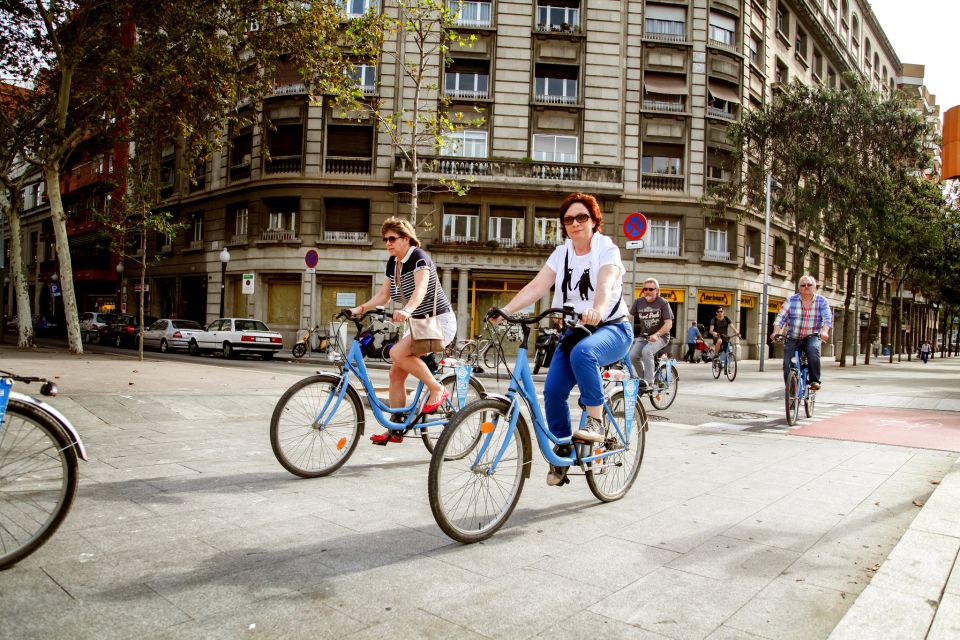
- Bike-lane friendly streets, which helps the ride feel calm and safe
- Gaudí sightings on a tight timeline, including Sagrada Familia and both Casa Batlló and La Pedrera
- Gothic Quarter + El Born atmosphere, with churches, squares, and old-street charm
- Ciutadella Park and Arc de Triomf, so you’re not only in the historic core
- A guide-led experience with an active, chat-friendly vibe (Mady, Coco, Danny, Thomas, Oscar)
Why this 3-hour Barcelona bike loop is such a good idea
Barcelona is one of those cities where the highlights feel spread out. You can spend hours bouncing between viewpoints, or you can choose a format that helps you get your bearings fast. This tour does that well. In a short window, you get a cross-section of the city’s main “eras”: Roman-era bones near the waterfront, medieval-feeling alleys in the center, and modern/Art Nouveau drama from Gaudí.
What I like about this format is how it mixes “looking” with motion. You bike past the sights, then pause often enough to take photos and listen without feeling rushed. The included drink and helmets also remove small friction points. It’s not just sightseeing; it’s sightseeing that’s actually practical.
And the guide quality is a major reason this tour tends to land well. People repeatedly highlight guides who are engaging and friendly—whether it’s Coco’s easy flow, Danny’s fun teaching style, or Thomas keeping non-history folks interested.
You can also read our reviews of more cycling tours in Barcelona

Starting at Carrer de la Marquesa: you’re in the action early
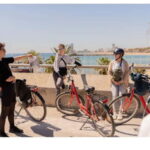
You start and end at Carrer de la Marquesa, 11B. That matters. You’re not meeting in some distant parking lot. You’re already positioned for the neighborhoods that make this city memorable—especially the old-town feel around the Gothic Quarter and El Born.
Plan to arrive about 10 minutes early so you can get your bike sorted calmly. This matters more than you’d think, because once the ride starts, the tour runs on momentum. If you’re late, you’re basically asking the group to wait and making your own day feel tight.
Another small but helpful detail: helmets are included. That’s one less thing to worry about while you’re traveling light.
Pla de Palau and the Columbus Monument: a fast orientation
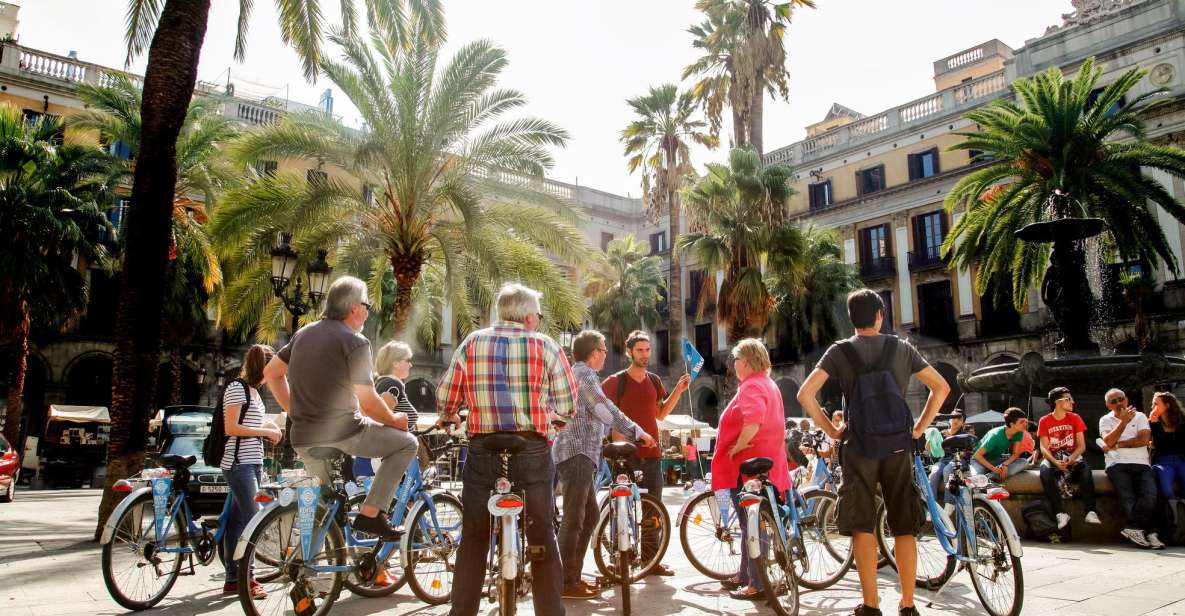
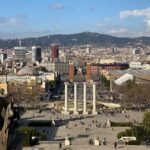
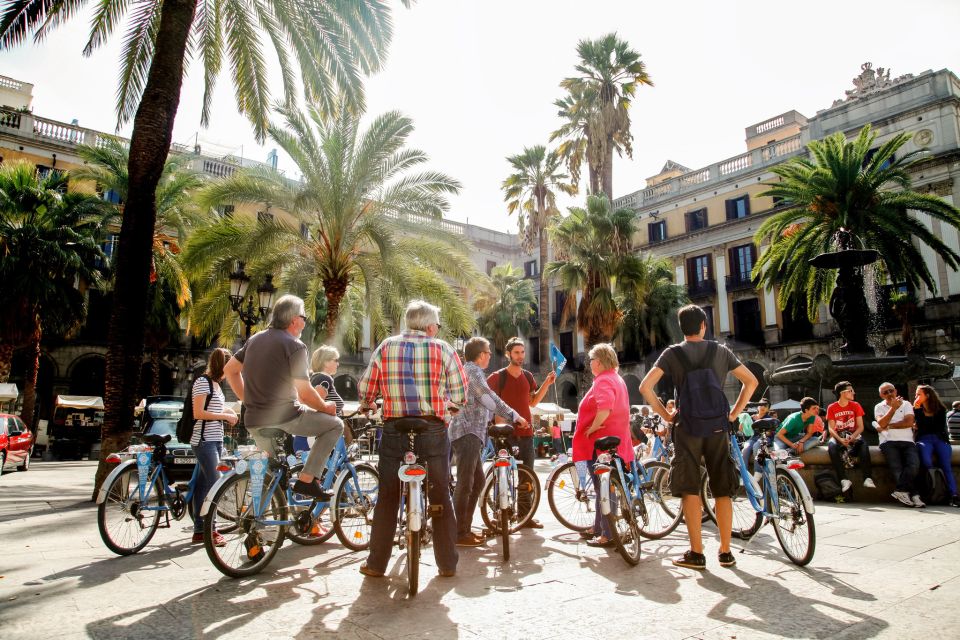
The tour rolls to Pla de Palau, with a photo stop and guided context. This is a smart opening move. Pla de Palau gives you a visual anchor for the city—water nearby, big avenues in view, and a sense of where central Barcelona stretches out.
From there, you pass the Columbus Monument. Don’t treat this as a “must-know history lecture.” Think of it as a landmark that helps connect the waterfront mood to the older streets inland. It’s a reminder that Barcelona’s story isn’t only one architectural style. You’re moving through layers.
If you like travel photos that look like you actually know where you were, this early segment helps. You’ll get a sense for direction and sightlines before the tour gets more intricate.
La Rambla and Port Vell: big-city energy, then maritime calm
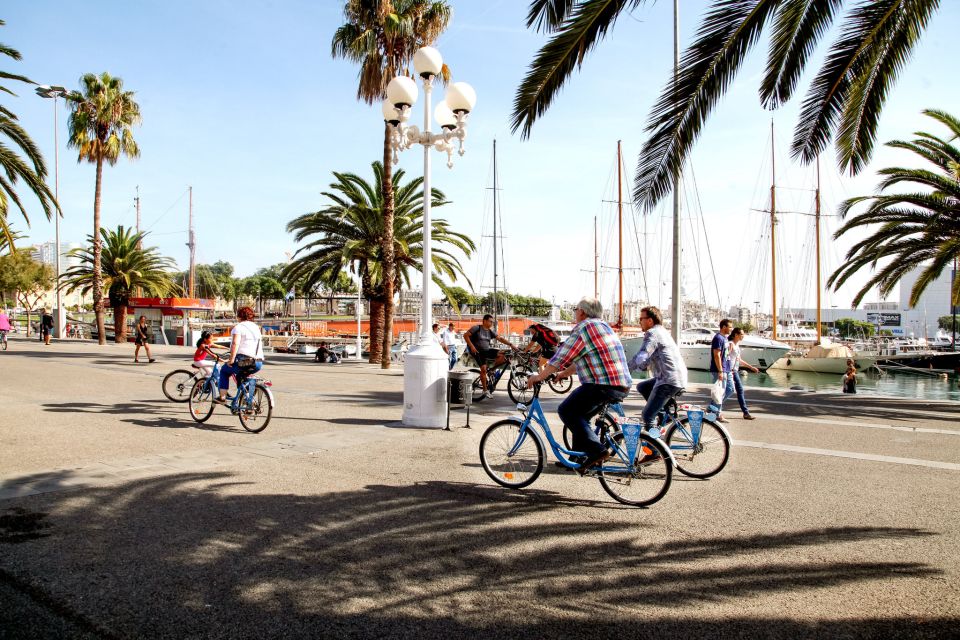
Next comes La Rambla. Even if you’re not the kind of person who wants crowds on purpose, biking past it is a different experience than walking through it for hours. You’re moving, watching, and learning while the street noise doesn’t swallow your whole schedule.
Then you head toward Port Vell. This shift—from lively boulevard to waterfront—breaks the ride into chapters. It also helps you understand Barcelona’s layout. You can feel the city working around the sea.
A practical bonus: if you’ve only got a couple days in Barcelona, this sequence helps you avoid the classic mistake of spending your time only in one zone. You’ll still get the historic quarters, but you won’t ignore the water-and-city axis that shapes Barcelona.
St. Mary of the Sea Cathedral and El Born: the old-street vibe lands
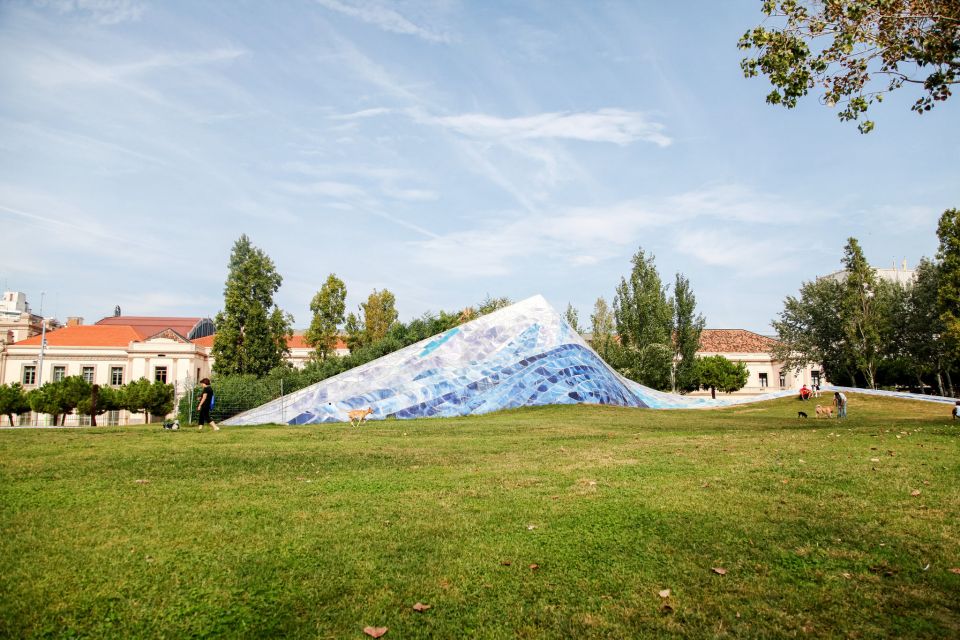
The tour bikes past the St. Mary of the Sea Cathedral. This is one of those stops where the architecture does half the explaining. Even from the street, you can sense why church buildings matter here—they aren’t just religious sites; they’re anchors for neighborhoods and local identity.
Then you roll into El Born. This area has that lively old-street character that makes people fall for Barcelona fast: narrow ways, small squares, and a sense that the city is built for wandering.
From a biking perspective, this segment is also a good reality check. It’s old-town looking, but you still stay in motion, so you don’t feel like you’ve been trapped at the most crowded corners. And because the pace is relaxed, you can slow down mentally and let the details register.
If you’re the type who likes to understand what you’re seeing—not just see it—this is where the guide’s storytelling really earns its keep.
You can also read our reviews of more historical tours in Barcelona
Ciutadella Park and Arc de Triomf: a breather with real sights
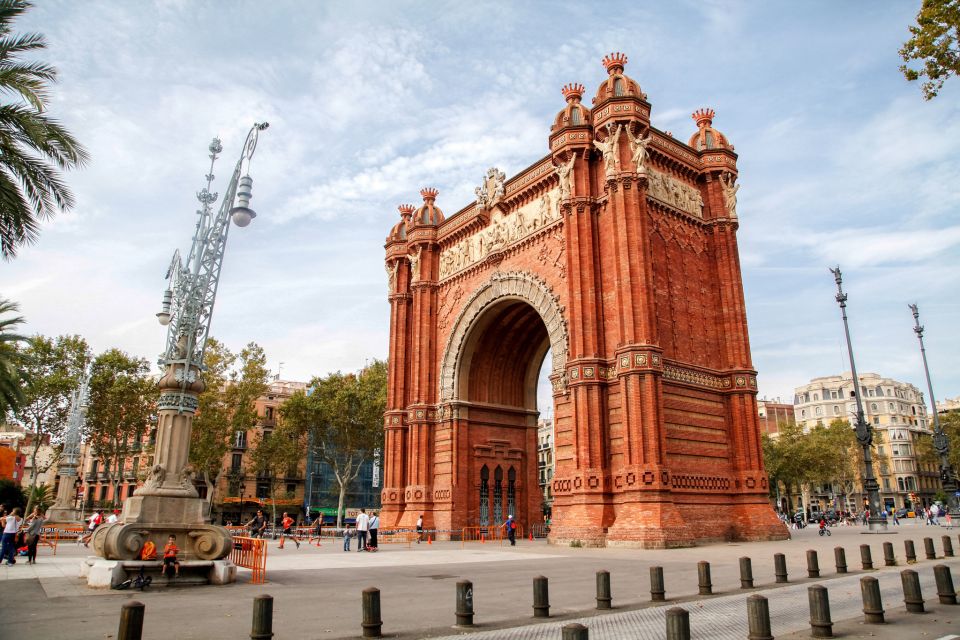
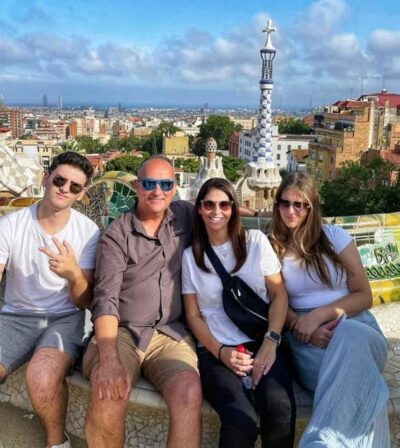
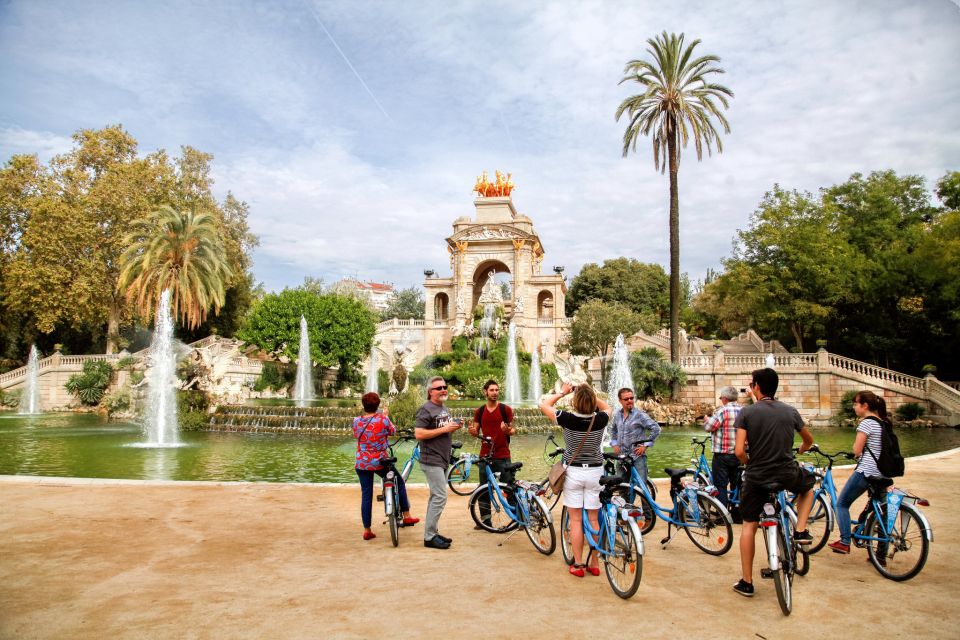
After the dense historic zones, the tour heads to Parc de la Ciutadella. This park stop isn’t random downtime. Ciutadella Park is connected to the city’s grand public-space tradition, and it helps balance the tour. You’re not stuck in a straight line of stone and churches.
You’ll also pass Arc de Triomf. This is a striking piece of city grandeur that gives Barcelona a “processional route” feeling—like you’re being guided along a planned urban idea, not just hopping between random stops.
This part of the ride is also where you’ll appreciate how comfortable the format feels. A bike tour gives you enough movement to stay fresh, but the park and monuments give you a visual reset. It’s a good reminder that Barcelona isn’t only narrow alleys and famous façades.
Sagrada Familia: seeing Gaudí’s scale without waiting in line
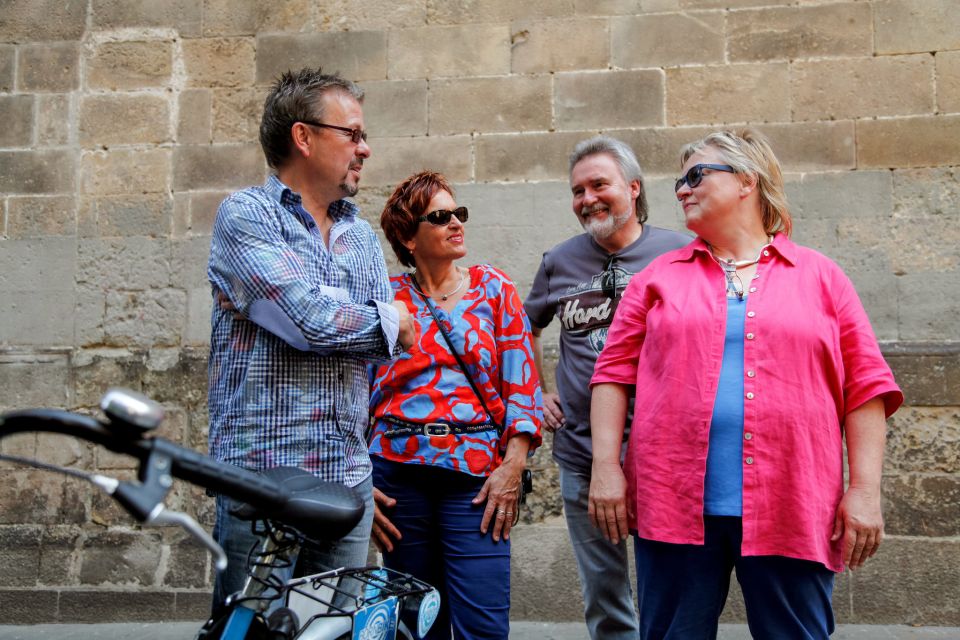
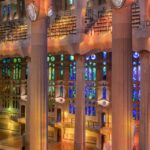
Then comes Sagrada Familia. You bike past and take it in as part of the city narrative, not as a standalone “all-day project.” Even if you don’t go inside, it hits hard from the outside—Gaudí’s forms make it impossible to treat it like any other cathedral.
In a short tour, this stop is valuable because it gives you a benchmark. Once you’ve seen Sagrada Familia from the street, the rest of Gaudí’s work feels more connected. You start noticing how he shapes space—how the building communicates movement and detail even when you’re just cycling by.
This segment is also a good “timing strategy” for your trip. Seeing it once on a bike day helps you decide whether you want a longer visit later on with a ticket and more time.
Casa Mila (La Pedrera) and Casa Batlló: two very different faces of Gaudí
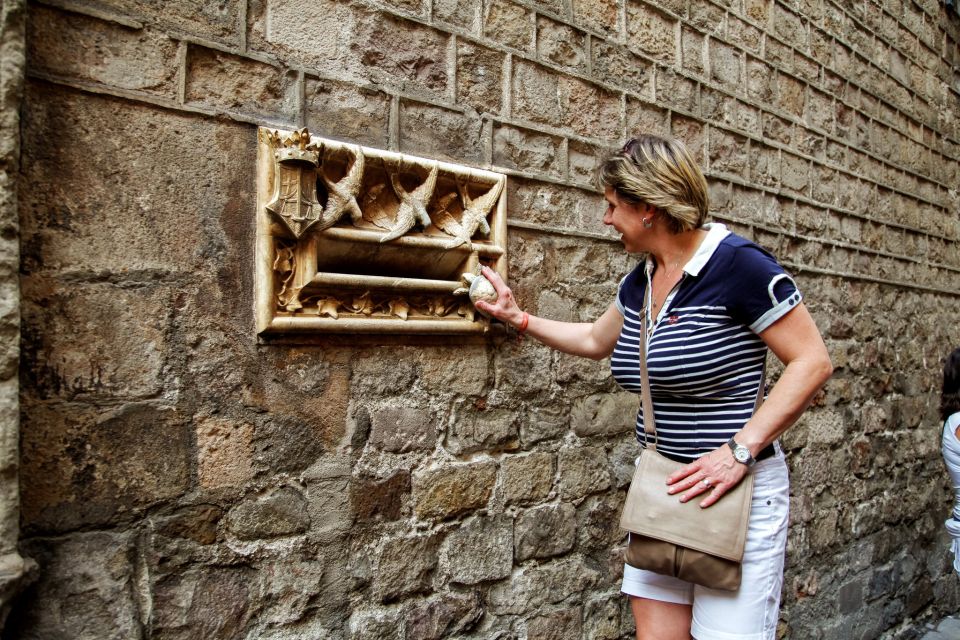
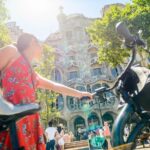
The tour then brings you to Casa Mila (also known as La Pedrera) and Casa Batlló. This is one of the most efficient parts of the day because it packs major Gaudí style into a short sequence.
Casa Mila is Gaudí’s modern masterpiece in motion—curves, rhythm, and that unmistakable sense that the building isn’t trying to look “flat.” You don’t need a lecture to understand why people talk about it.
Then Casa Batlló follows. This one gets extra attention because it looks like something straight out of imagination: the building’s bone-like character is part of its charm and its shock value. It’s the kind of sight that makes you stop mid-sentence and just stare for a moment.
If you’re trying to choose between “architecture day” and “neighborhood day,” this tour is a clever hybrid. It keeps you outdoors, keeps you moving, and still gives you the city’s most iconic designer identity.
Palace of Catalan Music: a classy note to finish on
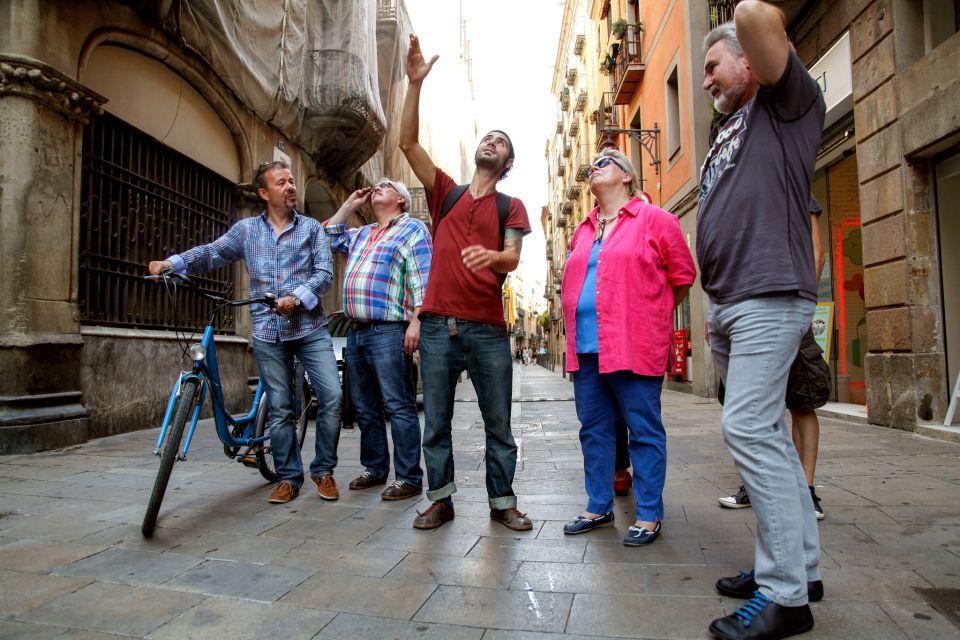
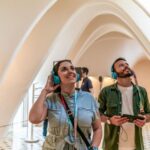
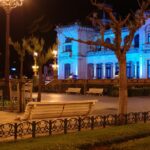
The final stretch includes the Palace of Catalan Music. This is a welcome ending because it adds cultural texture beyond churches and household-name Gaudí.
It also gives you a sense of Barcelona’s artistic ambition. You’ve already seen grand architecture. This stop reminds you that Catalonia’s creative drive isn’t only about big, singular monuments—it’s also about institutions and performance spaces.
Ending here also feels right because by this point you’ve cycled through enough variety that the city starts making more sense. You stop thinking in isolated attractions and start seeing how Barcelona’s art shows up in different forms.
Price and value: what $42 buys you in real Barcelona time
At $42 per person for a 3-hour tour, this is priced like an experience that’s built to save time. And that’s the key value question in Barcelona.
Here, you’re getting:
- a rented bike
- a live tour guide
- helmets
- a drink
- and a route that strings together multiple “big asks” into one session
You’d spend more than that easily when you start paying separately for transport, rentals, and guided time. Plus, the tour removes the stress of figuring out where to go and how to stitch it into a half-day plan.
The other value piece is safety and ease. Multiple bike lanes help make the ride feel straightforward, which matters if you’re not confident biking in busy cities. Reviews also lean heavily toward guides who keep things engaging, not dull—so you don’t waste your paid time on generic facts.
If you’re doing Barcelona on a tight schedule, this price is less about saving money and more about buying back time and energy.
Who should book this bike tour (and who might not)
This is a great fit for:
- art and history lovers who want an efficient overview
- first-time visitors who want to see more than one neighborhood
- people who like architecture but don’t want to spend the whole day in lines
- anyone who prefers getting around with motion instead of constant walking
It might be less ideal if:
- you want to linger deeply at one monument for a long visit
- you hate frequent stops and prefer uninterrupted riding
The terrain is flat, which helps most people feel comfortable. Still, if your biggest vacation goal is pure wandering on foot, you might find a bike pace less satisfying.
Should you book the Barcelona Historical 3-Hour Bike Tour?
If you want a smart, low-stress way to connect Barcelona’s Gothic and Gaudí worlds in one afternoon or morning, I’d book this. The combination of guided stops, included gear (helmet and bike), and a route that covers the city’s core highlights in three hours makes it a strong value play.
I’d especially recommend it on your first couple days. You’ll come away with a clearer mental map, plus you’ll know what you want to revisit later—Sagrada Familia for scale, and Casa Batlló and La Pedrera for Gaudí’s imaginative side.
FAQ
How long is the Barcelona Historical 3-Hour Bike Tour?
It lasts 3 hours.
Where does the tour start and end?
It starts and returns to Carrer de la Marquesa, 11B.
How much does the tour cost?
The price is $42 per person.
What’s included in the price?
You get a rented bike, a tour guide, a drink, and helmets. Child seats are available if desired.
What time do tours depart?
Tours leave daily at 11:00 and 16:00, except on December 25–26 and January 1.
Will the tour run in rain?
Yes, tours leave in any weather. Rain jackets are supplied.
What languages are available for the live guide?
The guide is available in Italian, Spanish, Catalan, French, and English.
Is the ride difficult?
The terrain is flat, so it’s not considered technically hard.
What should I bring?
Wear comfortable clothes. The tour also supplies rain jackets if needed.