REVIEW · BARCELONA
Barcelona e-Bike Tour: Gaudí & Old Town Small Group
Book on Viator →Operated by Barcelona eBikes · Bookable on Viator
Barcelona’s best sightseeing tool might be an e-bike. You glide through the Gothic Quarter, swing by the waterfront, and get Gaudí context without the stress of long walks. It’s a small-group ride built for an easy pace.
What I like most is the mix of places: Roman-era Barcino streets, the sea-front neighborhoods, and park-and-architecture stops tied together by a guide who can explain what you’re looking at. Plus, you get an electric boost, helmet, and a water refill setup so the day stays comfortable, even in warm weather.
One drawback to plan around: Barcelona streets are loud and busy, and the tour can be harder to hear if your group spacing gets stretched out at traffic lights. Also, if you book a later slot, you may get less daylight for the beach and coast views.
In This Review
- Key highlights to look for
- E-bike ease in the middle of Barcelona’s action
- Where you start: Plaça de Sant Agustí Vell and the plan for the ride
- Gothic Quarter and El Born: Barcino lanes to Santa Maria del Mar
- Parc de la Ciutadella: green break plus 1888 Expo storytelling
- The ride to Barceloneta and Port Olímpic: sea-front views without the slog
- Rambla de Poblenou: stepping away from the big crowd
- Passeig de Gràcia and Gaudí houses: the architecture route you’ll actually understand
- Time slot matters: morning ease vs. later darkness
- Price and value: what $38.70 buys you in real terms
- Group size and comfort: why it often feels easy, and when it can get loud
- What to bring (so you don’t have to think mid-tour)
- Who this tour is best for (and who should consider alternatives)
- Should you book this Barcelona e-bike tour?
- FAQ
- How long is the Barcelona e-bike tour?
- Where does the tour start and end?
- What’s included in the price?
- Are attractions tickets included?
- What language is the tour offered in?
- How many people are in the group?
Key highlights to look for
- Easy pedal assist: less effort on longer stretches and heat
- Small group up to 15: easier navigation and a calmer ride
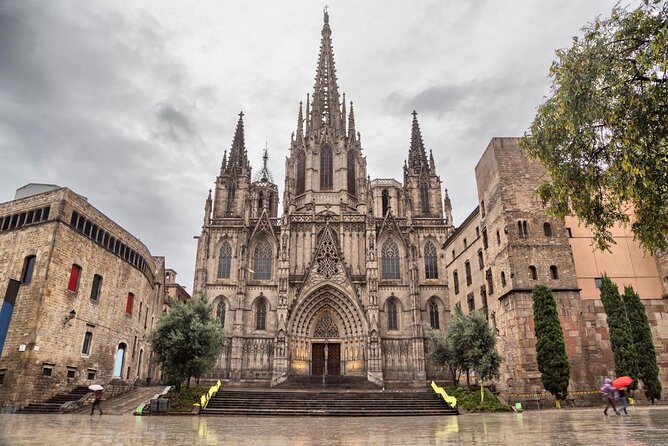
- Gothic Quarter to El Born: medieval lanes plus a market-area culture stop
- Ciutadella Park and 1888 Expo: stop for the park views and the expo arch
- Port Olímpic skyline: waterfront perspective without spending hours walking
- Passeig de Gràcia Gaudí houses: stories of the famous modernist facades, including La Pedrera and Casa Batlló
E-bike ease in the middle of Barcelona’s action
Barcelona is pretty flat, but it’s still a city that demands attention: tight corners, stop-and-go traffic, and pedestrians who move like they’re on a secret mission. This e-bike tour solves the main problem with touring by bike—effort—so you can focus on the streets and your guide’s explanations instead of fighting hills or sweaty pacing.
The pedal assist also makes the ride feel more “sightseeing-friendly.” You’re not stuck doing long, slow, full-effort cycling just to keep up. That matters for comfort because the route takes you through multiple neighborhoods that feel very different from each other—old medieval lanes, green city park space, and then right out toward the sea.
You can also read our reviews of more cycling tours in Barcelona


Where you start: Plaça de Sant Agustí Vell and the plan for the ride
You meet at Plaça de Sant Agustí Vell 16, in Ciutat Vella, and the tour ends back at the meeting point. That’s a practical choice. You start in the historic core, and you don’t need to arrange transit back at the end.
At the start, your guide explains what you’ll do. This is more important than it sounds. Bike tours only feel easy when everyone understands the flow: when to stop, how to regroup, and how to handle the busy parts of the city. The best guides also set expectations about traffic and safety—something you’ll see emphasized in guides like Oriol, Rory, Julio, Mateo, Anka, and Lili, who are praised for guiding people confidently and keeping the group together.
If you’re the type who hates feeling rushed, this tour’s pacing is built for you. Multiple stops are short—think quick looks and short conversations—so you’re not stuck waiting around for long periods.
Gothic Quarter and El Born: Barcino lanes to Santa Maria del Mar
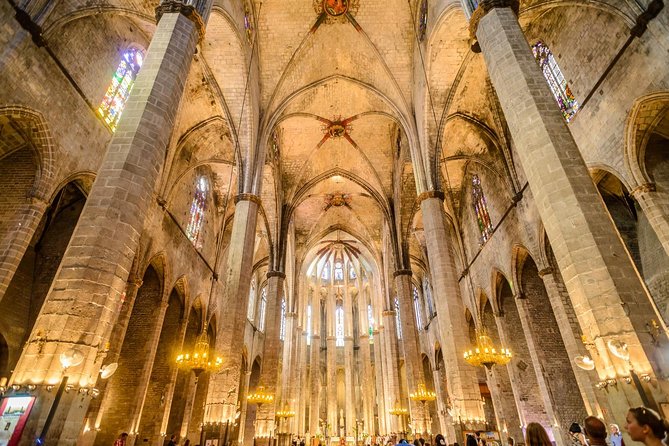
This tour’s first big “wow” is how quickly it gets you out of the modern mindset and into old Barcelona. You begin in the Gothic Quarter, where Roman Barcelona (Barcino) is part of the story. You’re not just reading history on a sign—you’re cycling through the area where the city’s older footprint shows up in the layout: narrow lanes, winding paths, and that medieval-feeling street geometry.
This is where an e-bike helps in a sneaky way. Those tight streets can be tiring on foot, especially when you’re also trying to look up at details. On a bike, you can actually take in the streets as you move through them.
Then you head toward El Born Centre de Cultura i Memoria, a former food market area with a “culture and memory” focus. The point of this stop isn’t the length—it’s the shift in atmosphere. You’re in a part of Barcelona where daily life used to happen in public spaces, and now you get that sense of the city’s layered past.
From there, the tour steers toward Santa Maria del Mar, described in tour language as the Cathedral by the Sea. That framing is smart. It pushes you to notice the building not as a random landmark, but as something the locals built for their community, tied to the coastline and the people who lived with the sea as part of their routine.
Parc de la Ciutadella: green break plus 1888 Expo storytelling
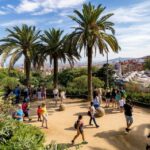
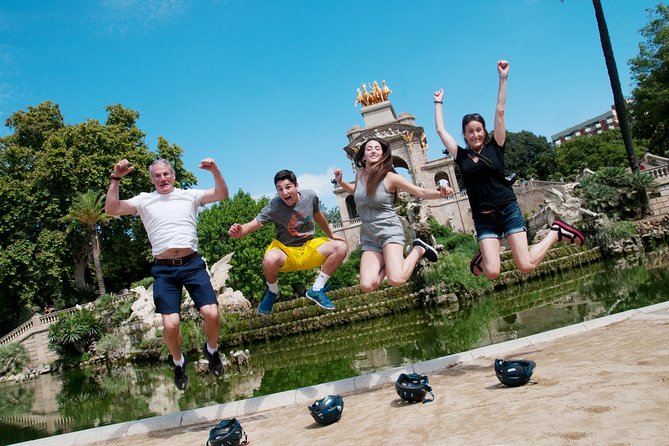
One of the best parts of Barcelona tourism is how the city balances dense historic areas with major open spaces. Parc de la Ciutadella is that balance in real time. You get an oasis moment—green, airy, and a nice break from the street noise.
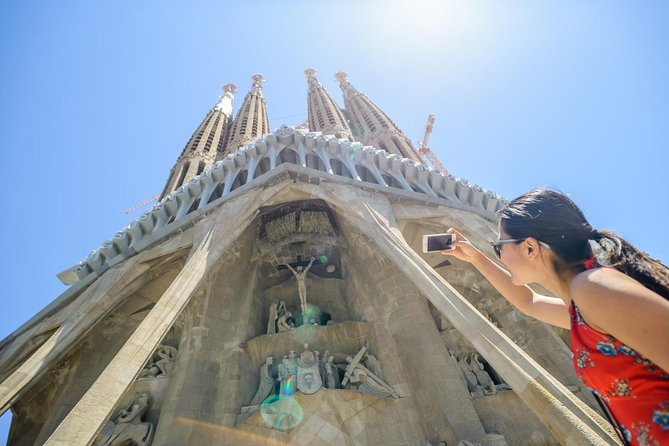
The tour also connects the park to the 1888 International Exposition, which is a useful “why this place exists” thread. This stop isn’t just scenic; it’s interpretive. You’ll pass underneath a majestic arch that was used as a door for the 1888 expo. That kind of detail turns a park walk into something with context.
Even if you don’t care about expositions, this is still a good checkpoint for a few reasons:
- You reset your eyes between older streets and busier waterfront roads.
- You get a different kind of Barcelona photo—wide views and architecture against greenery.
- It helps you pace yourself for the ride toward the coast.
The ride to Barceloneta and Port Olímpic: sea-front views without the slog
After the park, you ride along Barceloneta, the neighborhood where fishermen and fisherwomen have lived for many years. That’s a strong storytelling cue. It reminds you the waterfront isn’t only about visitors and seafood menus—it’s also about labor, homes, and daily rhythm.
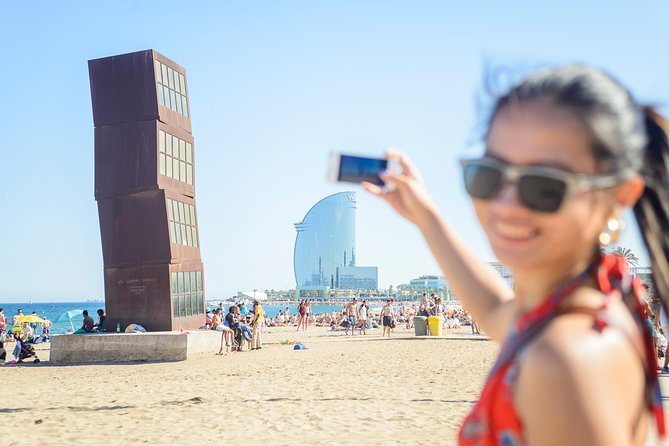
Then you hit Port Olímpic. This is a great “perspective change” stop. From here you get a skyline view and a strong sense of Barcelona opening toward the Mediterranean. It’s a quick stop—about ten minutes—but it’s timed well. You’re likely to be past the hardest concentration zone of the day (the tightest streets), so the ride feels smoother, and the sea air makes you want to linger for just a minute.
If you like photos, this part is useful. You’re getting wide sightlines that you just won’t get in the Gothic Quarter’s narrow lanes.
You can also read our reviews of more tours and experiences in Barcelona


Rambla de Poblenou: stepping away from the big crowd
The tour does something smart here: it doesn’t just treat the city like one giant “must-see corridor.” You move away from the crowded Rambla to a quieter stretch on Rambla de Poblenou.
The focus is on everyday city rhythm—how this kind of avenue fits into local life. You’re still in a classic Barcelona street type, just without the same peak congestion you’d expect near the most famous tourist ribbon.
This is also a practical cycling move. Dense crowds slow bike lanes and create more start-and-stop moments. If you want a calmer pace, this detour helps.
Passeig de Gràcia and Gaudí houses: the architecture route you’ll actually understand
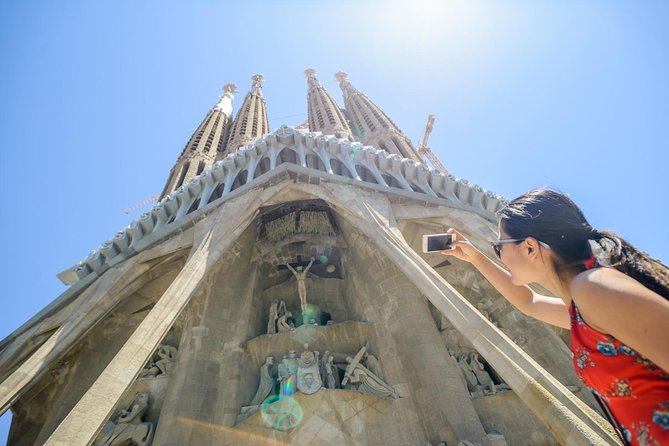
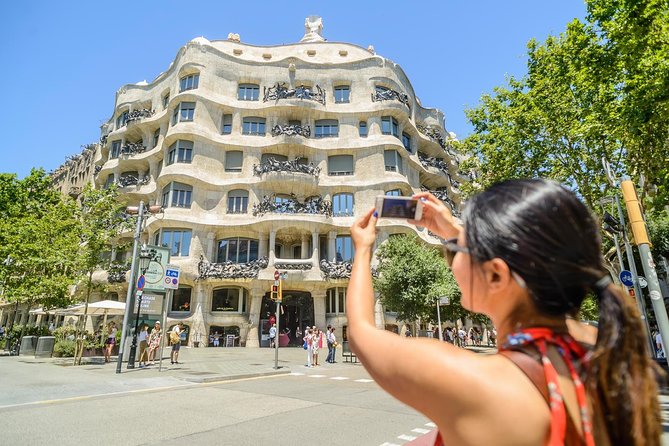
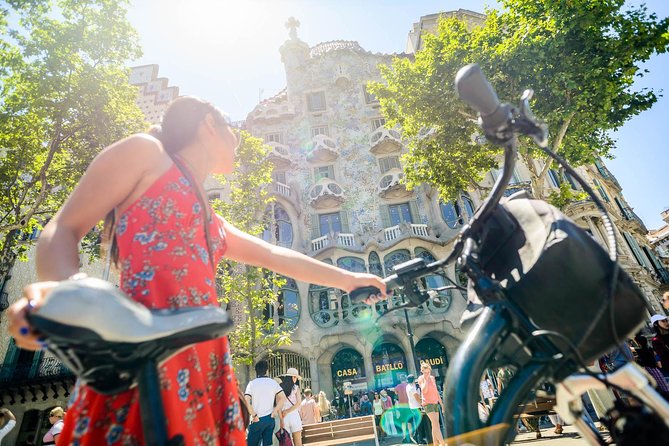
The Gaudí portion is where the tour earns its ticket price for many people. The route is framed like Barcelona’s version of 5th Avenue: an impressive avenue lined with modernist facades. And here’s the key: you don’t only get “look at this building.” You get stories about why these wealthy families competed, what they wanted their houses to say, and how Gaudí’s design language shows up in the details.
Along this stretch, you’ll learn about two of the most important houses associated with Gaudí:
- La Pedrera: discussed with its wavy, distinctive walls and the stories behind it
- Casa Batlló: discussed as part of the same famous avenue pair, with the tour framing it as a magical-feeling modernist creation
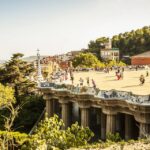
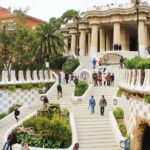
What makes this valuable is the guide’s storytelling style. In the feedback you can see a pattern: guides explain inspiration and symbolism behind Gaudí’s work, not just dates and names. Some routes or conversations also connect these houses to other Gaudí landmarks you might visit later—Sagrada Família and Park Güell come up in tour explanations—so you start seeing the big picture of his architectural ideas.
Even if you’re not a hardcore architecture person, you’ll leave with a mental map. You’ll know what to look for when you later walk past modernist facades on your own. It’s the kind of advantage that makes a shorter tour feel longer.
Time slot matters: morning ease vs. later darkness
This tour offers three itineraries at different times of day. That’s not just convenience. Timing affects what you notice.
Pick an earlier slot if you want:
- more daylight for the coastline and Port Olímpic views
- an easier experience with heat (especially in summer)
- more flexible photo time without rushing the light
Later afternoon or early evening slots can still be great—city lights can look stunning. But you may lose some beach-coast visibility if it’s getting dark where you are. One common caution is that a later start in December can make the final stretch feel darker than expected. So if your priority is the water views, aim for daylight hours.
Price and value: what $38.70 buys you in real terms
At $38.70 per person for about 3 hours, this tour is positioned as a high-value “orientation + highlights” experience. The cost makes sense because you’re not just paying for a bike. You’re paying for:
- a professional local guide
- a small-group ride (max 15)
- the bike and helmet
- a water refill station setup, if you bring a bottle
The big value is time. Barcelona is big on walking. If you’re only in town for a short stretch, this tour helps you cover multiple neighborhoods in a way that feels efficient but not robotic.
One nuance: attractions tickets aren’t included. Some stops are listed as free-admission, but don’t assume everything you might want to enter is covered. This tour is built around seeing key areas and learning their context, not about queueing and ticketing.
Group size and comfort: why it often feels easy, and when it can get loud
Small groups are a major selling point here, and the “up to 15” cap helps a lot. When your group stays together, the guide can keep explanations clear and the pace comfortable. Many guides are praised for keeping riders safe, reading traffic, and waiting when people fall behind at lights.
Still, two considerations are worth keeping in mind:
- Barcelona is noisy. Even with a great guide, busy intersections can drown out conversation.
- If the group spacing gets stretched at red lights, you can feel a bit separated—especially in crowded zones.
This is why it helps to choose a time slot that’s less hectic for your comfort. And if you want the best listening experience, stay attentive when you stop—don’t wander off for photos right as the guide starts talking.
What to bring (so you don’t have to think mid-tour)
You’ll be on an e-bike with a helmet, but you still control your comfort with a few basics.
Bring:
- a water bottle you can refill (the tour mentions a refill station)
- sun protection if you’re going in warmer months
- a light layer if you tend to get chilly near the sea
- comfortable shoes you can walk in if you step off briefly at stops
If you’re planning a day that includes more walking later, this tour is a good way to start. You get movement, shade breaks, and lots of sightlines without exhausting your legs before the rest of your itinerary.
Who this tour is best for (and who should consider alternatives)
This tour fits you best if:
- you want a first-time Barcelona orientation
- you like local stories tied to real neighborhoods
- you want to see Gaudí-related architecture without turning your day into an all-day museum slog
- you want an activity that works for a range of fitness levels thanks to pedal assist
It might be less ideal if:
- you need quiet, one-on-one explanation time
- you’re very sensitive to noise in busy city centers
- you prefer long stops at fewer places instead of a “move, see, learn” rhythm
If you’re visiting with kids or teens, the e-bike setup tends to help families keep a shared pace. Some people also like doing it right after a long flight to shake off the travel stiffness.
Should you book this Barcelona e-bike tour?
Yes, if you want a smart, efficient way to connect the dots between Barcelona’s old lanes, the sea-front neighborhoods, and Gaudí’s modernist world. It’s especially worth booking early in your trip because it gives you bearings for where to go next on foot.
I’d book it if:
- you want a relaxed 3-hour highlights route
- you value a safe small-group ride led by guides like Oriol, Rory, Julio, Mateo, Anka, or Lili (all highlighted for passion and keeping people together)
- you want water-friendly, park-to-sea scenery without the walking grind
I’d think twice if you’re chasing a super quiet experience or you hate traffic-light stop-and-go routines. Otherwise, it’s a practical way to see a lot of Barcelona in one go, with enough Gaudí context to make later visits feel more meaningful.
FAQ
How long is the Barcelona e-bike tour?
The tour is about 3 hours.
Where does the tour start and end?
It starts at Plaça de Sant Agustí Vell, 16, Ciutat Vella, 08003 Barcelona, Spain and ends back at the same meeting point.
What’s included in the price?
The tour includes a small-group tour with a professional local guide, bicycle and helmet use, and access to a water refill station (bring your bottle).
Are attractions tickets included?
Attractions tickets are not included, even though some stops are listed as free admission.
What language is the tour offered in?
The tour is offered in English.
How many people are in the group?
The maximum group size is 15 travelers.