REVIEW · BARCELONA
Barcelona: Sagrada Familia or Coastal City Sights by eBike
Book on GetYourGuide →Operated by Barcelona eBikes · Bookable on GetYourGuide
Barcelona has a way of slipping under your skin.
This tour is a smart way to see major sights without wasting your whole day stuck in traffic or figuring out routes, with Sagrada Familia and Gaudí highlights plus classic neighborhoods by bike. I especially like how the ride connects big icons with small streets and local-looking blocks, and how guides like Aleix, Lily, and Rory seem to turn the city into a story you can follow pedal by pedal.
I also like the balance: you get a guided pace that still feels relaxed, plus safe-feeling cycling routes that make it much easier to move across town than on foot in short bursts. The Gothic Quarter stretch and the seafront sections give you variety, not just “stop, photo, repeat,” and you’re back at the same meeting point when you’re done.
One thing to consider: if you choose the e-bike, availability isn’t guaranteed, and after a few hours your seat comfort may start to feel less than perfect for some people. For the best experience, plan on bringing a little patience and enjoying the ride as the main event.
In This Review
- Key highlights at a glance
- Why bike (and e-bike) works so well in Barcelona
- Getting set up at Plaça de Sant Agustí Vell
- Santa Maria del Mar to The Born: medieval streets and visible layers of time
- Parc de la Ciutadella: a park break with real scenery
- Vila Olímpica and the Port Olímpic marina: city meets coastline
- Two ways to choose your 3 hours: morning Gaudí versus afternoon beach-and-old-town
- The 11am option: Gaudí life itinerary
- The 4pm option: beach and old town relaxed itinerary
- Sagrada Familia: what to look for when it’s still a work in progress
- Casa Mila and Casa Batlló: Gaudí facades up close
- Casa Mila (about 30 minutes)
- Casa Batlló (about 30 minutes)
- Eixample and the return ride: getting your bearings for later on your own
- Regular bike vs e-bike: which one makes your day easier
- What you’re paying for: value beyond the $31 headline
- Who should book this tour (and who might skip it)
- Should you book Barcelona: Sagrada Familia or Coastal City Sights by eBike?
- FAQ
- FAQ
- How long is the tour?
- What does it cost?
- Where do you meet for the tour?
- Do you ride a regular bike or an e-bike?
- Are helmets provided?
- Are entrance tickets included for the sights?
- Is food and drink included?
- What languages is the guide available in?
- Can children ride on the bike tour?
Key highlights at a glance
- Two itinerary styles: a morning Gaudí-focused run or an afternoon beach-and-old-town loop for a calmer feel
- Major Gaudí stops: Sagrada Familia, Casa Mila, and Casa Batlló in one efficient circuit
- Old City + sea change of scenery: medieval streets and the Port Olímpic marina area
- Parks and city planning: Parc de la Ciutadella’s green spaces and fountain, plus Vila Olímpica sights
- Small-group energy with photo stops: enough guidance to learn, enough time to take pictures
Why bike (and e-bike) works so well in Barcelona
Barcelona is built for walking, sure. But if you only walk, you end up spending more time crossing roads than absorbing neighborhoods. A bike tour solves that. You cover serious distance in a short window, and you experience the city at “human speed” instead of through a bus window.
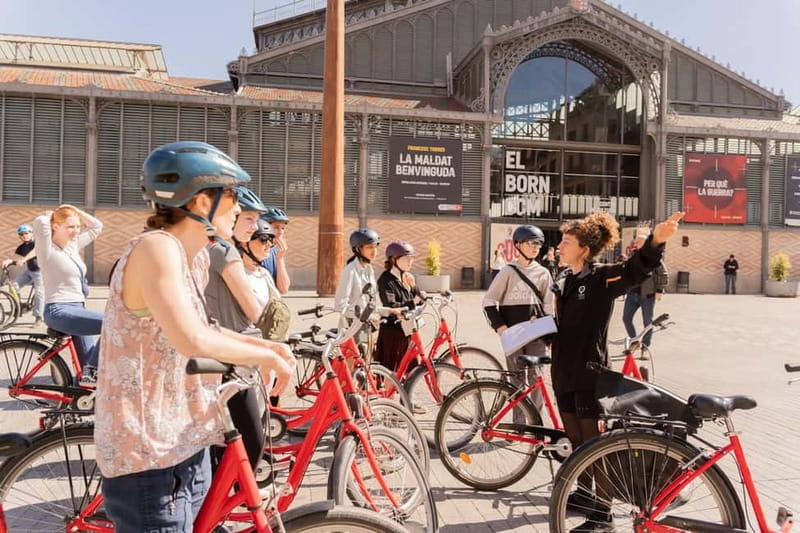
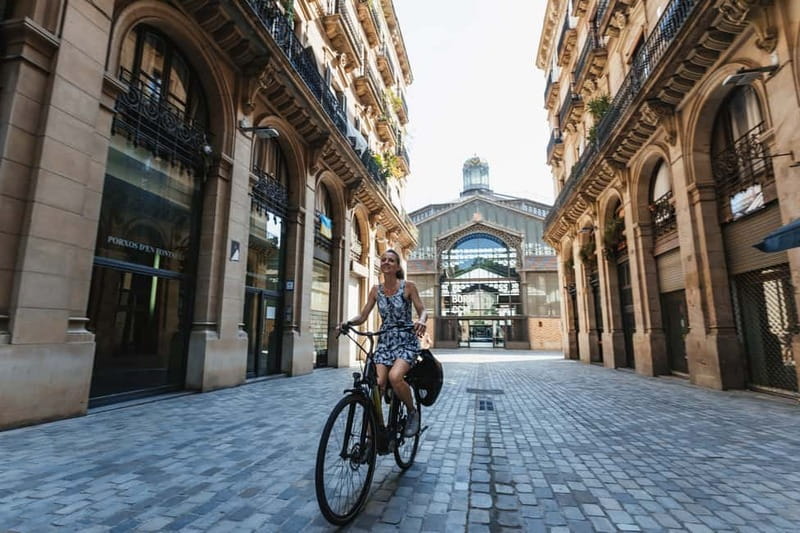
This ride is also practical because Barcelona is mostly flat along many central corridors, and the route is designed for cycling. You start with a safety briefing, get helmeted, then you’re off. The guide keeps the group together, sets a steady pace, and uses city bike lanes and quieter connections so you’re not constantly white-knuckling your way across intersections.
If you’re debating regular bike versus e-bike, treat it like a stamina choice. The itinerary is the same either way, so you’re not “missing” anything by going e-bike. You’re just changing how much effort you’ll want to spend on a 3-hour sightseeing loop.
You can also read our reviews of more cycling tours in Barcelona


Getting set up at Plaça de Sant Agustí Vell
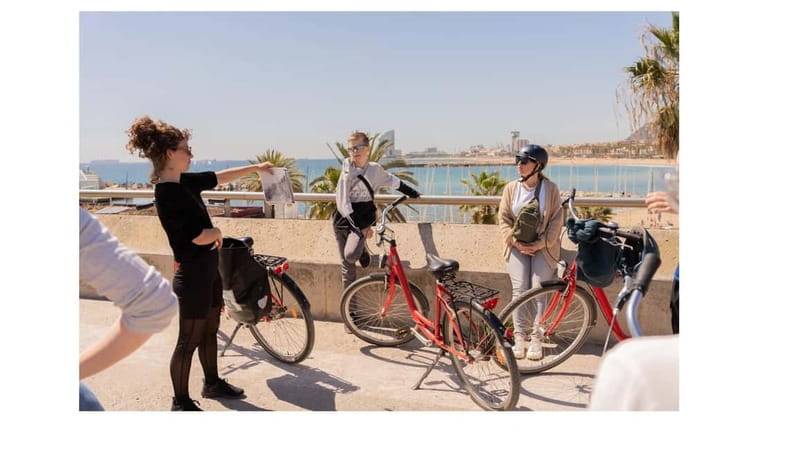
You meet at Plaça de Sant Agustí Vell, 16, and the tour is back at the same spot at the end. Plan to arrive about 5 minutes early so they can fit your bike and get you rolling without stress.
This is a good meeting point for first-time cycling in Barcelona because you’re starting inside the city’s core. You’ll do a short safety briefing (about 10 minutes) before the ride begins. That matters, even if you’re a confident cyclist, because local rules and road behavior can feel different from what you’re used to.
Helmets are provided. Spanish law requires helmets for riders under 16, but they’re available for everyone if you’d like the extra peace of mind. If you’re traveling with a smaller child, kids under 48 pounds (22 kilograms) can ride in a child seat attached to the back of the bike.
Santa Maria del Mar to The Born: medieval streets and visible layers of time
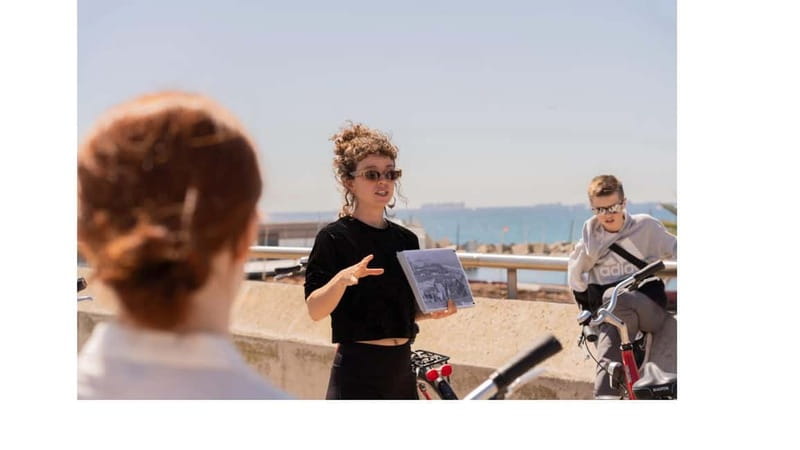
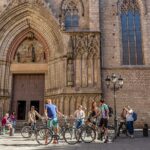
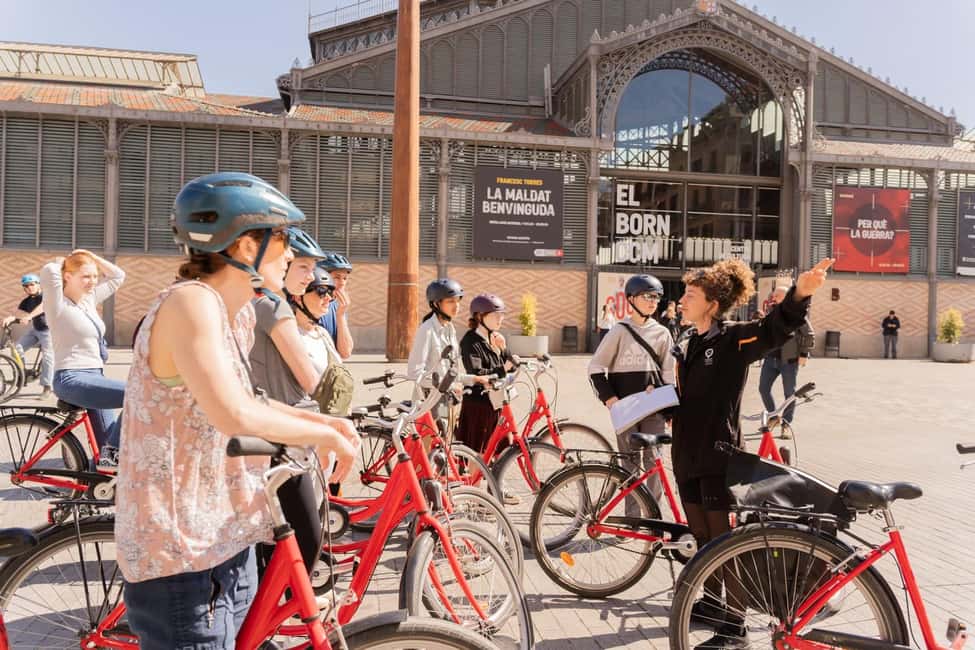
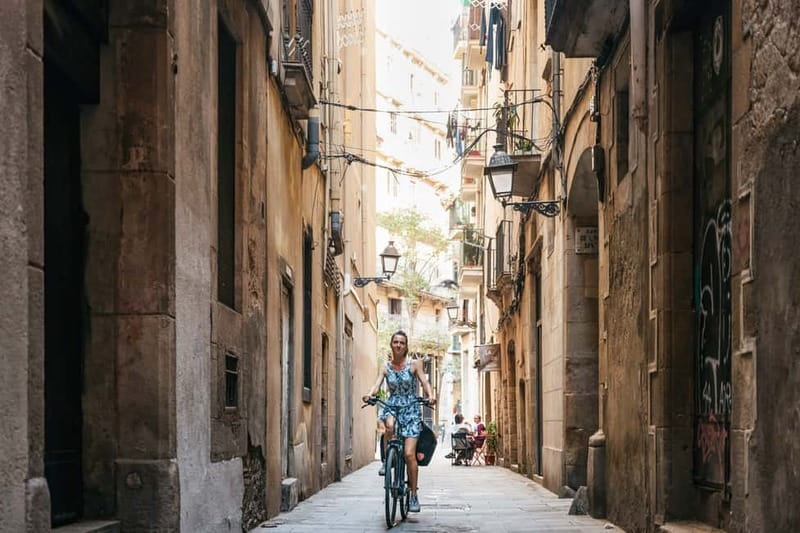
The first sightseeing moments focus on Barcelona’s Old City feel. You begin by admiring Santa Maria del Mar Cathedral, then you move over narrow medieval streets toward The Born Cultural Center.
What makes this part work is the contrast. Santa Maria del Mar gives you a sense of the city’s Gothic style at a glance, and then the bike route threads you through lanes that actually feel old—tight, walkable, and very “this is how the city was shaped.” You’re not just seeing a landmark; you’re riding through the fabric around it.
At El Born Centre Cultural, you get a photo stop and a visit that includes excavated city ruins displayed from the 1700s. That’s a rare payoff on a quick 3-hour format. It also gives you something to look for while you ride: historical layers aren’t hidden in a museum basement; they’re part of the ground you’re rolling past.
A small drawback here is also obvious: medieval lanes can feel tighter for bikes than wide boulevards. The upside is that the guide keeps the group together and chooses the smoother cycling lines, so the tightness doesn’t turn into chaos.
Parc de la Ciutadella: a park break with real scenery
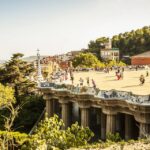
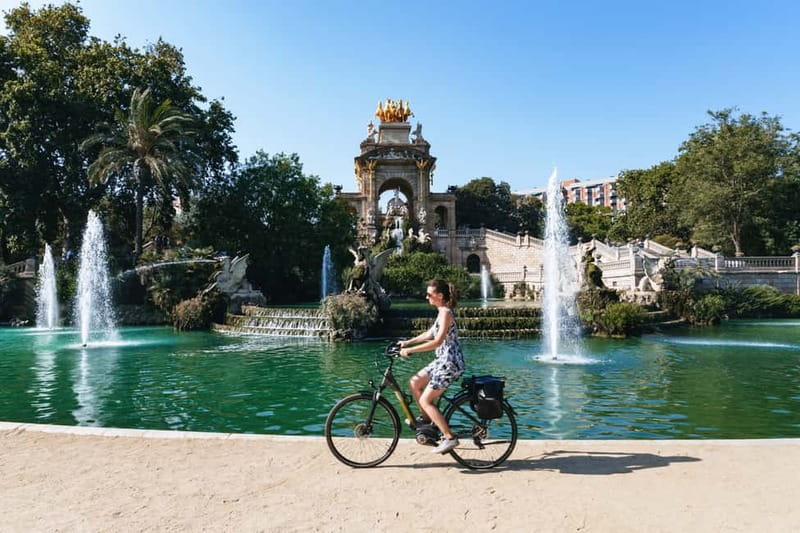
Next you head to Parc de la Ciutadella. Expect a photo stop and scenic views as you cross through the park’s green space, plus a look at a large, majestic fountain.
This stop is more than a rest break. It resets your eyes after dense streets. Parks also help you understand Barcelona’s planning mindset. You see how the city creates open space inside the urban core, which makes the later seafront area feel like the next logical step.
Photo time here is useful because it breaks the “continuous motion” feeling. You also get an easy moment to ask questions about what you’re seeing—guides often adjust explanations based on what people latch onto.
Vila Olímpica and the Port Olímpic marina: city meets coastline
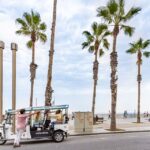
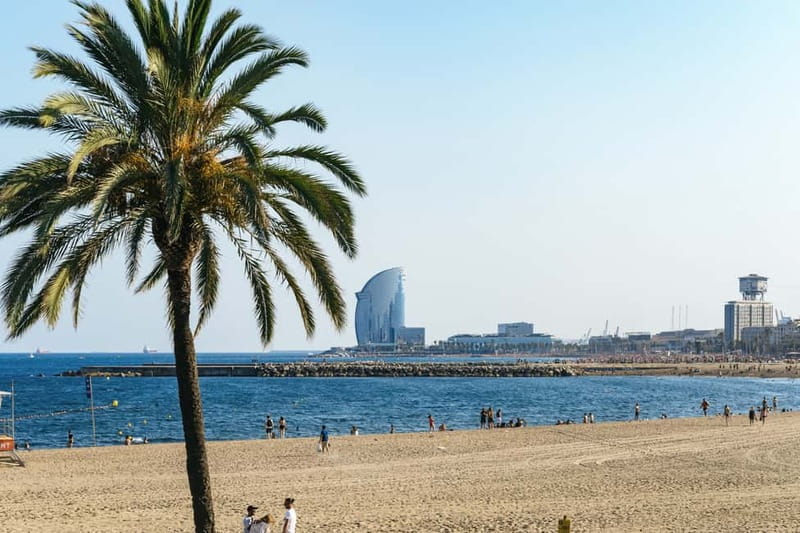
From the park you roll toward Vila Olímpica, with photo stops and time to sightsee. Then the route continues through the seafront zone around Port Olímpic Marina and the surrounding urban projects.
This is where the tour earns its “coastal city sights” name. Barcelona’s beach reputation is real, but the area isn’t just sand and umbrellas—it’s also modern waterfront design. Riding along lets you experience the scale: you get sky, water, and the sense of how the city turns toward the sea.
If you take the afternoon option (the one designed to avoid the noisiest parts of town), you often get a more relaxed feel near the water. One reviewer noted catching Sagrada Familia lit up around sunset on a route like this. Timing changes by day, of course, but it’s a reminder that the late-day light can make the iconic sites feel extra special.
You can also read our reviews of more city tours in Barcelona



Two ways to choose your 3 hours: morning Gaudí versus afternoon beach-and-old-town
You’ll have two main itinerary styles tied to starting time:
The 11am option: Gaudí life itinerary
This is the one aimed at Gaudí fans. It’s built to take you toward Sagrada Familia and then into the architecture cluster around it. If you want the classic “big Gaudí hits in a single session,” this is the most direct fit.
The 4pm option: beach and old town relaxed itinerary
This one is designed to get you out of the busiest patterns and into a calmer mix of neighborhoods. It focuses more on the Mediterranean atmosphere and connects areas like Born and Barceloneta with the Gothic Quarter feeling. It’s a great choice if your first day included lots of walking and you want cycling to be lighter on your feet.
Both options keep the total duration around 3 hours and use regular bikes or e-bikes depending on your selection. The stops and timing stay consistent; the order and emphasis shift.
Sagrada Familia: what to look for when it’s still a work in progress
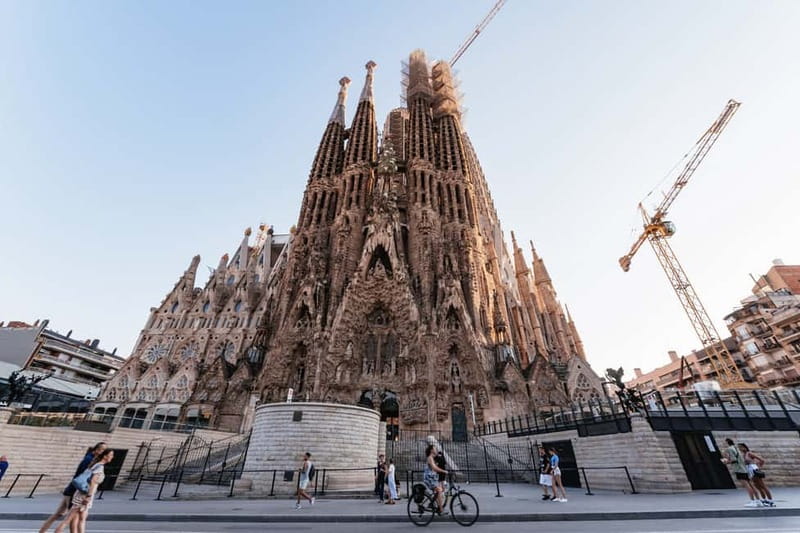
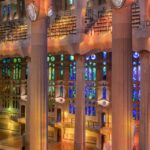
You’ll reach Sagrada Familia for a photo stop, a guided visit, and time on-site (about 45 minutes).
Even if you’ve seen pictures, seeing it in person hits differently because you notice details you can’t process from a distance. The tour’s guided approach helps you understand the church’s blend of Gothic and Art Nouveau influences, and it gives context for why it’s still not “finished” in the traditional sense.
One practical point: since entrance tickets are not included, your experience at Sagrada Familia depends on what you can access during your guided time window. The tour includes a guided stop and time to visit, but you should still plan to buy tickets separately if you want a specific interior experience or the sections that require separate entry.
Either way, this stop is the emotional anchor of the tour. It’s the moment you feel the city’s imagination at full volume.
Casa Mila and Casa Batlló: Gaudí facades up close
After Sagrada Familia, the route continues to two more Gaudí heavy-hitters:
Casa Mila (about 30 minutes)
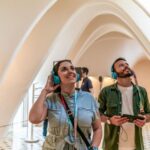
You’ll get a photo stop and time to visit with guided details. Casa Mila’s exterior tends to make people slow down instantly. Up close, the stonework and the fluid shapes stand out more than they do on postcards.
Casa Batlló (about 30 minutes)
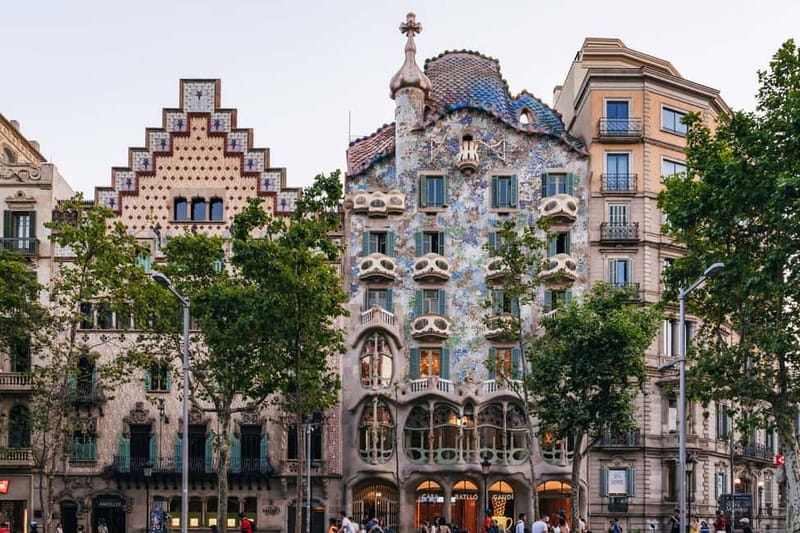
Then you move to Casa Batlló for another photo stop and visit with guided time (also about 30 minutes). This is the stop where the building feels almost sculpted for your eye to keep discovering new angles. The tour gives you guidance so you don’t just take photos, but also know what you’re looking at.
A reality check: without entrance tickets included, you might not get every possible interior area unless the operator covers what’s accessible during the stop. The good news is that even the outside viewing time can be powerful, and the guided explanation makes those surfaces make sense.
Eixample and the return ride: getting your bearings for later on your own
You’ll pass through the Eixample District for a bike tour portion (about 15 minutes), then continue back through old city segments for additional scenic riding and short bike stretches (including return to Old City and Barri de la Ribera).
This back half is valuable because it helps you build a mental map. When you later walk to nearby cafés or plan your next sights, you’ll already understand the city blocks you’re in.
Also, the tour returns to the same meeting point. That simplicity matters in a city where “getting back” can sometimes become its own mini-journey.
Regular bike vs e-bike: which one makes your day easier
Regular bike works well if you’re comfortable riding for 3 hours and you don’t mind pedaling through a lot of stop-start turning.
E-bike makes the experience feel more like an outing than a workout. Multiple guides and seat-time comments point to the same theme: e-bikes can make the city feel easier to manage, especially if you’re traveling with teenagers or after a travel day.
The main caution is availability. E-bikes are subject to availability, so if you want one, it’s smart to reserve with that goal in mind.
And yes, there’s at least one comfort note worth hearing: after hours in the saddle, some people found the seats less comfortable even on e-bikes. It’s not usually a dealbreaker, but if you’re picky about bike comfort, consider bringing a bit of extra cushion in your travel mindset (and wear bike-friendly clothing).
What you’re paying for: value beyond the $31 headline
This tour is priced at $31 per person for about 3 hours. That’s a bargain for what you get, especially compared with the time cost of trying to stitch together multiple Gaudí stops using public transit.
Here’s the value breakdown:
- A guided route that links multiple major sights and neighborhoods
- Bike or e-bike provided
- Helmet included
- Liability insurance included
Not included:
- Food and drinks
- Entrance tickets to attractions and monuments
So think of this tour as the “best way to see a lot with guidance.” You’re not paying for a ticket bundle to every site. You are paying for navigation, interpretation, and the mobility to get between all the key areas without burning your day.
If you’re short on time in Barcelona, this is one of those “pay once, save time, and learn fast” choices.
Who should book this tour (and who might skip it)
Book it if you:
- Want a short, high-impact overview of Barcelona’s big neighborhoods and Gaudí architecture
- Like moving between sights instead of spending hours in line with buses or on foot
- Want a guided explanation that helps you see more than just the obvious photo angles
- Prefer a planned route with a guide handling safety and group flow
Consider skipping or switching if you:
- Know you don’t enjoy cycling at all, even at an easy-to-moderate pace
- Expect full ticket-included access to every monument without extra purchases
- Have extremely sensitive bike-seat needs, since saddle comfort can vary over 3 hours
Should you book Barcelona: Sagrada Familia or Coastal City Sights by eBike?
If your goal is to see Barcelona’s top architecture and a chunk of the city’s neighborhoods in one tight window, I think this is a strong pick. The route choice between a Gaudí-heavy morning and a calmer beach-and-old-town afternoon gives you control over the feel of your day, and the guide-led rhythm makes it easy to learn without turning the day into a checklist.
Book it if you want efficiency with real city texture: medieval streets, a major park, and waterfront design, all tied together with stops at Sagrada Familia, Casa Mila, and Casa Batlló. Bring modest expectations about ticket inclusions, and you’ll be set for a smooth, fun ride that makes Barcelona easier to understand fast.
FAQ
FAQ
How long is the tour?
The tour lasts about 3 hours.
What does it cost?
The price is listed as $31 per person.
Where do you meet for the tour?
You meet at Plaça de Sant Agustí Vell, 16. The tour ends back at the same meeting point.
Do you ride a regular bike or an e-bike?
You can choose a regular bicycle or an e-bike. E-bikes are subject to availability.
Are helmets provided?
Yes, helmets are included. Helmets are required by Spanish law for riders under 16, but they are available for all customers.
Are entrance tickets included for the sights?
No. Entrance tickets to attractions or monuments are not included.
Is food and drink included?
No. Food and drinks are not included.
What languages is the guide available in?
The live guide is available in English and Spanish.
Can children ride on the bike tour?
Children under 48 pounds (22 kilograms) can travel in a child seat attached to the back of the bike.