REVIEW · BARCELONA
City Sightseeing Barcelona Hop-On Hop-Off Bus Tour: 24 or 48-Hour
Book on Viator →Operated by City Sightseeing Ltd - Europe · Bookable on Viator
Pink-and-blue buses make the city easy.
This City Sightseeing hop-on hop-off tour is interesting because you can choose a 24- or 48-hour pass, ride two different routes, and jump off whenever something catches your eye. I love the open-top, double-decker 360-degree views for photographing Barcelona without craning your neck. I also like how simple it feels once you’re on—one ticket gets you back on and riding again. The main drawback to plan around is that starting out at the main square can be confusing, especially when you’re standing in a windy, rainy, or crowded spot.
The onboard setup does a lot of the work for you. You get audio commentary in 16 languages through headphones, plus free onboard Wi-Fi, and buses run often enough to let you keep moving at your pace. If you’re short on time, this is a fast way to spot the best neighborhoods before you commit to longer walks.
Just keep your expectations realistic: the full loop is about 120 minutes, traffic and waiting at lights can stretch the feeling of the route, and rainy or cold days can make the open-top experience less comfy.
In This Review
- Key things to know before you ride
- How the City Sightseeing 24- or 48-Hour Pass Works in Barcelona
- On-Board Comfort: Open-Top Views, 16-Language Audio, and Wi-Fi
- Route Strategy: How to Use Two Circuits Without Wasting Your Day
- Stop-by-Stop Highlights on the Coastal and City Center Loop
- Stop-by-Stop Highlights on the Gaudí and West-Side Loop
- Timing Reality: 120 Minutes, Every 20 Minutes, and Traffic Lights
- Value Check: Is a $39.54 Ticket Smart for 24 or 48 Hours?
- What to Watch Out For: Start Points, Rain, Dirty Windows, and Hearing Choices
- Who This Barcelona Bus Tour Fits Best (and Who Should Skip It)
- Should You Book City Sightseeing Barcelona?
- FAQ
- What ticket options are available?
- How long is the tour, and when do buses run?
- How often do the buses depart?
- What’s included onboard?
- Are attraction tickets included?
- Can I cancel and get a refund?
- Can I use my voucher on another day?
Key things to know before you ride

- Two route choices so you’re not forced to see everything from one narrow corridor
- Frequent departures (every 20 minutes) with first bus at 9am and last at 7pm from the main stop
- 16-language audio + Wi-Fi so you’re not stuck guessing what you’re looking at
- A coupon booklet worth over €200 to soften the cost of paid attractions
- Large coverage from Plaça de Catalunya to Sagrada Família, Montjuïc, the beaches, and Gaudí’s Park Güell area
How the City Sightseeing 24- or 48-Hour Pass Works in Barcelona

This is a straightforward hop-on hop-off format: you buy a pass for 24 hours or 48 hours, then you can ride as many times as you want during the validity window. You can stay on for the big-picture loop, or treat it like a planning tool—ride to a stop, get oriented, then walk back to whatever you want to explore longer.
Buses depart regularly from the stops along both circuits, so you’re not stuck waiting all day for one bus to arrive. If you’re the type who likes options—morning museum, afternoon beach, evening viewpoint—this pass style fits well.
One small practical thing: vouchers can be used any day within 3 months of the selected travel date, and both mobile and printed versions are accepted at stops. That means you’re not locked into one exact pickup minute at booking time.
You can also read our reviews of more city tours in Barcelona


On-Board Comfort: Open-Top Views, 16-Language Audio, and Wi-Fi
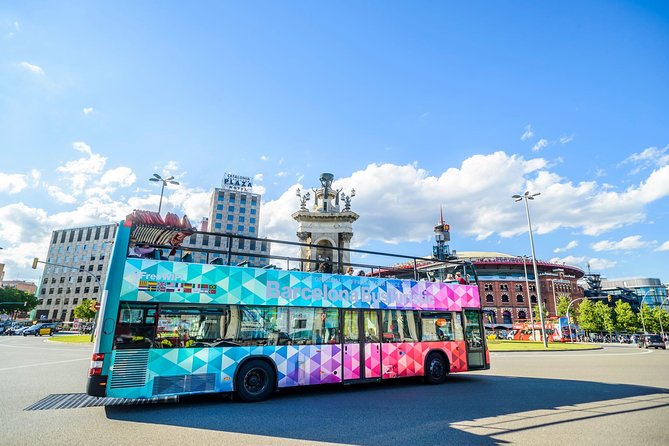
The biggest reason to pick an open-top bus in Barcelona is pure visibility. The streets are dense, and many sights sit just off the main roads; from a bus you can actually take in the city in one sweep. I like that the audio guide runs through headphones with 16 languages, so the narration isn’t tied to a single group size or a single guide’s pace.
Onboard Wi-Fi is also handy. Not because you’ll watch movies on a sightseeing bus, but because it makes it easier to check opening times for the next stop you plan to hop off at.
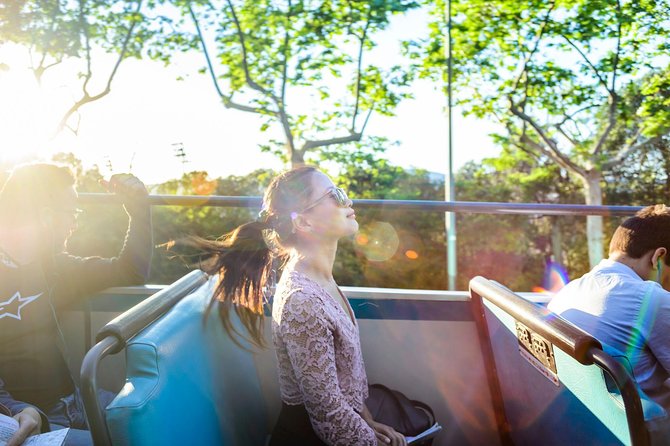
Now the reality check: open-top double-deckers can be uncomfortable in cold or wet weather. A few people noted wind chill when temperatures dropped, and rain can feel like it goes right through uncovered sides. If you’re traveling in shoulder season, bring a light rain layer and something warm for the upper deck.
Route Strategy: How to Use Two Circuits Without Wasting Your Day
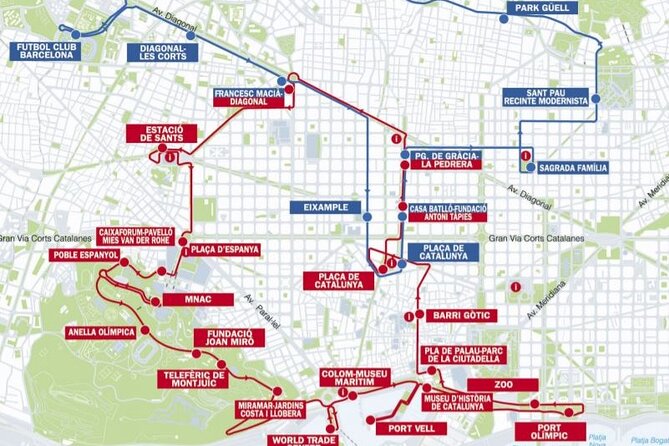
You get two different circuits, and the smart move is to treat your first ride like scouting. Start at Plaça de Catalunya and let the bus show you the broad layout: where the Gaudí landmarks sit, where Montjuïc rises, and how the city stretches toward the sea.
Route coverage matters because Barcelona is spread out. Some sights are close together, like the central modernist blocks, while others are separated by real distance—think Montjuïc and the beaches. The bus helps you “save your legs” for the walks that actually deserve it.
If you have just one day, aim to ride until you’ve seen both sides of the city you care about most. Then hop off and commit. If you have two days, you can do a loop one day, then do focused repeats the next—this is where a 48-hour pass makes the most sense.
Stop-by-Stop Highlights on the Coastal and City Center Loop
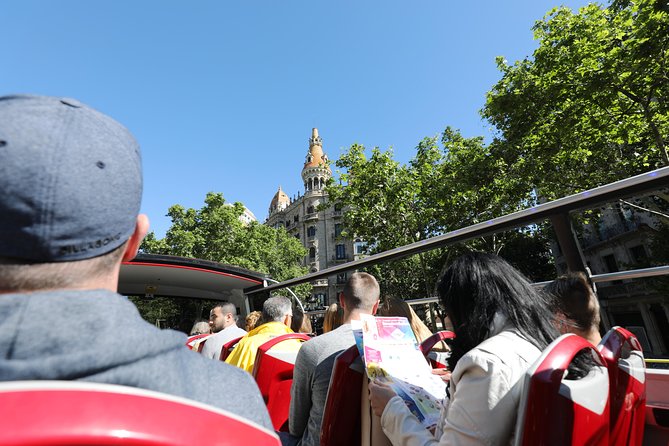
This circuit connects the central core, the Montjuïc area, and the waterfront side of Barcelona. It’s a good choice when you want the classic Barcelona arc: grand streets → Montjuïc viewpoints → Las Ramblas and then down toward the harbor and beaches.
Stop 1: Plaça de Catalunya
Your starting point. It’s a big junction where you can quickly learn how the city moves outward from the center. Because it’s a major plaza, you may find more than one bus setup around it—so give yourself time to get on the correct circuit.
Stop 2: Passeig de Gracia (Casa Batlló / Fundació Antoni Tàpies area)
This is modernist Barcelona in concentrated form. Passeig de Gràcia is the kind of street where you’ll want photos on both sides, not just the next building.
Stop 3: Avinguda de Roma (Eixample)
Eixample is Barcelona’s grid neighborhood—use this stop to understand the city’s geometry before you go exploring on foot.
Stop 4: Carrer de Viriat, 14U (Estació de Sants area)
If you plan to use trains or you’re hopping between plans, this stop is useful for navigation. It also anchors you in a practical part of town.
Stop 5: Pl Espanya (Placa d’Espanya / Fira Barcelona area)
Placa d’Espanya is a major transfer point. From here, you can feel the shift from shopping-and-streets Barcelona to the open spaces heading toward Montjuïc.
Stop 6: Carrer dels Montfar, 8 (CaixaForum / Pavelló Mies van der Rohe area)
This is a strong culture-and-design stop. Even if you don’t go inside, the area sets expectations for the modernist design language you’ll keep seeing.
Stop 7: Carrer del Gessamí, 3 (Poble Espanyol)
Poble Espanyol can be a fun walk-through depending on your interests. If you want something that feels like a themed cross-section of Spain’s architecture, this is one of your better drop-offs.
Stop 8: Mirador del Palau Nacional, 4 (Museu Nacional d’Art de Catalunya)
This stop is built for museum-and-view days. It’s also the kind of area where the walk up can be worth it if the weather holds.
Stop 9: Av. de l’Estadi, 42 (Anella Olimpica)
Olympic sites are not just for sports fans. Even from the street, it helps you understand how Barcelona designed space for big events.
Stop 10: Av Miramar (Fundació Joan Miró)
A convenient access point for one of Barcelona’s more distinctive art names. If you’re doing Montjuïc seriously, don’t treat this as a throwaway stop.
Stop 11: Telefèric de Montjuïc (Montjuïc Cable Car)
This is more than a viewing stop. It connects you to the cable car option if you want the height and the views without walking every step.
Stop 12: Avinguda Miramar, 74 (Miramar – Jardins Costa i Llobera)
If you like gardens and sea views, this is a good drop. Expect a calmer pace than the street level below.
Stop 13: Av. Miramar, s/n (World Trade Center area)
Useful for catching a different “Barcelona angle,” especially if you like mixing old and newer city development in your day plan.
Stop 14: La Rambla – Colom
This is a big-sight connection point. It’s also where you can plan a walk along the central promenade vibe toward the harbor.
Stop 15: Museu d’Historia de Catalunya
A solid option if you want context about Catalonia and not only the postcard sights. If you’re museum-inclined, this stop helps you plug it into your day without detours.
Stop 16: Av. del Litoral, 32 (Port Olímpic)
Port Olímpic is a good “reset” area—shoreline views, easy walking, and a different feel from the city center.
Stop 17: Av. del Litoral, 56 (Platja del Bogatell)
A beach stop that’s great if you want sea air and open space after busy sightseeing.
Stop 18: Passeig de Garcia Fària, 14S (Platja Nova Mar Bella area)
Another shoreline option when you want a change of scenery. This helps if your day plan includes both sightseeing and a proper break.
Stop 19: Av. Diagonal, 327 (Forum)
This spot adds modern structure and a sense of “Barcelona’s newer blocks” beyond the old streets and Gaudí streetscape.
Stop 20: Pg. del Taulat, 236 bjs (Parc Diagonal Mar)
A park stop is always valuable—especially if you need a pause. If the day gets long, this is where you can recover.
Stop 21: Carrer de Bac de Roda, 2.X (Poblenou)
Poblenou is where the city starts to feel less tourist-centered and more local-neighborhood. It’s a good stop for wandering.
Stop 22: Pl de les Glòries (Torre Glòries)
A landmark stop for the skyline side of Barcelona. If you want contrast between historic and modern forms, don’t skip this.
Stop 23: Plaça de la Sagrada Família, 16B (Sagrada Família)
This drop-off is the obvious Gaudí anchor. Even if you don’t enter that exact moment, getting off here lets you judge timing for tickets and the walk-up experience.
Stop 24: Barcelona Bus Station North (Arc de Triomf)
A nice end-cap for a route day. Arc de Triomf is a strong visual marker, and it helps you connect to the central areas without backtracking.
Stop-by-Stop Highlights on the Gaudí and West-Side Loop
This second circuit is built for the Gaudí-heavy plan and the west-side neighborhoods. If your trip list includes Park Güell, Tibidabo-area views, and modernist Barcelona farther out, this is the loop to prioritize.
Stop 1: Plaça de Catalunya
Again, the central starting hub. From here, you can quickly decide which direction fits your day.
Stop 2: CASA BATLLÓ area
A repeat stop on paper, but in practice it’s a helpful one: you can align your route day with which modernist buildings you most want to see up close.
Stop 3: Passeig de Gracia – La Pedrera
La Pedrera is one of those sights that looks better when you can see it from multiple angles. This stop sets you up for that.
Stop 4: Carrer de Cartagena, 329 (Sant Pau Recinte Modernista)
Modernist architecture fans should treat this as a key stop. The area is distinct enough that you’ll likely want time walking around it before or after any inside visit.
Stop 5: ENCANTOS (Park Güell)
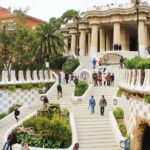
This is your Park Güell access point. Even if you do only part of the grounds, it’s the best way to connect your bus day to one of Barcelona’s most famous views.
Stop 6: Carrer de Balmes, 470 (Tramvia Blau – Tibidabo)
A stop aimed at reaching the Tibidabo area via Tramvia Blau. It’s a good fit if you want the hillside feel rather than only flat-city sights.
Stop 7: Install Sarrià (Sarria area)
This is a “neighborhood access” stop. Use it when you want to slow down and mix local streets into your route.
Stop 8: Carrer del Bisbe Català, 9 (Monestir de Pedralbes)
If you like quieter sites, this helps. It’s also a good counterbalance to the big-ticket landmarks.
Stop 9: Av. de Pedralbes, 24 (Palau Reial – Pavellons Güell)
This brings you into the Güell legacy and related sights around Pedralbes. It’s a stop that can feel more calm than the central busier core.
Stop 10: Av. de Joan XXIII, 6 (Futbol Club Barcelona area)
A useful stop if you’re including the club area in your Barcelona day planning. Even if you’re not doing a deep visit, it helps you understand where it sits in the wider city map.
Stop 11: Av. Diagonal, 597 (Diagonal – Les Corts)
Diagonal is one of Barcelona’s big connectors. This stop gives you access to that “main street” scale without needing a metro transfer.
Stop 12: Av. de Josep Tarradellas, 229 (Francesc Macia – Diagonal)
Another practical Diagonal access point. Great when you’re using the bus as your main transportation spine.
Stop 13: Av Roma – Tarragona (Eixample)
Back into the grid. This is helpful if you want to reposition and build a walking plan around Eixample blocks afterward.
Stop 14: Gran Via – Viladomat (Sant Antoni)
Sant Antoni is a good neighborhood ending point if you’re ready for shopping streets or a more casual stroll.



Timing Reality: 120 Minutes, Every 20 Minutes, and Traffic Lights

The “tour duration” is about 120 minutes, and buses run roughly every 20 minutes. That means you can usually build a day plan that doesn’t depend on perfect timing. Still, the route experience can stretch because Barcelona traffic lights, congestion, and frequent stops slow everything down.
Here’s how I use the timing to my advantage: if you care about a specific ticketed attraction like Sagrada Família, treat the bus as your transportation, not as your appointment clock. Ride early, hop off early, and leave yourself buffer time for getting from the stop to the entrance.
Also, if you’re going in cooler months, plan for wind exposure on the open-top deck. Even people who loved the tour still advised keeping warm—so you’ll get more enjoyment rather than rushing back inside or sitting in discomfort.
Value Check: Is a $39.54 Ticket Smart for 24 or 48 Hours?
Let’s talk value in plain terms. You’re paying for three things:
1) Transportation across big distances without needing to plan every metro segment
2) Sight-picture time—360 views, fast orientation, and easy stop access
3) Discount coupons worth over €200 at top attractions
At around $39.54 per person, it can be excellent value if you’re the kind of visitor who wants to see several major sights and still keep flexibility. It’s less of a bargain if your itinerary is only one or two locations total, because you’ll spend more time riding than using the ability to hop on and off repeatedly.
The 48-hour pass is usually the smarter choice when you’re doing neighborhoods in layers. Ride one loop day for orientation, then come back for a second route or repeat stops where you want photos, a longer walk, or a museum window.
The coupon booklet can matter too. Even if you only use a couple of the discounts, it can help offset the pass cost. And because the tour stops are placed near major sights, you’re more likely to actually use the coupons.
What to Watch Out For: Start Points, Rain, Dirty Windows, and Hearing Choices
A hop-on hop-off bus is simple, but the city can make it tricky at the start.
First, finding the exact stop location can be harder than it looks, especially at Plaça de Catalunya where more than one bus setup can be present. My advice: arrive a few minutes early, take a photo of the bus stop sign/map if you can, and double-check you’re boarding the right circuit before you commit.
Second, weather changes the experience fast. If it’s windy or raining, plan for discomfort up top. Some passengers reported getting drenched, while others found the tour still worth it if they dressed for it. I’d rather you be prepared and relaxed than trying to tough it out.
Third, audio and headphone fit matter for comfort and accessibility. One review flagged a problem for people using certain hearing aids because the headphones provided didn’t fit over devices, and there weren’t over-ear alternatives on that route. If you rely on specific hearing gear, it’s worth checking options before you board.
Fourth, cleanliness can vary. A few people mentioned dirty windows that made photos from behind the glass less enjoyable. If you care about photography, aim for the open-top area when possible and wipe your lens between stops.
Finally, staffing and pacing can feel inconsistent. Most of the time people praised helpful drivers and friendly staff at stops. But some reviews mentioned rude or unhelpful interactions and confusion around last departures or stop information. My practical advice: keep your own plan, confirm next bus direction before you walk away, and don’t assume the driver will know your exact timed ticket situation.
Who This Barcelona Bus Tour Fits Best (and Who Should Skip It)
This tour is a great fit if you:
- Have limited time and want a fast overview across Barcelona
- Like building your day around stop access, not metro schedules
- Want to see major landmarks like Sagrada Família, Park Güell, Montjuïc, Las Ramblas, and the waterfront without constant transfers
- Enjoy flexible plans—hop off now, decide later, ride again
You might skip it if you:
- Have a very tight plan with only a couple of stops and you’re happy with metro/taxis
- Hate waiting and prefer walking everywhere
- Travel in heavy rain or strong cold where open-top comfort would be a dealbreaker
- Need specific audio accommodations that aren’t confirmed for your setup
Should You Book City Sightseeing Barcelona?
I’d book it if you want a practical “city orientation tool” that also functions as transportation. The mix of two routes, frequent stops near big landmarks, and the onboard 16-language audio makes it easier to understand Barcelona without needing constant map work.
I’d hesitate if you’re traveling during rough weather or if you know you’ll be extremely sensitive to wind and rain on an open-top bus. Also, if you’re the type who gets frustrated by confusion at big squares, give yourself extra time at Plaça de Catalunya so you don’t lose your first connection.
If you do book, here’s my quick game plan: ride at least part of one full route on day one, hop off where you already feel curious, and reserve your most important timed attraction stops for mornings with buffer time.
FAQ
What ticket options are available?
You can choose a 24-hour or 48-hour hop-on hop-off bus pass.
How long is the tour, and when do buses run?
The tour duration is about 120 minutes. The first bus departs from Stop 1 at 9am, and the last bus departs from Stop 1 at 7pm.
How often do the buses depart?
Buses run approximately every 20 minutes.
What’s included onboard?
The tour includes free Wi-Fi and an audio guide commentary in 16 languages with headphones.
Are attraction tickets included?
No. Entry to attractions is not included.
Can I cancel and get a refund?
Free cancellation is available if you cancel at least 24 hours before the experience start time for a full refund.
Can I use my voucher on another day?
Yes. Vouchers can be used any day within 3 months of the travel date selected at check-out, and both mobile and printed vouchers are accepted.