REVIEW · BARCELONA
Barcelona Tapas and Wine Experience Small-Group Walking Tour
Book on Viator →Operated by Barcelona Local Experiences · Bookable on Viator
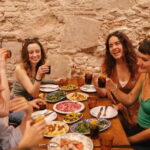
Barcelona tapas tours are a fast way in. This one pairs Catalan food with wine at each stop, while you walk past real historic landmarks like the Basilica de Santa Maria del Mar. It’s built for people who want more than a checklist, with tastings spread across four emblematic restaurants.
What I like most is the balance: you get street-level neighborhood context as you eat, plus a full-meal style spread that actually keeps you satisfied. I also like that the format is designed for conversation, since it caps out at 36 people and moves at walking speed (not bus speed).
The main drawback to plan around is movement. It’s a 3-hour walking tour through older streets, so you’ll want comfy shoes and a decent appetite for multiple small dishes.
In This Review
- Key things to know before you go
- Why a tapas-and-wine walk is one of the smartest Barcelona intros
- From Placa Sant Jaume into the Gothic Quarter’s stone-and-story streets
- Four tastings, spread like a real meal (not a sample platter)
- The kinds of dishes you can expect
- Why this structure matters for your hunger level
- Passeig del Colom and El Born: where the route turns more medieval
- Palau Dalmases and Santa Maria del Mar: ending with real Catalan Gothic
- Wine pairings in plain language: vermuth, cava, and wine for different bites
- What the small-group setup changes for you on the street
- Midday vs evening tour: which time fits your Barcelona schedule
- Dietary needs and the kid note you should plan for
- Price and time: why $83.44 can feel fair (if you eat like a foodie)
- Practical tips so your tour goes smoothly
- Should you book Barcelona Tapas and Wine Experience?
- FAQ
- How long is the Barcelona tapas and wine experience?
- Where does the tour start and end?
- What times are the tours offered?
- How many restaurant stops are included?
- Do I get wine during the tour?
- Is a vegetarian option available?
- Is a flamenco show included?
- Is hotel pickup included?
- Will infants get food and drinks?
- Is there a limit on group size?
Key things to know before you go
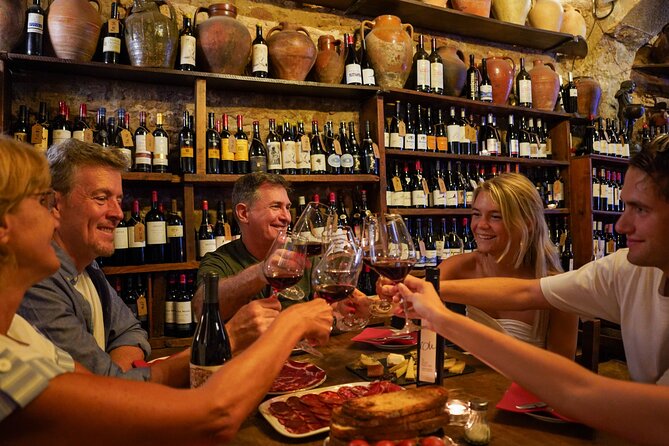
- Four emblematic restaurant stops with tapas and tastings that add up to a full meal
- Wine at each stop, including local styles like vermuth and cava
- Old-city route from the Gothic Quarter toward El Born, finishing at Santa Maria del Mar
- Optional flamenco add-on, tied to the area around Palau Dalmases
- Vegetarian option available if you request it at booking
Why a tapas-and-wine walk is one of the smartest Barcelona intros
Barcelona can feel like two cities at once: the postcard streets and the working neighborhoods where locals actually snack. This tour is designed to stitch those worlds together. You start in the heart of the old city, then keep moving so the food makes sense in context, not just as separate bites.
The other big win is pacing. Over about three hours, you’re not stuck watching a slideshow while “culture” happens around you. You’re walking, tasting, and getting explanations in the gaps—so you leave with a clearer mental map and a better sense of what to order next time.
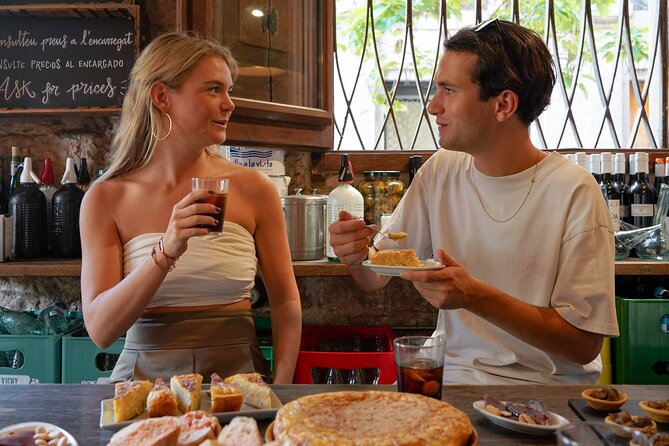
And yes, you’ll also learn that Barcelona cuisine is not one-note. You’ll see plenty of seafood, cured meats, classic tortilla de patatas, croquetas, patatas bravas, and main dishes like paella. You also get the drink pairing logic behind the menu: sweet, bitter, sparkling, and still wines all show up for a reason.
You can also read our reviews of more walking tours in Barcelona
From Placa Sant Jaume into the Gothic Quarter’s stone-and-story streets
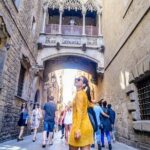
The experience kicks off in the Gothic Quarter, starting near Placa Sant Jaume. From there, your guide leads you through Ciutat Vella’s oldest lanes, where the vibe is medieval and the details are Roman-to-gothic layered. The tour doesn’t just say that history exists. It points at where it shows up in the streets and buildings.
This is a smart start for two reasons. First, the Gothic Quarter is where you’ll be spending time anyway during a first visit. Second, the food choices early on fit the area’s snack culture—small plates you can handle while you keep walking.
You’ll also get the feeling of a working neighborhood, not a museum corridor. The guide’s job here is to connect what you see with what you’re about to eat, which helps the tastings land harder.
Four tastings, spread like a real meal (not a sample platter)
The tour includes tastings at four stops, which is where it turns from “fun” into “worth it.” Each stop includes food and wine, enough to feel like a full meal rather than a few polite nibbles.
The kinds of dishes you can expect
The menu is a sample of what rotates through the tour, but these are the main categories you should look forward to:
- Starter-style classics
You might get Iberian cured meats (think jamón), cheeses, and pan con tomate paired with red wine. You may also taste tortilla de patatas, croquetas, and patatas bravas, with drink pairings like vermuth or cava.
- Seafood Barcelona behavior
Fried fresh sardina from the Mediterranean can show up, along with something a bit more specific like mojama (the jamón of tuna). Expect white wine pairing for the seafood moments.
- Main dishes that actually feel filling
You may move into a canelón course, plus paella—specifically black paella with prawns. Another possible main is galta de cerdo, Iberian pork jawl. These are the dishes that make the whole experience feel like a real sit-down meal, just broken into walking-friendly pieces.
Why this structure matters for your hunger level
Three hours sounds short, but four restaurant stops with wine at every stop is enough to keep energy steady. You won’t finish thinking, I should have eaten before or after. You’ll finish thinking, I ate well, and now I know what I liked.
One more practical note: the tour is built around tasting, not ordering. That’s good if you don’t want to wrestle with menus mid-walk. It’s also good if you’re traveling with picky eaters, since the guide can help explain what’s coming.
You can also read our reviews of more wine tours in Barcelona


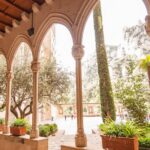
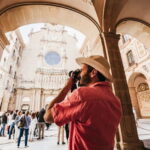


Passeig del Colom and El Born: where the route turns more medieval
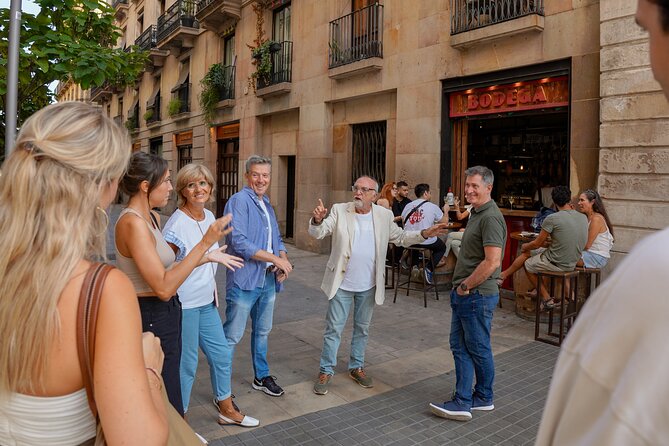
After the Gothic Quarter, the walk heads toward Passeig del Colom, then into El Born. This is a nice shift in feel. You move from tight old lanes into a broader “wander and browse” vibe, where history and shopping share the sidewalk.
El Born matters because it’s one of the areas where you’ll feel Barcelona’s contrast most clearly: craft shops, boutiques, and older architecture side by side. And since you still have two tastings left after this transition, the food rhythm stays logical—light snacks first, then more substantial bites as you cover ground.
If you like photos, this section helps you get them. But it’s also useful even if you don’t care about pictures, because El Born’s layout teaches you how to move around the district without getting turned around.
Palau Dalmases and Santa Maria del Mar: ending with real Catalan Gothic
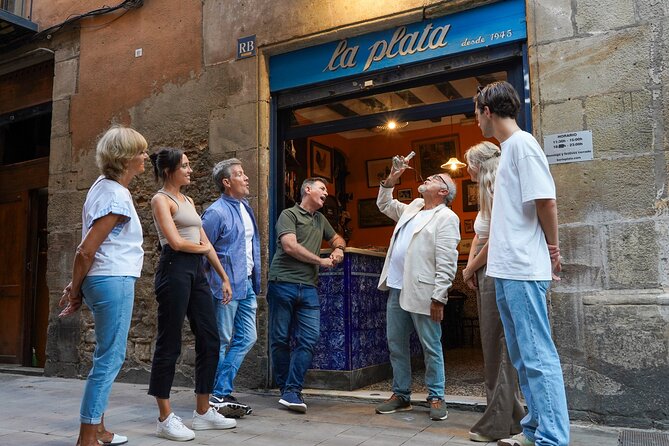
Near the end, you pass Palau Dalmases, which is now known as a flamenco venue. Even if you don’t plan to attend a show, it’s a useful cultural marker. It helps you connect what you’ve been tasting with the bigger idea of Catalan identity—food, music, and neighborhood life all show up here.
The tour finishes at Basilica de Santa Maria del Mar, a Catalan Gothic masterpiece from the 14th century. This ending is more than pretty. It gives you a strong visual anchor for the whole route, so you remember the walk as a story, not just four restaurants.
If you do choose the flamenco show option, it typically adds an extra layer at the end. The flamenco ticket itself is not included unless you select that option, so check what you’re adding before you go.
Wine pairings in plain language: vermuth, cava, and wine for different bites
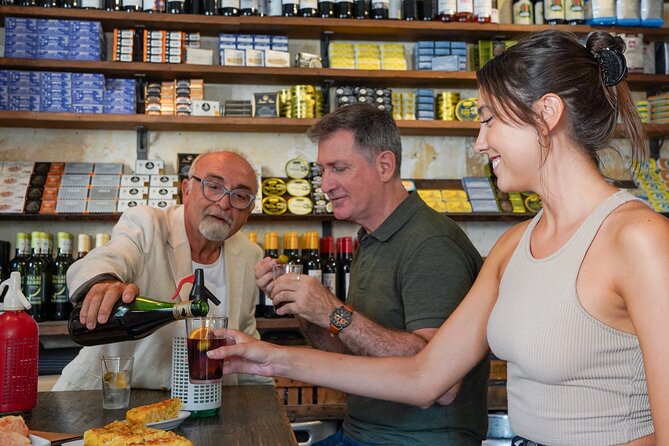
Wine is included at every stop, with the tour using local styles that make sense for tapas. Instead of treating wine as a generic add-on, the tastings are grouped so you taste how bitterness, salt, fat, and seafood each respond to different drinks.
Here’s how the included drinks show up in the sample menu:
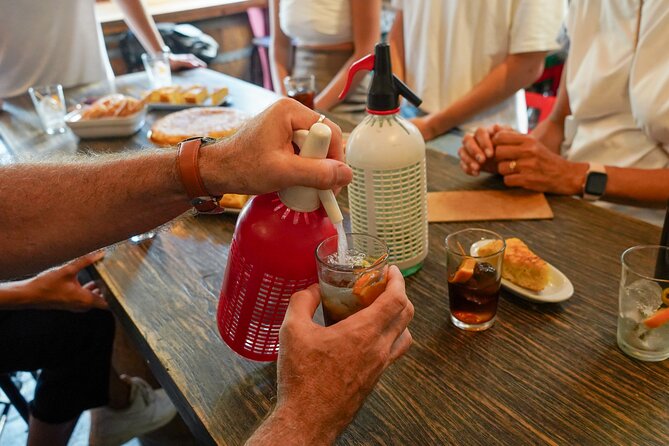
- Vermuth: often paired with tortilla de patatas and mojama
- Cava: frequently paired with croquetas and patatas bravas
- Red wine: paired with cured meats and also with main courses like canelón
- White wine: paired with seafood moments like fried sardina
This is a big deal if you’re trying to learn how Spanish drinking habits work. Vermuth isn’t just a drink; it’s a snack-time ritual. Cava isn’t “only celebrations” here; it’s part of the food math. And red versus white helps you understand why certain plates get certain wine styles.
What the small-group setup changes for you on the street
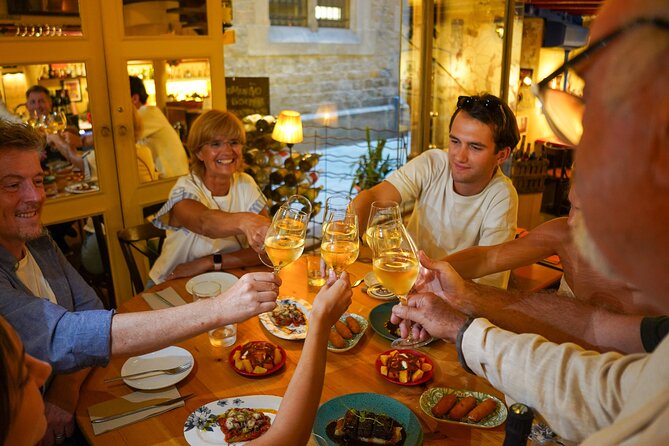
This tour is small-group by design, with a maximum of 36 people. That ceiling matters because it keeps the walk manageable and makes questions feel normal instead of rushed.
In the best moments, you’ll be able to ask practical stuff as you go—what to order next, how to read menus, and what to prioritize if you only have one more day. Guides who lead this experience (like Dasha, Filipe, Berta, Roberto, and Miro, to name a few) are repeatedly praised for turning food stops into mini lessons without turning the whole thing into a lecture.
Also, it’s a walking tour through older streets. Smaller groups tend to handle that better. You’ll wait less, crowd less, and feel more like you’re moving through a neighborhood with your guide, not herding through it.
Midday vs evening tour: which time fits your Barcelona schedule
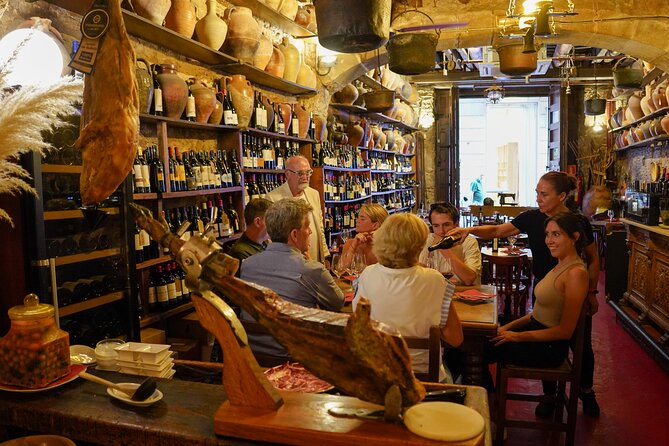
You can choose either a midday start or an evening start. Midday options begin around 11:00 am or 12:00 pm. Evening options begin around 5:00 pm or 6:00 pm. Both run about 3 hours.
Pick midday if you want:
- a strong food foundation before the rest of your day
- a calmer pace through sights before dinner crowds
Pick evening if you want:
- a later snack-to-meal transition
- a way to spend your first evening moving through backstreets and ending at a memorable landmark
If you’re deciding based on energy, I’d go with the time that matches when you’re most awake for walking. This is not a sit-and-stretch activity.
Dietary needs and the kid note you should plan for
The tour asks you to inform them of dietary requirements ahead of time. A vegetarian option is available if you request it at booking. That’s the best route if you don’t eat meat or fish, because the guide can plan around the rotation.
One important note: infants won’t have any food or drinks included, and parents need to pay extra if they want food for them. If you’re traveling with very young kids, factor that into your expectations and budgeting.
If you have allergies, don’t treat this like a self-serve situation. You’ll want to clearly state what you can’t have during booking so the guide can communicate with the restaurants.
Price and time: why $83.44 can feel fair (if you eat like a foodie)
At $83.44 per person for about three hours, the value depends on what you compare it to. If you were planning to eat tapas across multiple bars and also buy wine multiple times, the math starts to make sense fast.
Here’s what you’re actually paying for:
- Four restaurant stops where food and local tastings are included
- Wine at each stop, not just a single glass
- A friendly local guide who adds context so you don’t just consume, you understand
- A walk through the old city from Gothic Quarter toward El Born and on to Santa Maria del Mar
This pricing is often attractive because it reduces decision fatigue. You don’t have to guess which bar will be good, which dishes are worth ordering, or how to pair drinks with what you’re tasting.
The main “cost” is your time and walking energy. If you want to sit every step of the way, this will feel like too much movement. If you’re comfortable walking and hungry for variety, it’s a very efficient way to eat well.
Practical tips so your tour goes smoothly
A few small moves can make a big difference:
- Wear comfortable shoes. You’ll be walking through older streets with a steady pace.
- Arrive a few minutes early. Meeting point issues can happen if your booking channel sends you somewhere off.
- Come with an open mind. Some dishes you’ll see on the menu (like mojama) are local and specific. If you like to try, this tour plays to that.
- If you care about the drink pairing, pay attention as the guide explains vermuth, cava, and why certain wines show up with certain plates.
Should you book Barcelona Tapas and Wine Experience?
I’d book this tour if you want a first-visit shortcut to Catalan flavors, and you like learning through food rather than through museum stops. It’s especially strong for people who want a meal’s worth of tapas and wine spread across four places, without needing to plan each restaurant.
Skip it only if you strongly prefer minimal walking or you’re not interested in multiple courses. Also, if you have strict dietary needs, book with care and request the vegetarian option or dietary accommodations clearly at reservation.
If your goal is: Eat well, learn fast, and leave with a better sense of where you are in Barcelona, this is a solid choice.
FAQ
How long is the Barcelona tapas and wine experience?
It runs for about 3 hours.
Where does the tour start and end?
It starts in the Gothic Quarter, Ciutat Vella, Barcelona, Spain, and ends back in the Gothic Quarter.
What times are the tours offered?
Midday tours start at 11:00 am or 12:00 pm. Evening tours start at 5:00 pm or 6:00 pm.
How many restaurant stops are included?
The tour includes stops at four emblematic restaurants.
Do I get wine during the tour?
Yes. There is wine tasting, with a glass of great and local wine at each stop.
Is a vegetarian option available?
Yes. A vegetarian option is available if you request it at booking.
Is a flamenco show included?
A flamenco show is optional. The ticket is not included unless you select the flamenco show option.
Is hotel pickup included?
No. Hotel pick-up and drop-off are not included.
Will infants get food and drinks?
Infants won’t have any food or drinks included. Parents need to pay extra if they want food for them.
Is there a limit on group size?
Yes. The tour has a maximum of 36 travelers.