REVIEW · BARCELONA
Guided Tour at Catalonia’s Royal Academy of Medicine
Book on GetYourGuide →Operated by Sternalia Productions SL · Bookable on GetYourGuide
Medicine meets architecture in Barcelona. In this 50-minute guided visit, you’ll see the last anatomical amphitheater still standing in Spain and hear how training for surgeons was built right into the space. I also like that the tour links the building to real medical breakthroughs and famous names, so it feels like science you can stand inside.
My second favorite part is the walk through the Academy’s halls, where the guide ties together neoclassical design and the story of medicine. One thing to plan around: there are steps during the visit, and the tour isn’t suitable for people with pre-existing medical conditions.
In This Review
- Key highlights you won’t want to miss
- Royal Academy of Medicine: why this Barcelona neoclassical building draws you in
- The 50-minute flow: what happens during your guided tour
- Entering the Academy: finding your way at Carme Street
- Ventura Rodríguez’s anatomical amphitheater: the main reason to book
- Walking the Academy halls: architecture as a medical timeline
- The Academy’s medical figures: names you’ll remember
- The first X-ray experiment in Spain: a science stop with real meaning
- Live guide tips: languages, how to get the most from the room
- Price and value: is $16 worth 50 minutes?
- Who this tour suits best (and who should skip it)
- Should you book the Catalonia Royal Academy of Medicine tour?
- FAQ
- How long is the guided tour?
- What is the price per person?
- Where do I meet for the tour?
- Do I need to bring anything to enter?
- What languages are available for the live guide and audioguide?
- Is the tour wheelchair accessible?
- Are there stairs during the visit?
- Is free cancellation available?
Key highlights you won’t want to miss
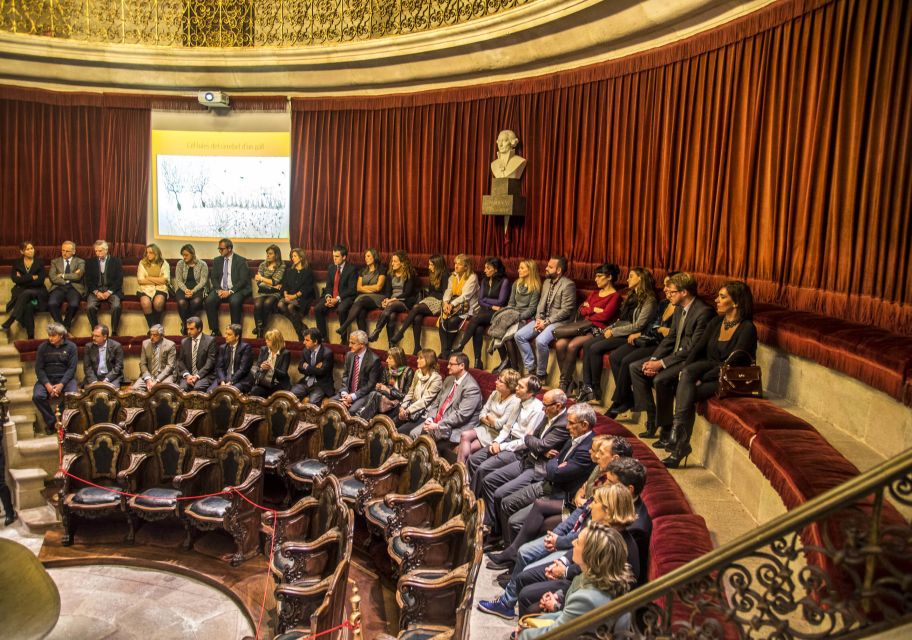
- Last anatomical amphitheater in Spain still preserved and open to visitors
- Ventura Rodríguez’s XVIII-century design for surgeon training
- A stop tied to the first X-ray experiment in Spain
- Names like Pere Virgili, Antoni de Gimbernat, and Santiago Ramón y Cajal in the Academy’s story
- Guided walk through the Academy’s halls, not just one room
Royal Academy of Medicine: why this Barcelona neoclassical building draws you in

If you like places where you can’t separate the “art” from the “science,” this is a smart pick. The Royal Academy of Medicine of Catalonia sits in one of Barcelona’s key neoclassical buildings, and it’s close to the city’s main hospital area. That setting matters, because the Academy wasn’t built as a museum after the fact—it grew from a working world of surgery and teaching.
The big hook is the anatomical amphitheater. This structure was built in the XVIII century by Ventura Rodríguez to train surgeons. When you stand inside the space, you start seeing how architecture can shape learning, not just look impressive.
You can also read our reviews of more guided tours in Barcelona



The 50-minute flow: what happens during your guided tour
This is a short, focused tour by design. You’ll get a live guide for about 50 minutes, plus an audio guide available in 7 languages (Chinese, English, French, German, Russian, along with the live-guide options). That mix is handy if your group’s language is Spanish/Catalan/English but you want extra support in another language.
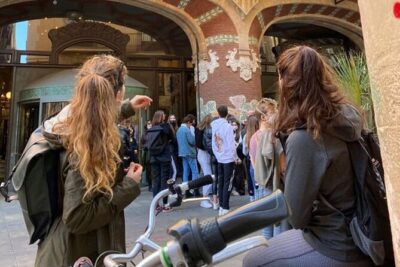
Before you go in, you need to have your confirmation email from Sternalia. Between tour groups, the main door stays closed, and the guide will open it about 5 to 10 minutes before the next start time. In other words, don’t show up and wander around waiting for an open door that isn’t meant to be open yet.
Inside, the pace is built around the building’s main story beats. You’ll move through the Academy’s halls, then focus on the anatomical amphitheater, and you’ll get the threads that connect surgery, research, and major medical names. Expect the guide to point out what you’re looking at and why it matters, not just recite dates.
Entering the Academy: finding your way at Carme Street

Your meeting point is right at the Catalonia’s Royal Academy of Medicine, Carme Street 47, 08001 Barcelona. This location is easy to match with maps, but the key detail is timing: the main door won’t be open between groups, so keep your eyes on the guide opening the entrance.
Dress for comfort. You’ll be walking through interior areas and there are steps involved. Comfortable shoes matter more here than you’d think, because you’ll want to move smoothly rather than rush or stop often.
One more practical note: the visit rules include no alcohol and no drugs. It’s a normal venue rule, but it does affect what you should bring along.
Ventura Rodríguez’s anatomical amphitheater: the main reason to book
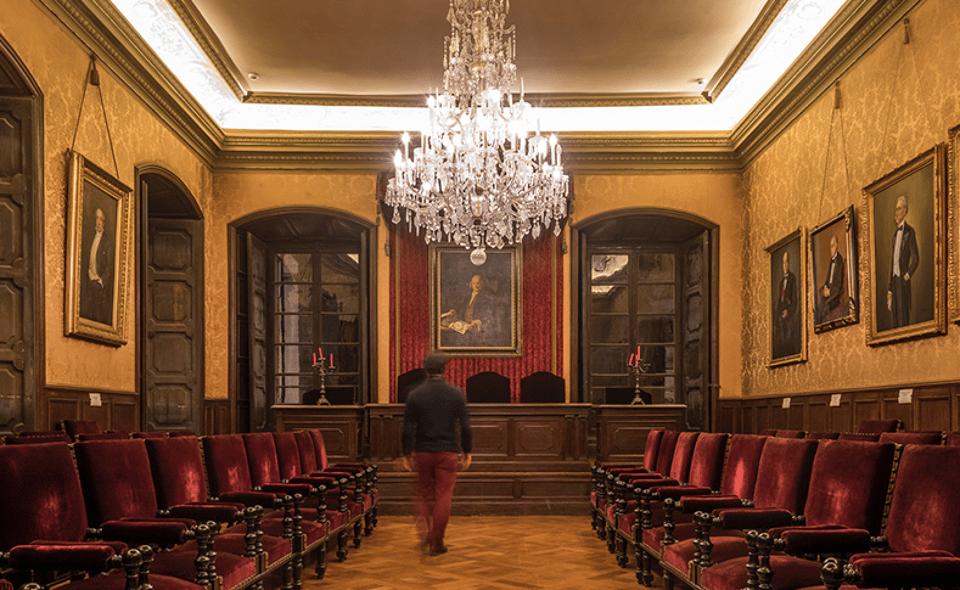
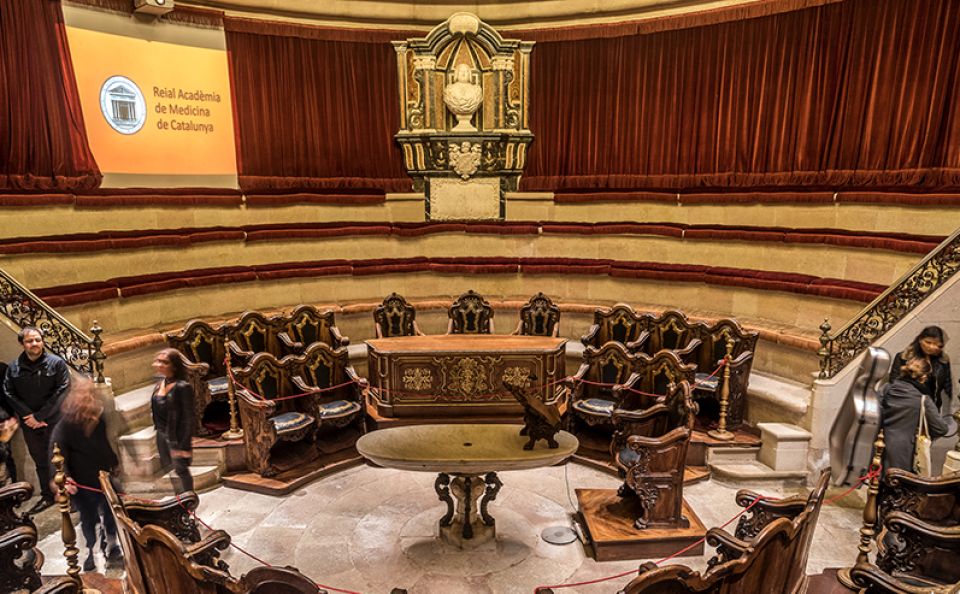
The anatomical amphitheater is the centerpiece. This is the spectacular XVIII-century space built for training surgeons. What makes it special is that it’s not a generic theatre set piece—you’re seeing a room created for instruction, with the layout designed for learning anatomy in a surgical context.
When a guide talks through how surgery and medicine connect, this room becomes the proof. The amphitheater format lets you understand how teaching required physical space: clear sightlines, focused attention, and a setting meant for repeated learning sessions.
If you’re the kind of visitor who likes “wait, I can see why they built it this way,” you’ll get a lot out of this stop. It turns an abstract topic—medical history—into something you can track with your eyes and your feet.
Walking the Academy halls: architecture as a medical timeline
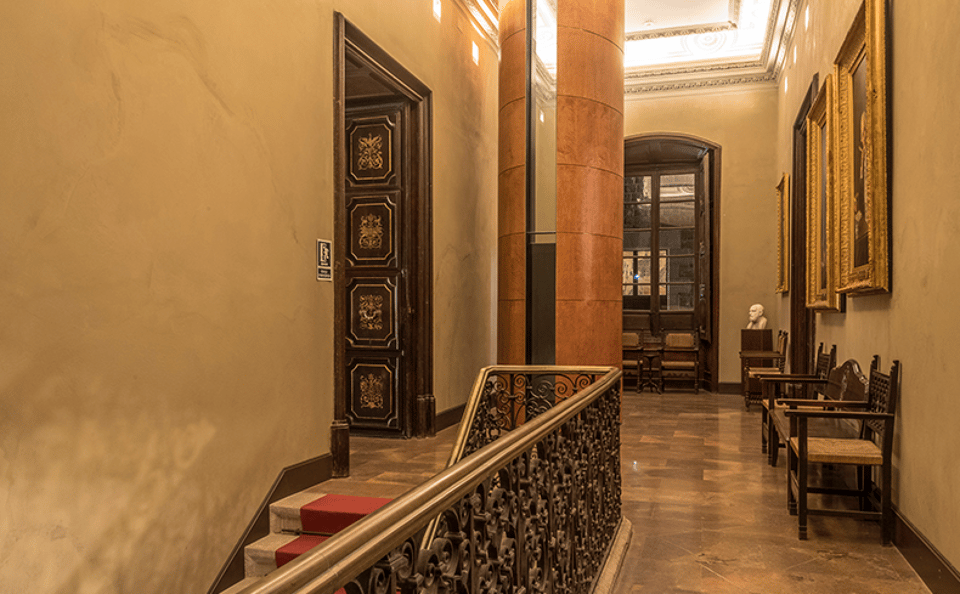
After the amphitheater, you’ll spend time moving through the Academy’s interior halls. This part feels like the glue that holds the visit together. The guide uses the building itself as a storyline, showing you how the Royal Academy connects to the development of medical research.
I like that the tour doesn’t treat the Academy like a single landmark photo. Instead, it frames the Academy as a place that helped shape medicine over time through teaching and research traditions.
You’ll also get a sense of the building’s atmosphere without needing fancy theatrics. The neoclassical architecture sets a serious tone, and the guide fills in the human side: who worked here, what they studied, and why the Academy’s mission mattered.




The Academy’s medical figures: names you’ll remember
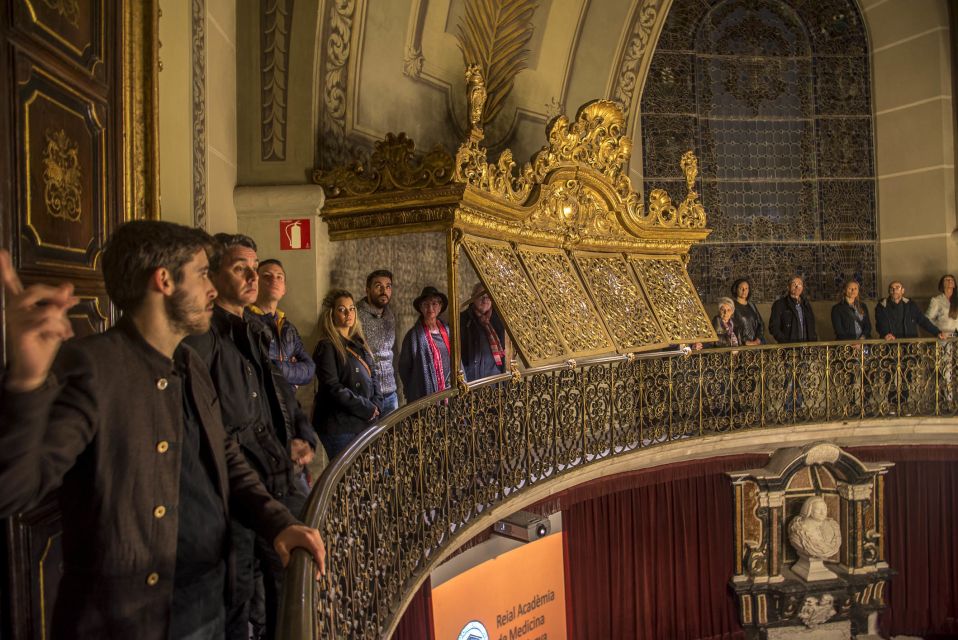
This is one of the tour’s strongest teaching elements. The Academy’s history is linked to well-known medical and scientific figures, including Pere Virgili, Antoni de Gimbernat, and Santiago Ramón y Cajal. Your guide uses these names to connect the physical spaces to real scientific progress.
Here’s why that approach is useful for you: it helps you go home with more than a vague impression of the building. You can remember the Academy as a link in a chain—from surgeon training spaces to scientific research that opened doors to new eras of medicine.
Also, if you’re curious about how different branches of medicine evolved, this tour gives you a starting map. You’ll see how training, research, and scientific discovery were treated as connected efforts rather than separate worlds.
The first X-ray experiment in Spain: a science stop with real meaning
One of the most intriguing highlights is discovering where the first X-ray experiment took place in Spain. That kind of detail makes the Academy feel surprisingly relevant, not just old.
Instead of “history for history’s sake,” you get a pinpointed moment in scientific advancement. You can look at the space and understand why it matters: this Academy isn’t only a beautiful building—it’s tied to experimentation and the shift into modern medical possibilities.
If you’re visiting with someone who loves science facts, this is the moment you’ll likely both remember later, because it adds a concrete breakthrough to the overall architecture-and-medicine theme.
Live guide tips: languages, how to get the most from the room
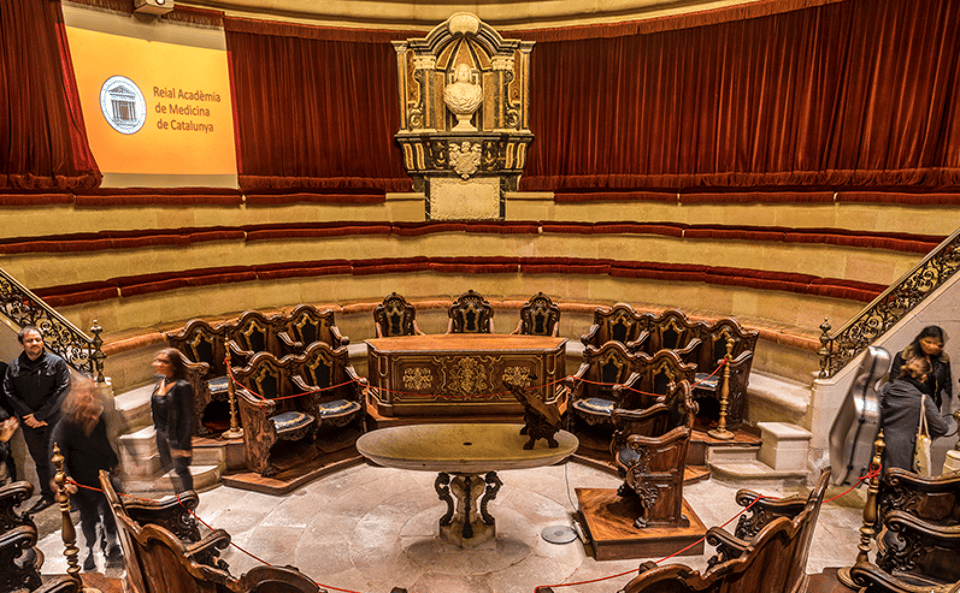
You’ll have a live tour guide in Spanish, Catalan, or English. You’ll also have an included audioguide in Chinese, English, French, German, and Russian. That setup is practical if you want to follow closely while you look around, especially in rooms where visuals matter.
If you want the best experience, do this: listen to the guide’s first explanation, then use the room’s features to confirm what you heard. The amphitheater stop is easiest to “get” this way—you’ll quickly see how learning spaces are designed.
And there’s a reason people rate the tour highly. One guide named Alex is specifically mentioned as excellent for explaining what you’re seeing. Even without guessing who your guide will be, you can expect that this is a guided experience meant to teach, not a quick walk-through.
Price and value: is $16 worth 50 minutes?
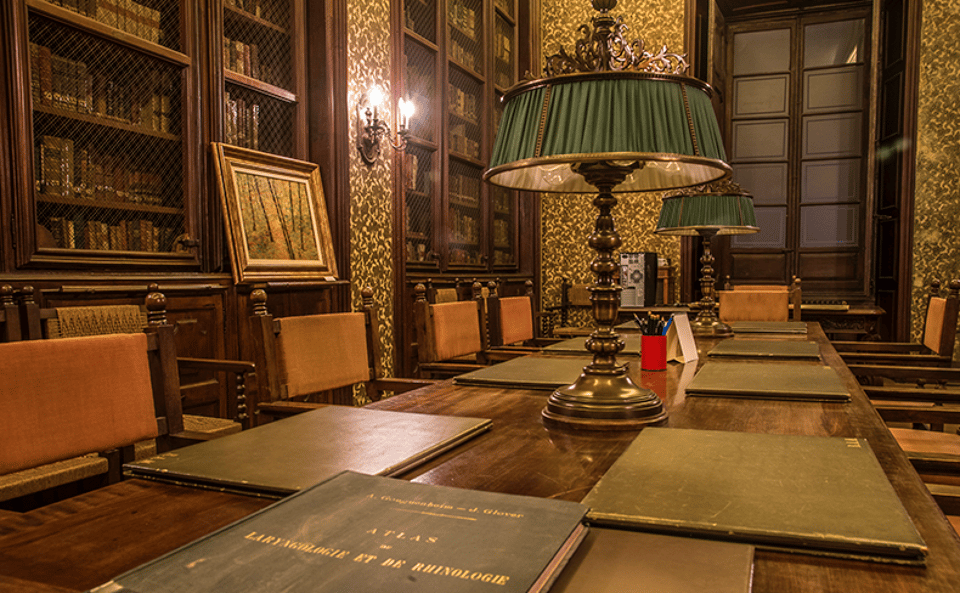
At $16 per person for a 50-minute guided tour, this is a strong value if you care about medicine history, architecture, or both. The price includes academy entrance fees, the guided tour, and the audioguide in multiple languages—so you’re not paying extra for access once you’re there.
This isn’t a long, multi-hour museum day, so if you only want the biggest-ticket attractions, you might treat it as a bonus stop. But if you want something different from the usual Barcelona sightseeing loop, this tour earns its place quickly: you get a focused “here’s the anatomy amphitheater” experience, plus science context like the first X-ray experiment site.
Who this tour suits best (and who should skip it)
This tour fits well if you:
- like architecture that has a clear purpose
- enjoy medical/science history
- want a short, well-guided experience rather than a self-paced maze
It may not fit if you:
- have pre-existing medical conditions
- need to avoid stairs, since there are steps
- want a purely casual stroll (this is guided and story-driven, not a hangout)
One more thoughtful point: bring comfortable clothes. This is a place to move and stand while you listen.
Should you book the Catalonia Royal Academy of Medicine tour?
Yes, if you want a compact, high-impact tour that connects medicine, surgery, and architecture in a way most Barcelona stops don’t. The Ventura Rodríguez anatomical amphitheater is the headline, and the tour’s added details—like the first X-ray experiment in Spain and the major medical names tied to the Academy—help you leave with real context.
If steps are a problem for you or you have medical constraints, skip it for now. Otherwise, $16 for entrance plus a live guide is a fair deal, and it’s one of those rare indoor stops that feels like it belongs on a serious science-and-history itinerary.
FAQ
How long is the guided tour?
The guided tour lasts 50 minutes.
What is the price per person?
The price is $16 per person.
Where do I meet for the tour?
Meet at Catalonia’s Royal Academy of Medicine, Carme Street 47, 08001 Barcelona.
Do I need to bring anything to enter?
Yes. You need your confirmation email from Sternalia before the tour begins.
What languages are available for the live guide and audioguide?
The live guide is available in Spanish, Catalan, and English. The audioguide is available in Chinese, English, French, German, and Russian.
Is the tour wheelchair accessible?
Yes, it is wheelchair accessible.
Are there stairs during the visit?
Yes. There are steps during the visit.
Is free cancellation available?
Yes. You can cancel up to 3 days in advance for a full refund.