REVIEW · BARCELONA
Barcelona Historic Walking Tour and Food Experience
Book on Viator →Operated by The Barcelona Feeling · Bookable on Viator
History here tastes better. This Gothic Quarter and El Born walk gets you into lanes buses never reach, plus drinks and snacks included so you are not stopping to pay for lunch. The only real catch is you will be on your feet for about 90 minutes over roughly 3.5 hours, so comfy shoes matter.
I like that the tour is built for small groups, with a maximum of 15 people, so the guide can keep things moving without feeling like a herd. Christian (prompt and friendly) sets the tone early, tying medieval streets to today’s independence movement, then explaining what El Born means at the start of the neighborhood story.
You start at Carrer del Comerç 60 in Ciutat Vella and finish near La Rambla at Carrer de Petritxol, right in the Gothic Quarter. It runs in English, uses a mobile ticket, and you’ll be near public transportation the whole time.
In This Review
- Key takeaways before you go
- Gothic Quarter to El Born: why walking works better than buses
- Meeting Christian and getting oriented fast
- The 3.5-hour route: what you’ll learn at each major stop
- First, a link between old Barcelona and today’s independence movement
- Then El Born’s meaning comes into focus
- Medieval Barcelona: palaces, churches, and neighborhood power
- Backstreet strolling that actually teaches
- Stop 1: Plaça de Sant Just and an early-Christian feel
- Stop 2: Plaça de Sant Jaume and Barcelona’s Roman heart
- Food and drinks built into the walk, not tacked on
- How the timing and pace really feel on cobblestones
- Value check: is $167.01 worth it?
- Who should book this tour—and who should skip it
- Should you book this Barcelona Historic Walking Tour and Food Experience?
- FAQ
- How long is the Barcelona Historic Walking Tour and Food Experience?
- What locations does the tour cover?
- Does the tour include food and drinks?
- What’s the walking requirement?
- How big is the group?
- Where does the tour start and end?
- What if my plans change?
Key takeaways before you go
- Small group size (max 15) keeps the pace human and the questions actually get answered
- Drinks and snacks included means less time budgeting and more time walking
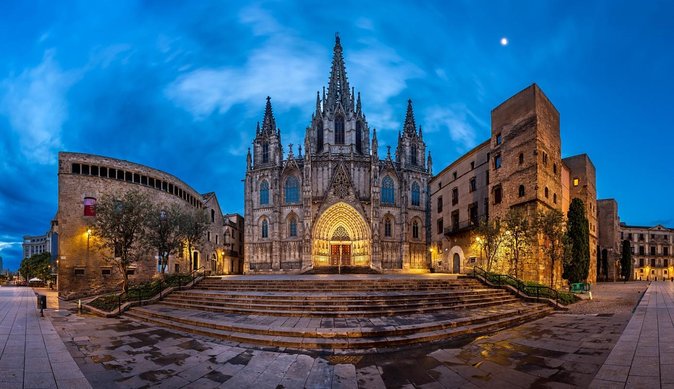
- Gothic Quarter + El Born gives you medieval Barcelona in layers, not one postcard view
- Plaça de Sant Just is paired with a real early-Christian landmark feel
- Plaça de Sant Jaume connects you to the Roman heart of the city
- 90 minutes of walking on mostly historic streets: plan for cobblestones and curbs
Gothic Quarter to El Born: why walking works better than buses
Barcelona’s old center can feel like a maze, but that’s the point. On this kind of route, you do not just look at history from a distance. You step into narrow backstreets and squares where the scale suddenly makes sense—why certain neighborhoods grew, where power sat, and how daily life moved through the city.
The tour’s focus on the Gothic Quarter and El Born is smart because these areas “answer” each other. You start in spaces that feel medieval and ceremonial, then you move into streets that feel more everyday—shops, corners, and hidden angles. The result is a Barcelona that reads like a living map, not a checklist.
Also, the tour is paced as a walk first. That matters because the value is not only the destinations—it is the connections you make while moving between them.
You can also read our reviews of more walking tours in Barcelona



Meeting Christian and getting oriented fast
The meeting point is Carrer del Comerç, 60 (Ciutat Vella). From there, you head into the old town with an English guide and a plan that stays organized even when the streets twist.
Christian is mentioned as prompt and upbeat, and you can feel that in the flow. The tour does not waste time with long stand-and-stare moments. Instead, it gives you enough context to understand what you are seeing—then keeps walking so your brain stays engaged.
One of my favorite parts of this style of guiding is how it turns “what am I looking at?” into “why did this exist?” The early talk links Barcelona’s past to the city’s current independence movement, which gives the stones a political edge—not just decoration.
The 3.5-hour route: what you’ll learn at each major stop
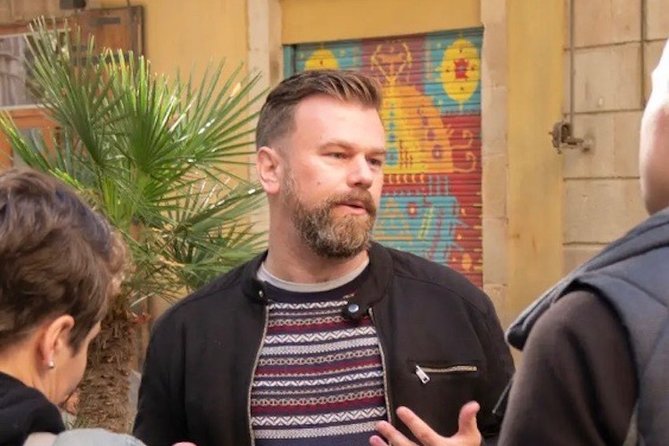
This tour is about 3 hours 30 minutes with around 90 minutes of walking. You’ll cover several “story stops,” including two named plazas where the guide points out specific landmarks and meanings.
First, a link between old Barcelona and today’s independence movement
Before you even get deep into individual landmarks, the tour makes a connection between history and the current independence movement. It’s a subtle but important framing. You stop seeing medieval Barcelona as something sealed off in the past, and start seeing it as part of a continuing identity.
Then El Born’s meaning comes into focus
Next, you learn what the name El Born means. This is one of those small moments that pays off later, because the neighborhood name becomes an anchor while you walk. Instead of treating places as random stops, you begin noticing how the story hangs together.
You can also read our reviews of more food & drink experiences in Barcelona






Medieval Barcelona: palaces, churches, and neighborhood power
From there, the tour builds a bigger picture of medieval Barcelona. You get pointed at palaces and churches and how they reflect the social structure of the time.
A key highlight here is the tour’s attention to a major church that was financed by the rich people of the neighbourhood. That detail changes how you look at the building. It’s no longer just impressive architecture. It becomes a visible record of who had money, who had influence, and how communities put wealth into stone.
Backstreet strolling that actually teaches
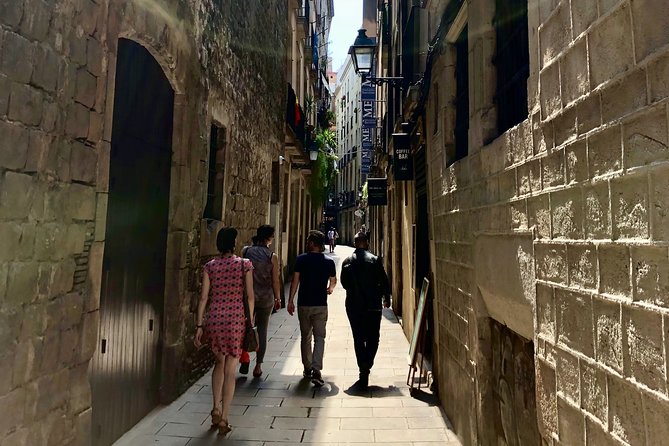
After the bigger landmarks, you move into narrow backstreets and the guide explains the story behind what you’re seeing. This is where walking tours can go wrong—sometimes they become scenic wandering. Here, the wandering is guided by specific explanations, so you do not feel like you are just moving from one photo spot to another.
Stop 1: Plaça de Sant Just and an early-Christian feel
At Plaça de Sant Just, you get a look at a historic square linked with the oldest Christian church. The time here is short, and the practical benefit is that you can soak up the atmosphere without needing extra ticketing effort—this stop is listed as free entry.
The vibe in places like this is different from bigger squares. It feels more grounded and local, like a space that has always been part of neighborhood rhythm.
Stop 2: Plaça de Sant Jaume and Barcelona’s Roman heart
You then meet at Plaça de Sant Jaume, described as the Roman heart of Barcelona. This stop is especially useful if you want the city’s timeline to make sense—from Roman roots into medieval power and later identity.
As with Plaça de Sant Just, this stop is also marked as free. You can enjoy it without feeling like you are constantly buying your way through the city.
Food and drinks built into the walk, not tacked on

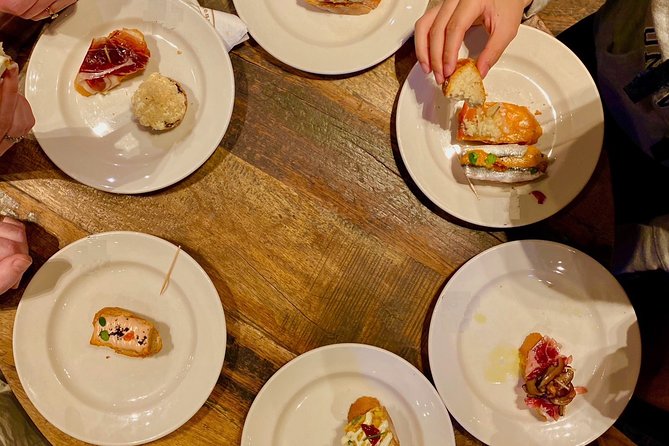
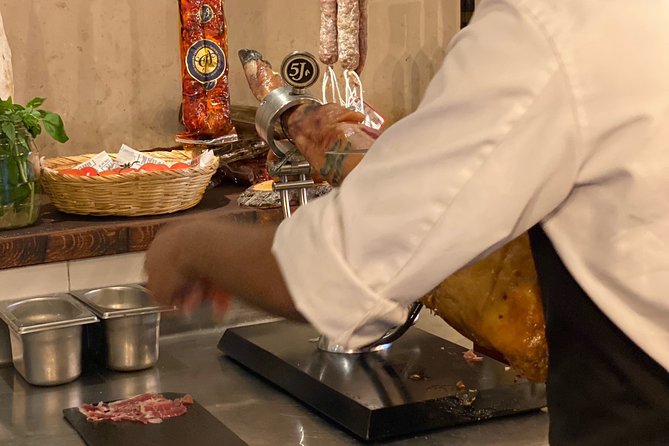
One of the best-value parts of the experience is that drinks and snacks are included. In practice, that means the tour gives you lunch-style fuel as you go—so you are not stopping in the middle of the best streets just to search for a place and pay full price.
The food stops are described as high quality and generous, with tastings of different types of food. That format is ideal for Barcelona’s eating culture because you get to try several things without committing to one heavy meal. You also get variety without needing a restaurant reservation.
I also like the timing flexibility this creates. If you book the walk around midday, the included food and drink can cover you enough that you are not stuck eating late later with nothing arranged.
How the timing and pace really feel on cobblestones
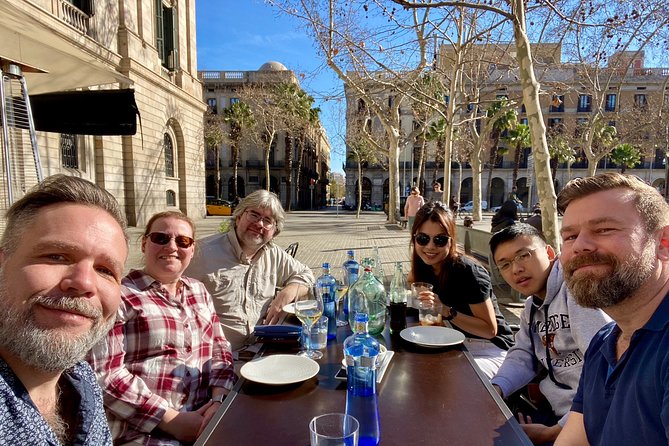
This is a walking tour, and it gives you a clear expectation: you should be able to walk for about 90 minutes. Over 3.5 hours, that means a steady pace with breaks built in through the stop structure.
A couple practical points:
- The old center streets include cobblestones and curbs, so proper shoes help more than you think.
- If you are arriving after travel (jet lag or a long morning), this is one of the better ways to get oriented without waiting for your hotel room. The walk keeps you busy and keeps your day moving.
Group size also affects pace. With a maximum of 15 people, it tends to feel like a real group outing rather than a slow shuffle behind strangers.
Value check: is $167.01 worth it?
At $167.01 per person, this is not a budget-only activity. But when I look at what you actually get—an organized English walking route through two major old-town neighborhoods, small group limits (max 15), plus drinks and snacks included—the price feels easier to justify.
Here is how I think about the value:
- You are paying for guided structure. Without that, you can easily wander the Gothic Quarter and miss the connections (like El Born’s meaning, the Roman core reference, and why certain churches were funded the way they were).
- You are paying for convenience. Included food and drinks mean less time and fewer surprise costs during the walk.
- You are paying for access to the “between” parts. Walking tours win when they take you through the narrow streets bus tours cannot reach.
And there’s another practical clue: this tour is commonly booked well in advance (an average booking window of 83 days). That usually means demand is solid. If you want a specific date, waiting can squeeze your options.
Who should book this tour—and who should skip it
This experience is a strong fit if you:
- Want an English guide and a guided route through the Gothic Quarter and El Born
- Like history that connects to real modern identity, not just museum facts
- Prefer a small group size and conversation that stays possible
- Appreciate that snacks and drinks are included while you walk
I would be cautious if:
- You dislike walking for long stretches. The tour expects about 90 minutes on foot.
- You want a quiet, sit-down sightseeing day only. This one is active by design.
Should you book this Barcelona Historic Walking Tour and Food Experience?
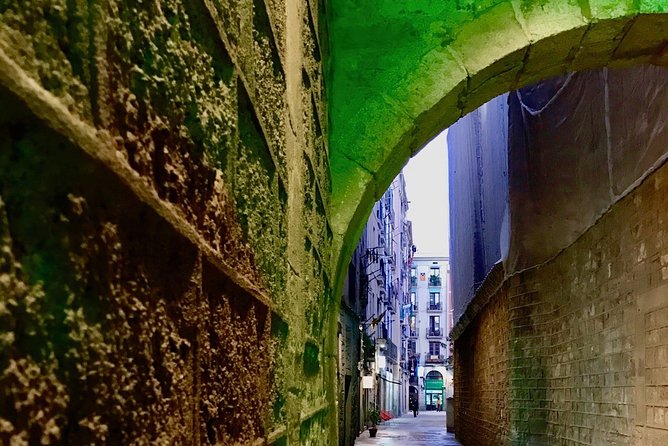
Book it if you want Barcelona that feels legible fast: medieval squares, neighborhood stories, and food that keeps the day from turning into “sightseeing on an empty stomach.” The included drinks/snacks alone make it easier to plan your day, and the small group size helps it stay personal.
If you’re on the fence, use this simple test: do you enjoy walking and learning at the same time? If yes, this is a very smart way to spend half a day in central Barcelona—especially when you want both the streets and the flavors.
FAQ
How long is the Barcelona Historic Walking Tour and Food Experience?
It runs for about 3 hours 30 minutes.
What locations does the tour cover?
You’ll walk through the Gothic Quarter and El Born, with stops in plazas including Plaça de Sant Just and Plaça de Sant Jaume.
Does the tour include food and drinks?
Yes. Drinks and snacks are included, and there are food tastings as part of the experience.
What’s the walking requirement?
You should be able to walk for about 90 minutes.
How big is the group?
The tour has a maximum of 15 travelers.
Where does the tour start and end?
It starts at ALDICarrer del Comerç, 60, Ciutat Vella, 08003 Barcelona and ends at Carrer de Petritxol, Ciutat Vella, 08002 Barcelona, near La Rambla.
What if my plans change?
You can cancel for a full refund if you cancel at least 24 hours before the experience’s start time. Confirmation is received at booking. The tour may also be canceled if a minimum number of travelers is not met, with an alternative date/experience or a full refund offered.