REVIEW · BARCELONA
Barcelona: City Sightseeing Hop-On Hop-Off Bus Tour
Book on GetYourGuide →Operated by City Sightseeing Europe · Bookable on GetYourGuide
Two bus routes can map Barcelona in a day. This hop-on hop-off ride is a low-stress way to cover far-flung sights with an audio guide and lots of chances to get off when something catches your eye.
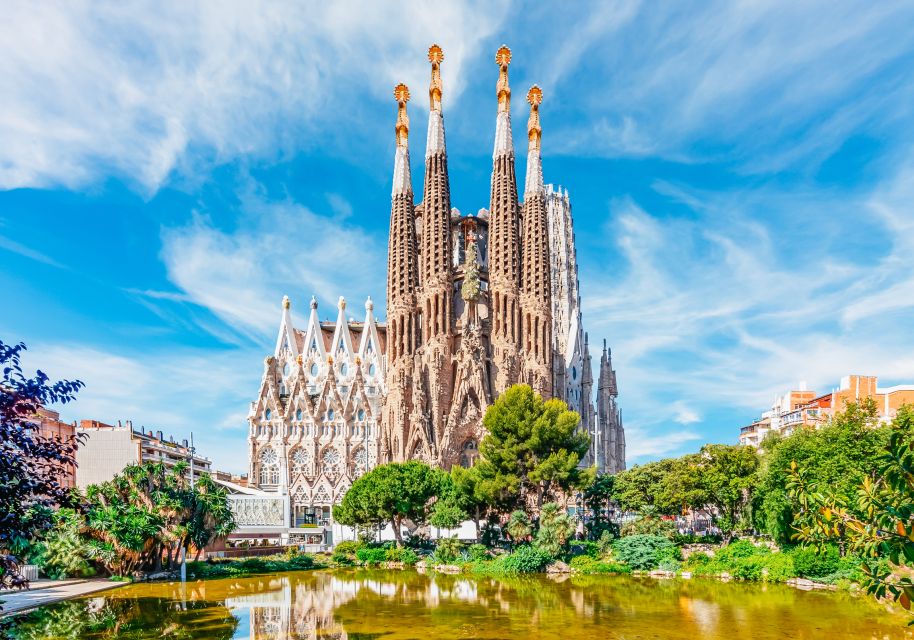
I like the mix of big-ticket landmarks and neighborhood wandering you can set up yourself. For me, the Sagrada Familia stop is the headline, and the route design also brings you past major art and culture stops like the Picasso Museum and key old-city areas near La Rambla.
One thing to plan around: the service runs on a clear schedule, with the last bus timing making it easy to get caught short if you linger. Also, some popular areas can involve a real walk once you’re off the bus.
In This Review
- Quick hits before you buy
- Getting Oriented Fast: How Hop-On Hop-Off Works in Barcelona
- Red Route: Gaudí, Montjuïc Views, and the Beach-to-Port Stretch
- Who the Red line is best for
- Blue Route: Modernism, Tibidabo Views, and the Camp Nou Drop-Off
- Which route order I’d use
- Timing, Frequency, and the Photo Reality You Need to Expect
- Stop-by-Stop Highlights: What to Do With Each Key Moment
- Sagrada Família stop: where to turn a bus ride into a visit
- La Rambla zone and the Gothic Quarter area feel
- Park Güell and the hill problem
- Montjuïc viewpoints and the “breathing room” stops
- Beaches and water: use the bus as a comfort shortcut
- Audio Guide, Wi-Fi, and the Headphones Factor
- Price and Value: Does $39 Make Sense for 24 vs 48 Hours?
- Practical Tips Before You Board Barcelona Bus Turístic
- Who This Tour Fits Best (And Who Should Rethink It)
- Should You Book This Hop-On Hop-Off Bus Tour?
- FAQ
- How long does the bus tour take?
- What time does the first bus leave and when is the last bus?
- How often do buses arrive?
- Are attraction tickets included?
- Is the audio guide included, and in how many languages?
- Is Wi-Fi included on the bus?
- Can I use the ticket on both the Red and Blue routes?
- Are 48-hour tickets valid on non-consecutive days?
Quick hits before you buy

- Two routes, one ticket feel: You can hop between the Red and Blue lines to build your own day.
- 38 stops across the city: From Plaça de Catalunya out to the beaches and back toward Gaudí.
- Open-top sightseeing when weather cooperates: You get the view, and the ride stays easy on your legs.
- Audio guide in 16 languages: Headphones are provided on site with multilingual commentary.
- Football stop on the Blue line: If Camp Nou is on your list, you’ve got a dedicated drop-off point.
- Last-bus timing matters: The ride is convenient, but it’s not a late-night plan.
Getting Oriented Fast: How Hop-On Hop-Off Works in Barcelona
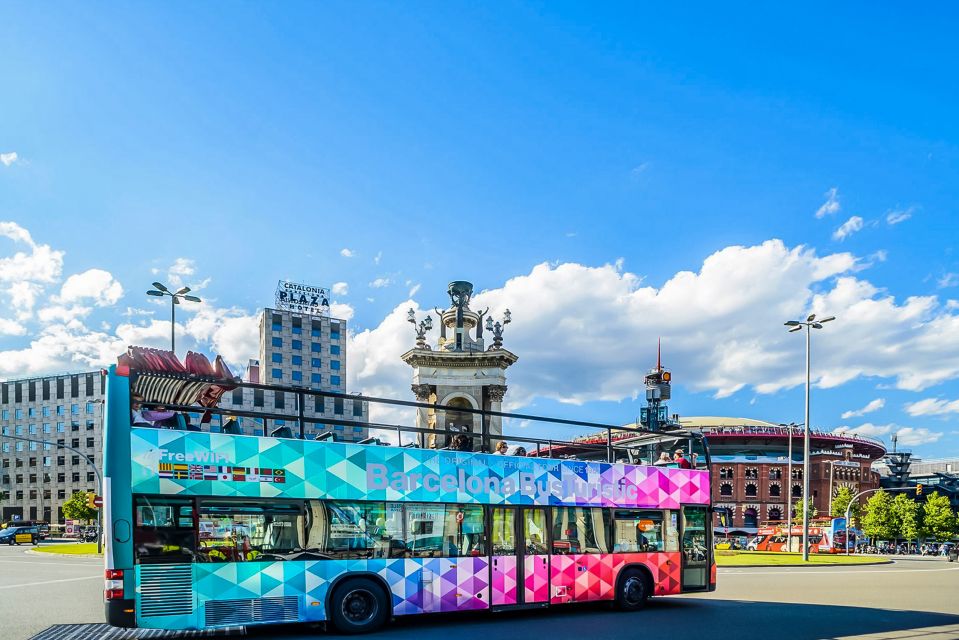
This is the kind of tour that helps you stop guessing. You buy a 24 or 48-hour ticket, then ride an open-top double-decker on one route, get off when you want, and hop back on later for the next leg.
A full circuit is about 120 minutes, so the bus isn’t just a quick drive-by. It’s enough time to soak up the city from the top deck, then—if you choose wisely—make a few targeted stops on each loop instead of trying to do everything on foot.
The buses run frequently—every 20 minutes—and in busier periods the service is designed to reduce waiting (the company notes runs every 5 minutes during high season). That matters because Barcelona has traffic and crowds. When the wait is short, your day stays flexible.
You can also read our reviews of more city tours in Barcelona


Red Route: Gaudí, Montjuïc Views, and the Beach-to-Port Stretch

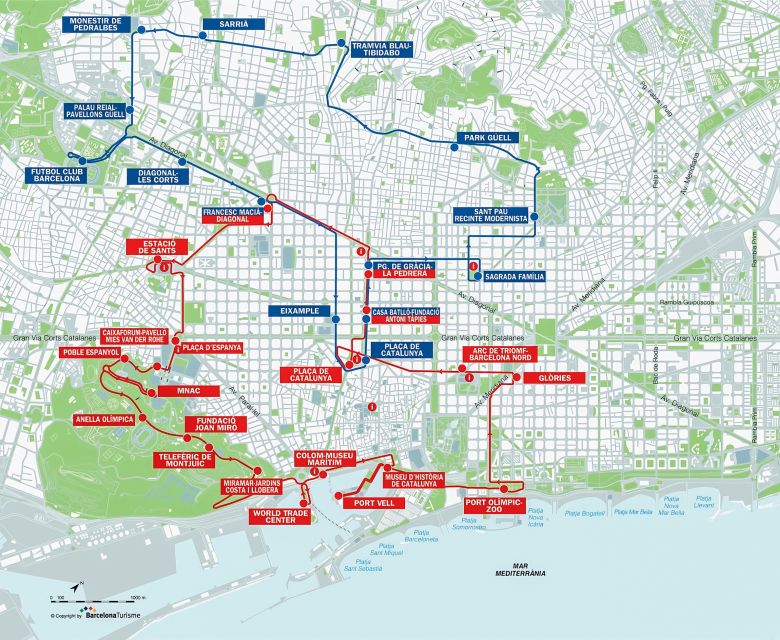
The Red line is the one I’d pick when you want a broad sweep: city center first, then Montjuïc and viewpoints, then the port and beaches, and finally back toward major sights like Sagrada Familia.
It starts at Plaça de Catalunya, which is a smart launch pad. From there, it hits several classic Barcelona landmarks along the way, so you can use the ride as a map even if you don’t hop off right away.
Here’s what you’ll get as you ride the Red line from Stop to Stop:
1) Plaça de Catalunya
A central hub. If you’re checking your bearings, this is where you can reset your plan before branching out.
2) Casa Batlló – Fundació Antoni Tàpies
You’ll see one of Gaudí’s most recognizable buildings from the bus. Even if you don’t go inside, the facade is worth spotting from the top deck.
3) Eixample
The grid-and-architecture district. From the bus you can pick up how the city is laid out, which later helps when you try to walk between sights.
4) Estació de Sants
Barcelona’s big train station area. It’s practical because it’s a marker of where you are in the city, not just a sightseeing stop.
5) Placa d’Espanya
A major junction point. It’s a good “change your plan here” stop if you want to pivot toward Montjuïc-related areas.
6) CaixaForum – Pavelló Mies van der Rohe
This is modern architecture territory. The value here is seeing the contrast: Gaudí and classic Barcelona next to sleek, mid-century design.
7) Poble Espanyol
A themed space that’s more about atmosphere than raw spontaneity. If you enjoy photo-ops and interiors, you’ll likely get something out of it.
8) Museu Nacional d’Art de Catalunya (MNAC)
One of the big Montjuïc draws. From the bus you get the location and scale, and if you hop off you’re in the right zone for museum time.
9) Anella Olímpica
Olympic legacy area. It’s a great stop if you like seeing how older city space repurposes around major events.
10) Fundació Joan Miró
Art-focused. If you love Catalan artists, this is a natural hop-off point.
11) Teleferic de Montjuïc
This is more “transport-adjacent” than a landmark you’ll spend hours on. Still, it’s useful because it connects you to the Montjuïc viewpoint idea without committing to a full hike.
12) Miramar – Jardins Costa i Llobera
Viewpoints. Even if you don’t stay long, the stop helps you cash in on the Montjuïc perspective.
13) World Trade Center
A business/office skyline marker. Helpful as a pacing stop if you want the ride to break up long stretches.
14) Colom – La Rambla
This is your bridge back toward the central, lively areas. It’s also a good hint that you’re heading closer to the old-city energy.
15) Museu d’Historia de Catalunya
History-focused, in the broad “Catalunya story” lane. If you’re curious about how the region thinks about itself, it’s a logical hop-off.
16) Port Olímpic
Marina vibes. The value here is the change in scenery—from dense city blocks to waterfront openness.
17) Platja del Bogatell
A beach stop that can be a lifesaver on a hot day. You get the option of sun breaks without committing to a full beach day.
18) Platja Nova Mar Bella
More beach time, more distance. If you like walking along the sand promenade area, this is your stretch.
19) Forum
This is where the city feels more modern and “planned.” From the bus you’ll see why it looks different from older Barcelona.
20) Parc Diagonal Mar
Green space near the modern district feel. It works well for a quick break between bigger stops.
21) Poblenou
A district with a different tempo than the Gothic Quarter style lanes. It’s a good “in-between” stop to recharge.
22) Torre Glòries
A standout skyline moment. Even from street level it’s a major visual; from the bus it’s a good landmark.
23) Sagrada Familia
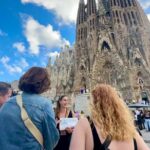
This is the big one. The bus stops in a spot that makes it easy to plan a visit, and riders often use this stop specifically for photos and orientation.
24) Arc de Triomf
A classic Barcelona arch area that also feels easy to connect to other central walking routes.
Who the Red line is best for
If you want Gaudí plus Montjuïc viewpoints plus water and beach scenery in one ticket plan, the Red line delivers. It also gives you that satisfying arc: city center → heights/views → sea → return to major sights.
Blue Route: Modernism, Tibidabo Views, and the Camp Nou Drop-Off
The Blue line feels like the “Gaudí and Modernism plus the city’s edges” version. If the Red line is broad, the Blue line is more about distinct districts—some hilly, some elegant, some very Barcelona football.
It begins again at Plaça de Catalunya, then passes shared early stops before branching into a different set of priorities.
Here’s the Blue line in stop order, and what it’s good for:
1) Plaça de Catalunya
Same smart launch pad.
2) Casa Batlló – Fundació Antoni Tàpies
Shared with the Red line. If you miss this one on the first route, you can catch it here.
3) Passeig de Gràcia – La Pedrera
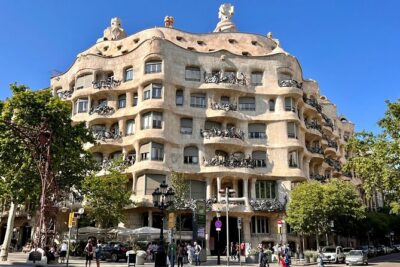
Another Gaudí must-see area. Even without entry, this corridor is one of Barcelona’s iconic streets for architecture spotting.
4) Sant Pau Recinte Modernista
Modernist landmark zone. If you like ornate, historic design, this is the kind of stop you’ll want to hop off for.
5) Park Güell
The hilltop attraction everyone talks about. From the bus, you get your first real sense of the slope, and it’s where you decide whether your day includes a walk or short transfers.
6) Tramvia Blau – Tibidabo
A viewpoint-ish area, and a fun clue that you’re heading toward the higher parts of the city.
7) Sarria
A residential-style segment. Good for a sense of how Barcelona lives beyond the main tourist loop.
8) Monestir de Pedralbes
A calmer stop than the center. If you want something less flashy and more atmospheric, it fits.
9) Palau Reial – Pavellons Güell
A Gaudí-linked stop, again connecting you to the family of sights tied to him without spending the whole day in one neighborhood.
10) Futbol Club Barcelona
If you’re a football fan, this is your key hop-off. It’s also a reminder that the Blue line is built to take you where the biggest evening energy lives.
11) Diagonal – Les Corts
A major corridor area. Useful for orientation if you’re trying to stitch together multiple parts of town on a tight schedule.
12) Francesc Macià – Diagonal
Another major diagonal marker, helpful when you’re moving between neighborhoods.
13) Eixample
Back to the architecture-heavy grid zone. It’s a good stop for reset and regrouping.
14) Sant Antoni
A lively area with a more local feel than some of the tourist-heavy pockets. It’s a decent ending point for a self-guided evening walk plan.
Which route order I’d use
A simple pattern that works well: do the Blue line earlier when you still have energy for hills and modernist stops, then do the Red line later when you want the broader sweep plus Sagrada Familia timing.



Timing, Frequency, and the Photo Reality You Need to Expect
The tour is designed for easy rhythm: get on, ride, and hop off without complicated transfers. Buses run about every 20 minutes, and there’s an emphasis on keeping waits low.
Still, the experience has a few practical quirks you should plan for.
First: buses don’t hold you. Some stops can be busy, especially around major attractions. If you want photos, give yourself extra minutes because a top-deck angle can be tricky when crowds press in and the bus is moving on schedule.
Second: the upper deck isn’t always a free-for-all. Some riders note that getting time to move around on top can feel tight. My advice is to decide your next stop in advance, then when you pull up, act fast: get off with a plan, not a wandering map.
Third: the ride has a clear end. One review experience highlighted that the bus stop timing felt more final than expected, so I’d treat the last run as a firm cutoff. Even though the last bus departs from Stop 1 at 7pm, you don’t want to gamble with a late hop-off.
Stop-by-Stop Highlights: What to Do With Each Key Moment
You’ll get the most out of this tour when you choose how you want to spend your hop-off time. Don’t treat every stop as equal. Pick a few and make them “real stops.”
Here are the key moments that tend to matter most, plus how I’d use them:
Sagrada Família stop: where to turn a bus ride into a visit
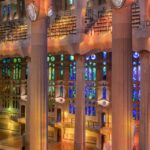
The Red line’s Sagrada Familia is the anchor. Even if your visit is short, the bus gives you orientation: you understand where it sits relative to the surrounding streets, and you can plan your walking routes after you step off. If you care about photos, this is one of the best times to be ready fast and claim a spot quickly.
La Rambla zone and the Gothic Quarter area feel
The route references the area near Colom – La Rambla, and it also supports the idea of bouncing between old streets and nightlife energy. This is the moment to stop if you want to switch from sightseeing mode to wandering mode. You can use the bus like a shuttle back to your next neighborhood choice.
Park Güell and the hill problem
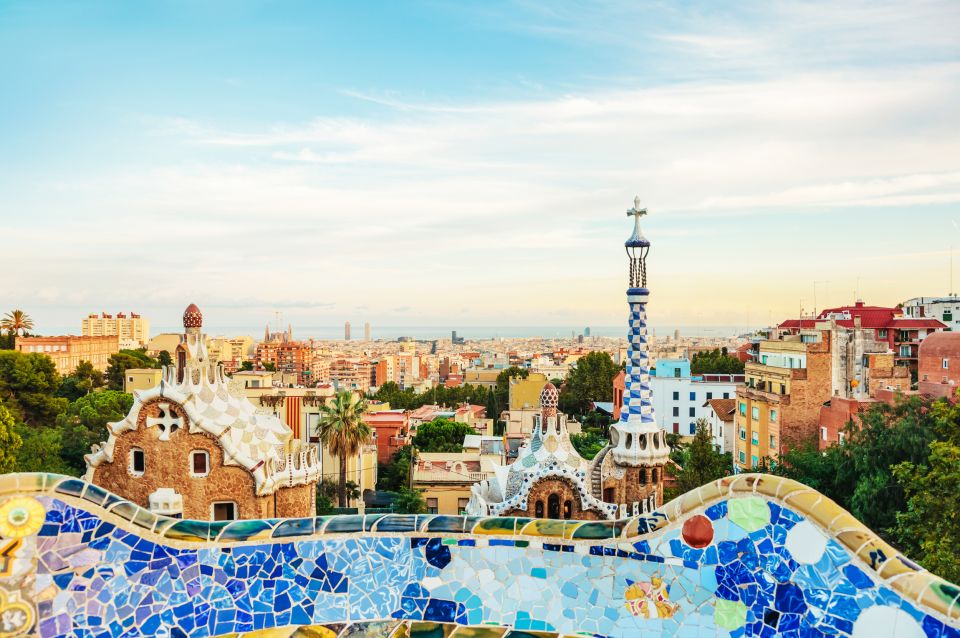
The Blue line includes Park Güell, and this is where you should be honest about your legs. One rider specifically called out that getting from the bus stop to the park can be a long, steep walk. If that sounds tough, treat this as a stop where you plan your time carefully, bring water, and expect some uphill exertion.
Montjuïc viewpoints and the “breathing room” stops
On the Red line, Miramar – Jardins Costa i Llobera and the broader Montjuïc cluster (MNAC, Olympic area, Miró, and the cable car) are the “win” for skyline views and a sense of elevation. This is also a good section to hop off for a short photo-and-walk break, then rejoin quickly.
Beaches and water: use the bus as a comfort shortcut
Stops like Platja del Bogatell and Platja Nova Mar Bella give you that seaside break without committing to figuring out transit. On hot days, it’s a smart option to step out, feel the breeze, and then get back on rather than walking long distances in the heat.
Audio Guide, Wi-Fi, and the Headphones Factor
You get an audio guide with commentary in 16 languages (Spanish, Catalan, Chinese, English, French, German, Italian, Japanese, Portuguese, Russian, Dutch, Hebrew, Swedish, Arabic, Turkish, Norwegian). Headphones are provided on site, and you can bring your own if you prefer.
This matters because Barcelona isn’t just “pretty buildings.” The narration helps you connect what you see to why it exists—especially around Gaudí and the modernist districts.
Two practical notes:
- Audio can cut out sometimes, so keep an eye on the stop map so you don’t miss your moment.
- Free Wi-Fi is included, though it might not work on every bus. Treat it as a bonus, not a guarantee.
If you’re traveling with kids or anyone who gets bored easily, the audio pacing helps keep the bus ride from turning into dead time. You listen while you ride, then jump off when you actually care.
Price and Value: Does $39 Make Sense for 24 vs 48 Hours?
At around $39 per person, the value question is really about what you plan to do after you buy it.
This isn’t just a ticket for transport. It bundles:
- open-top bus access for your chosen window (24 or 48 hours)
- audio commentary plus headphones
- a city map
- a discount booklet for local attractions, eateries, and shopping
- free Wi-Fi
If your schedule is tight and the sights you want are spread out, this is where the math starts to work. You’re paying to remove walking stress and transit planning friction. Instead of guessing routes between Montjuïc, the beaches, and central landmarks, you get a guided city loop you can exit and re-enter.
If you’re only doing one route for one day, it can feel like you’re paying for convenience rather than savings. But if you use the ticket across both lines—especially if you do a 48-hour ticket on consecutive days—the experience becomes more “transport for sightseeing,” which is when it starts to feel like a smart buy.
One caution from real-world sentiment: the price can feel higher than it did in earlier years. So I’d recommend treating this as a first-day orientation tool plus a way to hit specific anchors, not as a replacement for buying tickets at places you really want to see up close.
Practical Tips Before You Board Barcelona Bus Turístic
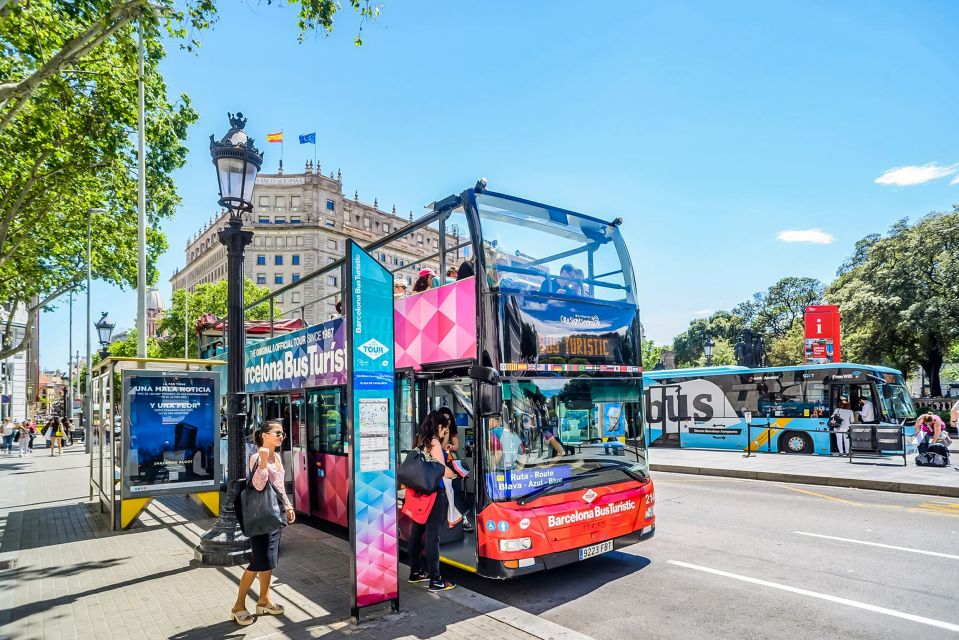
These are the little things that can make or break your day:
- Go early. The first bus departs at 9am, and that’s when lines feel shortest and you’re most likely to get top-deck views comfortably.
- Watch for the last run. The last bus departs from Stop 1 at 7pm, and you should plan to be back on the bus by early evening if you don’t want surprises.
- Use the map constantly. Some rides can feel like they move quickly, so don’t rely on memory for which stop is yours.
- Pick your seat with photos in mind. Top deck is great for angles, but it’s also where crowds cluster. If you’re chasing photos at Sagrada Familia or other highlights, be ready to reposition fast.
- Bring your own headphones only if you need them. The tour provides headphones on site.
- Know what’s not included. Attraction entry tickets and food/drink aren’t included. You can see the sites and learn about them, but you still pay for ticketed experiences separately.
- No pets and no smoking. It’s a standard rule set, but it’s worth noting for planning.
- Buses run year-round except 1 January and 25 December. If your trip falls around those dates, check schedules.
Who This Tour Fits Best (And Who Should Rethink It)
This tour fits you best if you want an easy way to cover a lot of Barcelona without turning your day into a long march.
It’s also a strong match for:
- first-time visitors who need orientation
- families who want to reduce nonstop walking
- people who prefer deciding on the spot where to hop off
- travelers who want Gaudí landmarks plus city neighborhoods in a single plan
You might reconsider if:
- you have a very tight budget and only want one or two specific stops
- you hate timed tours and prefer fully independent, on-foot exploring
- you plan to do several long, steep hillside visits without flexibility (Park Güell is a good example)
Should You Book This Hop-On Hop-Off Bus Tour?
I’d book it if you want a simple backbone for your itinerary. The big win is that you get two complementary routes and an audio guide that helps you turn bus windows into understanding.
If you’re going for value, don’t treat this like a one-and-done ride. Use the chance to hop off at a few anchors—Sagrada Familia, Park Güell, key art stops, and one of the beach/port zones—then reboard to save your energy for evening walks.
My decision checklist:
- You’re okay with a bus schedule and a daytime sightseeing pace.
- You want flexibility to choose what’s next.
- You plan to use both Red and Blue lines (ideally with a 48-hour consecutive-day plan).
FAQ
How long does the bus tour take?
The tour duration is 120 minutes for a circuit.
What time does the first bus leave and when is the last bus?
The first bus departs from Stop 1 at 9am, and the last bus departs from Stop 1 at 7pm.
How often do buses arrive?
Buses run every 20 minutes.
Are attraction tickets included?
No. Attraction tickets are not included. Food and drink are also not included.
Is the audio guide included, and in how many languages?
Yes. Audio guide commentary is included in 16 languages, and you use headphones provided on site.
Is Wi-Fi included on the bus?
Yes. Free Wi-Fi is included.
Can I use the ticket on both the Red and Blue routes?
Yes. Your ticket covers the hop-on hop-off bus access across the two routes.
Are 48-hour tickets valid on non-consecutive days?
No. A 48-hour ticket must be used on consecutive days.