REVIEW · BARCELONA
Crimes the tour through the Dark Side of Barcelona
Book on Viator →Operated by Oh my guide! · Bookable on Viator
Barcelona has a second face. This walk shows it. You’ll trace the city’s darker days through El Raval, the Gothic Quarter, and El Born, with a licensed guide tying street corners to real crimes and long memories. Two things I like a lot: the small-group feel (max 20, private to your group) and how the guide’s storytelling makes history feel personal, not textbook.
The other big plus for me is the route itself. You move past places like MACBA’s former convent setting, the apartment tied to Enriqueta Martí (the so-called Vampire of Raval), and squares where executions happened, so you’re not just hearing facts—you’re standing where it happened. One consideration: because the theme is crimes and war crimes, this is not the tour for you if you want light, cheerful vibes.
In This Review
- Key things that make this “Dark Side” tour work
- Entering the first crime at La Rambla and Hotel Manila
- El Raval on foot: MACBA’s convent past and the Vampire of Raval
- Queen Amàlia’s prison square and George Orwell’s Civil War connection
- Sant Pau del Camp and Plaça de Sant Pere: 985 war crimes and convent lives
- Roman walls, executions at Plaça de l’Àngel, and punishment methods
- Wheat-price protests, a 1934 family tragedy, and the mystery of 1936
- The practical side: 2 hours, max 20, and what to bring
- Who this tour suits (and who should skip it)
- Should you book this “Dark Side of Barcelona” walking tour?
- FAQ
- How long is the walking tour?
- What does the tour cost?
- Where does the tour start and end?
- Is this tour private?
- Are there entrance fees at the stops?
- What’s included in the price?
- Are snacks included?
- Is it suitable if I have limited mobility?
- Can I cancel for a full refund?
Key things that make this “Dark Side” tour work
- Cristina’s communication: clear, confident stories that keep the pace moving.
- Real places, short stops: around 10 minutes each, so you don’t get stuck in long lectures.
- El Raval to El Born routing: you see neighborhoods most first-time itineraries rush through.
- Crime themes from multiple eras: from 985 to the Spanish Civil War and beyond.
- Outdoor, walkable experience: near transit, but you’ll still want comfy shoes.
Entering the first crime at La Rambla and Hotel Manila
Most Barcelona tours start with grand views. This one starts at La Rambla, with the guide kicking things off around a former hotel called Manila, where the first major crime in the story is said to have taken place. It’s a smart opener because it grabs your attention fast: you’re standing in a place you likely recognize, but you’re hearing it explained through fear, motive, and aftermath instead of shopping and people-watching.
You also get a quick sense of how the tour will feel for the whole 2 hours: compact, chronological-ish, and focused on specific locations. The meeting point is at Le Méridien Barcelona on La Rambla (La Rambla 111 area), and that matters because you can arrive by foot or public transit without a stressful scramble.
You can also read our reviews of more tours and experiences in Barcelona.
El Raval on foot: MACBA’s convent past and the Vampire of Raval
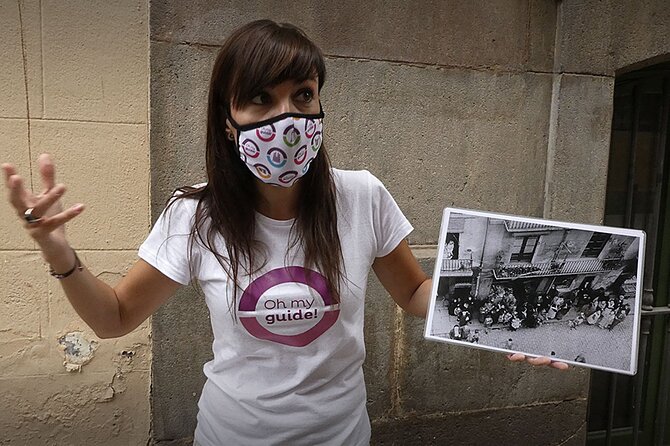
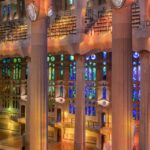
Then you head into El Raval, a neighborhood with a complicated past and a lot of layered buildings. One early stop is at MACBA (Museu d’Art Contemporani de Barcelona), but the point here is not the museum. It’s the context: the guide explains the area’s early-1900s misery and the setting of what used to be a convent. Even if you’ve walked through Raval before, this framing changes what you notice in the streets and doorway lines.
The tour’s most famous stop for many people comes next: Carrer de Joaquín Costa, 29, connected to the life of Enriqueta Martí, known as the Vampire of Raval. I like that the guide doesn’t treat her as a movie character. Instead, you hear how local conditions and the fear of the time shaped the story, which makes it feel more grounded and more unsettling.
A drawback to flag: this part of the route can hit emotionally hard if you’re sensitive to true-crime themes. But if you’re the kind of person who travels for real stories, not staged thrills, this is exactly where the tour earns its name.
Queen Amàlia’s prison square and George Orwell’s Civil War connection
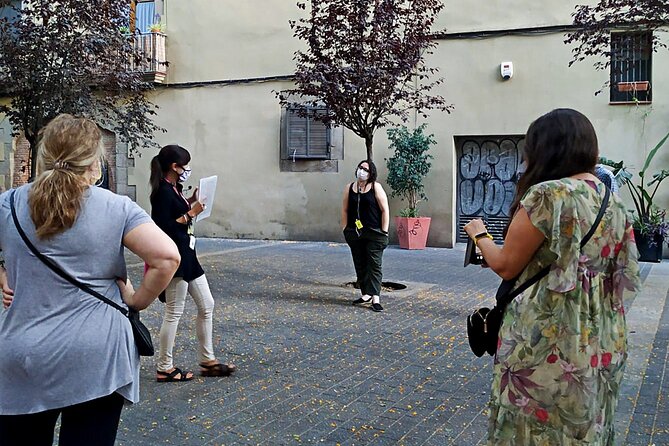
Next, you reach Carrer de la Reina Amàlia, a square the guide explains as having been used as the prison of Queen Amàlia. What makes this stop compelling is the lived angle. You’re not just hearing “there was a prison.” You’re told about the hard living conditions inside and about famous prisoners tied to the place. You start to connect architecture to power: walls, windows, and small spaces become part of the explanation.
After that, you stop at Plaça George Orwell, where the conversation shifts from old regal confinement to the Spanish Civil War and its crimes. Here, the guide links the city to Orwell’s Hommage to Catalonia, which helps you anchor what you’re hearing in a named work rather than floating rumors. Even if you’ve read Orwell before, this location-based angle gives you a new map in your head: you’re no longer just thinking of the text. You’re thinking of street-level consequences.
If you’re planning this trip, think about timing. Outdoor conversations in a square can work either way—quiet in the early evening, louder later. Bring a little patience; the stories rely on you hearing the details.
Sant Pau del Camp and Plaça de Sant Pere: 985 war crimes and convent lives
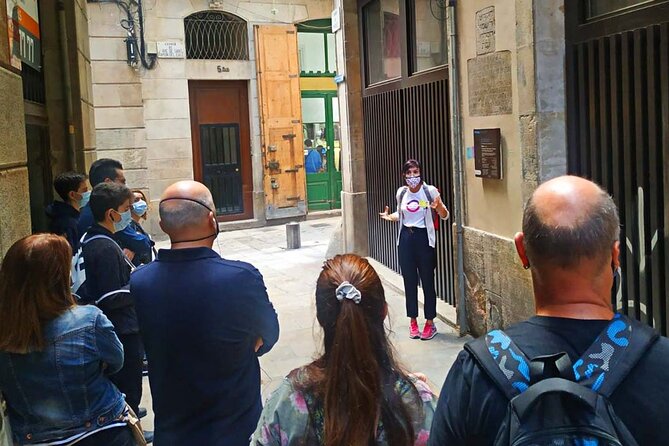
One of the tour’s strongest strengths is how it refuses to treat “crime” as just murders and mysteries. You keep seeing how conflict and cruelty touched everyday religious life. The stop at the Old Monastery of Sant Pau del Camp is a clear example: it’s presented as a former convent tied to war crimes in 985, connected to the invasion of Barcelona. The guide walks you through what happened there and why the site matters.
Then you revisit the convent theme at Plaça de Sant Pere, which includes an old convent and, again, terrible war crimes affecting the nuns in 985. I like the repetition here because it shows continuity. The tour isn’t random shocks; it’s a pattern of violence returning in different forms and different eras, leaving marks on the same kinds of institutions.
This is the point where I think the tour is most rewarding for locals and seasoned visitors. If you already know Barcelona’s big sights, you might still be missing how early layers of conflict shaped the city’s religious and street-level geography. Standing at these sites makes that history feel less abstract.
Roman walls, executions at Plaça de l’Àngel, and punishment methods
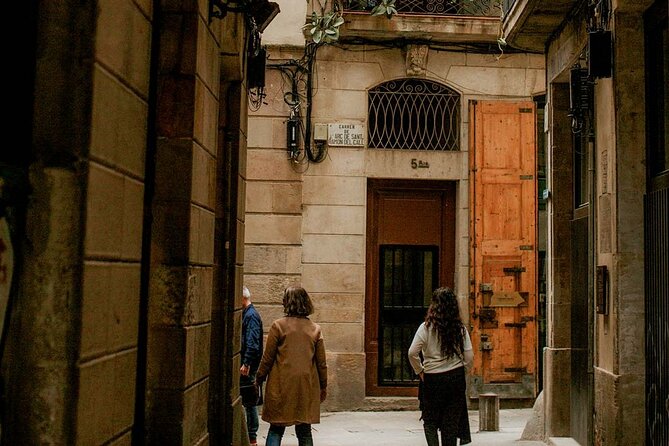
Next comes Muralla Romana, the old Roman wall border. The guide explains Barcelona’s earlier identity as the colony of Barcino, and even mentions a “first document crime” connected to the area. I find Roman-wall stops useful on tours like this because they reset your sense of time. You stop thinking in 1800s or 1900s only and start realizing the city’s documentation and trouble have long roots.
Then you move to Plaça de l’Àngel, described as a main old-town square where many executions took place. This stop leans into the practical: the guide talks about different methods used. It’s a heavy theme, but handled with the focus of place-based history rather than sensationalism. I’d call this the moment where you understand why the city feels different at street level. When you know punishment played out here, you can’t help but re-read the square.
Because you’re walking between eras—Roman walls to medieval squares to modern stories—your brain keeps switching gears. That’s part of the fun, and it’s also why the 2-hour length works well. You get the emotional impact without burning an entire day.


Wheat-price protests, a 1934 family tragedy, and the mystery of 1936
The later stops keep pushing toward modern Barcelona. At Carrer de l’Allada-Vermell, you hear about a 1934 tragedy involving a family losing a member in a tragic way. The tour doesn’t just drop a date; it explains enough context to make the place feel tied to a real event, not a spooky label on a street sign.
Then comes Plaça de Sant Agustí Vell, where the guide talks about a 1789 demonstration against the price of wheat. I like that the tour includes this kind of social crime-adjacent story. It broadens the meaning of fear and punishment beyond the sensational. When food prices rise, anger rises too, and this square becomes part of how Barcelona handled scarcity.
Finally, you reach Carrer del Portal Nou, tied to the death of Benvingut Funes in 1936. The guide explains that he was killed in a savage way and that the death remains a mystery in the city. This is the last “modern” spike before the tour winds down, and it lands well because the theme has built up: earlier violence, then war, then the city’s continuing secrets.
If you like a clean ending, you may want to mentally slow down here. The mystery point is intentionally unresolved, which can feel satisfying or frustrating depending on your personality.
The practical side: 2 hours, max 20, and what to bring
Let’s talk value, because $254.95 per person is not a throwaway price. For that amount, you’re paying for a licensed guide, a tight route of meaningful stops, and the ability to keep the group small—up to 20 people—with your group participating privately. The private setup matters: you can ask questions, and the guide can pace the story to your group rather than rushing everyone through.
Also, the tour’s structure is efficient. Each stop is about 10 minutes, and the listed stops are marked as admission ticket free, which means you’re not losing time or money buying entries. You’re walking, listening, and looking, not waiting in lines.
What you should bring is simple:
- comfortable shoes (you’ll be walking between squares and streets),
- a bottle of water,
- and a small plan for snacks since snacks aren’t included.
One more practical note: the experience is set for moderate physical fitness, and it’s near public transportation. If you’re choosing between this and a sit-down museum day, consider how much standing and walking you can handle at a steady pace.
Who this tour suits (and who should skip it)
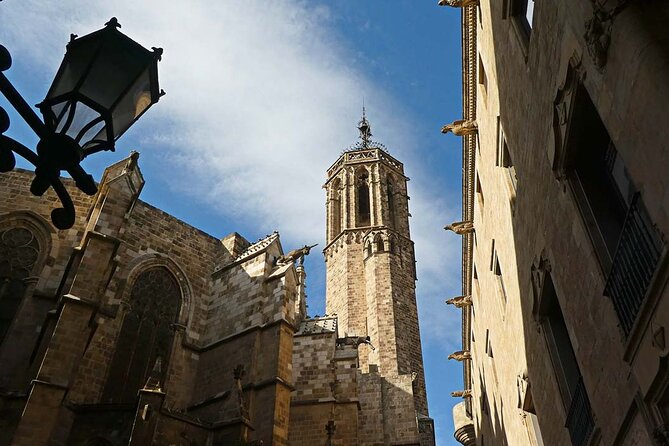
This is a great fit if you want Barcelona from street level. It suits you if you like true crime history, you enjoy places that make you look twice at architecture, and you already know the big-ticket sights and want something that feels genuinely off the usual path.
It’s also a strong choice if you’re going as a small group and want a guide who can keep control of tone and timing. The route’s popularity is backed by lots of high ratings, and many comments point to the same thing: a guide like Cristina, who knows how to transmit details clearly and keep the walk moving.
Skip it if your ideal vacation is all about relaxation with minimal emotional weight. The whole concept is fear, violence, and war crimes. Even when it’s narrated carefully, the subject is heavy.
Should you book this “Dark Side of Barcelona” walking tour?
I’d book it if you’re the kind of traveler who likes a city’s honest shadows as much as its postcards. In about 2 hours, you cover El Raval, the Gothic Quarter, and El Born in a way that changes what you notice afterward—Roman walls, convent sites, execution squares, and murders that still carry questions.
And if you can, choose a time when you won’t feel rushed. Some people even say the mood fits better in the evening, and rain can add to the atmosphere. Just remember: comfy shoes and a steady pace will make everything better.
FAQ
How long is the walking tour?
It lasts about 2 hours.
What does the tour cost?
The price is $254.95 per person.
Where does the tour start and end?
It starts at Le Méridien Barcelona (La Rambla 111, Carrer del Pintor Fortuny 4-6, Ciutat Vella, 08001 Barcelona) and ends at Plaça de Sant Pere (Pl. de Sant Pere, Ciutat Vella, 08003 Barcelona).
Is this tour private?
Yes. It’s described as a private tour/activity, and only your group participates. The tour also lists a maximum group size of 20.
Are there entrance fees at the stops?
The stops are listed as admission ticket free, so you aren’t being routed around paid entrances.
What’s included in the price?
The tour includes a licensed tour guide.
Are snacks included?
No. Snacks are not included.
Is it suitable if I have limited mobility?
It’s for people with moderate physical fitness needs. The information also notes that service animals are allowed.
Can I cancel for a full refund?
Yes. You can cancel up to 24 hours in advance for a full refund.
If you tell me your travel dates and roughly what time of day you’re thinking, I can help you pick the best time window for this route.