REVIEW · BARCELONA
Barcelona: 24 or 48-Hour Hop-On Hop-Off Bus Tour
Book on GetYourGuide →Operated by Julia Travel Gray Line Spain · Bookable on GetYourGuide
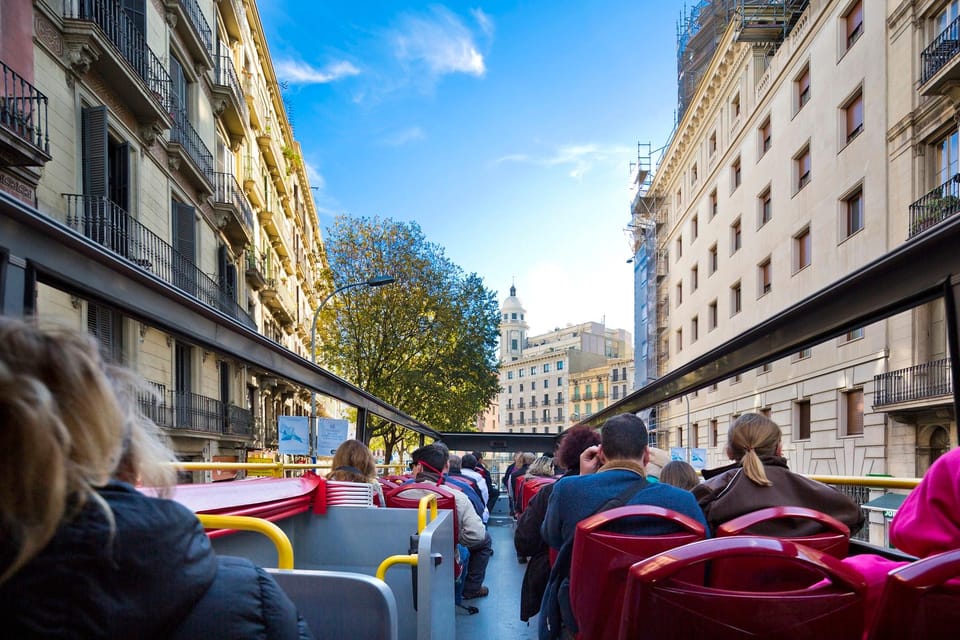
Barcelona can feel like a moving puzzle at first. This hop-on hop-off bus tour turns it into a simple plan: ride the red double-decker, hop out when something catches your eye, and get back on when you’re ready. You can tackle big icons like Sagrada Família and Parc Güell without juggling taxis or figuring out every street.
I especially like the two-route setup with one ticket. The green route focuses on the most artistic part of the city, while the orange route pushes farther west toward neighborhoods and landmarks beyond the postcard center. I also appreciate the audio system: the narration is offered in 16 languages, and the headphones support a multilingual looping setup for passengers with auditory disabilities.
One thing to keep in mind: the buses can get busy, and a few reviews point out occasional headphone plug or audio-module issues on certain seats. If rain is in the forecast, you might also want to dress for weather—there are reports of upper-deck seats getting wet.
In This Review
- Key highlights that make this bus tour worth your time
- How the 24–48 Hour hop-on hop-off ticket really plays out
- Green Route: Plaça Catalunya to Park Güell (plus Sagrada Família)
- Orange Route: the western circuit, El Born, and two museum moments
- Sights worth timing: Parc Güell and Sagrada Família
- Port Olímpic and El Born: the payoff of hopping off for real walking
- Audio guide, staff, and the headphone plug reality
- Price and value: is $39 a good deal?
- Practical tips so you get the best day from the bus
- Should you book this Barcelona hop-on hop-off bus?
- FAQ
- How long is the hop-on hop-off bus tour valid?
- Do I need hotel pickup?
- Can I start at any stop?
- What routes are included with the ticket?
- Is the audio guide included, and in how many languages?
- Are food and drinks included?
- Are pets allowed?
Key highlights that make this bus tour worth your time
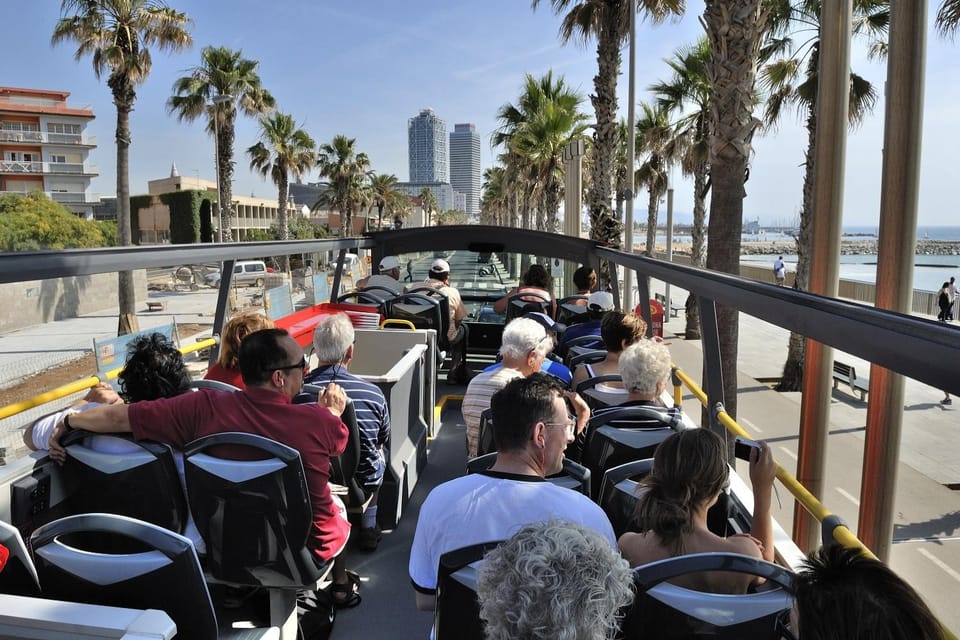
- One ticket, two routes: green for art-heavy sights and orange for the western circuit
- Sagrada Família + Parc Güell: major stops on the green route
- Audio guide in 16 languages: clear narration plus a looping system for hearing support
- You can use it like city transport: frequent service means less waiting in line for rides
- Map and discount booklet: helps you turn bus stops into a real itinerary
- Staff on board: multilingual support when you need it most
How the 24–48 Hour hop-on hop-off ticket really plays out
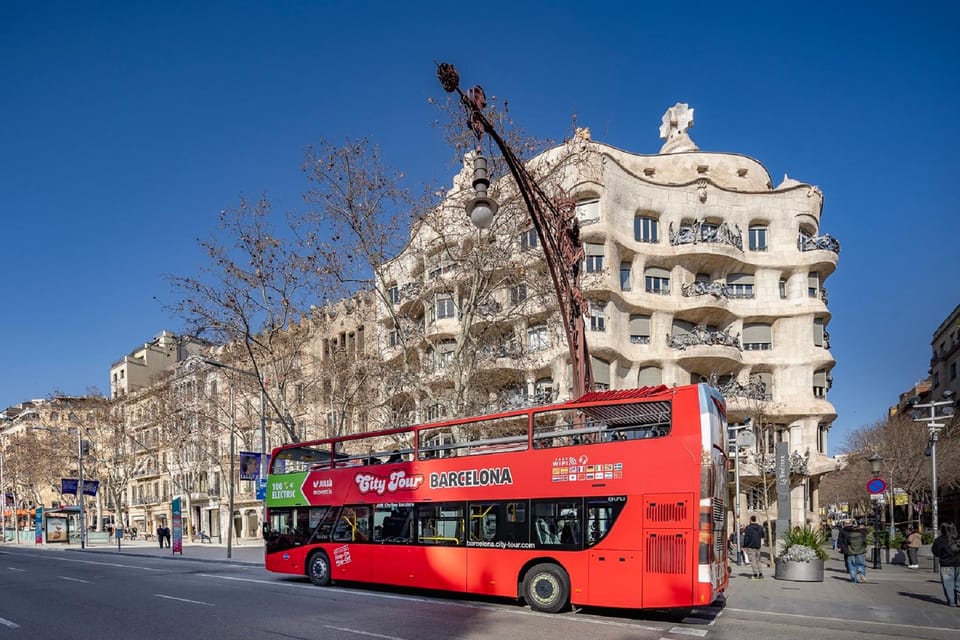
This tour is built for freedom, not rigid schedules. Your ticket lets you ride for 1 to 2 days, and you can start at any listed stop by showing your voucher to the guide on the bus. That matters because Barcelona’s best sightseeing day rarely goes straight from A to B.
Service frequency varies by season, but the goal is simple: you shouldn’t feel stuck waiting. In practice, the stops are designed to work like a network. If you want a slow morning, you can hop off, wander, then swing back on when you’re ready.
Timing also matters. In winter (Nov–Mar), service starts at 9:00, with the green route last leaving from Plaça Catalunya at 18:00 and the orange route last leaving from Pedrera at 18:00. In summer (Apr–Oct), last departures move later to 19:00 from those same end points. If you’re trying to do both routes in one day, you’ll want to keep an eye on those last rides.
You can also read our reviews of more tours and experiences in Barcelona.



Green Route: Plaça Catalunya to Park Güell (plus Sagrada Família)
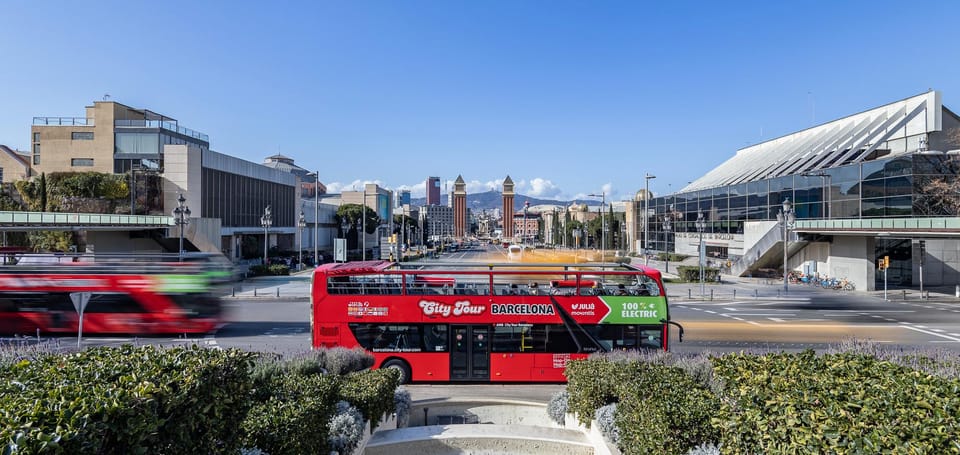
The green route is the one you take when you want Barcelona’s art and architecture front and center. It starts in Plaça Catalunya and runs toward Park Güell, with key stops along the way. The pitch here is that you’ll see the city as a chain of modernist scenes, not just a few famous buildings from the outside.
The big headline on the green route is Sagrada Família. Even if you never go inside, the experience of seeing it from the bus and then planning your walk around the area gives you a strong sense of what makes it so iconic. There’s also a lot of symbolism in its façades, and the audio guide is built to point out what you’re looking at while you’re moving.
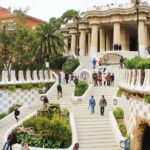
Then you get Parc Güell, a garden complex and UNESCO World Heritage Site. This is a stop you’ll feel in your legs. You can treat it as a quick viewpoint stop if you’re short on time, or you can plan time to wander the grounds and settle into the views. Either way, getting there by hop-on hop-off means you’re not stuck routing back and forth on foot.
If you like a plan with breathing room, the green route is your backbone. It’s also the easiest loop to build a classic “architecture day” around, because it connects major names without requiring you to know the city’s transit inside out.
Orange Route: the western circuit, El Born, and two museum moments

The orange route takes you beyond Barcelona’s most emblematic modernist blocks. It’s built as a longer circuit, reaching westernmost landmarks, including the FC Barcelona stadium and the National Museum of Art of Catalonia.
What I like about this route is that it’s not trying to repeat the exact same highlights. You’re swapping one kind of Barcelona story for another. The audio narration helps you connect what you’re seeing with what that area is known for, so the city doesn’t feel like random stops—it starts to feel like a place with different “chapters.”
There’s also a practical feature: the itinerary covers two museum opportunities, and you can hop off at the museums and then board again after your visit. That’s ideal if you want to tailor your day. Museums can eat time. With this setup, you aren’t risking missing the rest of your day’s sightseeing.
Two other moments stand out based on the route’s description. You can hop near El Born, where the vibe shifts toward food and old-street atmosphere. And you can use the bus for access around the harbor area, with Port Olímpic and the promenade coming into play—great for a relaxed walk after you’ve been sitting on the top deck.
If your goal is to feel like you saw more than the usual tourist strip, the orange route is the best counterbalance.
Sights worth timing: Parc Güell and Sagrada Família
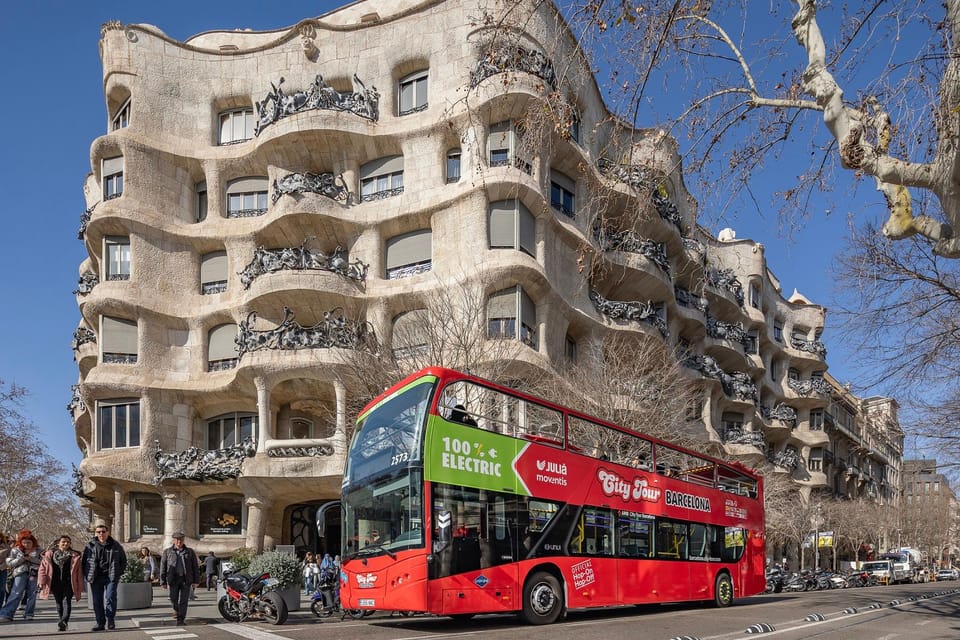
Let’s talk about what it’s like to actually use these stops, because the bus doesn’t do everything for you.
For Sagrada Família, the value is twofold. First, you get a strong visual introduction while you’re riding. Second, it gives you a location anchor. Once you’ve seen it from the stop and know where it sits in the city, you can decide whether to go deeper on foot. Just remember that this is one of the most in-demand areas in Barcelona, so build in extra time if you want to linger.
For Parc Güell, the UNESCO tag isn’t just paperwork—it’s a cue that this is a major site, not a quick photo corner. You’ll likely spend more time than you planned, especially if you enjoy viewpoints and strolling. If you’re the type who wants “one main stop, then lunch,” Parc Güell can be a satisfying anchor.
Here’s the best strategy: use the bus to get your timing right, then let these two sites set your walking pace. Don’t pack your day so tight you feel rushed. The whole point of hop-on hop-off is that you can slow down without losing the route.
Port Olímpic and El Born: the payoff of hopping off for real walking

One of the smartest parts of this tour is that it doesn’t keep you sealed inside the bus bubble. The route descriptions point toward places where you can actually get out and move.
Port Olímpic and the promenade are ideal for a calmer stretch. When you’ve done a couple of heavier sightseeing moments, a harbor walk can reset your brain. Even if you don’t do a long detour, hopping off for a promenade stroll can feel like you added a whole extra “activity” without paying for anything more.
Then there’s El Born. This is where the tour can help you transition from monuments to everyday Barcelona. If your plan includes eating well and wandering, you can hop off around this area, follow your nose, and then come back to the bus when you’re done. Because you can re-board later, it’s less stressful than trying to time dinner and a museum perfectly.
If you’re traveling with limited time, this is where you’ll feel the most value from the hop-on system. You’re not just passing by sights—you’re giving yourself the freedom to live a little between them.


Audio guide, staff, and the headphone plug reality
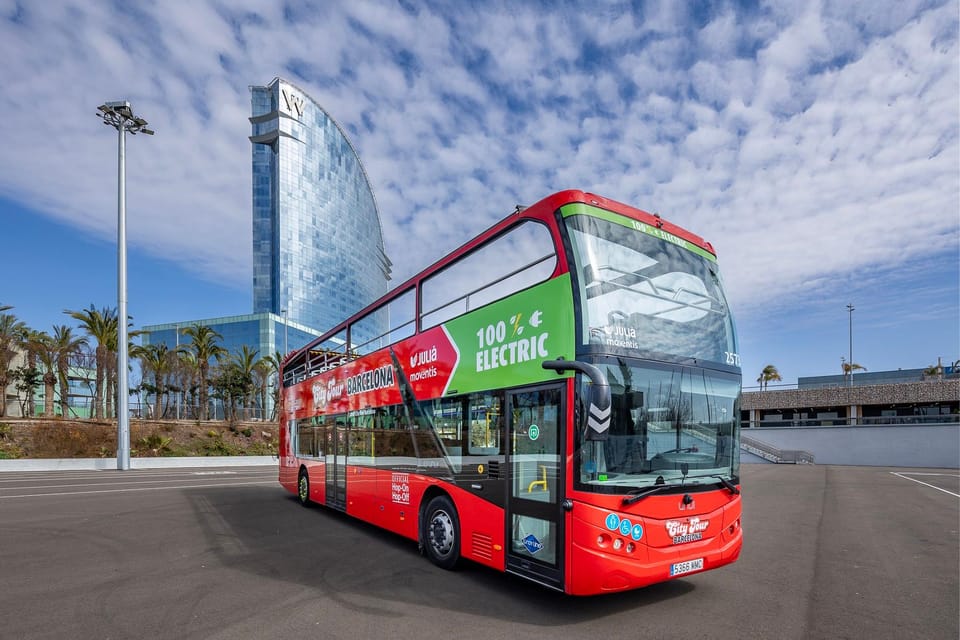
The audio guide is one of the tour’s biggest selling points, and the language coverage is unusually broad for a bus tour. You get audio in Spanish, Catalan, Chinese, Dutch, English, French, German, Italian, Japanese, Portuguese, Russian, Hebrew, Arabic, Swedish, Norwegian, and Turkish. That’s a lot of options, and it means the narration can actually match what you want to hear.
I also like that there’s onboard staff—a multilingual stewardess on the bus—so if you need help finding your stop, you’re not alone.
The audio system is also designed with listening support in mind. Seats with a multilingual looping system let you listen through headphones without wires, and passengers needing that support have priority for those seats. That’s a meaningful detail if you care about comfort and clarity.
Now, the honest part. Reviews flag a few problems: some headphone plug points weren’t working on certain buses, and in at least a few cases certain seats had no sound. That’s not a reason to avoid the tour, but it is a reason to be ready to ask for a quick fix. If you end up with dead audio, switch seats or point it out—don’t just suffer through silence for an hour.
Price and value: is $39 a good deal?
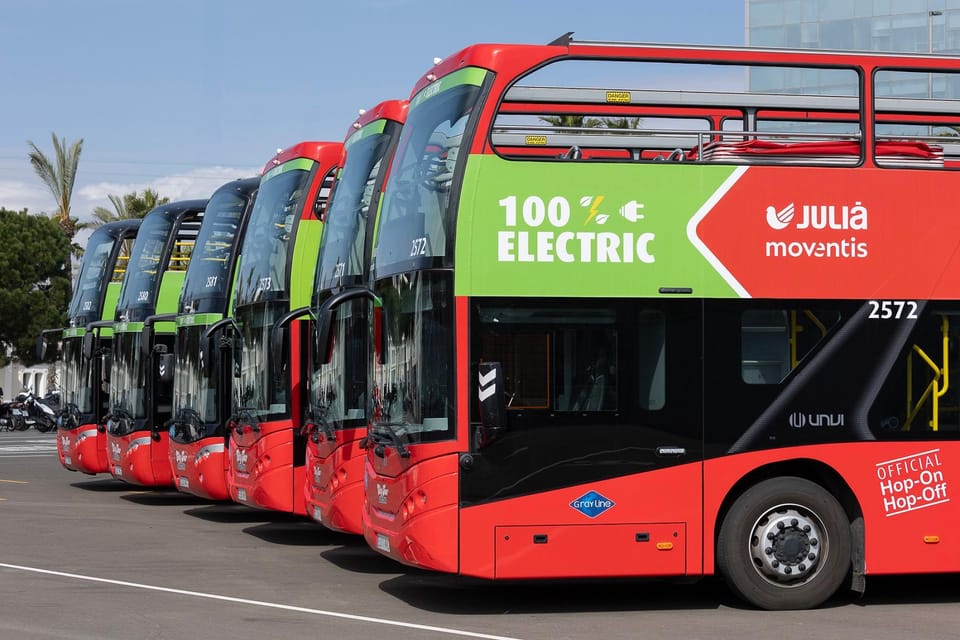
At $39 per person for a 1–2 day ticket, you’re buying flexibility more than a fixed itinerary. If you only have a short visit, that flexibility can be worth its weight in saved energy.
Here’s how to judge value for yourself:
- If you want to see multiple major areas without spending extra time getting around, you’re in the right category.
- If you plan to ride both routes over your stay, the “one ticket, two routes” feature helps justify the price.
- If you’re the kind of traveler who gets serious value from audio and wants context while moving, the 16-language narration adds real worth.
One thing to keep in mind: some people treat the buses as a “starter map.” They ride, get oriented, and then decide what to do next. If that’s your style, a hop-on hop-off ticket can be one of the cheapest ways to buy good decision-making.
Extra options can also appear nearby, and reviews mention a separate blue line catamaran on the sea that costs extra. That doesn’t change the base value, but it can turn the bus tour into the start of a longer day plan.
Overall, $39 makes sense if you’ll actually ride. The tour works best when you treat the bus like a tool, not just a one-time photo ride.
Practical tips so you get the best day from the bus

A few small choices make a big difference on a hop-on hop-off system.
1) Plan around “busy moments.”
Stops can get crowded, and it can be tough to reach the top deck immediately. If you care about views, aim to board a bit earlier at a stop or be ready to wait your turn.
2) Keep an eye on audio at boarding.
Because plug points and audio modules can be hit-or-miss on some seats, test your headset as soon as you sit. If it’s not right, move. Nobody wants to waste a good sight with dead narration.
3) Use the map, then trust your own feet.
You’ll receive a city map with route and stop information, plus a discount booklet for select shops and restaurants. The map won’t replace local instinct, but it makes it easier to decide where to hop off for lunch versus where to keep riding.
4) Rain changes the game.
There’s at least one report that the roof should be covered during rain because people got wet on the lower deck. So bring a light rain layer and choose your seat with weather in mind.
5) Expect street changes and route tweaks sometimes.
Barcelona events can affect routes. The itinerary can shift due to celebrations, protests, sports, or official acts. Don’t panic if your timing feels a little off—just follow the bus staff instructions and use the hop-off flexibility to adjust.
6) Consider timing if you’re doing a full 48 hours.
The green and orange routes are long circuits. If you want to cover both across two days, you’ll have a more relaxed experience than trying to sprint through everything in one.
Should you book this Barcelona hop-on hop-off bus?
Book it if you want a low-stress way to see major sights, get context from narration, and then build your own plan after you’re oriented. It’s especially good for first-timers who want to avoid the mental load of transit while still getting out and walking.
Skip it (or rethink the ticket) if you already know you only want one small area of Barcelona. In that case, you might get better value using local transit and picking one or two guided experiences instead.
If you do book, use it like a smart organizer: ride, listen, hop out for the stops that match your mood, and then come back. That’s when the tour earns its keep—when it helps you spend less time “getting there,” and more time being in Barcelona.
FAQ
How long is the hop-on hop-off bus tour valid?
Your ticket is valid for 1 to 2 days. You can hop on and off as many times as you want during the period of validity.
Do I need hotel pickup?
No. The tour does not include hotel pickup and drop-off.
Can I start at any stop?
Yes. You can begin at any of the stops mentioned in the tour description by showing your voucher to the guide on board.
What routes are included with the ticket?
The ticket covers two routes: the green route (art-focused area toward Park Güell and including Sagrada Família) and the orange route (a longer circuit reaching farther west, including landmarks like FC Barcelona’s stadium and the National Museum of Art of Catalonia).
Is the audio guide included, and in how many languages?
Yes. The tour includes an audio guide in 16 languages, including English, French, German, Italian, Spanish, Catalan, and more.
Are food and drinks included?
No. Food and drinks are not included.
Are pets allowed?
Pets are not allowed on the tour. Assistance dogs are allowed, and other pets would only be permitted if they’re transported in a basket suitably prepared.