REVIEW · BARCELONA
Barcelona: Sagrada Familia Skip-the-Line Entry Ticket & Tour
Book on GetYourGuide →Operated by 4 YOU BARCELONA, S.L. · Bookable on GetYourGuide
A stone forest with skip-the-line timing. This 1.5-hour Sagrada Familia tour is the fastest way to get meaningful access: you’re led by a live guide with skip-the-line entry while you learn why Gaudí’s design still feels unfinished and alive.
I especially love the skip-the-line advantage because it protects your time in a monument where security lines can eat up the morning. And inside, I love how the guide helps you read what you’re seeing—colored light through stained glass, branch-like columns, and that walk-through-the-woods feeling Gaudí aimed for.
One catch: you won’t go up to the towers, and the entry process is strict. After security (which can take up to 25 minutes at busy times), you’ll need to arrive at the meeting point at least 15 minutes early or your booking can be treated as a no-show.
In This Review
- Key highlights worth your attention
- The real reason this tour feels worth it
- Meeting point reality: find the red flag and get moving
- Getting oriented fast: Nativity Façade before the interior
- Inside Sagrada Familia: why the light feels like architecture’s mood
- A note on access rules once you’re inside
- Passion Façade: when the story shifts tone
- Sagrada Familia Schools: the build as a workplace and community
- Museum time: sketches, plans, and an upside-down model
- What you’ll ask about at the end (and how to use it)
- Price and value: is $67 a smart use of your time?
- Small group vs private: choosing the vibe
- Who should book this tour (and who might not need it)
- Should you book this Sagrada Familia skip-the-line tour?
- FAQ
- How long is the Sagrada Familia skip-the-line tour?
- Does this tour include skip-the-line entry?
- Are the tower visits included?
- Where do I meet the guide?
- What do I need to bring or wear?
- What languages are available?
- Is free cancellation available?
Key highlights worth your attention

- Skip-the-line, expert-led flow: security first, then the Nativity and interior with a guide to explain what matters.
- Stained-glass light in action: you’ll notice how the colors change the space while you stand under those branching columns.
- Nativity Façade context: it’s not just a photo stop—the guide frames it as the first completed section.
- Passion Façade drama: expect the stark, angular sculptural story of the crucifixion, built after Gaudí’s death.
- Sagrada Familia Schools: you’ll learn why this area was for the workers’ children and how it was rebuilt and moved.
- Museum models and sketches: original plans and an upside-down model of the basilica give you a rare behind-the-scenes view.
The real reason this tour feels worth it
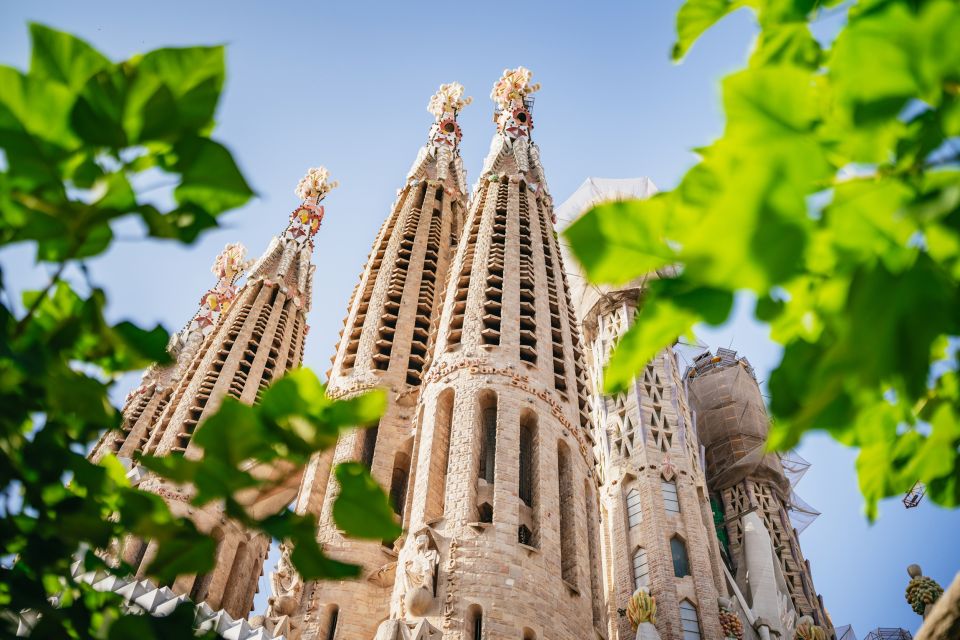
The Sagrada Familia can overwhelm you if you’re just scanning for the prettiest angles. What this tour does well is slow you down in the right places, so you don’t leave with a head full of random photos and no sense of meaning.
Gaudí’s work is full of symbols and structural ideas, and most first-time visits miss that layer. A guide like Victor, Raoul, or Juan Miguel (names you might hear on the tour) doesn’t just tell facts—they connect the façade and the interior to the bigger system Gaudí was building.
And because it’s only 1.5 hours, it’s a practical hit of insight without turning your day into a slow museum crawl.
You can also read our reviews of more tours and experiences in Barcelona
Meeting point reality: find the red flag and get moving

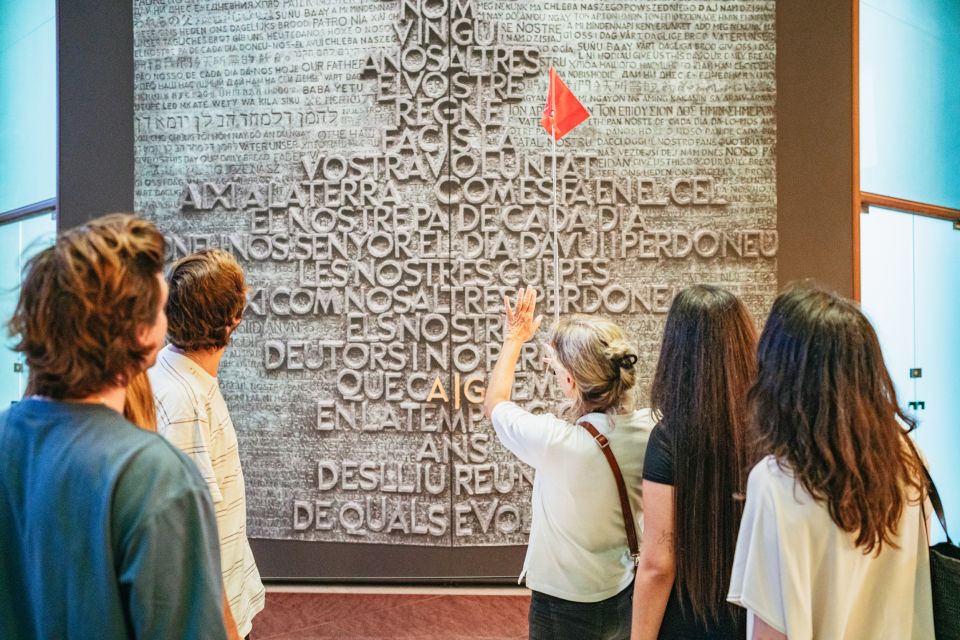
You meet your guide between Hard Rock and KFC, in front of the modernist lamppost at Av. de Gaudí, 1 (Eixample). The cue is simple: look for the guide holding a red flag.
This part matters more than it sounds, because the tour has strict start times. They ask you to arrive at the meeting point at least 15 minutes early, and once the entry clock starts, there’s no padding. If you’re late, you risk missing the group start, and that’s the one thing you want to avoid with Sagrada Familia.
Then comes the security check. In high season, it can take up to 25 minutes, so plan your timing as if security will be a real wait—not a rumor.
Getting oriented fast: Nativity Façade before the interior
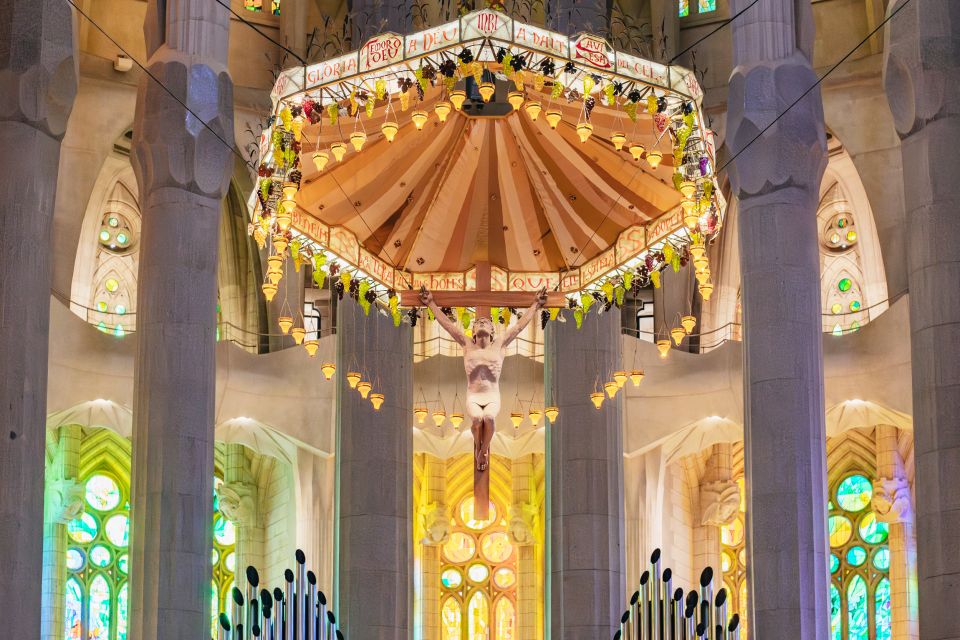
The tour starts outside with a short introduction, then you head to the basilica entrance and through security. This early orientation is useful because the Sagrada Familia façade can look like one big artwork until someone points out where to look.
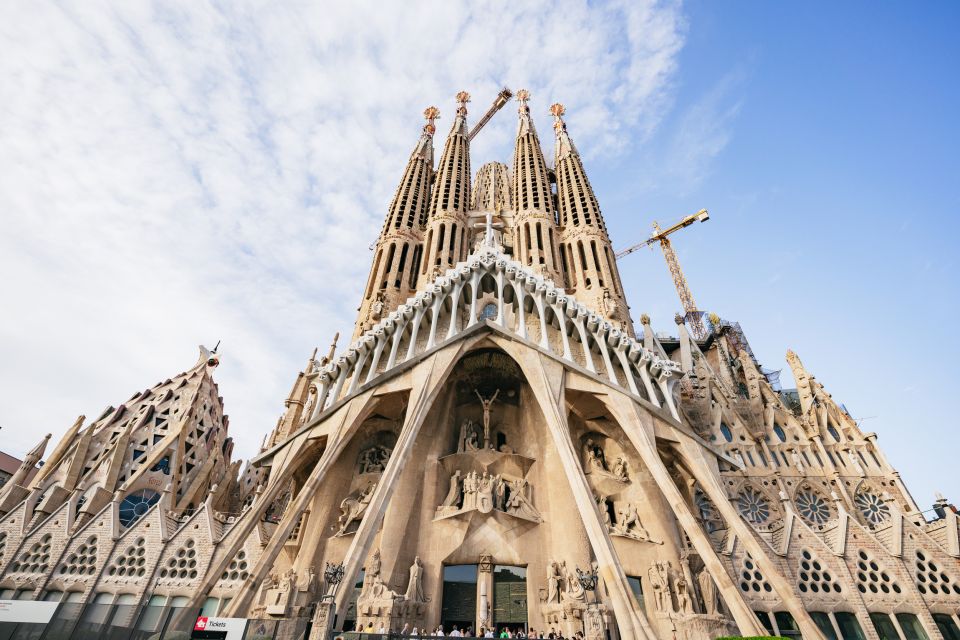
Next you’ll focus on the Nativity Façade. A key detail you’ll hear is that it’s the first completed section of the basilica. That single fact changes the way you see it. Instead of viewing it as just another wall of sculpture, you can read it as an early chapter in a much longer build.
The guide also helps you understand how the ongoing construction fits the design, including the current predicted completion timeline they discuss during the visit. Even if you’ve seen photos for years, hearing the status of the build makes the whole place feel current—not “history behind glass.”
Inside Sagrada Familia: why the light feels like architecture’s mood
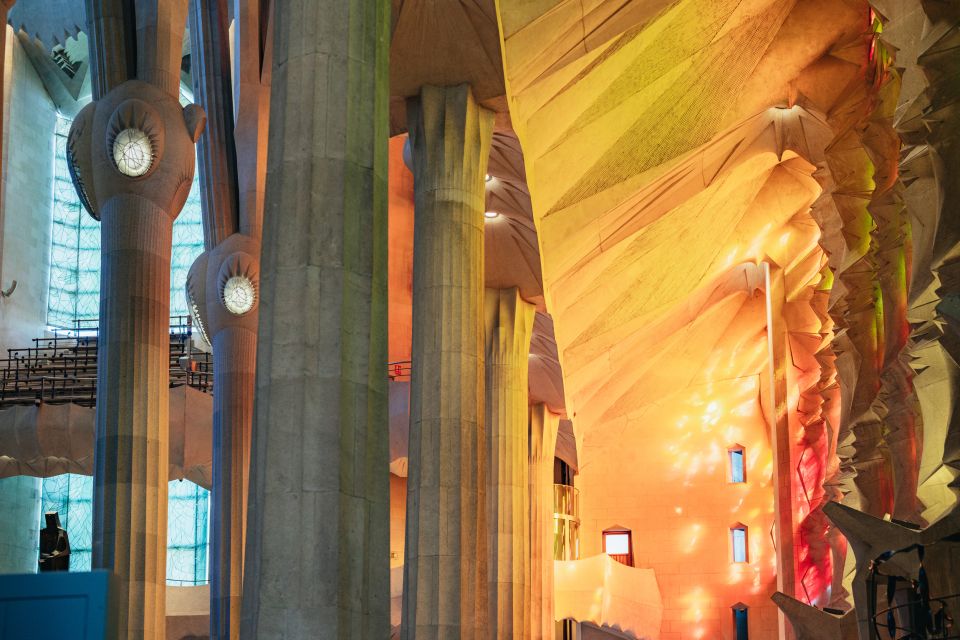
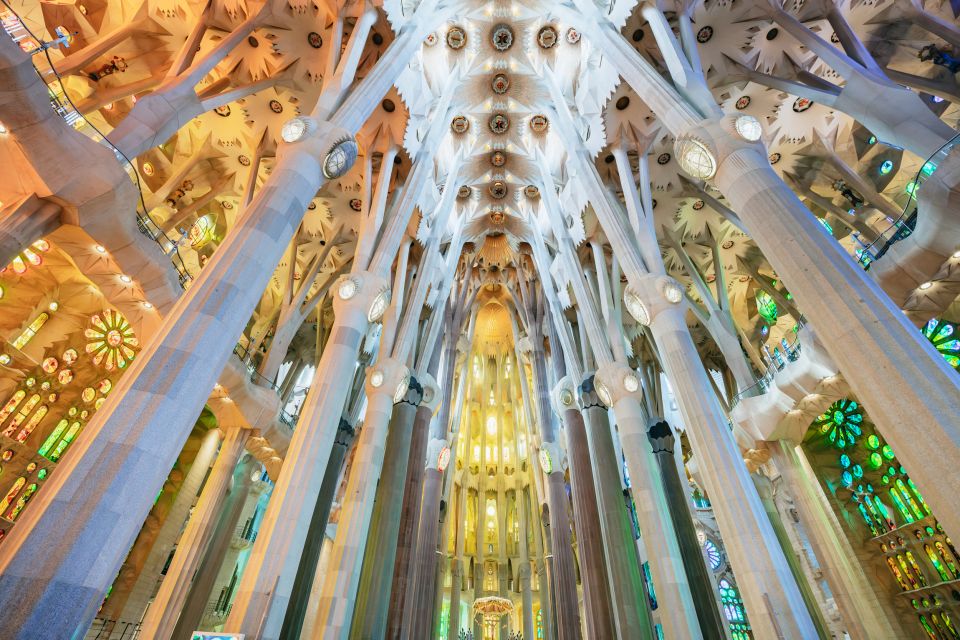
Then you step into the interior, and the basilica earns its reputation fast. Gaudí intended the inside to feel like you’re walking through a forest—columns branching overhead, and stained glass turning light into atmosphere.
What makes this stop so effective with a guide is that you don’t just look; you learn what to notice. The guide points out how the colors from the windows spread across surfaces and make the space feel alive. Those branch-like columns rising over the ceiling don’t read as decoration once you understand the structural idea and the nature analogy behind them.
If your timing is lucky, you’ll also get that “sun through the stained glass” effect people often talk about after the tour. Even when the light isn’t dramatic, the guide’s explanations help you see it as a planned experience rather than random beauty.
And yes, you’ll still have time to slow down and look. A big theme from the way these tours run is not rushing you, and many guides use questions to keep the group engaged—so you’re not stuck listening the whole time without interacting.
A note on access rules once you’re inside
Inside the nave and museum, you’ll run into practical rules. Hats aren’t allowed (unless for religious or health reasons), and the clothing code is strict: no swimwear, no transparent clothing, and avoid anything that’s too revealing. Also, don’t come barefoot—closed shoes are safest.
This stuff sounds annoying until you realize it protects the flow. Plan ahead and you’ll spend your time looking up, not arguing with the rules at the entrance.
You can also read our reviews of more tours and experiences in Barcelona



Passion Façade: when the story shifts tone
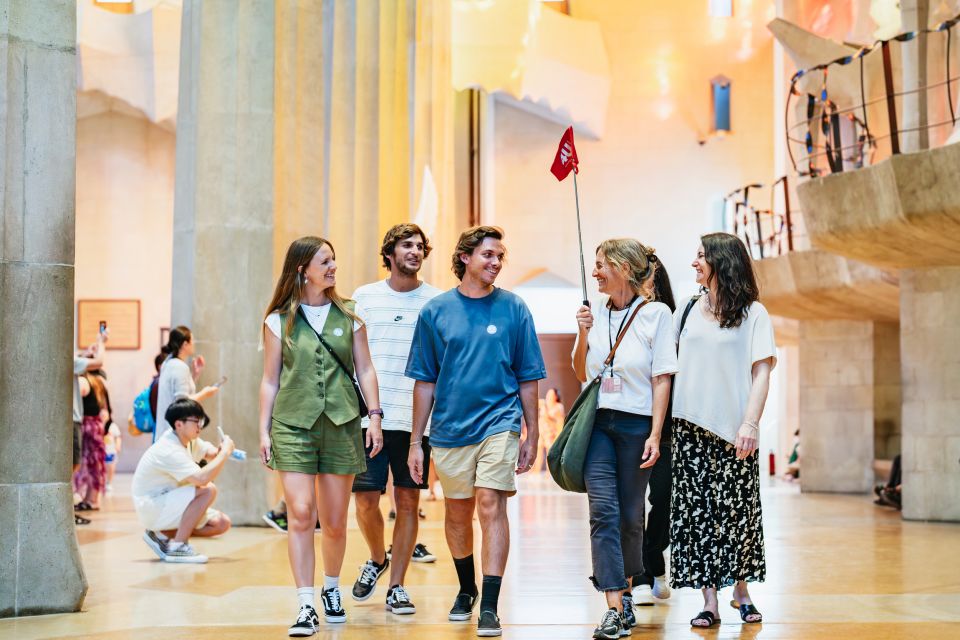
After the interior, you’ll exit and head toward the Passion Façade, which tells the story of Jesus’ crucifixion. Here’s the important context the guide provides: this façade, like most parts of the basilica, was built after Gaudí’s death.
That detail matters because it highlights how Gaudí’s vision outlived him. You’re not just seeing “art made by one man,” but an evolving project where later craftspeople had to keep the logic consistent with his plans.
Expect the sculptural drama to feel sharper and more angular compared to the Nativity side. The guide’s job is to show you how that tone supports the narrative, and it’s usually where people start to connect the façade stories to what they just saw inside.
Sagrada Familia Schools: the build as a workplace and community
The tour then moves to the Sagrada Familia Schools, a quieter but fascinating stop. This area was designed for the children of the workers building the basilica.
Even better, you’ll learn that it wasn’t static. It was reconstructed more than once and even moved locations to make way for the basilica. That turns the Sagrada Familia from a single monument into a long-running human project—people lived around it, worked for it, and raised families because of it.
It’s also one of the points where a guide’s passion shows. When the guide can connect a design choice to the lives behind it, the whole basilica feels less like a postcard and more like a living timeline.
Museum time: sketches, plans, and an upside-down model
The last stop is the Sagrada Familia Museum, where you get the behind-the-scenes proof that Gaudí was working like an architect-scientist with a poet’s instincts.
You’ll see original sketches and plans, along with artifacts from Gaudí’s life and from the basilica’s construction history. One standout example included in this tour is an upside-down model of the basilica. Seeing that kind of model helps you understand how the design system works—how the geometry and structure create both form and meaning.
This museum segment is also where you’ll get a more “how did they even do this?” reaction. Even if you’re not technical, watching how the ideas were mapped out makes the basilica’s complexity easier to grasp.
And because the tour is guided, you’re not wandering through display cases hoping someone explains what you’re looking at. You’ll leave with clearer mental pictures of the design logic rather than just impressions.
What you’ll ask about at the end (and how to use it)
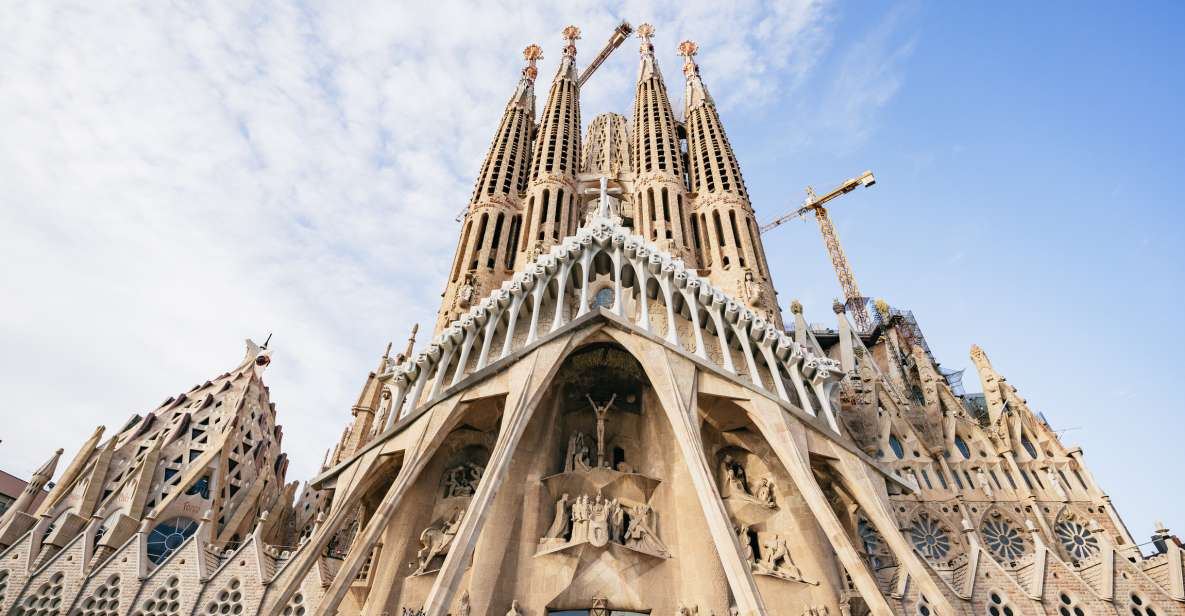
One of the underrated benefits here is that the guide finishes with tips on what else to see and do in Barcelona. When the guide is good, those suggestions are practical: where to go next, how to plan your time, and what’s worth your energy after you’ve spent 1.5 hours inside Gaudí’s masterpiece.
I like this format because it turns your tour into real decision-making, not just a ticket scan. If you’re trying to plan the rest of your day—especially if this is your first stop in the city—this is a nice handoff.
Price and value: is $67 a smart use of your time?
At $67 per person for a 1.5-hour guided visit, you’re paying for three things: (1) access you don’t have to fight for, (2) interpretation that turns the building into a story you understand, and (3) the fact that entrance fees and tickets are included.
If you went on your own, you’d likely spend time figuring out what to prioritize and why. The time you save with skip-the-line matters in a place that can get crowded, and the guidance matters because Sagrada Familia is huge and symbolic—easy to admire, harder to decode without help.
One more value note: towers access is not included. So if your dream is climbing up for views, you’ll need a different option for that. But if your goal is to grasp Gaudí’s design, enjoy the interior light, and leave with meaning—not just photos—this price-to-time ratio often makes sense.
Small group vs private: choosing the vibe
The tour offers either a small group or a private option. If you like meeting other people and keeping the energy light, the small-group format is a great fit. If you prefer quiet pacing, less “group timing,” and more direct Q&A, the private option is where you’ll feel the difference.
Either way, the structure of the experience stays the same: guided stops at the façade, interior, schools, and museum—with the same “you’ll know what to look for” approach.
Also, there’s personal audio reinforcement if the group is large (over 10 people). That’s the kind of practical detail that can save you from craning your neck to hear over the crowd.
Who should book this tour (and who might not need it)
This is a strong choice if you:
- want the Sagrada Familia highlight package in a tight time window
- care about understanding Gaudí’s ideas, not just admiring the visuals
- like guided storytelling that includes construction context and design meaning
- appreciate a pace that isn’t frantic (especially when you’re looking for photos but also for understanding)
You might choose differently if you:
- primarily want tower views and don’t care about the museum or façades
- dislike guided tours in general and would rather explore slowly with no structure
- are arriving late or can’t handle the security process. With strict admission times, you’ll want your schedule under control.
Should you book this Sagrada Familia skip-the-line tour?
If you’re planning one guided Sagrada Familia visit, I’d book this. The mix of skip-the-line access, a live guide, and key stops that explain the Nativity side, the interior light, the Passion façade, the workers’ schools, and the museum models is a smart use of money and time.
The decision mostly comes down to one thing: if towers are a must for you, look for an option that includes them. If they aren’t, this tour gives you the best “understand-and-feel” experience in about 1.5 hours.
FAQ
How long is the Sagrada Familia skip-the-line tour?
The tour lasts 1.5 hours.
Does this tour include skip-the-line entry?
Yes. Your ticket includes skip-the-line access.
Are the tower visits included?
No. Access to the towers is not included.
Where do I meet the guide?
Meet your guide between Hard Rock and KFC, in front of the modernist lamppost, at Av. de Gaudí, 1, Eixample. Look for the guide holding a red flag.
What do I need to bring or wear?
Bring a passport or ID card. Wear modest clothing. Hats, swimwear, bare feet, and transparent clothing are not allowed (and the tour has rules about hats inside the nave and museum).
What languages are available?
The tour guide is available in English, French, and Spanish.
Is free cancellation available?
Yes. You can cancel up to 24 hours in advance for a full refund.