REVIEW · BARCELONA
Gaudí & Modernism with a Historian.
Book on GetYourGuide →Operated by Mariano Pesin · Bookable on GetYourGuide
Gaudí’s meaning comes with a guide. On this Gaudí & Modernism walking tour, you’ll understand Barcelona from 1888–1930 with Modernism put into its social and political context.
I really like the way Mariano Pesin connects the buildings to ideas from daily life—economics, class power, and the city’s industrial growth. I’m also drawn to how the tour reads Gaudí through symbolism in nature, not just as pretty architecture.
The main downside is logistics: it starts on time, with a maximum 10-minute waiting window. If you’re late, you can lose the start, so go easy on the last-minute bathroom hunt and bring water.
In This Review
- Quick take on what makes this tour work
- Entering Barcelona’s Modernist Era with Mariano Pesin
- From Pg. de Gràcia to Casa Milà: what the walk feels like
- Casa Milà: seeing Gaudí through nature-inspired symbolism
- The Modernist story: social, political, and economic forces you can actually track
- Gaudí’s career move: power, patrons, and why the city mattered
- The coffee shop finish: why the ending is part of the value
- Price and value: is $65 fair for 2.5 hours?
- Language, pace, and practical tips that actually matter
- Who this tour suits best (and who might feel meh)
- Is this the right Barcelona move for you?
- FAQ
- How long is the Gaudí & Modernism tour?
- Where do I meet the guide?
- Do I get to visit Casa Milà?
- What languages are available?
- What is included besides the walk?
- Is the tour wheelchair accessible?
- Can I cancel or pay later?
- Should you book this Gaudí & Modernism tour?
Quick take on what makes this tour work
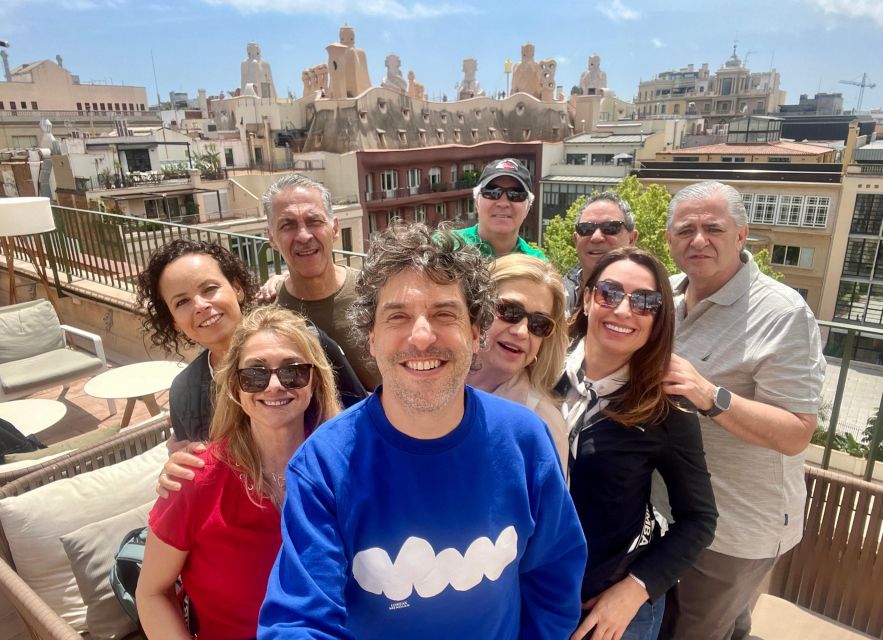
- Mariano Pesin’s Modernism framing (1888–1930) puts architecture into the bigger Barcelona story
- Gaudí symbolism inspired by nature is explained in front of the work, not in a lecture hall
- Original objects from the time help you picture how people thought back then
- A focused stop at Casa Milà ties the era’s style to what was happening in the city
- Coffee at the end turns the walk into a calm, conversational finish
- Two languages (English/Spanish) means you can follow every key point
Entering Barcelona’s Modernist Era with Mariano Pesin
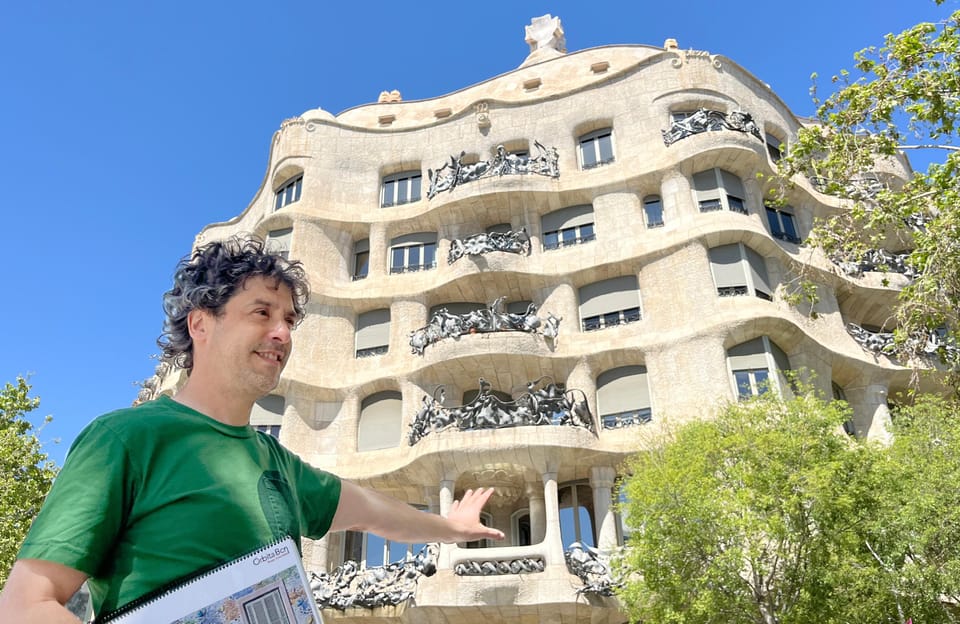
This isn’t a “look up at the facade” tour. It’s built around why the Modernist period happened in Barcelona, and how Antoni Gaudí turned that moment into something you can still feel today.
Mariano Pesin’s approach is energetic, and the tone stays friendly. You get explanations in English or Spanish, and the best part is that the talk stays tied to what you’re seeing and why it mattered.
The historical window here is clear: 1888–1930. That range helps you track Modernism as a full era, not as a handful of famous buildings. And because the tour looks at social, political, and economic context, you leave with a sense of cause and effect instead of just names and dates.
You can also read our reviews of more tours and experiences in Barcelona.
From Pg. de Gràcia to Casa Milà: what the walk feels like
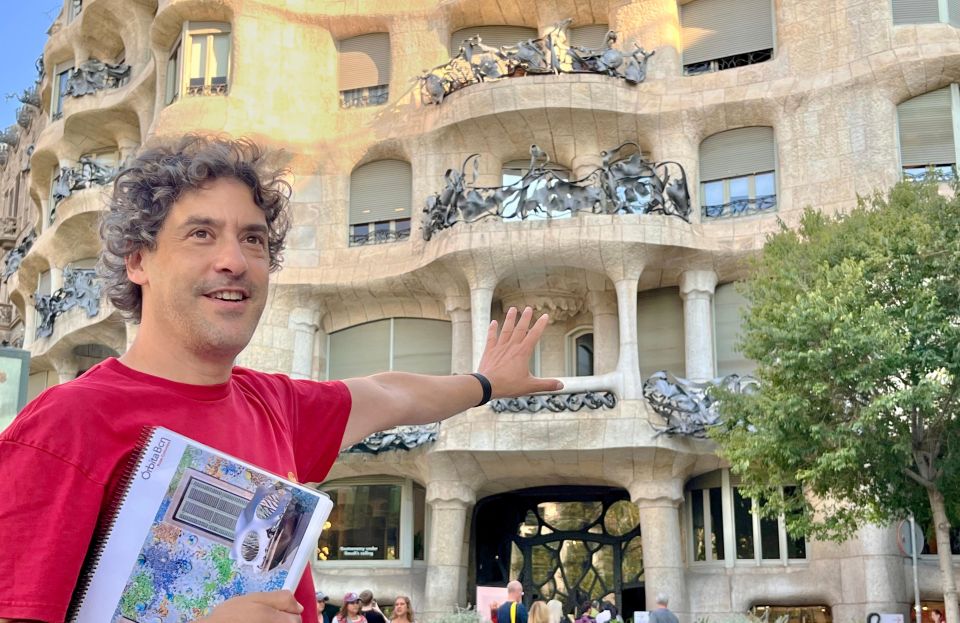
The tour starts in central Barcelona at Pg. de Gràcia, 2, meeting you in front of Camper Store. You begin with orientation and history, then you work your way toward Casa Milà as a key anchor for the story.
A lot of Gaudí tours race. This one keeps your eyes moving, but it also keeps your brain switched on. You’re walking through the city while Mariano explains how Barcelona’s rise as a modern, international metropolis affected artists and patrons alike.
Casa Milà is the named highlight stop on this experience, with a guided visit as part of the plan. Even if you already know Gaudí’s name, this is the point where the tour’s theme—nature symbolism and Modernist thinking—gets grounded in real architectural form.
If you’re someone who likes structure, this works well. You know where you’re starting, where you’re going, and how the tour wraps up on the C. de Pau Claris side of the city.
Casa Milà: seeing Gaudí through nature-inspired symbolism
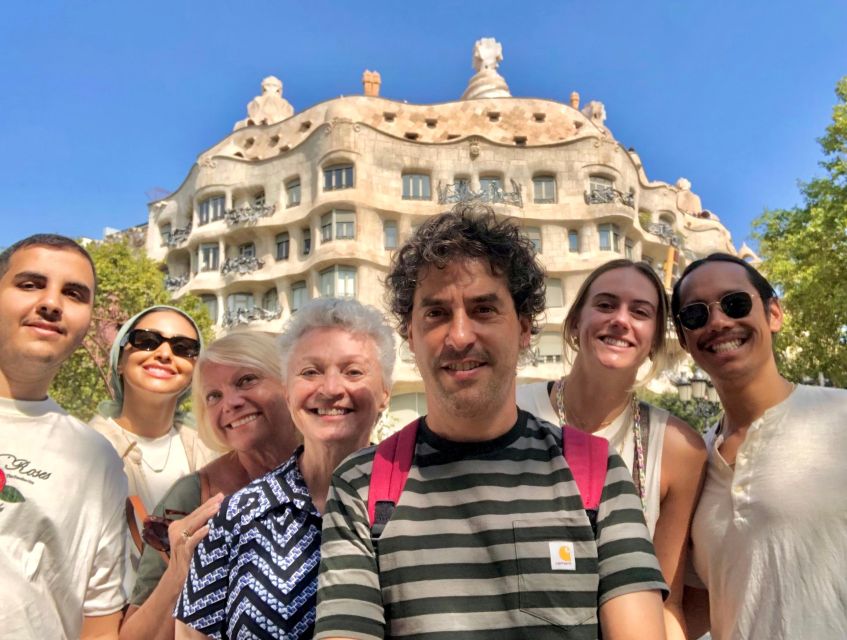
One reason this tour lands with people is that it doesn’t treat Gaudí like a set of quirky shapes. Mariano explains the symbology inspired by nature, and he keeps circling back to meaning as you look.
That matters because Gaudí’s work can feel “artsy” until someone gives you a lens. Here, you get that lens: how the Modernists thought about the natural world, how they translated it into design, and why those choices had impact beyond aesthetics.
You also learn how Mariano links Gaudí’s sensibility and deep knowledge to the way Barcelona changed. The guide’s take isn’t just that Gaudí made beautiful buildings. It’s that he used the city’s real power structures—especially the relationships with wealthy and influential people—to make emblematic Modernist architecture possible.
In practical terms, this means you’ll likely notice more details on your own afterward. Not because the tour gives you a checklist, but because it teaches you how to ask the right question: What is this trying to communicate, and why now?
The Modernist story: social, political, and economic forces you can actually track
Modernism can sound like a vague label. This tour fights that by walking you through the conditions that shaped Barcelona during the era 1888–1930.
The key starting point is the Barcelona Industrial Revolution. As the city becomes more modern and international, artists such as Picasso and Gaudí begin to settle and work there. That doesn’t mean they all collaborated, but it does help you understand how Barcelona became fertile ground for a new kind of creative ambition.
Mariano doesn’t focus on one side of the story. He frames the Modernist period in terms of:
- social change
- political atmosphere
- economic conditions
That three-part structure gives you a way to remember what you’re learning. You’re not only learning architecture. You’re learning how a city’s momentum shapes what artists attempt—and what patrons are willing to fund.
Gaudí’s career move: power, patrons, and why the city mattered
Gaudí is often treated as a solo genius. On this tour, he comes across as someone who knew how to work with the world around him.
Mariano emphasizes that Gaudí took advantage of the richest and most influential people in order to create buildings that became landmarks. That’s a big shift in perspective. It helps you see Modernism as a cultural negotiation: artists with vision, patrons with money, and a city with a reason to invest in identity.
And because the tour talks about the history of Barcelona, you get the broader storyline behind those commissions. You’re better able to connect what you see in the street to the pressures and incentives that shaped it.
One nice detail is that you don’t just hear the theory. You’re shown original objects from the time, which gives you a tangible sense of period life and the atmosphere in which these ideas were traveling. I find that type of evidence helps the tour feel real instead of purely interpretive.

The coffee shop finish: why the ending is part of the value
The tour includes a stop at an exclusive coffee shop surrounded by nature after the walk. That sounds like a small add-on, but it changes the whole feel of the experience.
The timing also matters. You’re not rushing straight into your next plan while you’re still full of facts. Instead, you have a calm transition where you can ask follow-up questions and process what you just learned.
This is also where Mariano’s personality comes through. Many guides can explain architecture. Fewer make the conversation feel like you’re talking to someone who truly cares about the city. The coffee stop gives you space for that tone to land.
If you want photos, you’ll still get plenty of chances during the walk. If you want understanding, the coffee moment often helps you connect the dots afterward.
Price and value: is $65 fair for 2.5 hours?
At $65 per person for 2.5 hours, this tour sits in the mid-range. What makes it feel worth it isn’t just the length. It’s what’s included and how the guide uses the time.
You get:
- guided walking explanations about the Modernist period
- analysis of Modernist buildings’ symbolism
- Gaudí history explained in front of his most famous buildings (not from a distance)
- original period objects shared during the experience
- a coffee stop at the end
When a tour only “shows sites,” you’re often paying for access. Here, you’re paying for interpretation: context, meaning, and a guide who ties everything back to Barcelona’s transformation.
If you’re the type who likes to leave a tour with a new way to look at streets, doors, and facades, this pricing tends to feel reasonable. If you only want a rapid hit of iconic photo spots, you might want to compare options that pack more stops in less time.
Language, pace, and practical tips that actually matter
The tour runs with a live guide in English and Spanish. That’s helpful if you’re traveling with a mix of language comfort levels.
The pace is walking-based, so wear shoes you trust. Also take the setup seriously: the experience starts on time, and there’s a maximum 10-minute waiting time with prior notice.
Before you go, do three simple things:
- bring water
- check the temperature and layer if needed (the weather can vary)
- go to the WC before the tour
Those aren’t details for show. They’re the difference between enjoying the explanations and counting minutes until you can sit down.
If you need direct contact, Mariano Pesin’s number is +34 667098989.
Who this tour suits best (and who might feel meh)
This experience is best for you if you want more than a photo tour. You’ll probably love it if you’re curious about how history shapes design, and if you like guides who connect art to everyday forces like economy and politics.
It also works well if you want to understand Gaudí’s choices through symbolism. The tour’s emphasis on nature-inspired meaning gives you a way to “read” the city as you walk.
You might feel less satisfied if your top goal is to tick off as many different buildings as possible in a short window. The tour is more focused and thematic, with Casa Milà as the clearly highlighted stop.
Is this the right Barcelona move for you?
If you’re coming to Barcelona for Gaudí, you’re likely already motivated. What this tour adds is context that helps everything click: Modernism as an era, Barcelona as the engine, and Gaudí as the artist who understood both symbol and society.
I also like that the experience ends with a coffee stop in a calmer setting. It makes the tour feel complete, not like a rushed handoff to your next destination.
One more reason to feel confident booking: the experience has a strong rating of 4.8 with 17 reviews. The repeated themes are consistent—Mariano’s enthusiasm, the depth of the explanations, and the way the tour makes you notice subtle details.
FAQ
How long is the Gaudí & Modernism tour?
It lasts 2.5 hours.
Where do I meet the guide?
Meet in front of Camper Store at Pg. de Gràcia, 2.
Do I get to visit Casa Milà?
Yes. Casa Milà is included as a guided stop.
What languages are available?
The live guide speaks English and Spanish.
What is included besides the walk?
You’ll get explanations about the modernist period, analysis of symbolism in the buildings, Gaudí history explained in front of his famous buildings, original objects from the time, and a coffee stop at the end.
Is the tour wheelchair accessible?
Yes, it is wheelchair accessible.
Can I cancel or pay later?
You can cancel up to 24 hours in advance for a full refund. You can also reserve now and pay later.
Should you book this Gaudí & Modernism tour?
Book it if you want Gaudí that makes sense. You’ll get Modernism framed through history, symbolism tied to nature, and a guide-led experience that ends with a thoughtful coffee moment.
Pass if your priority is maximum building count over meaning. This tour is focused on understanding, with Casa Milà as the central stop and the rest of the time used to connect the era to Barcelona’s bigger story.