REVIEW · BARCELONA
Barcelona: Sagrada Familia Skip-the-Line Guided Tour
Book on GetYourGuide →Operated by Golden Tour Guide · Bookable on GetYourGuide
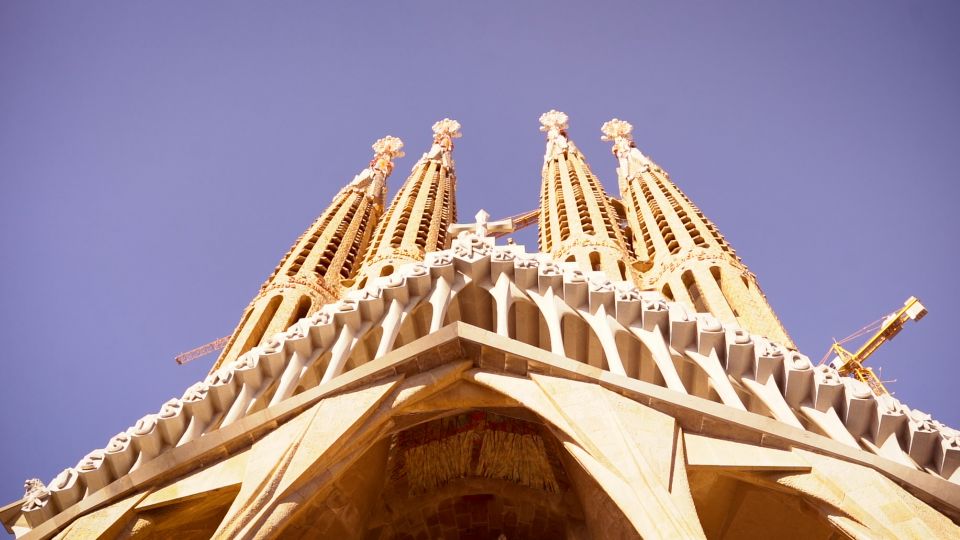
The towers of La Sagrada hit different up close. This skip-the-line guided tour pairs a certified local guide with an audio headset, so you spend less time figuring things out and more time reading Gaudí’s architecture like a story. You’ll see the Nativity side, then step into the interior where stained glass turns daylight into mood lighting.
Two things I’d prioritize right away: first, the tour explains what you’re actually looking at—symbolism on the façade and how Gaudí’s design creates that forest-of-branches feeling inside. Second, you don’t just rush through the church; you end with the Sagrada Familia Museum, where you can study original plans, sketches, and construction artifacts (including an upside-down model). The main drawback to consider is logistics: expect metal detectors and a realistic security wait, plus a strict dress code and ID check at entry.
In This Review
- Key Points to Know Before You Go
- Skip-the-Line Doesn’t Mean No Waiting at Sagrada
- Meeting Point at Ringels: How to Find Your Guide Fast
- Nativity Façade and Interior Light: What the Guide Helps You Notice
- Passion Façade After Security: Drama in Angular Stone
- Sagrada Familia Schools: The Building Had Families Inside It
- Museum Stop: Sketches, Plans, and an Upside-Down Model
- Price and Value for a 1.5-Hour Tour at $64
- Free Time After the Tour: Use It Smart
- Who This Tour Fits Best (and Who Might Want Something Else)
- Should You Book This Sagrada Familia Skip-the-Line Tour?
- FAQ
- How long is the Sagrada Familia guided tour?
- Does this include skip-the-line tickets?
- Where is the meeting point?
- What language is the tour in?
- Is there a security line when entering Sagrada Familia?
- What’s the dress code for entering the basilica?
- Do I need to bring ID?
- What’s included in the tour price?
- Is free cancellation available?
Key Points to Know Before You Go
- Separate entrance helps you start faster, but security still takes time once you’re inside the queue area
- Audio headsets keep you synced to the guide, even when you’re craning your neck up
- Façades come with meaning, not just descriptions—Nativity first, Passion after you exit the basilica
- You get the human story of the building at the Sagrada Familia Schools stop
- The museum adds context with original sketches and plaster-style construction models
Skip-the-Line Doesn’t Mean No Waiting at Sagrada
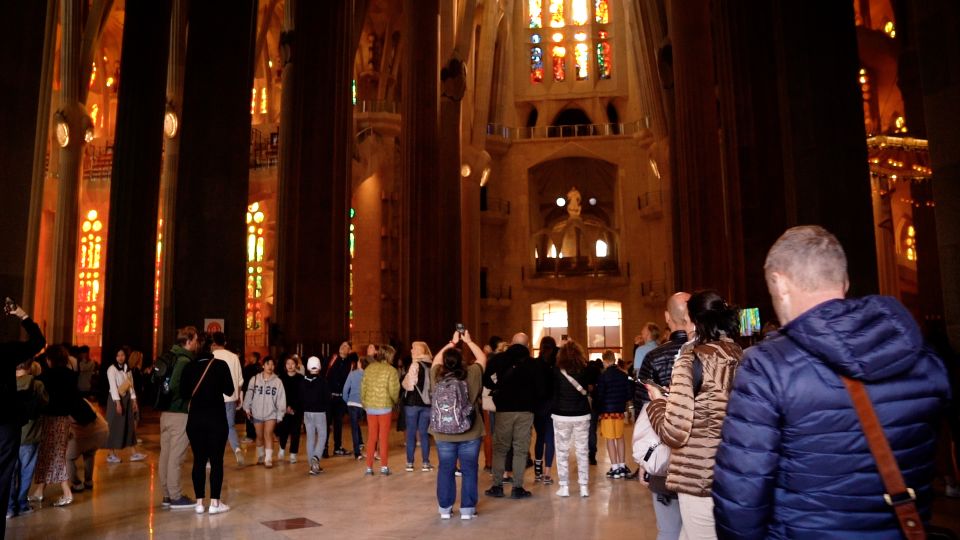
Let’s be honest: skip-the-line is still not a magic spell. You’ll use a separate entrance for the basilica entry, which saves real time, but the site requires everyone to go through metal detectors, and it can take about 20–30 minutes. Plan your arrival mindset around that. If you show up stressed, you’ll feel it; if you show up prepared, it becomes just part of the rhythm.
The upside is that once you clear security, your guide keeps the visit moving with clear pacing. You’re not stuck staring at a wall wondering what to notice. Instead, you’ll get a guided route that ties the exterior and interior together—so the building doesn’t just look incredible; it also makes sense.
You can also read our reviews of more guided tours in Barcelona

Meeting Point at Ringels: How to Find Your Guide Fast
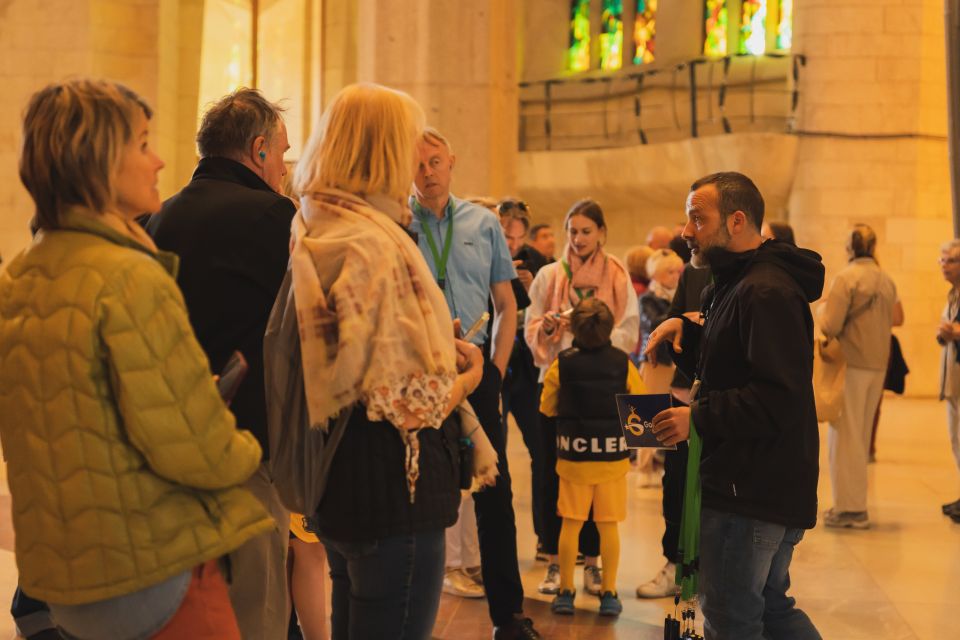
This tour starts at C/ de Mallorca, 418 (08013 Barcelona), inside Ringels souvenir shop. You’re looking for your guide holding a Golden Tour Guide sign. Arrive 15 minutes early—not because it’s a rule, but because the meeting point can feel like a crowd magnet.
One practical tip: if you’re arriving at a busy moment, scan for the official sign fast. Some people have struggled to spot their group because there are lots of similar-looking tour operators in the same area. Going early gives you space to orient yourself before you’re rushed.
Also note: there are restroom facilities at the meeting point, which is useful in a stop like this where you don’t want to be searching once you’re locked into the entry process.
Nativity Façade and Interior Light: What the Guide Helps You Notice
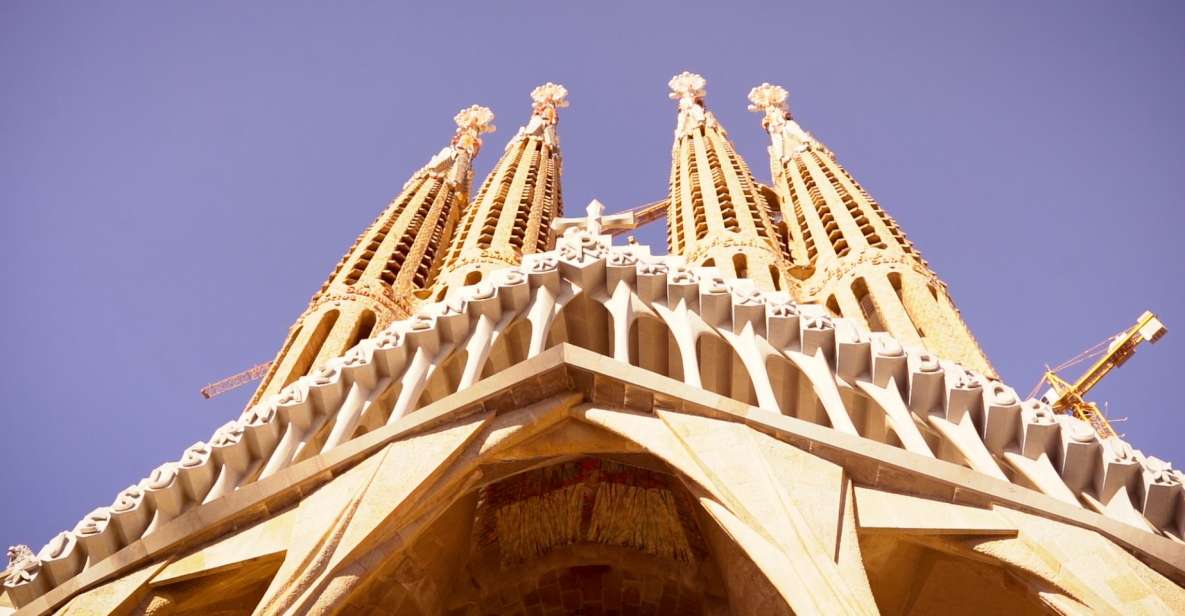
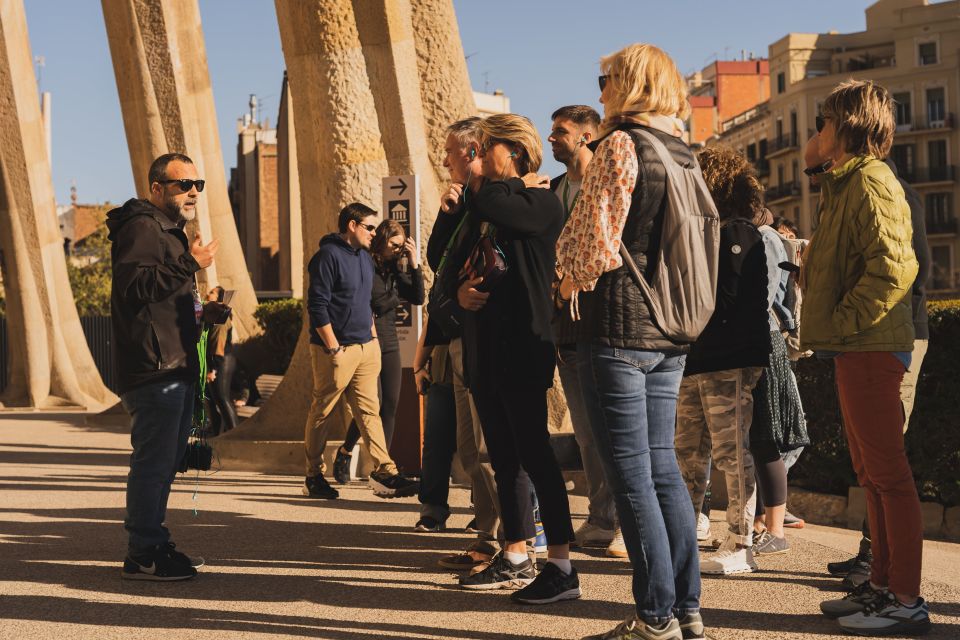
After the initial orientation, you’ll head toward the basilica entrance and learn about the Nativity Façade, the first completed section of the Sagrada Familia. This is where the tour’s “why” matters: you’re not just seeing stonework; you’re being guided through the stories and themes that shape the carvings and overall design.
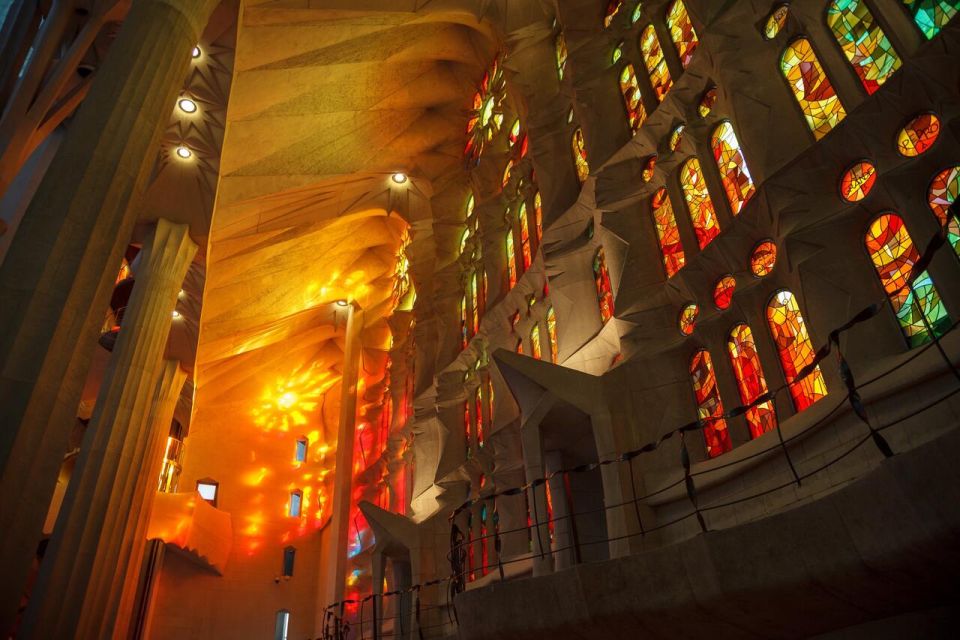
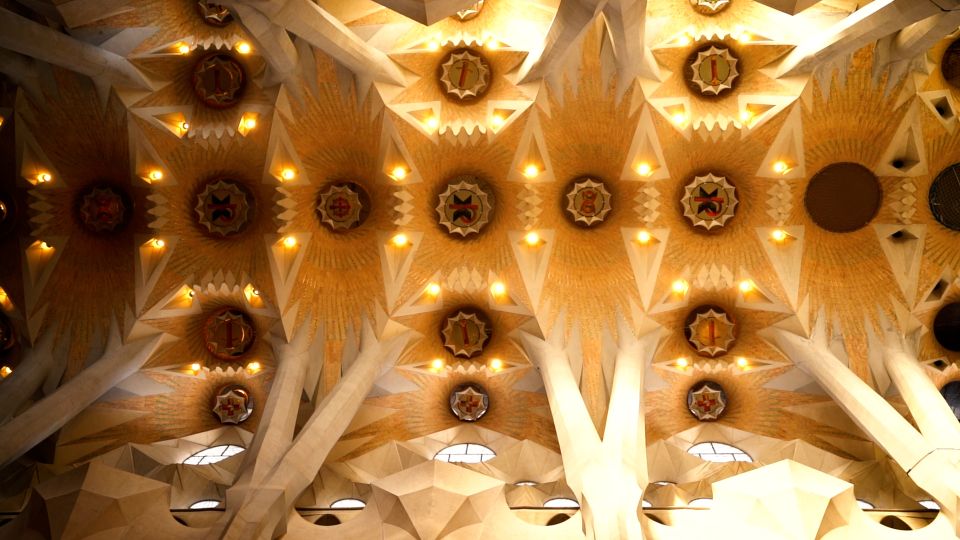
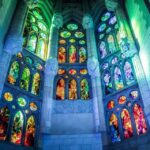
Then comes the moment you’ll remember. Inside, the guide helps you notice how Gaudí intended the interior to feel like a walk through a forest—where columns rise like branches and the ceiling geometry creates that organic canopy effect. The stained glass isn’t only decorative. It’s a lighting system that turns daylight into colored atmosphere, so your brain instantly goes quiet and then starts looking for details.
A detail you’ll hear explained is how the light behaves inside. Even on grey days, the interior can still feel unreal, and when the sun actually breaks through, the colors can sharpen in a way that makes you stop mid-sentence and just stare. I’d treat it as a “weather bonus,” not a guarantee.
This part of the tour also includes practical construction context. You’ll hear about the ongoing building work and a predicted completion date. That’s valuable because Sagrada Familia is not a finished museum piece. It’s a living project, and understanding that changes how you interpret what you see—especially when you notice fresh craftsmanship beside older design foundations.
Passion Façade After Security: Drama in Angular Stone
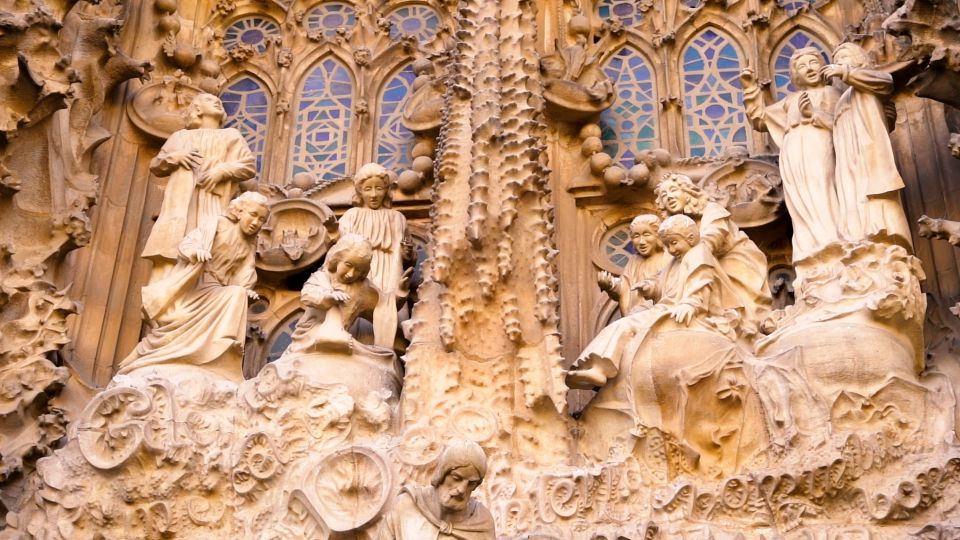
When you exit the basilica, the guide shifts to the Passion Façade, which represents the story of Jesus’ crucifixion. This façade is known for its stark, angular sculptures, and it hits differently after you’ve just experienced the soft glow of the interior.
Here’s what I like about including this stop in the same tour arc: it reinforces that Sagrada Familia is designed as a sequence. The Nativity side gives one emotional tone. The Passion side turns the volume up—sharper forms, stronger drama.
One key point to keep in mind: the Passion Façade, like much of what you see, was built after Gaudí’s death. Your guide’s job is to connect the designs across time so it doesn’t feel like random additions. When the story is told clearly, it becomes more like a single long conversation—rather than multiple chapters written by different hands.
Sagrada Familia Schools: The Building Had Families Inside It
The tour doesn’t stop at stone and religion. Next, you’ll visit Sagrada Familia Schools, created for the children of the workers building the basilica. This stop is short in time but big in meaning because it grounds the cathedral in real life.
You’ll learn that the schools were reconstructed more than once and were even moved locations to make way for the basilica. That kind of detail matters because Sagrada Familia isn’t just an artistic project; it’s a long-term construction effort that reshaped the lives of the community around it.
If you’re the type of person who loves architecture but hates dry lectures, this is one of the best segments. It gives you a human scale for the building work—so the cathedral feels less like a giant object and more like an actual project with people, schedules, and daily needs.
You can also read our reviews of more tours and experiences in Barcelona




Museum Stop: Sketches, Plans, and an Upside-Down Model
The final stop is the Sagrada Familia Museum, where the guide explains how Gaudí’s architectural thinking worked. You’re shown original sketches and plans, which helps you see the complexity behind the curves and geometry. Without this, it’s easy to assume the forms are just decorative flourishes. With it, you understand the structure has an internal logic.
You’ll also see construction-related artifacts from the basilica’s making—especially the kind of models and study pieces that show how ideas were tested before full-scale work. One highlight is the display of Gaudí’s upside-down model of the basilica. Even if you’re not a model person, it’s the kind of artifact that makes you rethink how designers visualize space.
This museum portion is also why I think this tour is worth it for first-timers. Sagrada Familia can overload your senses. The museum gives your brain somewhere to land: it turns awe into comprehension.
Price and Value for a 1.5-Hour Tour at $64
At $64 per person for about 1.5 hours, this isn’t a bargain ticket. It’s priced for demand and for what you’re buying: guided interpretation plus skip-the-line entry, plus an audio headset, and plus the museum component.
So how do you judge value?
You get value if:
- You want context fast. The tour connects façade symbolism, interior design, construction progress, and the workers’ community.
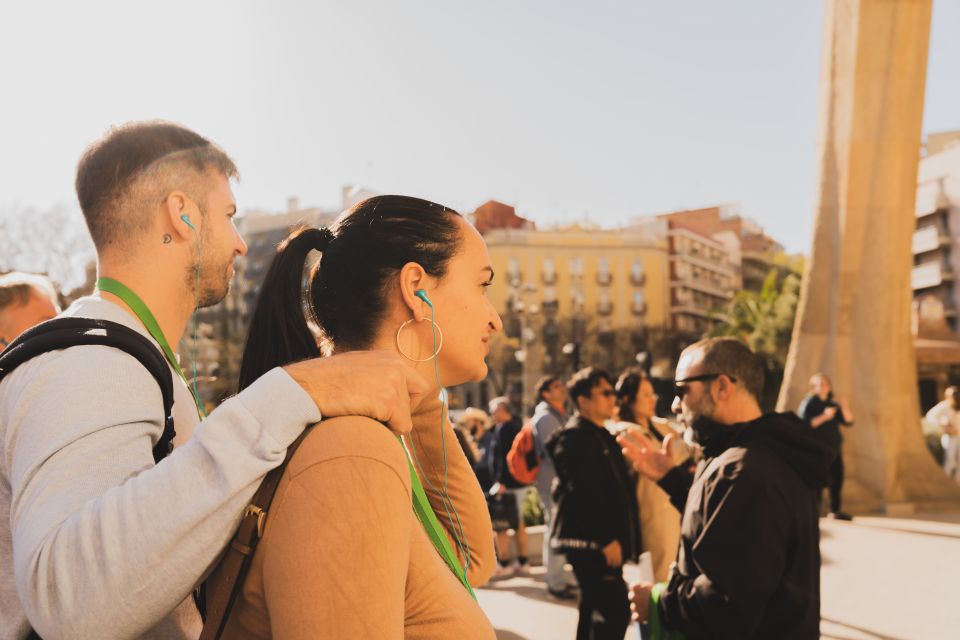
- You know you’ll miss details without guidance. The audio headset helps you stay with the guide rather than walking around guessing what’s important.
- You’re visiting during a high-demand period when tickets can sell out.
You might pause if:
- You’re happy to do a purely self-guided visit and you already know a lot about Gaudí.
- You prefer longer time on-site with fewer structured stops. This tour is efficient, not slow.
One other practical note: there’s an included restroom setup at the meeting point, and that matters for comfort when the security wait is predictable but unavoidable.
Free Time After the Tour: Use It Smart
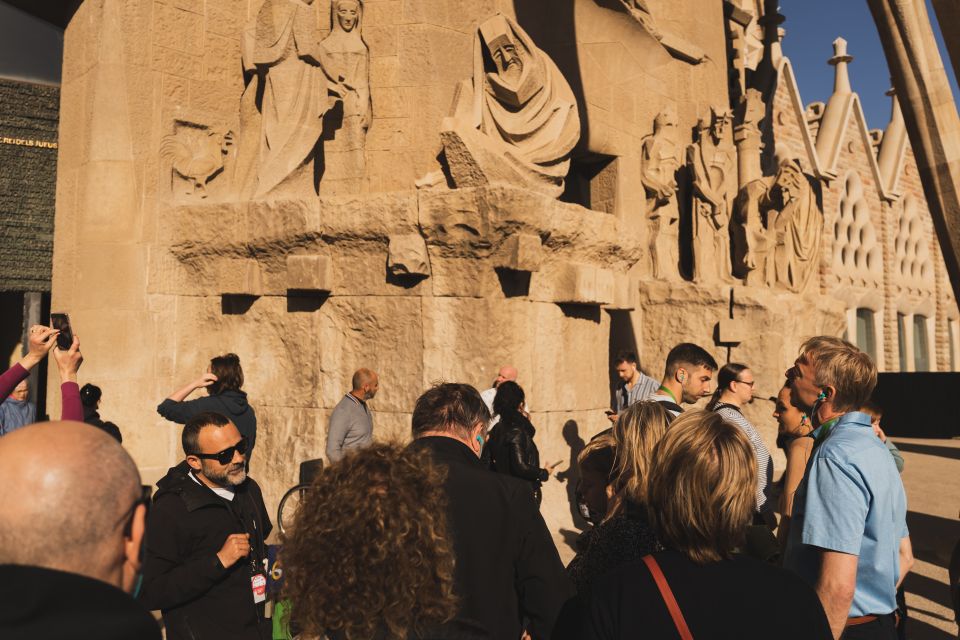
You’ll finish after the guided portion, with time to continue exploring on your own. This is your chance to do two things: look again, and linger where your attention caught.
When you’re inside, the stained glass color can shift as the light changes, and it’s worth rechecking the view after you’ve learned what to look for. If your guide shares photo pointers, take them seriously—some guides go as far as recommending good photo spots and even camera settings based on lighting.
If you have time, I’d also do a quick loop back to the area you found most striking. Early in the visit, you see the big forms. Later, you notice the smaller messages, textures, and how the columns and ceiling lines frame your view.
Who This Tour Fits Best (and Who Might Want Something Else)
This one works especially well if:
- It’s your first time at Sagrada Familia and you want the experience to feel coherent
- You like architecture explained with specific references to façades, symbols, and the building process
- You want a small group feel so you can keep up without feeling swallowed by a crowd
It may not be your best match if you:
- Want a long, totally independent visit where you control every minute
- Are easily thrown off by rules (dress code and ID requirements can feel strict)
Families can do well with the right pacing too, since guides are trained to keep the story moving and clear. English language support plus audio headsets also help a lot if you’re not fluent in Spanish or Catalan.
Should You Book This Sagrada Familia Skip-the-Line Tour?
Book it if you want the fastest path to understanding a landmark that can feel overwhelming on your own. You’re paying for interpretation (certified guide), time savings (skip-the-line), and extra context (museum artifacts and construction models). For $64, that’s a fair deal when you count everything you get in about 90 minutes.
Don’t book it—or swap plans—if you’re determined to wander without structure and you’re already comfortable with the basics of Gaudí and the basilica’s ongoing construction. In that case, you might feel the price is high for how short the guided portion is.
If you do book, do two things: arrive early at the meeting point, and dress for church rules. Then let the guide do the heavy lifting while you do the fun part—looking up and letting Gaudí’s light show work its magic.
FAQ
How long is the Sagrada Familia guided tour?
The tour lasts about 1.5 hours.
Does this include skip-the-line tickets?
Yes. Your tickets include skip-the-line entry through a separate entrance.
Where is the meeting point?
Meet your guide at Ringels souvenir shop at C/ de Mallorca, 418, 08013 Barcelona. Look for a guide holding a Golden Tour Guide sign inside the shop.
What language is the tour in?
The live guided tour and the included audio headset are in English.
Is there a security line when entering Sagrada Familia?
Yes. Visitors must pass through metal detectors, and you should anticipate about 20–30 minutes of wait time.
What’s the dress code for entering the basilica?
You’re expected to dress appropriately for a Catholic church. Tank tops, strapless shirts, short shorts, or sandals are not permitted.
Do I need to bring ID?
Yes. You must bring an ID to prove your age, and entry may be denied if you can’t show the correct proof.
What’s included in the tour price?
Included are skip-the-line Sagrada Familia tickets, a guided tour, a certified tour guide from the Barcelona Tourism Authority, audio headsets, and restroom facilities at the meeting point.
Is free cancellation available?
Yes. You can cancel up to 24 hours in advance for a full refund. You can also reserve now and pay later.