REVIEW · BARCELONA
Barcelona: Private City Tour by Eco Tuk Tuk
Book on GetYourGuide →Operated by Eco Tuk Tuk - Spain · Bookable on GetYourGuide
Barcelona feels bigger from the cockpit. This private ride uses a 100% electric eco tuk tuk, so you get great views with far less walking. I like that you’re not just pointed at photos; the local guide (often bilingual English/Spanish) ties the sights together with stories, and guides like Yago and Roger are the kind of people who make Gaudí click fast.
The second big win is how the tour is built around comfort and timing: it’s your group only, you get pre-arranged photo stops, and the vehicle runs rain or shine with blankets and protective covers in cooler months. One consideration: pickup isn’t included, so you’ll need to get yourself to the meeting point at Carrer de Casp 13 (Novedades Parking) in front of the Tivoli Theatre.
In This Review
- Quick take: what makes this tour work
- An electric tuk tuk is the smart way to start Barcelona
- Meeting at Carrer de Casp 13: plan to arrive a few minutes early
- Arc de Triomf and La Monumental: the city’s “big entrance” feeling
- Sagrada Familia plus Casa Mila and Casa Batlló: exteriors that still feel personal
- Plaça de Catalunya and the Gothic Quarter: where the tour starts to feel like a story
- La Rambla, Port Vell, and Ciutadella Park: the city’s middle story
- The Olympic Port: a different side of Barcelona
- How long to book: 60, 120, 180, or 240 minutes
- Price value: what $33 per person really buys
- Small group, private vehicle, and the 4-passenger limit
- What to bring (and what not to bring)
- Should you book this Eco Tuk Tuk tour?
- FAQ
- Where is the meeting point?
- Is hotel pick-up and drop-off included?
- Are entry tickets to Sagrada Familia or Gaudí buildings included?
- How long is the tour, and how do stops work by duration?
- Does the tour run in bad weather?
- What’s the group size and passenger limit per tuk tuk?
- What restrictions should I know before going?
Quick take: what makes this tour work
- Electric, private tuk tuk ride: easier on your legs than a full walking day.
- Pre-selected photo stops: you’ll know where to pull in for the shot.
- Gaudí exteriors on the route: Casa Batlló and Casa Mila are seen up close from the street.
- Old city + modern Barcelona mix: Gothic Quarter, La Rambla, plus Port Vell and the Olympic Port.
- Guide-driven orientation: you leave with a clearer sense of where neighborhoods are and what to prioritize next.
- Duration changes the coverage: the longer options add extra stops like Montjuïc.
An electric tuk tuk is the smart way to start Barcelona
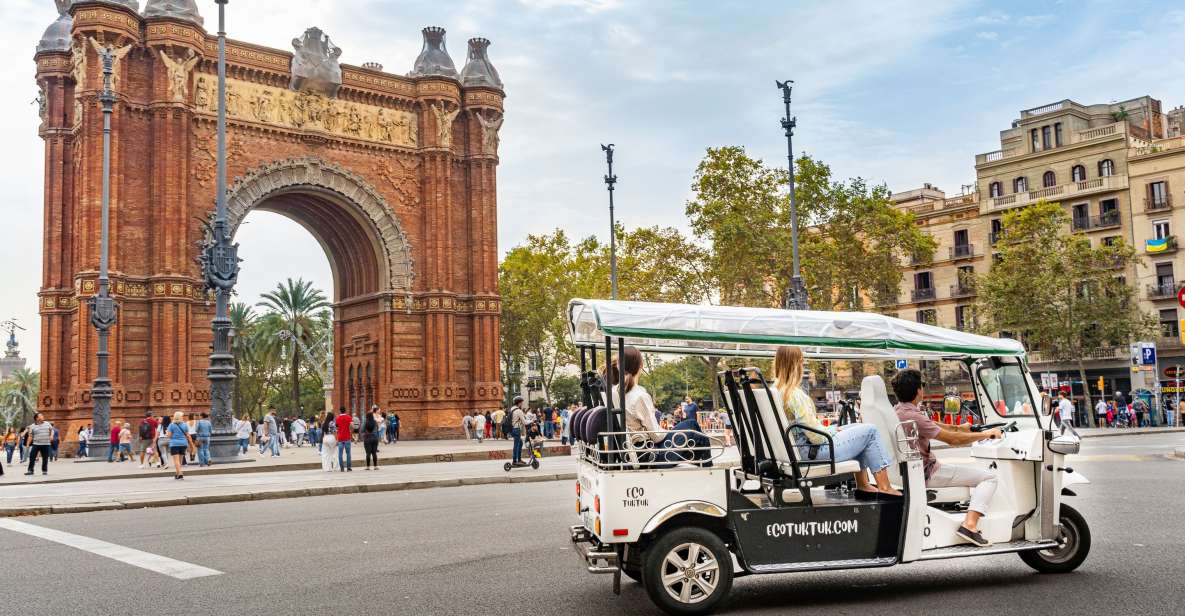
Barcelona can be a lot on day one. Between heat, hills, and the sheer number of must-sees, it’s easy to spend your first day tired and under-informed. This is why the electric tuk tuk format makes sense: you stay inside for the drive, see the architecture from the street, and get stops timed for visibility and photos.
The tuk tuk also helps you read the city quickly. You get a sense of the grid and the weird little bends that maps don’t show. And because it’s a smaller vehicle than a bus, the driving feels less like a moving slideshow and more like a guided route.
If you’re the type who wants to choose your next days with confidence, this tour gives you that fast “where am I” feeling without exhausting you.
You can also read our reviews of more city tours in Barcelona


Meeting at Carrer de Casp 13: plan to arrive a few minutes early
You meet at the lift entrance to Novedades Parking at Carrer de Casp 13, on street level in front of the Tivoli Theatre. The driver-guide meets you right there and picks you up.
I like meeting-point tours when they’re straightforward like this—no mystery locations, no long transfers. Still, the one drawback is on you: hotel pickup and drop-off aren’t included, and the tuk tuk doesn’t have a trunk. So if you’re carrying luggage or bulk, you’ll need another plan (storage at your hotel, or travel light).
Tip: aim to arrive a bit early and keep your ID or passport ready. The tour is efficient, and delays can shorten the time on the fixed route.
Arc de Triomf and La Monumental: the city’s “big entrance” feeling
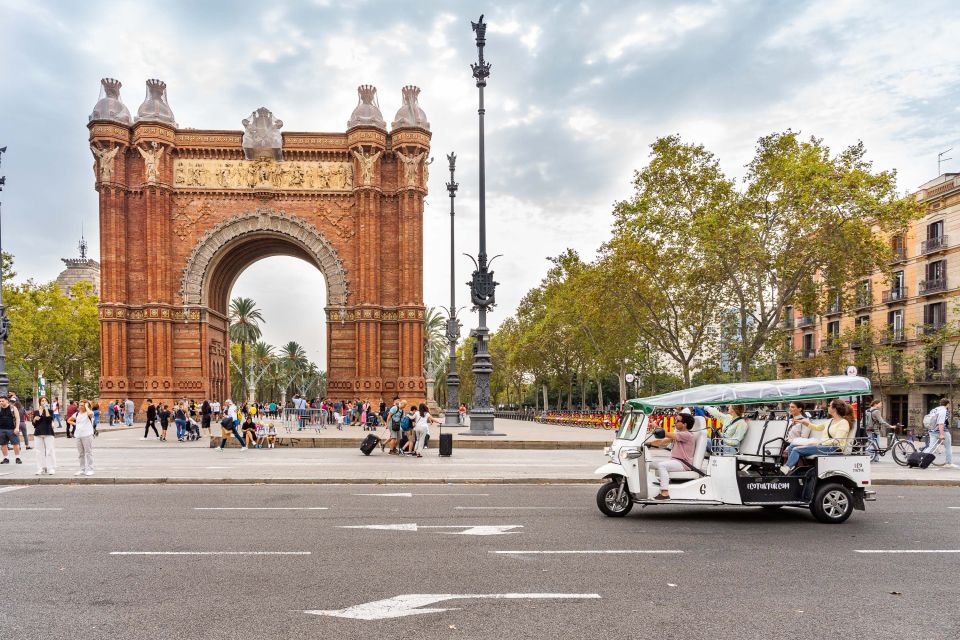
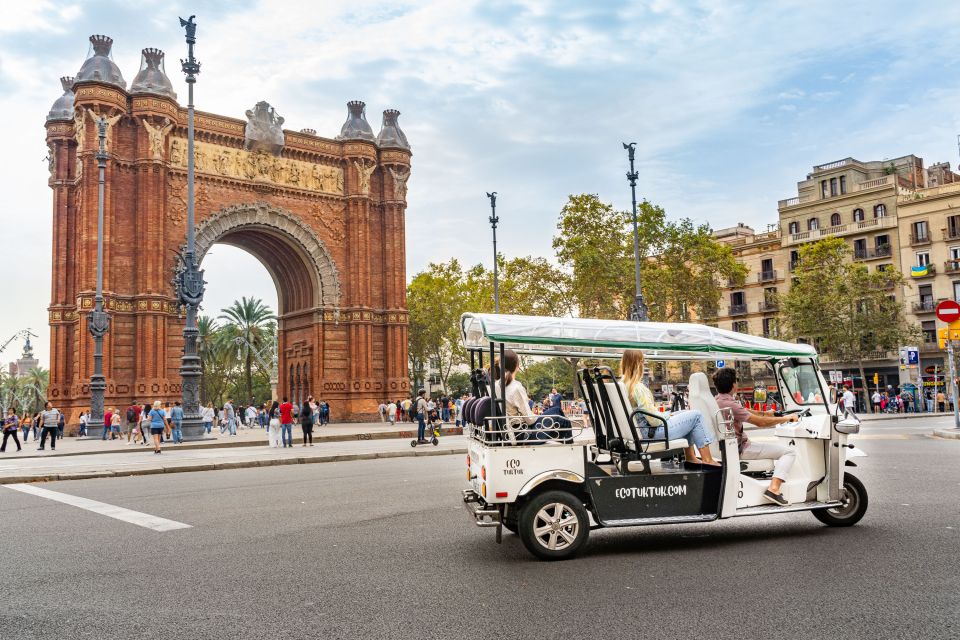
Your ride typically starts with a scenic introduction as you head toward Arc de Triomf. This area gives you a sense of Barcelona’s grand planning—wide avenues, clean sightlines, and that slightly ceremonial feel you don’t get when you’re only wandering side streets.
From there, you pass La Monumental, another piece of Barcelona’s built identity that helps balance the tour. It’s not just about the headline Gaudí stops. This is the kind of detour that makes the whole day feel more real, because it shows Barcelona as a living city, not just a museum list.
One practical upside: these early passes help you settle in. If you’ve been traveling and your brain is still buffering, the first stretch is a good warm-up before the more intense sightseeing stops.
Sagrada Familia plus Casa Mila and Casa Batlló: exteriors that still feel personal
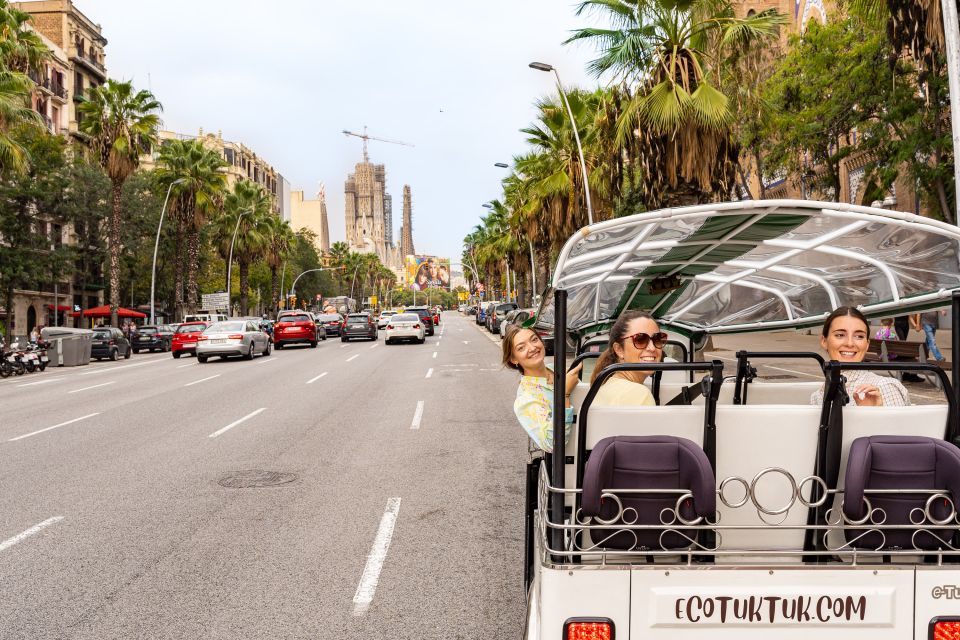
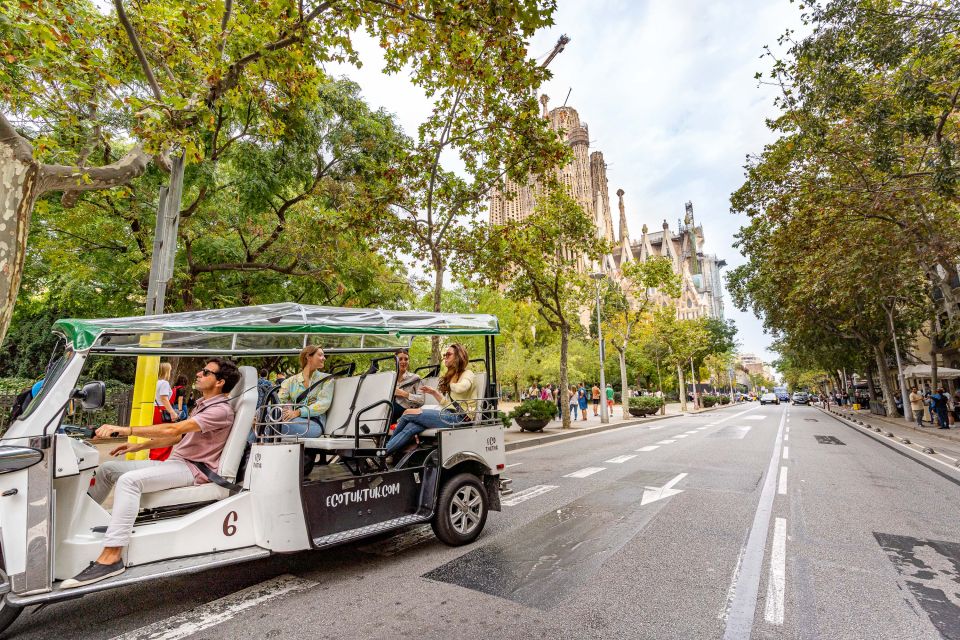
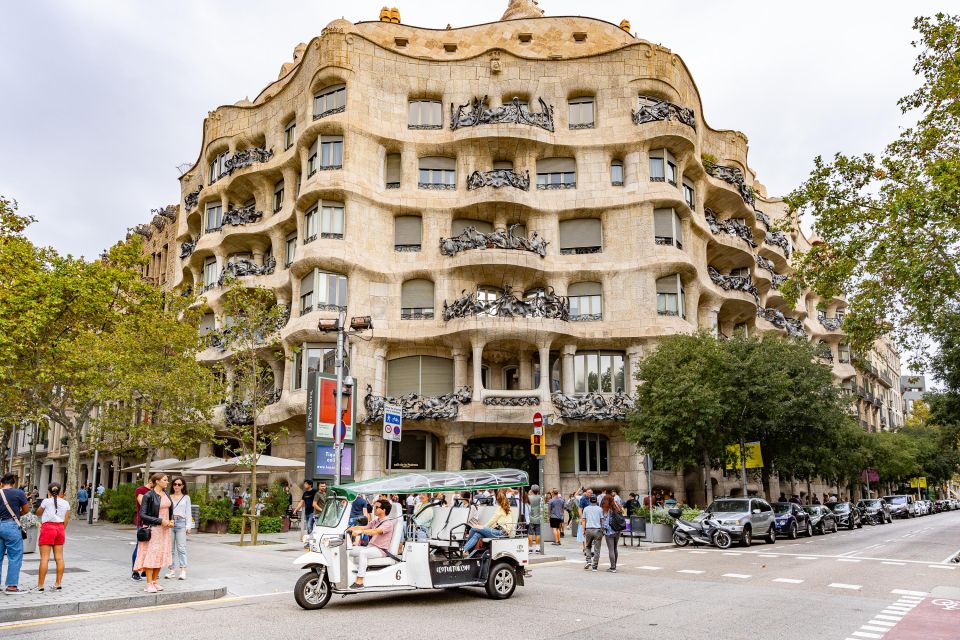
This is where the tour earns its reputation. You’ll see Sagrada Familia from the outside, then continue through the Gaudí zone with Casa Mila (La Pedrera) and Casa Batlló.
Seeing Gaudí buildings from the street is different from seeing them in photos. In person, you pick up the scale and the details that don’t fit in a postcard. The tuk tuk format also helps because you get excellent visibility and the driver can position for photo moments.
What I’d watch for at each stop:
- Sagrada Familia exterior: use the time to study the façade from the angle you’re offered, even if you don’t enter. The shapes and vertical rhythm start to make sense once you’ve seen it from more than one perspective on the route.
- Casa Mila exterior: it’s a building that looks better when you notice how the stone and curves play together. The drive-by gives you quick context.
- Casa Batlló exterior: the façade is the kind of thing you’ll want to photograph from multiple angles, and the pre-set photo stop helps you avoid rushing.
Also, you’ll often get plenty of story time here. Guides like Yago and Rodrigo are frequently praised for turning architecture into understandable narrative—why it looks the way it does, and how the ideas connect to Barcelona’s broader history.
Plaça de Catalunya and the Gothic Quarter: where the tour starts to feel like a story
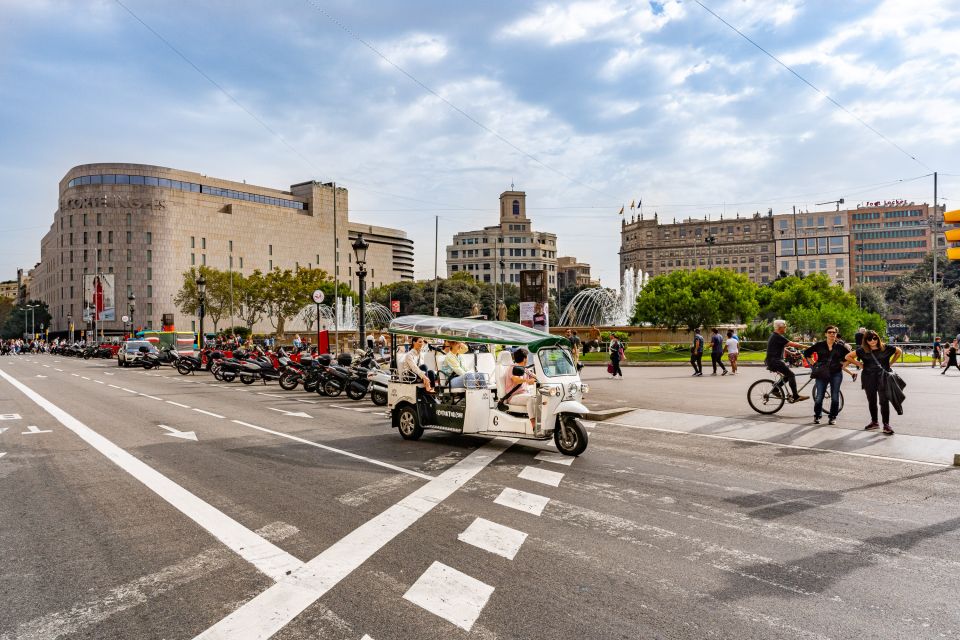
Once you hit Plaça de Catalunya, the vibe shifts. This is one of the city’s major junctions—busy, central, and full of movement. It’s a good place to start orienting yourself because it’s where many routes in Barcelona seem to orbit.
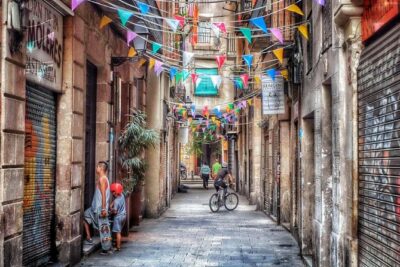
From there, you’ll head into the Gothic Quarter, described in the tour style as atmospheric, with hidden-corner feel. This is the segment where the guide’s role matters most. The driver can get you there fast, but the guide’s explanations are what help you connect what you see with what it means.
You also get photo opportunities along the way, and that’s key in the Gothic Quarter. If you’ve ever tried to plan it on your own, you know the streets can trick your sense of direction. A tuk tuk route with stop-and-go timing reduces the “where are we?” confusion.
You can also read our reviews of more private tours in Barcelona

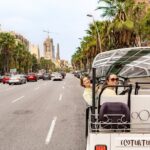

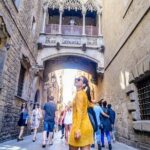
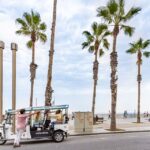

La Rambla, Port Vell, and Ciutadella Park: the city’s middle story
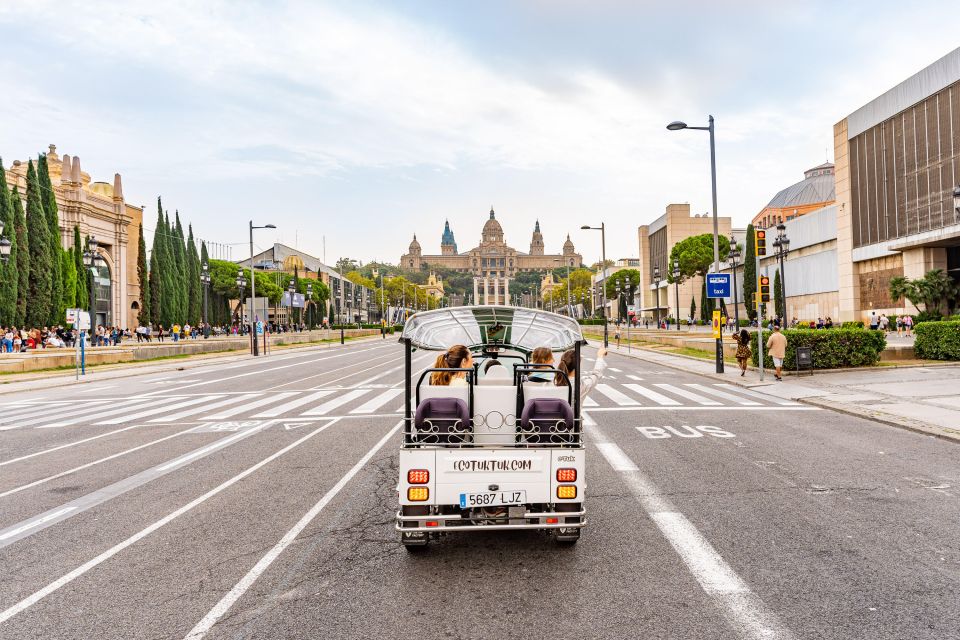
After the old-city maze, the tour moves into areas that feel more open and more urban-modern. You’ll see La Rambla, Port Vell, and Ciutadella Park as part of the broader sweep.
- La Rambla: you’ll recognize it immediately—main thoroughfare energy, lots going on, and a mix of storefront life. Even from the vehicle, it helps you understand how the Rambla acts like a spine for the city.
- Port Vell: this is a great contrast to the Gothic Quarter. You’re shifting from narrow stone streets to a waterfront feel, and you start to get a better sense for Barcelona’s geography.
- Ciutadella Park: parks are useful on tours because they act like breathing space. You’ll get views and a sense of where locals decompress when they’re not touring.
One thing I appreciate: this tour doesn’t treat the city like a list of separate attractions. It connects them. You leave with a mental map that makes choosing the next neighborhood easier.
The Olympic Port: a different side of Barcelona
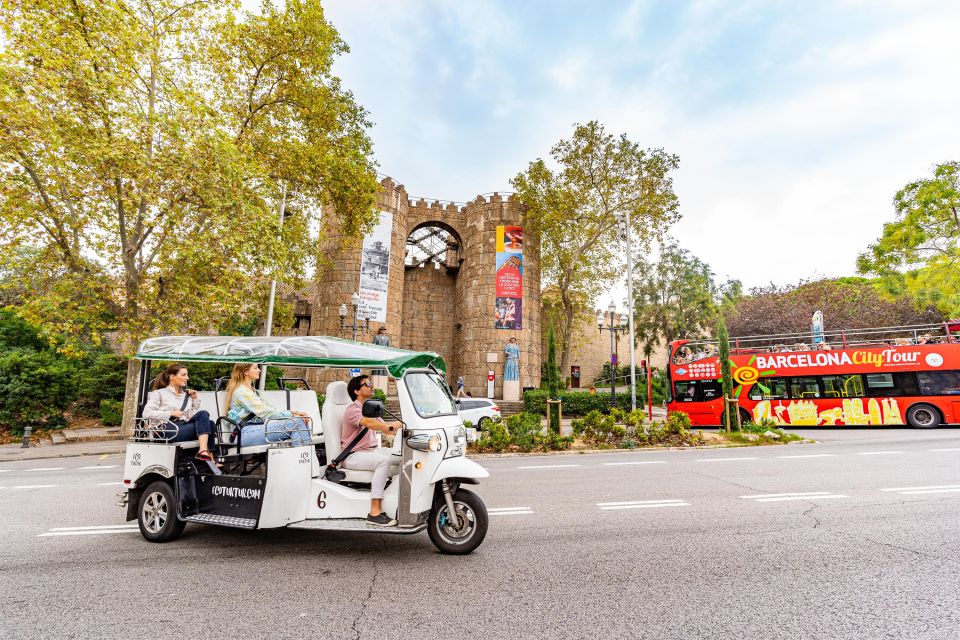
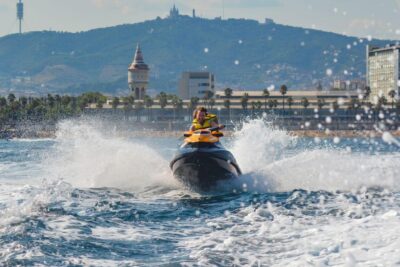
The tour also includes cruising through the Olympic Port, tied to the 1992 Summer Olympics sailing events. This stop is useful because it’s not purely “old world.” It shows Barcelona as a modern capital that staged global events and shaped parts of the coastline.
If you like the idea of understanding how cities reinvent themselves, the Olympic Port portion gives you that. Even if you’re not an Olympics fan, it helps explain why certain coastal sections feel the way they do today.
How long to book: 60, 120, 180, or 240 minutes
This tour comes in multiple lengths, and the time really does change what you get.
Here’s the practical take:
- 60-minute option: designed to include driving and orientation, but it doesn’t include stops.
- 120-minute option: adds stops and includes Montjuïc.
- 180- and 240-minute options: also include additional stops beyond the shorter routes (and street closures can slightly change what’s possible).
If you only have a little time and want quick orientation, go shorter. If you want Gaudí plus a stronger sense of the city’s variety, the longer options are the better fit. For most first-timers, I’d lean toward 2 hours or more so the tour isn’t just a scenic transit day.
Also note the route can vary if there are street closures or demonstrations. That’s not a failure of planning; it’s Barcelona being Barcelona.
Price value: what $33 per person really buys
At around $33 per person, you’re paying for more than transportation. You’re buying convenience, reduced walking, and a private vehicle experience—your group only—with a guide/driver involved.
What’s included that matters:
- A local accompanying guide/driver who helps make the route understandable
- Pre-selected photo stops (not random pull-offs)
- 100% electric ride
- Blankets and protective covers in rain/cool weather
- Insurance
What’s not included:
- Entry tickets to monuments
- Food or drinks
- Hotel pickup/drop-off
So the value depends on your priorities. If you’d otherwise spend your day doing ticket lines plus long walks, this can be a smart use of time. If you’re coming with a full schedule and already know every neighborhood detail, you might find the tour mainly useful as a quick orientation tool.
For me, the sweet spot is when you want a guided start and then you’ll build the rest of your trip from there.
Small group, private vehicle, and the 4-passenger limit
This is a private setup for your group, and tuk tuks are booked privately. There’s a legal maximum of 4 passengers per tuk tuk, so larger groups may need more than one tuk tuk, and the price adjusts based on the number of vehicles required.
This matters because it affects comfort and how “private” the experience stays. If you’re traveling with friends or family, it can be a great way to see the city together without splitting up into multiple buses.
What to bring (and what not to bring)
Keep it simple:
- Bring your passport or ID card.
- The tuk tuk doesn’t have a trunk, so large items and luggage aren’t a great match.
- Pets aren’t allowed, and baby strollers are not allowed.
- The tour isn’t suitable for wheelchair users (and the vehicle restrictions list non-folding wheelchair types).
The good news is the ride is designed for typical sightseeing needs. The not-so-good news is that if you’re traveling with bulky gear, you’ll want to plan storage in advance.
Should you book this Eco Tuk Tuk tour?
I’d book it if:
- It’s your first day in Barcelona and you want to get oriented fast.
- You prefer less walking while still seeing real city life.
- You value a guide’s stories as part of the sightseeing, not just a route checklist.
- You want exteriors of Gaudí icons like Sagrada Familia, Casa Mila, and Casa Batlló without committing to monument entry yet.
I’d think twice if:
- You want guaranteed monument entry (tickets aren’t included).
- You need hotel pickup or you’re carrying large luggage.
- Your group needs wheelchair access (the tour isn’t suitable for wheelchair users based on the provided restrictions).
If your goal is to leave Barcelona with a clearer mental map and a stronger sense of what to do next, this one is a strong starter.
FAQ
Where is the meeting point?
You meet at the lift entrance of Novedades Parking at Carrer de Casp 13, 08010 Barcelona, in front of the Tivoli Theatre. Wait at street level by the lift entrance.
Is hotel pick-up and drop-off included?
No. Pick-up and drop-off at the hotel are not included.
Are entry tickets to Sagrada Familia or Gaudí buildings included?
No. Entry tickets are not included; you’ll see the monuments from the outside.
How long is the tour, and how do stops work by duration?
The tour is offered in 1–4 hour options. The 60-minute tour does not include any stops. The 120-minute tour includes a stop at Montjuïc, and longer tours include additional stops.
Does the tour run in bad weather?
Yes. It runs rain or shine, and in winter the tuk tuks have protective layers plus blankets for warmth.
What’s the group size and passenger limit per tuk tuk?
The tuk tuks are booked privately, with a legal maximum of 4 passengers per tuk tuk.
What restrictions should I know before going?
Pets are not allowed, baby strollers and luggage/large bags aren’t allowed, and the tour is not suitable for wheelchair users.