REVIEW · BARCELONA
Barcelona: Dark History Night Walking Tour
Book on GetYourGuide →Operated by Runner Bean Tours · Bookable on GetYourGuide
Barcelona at night turns into a courtroom. This 2-hour dark history walk through El Born and La Ribera keeps it real: no ghost tricks, just the Spanish Inquisition, executions, and the people caught up in it. I love the way the guide uses a wall projector and clear headsets so the details land fast, even when you’re walking through narrow medieval streets.
One catch: this is not a fluffy bedtime story. It focuses on torture, public executions, and violent themes, so it’s not recommended for children under 14, and it can feel intense if you’re easily spooked.
In This Review
- Key highlights worth your attention
- Arc de Triomf to El Born: Finding the group and starting in the right mood
- Why El Born and La Ribera change after dark
- The Spanish Inquisition: What you actually learn (and why it sticks)
- Executions, forgotten cemeteries, and punishment in public view
- Hearing about the executioner of Barcelona (the job behind the terror)
- The storytelling tools that keep a dark tour from becoming heavy
- How the 2 hours actually feel: pace, distance, and weather
- Price and value: why $24 can work (if the topic is your kind of thing)
- Who should book this dark history tour, and who should skip it
- Should you book the Dark History Night Walking Tour in Barcelona?
- FAQ
- Is this a ghost tour or paranormal experience?
- Where do I meet the guide?
- How long is the tour, and what time does it start?
- What language is the tour in?
- What age is this tour suitable for?
- What is included during the tour?
- Is the tour wheelchair accessible?
- What should I bring?
- Does the tour run in rain?
- How much does it cost, and can I change my plans?
Key highlights worth your attention
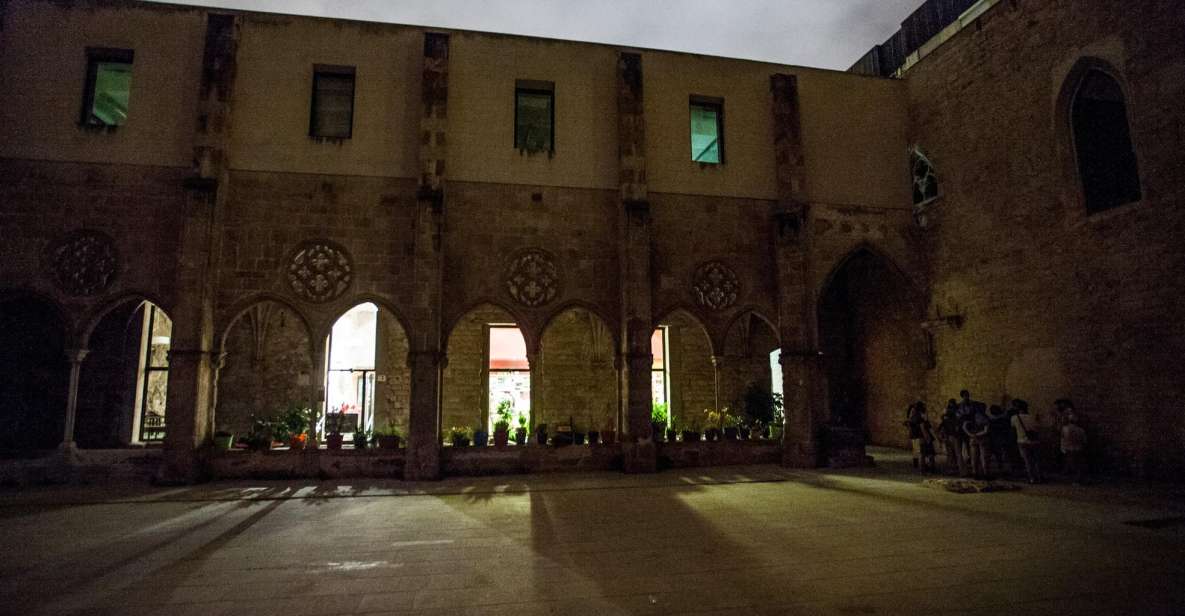
- Arc de Triomf start point: you meet under the arch, right by Metro Line 1 (easy to find)
- Real history, not paranormal theater: no gimmicks, no scary pranks, just documented dark events
- El Born + La Ribera at night: a medieval street maze that adds atmosphere to the facts
- Inquisition trials explained clearly: you learn how accusations could turn into fatal punishment
- Execution-focused storytelling: you hear about executions, forgotten cemeteries, and the site of punishments
- Guide-led visuals: a wall projector plus headsets help you follow along without guessing
Arc de Triomf to El Born: Finding the group and starting in the right mood
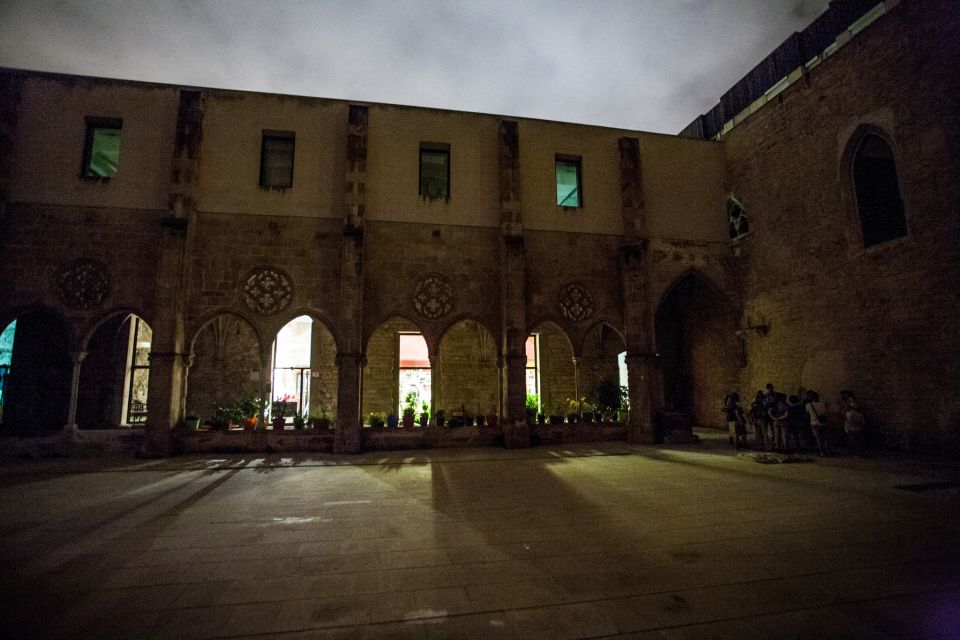
The tour starts where a lot of Barcelona tours start because it works: under the arch of Arc de Triomf. It’s also simple for transit. Use Metro Line 1 and you’ll be close by. That matters for night tours. You don’t want your “dark history” to begin with a stress spiral because you missed the meeting point.
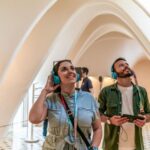
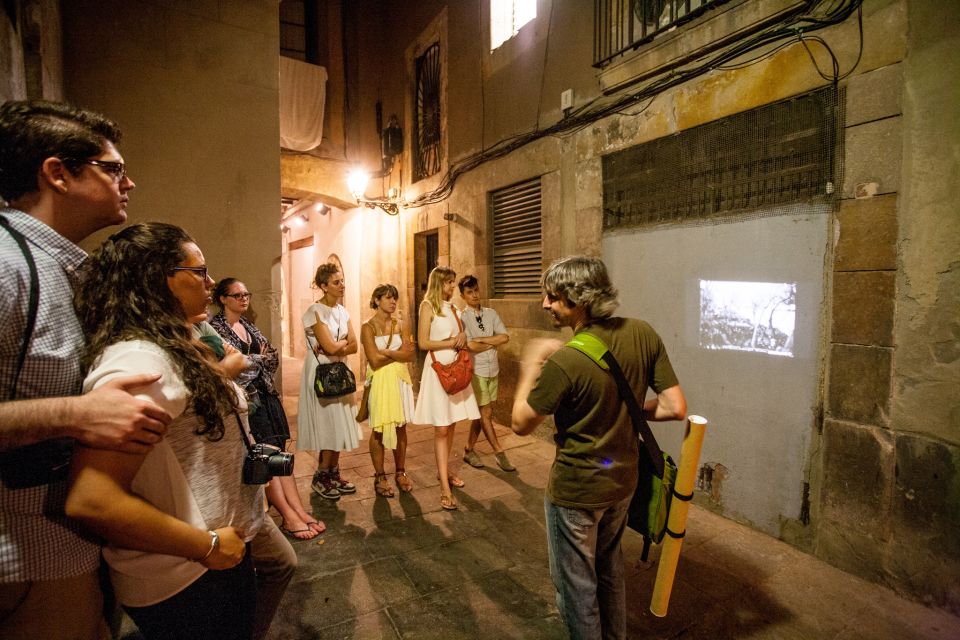
Once you spot the group, you’ll get set up quickly. The tour includes headsets, which is a small detail that makes a big difference when streets get noisy and the guide is moving you along tight corners. You also get a wall projector for explanations, so the story isn’t just talked at you. It’s shown.
Timing runs on local nightfall. The exact start time shifts through the year, but it’s always designed to feel like you’re walking the city after dark, when those old lanes in El Born start doing what they do best: creating shadows and questions.
You can also read our reviews of more walking tours in Barcelona



Why El Born and La Ribera change after dark
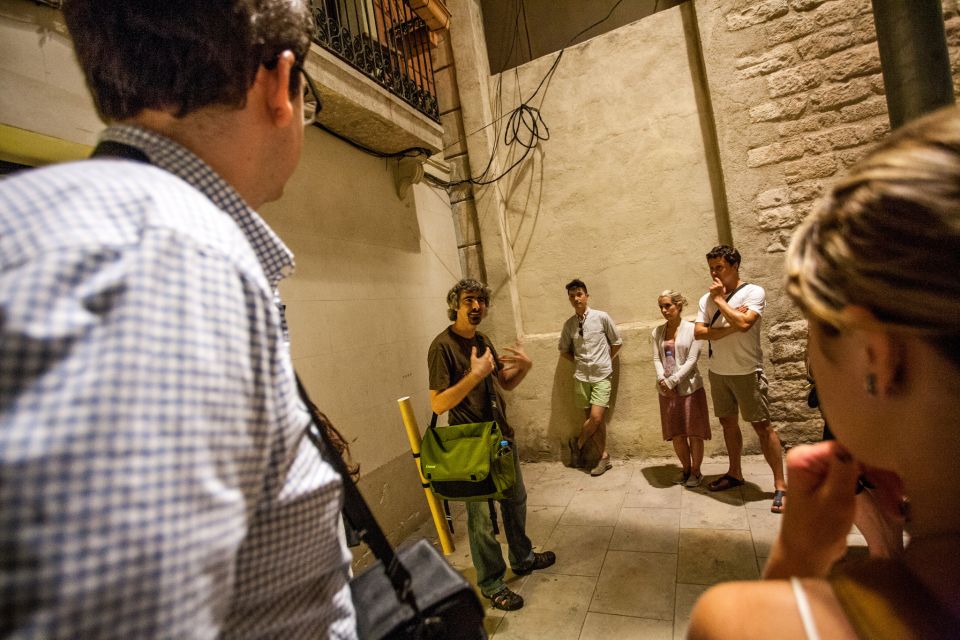
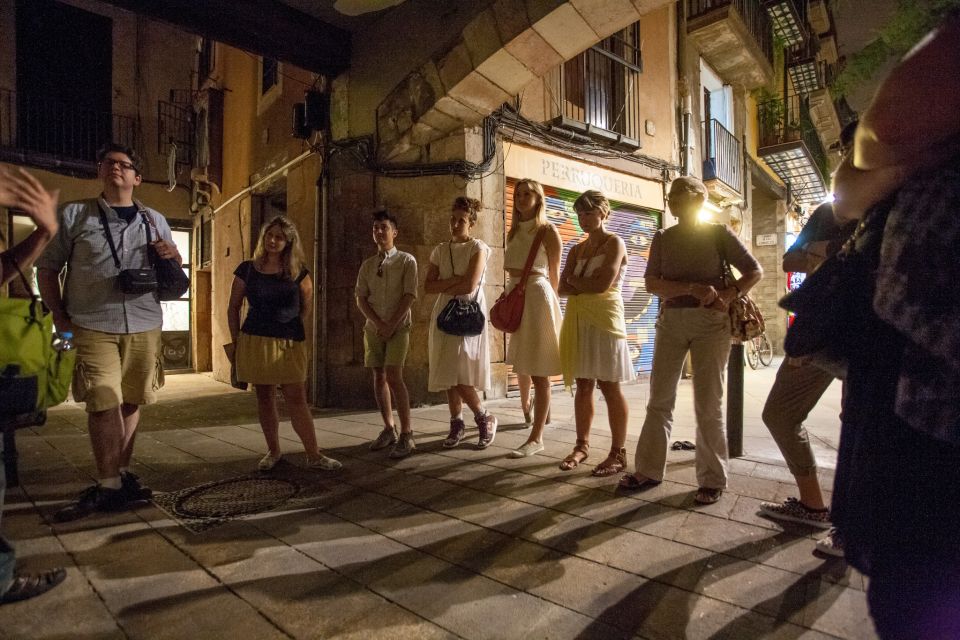
El Born and La Ribera are the kind of neighborhoods you can wander in daylight and still miss things. At night, the street rhythm feels different. You’re walking a maze of medieval streets, and the tour leans into that. Instead of treating these areas like pretty backdrops, it turns them into the stage where punishments, rumors, and fear played out.
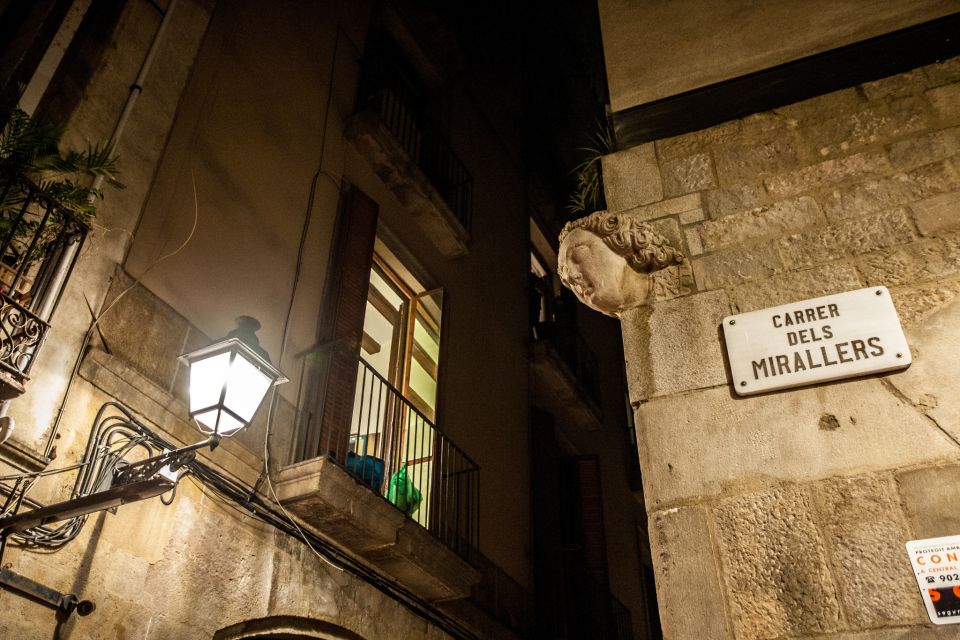
This matters because Barcelona’s “layers” aren’t just about architecture. Names of streets and the feel of buildings can point you toward older uses of space—where people gathered, where judgment happened, and where burial sites or forgotten grounds sat quietly for centuries. On this walk, you don’t just pass locations. You connect them to what the city did to people when control mattered more than compassion.
I also appreciate that the tour isn’t trying to make you believe in monsters under the bed. Yes, a couple legends can show up, but the core stays grounded: this is historical storytelling, not a paranormal walk. If you like spooky mood but want the substance to be real, that balance is the point.
The Spanish Inquisition: What you actually learn (and why it sticks)
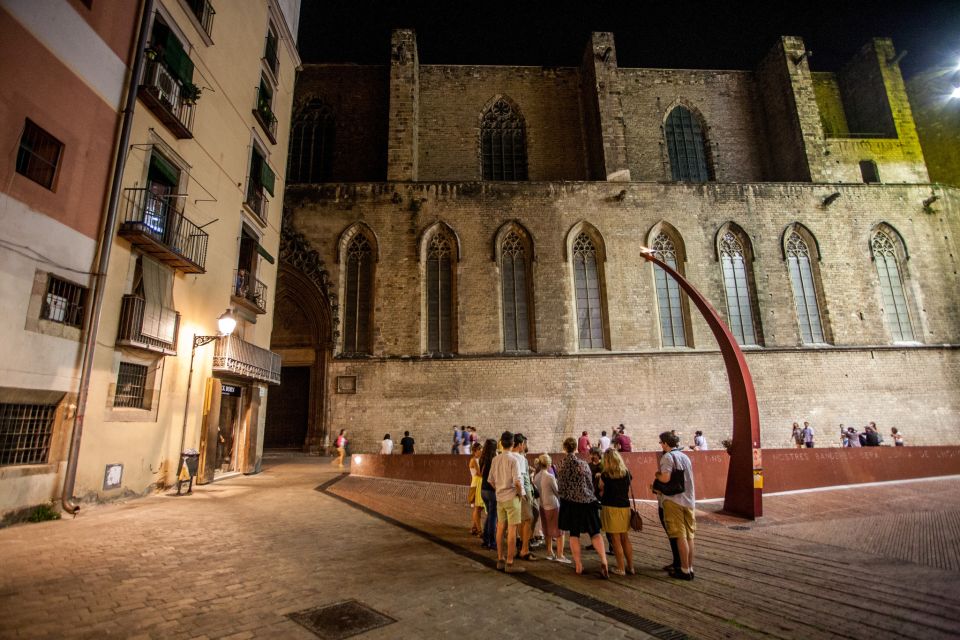
The Spanish Inquisition is one of those topics people throw around in pop culture, often with vague ideas. This tour works better than the usual “history facts” because it frames the system in human terms: accusations, investigation, fear, and the consequences that followed.
In a tight neighborhood walk, you’re not handed a textbook. You hear stories tied to places around El Born and La Ribera and how authority shaped daily life. The guide explains how the Inquisition operated, and then connects that pressure to what people experienced in medieval Barcelona—when “heresy” wasn’t just a word, but a pathway to punishment.
If you care about history that has teeth—history that changes how a city “feels”—this part delivers. You come away understanding why people stayed cautious, why rumors traveled, and why public punishment was designed to be witnessed.
And because it’s English only, you’re not stuck decoding translations while the group is moving. The combination of headsets and the guide’s pacing makes it easier to follow the thread even when you’re walking and looking around.
Executions, forgotten cemeteries, and punishment in public view
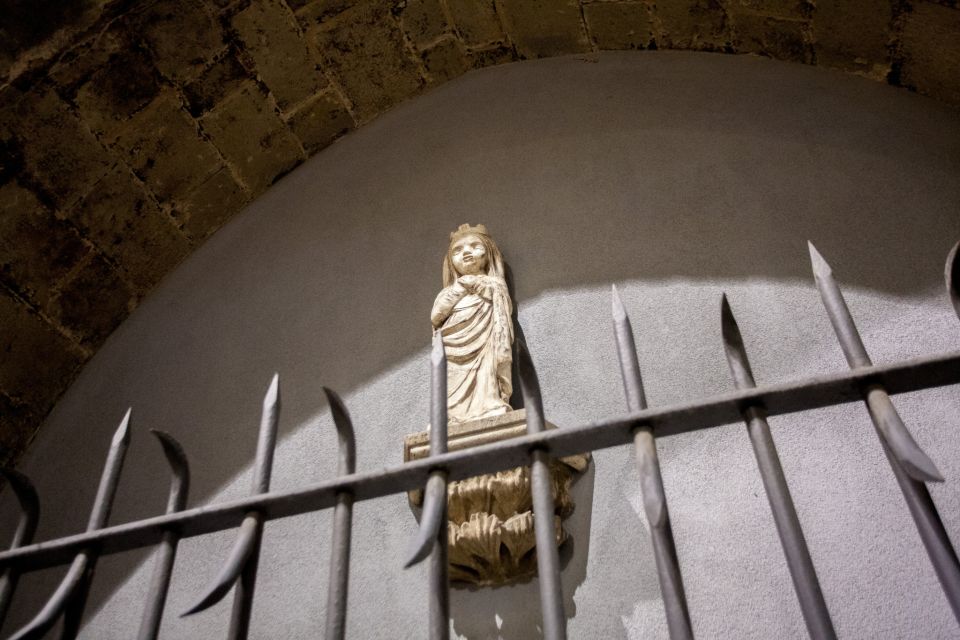
A big promise of this tour is that you’ll learn about forgotten cemeteries and the site of executions. Even without turning this into gore for its own sake, that’s a powerful theme: punishment wasn’t private. It was public. People could see what happened to someone accused and draw their own conclusions fast.
In practice, this means you spend part of the evening connecting locations in the medieval street grid to the darker functions they once held. Cemeteries and execution sites become more than “historic spots.” They become evidence of how a city managed control through fear.
One of the best effects is how it changes your “walk past” behavior. Barcelona is full of architecture that looks calm now. After hearing what happened in the same spaces centuries ago, you start noticing small things differently: the way buildings line up, how streets narrow, and how crowds could form. You don’t have to pretend you’re in the past. The tour just gives you enough context that the present starts speaking.
Hearing about the executioner of Barcelona (the job behind the terror)
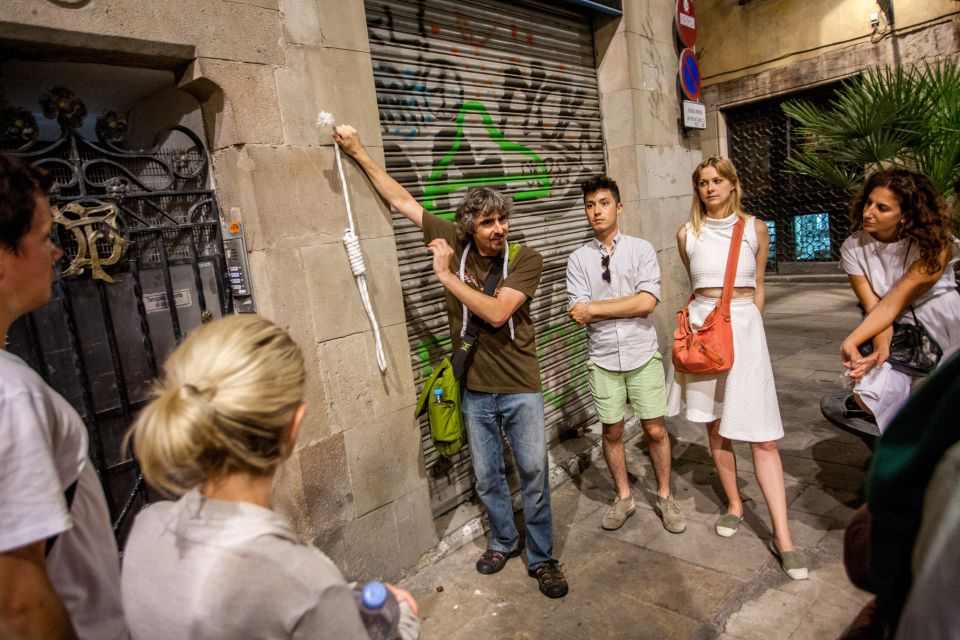
Most history about violence focuses on the victims and the institutions. This tour adds another layer: what life was like for the executioner of Barcelona.
That doesn’t mean the guide makes excuses for cruelty. It means you learn how violence functioned as work inside a system. You get a clearer picture of roles, responsibility, and how “order” was maintained through brutal routine.
I like this angle because it prevents the story from turning into a simple “good vs. bad” movie plot. Humans built these systems. Humans carried out the steps. When the tour talks about the executioner, it forces you to see the machinery of punishment, not just the headline event.
If you’re the kind of person who hates vague explanations, you’ll probably enjoy how the guide ties the personal role to the broader Inquisition-era context.
You can also read our reviews of more historical tours in Barcelona
The storytelling tools that keep a dark tour from becoming heavy
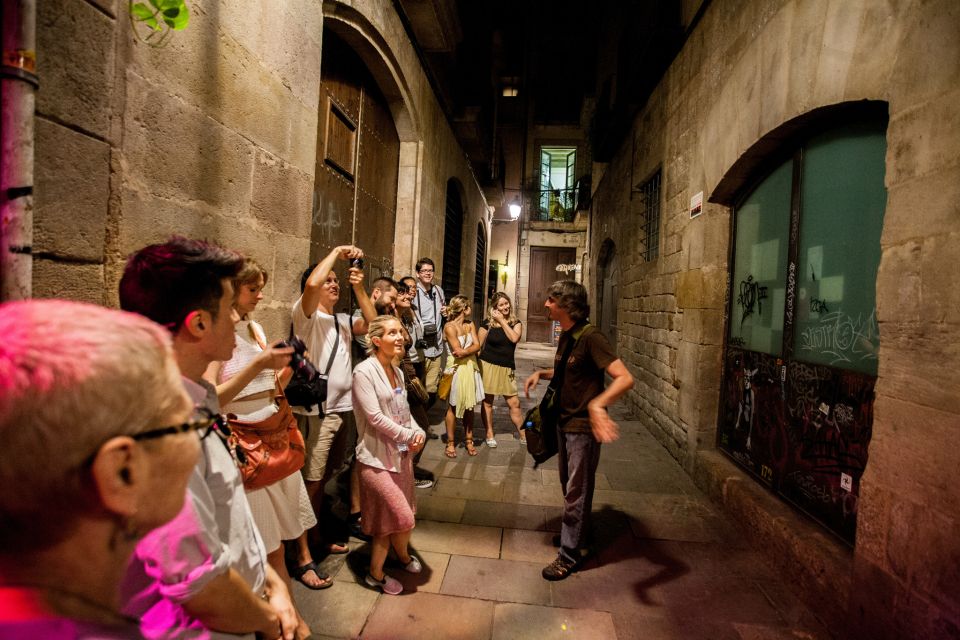
This tour doesn’t rely on jump scares. It relies on presentation. The guide uses a wall projector to illustrate explanations and includes props and visual aids as part of the storytelling style.
That’s not fluff. It makes the facts easier to track while you’re outside, walking, and listening. It also keeps the tour from getting too abstract. When you can see what the guide is describing, the details feel more concrete—and less like a lecture you tune out.
You may also notice a consistent “voice” from guide to guide. In the same program, you might meet people like Elena or Sara—and the group energy tends to reflect that: animated delivery, interaction with the tour group, and a focus on keeping pacing comfortable even though the material is heavy.
Some guides in this setup are especially known for involving the group, using interactive moments to keep attention. If you like history that talks back, this format fits.
How the 2 hours actually feel: pace, distance, and weather
The tour runs 2 hours, and the start time shifts with the season’s nightfall. So plan for a proper evening block, not a quick stop between dinner reservations.
In terms of intensity, the walking is night walking through central Barcelona, and you’ll be moving between points in El Born and La Ribera. That’s part of the value. You’re not trapped in one spot waiting for the next slide. You’re seeing the neighborhoods while you learn why they mattered.
Weather matters for comfort, not for cancellation. The tour runs in all kinds of weather, and rain alone isn’t enough to cancel. If heavy rain hits, bring suitable rain gear. You’ll also be walking at night, so good footwear and a calm pace help. The guide should keep things moving, but you’ll still be on your feet.
One practical item: bring a camera if you want photos. Just be mindful that the tour also uses visual aids and storytelling moments, and you’ll want to listen as much as you take pictures.
Price and value: why $24 can work (if the topic is your kind of thing)
At $24 per person for a 2-hour guided night walk, this sits in the “serious side-hustle” range of Barcelona tours—meaning it’s affordable compared to the big-ticket experiences, but not so cheap it feels stripped down.
The value comes from three areas that matter:
- You get a professional local guide who ties locations to dark historical events.
- You get equipment that improves comprehension (headsets and wall projector).
- You get time in the city at night, walking neighborhoods like El Born and La Ribera rather than doing a quick drive-by.
If you’re paying for a tour hoping for dramatic theatrics, you might feel disappointed. But if you want something different from the typical Gaudí-and-Gothic Quarter routine, the topic is the draw—and the structure is set up to make you follow the story without getting lost.
Also, numbers are limited. That’s a practical reason to book early, not just a marketing line. Smaller groups generally make it easier to hear the guide and keep the flow of the walk.
Who should book this dark history tour, and who should skip it
This tour fits best if you meet a few simple criteria:
- You like history that explains cause and consequence, not just dates.
- You’re curious about the Spanish Inquisition and public punishment in medieval Barcelona.
- You can handle dark themes without needing them softened.
It’s also a good match if you like spooky mood but don’t want a ghost tour. The tour is explicitly historical, even if some legends might be mentioned along the way.
Skip it if:
- You’re traveling with children under 14. It’s not recommended for that age group.
- You’re likely to get rattled by topics like executions and torture.
- You want a light, feel-good night out with minimal serious content.
Should you book the Dark History Night Walking Tour in Barcelona?
My take: book it if you want a guided night walk that changes how you see Barcelona’s central neighborhoods. You’ll pay $24 for a 2-hour experience that uses headsets and a wall projector to keep you locked in, while the guide ties Inquisition stories, executions, and even the executioner’s role to real locations in El Born and La Ribera.
Don’t book it if you need a gentle evening or you’re bringing younger kids. Also, if you hate walking at night in variable weather, you might find it less fun than you hoped.
If you’re the type who enjoys dark history done straight—no paranormal tricks, no pranks—this is one of the more focused ways to spend an evening in Barcelona.
FAQ
Is this a ghost tour or paranormal experience?
No. It’s a historical night tour focused on Barcelona’s darker past, including the Spanish Inquisition, executions, and related facts. Some legends may be included, but it is not presented as paranormal activity.
Where do I meet the guide?
Meet your guide under the arch of Arc de Triomf. The nearest Metro stop is Arc de Triomf (Line 1).
How long is the tour, and what time does it start?
The tour lasts 2 hours. Start times vary depending on nightfall throughout the year, so you’ll want to check availability for the specific time offered.
What language is the tour in?
The tour is English only.
What age is this tour suitable for?
It is not recommended for children under 14.
What is included during the tour?
Included are a professional local guide, the night walking tour, a wall projector to illustrate explanations, and headsets for communication between the guide and participants.
Is the tour wheelchair accessible?
Yes, it is listed as wheelchair accessible.
What should I bring?
Bring a camera. If weather is heavy, bring suitable rain gear since the tour runs in all kinds of weather.
Does the tour run in rain?
Yes. Rain or other weather conditions are not enough reason to cancel. In case of heavy rain, you should bring suitable rain gear.
How much does it cost, and can I change my plans?
The price is $24 per person. There is free cancellation up to 24 hours in advance for a full refund, and you can reserve now and pay later to keep plans flexible.