REVIEW · BARCELONA
Barcelona Interactive Spanish Cooking Experience
Book on Viator →Operated by Travel Brilliant · Bookable on Viator
Paella is fun, but this one starts earlier. You begin at La Boqueria and end in an El Born cooking studio learning classic seafood paella from scratch, with pintxos and sangria along the way. It is a smart mix of market know-how and real hands-on cooking, not just watching someone else work.
I especially love the hands-on rhythm. You help build the ingredients, make your own pintxos, and get into the steps that make paella work, including letting it simmer properly. I also like that the class is built around eating what you cook, with sangria making as part of the experience.
One thing to plan for: there is walking between stops, and the market timing can change. Boqueria is closed on Sundays and national holidays, so on those days you may not get the full market visit.
In This Review
- Quick hits before you go
- First stop: Travellers Nest Bar to La Boqueria
- La Boqueria market: what you’re actually learning
- El Born cooking school: open kitchen, workshop bar, and a shared table
- Pintxos and sangria: your warm-up before paella
- Seafood paella: step-by-step technique you can repeat later
- Eating your work: tapas, paella, and how the meal comes together
- Recipes to take home: the real reason this sticks
- Price and value: does $72.56 make sense
- Who should book this Barcelona paella and sangria class
- Should you book it
- FAQ
- How long is the cooking experience?
- Where does the activity start and end?
- Is La Boqueria included?
- When is La Boqueria closed for this experience?
- What dishes are included?
- Do you get recipes to take home?
- Is there a vegetarian or non-seafood paella option?
- Can the chef accommodate allergies?
- What’s the cancellation policy?
Quick hits before you go
- La Boqueria first: your chef helps pick fresh seafood and show you what to look for
- Small-group vibe: max 28 people, with seating that supports a shared table feel
- Pintxos + sangria: you make the snacks and mix the drinks before paella finishes
- Seafood paella from scratch: you learn each stage, then enjoy it right away
- Diet-friendly options: non-seafood alternative is available, and vegetarian paella can be made
- Take-home recipes: you leave with tips you can actually use later
First stop: Travellers Nest Bar to La Boqueria
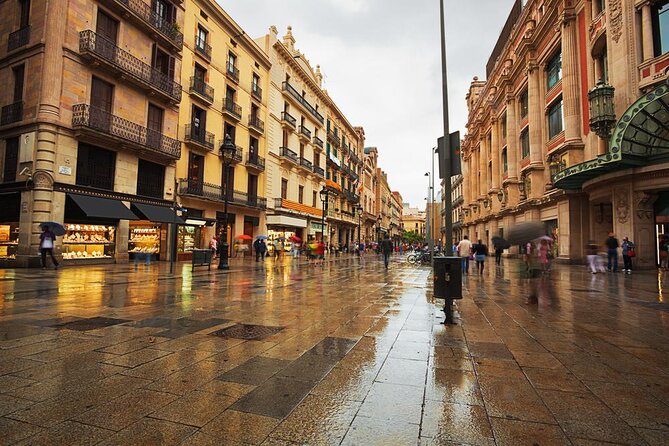
This experience starts at Travellers Nest Bar, Carrer de la Boqueria 27, in Ciutat Vella. From there, you head out to the market area and get oriented fast. The timing matters because paella is all about fresh ingredients and sensible workflow, and the class is designed around that.
Most classes run about 3 hours, and you can choose morning, lunch, mid-afternoon, or dinner slots. That flexibility is helpful if you like to pair this with other El Born or Gothic Quarter sightseeing. Also, the meeting point is near public transport, which makes it easier to slot into a travel day without turning it into a logistics puzzle.
If you’re the type who likes to understand where food comes from, starting with the market is a big win. You are not just buying groceries; you’re getting guidance on ingredient choices and how those choices affect the final dish.
You can also read our reviews of more cooking classes in Barcelona
La Boqueria market: what you’re actually learning
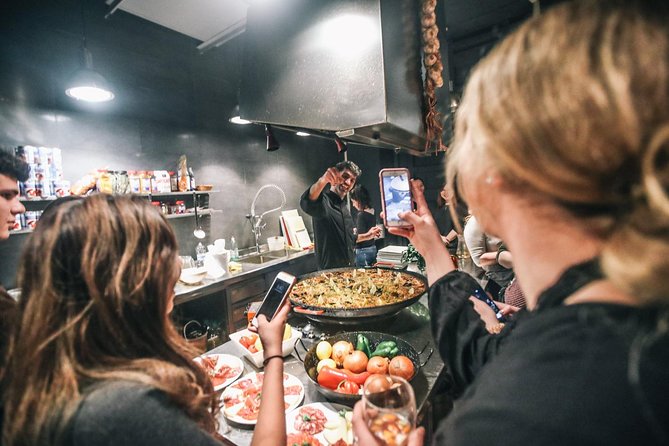
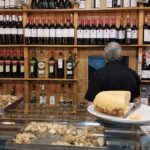
At Mercat de la Boqueria, the chef selects seafood (and other items) and introduces you to the smells and flavors you should expect in Spanish cooking. This is where the class becomes more than a cooking demo. You learn what “fresh enough” looks like and how to think like the person feeding a crowd.
You should know the practical detail that affects your expectations: the market visit is subject to opening times, and Boqueria is closed on Sundays and national holidays. If you’re traveling on one of those days, the start may feel different, because the market portion may not happen.
In the studio phase, this market knowledge pays off. When you later handle seafood ingredients and build paella, you’ll have a clearer idea of why certain steps and ingredient selections matter. That’s also why the chefs who teach this style of class tend to focus on method as much as ingredients.
And yes, there is time to look around the market, so even if you already know Spain’s food scene, you’ll likely pick up ideas for what to buy next time on your own.
El Born cooking school: open kitchen, workshop bar, and a shared table
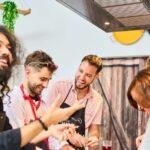
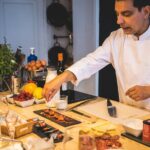
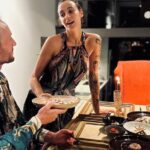
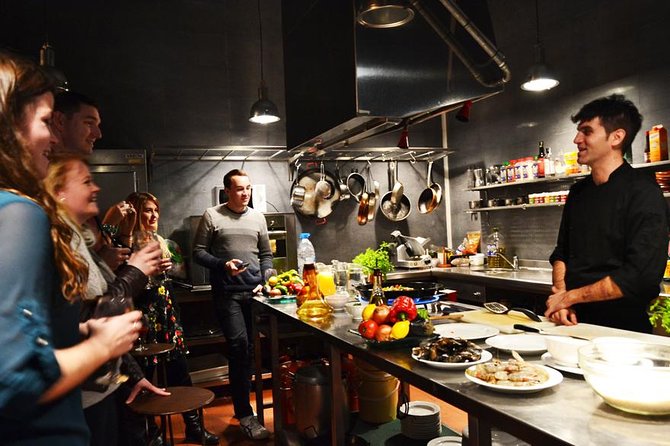
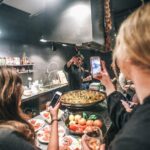
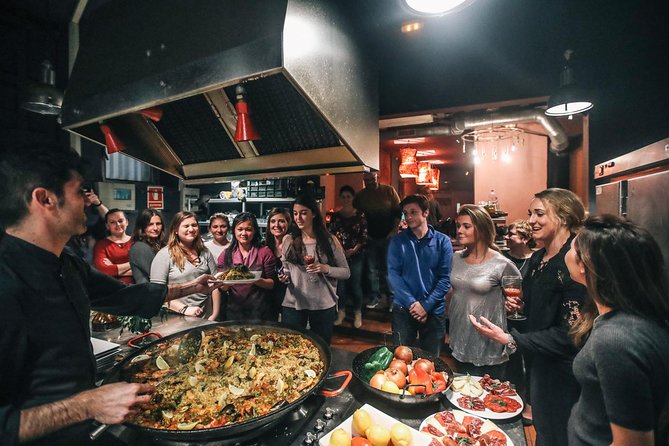
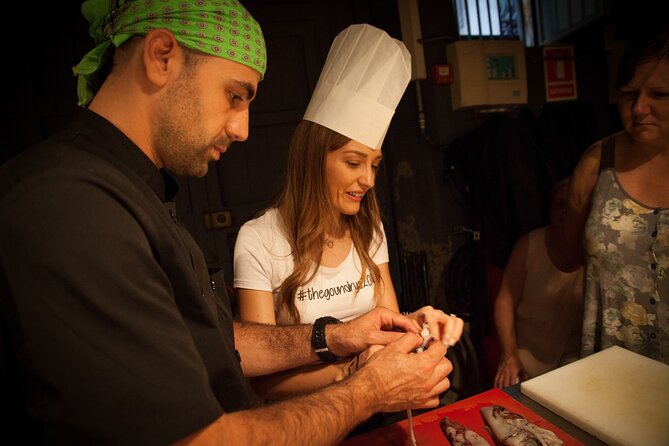
After the market, you walk to the cooking space in El Born. The setting is part of the charm: an open kitchen feel, a workshop bar, and cozy restaurant-style seating. It’s the kind of setup where you can see what’s going on, but you still get hands-on tasks instead of standing at the side.
Group size is limited. While the experience allows up to 28 people, the way the class is set up tends to keep it social rather than crowded. In practice, you’ll be around a large table with other participants, and the chef guides you step-by-step.
If you are traveling with friends or family, this format is a good fit because you can spread tasks out and still stay connected as a group. If you’re solo, it also works, because you’re cooking and eating at the same time, which naturally creates conversation. Several instructors (for example, Andrea, Luca, Kako, Andres/Andreas, and Juan show up as class leaders in past sessions) have taught the same overall style: teach the why, then let you do the work.
One note: reviews point out that there is walking involved. It is not a marathon, but if you have limited mobility, factor in the stroll between the market and the kitchen.
Pintxos and sangria: your warm-up before paella
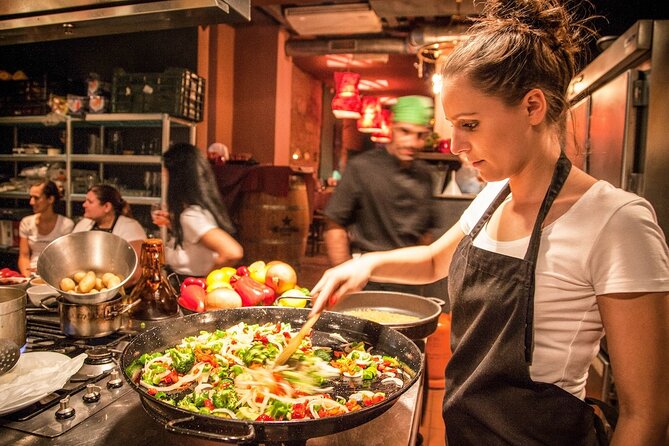
Before the big paella moment, the class starts with Spanish finger food—pintxos—and then moves into sangria making. This is not just an appetizer situation. It is training for the main cook: you learn prep rhythm, ingredient handling, and how Spanish meals balance savory bites with drinks and conversation.
You’ll prepare pintxos alongside flowing sangria. The sangria portion is hands-on: you mix your own fresh, fruity jugs of the classic drink. That matters because sangria is easy to mess up if you only think about sweetness. In this class, the method and flavor balance are part of what the chef explains.
Also, there is a minimum drinking age of 18. If you are under 18, you can still take the class, but you should expect the alcohol component to be handled within that age rule.
This warm-up phase is a nice mental switch from sightseeing mode to cooking mode. It also sets the tone. The best feeling here is low-pressure: you’ll be busy, but not stressed.
Seafood paella: step-by-step technique you can repeat later
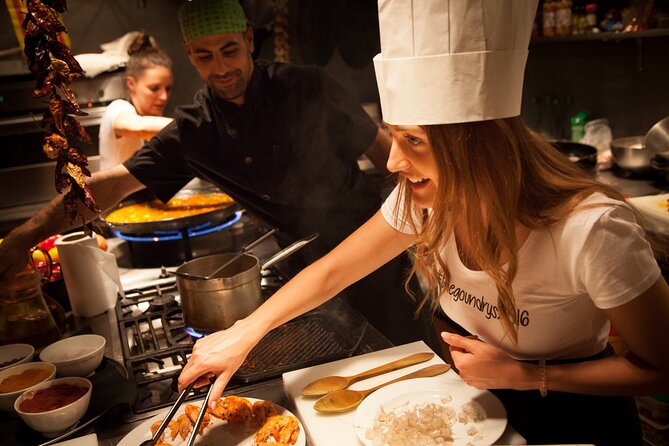
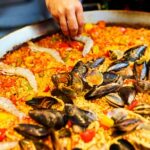
Now for the main event: seafood paella. The class is built around making it traditionally, learning each step from scratch. That means you don’t just get the final plate and a quick recipe card. You learn the process that affects taste and texture—how ingredients come together, how paella behaves as it cooks, and what you’re aiming for when it finishes.
The workflow typically starts earlier than you might expect. After market selection and early snack prep, the kitchen moves into paella assembly and cooking. While the paella simmers, you get time for the sangria workshop, then you return to eat your finished dish.
For dietary needs, you’re not stuck with a single version. There is a non-seafood alternative available for restrictions, and a vegetarian option can be prepared if you request it at booking. The key practical point: tell the operator your needs ahead of time so the chef can adapt the ingredients and timing.
If you care about learning, paella is a great choice because it rewards attention. The difference between a good paella and a great one is often in the steps people usually skip. Here, the class structure pushes you to do those steps, not just watch someone else do them.
And once it is ready, you sit down and enjoy what you made. That sit-down meal is part of the lesson. You taste, then you understand.

Eating your work: tapas, paella, and how the meal comes together
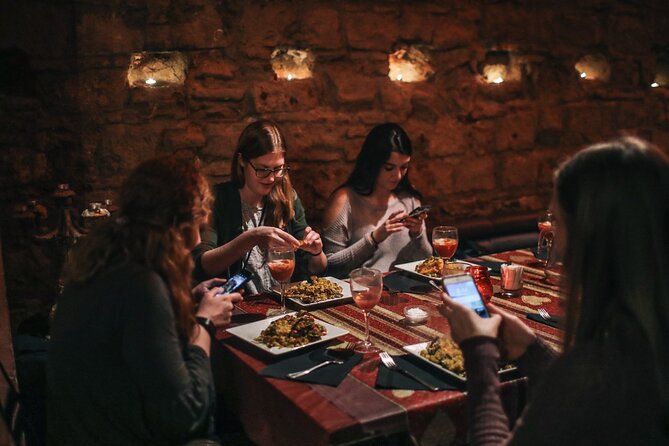
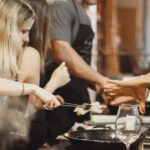
After cooking, you get the payoff: you eat the tapas/pintxos you helped make, then you move on to the paella you cooked. Sangria is part of the meal, too. This full cycle—prep, cook, eat—makes the experience feel complete in a way many classes don’t manage.
Presentation gets attention as well. One of the consistent themes in past instruction styles is that paella is treated like a show dish. You learn the process, then you see what the finished plate should look and taste like.
And since you’re in a communal seating setup, the meal feels social rather than formal. It’s the kind of food experience that works for celebrations, too. Several past classes have mentioned special occasions, with chefs making the night feel personal without turning it into an awkward performance.
If you’re a picky eater, this may still be worth it because the class includes tapas and drink-making alongside paella. That means you have multiple points where you can enjoy the meal, even if one ingredient type is not your favorite.
Recipes to take home: the real reason this sticks
What I like most about this style of class is the take-home support. You receive recipes and local cooking tips, so you can recreate the dish later instead of forgetting the method the moment you get back home.
This is where the value becomes obvious. Paella recipes are not just about ingredients; they’re about timing, sequence, and technique. When you have a written guide plus tips from your chef, you have a better chance of making the dish correctly at home—especially the parts that don’t always translate from memory.
A bonus: you also take away what to buy in Barcelona when you’re shopping on your own. Market visits are useful that way. Even if you don’t recreate the full paella right away, you’ll know what to look for.
Price and value: does $72.56 make sense
At $72.56 per person for about 3 hours, this class isn’t trying to be the cheapest cooking option in Barcelona. But it does justify the price with a lot included: market time, chef instruction in English, and an all-in meal built around what you cook—tapas/pintxos, seafood paella, and sangria. You’re also getting recipes and local tips, which help you extend the experience beyond the evening.
The value is also improved by the small-group feel. When you are actively doing tasks—mixing, prepping, assembling, learning the steps—the cost feels more like a workshop than a show. And since the class is offered multiple times per day (morning through dinner), you can better match it to your schedule without sacrificing quality.
One practical perk to factor in: the experience supports free cancellation up to 24 hours in advance for a full refund. That gives you flexibility if your itinerary shifts.
Who should book this Barcelona paella and sangria class
Book it if you fit one (or more) of these profiles:
You love learning through doing. This is built for beginners and for foodies who want technique, not just flavors. The chef explains steps and then gives you room to participate.
You want a true Barcelona food experience that goes beyond tapas bars. The market stop gives you context, and El Born gives you the classic neighborhood vibe without feeling like a tourist trap.
You’re traveling with friends or family. The shared table format helps people bond fast. Some past sessions even turned into mini hangouts after the meal, which tells you the group energy tends to be friendly.
You have diet needs but want a real option. There’s a vegetarian option available and a non-seafood alternative for restrictions, and the chef is happy to accommodate allergies or special requirements when you advise them at booking.
If you are only interested in eating and not cooking, you might find this still enjoyable because there is tapas, sangria, and plenty of room to choose how hands-on you want to be. That said, it is still a cooking class at heart.
Should you book it
I think you should book this class if you want your Barcelona food day to have structure and meaning. The market stop makes your paella lesson feel grounded in real ingredients, not theoretical cooking. The hands-on tasks, the shared meal, and the take-home recipes are a strong combo for learning and enjoyment.
If you hate walking or you’re traveling on a Sunday or national holiday, plan ahead for the market portion since Boqueria is closed those days. Otherwise, the price feels fair for what you get: instruction, ingredients, and a full sit-down meal.
If you like your experiences to be practical, social, and focused on what you can actually cook later, this is a great bet.
FAQ
How long is the cooking experience?
It lasts about 3 hours (approx.).
Where does the activity start and end?
It starts at Travellers Nest Bar, Carrer de la Boqueria, 27, Ciutat Vella, Barcelona, Spain, and it ends back at the same meeting point.
Is La Boqueria included?
Yes. You get a tour of Mercat de la Boqueria, subject to opening times.
When is La Boqueria closed for this experience?
The market visit does not run on Sundays and national holidays because the market is closed then.
What dishes are included?
You make and eat pintxos (tapas), seafood paella, and sangria.
Do you get recipes to take home?
Yes. You receive recipes and local cooking/dining tips to take home.
Is there a vegetarian or non-seafood paella option?
Yes. A vegetarian option is available (request it at booking), and a non-seafood alternative is available for dietary restrictions.
Can the chef accommodate allergies?
You can advise food allergies or special requirements at booking, and the chef is happy to accommodate them.
What’s the cancellation policy?
You can cancel for a full refund up to 24 hours in advance. If you cancel less than 24 hours before the start time, there is no refund. Free cancellation applies based on the experience’s local time.