REVIEW · BARCELONA
Barcelona: Paella Cooking Class with Market Visit and More
Book on GetYourGuide →Operated by Gastronomic Arts Barcelona · Bookable on GetYourGuide
Paella in Barcelona should not start in a kitchen lab. This 3-hour class begins at La Boqueria with a chef who helps you pick ingredients like a local, then you cook your own paella step by step. I like that it’s truly hands-on, not a show where you watch and hope for the best, and I also like the payoff: you leave with food, drink, and a recipe you can repeat at home with your own pan.
The main catch is timing and expectations. The market visit doesn’t run on Sundays, bank holidays, or the 21:00 class, and you should be ready for light walking around the market before you settle in to cook.
If you’re into real local flavors, this is a smart way to spend part of your day near Las Ramblas. And if your group has strict seafood limits, go in with a flexible mindset and make sure the chef knows at the start.
In This Review
- Key highlights I’d plan around
- Why a paella class starts at La Boqueria (not at a stove)
- The market walk: how you choose seafood like you mean it
- Back in the kitchen: sangria, tapas, and a real plan
- The paella masterclass: from sofrito to socarrat
- What about seafood diets and allergies?
- Timing and logistics: 3 hours that fit real Barcelona days
- Price and value: what $95 buys you in real food time
- How this experience helps you eat better after the class
- Who should book this paella class?
- Book it or skip it: my take
- FAQ
- FAQ
- How long is the cooking class in Barcelona?
- Where does the experience start?
- Is La Boqueria included every day?
- What paella styles do you learn to make?
- Is the class beginner-friendly?
- Do I have to drink alcohol for the sangria?
- What food is included besides paella?
- Do I get recipes to take home?
- Do they accommodate dietary needs?
- Is hotel pickup included?
Key highlights I’d plan around
- La Boqueria market walk with your chef so you learn what to buy, and why
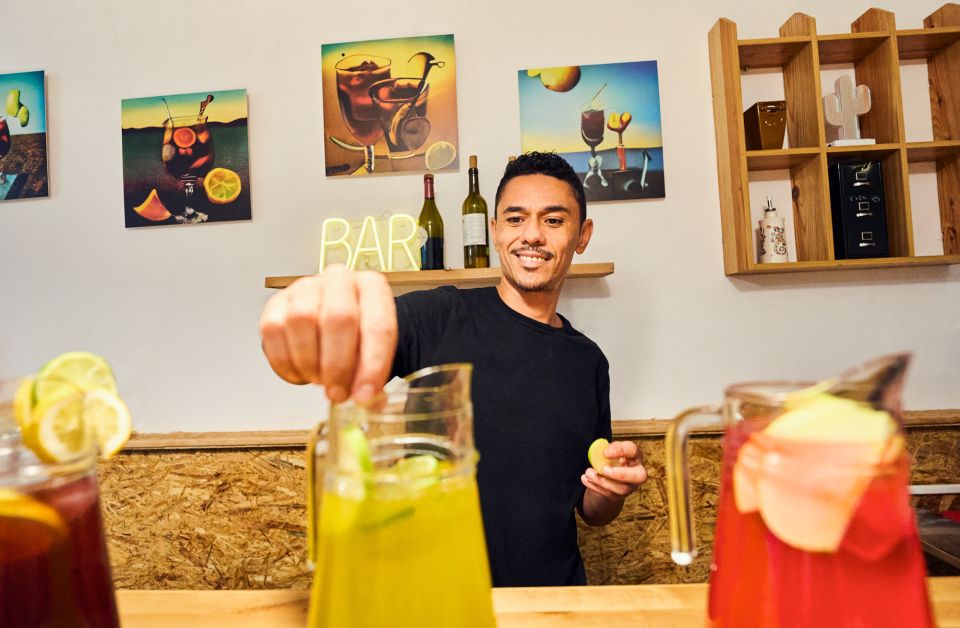
- Hands-on sangria workshop plus a proper toast while you cook
- Seasonal tapas tasting that sets the flavor theme before the main event
- Paella masterclass from sofrito to socarrat (the crispy rice layer)
- Dessert show-cooking to finish the meal the Spanish way
- Take-home recipes by email so your next paella night is less guesswork
Why a paella class starts at La Boqueria (not at a stove)
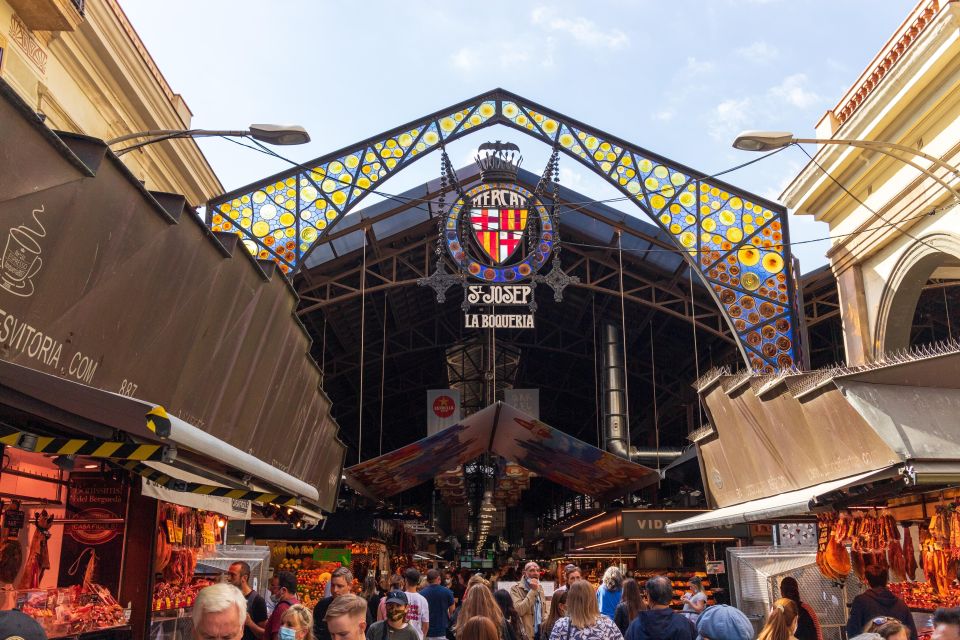
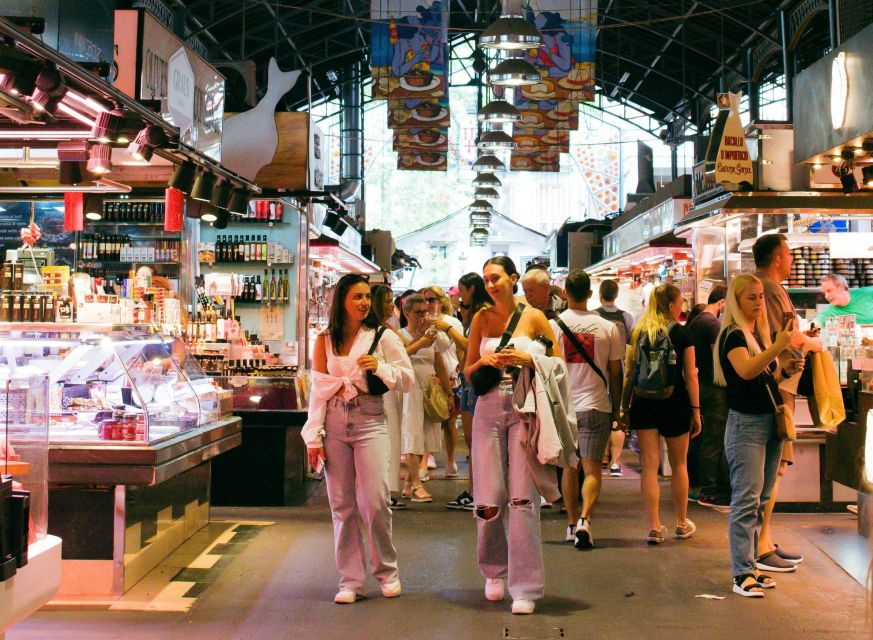
Most food experiences in Barcelona hand you a dish and call it culture. This one uses a different tactic: you start with the ingredients first, at Mercado de la Boqueria, just off Las Ramblas. That matters because paella is not just rice and “stuff.” It’s seafood or chicken or vegetables, plus the right vegetables, plus the right spices, plus technique.
The market visit gives you a fast education in Spanish cooking thinking. You learn how chefs shop when they’re building flavor from scratch: fresh produce, reliable seafood, and pantry staples that actually change the taste. Then you walk back to a kitchen nearby and turn those choices into dinner.
A lot of people book this because they want paella. I think the bigger win is that you also learn how Barcelona cooks buy food. That’s the part that makes the class feel more like a skills lesson and less like a tourist meal.
You can also read our reviews of more shopping tours in Barcelona
The market walk: how you choose seafood like you mean it
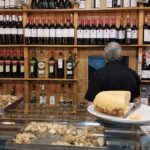
La Boqueria can overwhelm you if you treat it like a photo stop. In this class, it’s structured so your chef is pointing out what’s worth your attention and how to interpret what you’re seeing.
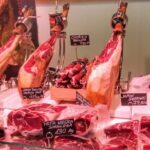
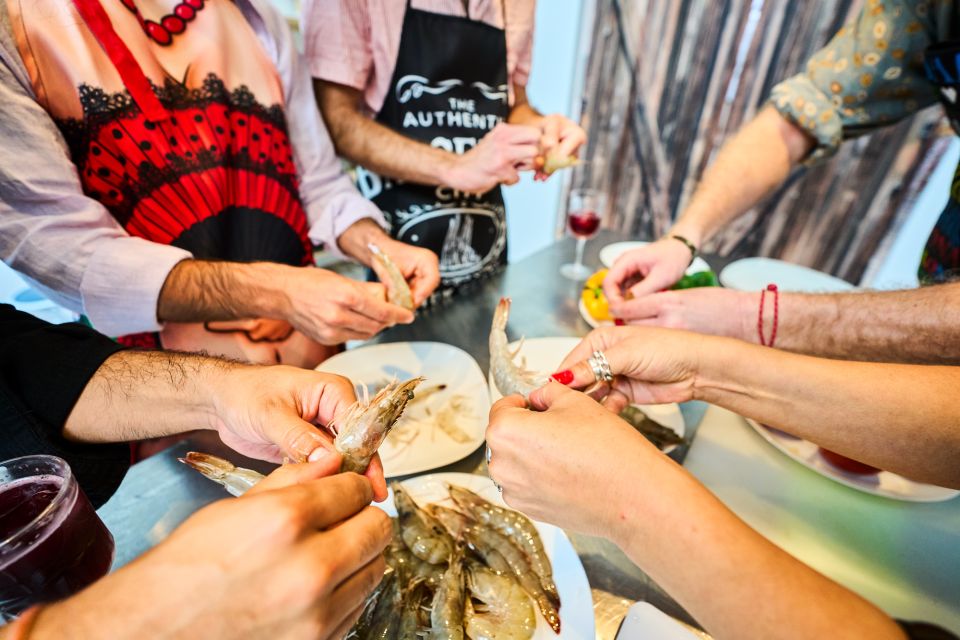
You’ll focus on choosing fresh seafood, vegetables, and spices that match the paella style you’re making. Some diners specifically mention learning practical details about shellfish in the market, including what to look for and how to handle certain seafood prep steps once you’re back in the kitchen.
One thing I like about doing the market early is that it changes how you cook later. When you’ve actually selected what goes in your pan, you cook with more confidence. And when your paella tastes better than you expected, you can usually trace it back to those ingredient decisions.
Important note: the market visit is not included on Sundays, public holidays, and for the 21:00 class. If you want the full market-to-kitchen flow, book one of the sessions when it’s running.
Back in the kitchen: sangria, tapas, and a real plan
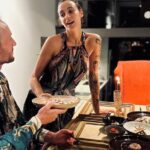
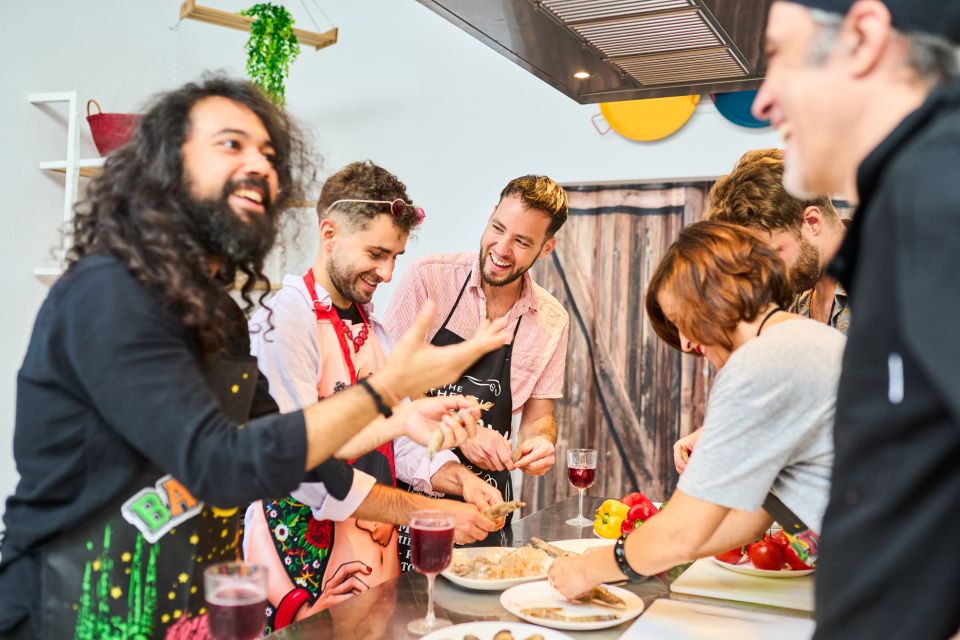
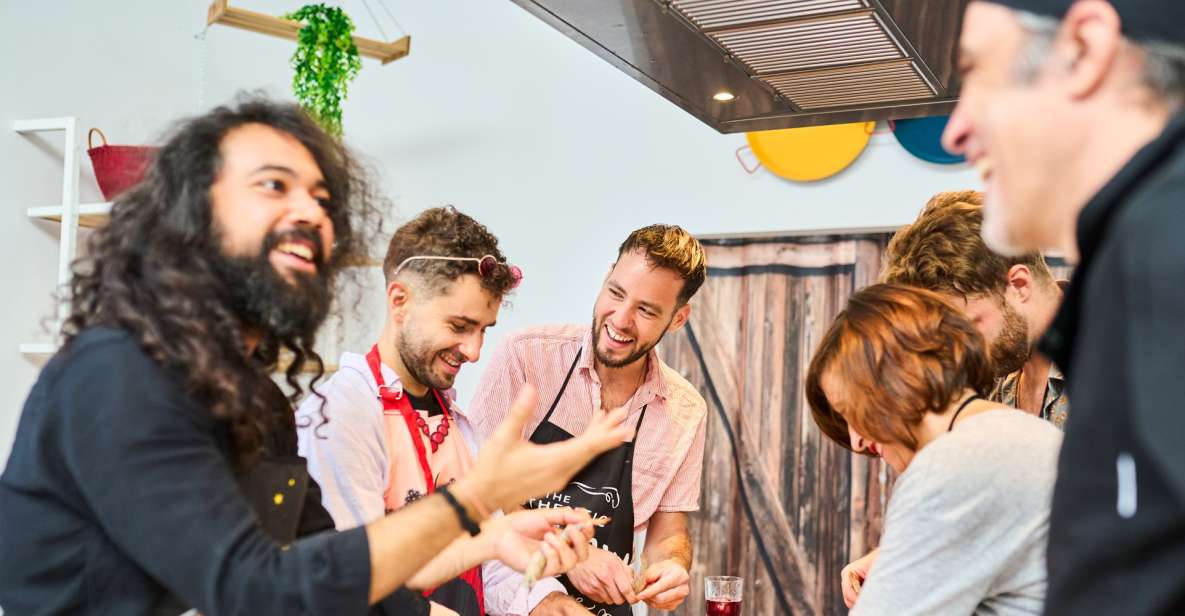
After the market, you shift from “watch and learn” into “put on your apron and do.” The kitchen portion is designed as a social space where the class feels like a group meal you’re helping create. Many instructors include a host vibe and a team approach, with names that pop up repeatedly in feedback like Maria and Hugo.
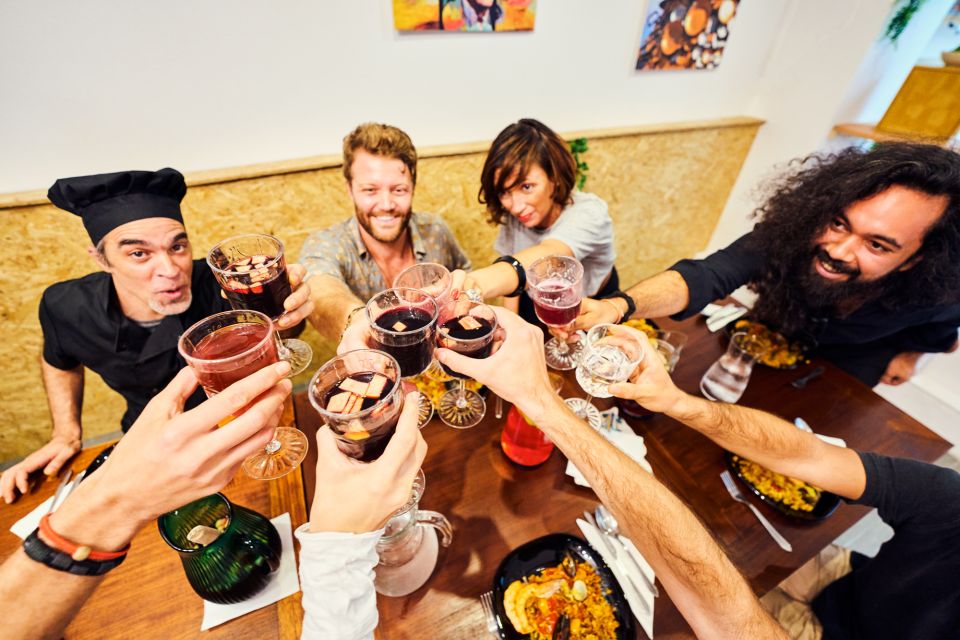
You’ll start with Spanish sangria-making. The workshop includes mixing and learning how the drink balances fruit and Spanish wine. If you prefer no alcohol, non-alcoholic sangria is included, so the group can still share the same ritual.
Then you’ll eat seasonal tapas. This is not just filler while paella cooks. Tapas set the flavor stage and give your palate something to measure against once the rice hits the pan.
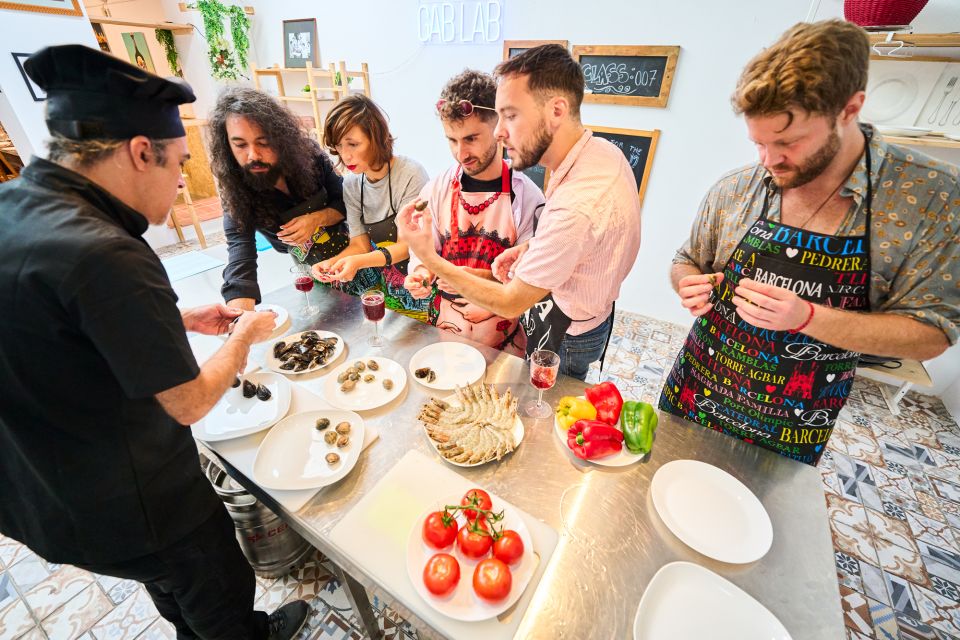
After that, the meal turns into your hands-on cooking process: you prep ingredients, assemble your paella, and cook together. A dessert show-cooking finishes the experience, and several people specifically mention classic options like almond cake.
The paella masterclass: from sofrito to socarrat
Here’s the part that makes this class worth it even if you’ve had paella before. You don’t just “make rice.” You learn the sequence that creates depth.
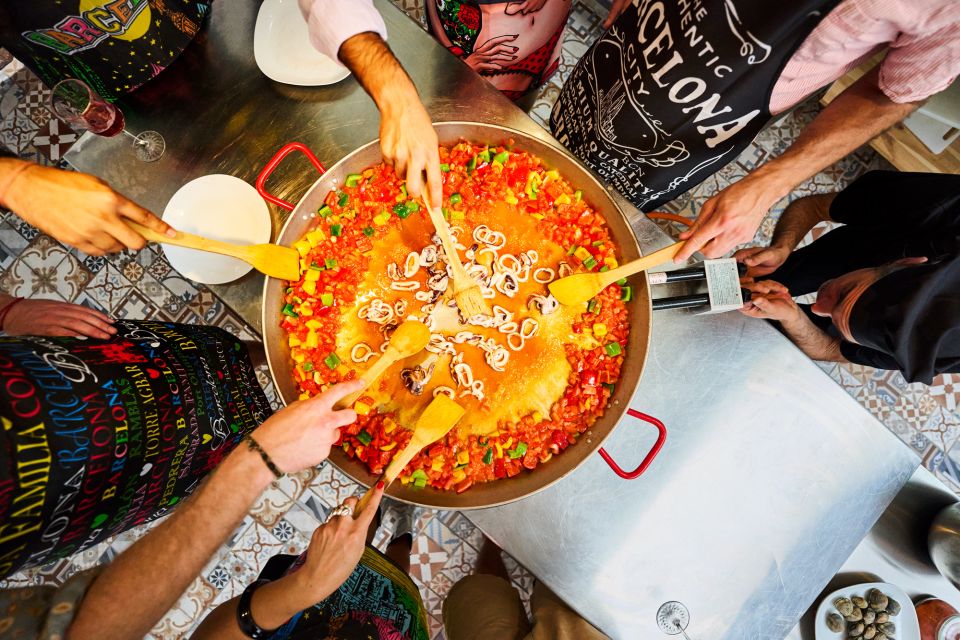
Your chef walks you through the key steps, from sofrito (the aromatic base) to the moment you aim for socarrat, the crispy rice layer. That crispy layer is the goal many home cooks miss, partly because they don’t know when to adjust heat or how to hold the cooking stage.
You’ll learn how to prepare traditional seafood paella, chicken paella, or a vegetarian version. Which one you end up doing can depend on the group and your needs, but the teaching stays the same: technique first, then ingredients.
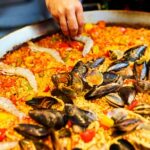
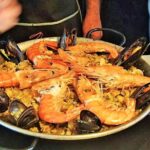
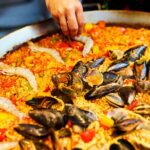
In reviews, people describe prepping things like calamari, shrimp, cockles, and mussels for the seafood version. Others also mention having a chicken paella when seafood wasn’t the plan for their portion of the group. So even within the same class, it can adapt.
What about seafood diets and allergies?
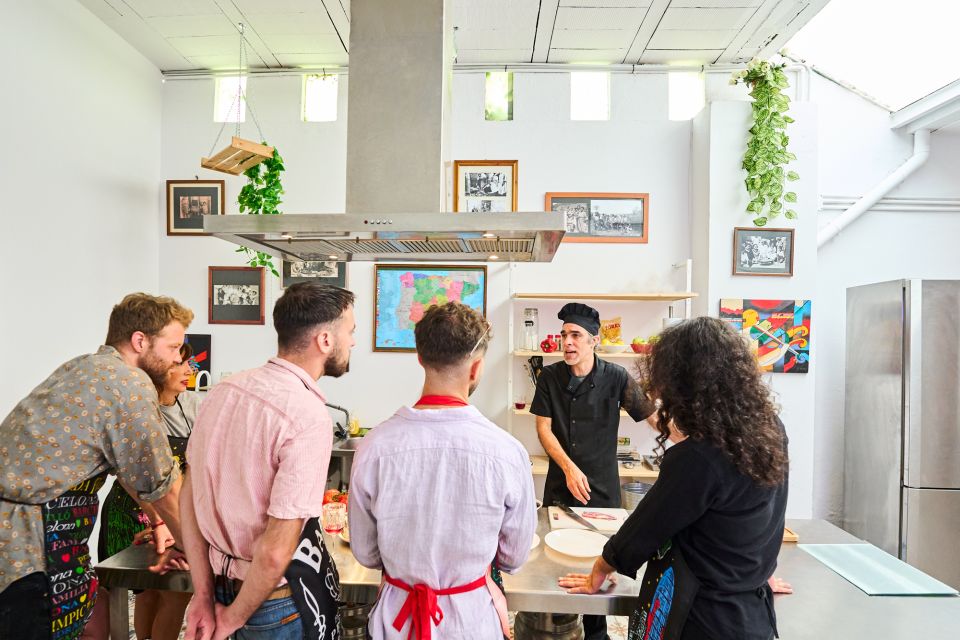
This class can work well for many dietary needs, but you should plan for the reality of paella. Paella is built around specific cooking methods and ingredient sets, so “no seafood” or “no dairy” can change what you’re cooking at your station.
You get dietary accommodation because the chef asks about needs at the beginning of the session. The course is also offered in seafood, chicken, and vegetarian approaches, so there’s room to match your dish to your preferences.
That said, one caution is about group dynamics. If someone in your group doesn’t eat seafood, pay attention to how stations are assigned. In one case, a participant felt less involved during the seafood-heavy portion. It’s not a universal pattern in the overall feedback, but it’s enough of a note that I’d treat it seriously.
My practical advice: when you arrive, say what you avoid clearly and ask what your dish will be. If you want a chicken or vegetarian paella from the start, confirm that early so you cook alongside the group’s plan.
You can also read our reviews of more tours and experiences in Barcelona
Timing and logistics: 3 hours that fit real Barcelona days
The class runs about 3 hours (often between 2.5 and 3 hours). It’s offered at 10:00, 11:00, 14:00, 18:00, and 19:00 each day.
This matters because cooking classes in Barcelona can eat your day in a hurry. Here, the schedule is tight enough that you can still do other things afterward. One especially good strategy for families and groups is picking the 10:00 slot, since it pairs naturally with lunch and leaves room for a later stroll or a light activity.
There’s also walking involved, especially around the market. Expect light walking before, during, and after the market part of the experience. If you’re sensitive to walking time, go easy on your pace and plan for the extra minutes.
Late arrival is handled too. If you arrive late, you can meet the kitchen about 40 minutes after the class starts, and there’s a doorbell option at the meeting setup. Still, if you want the full market piece, arrive early so you don’t miss the ingredient briefing.
Price and value: what $95 buys you in real food time
At $95 per person, this is not a budget-only activity. But it’s also not just “pay for a class.” The package includes a lot of what normally costs extra in Barcelona.
You get:
- Interactive paella cooking
- The La Boqueria market visit (when it’s scheduled)
- Sangria-making workshop
- Seasonal tapas
- All ingredients and cooking tools needed
- Family-style paella meal
- Dessert show-cooking
- Bottled water, juice, and non-alcoholic sangria option
- Recipes to recreate at home
If you’ve ever eaten in Barcelona, you know paella plus drinks plus dessert can become expensive fast. Here, you’re buying a structured meal with instruction, not just dinner. The instruction component is the “value multiplier,” because it helps you reproduce the result later instead of wondering why your homemade version never matches.
One more value point: small groups. Many people describe the experience as intimate and personal, with chefs making sure participants are involved rather than standing aside. For $95, that group attention is a big part of why it lands well.
How this experience helps you eat better after the class
The best thing about a good cooking class is not the meal you eat today. It’s the way it changes how you shop and order tomorrow.
After learning how chefs pick ingredients at La Boqueria, you’ll notice what you’re buying. You’ll understand why certain seafood looks and smells like it’s ready for a hot pan, and why vegetables and spices matter for the sofrito base. And because you learn the socarrat goal, you’ll be less forgiving of watery rice when you try paella elsewhere.
You also get a concrete home skill: you’ll receive recipes and tips by email. That’s a big deal if you want to cook again without hunting down notes or guessing measurements the next time you’re in your own kitchen.
Who should book this paella class?
This is a great fit if:
- You’re a first-time visitor who wants Barcelona flavor with structure
- You like markets and want ingredient-led learning
- You want a hands-on meal where you actually cook
- You’re traveling with mixed experience levels, since beginners are still doing real tasks
- You want a social class where meeting people feels natural
It can be a weaker fit if:
- Your schedule depends on a Sunday market visit
- Your group’s seafood preferences are very strict and you need guaranteed non-seafood station involvement
- You hate any walking around crowded market stalls
In other words, it’s best when you treat paella as a learning goal, not just a dinner plan.
Book it or skip it: my take
I’d book this if you want a memorable Barcelona food day that ends with real cooking skills. The market-to-kitchen flow is the reason it feels worth the time, and the combination of paella technique, sangria, tapas, and dessert gives you a full meal experience for three hours.
Skip it only if the market visit timing matters most to you and you’re choosing a Sunday or a slot where the market is excluded. Also consider your group’s dietary needs early, so your paella plan matches what you actually want to cook.
If you want one ticket that covers ingredient shopping, hands-on cooking, and a dinner you can repeat later, this one earns a spot on your itinerary.
FAQ
FAQ
How long is the cooking class in Barcelona?
The class lasts about 3 hours, with a stated running time between 2.5 to 3 hours.
Where does the experience start?
Your experience starts with a visit to La Boqueria Market (Mercado de la Boqueria), then you head to a nearby kitchen to cook.
Is La Boqueria included every day?
No. The market visit is not included on Sundays, public holidays, and during the 21:00 class.
What paella styles do you learn to make?
You’ll learn step by step to prepare traditional seafood, chicken, or vegetarian paella.
Is the class beginner-friendly?
Yes. The class is suitable for all levels, whether you’re a beginner or you cook confidently at home.
Do I have to drink alcohol for the sangria?
No. The class includes a sangria-making workshop, and non-alcoholic sangria is also included.
What food is included besides paella?
You’ll have a market visit (when scheduled), sangria, a selection of seasonal tapas, a family-style paella meal, and dessert show-cooking.
Do I get recipes to take home?
Yes. You receive recipes to recreate the paella at home by email.
Do they accommodate dietary needs?
Yes. The chef will ask about dietary needs at the beginning of the session.
Is hotel pickup included?
No. Hotel pickup or drop-off is not included.