REVIEW · BARCELONA
Ultimate Barcelona Food Tour with visit to a Local Market
Book on Viator →Operated by Devour Barcelona Food Tours · Bookable on Viator
Three hours. A lot of Barcelona food.
This is a small-group morning-to-lunch tasting that starts at Mercat de Santa Caterina and keeps moving through local neighborhoods instead of circling the most tourist-splashed sights. I like that the plan is built around real eating moments: market samples first, then pastry and nougat, then a vermut-and-tapas stop, and finally a seafood paella lunch with local wine.
The only catch is the food volume. You’ll likely want to go in hungry, and if you’re avoiding alcohol, there are non-alcoholic options, but the tour may not be able to match every ingredient request at every stop. Also, it’s not recommended for vegans.
In This Review
- Key things to know before you go
- Santa Caterina Market: where Barcelona food starts to make sense
- Born and Barceloneta: tasting your way through two different Barcelona moods
- Brunells Croissants (and why 1852 still matters)
- Torrons i dolços La Campana: turrón that isn’t just a holiday souvenir
- Carrer de la Princesa bodega: vermut and tapas bomba
- Can Ramonet in Barceloneta: paella y marisco in a historic setting
- Guides are the real engine of this tour
- Price and value: what $107.63 buys you in real terms
- What to do before you meet at Santa Caterina
- Dietary notes: what’s possible, and what can’t be guaranteed
- Should you book the Ultimate Barcelona Food Tour with Santa Caterina Market?
- FAQ
- How long is the Ultimate Barcelona Food Tour?
- How many people are in the group?
- Where does the tour start and end?
- Is the tour walking-heavy?
- Does the tour include wine or alcohol tastings?
- Is it suitable for vegetarian or gluten-free diets?
Key things to know before you go
- Mercat de Santa Caterina instead of the bigger, more crowded market vibe
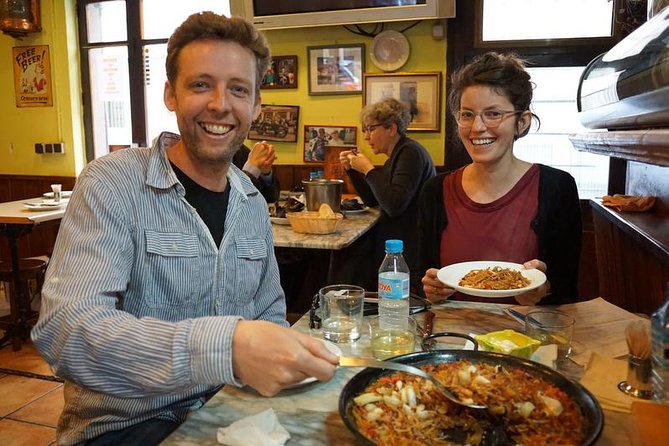
- Max 9 people means more talking and easier food questions
- Stops built for Catalan flavors: turrón nougat, vermut, tapas bomba, and paella y marisco
- Wine tastings are part of the experience (with non-alcoholic options available)
- Plan for a breakfast + lunch day in just about 3 hours
Santa Caterina Market: where Barcelona food starts to make sense
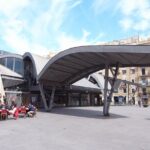
I love how this tour begins at Mercat de Santa Caterina, in Ciutat Vella, on Av. de Francesc Cambó. It’s a top-tier Barcelona market, but the feel is calmer than the famous one across town. That matters, because you’re not just eating random bites. You’re learning how locals shop for breakfast and midday meals.
Here’s what you can expect in practical terms: you’ll move through family-run stalls with your guide, and you’ll sample regional cheeses and cured meats. This is the fastest way to understand Catalan flavors, since cured ham and cheese are everyday items for many people here, not just “tourist food.” You’ll also get little context clues from the guide about what you’re tasting and why it’s common in this region.
If you’re the type who worries about food tours being too hectic, start here. The market gives the pacing a natural rhythm: look, taste, listen, repeat. And because it’s built for a small group (up to nine), you’re not standing in a long line waiting to be heard.
You can also read our reviews of more food & drink experiences in Barcelona

Born and Barceloneta: tasting your way through two different Barcelona moods
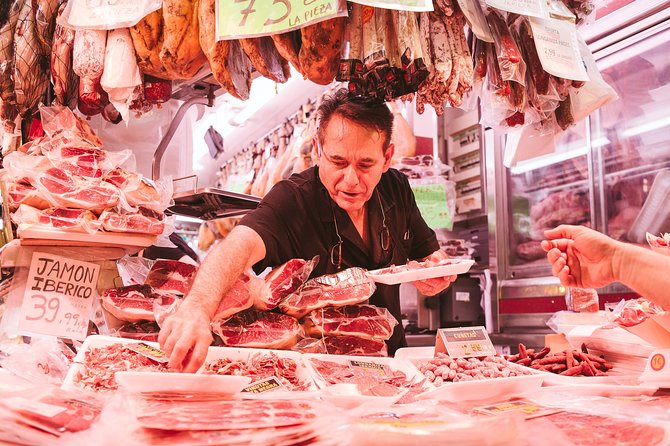
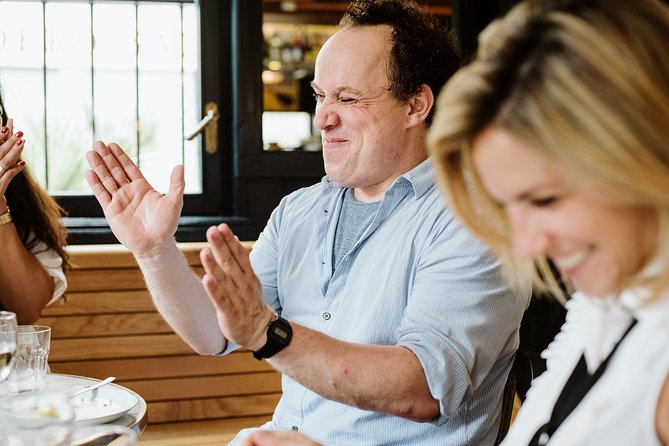
After the market, the tour turns toward the medieval Born area and then on to seaside Barceloneta. This part is smart because it ties food to geography. You get to see how the city changes feel street by street, not just dish by dish.
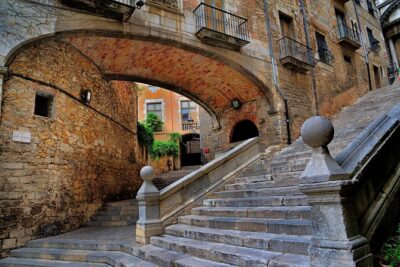
In Born, you’ll wander winding lanes that feel historic and lived-in. This is where the tour leans into “old-school Barcelona sweets,” including a nougat shop that’s been operating for well over a century. Then you’ll move toward Barceloneta, where the mood shifts toward sea air and aperitif time.
This is also where a lot of the learning happens. The guide doesn’t just name dishes. They explain where traditions come from, and you’ll hear Catalan viewpoints on what counts as a real local tapas-style moment. One stop includes vermut at a corner bodega and a specific tapas style locals associate with Barcelona itself. Even if your Spanish is basic, this is easy to follow because you can see the food and drink right in front of you while the guide puts it in context.
Brunells Croissants (and why 1852 still matters)
Next up is Brunells, a pastry stop famous for croissants and long history. The shop dates back to 1852, and that long timeline is more than trivia. It tells you why the place can hold up: it’s not a one-season trend.
At this stop, you’ll try a croissant and learn how Spanish pastries fit into daily life. The tasting here is short (about 25 minutes), but it’s a useful reset. Market tastings can be salty and heavy, and a good croissant gives you texture contrast—buttery, crisp, and easy to eat while you keep walking.
This stop also shows the tour’s balance: it’s not only about savory. It gives you Catalan and Spanish sweet culture through places that have lasted, which tends to be a better signal than wherever has the flashiest Instagram sign.
Torrons i dolços La Campana: turrón that isn’t just a holiday souvenir
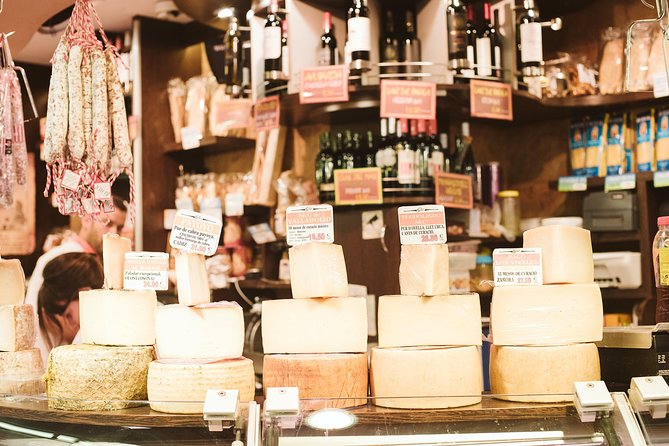
Then you’ll hit Torrons i dolços La Campana, a specialty store run by two sisters. It’s been in the region since the 1890s, and the shop has adapted to modern times without losing what made it last.
You’ll taste four samples of the store’s signature treats—turrón (Spanish nougat). This is one of the more “wow, I didn’t expect that” stops on the route because turrón often feels seasonal in other places. Here, it’s treated like a serious candy category, with different styles that actually taste distinct.
You’ll also get a quick lesson in how Spanish sweets are built—what’s often shared across styles, and what changes when nuts, honey, and texture come into play. It’s the kind of mini-course you can taste, not just read.
One more reason I like this stop: it’s short enough to keep energy up, but it gives you a full sensory moment with enough variety to remember later.
Carrer de la Princesa bodega: vermut and tapas bomba
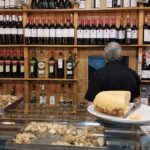
By the time you reach Carrer de la Princesa (36), the tour is in aperitif mode. You’ll visit a bodega known as a local favorite for relaxed drinks and bites.
What you’ll try here is one of Barcelona’s famous tapas: the bomba, and the tour explains it was created in this neighborhood. You’ll pair it with vermouth (vermut), which is a big deal in Barcelona culture. It’s not just a drink. It’s a way locals slow down the evening or prep for a longer meal later.
This stop is also one of the reasons the tour is rated so highly. A lot of the best food-tour memories come from places that feel like you’re joining a local habit for a short time. A corner bodega does that fast: you can see how people order, how they sit, and how the drink works with the food.
If you’re not drinking alcohol, note the tour is adaptable with non-alcoholic options, but the tour also warns that replacement food options may not exist at every stop. So if your needs are very specific, it’s worth messaging ahead after booking.
You can also read our reviews of more tours and experiences in Barcelona
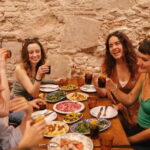
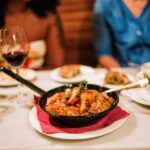

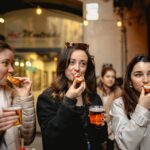
Can Ramonet in Barceloneta: paella y marisco in a historic setting
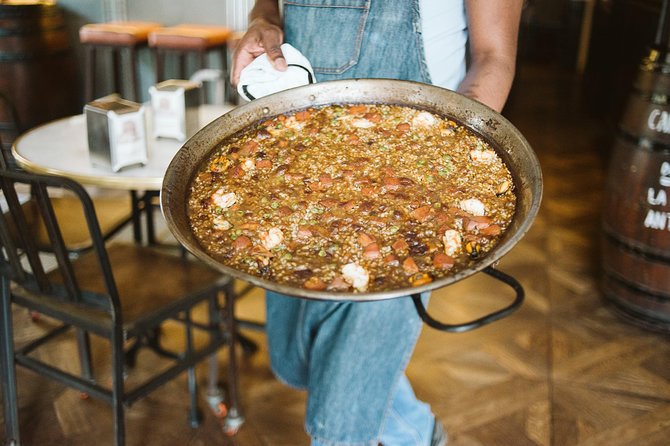
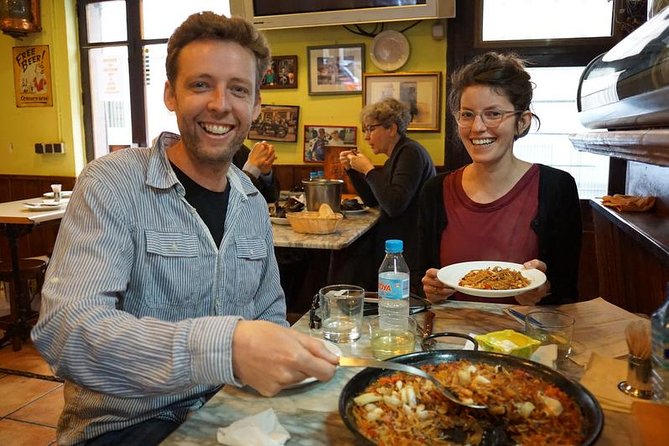
The finale is lunch at Restaurant Can Ramonet in Barceloneta. You’ll eat a seafood paella (paella y marisco) and it comes with your choice of local wine (white or red, depending on what’s offered).
What makes this more than just “a paella meal” is the setting. The restaurant sits in a building with serious age—an 18th century winery—and it’s in one of the oldest parts of the neighborhood. That kind of space matters because it changes how the meal feels. You’re not in a generic dining room built for tour schedules. You’re in a place that has seen many meals for a long time.
Timing here is generous (about 50 minutes). Still, keep expectations realistic. This is a tasting tour with a lot of bites before lunch. One review noted that by the time the paella arrived, appetite was already low for some people, even though the paella itself was still very good. Translation: if you’re dieting, don’t over-restrict earlier in the day. If you’re trying to enjoy everything, you’ll be happiest going in with a normal appetite and decent pacing.
Guides are the real engine of this tour
I like that this tour depends on the guide’s personality as much as the food list. In the feedback, names come up again and again: Alex gets praised for being personable and extremely engaging, Jorge for friendly, standout guidance, and Hector for skillfully pairing market walk-through stories with routes that feel purposeful. Mick also gets called out for mixing food with local context and even a chef background.
There are a few patterns worth paying attention to:
- Guides often add practical explanations so you can order confidently later.
- The best guides keep it fun. People mention humor and high energy, not just facts.
- Some guides add help tools like maps or visual aids to make the stories easier to follow.
If you get a guide who talks clearly and keeps the group moving, you’ll feel like you’re walking with someone who knows where the good moments live.
Price and value: what $107.63 buys you in real terms

At $107.63 per person, you’re not just paying for one restaurant meal. You’re paying for:
- A guided route through multiple stops across different neighborhoods
- Food tastings designed to cover breakfast and lunch
- Wine tastings (plus non-alcoholic options are available)
- A small group size capped at nine, which usually means fewer “waiting” moments
That combo is the value. If you tried to replicate this on your own, you’d still need to find the market, choose the pastry stop, locate the turrón shop, work out vermut-tapas pairing, then land on a paella place you can trust. The tour basically bundles the decisions and makes sure the route lines up so you get the right sequence of flavors and textures.
Could it be a lot of money for someone who eats lightly? Sure. But if you like tasting your way through Barcelona and you want local guidance rather than guesswork, the price starts to look reasonable fast.
What to do before you meet at Santa Caterina
This tour runs in the morning and ends after your paella lunch in Barceloneta. It’s a walking tour with a moderate pace and a moderate physical fitness level requirement.
Here’s how to make your day go smoothly:
- Wear comfortable shoes you can walk in for the full route.
- If you’re tempted to “save room” by skipping breakfast, do it carefully. One person specifically suggested skipping breakfast for the tastings, because the tour is heavy on food.
- Bring a little patience for transitions. You’ll shift from market smells to sweet shop aromas to vermut and tapas, then to seafood lunch. That’s part of the fun, not a flaw.
Also, this tour is in English, and the group size stays small—so you’ll likely get answers to the questions you actually care about.
Dietary notes: what’s possible, and what can’t be guaranteed
The tour is adaptable for:
- Vegetarians
- Pescatarians
- Gluten free (specifically noted as not celiac)
- Non-alcoholic options
- Pregnant women
But there’s an important limitation: it’s not recommended for vegans, and even for other adaptations, you may not have a replacement option at every stop.
So how do you handle that practically? If your dietary needs are important (especially non-celiac gluten free), plan to communicate clearly when booking so the guide can prepare. With a multi-stop itinerary, the tour can’t always swap every single ingredient everywhere.
Should you book the Ultimate Barcelona Food Tour with Santa Caterina Market?
Book it if you want an easy first-food-walk in Barcelona with a plan that actually matches how locals eat across neighborhoods. The market start, the shift through Born and Barceloneta, and the finale seafood paella at Can Ramonet are a strong trio. I’d also lean toward booking if you care about the guide’s storytelling—feedback repeatedly highlights that guides like Alex, Hector, Mick, Nika, Ariana, Vera, and others turn the route into something more memorable than just eating.
Skip or rethink it if you don’t like big tasting portions, since this experience includes enough food for breakfast and lunch in about 3 hours. Also reconsider if you’re vegan, because the tour notes it isn’t recommended for that dietary style.
FAQ
How long is the Ultimate Barcelona Food Tour?
It lasts about 3 hours.
How many people are in the group?
The tour is limited to a maximum of 9 people.
Where does the tour start and end?
It starts at Mercat de Santa Caterina, Av. de Francesc Cambó, 16, Ciutat Vella, 08003 Barcelona, Spain, and ends in Barceloneta (Ciutat Vella, 08003 Barcelona, Spain).
Is the tour walking-heavy?
Yes. It’s a walking tour, and you should be able to walk at a moderate pace.
Does the tour include wine or alcohol tastings?
Wine tastings are included, including drinks such as cava and vermouth. The tour also offers non-alcoholic options.
Is it suitable for vegetarian or gluten-free diets?
It’s adaptable for vegetarians, pescatarians, and gluten free (not celiac). It’s also adaptable for non-alcoholic options and pregnant women, but it is not recommended for vegans, and replacement food options may not exist at every stop.