REVIEW · BARCELONA
La Boqueria Market and Paella Cooking Class in Barcelona
Book on Viator →Operated by Just Royal Bcn · Bookable on Viator
Paella starts with a market walk. What I like most about this Barcelona class is how it ties La Boqueria’s sights and smells to the exact dishes you’ll cook, with a professional chef guiding the whole show and using local seller stories as part of the lesson. You’re not just tasting—you’re learning the “why” behind Catalan and Spanish flavors while you work side-by-side with the chef (names I’ve seen tied to this experience include Claudia, Hori, and Alfredo).
I also like that it’s truly hands-on: every person prepares the menu, and the paella is organized in small cooking rounds (so you’re not stuck watching all night). One drawback to plan around: the renovated 18th-century apartment has three flights of stairs, so if you have mobility limits, this isn’t the easiest venue.
In This Review
- Key highlights I’d plan around
- La Boqueria market walk: the lesson starts before the stove
- 18th-century apartment cooking: why the setting changes the vibe
- Tapas tasting with wine: what you’re learning in each bite
- What you cook: paella, Spanish omelet, and Catalan cream
- Paella: seafood or vegetarian, cooked in rounds
- Spanish omelet: hands-on, not “breakfast demo”
- Catalan cream (crema catalana) with berries for dessert
- Diet flexibility
- How the class runs: market → tapas → cook → sit down
- Value check: what $145 gets you (and where it might not)
- Who should book this Barcelona food experience
- Practical tips before you go
- Should you book this La Boqueria paella class?
- FAQ
- How long is the La Boqueria and paella cooking class?
- Where does the experience meet and end?
- Is the experience in English?
- What’s included in the price?
- What dishes are on the menu?
- Can the menu be adapted for dietary restrictions?
- How many people are in the group?
- Is wine included, and is there an age requirement?
- Is hotel pickup or drop-off included?
- What is the cancellation policy?
Key highlights I’d plan around

- La Boqueria market walk with seller anecdotes so produce actually makes sense, not just looks pretty
- All participants cook the menu (including paella in rounds for every 2–3)
- 10 tapas tasting with wine pairings plus explanations of Spanish gastronomy through the bites
- Seafood or vegetarian paella options, with the rest of the menu kept consistent
- 18th-century apartment dining setup, served at an Imperial table style
- Small group size (max 12; typically 11) for real interaction with the chef
La Boqueria market walk: the lesson starts before the stove
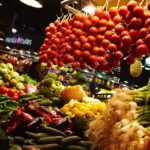
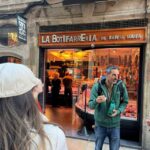
Your experience begins in central Barcelona near Pl. Reial (meeting point: Pl. Reial, 3, Ciutat Vella). From there, you head toward Las Ramblas and then into Mercat de la Boqueria, one of Europe’s most famous food markets. The big advantage here is timing and focus: instead of wandering on your own, you’re shown what matters and why—ingredients, sourcing, and flavor cues—using the market as a living classroom.
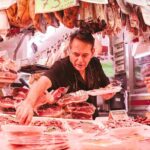
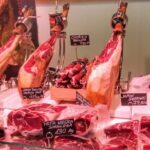
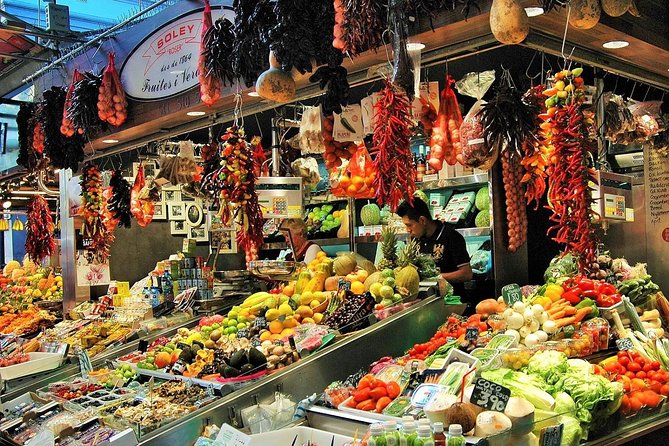
What you’ll notice fast at La Boqueria is how many things compete for your attention: fish counters, cured meats, fruit, spices, and prepared snack stalls. In a group, it can get tight, and the market can feel crowded. That’s normal. Your best move is to keep your head up and listen for the chef’s cues so you don’t lose the thread while you’re adjusting to foot traffic.
One detail I really appreciate is that the chef doesn’t treat the market like a photo stop. The walk includes stories about the sellers and the traditions behind Catalan gastronomy. It’s the kind of context that helps you later when you’re tasting tapas and then cooking your own dishes—because you can connect ingredients to regions and habits, not just recipes.
You can also read our reviews of more shopping tours in Barcelona
18th-century apartment cooking: why the setting changes the vibe
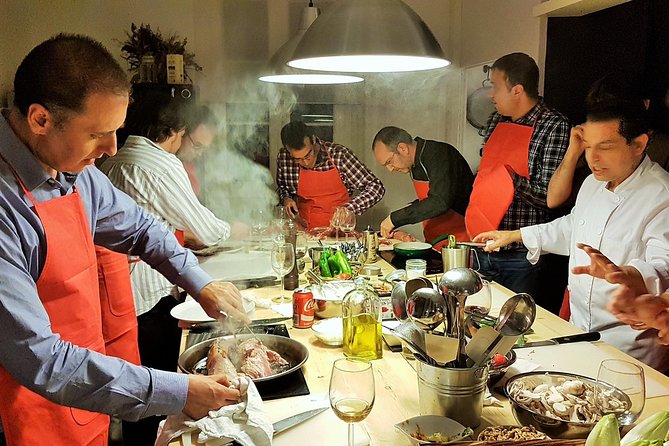
After the market, you move to the kitchen space, which is set in a historic 18th-century apartment belonging to a Catalan aristocracy family. It’s renovated and keeps its original majesty, so the feel is more “Barcelona home dining” than “tour kitchen.”
This matters because cooking classes can sometimes feel mechanical—chop, stir, repeat. Here, the setting makes the meal feel like an evening with people, not an assembly line. You’ll be working with a chef and assistant, and the tone is hands-on and guided. In the experiences I’ve read about this activity, hosts like Claudia were praised for keeping people comfortable and getting even non-confident cooks involved.
Now the practical part: stairs. You should assume you’ll climb three flights once you’re headed to the apartment. If stairs are tough for you, don’t hope for a workaround—plan for it or choose a different food tour option. Also, keep in mind this is a real apartment space, not a hotel ballroom.
Tapas tasting with wine: what you’re learning in each bite
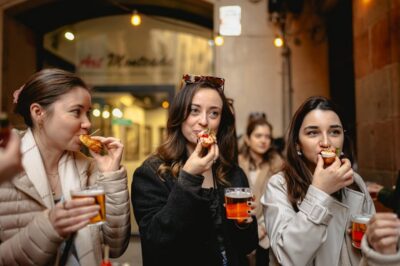
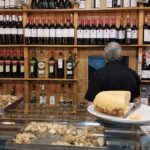
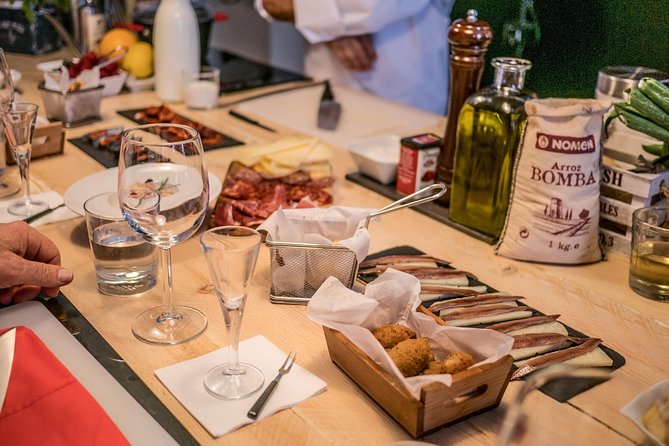
Before you cook, you start with a tasting of 10 tapas with wine pairing and explanations of Spanish gastronomy through those tapas. This is one of the best ways to get value out of a cooking class, because you taste the landscape first and then recreate it.
The tapas lineup you might experience includes a mix of classic Spanish bites, such as:
- Brava potatoes with sauces
- Assortment of Iberian sausages
- Traditional croquettes
- Prawns to garlic
- Andalusian fish
- Manchego cheese
- Cantabrian anchovies
- Mussels with sauce
- Octopus a feira
That spread is useful because it shows how Spanish meals balance rich, salty, fried, and seafood-forward flavors. It also helps you understand texture: creamy inside croquettes, briny anchovies, and saucy octopus are different “classes” of taste, not just different foods.
Because there’s wine involved, there’s a minimum drinking age of 18. If you’re traveling with mixed ages, it’s smart to check how your group handles the tasting portion. Still, even for non-drinkers, the explanations of the dishes and what makes them Spanish or Catalan can be the real takeaway.
One more practical benefit: tasting first helps you cook with less guessing. If you’ve already tasted what a good sauce or seasoning should feel like, paella and omelet steps become more intuitive.
What you cook: paella, Spanish omelet, and Catalan cream
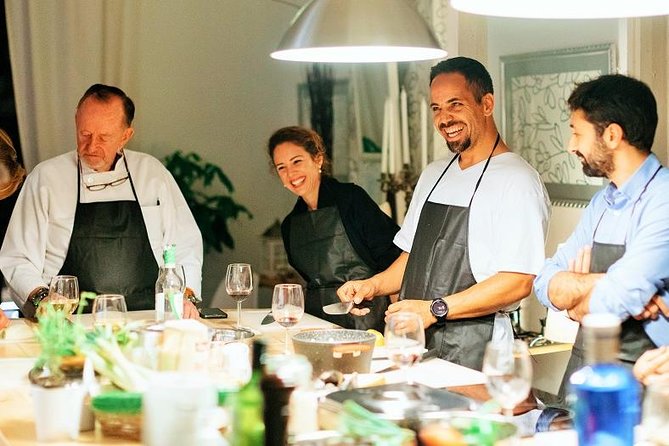
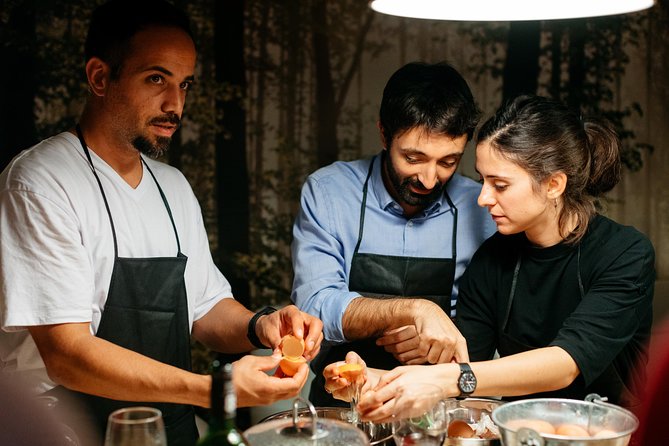
This is not a “watch the chef” event. The workshop is built so all participants cook the menu items. That’s huge if you want a skill you can repeat at home.
Paella: seafood or vegetarian, cooked in rounds
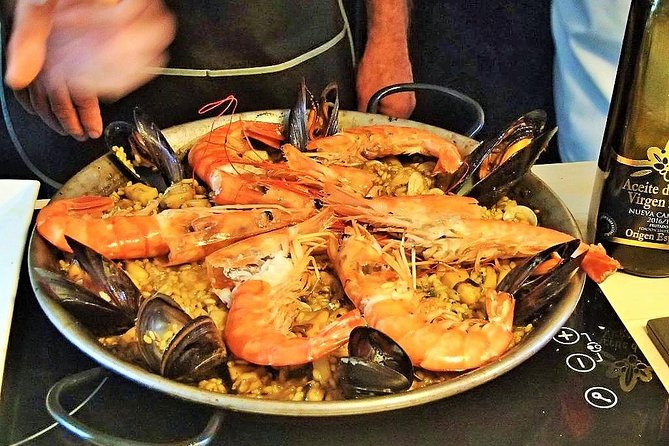
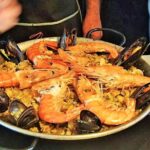
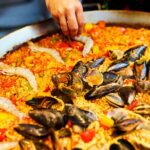
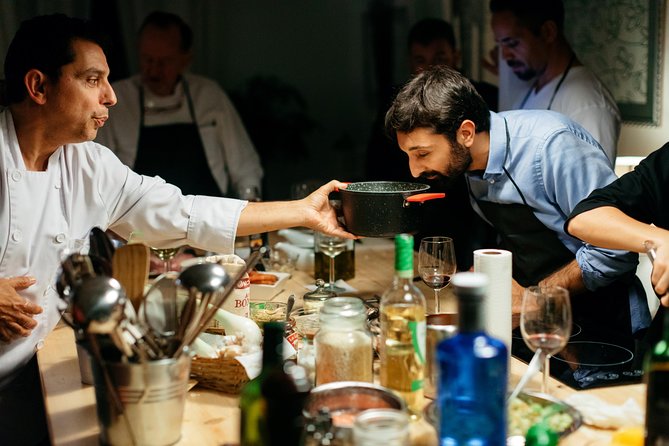
The menu includes seafood paella or a vegetarian paella, depending on what you choose. Either way, you’ll be assigned tasks as you cook. Paella is cooked for every 2–3 people, which is a clever way to keep it interactive without turning the kitchen into a traffic jam.
Expect the chef to guide you through the key steps and techniques that matter for paella—so it’s not just tossing ingredients into a pan. In the feedback I saw reflected in this experience, hosts and chefs were repeatedly praised for explaining how to make paella and for involving everyone enough that people felt confident they could try it again later.
If you’re a first-timer: tell yourself you’re learning fundamentals, not doing a restaurant-perfect version on your first try.
You can also read our reviews of more tours and experiences in Barcelona
Spanish omelet: hands-on, not “breakfast demo”
Alongside paella, you’ll cook a Spanish omelet (tortilla). This dish is perfect for a class because it teaches technique and timing. You’ll get guided instructions and will participate instead of merely sampling.
Catalan cream (crema catalana) with berries for dessert
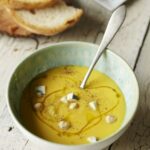
For dessert, the menu includes Catalan cream with berries. It’s a fitting end because it anchors the meal in Catalonia, not just generic Spanish fare. You’ll prepare it as part of the class flow and then serve it alongside everything else.
Diet flexibility
The menu can be adapted to many dietary needs, including vegetarian, vegan, and gluten-free. That’s a real advantage because it means you’re not stuck with a token substitution. Still, you should share your needs at booking so the chef can plan properly.
How the class runs: market → tapas → cook → sit down
Here’s the rhythm that makes this work well: you start in the city center, visit the market with the chef, taste the tapas with wine, then return to the apartment where everything is set up for cooking.
In the kitchen portion, you’ll have:
- A professional chef with guidance
- An assistant who helps run the process
- A structure where you cook and then eat what you made
Once the dishes are ready, you’ll serve the meal at an Imperial table format, which adds a formal dining feel without making it stiff. The result is that you get both the learning and the reward right away, with your group sitting down together instead of standing around.
Also, the class is designed for a small group—maximum 12 travelers, and the experience is described as small groups around 11. In practice, that size is what makes the chef’s attention feel personal. You can ask questions and actually get answers before the next step.
Value check: what $145 gets you (and where it might not)
At $145.18 per person for about 4 hours, you’re paying for three big things that are hard to recreate on your own:
- A chef-led market visit with context (not just “go see the market”)
- A structured cooking class where you participate in multiple dishes
- A sit-down meal experience paired with a 10-tapas tasting and wine
If you’re the type who wants a food memory you can repeat—like learning paella technique—this is where the price starts to make sense. You’re not paying only for ingredients; you’re paying for guidance, pacing, and the choreography of cooking multiple dishes without chaos.
Where it might not be the best fit: if you mainly want a quiet meal and don’t care about cooking skills. Also, the apartment stairs can add friction. And if you’re hoping for recipe handouts, it’s worth asking ahead. In the information I saw tied to this experience, at least one person said they hadn’t received promised recipes by email. That doesn’t mean it won’t happen for you, but you’ll be happiest if you confirm what you’ll get after the class.
Who should book this Barcelona food experience
This is a great match if you want:
- A small-group Barcelona food night instead of a crowded tour bus
- A chef-led market visit that helps you understand ingredients
- A hands-on cooking class where you cook paella, omelet, and dessert
- A tapas-and-wine intro that teaches you how Spanish dining builds flavors in layers
It’s also a nice first activity after you arrive, because it gives you immediate context for what you’ll see and eat later around the city. And it’s clearly family-friendly in the sense that the class keeps younger participants engaged—at least one account mentioned a 14-year-old staying involved while learning.
If you have mobility concerns, I’d treat the stairs as a deal-breaker unless you already know you’re comfortable with that level of walking and climbing.
Practical tips before you go
A few small things will make your experience smoother:
- Plan to meet at Pl. Reial, 3 and return there at the end. No hotel pickup is included.
- Bring a light bag. You’re walking through market space and then working in a kitchen area.
- If you’re bringing a group with different dietary needs, specify them at booking. The menu can be adapted, but you want it sorted early.
- Be mindful of the 18+ wine tasting rule if your party includes younger travelers.
Also, if you’re scheduling your evening, remember it’s about 4 hours total. That’s long enough to feel like a real plan, not an add-on.
Should you book this La Boqueria paella class?
I’d book it if you want more than a tasting and you like the idea of cooking with a real chef in a real Barcelona apartment setting. The combination of market context + tapas + hands-on cooking is what makes the class feel worth it, especially at this group size.
I’d skip it if stairs are a problem for you, or if you only want to watch and eat without caring about technique. And if recipes after the class matter to you, ask about them before you go so there are no surprises.
If you’re chasing a memorable, skills-based food experience in Barcelona—and you don’t mind a little stair climbing—this one checks a lot of boxes.
FAQ
How long is the La Boqueria and paella cooking class?
It lasts about 4 hours.
Where does the experience meet and end?
It meets at Pl. Reial, 3, Ciutat Vella, 08002 Barcelona, Spain, and ends back at the same meeting point.
Is the experience in English?
Yes, it’s offered in English.
What’s included in the price?
You get a La Boqueria market visit with the chef, a tasting of 10 tapas with wine, and a guided cooking class where you prepare a complete menu, plus drinks and coffee served at an Imperial table format.
What dishes are on the menu?
You’ll cook paella (seafood or vegetarian), Spanish omelet, and Catalan cream with berries for dessert. You also do a tapas tasting as starters.
Can the menu be adapted for dietary restrictions?
Yes. The menu can be adapted to diets such as vegetarian, vegan, and gluten-free. You should advise dietary requirements at booking.
How many people are in the group?
The activity has a maximum of 12 travelers, and it’s described as a small group experience.
Is wine included, and is there an age requirement?
Wine is included with the tapas tasting. The minimum drinking age is 18 years.
Is hotel pickup or drop-off included?
No. Hotel pickup and drop-off are not included.
What is the cancellation policy?
You can cancel for a full refund if you cancel up to 24 hours in advance. Free cancellation is available, but cancellations within 24 hours of the start time aren’t refunded.