REVIEW · BARCELONA
Barcelona Guided Tour on Segway
Book on Viator →Operated by Barcelona Segway Glides · Bookable on Viator
Silent streets feel fast on a Segway. What makes this tour fun is the training session that gets you riding quickly, plus the port-to-parks route that stitches together big sights without the usual walking grind. Guides like Alex, Philip, Pablo, Ivan, and Val keep the vibe upbeat and the safety rules clear, but one real consideration is that you’ll need comfort standing and balancing for the whole ride (and the itinerary aims for speed, not long museum time).
I like that the tour starts in the Gothic Quarter area near the ancient Roman Wall, then moves you through the Old Port, parks, Olympic-era landmarks, and down toward the beaches. It’s also packed with practical perks: helmet (mandatory), bottled water, supervised training, and a mobile ticket, with tours offered in English and running in small groups capped at 18.
In This Review
- Why This Segway Tour Works in Barcelona
- Meeting by the Roman Wall and Learning the Segway Fast
- Getting Value: Segway Time, Water, and the Quick-But-Not-Rushed Pace
- Gothic Quarter Glides: Narrow Streets, Iron Railings, and a Fast Orientation
- Mirador de Colom and the Old Port: History by Sea Air
- Parc de la Ciutadella and the Arc de Triomf: Olympic-Era Barcelona Made Visible
- Port Vell, Port Olímpic, and Cara de Barcelona: The Waterfront Without the Parking-Lot Feeling
- Estació de França and David & Goliath: Architecture and Symbol Stops
- Baluard de Migdia and Muralla de Mar: Fortress Walls From a New Angle
- Mar Bella to Parc del Fòrum: Beaches, Science Exterior Views, and Sea Breezes
- Plaça dels Campions and the 1992 Thread
- Private-Only Extras: More Beaches and More Architectural Stops
- Weather, Timing, and What to Wear
- Who This Tour Fits Best (and Who Should Skip)
- Should You Book Barcelona Guided Tour on Segway?
- FAQ
- What does the tour include?
- Where do we meet for the tour?
- How long is the tour?
- Can kids ride a Segway?
- Do I need to bring ID?
- What are the weight limits for Segway riders?
- What happens if it rains?
- Does the tour include museum or building entrances?
Why This Segway Tour Works in Barcelona
- Training first, then riding: you practice in a controlled area until you’re comfortable, not just handed a helmet and sent off.
- A route that connects major zones: Gothic Quarter → Old Port → Ciutadella → Arc de Triomf → Port Vell/Olímpic → 1992 monuments.
- Short stops that still feel meaningful: you get history and photo moments without turning the day into a bus ride.
- Real waterfront time: Port Vell and Port Olímpic are the kind of places you see best when you’re gliding, not dodging crowds on foot.
- Private options add extra coast and architecture: you can trade the basics for more beach passes and neighborhood angles.
Meeting by the Roman Wall and Learning the Segway Fast
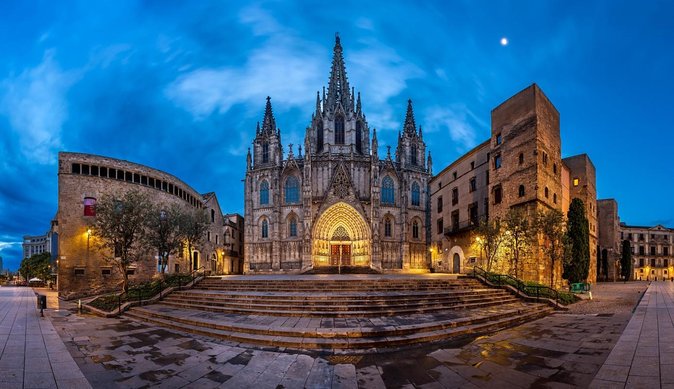
You’ll meet at Carrer del Correu Vell, 6, Ciutat Vella (08002). The operator also frames the start as being near the ancient Roman Wall in the heart of the Gothic Quarter, which is a smart choice: you’re already in one of Barcelona’s most atmospheric areas before you ever roll.
The first phase is a supervised training session at the depot (Euro Segway Barcelona). Expect a quick safety run-through—then practice. The goal is simple: you take as many practice trips as you need until you can maneuver confidently. In practice, that matters because Barcelona traffic isn’t the place you want to be learning balance for the first time.
A few practical rules that really affect your experience:
- Helmet is mandatory, and the company provides all sizes.
- You need a valid ID or passport at the time of the tour (a copy is accepted).
- Minimum age to join is 12, but city law sets the Segway riding minimum at 16. If you’re under 16, the tour offers e-bikes for children at the same price.
- Weight limits for Segway riders are 35 kg (100 lbs) to 117 kg (260 lbs).
If you come in expecting a relaxed “sit back and be transported” experience, adjust your mindset. This is more like: you’re part of the action. Your job is to look up, absorb, and snap photos—while the guide handles starts, stops, and the safe flow through busy areas.
You can also read our reviews of more guided tours in Barcelona



Getting Value: Segway Time, Water, and the Quick-But-Not-Rushed Pace
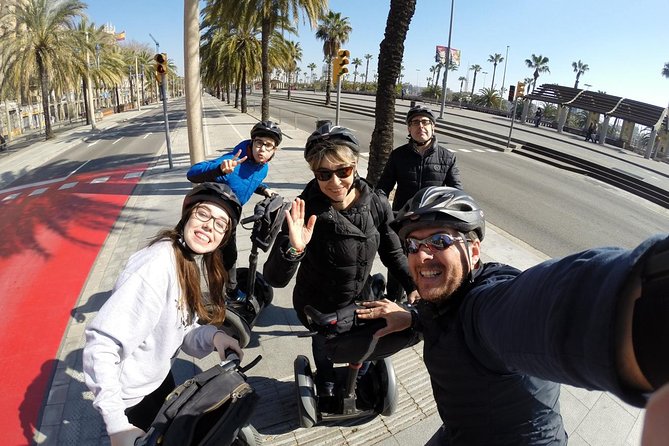
The price listed is $3.62 per person, which is extremely low for a 2–3 hour guided ride with equipment and training included. The catch with any bargain is always the same: what’s actually included? Here, you’re getting:
- Segway use
- Helmet
- Supervised training before departure
- Bottled water
- Mobile ticket
That package is what makes the value feel real. You’re not just buying transportation—you’re buying the ability to cover far more ground than a walking tour, without needing to navigate bike lanes and tight streets yourself.
The tour length is flexible in the booking options: listed as about 5 minutes to 3 hours depending on the format you choose. In the real world, the sweet spot is usually the 2–3 hour range because you get enough time to glide across multiple districts while still feeling like you spent the day doing something, not waiting at the next stop.
One thing to note: the tour’s stated goal is to show the most sights and views, while skipping museum entrances and building admissions. If you want long indoor time—cathedrals, big museums, ticketed attractions—plan to do those later on your own.
Gothic Quarter Glides: Narrow Streets, Iron Railings, and a Fast Orientation
After the training, you’ll start gliding through the Gothic Quarter. This is one of those areas where a walking pace can feel slow because the streets are narrow, turn often, and keep pulling your attention in multiple directions.
From a Segway, the experience changes. You’re able to keep moving while still soaking in the details: narrow alleys, grand architectural facades, and those wrought-iron railings that look like they’ve been there forever.
This segment is also an orientation win. Barcelona can be hard to “place” on day one. By rolling through the Gothic Quarter early, you quickly understand where the old city energy sits relative to the waterfront—so later when you wander on foot, you’re not guessing as much.
Mirador de Colom and the Old Port: History by Sea Air
Next up, you head toward Mirador de Colom, described as the historical entrance of the Old Port. This is one of the most visited parts of Barcelona for a reason: it frames the city’s relationship with the water in a way you can’t get from inland streets alone.
On a Segway, this stop works because the views open up while you’re still in motion. You’re not stuck standing somewhere with a postcard angle and half a dozen people blocking your line of sight. Instead, the ride sets you up to see the port approach, then transition onward without losing momentum.
A practical tip: take a moment to look back while you’re moving. The Gothic Quarter-to-port shift is one of Barcelona’s big “aha” moments.
Parc de la Ciutadella and the Arc de Triomf: Olympic-Era Barcelona Made Visible
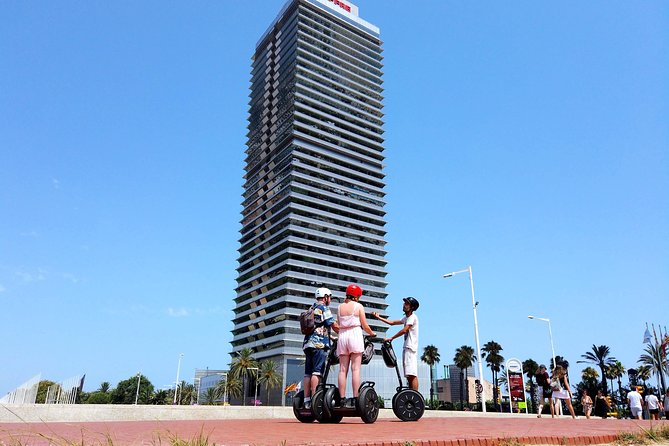
From Mirador de Colom, the route heads to Parc de la Ciutadella. This park is a major relief after the stone density of the Gothic Quarter. You’ll glide past fountains, monuments, and palaces, and one highlight mentioned is the park’s monumental waterfalls around the main fountain.
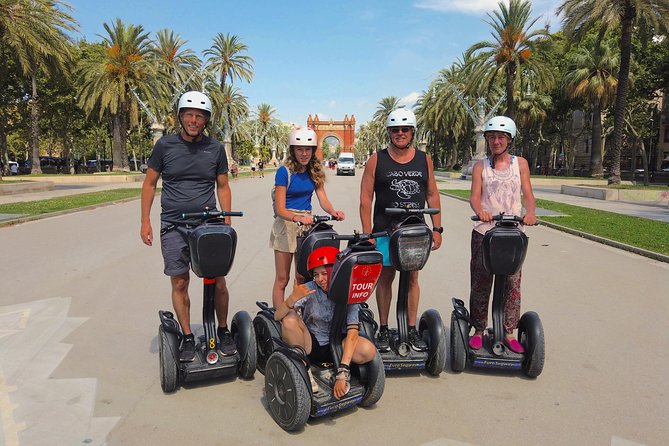
Then you connect to Arc de Triomf, a monumental arch that also functions like a public meeting point. It’s known for street performers and artists, so you may see activity around it even during short stops.
Why these two stops fit together: they show two sides of Barcelona planning. Ciutadella feels like a grand civic garden. Arc de Triomf feels like a city stage—an obvious waypoint you can later build into your own walking route.
The main drawback for some people is also simple: you’ll see a lot fast. If you’re the type who wants to wander through a park for hours, this won’t replace that. But it does a great job setting you up to return later with a clearer sense of where everything is.



Port Vell, Port Olímpic, and Cara de Barcelona: The Waterfront Without the Parking-Lot Feeling
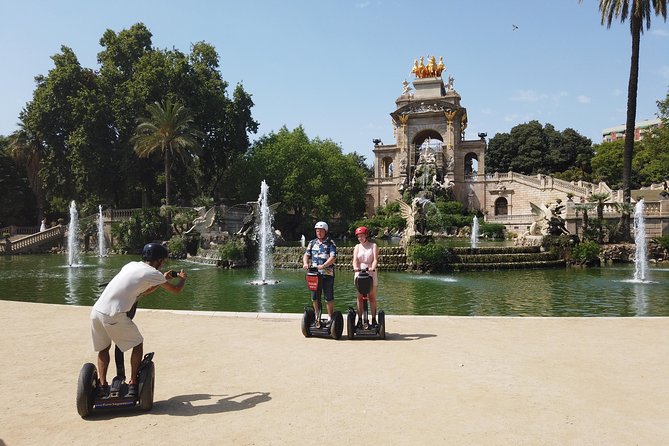
Now you shift to the sea. First is Port Vell, where you glide past yachts and get that easy maritime charm. This is also where you start feeling the difference between Barcelona on a Segway and Barcelona on foot: the waterfront stretches out, and you can cover it without burning time on detours.
Then it continues to Port Olímpic. The marina created for the Olympic competition is now a main spot for fun by the water, with panoramic sights that reward slow looking—even if your Segway is moving.
You’ll also pass Cara de Barcelona, a monument created for the 1992 Olympic Games. It’s short, but it’s one of those landmarks that helps you “read” the city’s modern timeline. You’re not only seeing old stone—you’re also seeing the Barcelona that reinvented itself for 1992.
Quick note for comfort: waterfront areas can be windier than you expect. If it’s cool when you start, it might feel colder once you’re closer to the harbor.
Estació de França and David & Goliath: Architecture and Symbol Stops
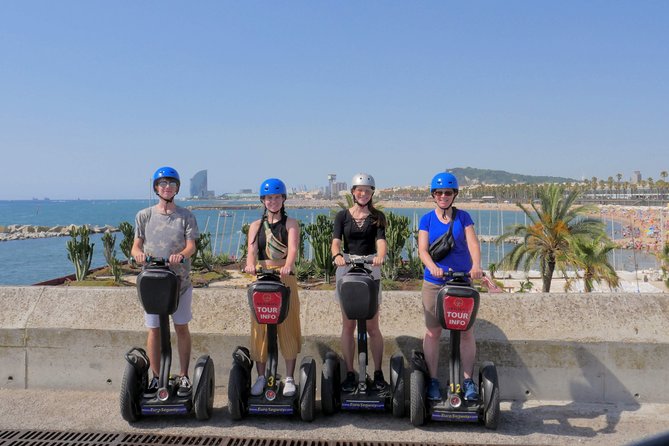
From the ports, you head toward landmark stops that aren’t as obvious if you stick to the main tourist lanes.
One is Estació de França, a railway station described as having architectural grandeur and a sense of historical importance. From a Segway, you get a clean view of the building’s presence without having to stop in the middle of pedestrian traffic for long.
Another is the David & Goliath sculpture by Antoni Llena, created as part of the preparations for the 1992 Olympics. The description includes it as a stylized representation of the biblical story, representing strength and resilience. Even if you don’t know the reference, the sculpture gives you a clear visual marker for the Olympic-era transformation.
If you like your sightseeing to include symbols you can later recognize, these two stops are good anchors.
Baluard de Migdia and Muralla de Mar: Fortress Walls From a New Angle
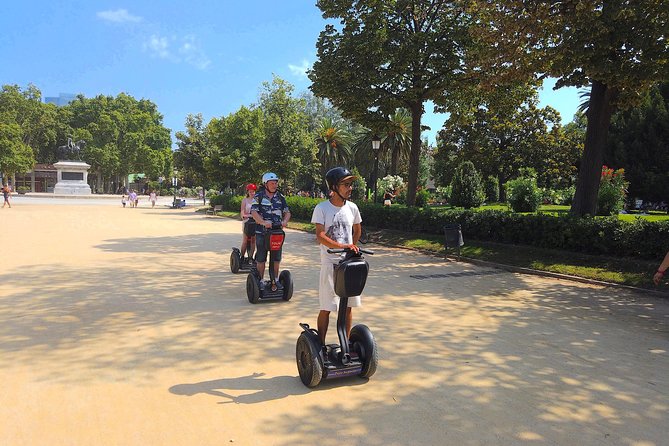
Then come the defensive walls: Baluard de Migdia and Muralla de Mar, part of Barcelona’s historic defense system.
You’ll get quick but useful context: Baluard de Migdia offers commanding views, while Muralla de Mar reflects the city’s maritime legacy through its coastal fortress architecture. On foot, you might only catch a section. On a Segway glide, the walls feel like a continuous story.
The practical consideration here is straightforward: this is a history-and-view stop, not an indoor attraction. You’re getting the setting more than any artifact access.
Mar Bella to Parc del Fòrum: Beaches, Science Exterior Views, and Sea Breezes
As the route heads toward the coast, you’ll pass Platja de la Mar Bella—a popular beach along Barcelona’s coastline. The description emphasizes golden sands, clear Mediterranean water, and the lively beach bar and restaurant atmosphere. Even in a brief stop, it’s an important shift: you go from historic city planning to contemporary seaside life.
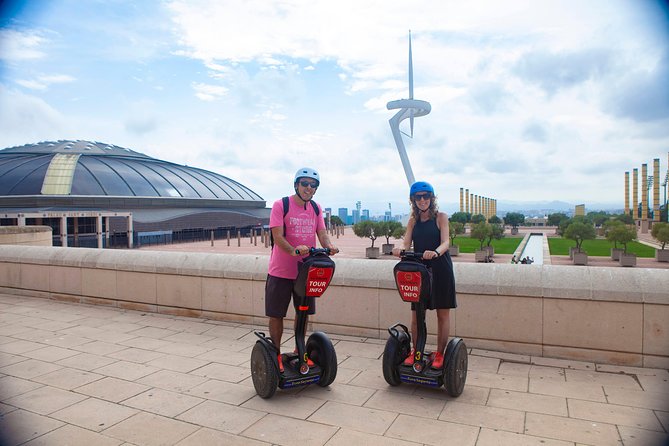
Next is Parc del Fòrum, a more modern pocket of Barcelona with contemporary architecture and waterfront scenery. You’ll glide through open spaces and take in views toward the Mediterranean. There’s also a stop that mentions Museu de Ciències Naturals de Barcelona—at least the exterior is the point here, which matches the tour’s general style of quick sight coverage rather than long museum time.
This section is where the tour becomes very “Barcelona now.” If your trip is short and you’re worried you’ll only see Gothic streets and port photos, this route delivers more of the city’s modern edge.
Plaça dels Campions and the 1992 Thread
You’ll end with Plaça dels Campions, a square where the names of the gold medal winners from the 1992 Olympic Games are listed. It’s a compact stop, but it adds meaning to everything you saw earlier tied to the Olympics: Cara de Barcelona, Port Olímpic, and the overall transformation narrative that runs through the route.
Then you ride back to the original meeting point.
Private-Only Extras: More Beaches and More Architectural Stops
The core route hits the big hitters. But private options can include additional quick passes that broaden the experience.
On private tours, the tour data lists extra coastal stops such as Somorrostro beach, Platja de la Nova Icaria, Bogatell Beach, plus additional Mar Bella variations. It also includes more parks and civic architecture areas like Parc Diagonal Mar, Parc del Centre del Poblenou, and Parc de les Glòries.
You can also pick up extra landmarks linked to Barcelona’s growth and design, including:
- Parlament de Catalunya
- Cascada monumental
- Jardins Fontserè i Mestre
- Homenatge a Picasso
- Umbráculo del Parque de la Ciudadela
- Basilica de Santa Maria del Mar and El Born / La Ribera (with the note that admissions aren’t included)
That’s a lot of ground, but the logic is simple. Private tours can trade strict group pacing for more “this street looks interesting” flexibility.
Weather, Timing, and What to Wear
This activity operates in all weather conditions. If it’s raining, the company provides raincoats, but you’ll still feel more comfortable if you bring your own small umbrella or extra layer if you have one.
Timing-wise, you can choose morning or afternoon tour times. That matters in Barcelona because light and crowds change a lot across the day. If you’re chasing photos, morning tends to feel calmer; afternoon can give you warmer light (if the weather cooperates).
Also consider how long you want to be upright and moving. People tend to love Segways, but your comfort still depends on shoes and clothing. The tour strongly recommends comfortable shoes and clothing.
One more detail that keeps things smooth: routes may change due to interferences outside the operator’s control. That’s normal in city touring. The tour still aims to connect the major zones you came for.
Who This Tour Fits Best (and Who Should Skip)
This is a great fit if:
- you want a fast way to learn the geography of Barcelona,
- you’re okay with short stops and quick history context,
- you want sea views, parks, and Olympic landmarks in one outing,
- you want to try a Segway without the stress of figuring it out alone.
It may not be ideal if:
- you’re expecting museum entry tickets or long indoor time,
- you don’t like balancing while standing for extended periods,
- you’re outside the Segway rules (under 16 goes to e-bikes; under 35 kg or over 117 kg isn’t listed as Segway-ridable),
- you want a slow wandering style tour with plenty of time at each stop.
If you’re a couple, a family with teens, or a solo visitor who wants the city to make sense quickly, this kind of guided glide can be a very smart first move.
Should You Book Barcelona Guided Tour on Segway?
I’d book it if you want an efficient, guided way to cover Barcelona’s big contrasts: Gothic Quarter atmosphere, port views, Olympic-era landmarks, and beach-and-park energy. The value comes from the full package—helmet, training, and water—plus the way the route connects distant districts so your day feels packed without feeling frantic.
Skip it only if your priority is ticketed museum time or you know you’ll struggle with standing and balance. Otherwise, it’s an easy way to get your bearings fast and start exploring on your own with a map in your head.
FAQ
What does the tour include?
It includes the use of the Segway, a mandatory helmet, a supervised training session before the trip, and bottled water.
Where do we meet for the tour?
The meeting point is Carrer del Correu Vell, 6, Ciutat Vella, 08002 Barcelona, Spain, and the tour ends back at the same place.
How long is the tour?
Duration is listed as about 5 minutes to 3 hours, depending on the tour option you choose.
Can kids ride a Segway?
The minimum age to join is 12 with an adult, but city law sets the minimum age to ride a Segway at 16. For underaged riders, the operator provides e-bikes for children at the same price.
Do I need to bring ID?
Yes. You need a valid ID or passport on the day of the tour (a copy is accepted).
What are the weight limits for Segway riders?
The minimum weight is 35 kg (100 lbs) and the maximum is 117 kg (260 lbs).
What happens if it rains?
The tour operates in all weather conditions. In rain, the operator provides raincoats, and if severe weather prevents the tour, you’ll be offered an alternative date or a full refund.
Does the tour include museum or building entrances?
The tour is designed to show the sights quickly and doesn’t include entrances to museums and other buildings.