REVIEW · BARCELONA
Barcelona Guitar Trio & Dance at the Palau de la Musica
Book on Viator →Operated by Maestros de la Guitarra · Bookable on Viator
If you love music halls, this one hits hard. A live guitar and flamenco tribute in the UNESCO Palau de la Música is a great way to spend an evening in Barcelona.
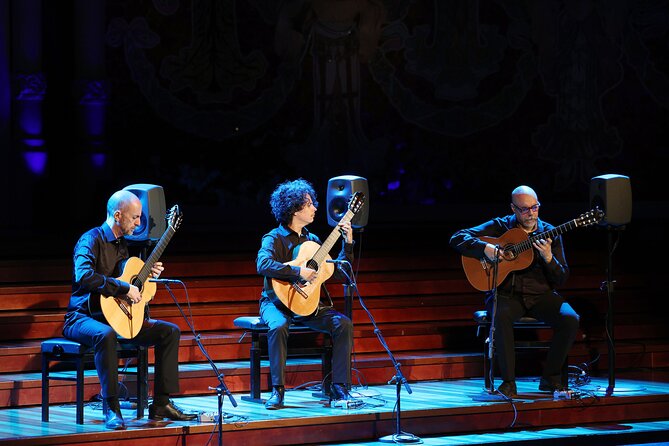
I especially like the world-class setting and the way the hall’s sound carries every note. I also love the Paco de Lucía homage, performed by respected guitarists Ali Arango, Xavier Coll, and Luis Robisco alongside flamenco dancers.
One heads-up: the show leans more guitar-forward than dance-forward, and you also won’t be able to take photos or videos during the performance.
In This Review
- Key highlights you’ll feel right away
- Palau de la Música after dark: UNESCO beauty you can actually hear
- The Paco de Lucía tribute: guitar-forward flamenco with real emotional punch
- Meet the musicians: Ali Arango, Xavier Coll, and Luis Robisco
- What the performance feels like: pacing, length, and where dance shows up
- Seating and sound: why this hall is easier than the photos make it seem
- Arriving without stress: exchanging your voucher and keeping it smooth
- Value check: why $66.54 makes sense for a UNESCO concert night
- Who should book this show—and who might want a different kind of flamenco
- Should you book Barcelona Guitar Trio & Dance at Palau de la Musica?
- FAQ
- How long is the Barcelona Guitar Trio & Dance show?
- Where does the show take place?
- How much does it cost?
- What is included in the ticket price?
- Are a CD or other extras included?
- Do I need to exchange my voucher for physical tickets?
- Is the venue easy to reach with public transportation?
- Can children attend?
- Is there any guidance on confirmation after booking?
- What if I need to cancel?
Key highlights you’ll feel right away
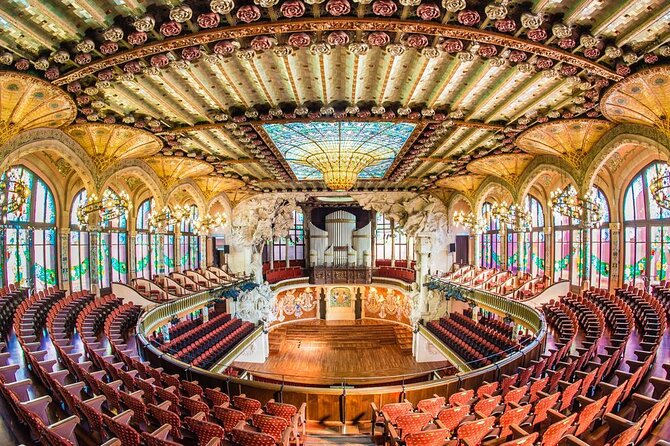
- Palau de la Música Catalana: UNESCO concert hall with acoustics that actually support the music
- Paco de Lucía tribute with guitar and flamenco pairings
- Top-name Spanish guitarists: Ali Arango, Xavier Coll, and Luis Robisco
- Instrumental focus with composers like Manuel de Falla and Federico García Lorca named in the program
- Prebooking saves time and helps you lock in good seats for a popular, limited-capacity venue
Palau de la Música after dark: UNESCO beauty you can actually hear
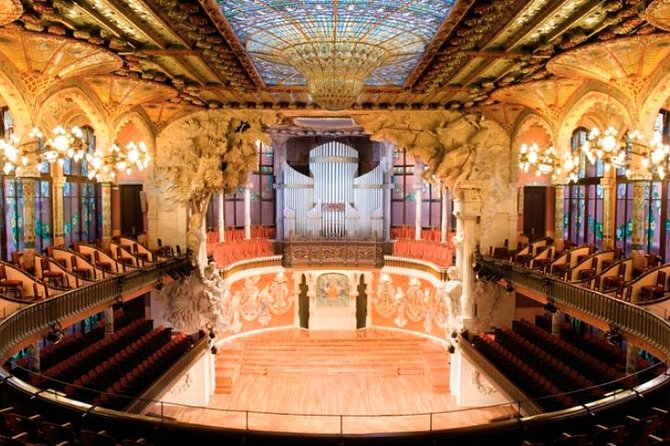
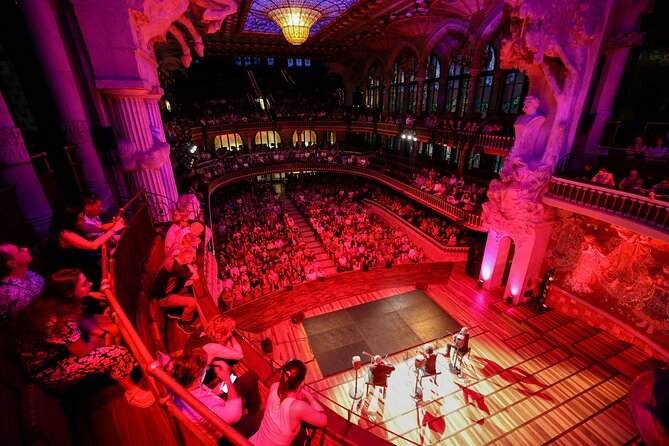
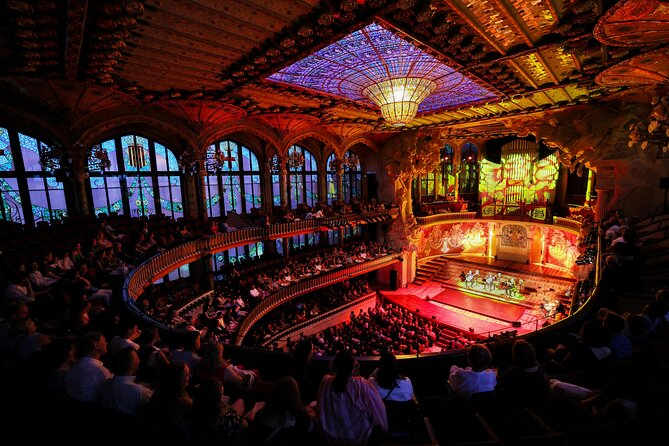
Palau de la Música Catalana is the kind of building you want to see in daylight. But the best trick is using this show to experience it at full volume—literally. The hall is UNESCO-listed, known for its Catalan modernisme design, and it turns a one-hour-evening into a real sense of occasion.
What makes it worth your time is that the music doesn’t feel trapped. You can follow the performance even without knowing the details of Spanish guitar technique. And because the hall is designed for live sound, the acoustics tend to make virtuosity feel close, not distant.
The other big plus is logistics-by-design. This is an evening activity that fits cleanly after sightseeing. You’re not hunting for a late-night plan. You’re stepping into a venue that’s already set up to do one thing extremely well: sound amazing.
You can also read our reviews of more tours and experiences in Barcelona.
The Paco de Lucía tribute: guitar-forward flamenco with real emotional punch
This program is built around an homage to Paco de Lucía, supported by two flamenco dancers. That matters, because it sets your expectations. You should go in knowing the core of the show is Spanish guitar—then flamenco dance adds interpretation, intensity, and rhythm.
The music choices are a smart mix. You’ll hear references in the program to major figures such as Manuel de Falla, Federico García Lorca, Chick Corea, and Paco de Lucía himself. That gives the evening a “Spanish culture and beyond” feel without turning it into a long lecture. It’s entertainment with context baked in.
Also, it’s not a vocal show. One recurring point from the experience is that there’s no singing—so don’t expect a singer to carry melodies. If you like guitar lines, handwork, and the way dancers respond to phrasing, you’ll be in the right mood.
Meet the musicians: Ali Arango, Xavier Coll, and Luis Robisco
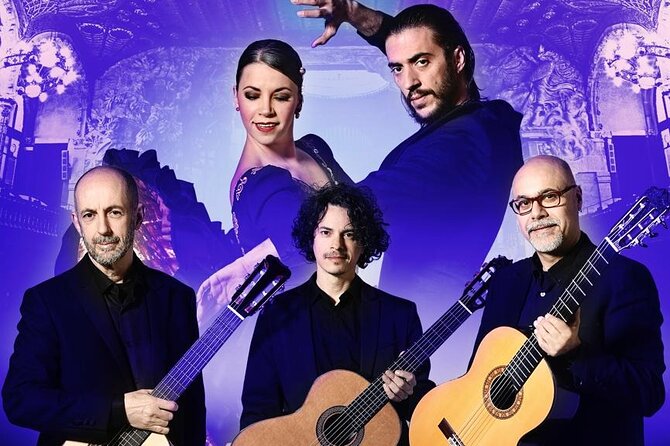
The show is performed by three highly regarded guitarists: Ali Arango, Xavier Coll, and Luis Robisco. You’re not watching a generic “music demo.” You’re watching a real trio with individual voices, plus the chemistry that comes when three players share the same stage space and timing.
Here’s what I think you’ll notice even if you don’t know the technical names. When the trio plays together, the sound becomes layered. When one guitarist leads, the room seems to tighten around that line. It’s the kind of performance where you start listening for balance—who’s carrying the rhythm, who’s shaping the melody, and how the dancers react.
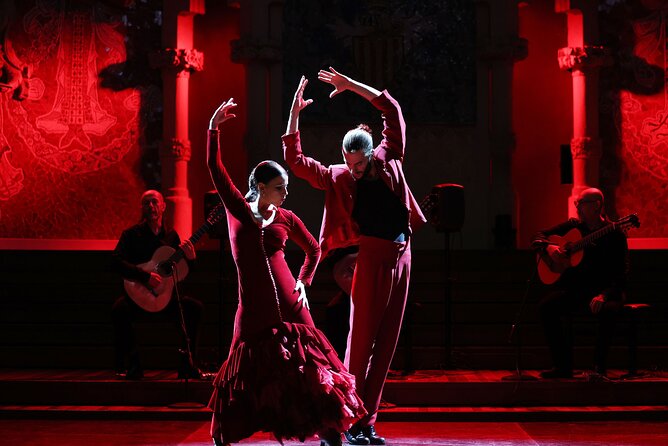
The dancers are a key part of the emotional arc. Flamenco in this setting doesn’t feel like an add-on act. It feels like a second language translating what the guitars are doing—graceful when the music softens, sharp when the rhythm lands.
What the performance feels like: pacing, length, and where dance shows up
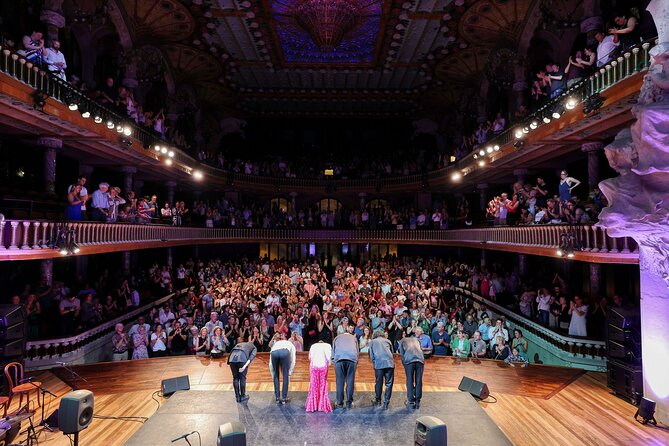
The show runs about 1 hour 30 minutes. That’s a good length for jet-lag levels and for pairing with a busy day. It’s long enough for the trio to explore textures and for dancers to build a mini-story, but not so long that you’re counting minutes.
Still, balance matters. A few people described disappointment because they wanted more flamenco moments. That doesn’t mean there’s no dance—it’s there. But your safest expectation is that this is primarily a guitar and atmosphere show, with flamenco dance as a strong supporting element rather than the headline throughout.
There’s also a very “performer and building” vibe to the evening. Even when the art is intense, it stays watchable. One of the most positive signals from the experience is how engaging the musicians are, including some light humor. It keeps the mood friendly, not stiff or overly formal.
Seating and sound: why this hall is easier than the photos make it seem
Here’s a practical thing to know: Palau de la Música doesn’t feel as huge as you might think from images. That tends to help your experience. Seats are close enough that you can actually see musicians’ engagement, not just a distant stage picture.
In the reviews, people highlight that the venue’s size makes most seats feel good. If you’re choosing between levels, you might find the balcony experience especially atmospheric, but it can mean more stairs. If you’d rather avoid that, pick a seat with the easiest path you can manage.
Sound quality is another major theme. People consistently mention top-notch acoustics and a crisp mix that does justice to guitar detail. That matters because guitar can get lost in the wrong venue. Here, the hall seems built to prevent that.
One more rule to plan around: you can’t take photos or videos during the show. If you’re the type who documents everything, that’s a moment you’ll need to give up for one night. You’ll get the memory in a different form: watching how hands and feet move in sync with the music.

Arriving without stress: exchanging your voucher and keeping it smooth
This experience is near public transportation, so you can usually pair it with a final stop in central Barcelona. Still, the most important detail is entry. You must exchange your mobile voucher for physical tickets before you enter the venue.
And here’s the part that saves time: ticket exchange happens with the tour’s staff, not at the venue’s official box office. The exchange is done exclusively from staff, at the time and place they designate. If you show up and go straight to the official box office, you might lose time you could have used to settle in.
My advice: build a small buffer into your schedule. You’re heading into a special building, and you want your focus on the show, not on last-minute logistics.
Value check: why $66.54 makes sense for a UNESCO concert night
At $66.54 per person, this isn’t bargain-basement entertainment. But when I look at value, I see three things you’re paying for:
First, you’re paying for the venue itself—Palau de la Música is a UNESCO landmark. Seeing it during a live performance means you’re not just paying for entry into a building. You’re paying for an evening built around the space.
Second, you’re paying for serious performance talent. The program is anchored by a trio of well-regarded guitarists and supported by flamenco dancers. This is not a casual street-style moment. The entire format is performance-driven.
Third, you’re getting a tight experience length: about 1 hour 30 minutes. That’s a practical duration for an evening in Barcelona, where travel time and meal timing can eat hours fast.
One note on add-ons: a CD is not included, though it may be available for purchase. If you love the music and want something to take home, that’s a possible follow-up. If you don’t, you can simply enjoy the performance and leave it all onstage.
Who should book this show—and who might want a different kind of flamenco
I’d recommend booking this if you want a classy, culture-heavy night that still feels lively. If you like Spanish guitar, if you enjoy flamenco dance as a visual response to rhythm, or if you just want a memorable way to experience Palau de la Música in one evening, this fits well.
It’s also a strong option for couples and older kids who can sit for about 90 minutes. The experience says children must be accompanied by an adult. It also notes that children can be free if they are not using a seat, while children using a seat pay the same price as adults.
If you’re expecting a flamenco show where dance dominates every segment, you might feel underfed. Since the program is guitar-led with dancers integrated into that framework, it’s best for people who want guitar virtuosity first, flamenco second.
Should you book Barcelona Guitar Trio & Dance at Palau de la Musica?
I’d book it if you want a high-impact evening in a UNESCO concert hall, with real Spanish guitar talent and flamenco dance used as emotional storytelling. The venue’s acoustics and the hall’s beauty are major reasons to do this, and the program’s tribute focus to Paco de Lucía gives the night a clear theme.
Skip it only if your top priority is lots of continuous flamenco dance, or if you’re strongly bothered by photo and video restrictions. For most people, this is one of the most efficient ways to turn a Barcelona evening into something you’ll remember long after the photos would have worn off.
FAQ
How long is the Barcelona Guitar Trio & Dance show?
The performance is about 1 hour 30 minutes.
Where does the show take place?
It takes place in Barcelona, Spain, at the Palau de la Música Catalana (Palau de la Musica).
How much does it cost?
The price is $66.54 per person.
What is included in the ticket price?
The included item is the flamenco show.
Are a CD or other extras included?
No. A CD is not included, though it may be available to purchase.
Do I need to exchange my voucher for physical tickets?
Yes. You must exchange your mobile voucher for physical tickets before entering, and this is done by the show’s staff—not at the venue’s official box office.
Is the venue easy to reach with public transportation?
Yes. The experience is near public transportation.
Can children attend?
Children must be accompanied by an adult. Children are free if they are not using a seat. If a child uses a seat, they pay the same price as adults.
Is there any guidance on confirmation after booking?
You should receive confirmation at the time of booking.
What if I need to cancel?
Free cancellation is available. You can cancel up to 24 hours in advance for a full refund, and changes within 24 hours aren’t accepted.