REVIEW · BARCELONA
Tarragona and Sitges Small Group Tour – Roman History & Culture
Book on Viator →Operated by Explore Catalunya · Bookable on Viator
Two cities hide in plain sight. This full-day Tarragona and Sitges tour strings together standout Roman sights with genuine seaside downtime, from the El Pont del Diable aqueduct walk to a slow stroll in the whitewashed streets of Sitges. I like how guides like Sergio and Xavier keep the day moving with clear, practical explanations and room for questions.
The other thing I really like: you get a real break from ruins. Sitges gives you time to wander cafes and boutiques, then decide if you want a quick dip when the timing works out.
One possible drawback: the schedule packs a lot in, so it can feel tight if you want more time on the aqueduct or you hit a busy day in Sitges. If you prefer long museum-style pacing over brisk guided stops plus free time, this may not match your style.
In This Review
- Key things to know before you go
- Getting to Tarragona: a smooth start from central Barcelona
- El Pont del Diable Aqueduct: the walk you’ll remember
- Entering Tarragona: Roman walls meet modern streets
- The Cathedral area, Roman forum, and the circus hidden inside the city
- Seaview amphitheater moments and the church in the ruins
- Roc de Sant Gaieta: the quick coastal reset on the way to Sitges
- Sitges beach time: cafes, boutiques, and a choice to swim
- The rhythm of free time: how to avoid feeling rushed
- Group size and guide style: why it feels personal
- Transport and comfort: the minivan advantage
- Price and value: what $119.48 really buys you
- Practical tips for a smoother day
- Who should book this Tarragona and Sitges tour
- Should you book Tarragona and Sitges Small Group Tour?
- FAQ
- What’s the meeting point for the Tarragona and Sitges tour?
- What time does the tour start and when do you return to Barcelona?
- Is this tour small-group sized?
- Does the tour include admission tickets and food?
- What language is the tour offered in?
- Do I need to bring swimwear for Sitges?
- Is hotel pickup provided?
Key things to know before you go
- Walk the aqueduct at El Pont del Diable, including time on top of this near-perfect Roman structure
- Tarragona’s Roman layers show up in everyday streets, where Roman remains and modern city life overlap
- Forum and circus time includes a stop at Placa de la Font inside the Roman circus area
- Sea views and photo moments show up at multiple points, especially near the Roman amphitheater viewpoints
- Short coastal reset at Roc de Sant Gaieta gives you a calm pause before Sitges
- Sitges free time lets you choose between beach strolling, shopping, and optional swimming
Getting to Tarragona: a smooth start from central Barcelona
You meet at C/ Palau de la Música, 1, near Palau de la Música. The day starts early, with a meet-and-greet window around 8:15 so you can use restrooms and grab a quick coffee before the group boards.
At 8:30, you head out of Barcelona by minivan. Expect about 90 minutes of driving, and your guide shares a quick orientation about the city as you roll toward Tarragona.
This format is a big part of the value: you skip the hassle of figuring out transport, and you arrive ready to see sites instead of waiting around.
You can also read our reviews of more historical tours in Barcelona



El Pont del Diable Aqueduct: the walk you’ll remember
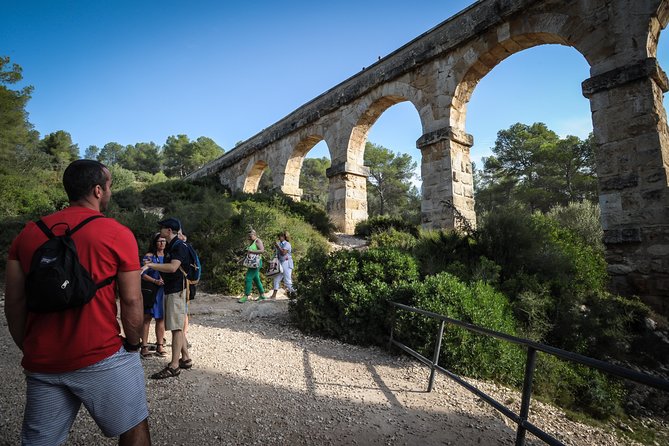
Around 10:00, you reach the Roman aqueduct known as Pont del Diable (or Les Ferreres). What makes it special is the condition and the experience: you can walk across the top from one side to the other.
Standing on a structure built roughly 2,000 years ago changes your sense of scale fast. You also get multiple viewpoints in a short time, so even if you’re not a hardcore ruins fan, you’ll still feel like you saw something extraordinary.
Practical note: this is a walking stop. Wear shoes you trust, and if you’re sensitive to heat, take your time on the sunlit stretches.
Entering Tarragona: Roman walls meet modern streets
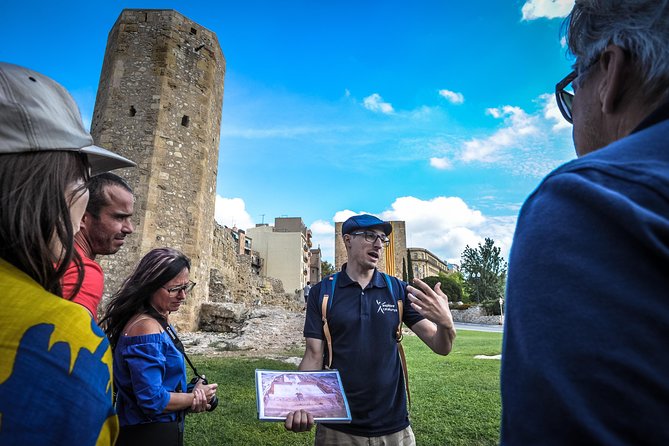
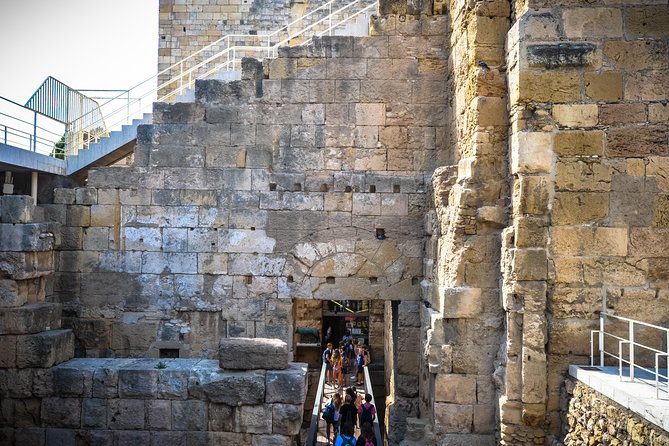
Next you move into Tarragona’s old quarter, slipping through a narrow gateway in the ancient walls. Around 11:00, the city starts to feel like a lesson you can walk through: newer development sits on top of old ground, so Roman remains aren’t staged behind fences the way they can be in some places.
You’ll follow the archaeological walkway, then wander the old town while seeing how layers of time overlap. A medieval hospital and the surrounding streets help set context before you get to the Roman core.
If you enjoy comparing eras side by side, Tarragona is one of the better day-trip targets from Barcelona because the evidence is visible right where people live and move.
The Cathedral area, Roman forum, and the circus hidden inside the city
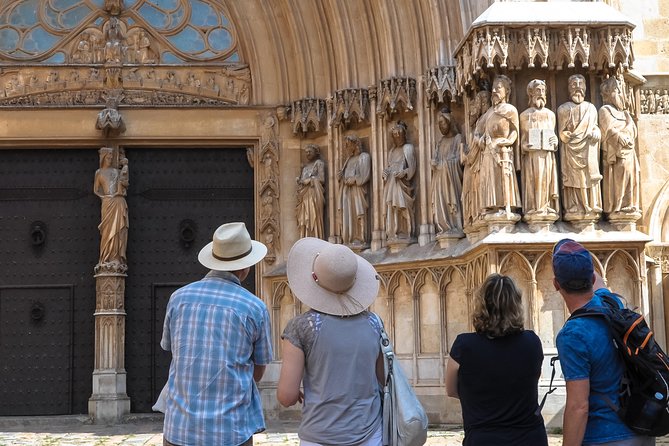
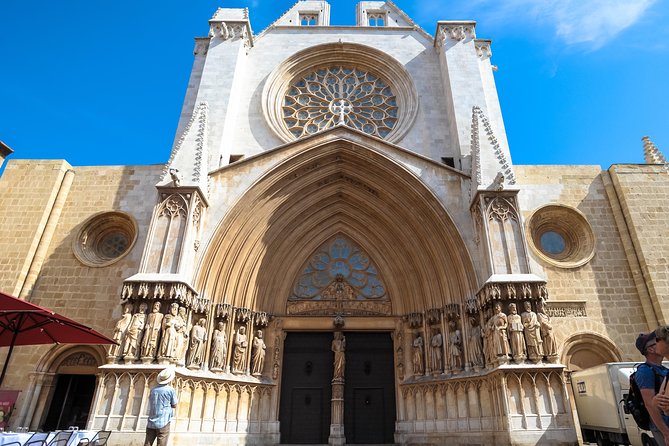
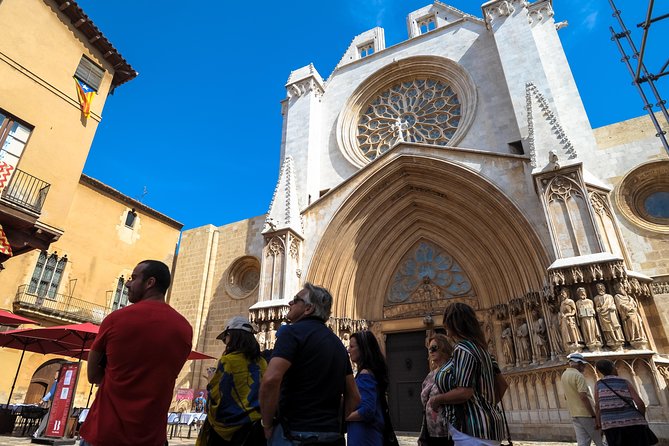
Tarragona’s route keeps tightening toward the “how did this place work?” story. You pause at the cathedral area, where the timing can line up with a local antique market. Then you continue down through the old town toward the Roman forum and the nearby Roman circus tucked into the urban layout.
One of the smartest parts of this stop is that it’s not only about big ruins. You also get to walk the underground passageways linked to the circus stands, which helps explain how the crowds and action would have run.
Placa de la Font is a key moment. It sits inside the circus zone, and the setting makes it easier to imagine chariots racing past and spectators filling the area. I like this kind of stop because it turns “I saw ruins” into “I can picture the daily theater of the city.”
Seaview amphitheater moments and the church in the ruins
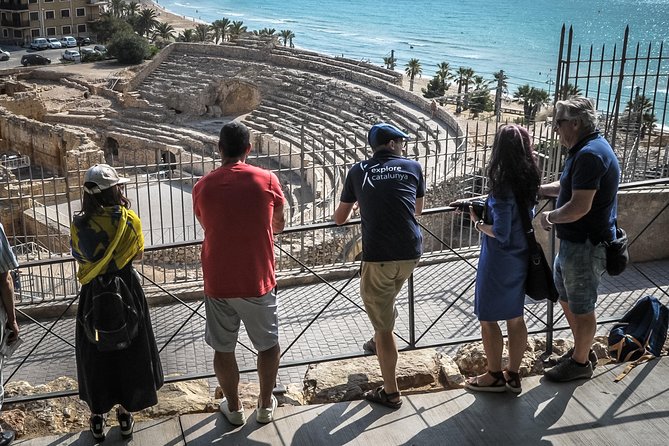
As the day continues, you reach one of the most memorable viewing points: the sea view over the Roman amphitheater. This is where the tour balances stone-and-time with the Mediterranean setting, and it gives you a chance to slow down and look outward as well as down.
The amphitheater area also includes a detail worth paying attention to: a Christian church built in the middle of the stage, using blocks from the earlier Roman amphitheater. It’s a strong reminder that cities don’t just “end” in archaeology. They keep changing, reusing, and adapting.
This is where a guide’s explanations can make or break the experience. Guides such as Rod and Henrique are praised for keeping the story clear and friendly, so if you like a narrative rather than a list of facts, you’ll probably enjoy this portion.



Roc de Sant Gaieta: the quick coastal reset on the way to Sitges
After Tarragona, you head toward Sitges with a short stop at Roc de Sant Gaieta around 1:30. This is brief—about 20 minutes—but it’s timed well. You stroll between tiny white houses on a rocky shoreline and get the sea air before the day becomes beachy.
Think of it as a breath between chapters. You’re not there to over-plan. You’re there to reset your eyes and take in another coastal “Catalonia feels” moment before the main beach area.
If you love photography, this is one of those stops where the light and coastline give you quick wins.
Sitges beach time: cafes, boutiques, and a choice to swim
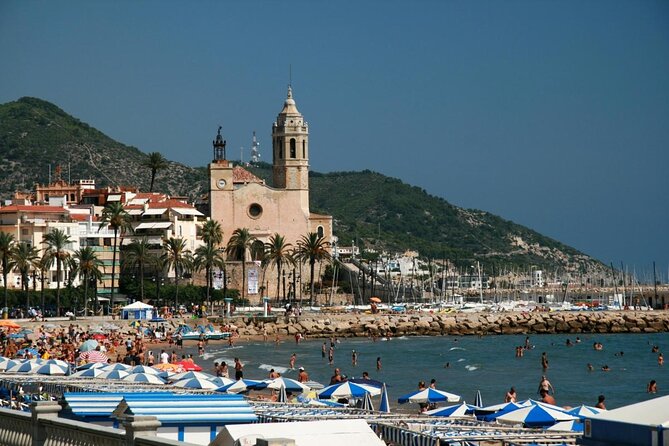
Around 2:30, you arrive in Sitges for your main free-time chunk, lasting about 3 hours with an exit around 5:30. Sitges used to be a quieter fishing village, and it still carries that feel in the whitewashed streets, but it also became fashionable and artsy long ago.
What you can do with your time:
- stroll the seafront and shady side streets
- browse boutiques and local shops
- sit down in a cafe or restaurant by the water
- visit one of the town’s beaches if you want a swim or a soak
A practical bonus: the tour notes that there’s an opportunity to swim if you want. If swimming is on your mind, bring a swimsuit and a towel so you’re not stuck improvising.
A real consideration: Sitges can get busy, especially when locals and Sunday crowds pile in. If your ideal day is quiet beach walking, arrive early within your free-time window and focus on the edges of the beach areas rather than the busiest central spots.
The rhythm of free time: how to avoid feeling rushed
This tour works best when you treat free time like a mini plan. You’re given guided structure for the Roman side, then you’re released in Sitges.
To keep it easy:
- Decide early if you want a sit-down lunch or a lighter meal.
- If you want to swim, aim for earlier in the free-time window so you’re not squeezed by changing conditions.
- Wear comfortable sandals or shoes you can walk in for beachside strolls.
I also like that the day ends with an option to get back easily, either via metro/taxi or by using the guide’s dinner suggestions once you reach Plaça Catalunya.
Group size and guide style: why it feels personal
This is a small-group tour. The listing details show a cap of up to 15 people, and other activity info states up to 8 travelers. Either way, it’s designed to be compact enough that a guide can keep track of questions and regroup the group smoothly.
Language is English only, and a professional guide handles the story and logistics. In reviews, guides like Sergio, Xavier, Jordi, Enrique, and Steve get repeat praise for being friendly, prompt, and willing to answer questions.
I’d call out one more pattern: the best feedback isn’t just about seeing sites. It’s about how the guide shaped the day so you didn’t feel lost.
Transport and comfort: the minivan advantage
You travel by air-conditioned minivan, which matters on a hot day. The route includes driving out from Barcelona and back, so having comfortable seats makes the day more enjoyable than a long ride in a less comfortable bus.
You also get a mobile ticket, which keeps you from fussing with paper vouchers in the morning rush.
One more detail that helps: pickup is not included, so you plan your own trip to the meeting spot. The good news is the meeting point is near public transportation.
Price and value: what $119.48 really buys you
At $119.48 per person, this isn’t a bargain in the way a very short bus hop can be. But for a full 10.5-hour day trip, the value comes from three things:
First, transport is handled with a small group and air-conditioning. Second, Tarragona’s Roman sites are spread out across multiple stops that take real time to navigate. Third, you get a meaningful mix: Roman architecture and city layering in Tarragona, then coastal freedom in Sitges.
If you tried to DIY it, you’d likely spend time on planning and transit. Here, you buy time savings plus a guide to connect the pieces into a story you can remember.
The main value risk is time pressure. If you want long, slow stays in the biggest Roman sites, you might wish you had more hours. But if you want a well-paced overview and then beach downtime, this is a strong match.
Practical tips for a smoother day
The tour asks you to bring the basics, and I’d treat it as a checklist:
- comfortable footwear for walking at ruins and on the aqueduct
- sun protection (especially at exposed viewpoints)
- clothing that works for walking and possible sea breezes
- if you want to swim in Sitges, bring swimsuit and towel
Also plan for a long day on your feet, even though the minivan ride gives you breaks between stops. Water helps too, but the tour doesn’t include food or drinks, so budget that into your day.
Finally, if you care about photo timing, focus your camera time around the aqueduct walk and the amphitheater seaview moments. Those are the high-payoff snapshots.
Who should book this Tarragona and Sitges tour
I think this tour is ideal if you want:
- Roman sights without the stress of planning transit between scattered sites
- a small-group day where you can ask questions
- a mix of ruins and coastal downtime
- English-language guidance with a friendly tone
It may not be the best fit if:
- you want only Tarragona and wish Sitges were shorter or optional
- you dislike busy seaside areas and prefer quiet beach time
- you need long stops in one museum-heavy site rather than multiple guided segments plus free time
Should you book Tarragona and Sitges Small Group Tour?
Book it if you want a single-day hit of two Catalonia sides: Roman Tarragona’s visible layers and Sitges’ beach-town atmosphere. The walk across El Pont del Diable is the kind of experience that makes this tour feel different from a standard “see a few ruins” day.
Skip it if your priority is slow, museum-style pacing or if your perfect vacation is totally low-foot-traffic. This day moves. Still, it moves in a way that gives you real payoff: Roman architecture, sea views, and time to relax on the Mediterranean.
FAQ
What’s the meeting point for the Tarragona and Sitges tour?
You’ll meet at C/ Palau de la Música, 1, Ciutat Vella, 08010 Barcelona, Spain, right by Palau de la Música.
What time does the tour start and when do you return to Barcelona?
The start time is 8:30 am. You return to central Barcelona around 7:00 pm (sometimes between 7:00 and 7:15 pm), at Plaça de Catalunya.
Is this tour small-group sized?
Yes. It’s a small group tour. The details state a maximum of 15 people, and the activity info also lists a maximum of 8 travelers.
Does the tour include admission tickets and food?
Food and drinks are not included. Entrance fees for museums and monuments in Tarragona are also not included. The day’s listed stop times note free admission at certain outdoor sites.
What language is the tour offered in?
The tour is offered in English only.
Do I need to bring swimwear for Sitges?
You might have the opportunity to go swimming in Sitges. The tour advises bringing a swimsuit and a beach towel if you want to swim.
Is hotel pickup provided?
Hotel pickup and drop-off are not included. You’ll need to get yourself to the meeting point near Palau de la Música.