REVIEW · BARCELONA
Picasso’s Barcelona on Electric Bike Small Group Tour
Book on Viator →Operated by Barcelona eBikes · Bookable on Viator
Barcelona from a battery-powered bike feels like cheating. This tour gives you an easy, city-center overview with electric assist and a wireless headset that keeps the story clear while you ride. The only real caution: if you’re expecting a strict Picasso-only art deep dive, the route also spends time on Olympics and other modern Barcelona themes.
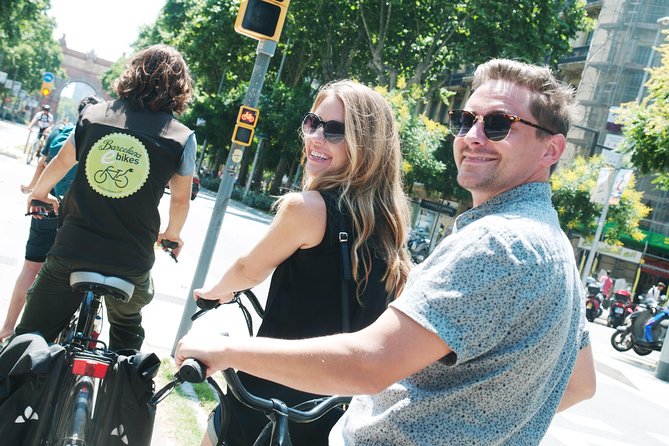
I like that you’re not stuck in a long line of sightseeing blocks. You start in the old town, get guidance on how to handle the bike, then flow through markets, parks, and waterfront streets without turning it into a 12-mile foot trek. With a maximum of 10 people, it tends to feel more like a guided ride than a production, though the group dynamic still matters on any bike tour.
In This Review
- Key things I’d book this for
- Entering Barcelona on an e-bike: why this works
- Getting started at Plaça de Sant Agustí Vell and learning the bike
- Barcelona Cathedral square: your first look at the old town pace
- Santa Caterina Market and El Born: food history you can see
- Parc de la Ciutadella and Arc de Triomf: parks with a purpose
- Port Olímpic and the waterfront story: 1992 on the move
- The fishing neighborhoods and La Catedral del Mar
- Pace, group size, and how to enjoy it safely
- Price value: what $50.69 buys you in real time
- Who should book this electric bike tour, and who might not
- Should you book Picasso’s Barcelona by electric bike?
- FAQ
- How long is the Picasso’s Barcelona electric bike tour?
- How much does the tour cost?
- What time does the tour start?
- Is it offered in English?
- What’s included with the tour?
- How many people are in the group?
- Where does the tour start and end?
Key things I’d book this for
- Up to 10 people keeps the ride calmer and the guide more hands-on
- Wireless headset helps you catch details even when you’re moving
- Bike, helmet, and water included means you show up ready to roll
- Old town + sea + parks gives you a real sense of how the city fits together
- A guide with insider tips helps you understand what you’re actually seeing
- Practical e-bike training time so you’re comfortable before you start stacking sights
Entering Barcelona on an e-bike: why this works
Barcelona is a lot of things at once. It’s medieval lanes and grand squares. It’s beach light and big-city infrastructure. And it’s spread out enough that a walking plan can feel slow by midday. This tour solves that with an electric bike that makes distance and hills feel manageable, even if you’re not training for the Tour de France.
You’re getting more than motion. The e-bike changes what you notice. When you’re not pedaling hard, you can look up at façades, check street corners, and actually connect the dots between neighborhoods. That matters here because the route is built as a tour through Barcelona’s layers: Roman-era roots, Gothic landmarks, market culture, and the city’s more recent reinventions.
Also, the tour runs with a wireless headset, so the guide doesn’t become background noise. The stops aren’t just quick photos; you get a short explanation before you move on. That’s especially helpful in an older core like Ciutat Vella, where street layout can be confusing if you’re doing it solo.
One more subtle point: small group size helps you learn the flow. When there are fewer people, it’s easier for the guide to adjust pace, and it’s less chaotic to merge at the places where bikes need a bit of space.
You can also read our reviews of more cycling tours in Barcelona


Getting started at Plaça de Sant Agustí Vell and learning the bike
Your ride starts at Plaça de Sant Agustí Vell, 16 in Ciutat Vella (with the tour ending back at the same meeting point). The start time is 4:00 pm, and the whole experience runs about 2 hours 30 minutes.
The first stop is at the e-bike shop base, where you get the briefing and meet your bike. They give you time for setup, plus a little testing period once you arrive near the first major square. That matters more than it sounds. If you’ve never ridden an e-bike in traffic, having a minute to figure out the motor and braking before you roll into tighter streets keeps the experience fun instead of stressful.
You’ll also have key gear handled for you: helmet and water are included, and the bike is provided. In practice, that lowers the friction. You don’t need to solve logistics like renting equipment or tracking down where to refill.
One practical detail to keep in mind: the meeting area is in the old town, and older neighborhoods can be a little maze-like. The good news is you’ll be in the right neighborhood early, and once you find the correct spot the rest is straightforward.
Barcelona Cathedral square: your first look at the old town pace
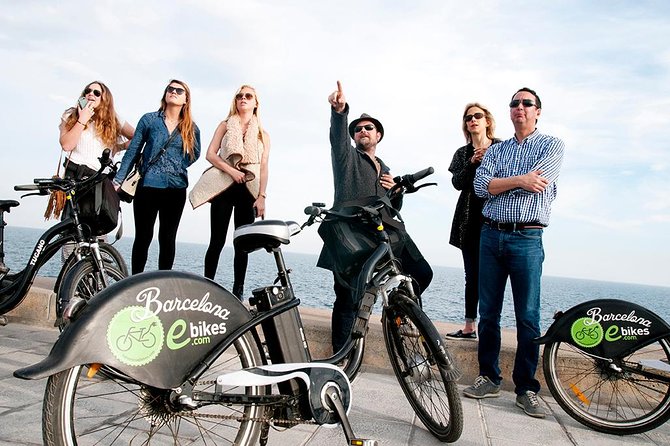
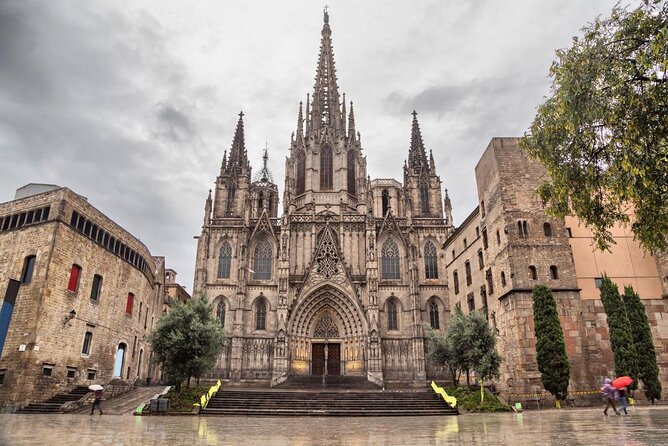
The next anchor is Barcelona Cathedral, right in the big old-town square area in front of it. The tour uses this as an early checkpoint for two reasons. First, it’s a visual landmark that immediately makes the city feel real. Second, it’s a safe moment to learn the bike rhythm and how the motor responds before you continue deeper into the network of streets.
You’ll have a short time to test the bikes again there, plus explanations about how the e-bike works. That’s a big deal because an e-bike tour lives or dies on control. When you can feather the assist or slow down confidently, you stop feeling like you’re riding a machine and start feeling like you’re riding through a story.
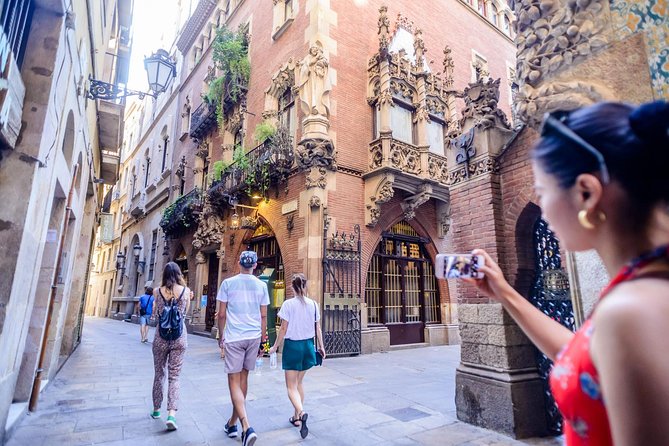
After that, the tour shifts into the area where the shop is located—right in the old heart of the city, where Barcelona’s earlier identity grew (including Roman-era Barcino connections). You’re not just passing through; you’re moving through the geography of identity. It’s the kind of context that helps when you later return on foot and realize why streets and squares are shaped the way they are.
Santa Caterina Market and El Born: food history you can see
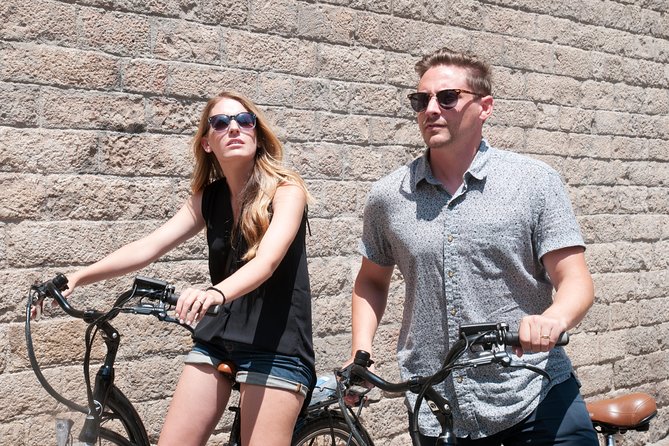
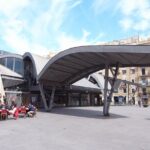
Once you roll into the central market area, you’ll reach Santa Caterina Market. The key detail here is its colorful roof and organic structure, which makes it visually memorable even if you’ve seen other Barcelona markets. Markets in Barcelona aren’t only about buying things—they’re about showing how neighborhoods eat, trade, and gather.
Then the route moves to El Born Centre de Cultura i Memòria, a site connected to the old food-market era. What makes this stop special is that you’re looking at how the market worked in the city’s earlier days—then you get a glimpse of older layers underneath. The experience is described as showing history discovered beneath that beautiful market structure, which means it’s not only architecture above ground.
For me, this part of the tour is where the bike helps most. Markets and old districts are where walking-only tours can stall. E-bikes let you keep momentum without feeling rushed, and the guide’s explanations give you a reason to slow down at the exact points that matter.
If you love architecture, this stop is a good match. If you love people-watching and daily life, it’s equally useful because it frames markets as cultural infrastructure, not just shopping areas.
Parc de la Ciutadella and Arc de Triomf: parks with a purpose
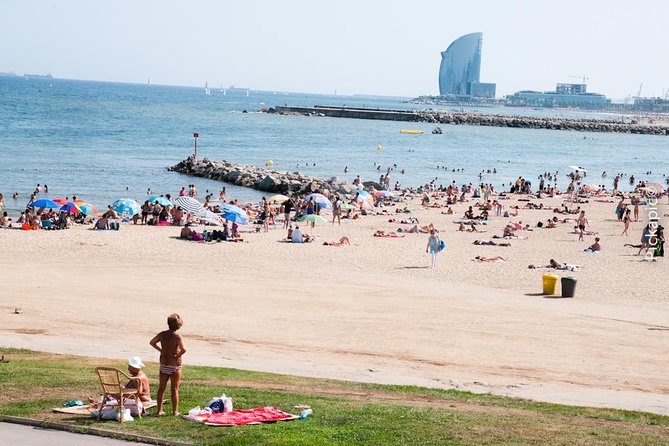
Next you head toward Parc de la Ciutadella, a park tied to major city events and personal memories. It’s linked to the Universal Exposition of 1888, and later it’s described as a place where Picasso and his family used to enjoy time. That’s a direct connection to the tour’s Picasso framing, and it’s one reason this segment works better than a pure showroom itinerary.
You’ll also get a glimpse of Arc de Triomf while riding through a beautiful park route. Arc de Triomf is the kind of landmark that you can miss if you only move between famous churches and big Gaudí headlines. Here it’s integrated into the flow, so it feels like part of a lived city rather than a one-off photo stop.
These parks sections also help you recharge. After tighter streets and market lanes, the open space changes the ride. It’s easier to breathe, look around, and take in wider views.
Drawback to consider: because the bike tour is moving, you don’t get the kind of long wandering time you might want in a big park. If you’re the type who loves sitting and stretching out, plan to return later on your own for a slower pass.
You can also read our reviews of more tours and experiences in Barcelona


Port Olímpic and the waterfront story: 1992 on the move
Then comes the Port Olímpic area. This section is tied to the 1992 summer Olympic Games, which transformed parts of the sea front for that event. You get a sense of what those games meant for Barcelona as you ride along the waterfront.
This is one of the segments that can surprise people depending on expectations. If you booked under the assumption that this is only about Picasso and classical art, you may feel the balance shifts toward modern history and big international events. One person noted they expected more art and got more sports-era context, including references like the Olympics and other maritime competition mentions.
That doesn’t mean it’s a bad tour segment. It means it’s a tour about Barcelona as a changing city, not only Picasso as a single artist. If you enjoy understanding how the city reinvented itself—and how that reinvention shows up in the waterfront—this stop delivers.
It’s also a nice moment for the e-bike: sea air, open space, and a path where the riding feels smooth compared to narrow lanes.
The fishing neighborhoods and La Catedral del Mar
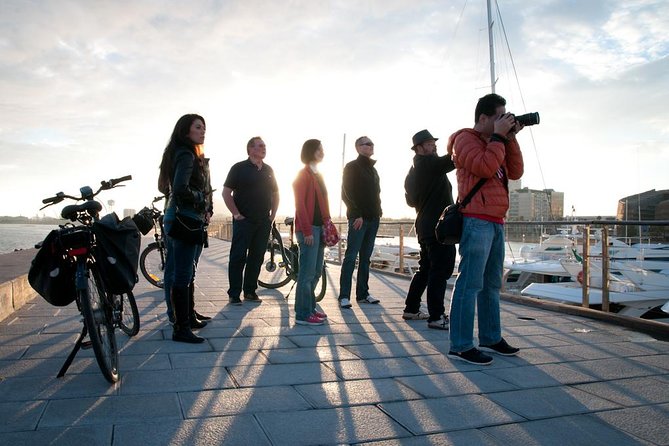
After the waterfront, the tour turns back toward areas described as very local, including neighborhoods traditionally associated with fishermen and women of Barcelona. This is a change of tone: less Olympic-era spectacle, more everyday identity.
Then you reach Basilica de Santa Maria del Mar, often called La Catedral del Mar, or the Sea Cathedral. This is a genuinely strong stop. The basilica is described as a Gothic landmark built by the people of the same neighborhood, and the purpose was protection from the sea. That local origin matters—it connects architecture to the work and worries of real residents.
The guide explains it in a way that makes the building feel like it grew out of community needs. It stops being a postcard and becomes something that answers a question: how did this neighborhood protect itself, worship, and build pride?
After the basilica, the ride continues into a maze of small streets where, in medieval times, craftsmen and craftswomen had workshops. Today, that essence still shows up through handmade clothing, jewelry, and similar trades.
This ending stretch is where the e-bike tour earns its keep. It’s easy to get lost on small streets on foot if you’re trying to cover the right sights. Bikes help you move through the network while the guide points out what you should notice.
Pace, group size, and how to enjoy it safely
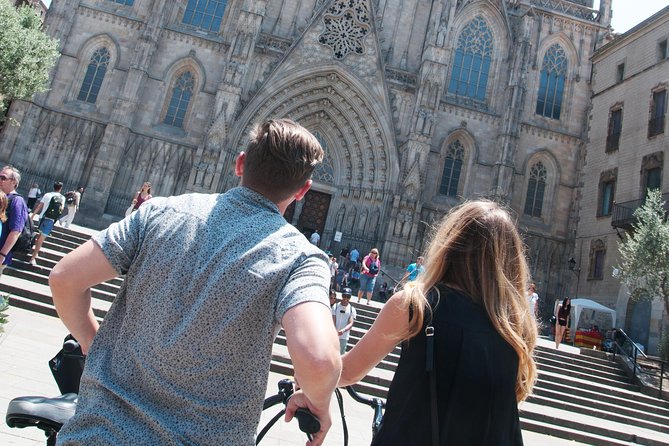
The tour runs about 2 hours 30 minutes, which is long enough to feel like you’ve actually toured Barcelona, yet short enough that you don’t feel like you missed dinner. The maximum group size of 10 travelers is an important quality marker because it reduces the chance of bike congestion.
Still, bike tours are shared space. Even with small groups, you’ll want to stay alert around people stopping suddenly or cutting across lanes. One review mentioned difficulty riding with children on the same tour and having to watch for them more than they wanted. That’s not a reason to skip the tour, but it is a reminder to pick your moment: if you’re sensitive to slower riders, time your booking with that in mind.
Language is listed as English. In one case, a guest said the guide was hard to understand due to the English delivery. Your best bet is to focus on listening when the group pauses for explanations, and ask clarifying questions if you can.
My practical comfort tips:
- Wear closed-toe shoes with grip (old town streets can be uneven).
- Keep your phone tucked away while riding and only stop when the guide signals.
- If you get motion-sick or stressed in traffic, tell yourself this route is short segments between breaks, not one long grind.
Price value: what $50.69 buys you in real time
At $50.69 per person for about 2.5 hours, this is priced like a guided, gear-included city tour, not a ticket-only walking loop. The value comes from the package: e-bike + helmet + bottled water + professional guide + wireless headset.
What you’re really paying for is time and reduced effort. In central Barcelona, getting from one highlight to the next can cost you more energy than you expect, especially if you’re also climbing stairs, squeezing through crowds, or doubling back. Here, the e-bike helps you cover more ground without turning the day into a workout.
Also, the headset can be a big deal when you’re in noisy streets. It’s what allows the guide to give you explanations that you can actually follow while moving.
The other value driver is the guide. Multiple guides were praised by name in the feedback: Lily for friendliness and knowledge, Nil for excellent history explanations, Kubi for interesting stops and details, and Uri for being helpful even when translating for Spanish speakers. Even if you’re traveling solo, that pattern matters: the stories you hear tend to be part of why this tour rates so well.
Who should book this electric bike tour, and who might not
This tour is a great fit if you want:
- A fast intro to Barcelona’s center and how neighborhoods connect
- A mix of major sights and local street texture
- Low-effort sightseeing thanks to e-bike assist
- A guided route that keeps you from wandering in circles
It may not be your best match if you:
- Want only Picasso-related art and nothing else. The ride includes modern history themes like the Olympics and waterfront transformation.
- Get easily frustrated by mixed group energy, especially if families with kids are in the group.
- Need very clear English delivery without any accent challenges. Most people will be fine, but clarity matters when you’re on a headset and moving.
If you’re visiting for a first day in Barcelona, this tour can help you build a map in your head. You’ll know where things are and why they’re laid out the way they are.
Should you book Picasso’s Barcelona by electric bike?
I’d book it if you want a practical, small-group way to get oriented and see a smart spread of Barcelona without exhausting yourself. The combination of e-bike ease, headset audio, and a guide who makes stops make sense is exactly what turns a highlight run into a real understanding of the city.
Choose a different kind of tour if you’re hunting for a strict museum-style Picasso program only. This one is about Picasso’s Barcelona as a city with layers, connections, and change, not just an artist slideshow.
If you like riding through real neighborhoods—markets, parks, waterfront, and craft streets—then this is a strong use of your afternoon.
FAQ
How long is the Picasso’s Barcelona electric bike tour?
It lasts about 2 hours 30 minutes (approx.).
How much does the tour cost?
The price is $50.69 per person.
What time does the tour start?
The start time is 4:00 pm.
Is it offered in English?
Yes, the tour is offered in English.
What’s included with the tour?
You get bottled water, a professional guide, a helmet, use of the electric bike, and wireless headset.
How many people are in the group?
The tour has a maximum of 10 travelers.
Where does the tour start and end?
It starts at Plaça de Sant Agustí Vell, 16, Ciutat Vella, 08003 Barcelona, Spain, and it ends back at the same meeting point.