REVIEW · BARCELONA
Walking Tour Mysteries and Legends of Barcelona and its Ghosts
Book on Viator →Operated by Mediaticos en ruta · Bookable on Viator
Barcelona at night feels haunted for a reason. This 1.5 to 2 hour walk connects street plaques, portals, and cathedral corners with the city’s mysteries, and I love that it treats folklore like a clue trail rather than a gimmick. I also like the way the tour moves fast, so you get a tight burst of stories at each stop. One thing to consider: several moments are external views only, so you won’t always get inside-and-look-in the way you might on a museum visit.
The guides here, including Violant (or Yolanda), bring the legends down to earth with friendly answers and a knack for getting you curious about the details in front of you. With a maximum of 20 people, it stays personal enough that questions don’t get swallowed.
You start at Carrer de Fontanella, 10 in Ciutat Vella and finish at Plaça de l’Àngel near Jaume I Metro (Line L4). It runs at 7:00 pm, and it really depends on good weather since it’s an outdoor walk.
In This Review
- Key Things You’ll Notice On This Barcelona Ghosts Walk
- Ghosts With GPS: What This Tour Really Offers
- Where You Meet and How the Route Lands at Plaça de l’Àngel
- Carrer d’Estruc: Estruc Sacanera and the House of Severed Heads
- Portal de l’Angel: A Medieval Entrance and a Miracle Story
- Romanesque Jewel and a Roman Necropolis: Exterior Views With Big Atmosphere
- Carrer de la Portaferrissa: Old Masonic Lodge and the Four Elements
- The Gothic Cathedral Zone: Myths, Ghosts, and Street Secrets
- Plaça Sant Felip Neri: Strange Phenomena and a Black Day in the Story
- Pont del Bisbe and Placa del Rei: What the Stones Were Built For
- Baixada de la Llibreteria: Roman Gate to Rome and Saint Eulalia’s Miracle Square
- Ending at Plaça de l’Àngel: Saint Eulalia’s Mystery and the Crypt Transfer
- Price and Value: Is $16.21 a Good Deal?
- Who This Tour Suits Best (And Who Might Want Something Else)
- Should You Book This Barcelona Ghosts and Mysteries Walk?
- FAQ
- Where does the tour start and where does it end?
- What time does the tour begin and how long is it?
- How much does it cost?
- What is included with the tour ticket?
- Is admission included at every stop?
- What happens if the weather is bad?
Key Things You’ll Notice On This Barcelona Ghosts Walk
- Dusk timing for legend mode: the experience leans into evenings, when the city’s stonework feels extra story-heavy
- Real locations, not just spooky talk: each stop anchors a mystery to a specific street, square, or monument
- Mixed access to sights: some stops include free admission tickets, while others are exterior-only
- Old myths and newer explanations: you get myth-busting as you pass the Gothic cathedral zone
- Small group pace: up to 20 people keeps the rhythm manageable
- Ends at Plaça de l’Àngel for easy night flow: you finish by Jaume I Metro (L4), so you can continue exploring
Ghosts With GPS: What This Tour Really Offers
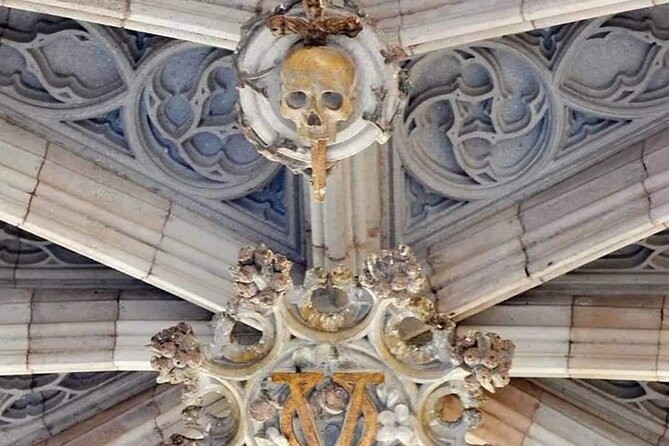
This isn’t a haunted-house show. It’s a walking tour built like a puzzle, using Barcelona’s actual corners to explain why certain places became linked to ghosts, miracles, and local fear stories. The theme is mysteries and legends at dusk, but the tour style stays practical: you stop, look, and learn what the stones and carvings were doing long before modern tourists arrived.
I love that you’re not stuck with only famous landmarks. You get street-level details, like why certain plates and numbers matter in Carrer d’Estruc, and how a place name can point you toward a story that survives for centuries. I also like the tour’s confidence in mixing myth with context. You’re asked to see the city’s layers—Jewish history, medieval faith legends, Masonic references, Roman leftovers, and Gothic-era misunderstandings—without needing a textbook.
A possible drawback is pacing. This is a quick series of stops, many lasting around ten to fifteen minutes. If you want one big, long interior visit where you can linger, you’ll probably feel a bit more like you’re sightseeing with a guide than doing a slow, in-depth museum day.
You can also read our reviews of more walking tours in Barcelona


Where You Meet and How the Route Lands at Plaça de l’Àngel
The tour starts at Carrer de Fontanella, 10, in Ciutat Vella, at 7:00 pm. You end at Plaça de l’Àngel, also in Ciutat Vella, right by the Jaume I metro stop on the yellow Line L4.
That matters because it shapes the whole experience. You’re walking during the evening changeover—light fading, streets waking up, and the city’s atmosphere doing half the work. And since the finish is near a major metro stop, you can wrap up easily after the tour instead of improvising transport.
The tour also runs in a maximum group size of 20. That’s a sweet spot for a legend-style walk: you can hear the guide, and you’re not constantly elbowing through a crowd.
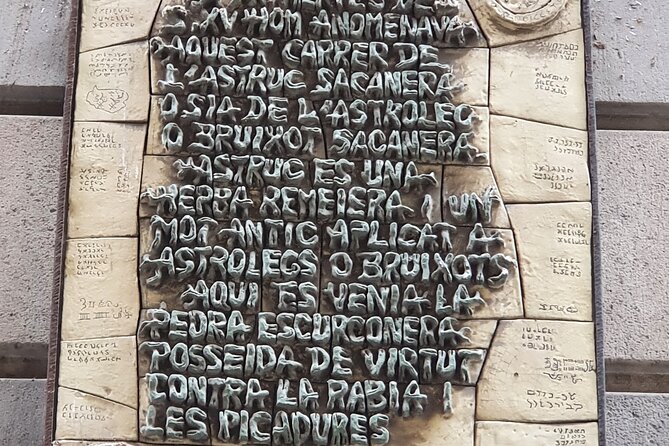
Carrer d’Estruc: Estruc Sacanera and the House of Severed Heads
Your route begins on Carrer d’Estruc, described as one of the more magical streets in Barcelona. The story leads with Jew Estruc Sacanera and his backyard location. Then you shift from family lore to the street itself: the tour calls your attention to the meaning of the plaques and numbers you see as you walk.
The real hook here is the House of the severed heads. Even if you’ve never heard the phrase before, the way the tour frames it makes you look at the street like it’s holding onto a message—carved into memory and repeated through city chronicles.
What you’ll like: you start with a street-level mystery that isn’t the usual “photo spot.” It sets the tone that you’ll be noticing details, not just passing by buildings.
What to watch for: because the stop is short (around 15 minutes), you’ll want to keep your eyes up and your walking steady. This is not a slow stop where you can fully process everything. Think of it as getting oriented for the rest of the night.
Portal de l’Angel: A Medieval Entrance and a Miracle Story
Next comes Portal de l’Angel, where you’re asked to visualize one of the medieval entrances of Barcelona. The tour points you toward a miracle attributed to this spot, and then pushes you into a kind of scavenger mindset—hunting for the angel that hides in it.
This is where the tour’s “mystery method” really clicks. Instead of telling you only a story, it trains you to see symbolism in the architecture. If you’ve ever walked past carvings without noticing them, this kind of stop gives you a reason to look again.
Because admission is listed as free for this segment, it’s also a rare feeling of being guided into the right viewpoint without worrying about another ticket decision.
Practical note: even with free admission, you’re still moving. Plan to listen while you look, and don’t get stuck reading every plaque like you’re on a self-guided tour. The guide is likely steering you toward the most story-relevant parts.
Romanesque Jewel and a Roman Necropolis: Exterior Views With Big Atmosphere
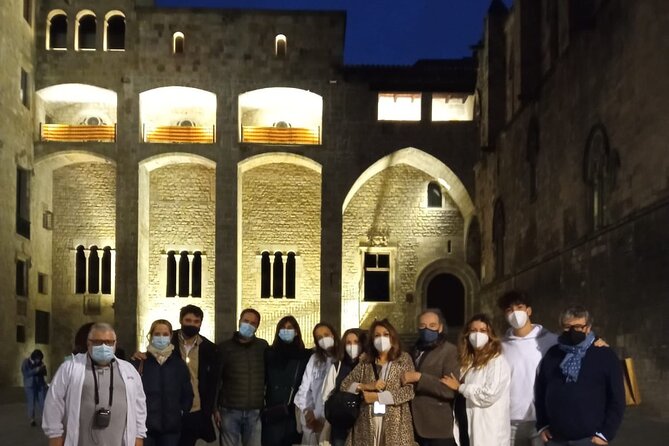
In the middle stretch, the tour highlights two stops where you learn about something older and specifically Romanesque (described as a Romanesque jewel), plus nearby the location of an ancient Roman necropolis.
Here’s the key detail: these are external visits only, and admission is not included. That doesn’t make them less valuable. It just changes what you’re getting. You’re not being asked to “buy time” inside. You’re being asked to recognize the site from the street and understand why it mattered.
If you like historical layers—how the same city location can serve different purposes across eras—this section works well. It’s less about one artifact and more about place logic. The guide helps you understand why a Roman necropolis ends up where it does, and how those older footprints shape what exists later.
Consideration: since it’s exterior-only, expect viewing rather than entering. If you strongly prefer interior visits, you might find these segments shorter-feeling than the stops that include free tickets.


Carrer de la Portaferrissa: Old Masonic Lodge and the Four Elements
Carrer de la Portaferrissa is where the tour makes a sharp turn into symbolism. You’ll locate the oldest Masonic lodge in Barcelona and then discover the four elements that identify it.
This is a fascinating stop because it’s unusual on standard Barcelona itineraries. Most walks focus on cathedrals, Gothic streets, and big squares. Here, the tour asks you to pay attention to a different kind of social history—how groups used symbols, design language, and coded meaning.
It’s also only about 10 minutes, and admission is listed as free. So it’s designed as a quick hit: you learn enough to spot the idea again later on your own, and you move on while the night stays fresh.
My practical advice: stand where the guide tells you to stand. Masonic symbols and architectural identifiers can be easy to miss when you’re just drifting along.
The Gothic Cathedral Zone: Myths, Ghosts, and Street Secrets
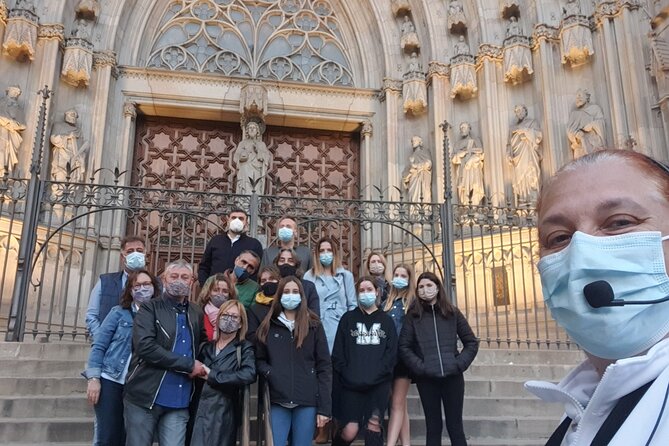
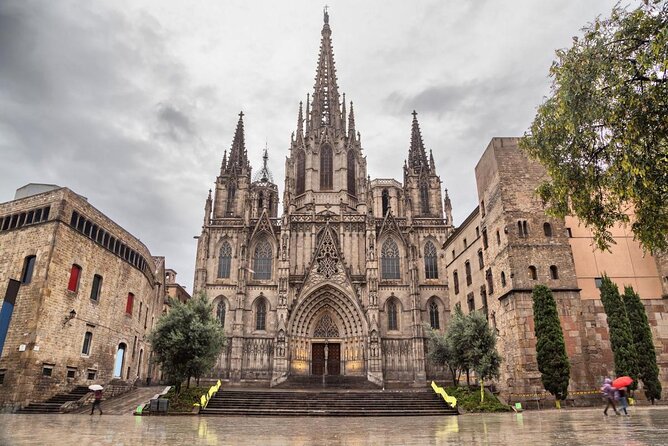
One of the more dramatic segments of the route deals with a Gothic cathedral. The tour aims to dismantle myths tied to it, reveal the ghosts said to inhabit it, and explain the mysteries of the streets that circumvent it.
This part is built for anyone who likes “what’s real vs. what’s legend” thinking. You get the thrill of the ghost framing, but you’re also walking away with a better sense of how rumors attach to buildings over time.
Since this segment is external visit only with no admission included, treat it as a street theatre of sorts—listening plus observing. If you want a guided look into specific rooms, this isn’t that version. But if you want to understand why the area attracts stories, this is a strong use of time.
Plaça Sant Felip Neri: Strange Phenomena and a Black Day in the Story
At Plaça Sant Felip Neri, you get “unknown history” focused on strange phenomena and the area’s blackest day. Another twist is timing and labeling: even though the space is Gothic-looking, the Gothic era did not exist as such during the relevant early period described by the tour.
That’s a smart approach. It prevents the easy mistake of assuming the look equals the date. The guide’s job here is to help you separate what you see now from what belonged then.
This stop is about 10 minutes, with free admission listed. But because it’s still part of a walking flow, you should expect quick interpretation rather than a long lecture. Bring your curiosity and your patience, and you’ll leave with a clearer sense of how Barcelona stories evolve.
Pont del Bisbe and Placa del Rei: What the Stones Were Built For
Two more short stops keep the energy moving: Pont del Bisbe and Placa del Rei.
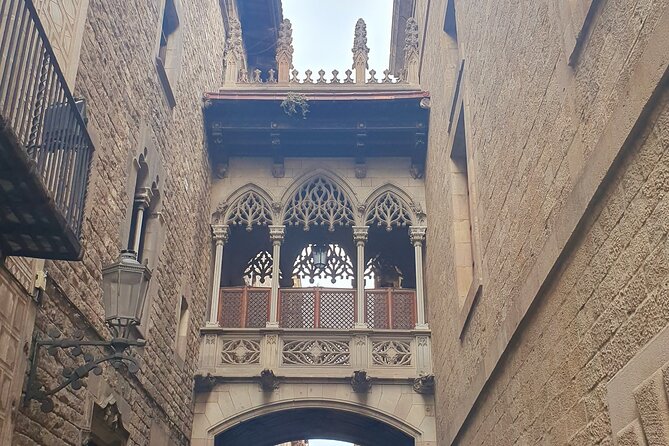
At Pont del Bisbe, the tour asks what it was built for and what black history its stones hide. The theme is straightforward: bridges and crossings tend to accumulate stories because they connect spaces and people. Even when you’re just looking at stone, you’re learning why the crossing mattered.
Then at Placa del Rei, the tour brings in a local saying about being more difficult to find than the snail of the city. This is where the walk blends legend with language. It’s not just about ghosts. It’s about how Barcelona talks about difficulty, hiding, and searching.
These are quick segments (around 10 minutes each), and admission is free where listed. Don’t expect long pauses. Expect to be shown where to look, then move on while the story keeps chaining forward.
Baixada de la Llibreteria: Roman Gate to Rome and Saint Eulalia’s Miracle Square
Baixada de la Llibreteria adds a Roman layer in a way that feels almost cinematic: you’ll locate a Roman gate that led to Rome. That alone is a neat mental jump, because you’re in Barcelona while the story stretches toward the idea of Rome.
Then the tour connects to a miracle story tied to Saint Eulalia. You’ll learn about the Angel Square where the miracle of Sta. Eulalia took place.
This section ties multiple threads together: earlier “angel” themes, Roman survival, and later Christian legend. If you’ve been wondering how a single city can keep reusing the same symbolic language across centuries, this is one of the stops that explains the pattern.
Again, it’s short (about 10 minutes). But it’s the kind of short stop that stays in your head because it changes the scale of what you think you’re seeing.
Ending at Plaça de l’Àngel: Saint Eulalia’s Mystery and the Crypt Transfer
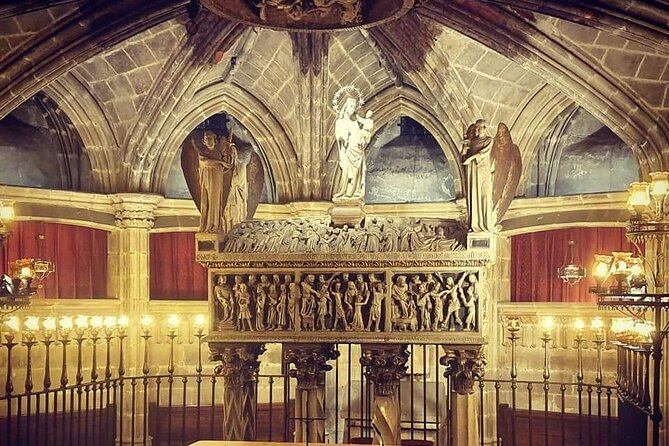
The tour ends at Plaça de l’Àngel. Here, the focus narrows toward Saint Eulalia’s mystery and her transfer from the hermitage of Ntra. Sra. De las Arenas to the crypt of the Cathedral.
That final storyline matters because it gives the “ghost” theme a specific anchor. Instead of vague spooky energy, you’re getting a named figure and a specific movement of remains and worship—something you can trace as a sequence.
If you want a satisfying close, this is it. You start with a street curse-like detail, pass through portals and symbols, and then finish where the cathedral’s story reaches a climax.
Also, logistically, ending by Plaça de l’Àngel is convenient. You’re near Jaume I metro (Line L4), so if you want to keep going with food, drinks, or another walk, you can.
Price and Value: Is $16.21 a Good Deal?
At $16.21 per person, this is priced like a short guided experience, not a full-day tour. The value comes from three things.
First, it’s packed into about 90 minutes to 2 hours with a clear story arc. You’re not paying to be carried from one random landmark to another. You’re paying for the guide to connect locations to legends and then help you read what’s in front of you.
Second, some segments include free admission tickets. That matters because it keeps the cost from feeling like you’re only buying storytelling. You get a mix of access and exterior viewing, so the tour doesn’t pretend you’ll do only inside entry.
Third, included SRC Civil Liability Insurance gives a basic layer of cover. It’s not a life-changing perk, but it’s part of why this kind of small-group night walk can feel safer and more straightforward.
One more practical point: the tour is on the popular side, with an average booking window of 58 days. If you’re traveling during busier periods, booking ahead makes your life easier.
Weather-wise, it requires good weather. If it’s canceled for poor weather, you’ll be offered a different date or a full refund. I’d treat that as normal for evening walking tours and plan a flexible night.
Who This Tour Suits Best (And Who Might Want Something Else)
This works best if you enjoy:
- seeing a city through legends, but still wanting concrete location cues
- short guided stops with a story at each one
- a small group vibe (max 20) where you can ask questions
You might want a different kind of tour if:
- you need long interior visits and museum time at every stop
- you get impatient with quick segments and prefer a slower pace
- you’re not comfortable walking at dusk and want daytime-only sightseeing
Should You Book This Barcelona Ghosts and Mysteries Walk?
I’d book it if you want Barcelona at night with a guide who helps you notice the city’s details instead of just moving you along. The strongest reason is the chain of specific places: Carrer d’Estruc, Portal de l’Angel, the Masonic stop at Carrer de la Portaferrissa, the cathedral area, Plaça Sant Felip Neri, Pont del Bisbe, and then a Saint Eulalia finale at Plaça de l’Àngel.
The guide energy also seems like a real selling point. Violant (or Yolanda) is described as enthusiastic and empathetic, and you’ll likely appreciate that the tour doesn’t shut down curiosity. If your idea of fun is listening to stories while looking at the stones that carry them, this fits.
If you’re short on time but want a memorable evening that feels more local than generic, this is a good pick. Just come ready for quick stops, exterior viewing in places, and a night that depends on decent weather.
FAQ
Where does the tour start and where does it end?
It starts at Carrer de Fontanella, 10, Ciutat Vella, Barcelona, Spain. It ends at Plaça de l’Àngel, Ciutat Vella, next to the Jaume I metro stop on the Yellow Line L4.
What time does the tour begin and how long is it?
The tour starts at 7:00 pm. The duration is approximately 1 hour 30 minutes to 2 hours.
How much does it cost?
The price is $16.21 per person.
What is included with the tour ticket?
The tour includes SRC Civil Liability Insurance, and you receive a mobile ticket. Confirmation is received at the time of booking.
Is admission included at every stop?
No. Some stops mention a free admission ticket, but others are external visits only, and admission is not included for those.
What happens if the weather is bad?
The experience requires good weather. If it’s canceled due to poor weather, you’ll be offered a different date or a full refund.