REVIEW · BARCELONA
Barcelona Old Town & Gothic Quarter Small Group Tour
Book on Viator →Operated by In Out Barcelona Tours · Bookable on Viator
Some cities need a map; Barcelona’s old streets need a guide.
This walk links the Gothic Quarter to El Born, with stops that explain what you’re actually seeing, not just where it is. You’ll cover the highlights on foot in one smooth 2.5-hour stretch, and you can choose a morning or afternoon departure.
I really like the focus on orientation: you get the story of Roman leftovers, medieval growth, and Catalan life as you move. Two things that stand out are the small group size (so questions don’t get swallowed by the crowd) and the strong end point near Palau de la Música, the city’s modernist showpiece.
One possible drawback: a few key buildings on the route have entrance tickets not included, so if you want to go inside everything, plan for extra costs and time.
In This Review
- Key Things That Make This Tour Worth Your Time
- The Gothic Quarter Maze: A Guide Saves You From Strolling in Circles
- How the 2.5 Hours Actually Move: From Fontanella to Palau de la Música
- Gothic Quarter Stop-by-Stop: What You’ll Notice When Someone Explains It
- Stop 1: Gothic Quarter (about 45 minutes)
- Stop 2: Ciutat Vella (about 15 minutes)
- Stop 3: Las Ramblas (about 15 minutes)
- La Rambla + Boqueria: Short Visits That Still Feel Worth It
- Stop 4: Mercat de la Boqueria (about 15 minutes)
- Plaça Reial + The Cathedral: Architecture With an Explanations First Policy
- Stop 5: Plaça Reial (about 15 minutes)
- Stop 6: Barcelona Cathedral (about 15 minutes; entrance not included)
- El Born + Santa Maria del Mar: Where Barcelona Feels More Neighborhood-Lived
- Stop 7: El Born (about 15 minutes)
- Stop 8: Basilica Santa Maria del Mar (about 15 minutes; entrance not included)
- The Finish Line: Palau de la Música Catalana’s UNESCO-Level Details
- Small Group Size: Why It Changes the Quality of Your Walk
- Price Value at $22.15: What You’re Getting for a Short, Focused Walk
- Practical Tips to Make the Stops Work for You
- Who Should Book This and Who Might Skip It
- Should You Book This Barcelona Old Town & Gothic Quarter Small Group Tour?
- FAQ
- How long is the Barcelona Old Town and Gothic Quarter small group tour?
- What does the tour cost?
- Is the tour offered in English?
- How big is the group?
- Where do I meet the tour, and where does it end?
- Are admission tickets included for all stops?
- Can children join, and is there a discount?
Key Things That Make This Tour Worth Your Time
- Small group pace (max 12; stated max 15) that keeps you together and hearing the guide
- Gothic Quarter navigation help for maze-like streets where getting lost is easy
- Practical stop planning from Roman remains to Ramblas to the market
- Local stories you can use later when you’re choosing what to see on your own
- Finish at Palau de la Música so you end with a landmark worth lingering near
The Gothic Quarter Maze: A Guide Saves You From Strolling in Circles
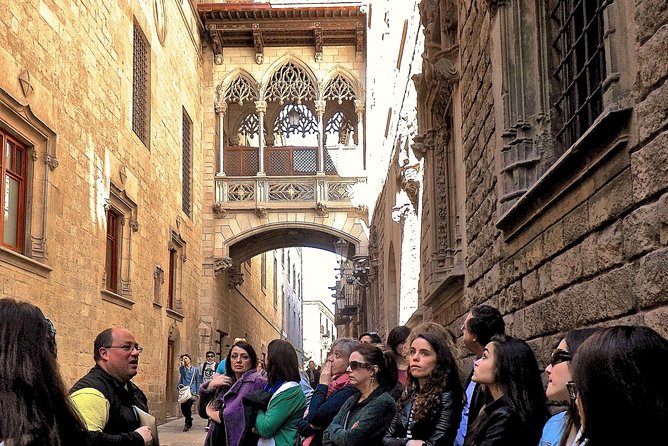
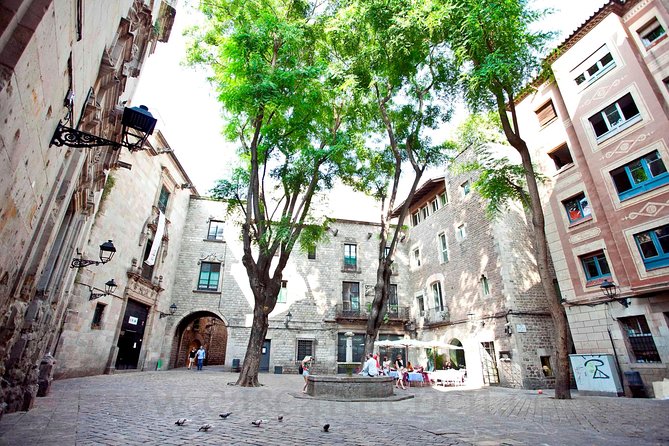
Barcelona’s Gothic Quarter is the part of town that looks like history turned into a street plan. The streets twist, squares appear like stage sets, and buildings feel layered—Roman foundations, then medieval growth, then later Catalan identity showing up in stone and arches.
What makes this tour work is the way it frames the place. You’re not just ticking off sights; you’re learning how the old city formed. One highlight is the mention of Roman remains still visible in corners of the area. That kind of detail helps your brain connect the dots instead of treating every doorway like a random photo spot.
The other win: the tour is designed so you can ask questions while you walk. In a neighborhood like this, that matters. You’ll want to know what you’re looking at, why it’s placed where it is, and how it all fits into Barcelona’s Catalan story.
You can also read our reviews of more tours and experiences in Barcelona.
How the 2.5 Hours Actually Move: From Fontanella to Palau de la Música
The tour runs about 2 hours 30 minutes, and it keeps you moving in short, digestible chunks. You start at Carrer de Fontanella, 2 in Ciutat Vella and finish near Palau de la Música Catalana on Carrer del Palau de la Música.
The route is built for flow: Roman and medieval context first, then you widen out to the Old City, then you hit Barcelona’s famous boulevard and market, and you wrap back into the quieter but stylish layers of El Born. It ends where the architecture gets extra interesting, which is handy if you still want to keep exploring after the tour.
This is also a simple setup if you’re traveling on limited time. If you’re trying to build a solid first-day game plan, this gives you a backbone you can follow later.
Gothic Quarter Stop-by-Stop: What You’ll Notice When Someone Explains It
Stop 1: Gothic Quarter (about 45 minutes)
This is the anchor. You wander narrow streets and squares in the maze of the old quarter, where the medieval and gothic architecture is the main show. The guide’s job here is to help you see patterns: how the neighborhood grew and why legends and history keep getting repeated around these corners.
The Roman detail is key. When you hear where Roman traces fit into later Barcelona, you start noticing them (or at least knowing what to look for) instead of just watching tourists crowd around the prettiest facade.
Stop 2: Ciutat Vella (about 15 minutes)
Ciutat Vella just means old city in Catalan, but it’s more than a translation lesson. It signals the idea that Barcelona’s oldest neighborhood is its living core. In this short stop, you’re mostly getting context: what the area was, how it developed, and how the stories connect to what’s around you today.
A nice thing here is that the guide keeps you from treating the Old City like one big blob. You get a sense of how zones differ without needing to study a map for hours.

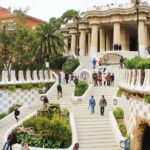

Stop 3: Las Ramblas (about 15 minutes)
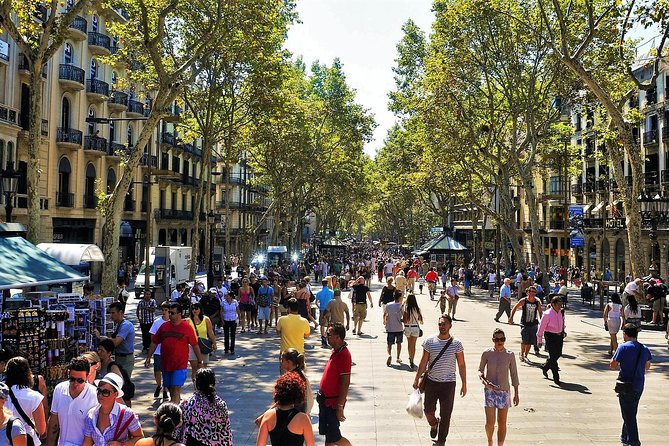
Las Ramblas is famous for a reason, but it can also be the part of Barcelona people either love or tolerate. Here, it’s handled like a transition stop: you learn that in medieval times the boulevard was once a sandy river used as natural defense at the boundary of the old city walls.
That one detail changes how you view the space. Instead of seeing it as just a busy street with bars and street performers, you understand why the city arranged it this way.
La Rambla + Boqueria: Short Visits That Still Feel Worth It
Stop 4: Mercat de la Boqueria (about 15 minutes)
Boqueria is one of those places you’ll either enjoy instantly or feel overwhelmed by. This tour keeps it manageable by giving you a quick walk-through with the right focus: fresh juices, fruit color, and the market’s Catalan food identity.
You also get a conversation starter around ingredients locals associate with the area—like where Iberian cured ham comes from. Even if you don’t buy anything, the market becomes easier to read when you understand what you’re looking at and why it matters locally.
If you want to eat during the tour, the time is short. I’d treat this as a chance to sample if you feel like it, and then plan your full meal later.
Plaça Reial + The Cathedral: Architecture With an Explanations First Policy
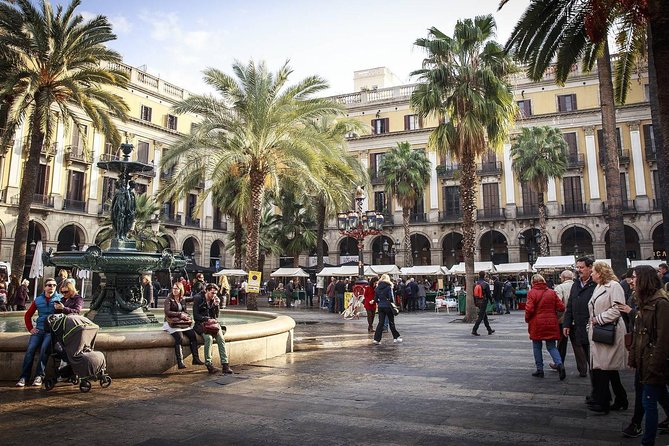
Stop 5: Plaça Reial (about 15 minutes)
Plaça Reial is open space inside the Gothic Quarter’s tight streets. That alone is a good reset. The highlight is the Napoleonic architecture, plus the square’s function as a meeting point for artists, bohemians, and travelers.
You’ll also hear about the fountain de Tres Gracias and the lanterns designed by a very young Gaudí on his first public assignment. Those details help you see why people photograph this square from specific angles—it’s not random, it’s intentional design with a strong story behind it.
Stop 6: Barcelona Cathedral (about 15 minutes; entrance not included)
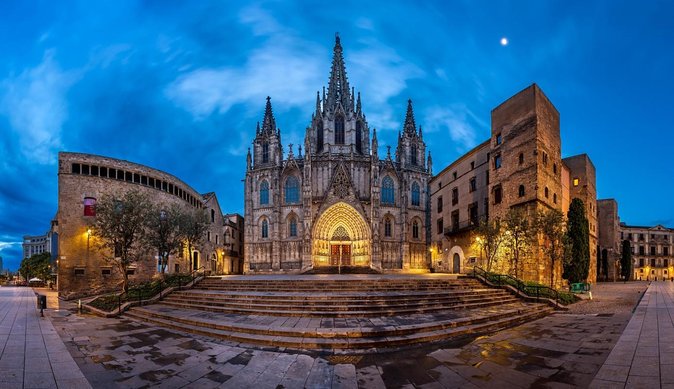
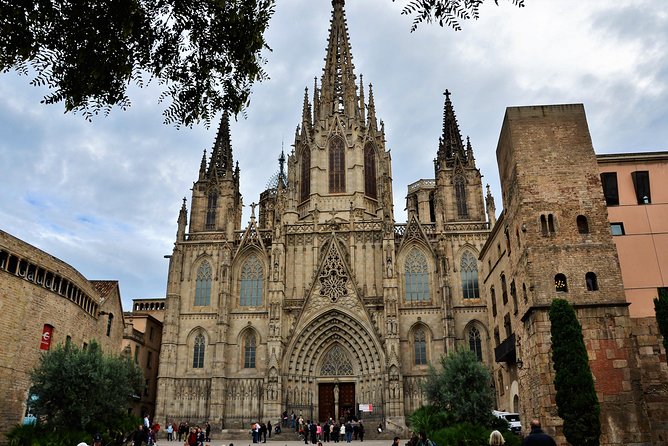
You pass by the Barcelona Cathedral and get a close look at details like gargoyle sculptures high on the towers. The building is dedicated to Saint Eulalia, and you’ll also be pointed toward the bright interior patio and towering columns.
Here’s the practical consideration: the cathedral stop has admission not included. So you’ll want to decide ahead of time whether you’re just happy to admire from the outside and around the areas you can access, or if you want full interior time.
El Born + Santa Maria del Mar: Where Barcelona Feels More Neighborhood-Lived
Stop 7: El Born (about 15 minutes)
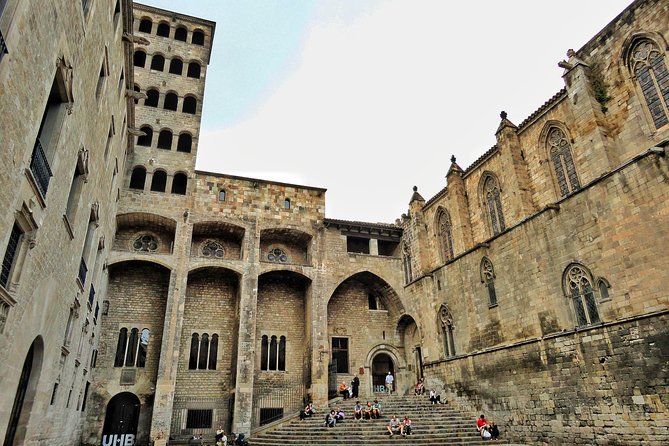
El Born is one of those neighborhoods where the streets feel like they were built for wandering. You get a stroll through squares where younger and older people both hang out, plus a sense of how old and new buildings coexist.
This section works best if you want a calmer, more local flavor compared to the big-name corridors. It also sets you up well for what comes next.
Stop 8: Basilica Santa Maria del Mar (about 15 minutes; entrance not included)
Santa Maria del Mar is often described as a real cathedral of the old city because it was founded and built in medieval times by people from the neighborhood themselves. For architecture fans, it’s a strong example of Catalan Gothic.
As with the cathedral, admission isn’t included. If you’re the type who wants to step inside, add that time and cost to your own plan.
The Finish Line: Palau de la Música Catalana’s UNESCO-Level Details
The tour ends near Palau de la Música Catalana, and this is a great way to cap the walk. The building is designed by Lluís Domènech i Montaner, who is described here as Gaudí’s teacher. That matters because it connects Barcelona’s architectural generations instead of treating styles like separate worlds.
It’s also noted as the only concert hall declared a UNESCO World Heritage Site. If you have time afterward, this is a solid place to slow down and keep looking at the applied arts—sculpture, mosaics, stained glass, and wrought iron.
Even if you don’t go inside, the surrounding area is a good end point for moving on to dinner or a later museum stop.
Small Group Size: Why It Changes the Quality of Your Walk
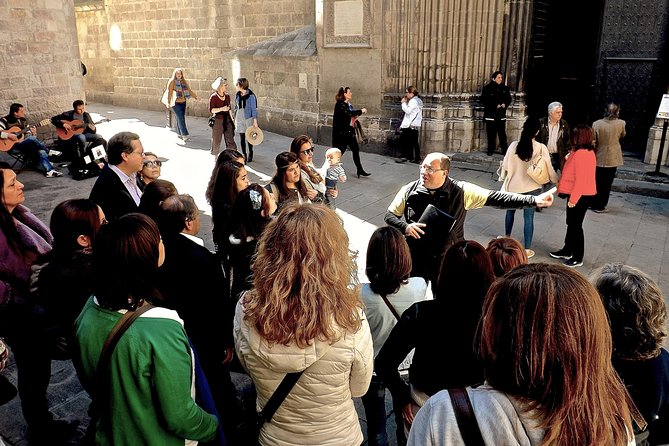
This tour is built for a small group (max 12, with a stated max of 15). That’s not just comfort math. In a place like the Gothic Quarter, it affects how much you actually learn because your questions get answered in the moment.
The guide-style also shows up in the way the walk flows. Names that have been associated with this experience—like Joris, Steven, Alba, Nilo, Isabel, Miguel, Laura, and Anna—come through in the same themes: friendly delivery, fast pacing that keeps things moving, and stories that help you see the city as more than a checklist.
If you’re traveling with kids, the tour is described as family friendly in practical ways. One family specifically noted it worked well with a stroller, which is the kind of detail that matters on a walking tour.
Price Value at $22.15: What You’re Getting for a Short, Focused Walk
At $22.15 per person, this is fairly low-priced for a guided orientation across multiple major neighborhoods in Barcelona’s core. You’re paying for someone to connect the dots: Roman traces, medieval legends, Catalan architecture, and how to read the city’s key public spaces.
The value gets even better because you’re in a small group, so you’re not stuck competing with the loudest voices in a huge pack. Also, most stops have admission ticket free noted along the way, which keeps the cost predictable unless you choose to enter the cathedral and Santa Maria del Mar.
Food isn’t included, and hotel pickup isn’t included. That’s normal for walking tours like this, but it means you keep control of what and where you eat after the walk.
Practical Tips to Make the Stops Work for You
- Decide before you go whether you care about interior time for the cathedral and Santa Maria del Mar, since entrance tickets are not included.
- If you want to eat at Boqueria, treat it as a snack-and-look stop. The time is short.
- End near Palau de la Música means you can plan dinner afterward without backtracking across the Old City.
- If you like asking questions, take advantage of the tour while you’re still inside the Gothic Quarter streets. That’s where guidance pays off the most.
If plans change, the experience offers free cancellation up to 24 hours before the start time for a full refund, which gives you some breathing room.
Who Should Book This and Who Might Skip It
Book it if you want an efficient first look at Barcelona’s most story-loaded neighborhoods, especially the Gothic Quarter and El Born. It’s also a smart pick when you don’t want to spend your precious time fighting your way through narrow streets with a phone map while everyone else crowds the same landmarks.
Skip it (or consider an alternative) if you already know the historical background and you mainly want long interior time at churches or museums. This walk is timed for highlights, not slow building-by-building exploration.
The tour is offered in English, with a professional local guide, and it’s near public transportation. Service animals are allowed, and children can join with the provided age guidance and discount info.
Should You Book This Barcelona Old Town & Gothic Quarter Small Group Tour?
Yes, I’d book it if you’re the kind of visitor who learns faster when someone points out what you should notice. For the price, the small group format, and the strong ending near Palau de la Música, this is a good use of 2.5 hours on a first trip.
It’s also a safe bet if you’re short on time and want a route that keeps you oriented from Roman traces to medieval legends to Catalan modernism.
If you go, wear comfortable shoes for a walking route, and decide ahead of time about entrances at the cathedral and Santa Maria del Mar so you’re not making that call at the last second.
FAQ
How long is the Barcelona Old Town and Gothic Quarter small group tour?
The tour lasts about 2 hours 30 minutes.
What does the tour cost?
The price is listed as $22.15 per person.
Is the tour offered in English?
Yes, the tour is offered in English.
How big is the group?
It is a small group tour with a maximum of 12 people, and the overall maximum is stated as 15 travelers.
Where do I meet the tour, and where does it end?
You start at Carrer de Fontanella, 2, Ciutat Vella, 08002 Barcelona, and you end near Carrer del Palau de la Música in Ciutat Vella, 08003 Barcelona at Palau de la Música area.
Are admission tickets included for all stops?
Most stops list admission ticket free, but the stops for Barcelona Cathedral and Basilica Santa Maria del Mar are marked as not included for admission.
Can children join, and is there a discount?
Children must be accompanied by an adult. Children under 2 can join free of charge, and children between 3 and 8 are entitled to a 30% discount.