REVIEW · BARCELONA
Segway Flexible Private Tour in Barcelona
Book on Viator →Operated by Euro Segway Spain · Bookable on Viator
A Segway makes Barcelona feel instantly closer. You get a private, flexible route on a personal Segway, with a guide who can steer you toward what you care about. I love that the tour mixes big-name sights with quieter corners near Port Vell and El Born, and I like that the pace is fast enough to save hours of walking without feeling rushed. The only real drawback to plan for is that there are rules: Segways have a minimum age, a weight range, and you’ll need to arrive early for training.
You can think of this as a sightseeing shortcut that still comes with real context—history, architecture, and city “why” behind what you’re seeing—so the views land in your brain instead of just bouncing by your eyes.
In This Review
- Key things that make this Segway tour work
- Private Segway in Barcelona: what you’re really buying
- Safety and riding comfort: training is part of the experience
- Where the tour starts: Carrer del Correu Vell in Ciutat Vella
- Stop by stop: the route that stitches Roman, Olympic, and Gaudí Barcelona
- Torre Romana and the ancient walls (4th century AD)
- Port Vell: from old harbor to modern marina
- Cara de Barcelona by Roy Lichtenstein (1992)
- Monument a Colom at the end of La Rambla
- Les Drassanes Reials (Royal Shipyards)
- Las Ramblas: the famous boulevard, seen from the right speed
- Port Olímpic and Barceloneta: 1992-era city energy
- La Monumental: the former bullring
- Sagrada Família exterior stops: from towers to square views
- Modernist stops in and around Eixample streets
- Arc de Triomf: a 19th-century entry for photos
- Ciutadella Park: where Barcelona relaxes (and modernism decorates the park)
- Parliament of Catalonia and public monuments
- El Born Centre de Cultura i Memòria and the El Born neighborhood
- Estació de França and Casa Llotja de Mar: stations and merchant power
- Waterfront street lamps and the old seawall: small details, big charm
- Who this tour fits best (and who should reconsider)
- What the guides do right: customization without chaos
- Price and value: $58.87 per person is about time saved
- Should you book this private Segway tour in Barcelona?
- FAQ
- How long is the Segway tour in Barcelona?
- How much does the private Segway tour cost?
- Is the tour private or shared?
- Do I need to know how to ride a Segway?
- What’s the minimum age to ride a Segway?
- What should I bring for check-in?
- What’s included in the price?
- Are entrance tickets included for major sights?
- Does the tour run in rain?
- What are the cancellation rules?
Key things that make this Segway tour work
- Private route control: your guide sets the plan or customizes it based on what you want to see
- Quick training session: you’ll get helmeted, sized up, and taught before you roll
- Big sights, short stops: Gaudí exteriors, the waterfront, Olympic-era areas, and major boulevards in one run
- Weather ready: raincoats are provided and the tour runs in all weather
- Safety built in: you ride in small groups, with spacing rules and a mandatory helmet
- No museum pressure: lots of exterior viewing, with limited need for ticket lines
Private Segway in Barcelona: what you’re really buying
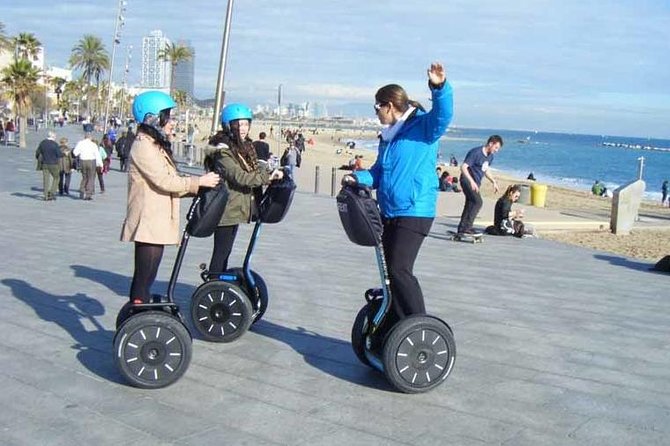
This is a private customized Segway tour built for people who want maximum Barcelona per hour. The price is $58.87 per person, and the duration can be as short as about 5 minutes or run up to about 3 hours, so you’re not locked into a long commitment if you just want the highlights.
The value here is not the Segway gadget itself—it’s the combination of speed, control, and guidance. On foot, you end up zigzagging between neighborhoods, then fighting crowds, traffic lights, and hills. On a Segway, you can move cleanly from the Gothic Quarter vibe toward Port Vell, then keep rolling to Gaudí landmarks and the modernist streets of Eixample. When your guide pauses often enough to explain what matters, you start seeing patterns: how Barcelona went from Roman walls to Olympic modernity to Gaudí-shaped identity.
Just be aware of the practical constraints that keep things safe and legal: helmets are mandatory, there’s a minimum riding age (local rules say Segways minimum age is 16), and there’s a weight range (45 kg to 117 kg). If you’re traveling with teens or mixed ages, this is something to plan around.
You can also read our reviews of more private tours in Barcelona



Safety and riding comfort: training is part of the experience
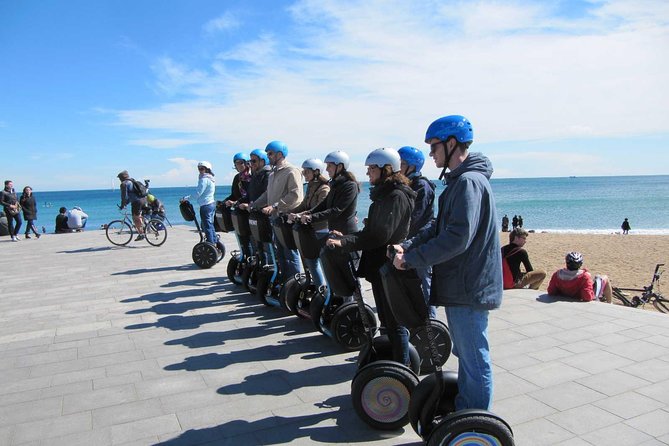
Before you head out, you’ll get a training session so you can drive comfortably in the city. Helmets are mandatory and rental is free, and they provide raincoats if it’s wet. The goal is simple: you shouldn’t feel like you’re “learning to ride” while you’re also trying to enjoy sights.
A few details matter:
- Local rules keep groups small (up to 6 participants plus 1 guide), and there’s a spacing rule of at least 50 meters between groups.
- You must bring valid ID or a passport for check-in.
- You can’t ride under the influence of alcohol, drugs, or strong medicine.
- You’ll want comfortable shoes and clothing, because you’re still covering distance even if you’re not walking.
If you’re a first-timer, I’d take encouragement from the way guides work on these tours. In past Segway experiences, guides like Ivan and Felipe have been described as patient, and people have said they felt confident quickly. That matches what you want: your first minutes should focus on control, then the city starts.
Where the tour starts: Carrer del Correu Vell in Ciutat Vella
The meeting point is Carrer del Correu Vell, 6, in Ciutat Vella (08002). The tour ends back at the same spot.
Two timing tips:
- Arrive 15 minutes early for check-in and practice. Tours start and finish on time, and late arrivals can push your slot to a different time.
- The office opening time isn’t listed here, but one practical note from real-world use is that it may open around 10am. If you’re planning a morning start, don’t assume an early walk-up is possible.
The start location is convenient if you’re already exploring the Gothic Quarter area. You avoid wasting your trip on long rides from far-away meeting points, and you get to roll into sightseeing immediately.
Stop by stop: the route that stitches Roman, Olympic, and Gaudí Barcelona
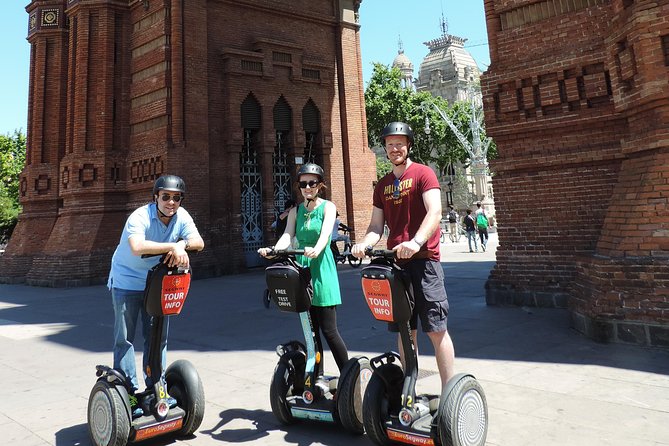
Below is what you can expect on a typical run. Your guide may adjust the order or swap segments depending on timing, but the character of the route usually stays the same: ancient walls, harbor energy, then modernist and Gaudí landmarks, and finally big-city park and cultural stops.
Torre Romana and the ancient walls (4th century AD)
You begin near the Torre Romana, a structure tied to Barcelona’s Roman past as the colony of Barcino. Even if you don’t love Roman ruins, this stop works because it gives you a baseline. You’re looking at the city’s origin, then you’ll rapidly see how Barcelona keeps layering new eras over old bones.
Admission is free here, and the quick stop format fits a Segway day—you’re not “spending a day” on any one site, you’re building the story as you move.




Port Vell: from old harbor to modern marina
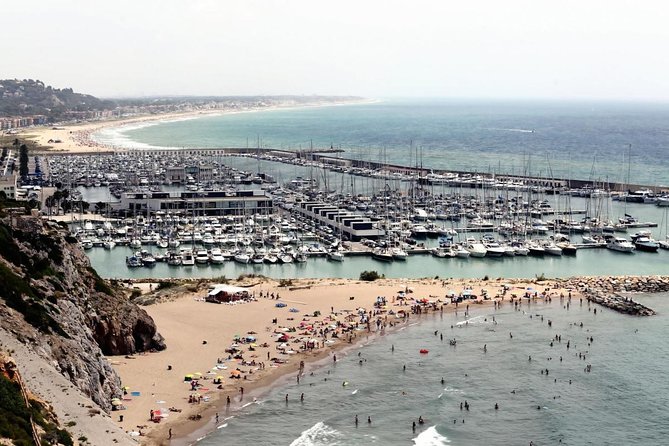
Next you head toward Port Vell, Barcelona’s old harbor now used as a modern marina. This is where the city’s relationship with the sea becomes obvious. Expect lively waterfront energy, and an easy transition from stone-and-ancient to boats-and-tourists.
If you like photos, this stretch is useful because views open up and you’ll be riding along paths where the scenery changes constantly.
Cara de Barcelona by Roy Lichtenstein (1992)
Near Port Vell you’ll see Cara de Barcelona, the multicolored Lichtenstein sculpture made for the 1992 Olympics. It’s inspired by Pop Art and Cubism, and it’s the kind of artwork that can be hard to find on foot without knowing it’s there.
This stop adds a modern twist right in the harbor zone: it’s less “monumental building” and more “Barcelona attitude.”
Monument a Colom at the end of La Rambla
You’ll roll to the Christopher Columbus monument (La Rambla’s end point). The 60-meter column built in 1888 is one of those Barcelona icons you’ve probably seen in photos, even if you didn’t know where it was.
The main value here is orientation. La Rambla is a magnet, and seeing the monument from the right vantage helps you understand where the city funnels traffic between the center and the waterfront.
Les Drassanes Reials (Royal Shipyards)
Then comes Les Drassanes Reials, a 13th-century Gothic complex tied to ship building and repair. Today, it houses the Maritime Museum.
This is a good Segway stop because the building’s form reads quickly as you glide past: heavy stone, Gothic structure, and a direct link to the harbor theme. Admission to museums is not included on these tours, so you’ll likely focus on exterior viewing and the street-level story.
Las Ramblas: the famous boulevard, seen from the right speed
Las Ramblas runs from Plaça de Catalunya to the port area, packed with shops, cafés, flower stalls, and street performers. Riding through it by Segway can feel like the best of two worlds: you’re not stuck in a slow crush of foot traffic, but you still get the buzz.
A consideration: Las Ramblas can be crowded. Your guide’s job is to keep the route moving and avoid getting bogged down.
Port Olímpic and Barceloneta: 1992-era city energy
You’ll reach Port Olimpic, tied to the 1992 Olympics, and then roll to Barceloneta. Port Olimpic is near beaches and often has that “sports legacy meets vacation” atmosphere. Barceloneta was once a fishing quarter and is now famous for its sandy beach, promenade, and seafood restaurants.
This is the part of the day where Barcelona can feel like two different cities: the architectural backbone continues, but the mood shifts to sea air and summer crowds.
La Monumental: the former bullring
You’ll also pass La Monumental, a former bullring built in 1914 with a mix of Moorish and Byzantine styles. It’s used for concerts, exhibitions, and cultural activities today.
This stop is good if you like architecture that doesn’t try to be polite. It’s a strong visual contrast to Gaudí-style curves and modernist façades.
Sagrada Família exterior stops: from towers to square views
The big finale of the first “major zone” is the Basilica de la Sagrada Família and the nearby park squares. It’s Barcelona’s signature Gaudí landmark, and construction began in 1882 and continues today. On these tours, admission is not included, so you’ll focus on what you can see from outside and in the surrounding public spaces.
A typical sequence includes:
- Sagrada Família exterior viewing
- Plaça de Gaudí, with peaceful park space, a pond, and excellent views for photos and a break
- Plaça de la Sagrada Família, with open green areas and a view toward the Nativity façade
Even if you plan to enter later on another day, riding here gives you a sense of scale fast. From ground level, the basilica can feel unreal, and the Segway pace helps you reach the best angles without turning your day into a long slow climb.
Modernist stops in and around Eixample streets
From the Sagrada Família area, you’ll often pass through or near Modernist highlights around Passeig de Gràcia and surrounding streets. The tour includes several named façades and buildings, with emphasis on exterior viewing rather than ticketed interiors.
Stops you can expect to see include:
- Palau Macaya (white façade, decorative sculptures; now used for cultural events)
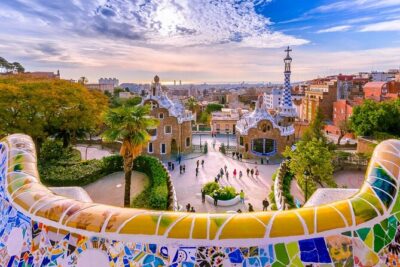
- Casa de les Punxes (castle-like Modernist building with pointed towers)
- Palau del Baró de Quadras (ornate façade with Gothic and Plateresque elements)
- La Pedrera (Casa Milà) exterior (undulating façade and rooftop chimneys)
- Casa Batlló exterior (colorful Gaudí shapes)
The street context matters here. Passeig de Gràcia is Barcelona’s luxury boulevard, lined with Modernist landmarks. Even if you don’t shop, this stretch is one of the best ways to get a “wow” concentration of architecture without doing a separate bus day.
Arc de Triomf: a 19th-century entry for photos
You’ll ride to the Arc de Triomf, built in 1888 as the main entrance to the Universal Exhibition. It’s in Neo-Mudéjar style with decorative brickwork and sculptures.
This is often a clean photo stop because the arch works from multiple angles and there’s usually room to reposition without chaos.
Ciutadella Park: where Barcelona relaxes (and modernism decorates the park)
Then you shift into green space at Parc de la Ciutadella. This park is one of the city’s largest and most popular. You’ll pass gardens, fountains, a lake area, and major historic monuments and buildings.
In this section, you can expect a cluster of Modernist and event-era structures:
- Castell dels Tres Dragons (Modernist building originally a café-restaurant, later linked to a zoology museum)
- Homenatge a l’Exposició Universal de 1888 monument
- Hivernacle and Umbráculo greenhouses (glass and iron or wood and brick structures built for exotic plants)
- Pèrgola del Monumental
- Cascada Monumental (grand fountain with sculptures and waterfalls)
- Gran Lago del Parc de la Ciutadella
If you want a “pause” moment, this part delivers. You get architecture details while also having open paths and more breathing room than narrow streets.
Parliament of Catalonia and public monuments
You’ll also be near the Parliament of Catalonia, housed in an 18th-century building originally used as an arsenal. You’ll also pass Plaça de Joan Fiveller and the equestrian statue of General Joan Prim, plus a Picasso tribute monument (Homenatge a Picasso).
These aren’t just trivia stops. When you ride past them in sequence, you see how Barcelona treats art and politics as visible, public things—not hidden behind walls.
El Born Centre de Cultura i Memòria and the El Born neighborhood
You’ll head toward El Born Centre de Cultura i Memòria, a cultural and historical center housed in a restored 19th-century market building. It preserves archaeological remains and hosts exhibitions related to Barcelona’s heritage.
The El Born area is known for narrow medieval streets, cultural life, and landmarks like the Basilica of Santa Maria del Mar. The tour may include a stop for Santa Maria del Mar exterior viewing, while admission is not included.
This stretch is where the city feels more local. Even if you’ve been in Barcelona before, it’s often a different mood from the waterfront and Eixample.
Estació de França and Casa Llotja de Mar: stations and merchant power
You may pass Estació de França, a major train station known for classical and modernist elements and large iron-and-glass roofs with marble details. Later you may roll near Casa Llotja de Mar, a historic merchant exchange building from the 14th century with Gothic and Neoclassical architecture.
This is a smart way to see Barcelona’s “infrastructure beauty.” It’s not only museums and towers. These buildings show how the city worked.
Waterfront street lamps and the old seawall: small details, big charm
Near the harbor, you’ll see Antoni Gaudí-style lamppost designs at Plaça de Palau. You may also ride near the Baluard de Migdia and Muralla de Mar, remnants of 17th-century city walls tied to coastal defense.
These are quick but memorable. The lampposts add personality at street level, and the wall remnants remind you that Barcelona’s geography shaped its protection.
Who this tour fits best (and who should reconsider)
This tour is a great match if you:
- Want a private way to see a lot without turning every hour into walking
- Like architectural highlights and city storytelling
- Have limited time and want a “first pass” over major areas like Port Vell and Sagrada Família
It’s also useful for families with teens, as long as everyone can ride under the age rules. The minimum age to ride a Segway is 16, but for younger participants the operator provides electric bicycles for children (tour price stays the same). If you have younger kids, this flexibility is a major plus.
Consider other options if you:
- Fall outside the Segway weight range (45 kg minimum, 117 kg maximum)
- Aren’t comfortable riding in a street environment even with training
- Need lots of time for ticketed museum interiors, since the tour’s focus is on sights and not museum entry
What the guides do right: customization without chaos
One of the most praised parts of this experience is the way guides handle first-timers and adjust the day. Names that show up include Ivan, Felipe, Pablo, Lunis, and Philip. Different personalities, same pattern: they help you feel steady on the Segway, then they talk about what you’re seeing in plain, city-smart terms.
If you tell your guide what you care about—Olympics, Gaudí, Roman-era Barcelona, or just the best photo angles—they can shape the route. That’s why private control matters here. You don’t lose time arguing with a group pace, and you can ask for a stop when the light hits a façade.
Price and value: $58.87 per person is about time saved
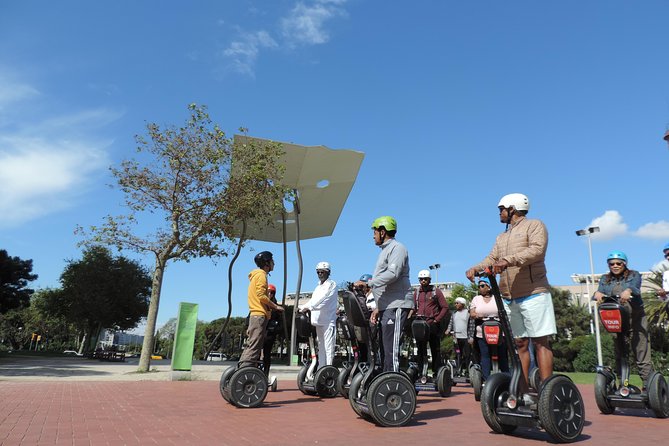
At $58.87 per person, this isn’t a cheap “just transport” option. It’s priced for guide time, training, equipment, and the fact that you’re getting a lot of locations in a single stretch.
Think about what costs you time in Barcelona:
- Walking between neighborhoods takes longer than you expect
- Crowds slow you down
- Hills and heat can drain your energy
- Finding the right viewpoints for Gaudí and the waterfront can be harder than it sounds
This Segway tour trades some cost for an efficiency boost. If you’re doing a tight itinerary, that efficiency can be worth it fast.
Should you book this private Segway tour in Barcelona?
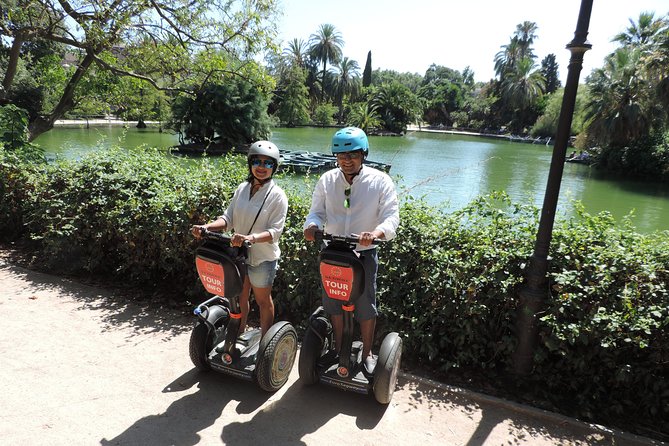
Yes, if you want a high-sight day with a guide who helps you move confidently and understand what you’re seeing. It’s especially worth it as a first or second day plan: you’ll get a coherent overview of Barcelona’s different “eras,” from Roman walls and Port Vell to Olympic areas and Gaudí landmarks around Sagrada Família.
Book with confidence if you’re:
- Comfortable meeting the rules (helmet, ID, weight range)
- Planning for the training time and arriving 15 minutes early
- Open to a route focused on exterior viewing rather than museum deep-dives
Skip it only if you strongly prefer ticketed interiors as the main event, or if the Segway constraints don’t work for your group’s ages or comfort level.
FAQ
How long is the Segway tour in Barcelona?
The duration can run from about 5 minutes up to about 3 hours, depending on your tour length and route.
How much does the private Segway tour cost?
The price is $58.87 per person.
Is the tour private or shared?
This is a private tour. Only your group will participate, and by local laws groups are limited in size with separation between groups.
Do I need to know how to ride a Segway?
You’ll get a training session before you start riding in the city, and helmets are mandatory.
What’s the minimum age to ride a Segway?
The minimum age to ride a Segway is 16 by local laws. The general tour minimum age is 12 with an adult, and for underaged participants the operator provides electric bicycles for children (tour price remains the same).
What should I bring for check-in?
You’ll need a valid ID or passport for the tour (a copy is accepted).
What’s included in the price?
Included items are a helmet (mandatory), private customized tour, raincoats (for bad weather), bottled water, use of a Segway, and a guide/instructor.
Are entrance tickets included for major sights?
Admission is not included for buildings like the Sagrada Família and other venues marked as not included. Some stops note free or included access, but the main focus is on sightseeing rather than museum entry.
Does the tour run in rain?
It operates in all weather conditions, and raincoats are provided. You should still dress appropriately.
What are the cancellation rules?
You can cancel for a full refund if you cancel at least 24 hours in advance of the experience start time. If you cancel less than 24 hours before, the amount paid is not refunded.