REVIEW · BARCELONA
Barcelona & The Sea. Regular Tour
Book on Viator →Operated by Barcelona Architecture Walks · Bookable on Viator
Barcelona looks different from the shoreline. This guided architecture walk traces how Barcelona’s skyline grew right beside the water, using stops you can actually see up close. I love that it’s architect-led, so you don’t just get dates—you get the why behind the designs. I also like that the route moves from Roman defenses all the way to modern works along the port, so the sea-to-city story feels complete, not random.
One possible drawback: you’ll be on your feet for about 3 hours across narrow streets, parks, beaches, and breakwaters. If the weather turns or you don’t handle coastal walking well, plan for it.
In This Review
- Key highlights to look for
- Why this sea-to-city walk changes how you see Barcelona
- Starting at Plaça Nova: the fastest way to get oriented
- Roman defensive walls and the Temple of Augustus: the city’s first shoreline logic
- Santa María del Mar: how community-building shows up in architecture
- Moll de la Fusta wharf by Manuel de Solà-Morales: modern design at water level
- Barceloneta Market by Josep Miàs: architecture with daily-use power
- Casa de la Marina by Jose Antonio Coderch and Somorrostro Beach: where housing meets the shore
- Ending at the Barcelona skyline: the part you’ll remember later
- Price and value for a 3-hour architect-led walk
- Should you book Barcelona & the Sea?
- FAQ
- How long is the Barcelona & the Sea tour?
- What time does the tour start?
- Where is the meeting point?
- How many people are in the group?
- Is a printed ticket required?
- Does the tour run in all weather?
- Are service animals allowed?
- What is the cancellation window for a full refund?
Key highlights to look for
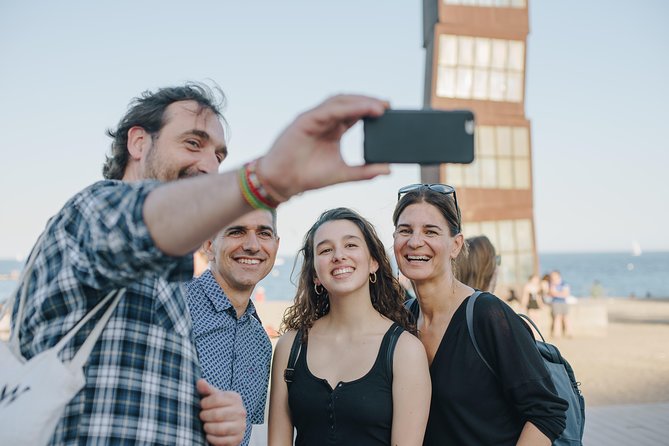
- Architect-critic perspective: you’ll connect architecture choices to the way the city changed over time
- Roman to modern route: Roman defensive walls and the Temple of Augustus sit alongside port and market design
- Specific named works: Manuel de Solà-Morales, Josep Miàs, and Jose Antonio Coderch are built into the walk
- Small group size (max 20): easier pacing and more chances to ask questions
- Microguide included: a handy way to keep notes and remember details as you go
- Sea-level viewpoints: you’ll end with the skyline perspective from the waterfront edge
Why this sea-to-city walk changes how you see Barcelona
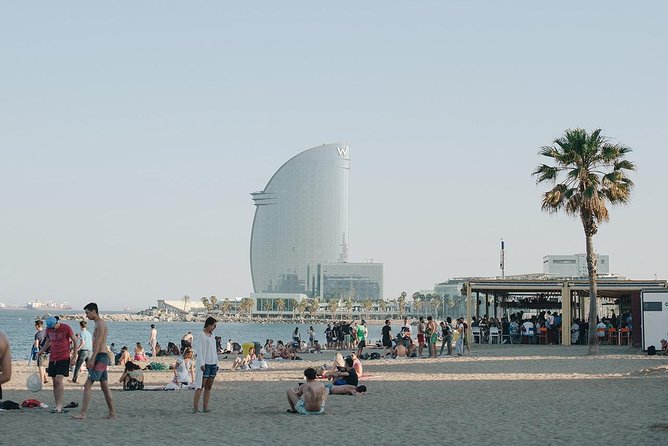
Barcelona can feel like it has two personalities: the tight, old-city streets inland, and the open pressure of the Mediterranean right next door. This tour is built around that contrast. As you move along the route, you’ll hear how the city center seems to pull away from the sea over time—and you’ll see physical evidence of that shift in stone, walls, housing, markets, and port structures.
What makes the experience practical is the way you’re taught to notice. Instead of just looking at pretty buildings, you learn what to look for: how a wall makes a city think about safety, how a church reflects the community that built it, and how a wharf or market shows modern Barcelona’s relationship with trade and public life near the water.
And because the guide is a practicing architect and critic, you don’t stay in pure sightseeing mode. You get a framework for reading the city—what’s functional, what’s symbolic, and what changed as Barcelona’s coastline, needs, and ideas shifted.
You can also read our reviews of more tours and experiences in Barcelona.

Starting at Plaça Nova: the fastest way to get oriented
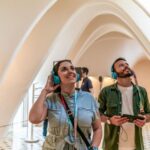
The walk starts at the Barcino Sculpture in Plaça Nova (Ciutat Vella). That matters more than you’d think. You’re beginning in the center of the historic city, where the sea-story hasn’t swallowed the view yet. Within minutes, you’re set up to notice the gradual shift toward the waterfront.
Timing helps here too. The start is at 10:30 am, and the tour runs about 3 hours. That’s long enough for a full arc—ancient defense, maritime neighborhood texture, and final skyline views—without turning into an all-day ordeal.
Group size is also a real factor. With a maximum of 20 travelers, the pace stays human. You’re less likely to feel like you’re being rushed between photo stops. If you like architecture walks, you’ll appreciate that the guide can slow down when something deserves a closer look.
Roman defensive walls and the Temple of Augustus: the city’s first shoreline logic
One of the most compelling parts of the route is the shift back to the earliest layers of Barcelona. You’ll see the Roman defensive walls and the Temple of Augustus. These aren’t stops you treat like trivia. They’re stops you use to understand how early Barcelona thought about the edge of the city.
Defensive walls are a clue: they show a settlement that expects pressure and plans for control. Even when you’re not standing on a battlefield, a wall tells you how a community organized itself and defended access routes. In a coastal city, those decisions ripple outward—into where people could live, where movement was safe, and how the city expanded.
The Temple of Augustus adds another angle. It anchors the idea that power wasn’t just about protection; it was also about presence and authority. In other words: you’re not just looking at old structures. You’re learning how Barcelona used architecture to define its place.
If you like history you can read through design choices, these two early stops are where the tour earns its keep.
Santa María del Mar: how community-building shows up in architecture
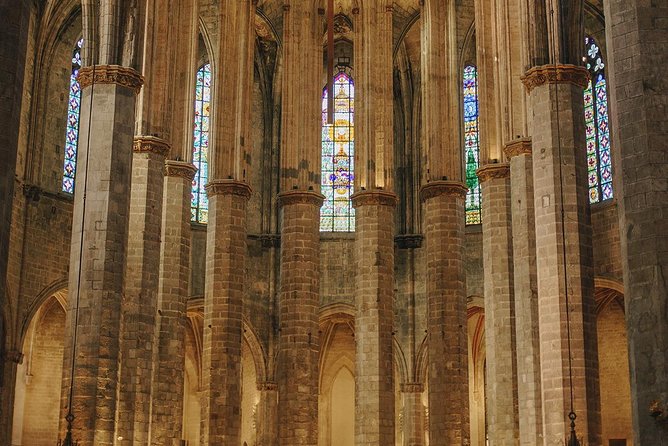
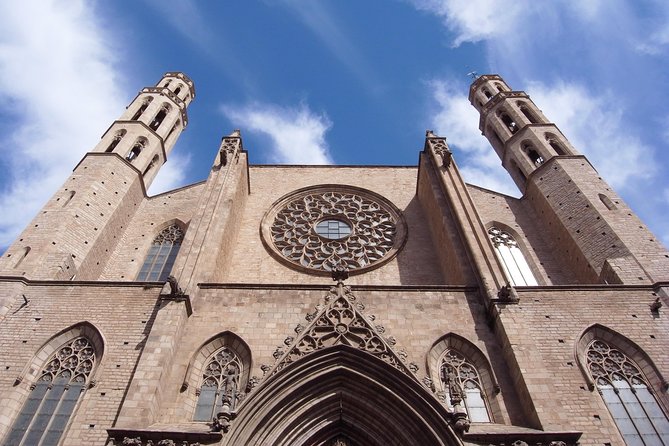
Next comes Santa María del Mar. This is the kind of place where the architecture is the story. A church like this isn’t only about worship; it’s about what kind of city needs that kind of building.
As you stand there, think about the context you’ve been building since the Roman walls. Earlier architecture choices show defense and authority. A major church adds another layer: organization, shared effort, and civic pride. The point of this stop on the tour is not just to admire. It’s to see how Barcelona’s social fabric becomes stone.
It also helps you understand why the sea matters here. Barcelona wasn’t growing in isolation. Maritime life shaped the neighborhoods and the economic energy around them. A church of this scale signals a community that could mobilize resources and sustain an identity over time.
Practical note: if you get photo-happy, slow down for a moment and look beyond the most obvious angles. The guide’s whole job is training your eye. Lean into that and you’ll get more from the stop than you would if you just pass through.
Moll de la Fusta wharf by Manuel de Solà-Morales: modern design at water level
Now the walk starts moving into a modern register, and one of your key stops is the Moll de la Fusta wharf by Manuel de Solà-Morales.
Wharves are where city planning meets real-life movement. Ships arrive, cargo needs handling, and people need space to walk and linger. The waterfront is also where Barcelona’s ideals—public access, contemporary design, and urban quality—become visible fast.
This is a good moment on the tour to practice what the guide is teaching: ask yourself what the structure is doing for people. Does it prioritize circulation? Does it create a sense of place? Does it make the waterfront feel approachable rather than like a barrier?
The reason I like this stop for value is that it turns architecture talk into something you can instantly test. You can watch how the space feels at pedestrian level. You’re not stuck in conceptual mode.


Barceloneta Market by Josep Miàs: architecture with daily-use power
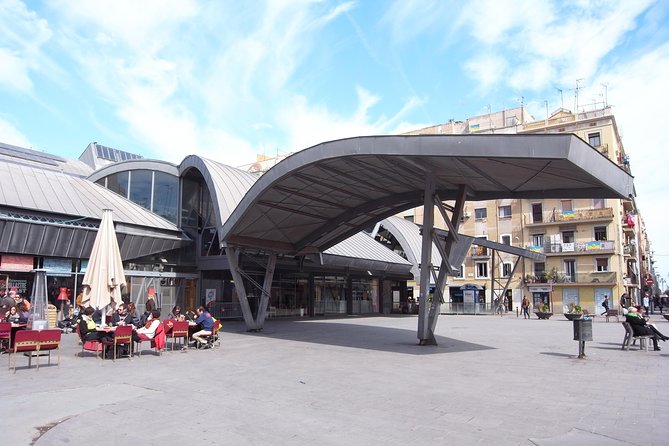
From the wharf you move to the Barceloneta Market by Josep Miàs. Markets are architectural gold for a simple reason: they’re built for repeated use. You can often learn more from a daily destination than from a monument that’s only visited occasionally.
Here’s what you can listen for during the explanation: how the market’s design fits the neighborhood and how public spaces near the water support local life. Barcelona’s sea-adjacent areas aren’t only for tourists and promenades. They include routine, work, and community rhythm.
This stop is also a reminder that waterfront cities always have to manage both worlds. They need trade and access, but they also need neighborhood scale. A market is the bridge between those needs.
When the guide connects the design to how people actually use the area, the tour feels grounded. It’s not just “look at the building.” It’s “see how the city behaves around it.”
Casa de la Marina by Jose Antonio Coderch and Somorrostro Beach: where housing meets the shore
Then you’ll head toward Casa de la Marina, a building by Jose Antonio Coderch, followed by Somorrostro Beach in Barceloneta.
This section is where the tour’s theme really tightens. You’re not just studying waterfront architecture as isolated objects. You’re looking at how the city houses people near the sea and how the coastline becomes part of daily life.
Housing architecture near water has its own pressures. The city has to balance comfort, density, and the realities of a shoreline environment. Even without getting technical, you can learn to notice the choices that shape how a building relates to its surroundings—orientation, massing, and how it frames views.
Then comes the beach and breakwater zone energy. Being at Somorrostro Beach is a chance to step back from the buildings and see the broader composition. The sea isn’t a backdrop here. It’s a design actor in the story—changing how the city feels and where the city can grow.
One tip for this part: give yourself a few minutes to just look before the next stop. The guide’s explanation will make sense faster when you’ve already formed your own first impressions of the waterfront edge.
Ending at the Barcelona skyline: the part you’ll remember later
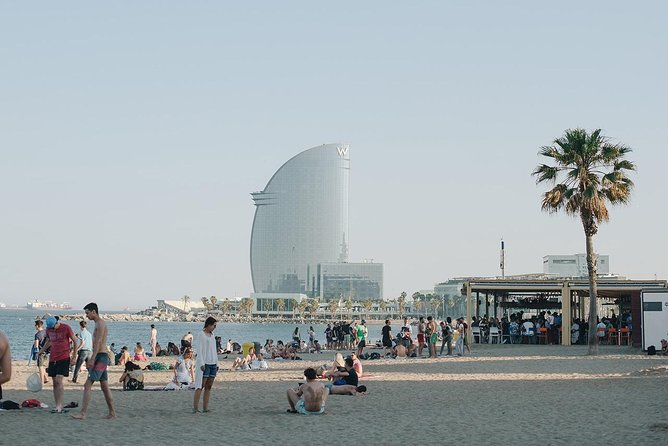
The tour finishes back at the meeting point after reaching the Barcelona skyline perspective. This ending works well because you’ve already seen the “in-between” architecture: defense, worship space, port movement, commerce, housing, and the beach line.
So when you look outward at the skyline from the waterfront edge, you’re not just admiring views. You’re reading them like a timeline. You can sense how earlier structures anchored the city, how modern works kept the waterfront functional and public, and how the city’s growth patterns shaped the direction of what you can see.
This is the kind of finish that sticks. Later, even when you’re wandering on your own, you’ll remember what to compare: where the city felt closer to the sea in earlier eras, and where it feels more separated now.
Price and value for a 3-hour architect-led walk
At $52.06 per person for about 3 hours, this is priced like a focused small-group guided experience—not a generic walking tour. Where the value shows up for me is in the specificity. You’re not only visiting major sights; you’re learning from a working architecture professional and hitting named works like:
- Manuel de Solà-Morales at Moll de la Fusta
- Josep Miàs at Barceloneta Market
- Jose Antonio Coderch at Casa de la Marina
That kind of specificity usually costs more in other contexts. Here, it’s folded into a route that’s paced for walking and explanation.
Also, the included architecture microguide helps you translate the tour into something usable after the fact. If you like to remember details without needing to screenshot everything, that little extra piece matters.
If you’re on a tight schedule and want one guided architecture moment with clear payoff, this is a solid choice. If you’re only into broad landmark photos and zero architectural discussion, you might find some parts slower than you’d like.
Should you book Barcelona & the Sea?
Book it if you want Barcelona in layers: Roman to modern, sea level to inland, and design to city life. It’s especially worth it if you enjoy learning by looking—because the route teaches your eye and then rewards it with skyline views that make sense.
Don’t book it if you hate walking over uneven coastal terrain or you’re likely to feel uncomfortable in changing weather. This kind of outdoor waterfront route is best when the skies cooperate, and you’ll want the full experience rather than half-paying attention.
If you’re trying to decide between a generic sightseeing walk and an architecture-focused outing, I’d pick this one. You’ll leave with more than photos—you’ll leave with a way to read the city the next time you pass by stone, walls, markets, and water.
FAQ
How long is the Barcelona & the Sea tour?
It’s approximately 3 hours.
What time does the tour start?
The start time is 10:30 am.
Where is the meeting point?
You meet at the Barcino Sculpture, Plaça Nova, 40, Ciutat Vella, 08002 Barcelona, Spain.
How many people are in the group?
The tour has a maximum of 20 travelers.
Is a printed ticket required?
No. The tour uses a mobile ticket.
Does the tour run in all weather?
It requires good weather. If it’s canceled due to poor weather, you’ll be offered a different date or a full refund.
Are service animals allowed?
Yes, service animals are allowed.
What is the cancellation window for a full refund?
You can cancel up to 24 hours in advance for a full refund.
If you cancel less than 24 hours before the experience starts, the amount paid is not refunded.