REVIEW · BARCELONA
Barcelona Panoramic Walking Tour – Discover Montjuic
Book on Viator →Operated by The Barcelona Feeling · Bookable on Viator
Montjuïc turns Barcelona into a hilltop story. This small-group walk mixes World Fair 1929 design, Olympic-era moments, and big Bauhaus architecture—then feeds you panoramic viewpoints that feel far from the usual city routes.
What I like most is the pace: with up to 10 people joining (and a max of 15), your guide can slow down when a detail matters.
The only real catch is the climb. Expect uphill walking and stairs, often in sun with little shade, so wear shoes you trust and plan for heat. If you can’t walk at least 5 miles on partly steep ground, this one won’t be fun.
In This Review
- Key things to know before you go
- Why Montjuïc feels different from the city center
- The German Pavilion (World Fair 1929) start: architecture first
- Climbing toward the Magic Fountain with local escalators
- Crossing Expo 1929 ground: seeing the hill’s planning logic
- Lluís Companys Olympic Stadium: Olympics with a political thread
- Cementerio de Montjuïc: a short stop that hits hard
- Fortresses and the hill as a watch tower
- Calle Blai and Pinchos: the local finish in Poble Sec
- Who this tour fits best (and who should skip)
- Price and value: what $50.57 buys you
- What it feels like in real time: guide energy matters
- Should you book the Barcelona Panoramic Walking Tour for Montjuïc?
- FAQ
- How long is the Barcelona Panoramic Walking Tour for Montjuïc?
- Is this tour suitable for kids?
- What kind of fitness level do I need?
- Is admission included for the German Pavilion?
- What’s the group size?
- Does the tour run in bad weather?
Key things to know before you go
- Bauhaus start at the 1929 German Pavilion sets the tone for architecture you won’t see at street level.
- Magic Fountain photo stops from the hill come with context about the World Fair and Barcelona’s ambitions.
- Olympic Stadium story includes political history linked to 1936 and 1992.
- Cementerio de Montjuïc is short but striking—a quiet stop with strong atmosphere and free entry.
- Calle Blai ends in Pinchos territory for an easy, local-feeling finish near Poble Sec.
Why Montjuïc feels different from the city center
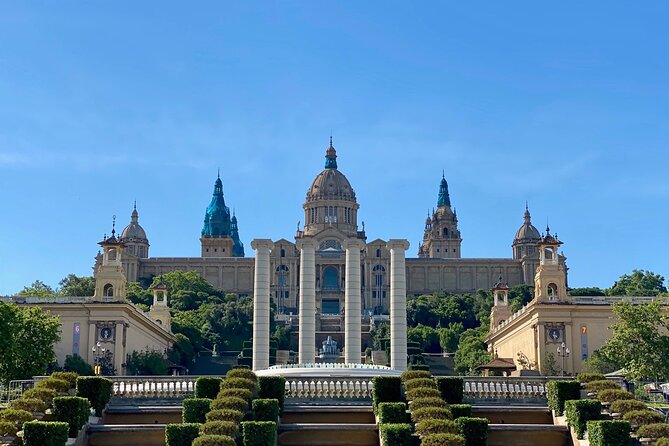
Montjuïc has a way of changing your sense of scale. In a few hours you move from modern city life into hill forts, expo grounds, and viewpoints that let Barcelona look planned from above. It’s not the kind of sightseeing that rushes you from one postcard to the next. You’re walking, climbing, and noticing—so the hill earns its place.
This tour’s value is in how it connects places that are often visited separately. You’ll see the 1929 World Fair footprint through the buildings and the way the hill was used. You’ll also get the Olympic layer—1992, plus an earlier protest story tied to 1936. That mix gives your photos context, not just scenery.
And because it’s designed for a moderate fitness level, it doesn’t feel like a full-on trek. It’s challenging enough to be memorable, but not so technical that you’re fighting the route the whole time.
You can also read our reviews of more walking tours in Barcelona


The German Pavilion (World Fair 1929) start: architecture first
You begin near Sants-Montjuïc at Av. de Francesc Ferrer i Guàrdia, in the area of the German Pavilion connected to Barcelona’s 1929 World Fair. The guide focuses on the design language—timeless Bauhaus lines that make the pavilion feel crisp even years later.
This first stop matters because it sets a theme. Montjuïc wasn’t developed randomly; it became a stage for ideas about modern life, design, and international prestige. Even if you’re not an architecture superfan, you’ll understand why this hill looks the way it does: the city built for spectacle, then later reused parts of that infrastructure.
One practical note: the pavilion admission isn’t included. If you want to go inside, plan for that extra cost and check whether it’s open on the day you book.
Climbing toward the Magic Fountain with local escalators
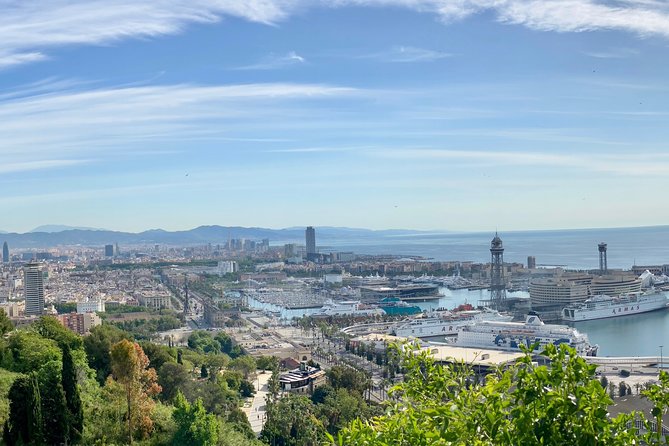
From the pavilion area, you head uphill. The tour uses local escalators to get you through the first part of the hill, so you’re not climbing every meter with your legs alone. Still, there’s plenty of uphill walking after that, which is why comfortable shoes really matter.
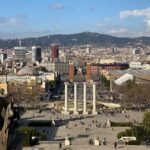
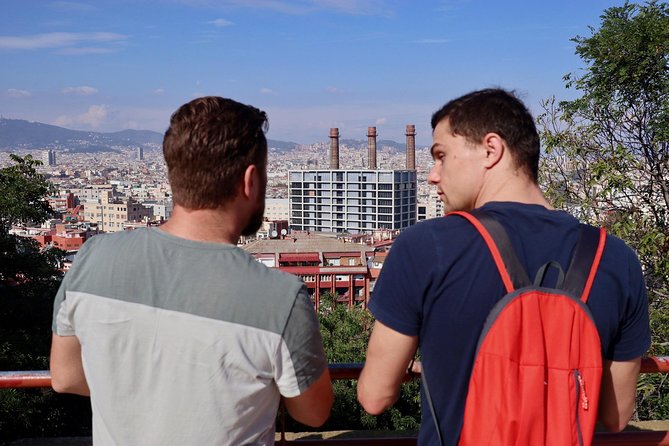
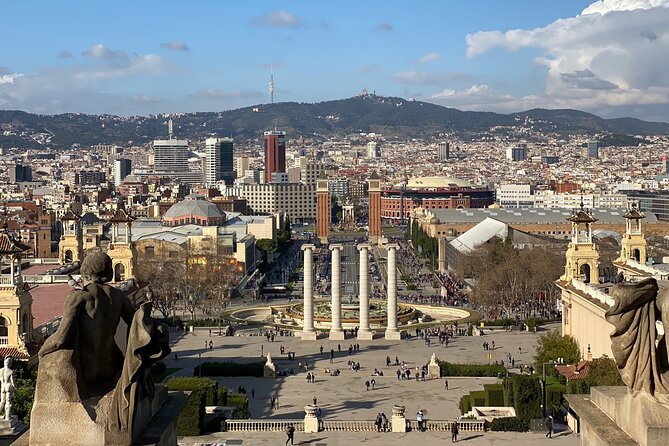
As you climb, you learn how the Magic Fountain became part of the Montjuïc story. You also get viewpoints that make the effort feel fair. You’ll be able to pause for photos in spots where Barcelona spreads out below you—especially helpful for orientation when it’s your first days in town.
Here’s what I’d do if I were you: bring sun protection even if the forecast looks mild. One important review-style tip you can’t ignore is that a lot of the walk is in direct light, with limited shade. A hat plus sunscreen makes the difference between enjoying the climb and counting minutes until the next stop.
Crossing Expo 1929 ground: seeing the hill’s planning logic
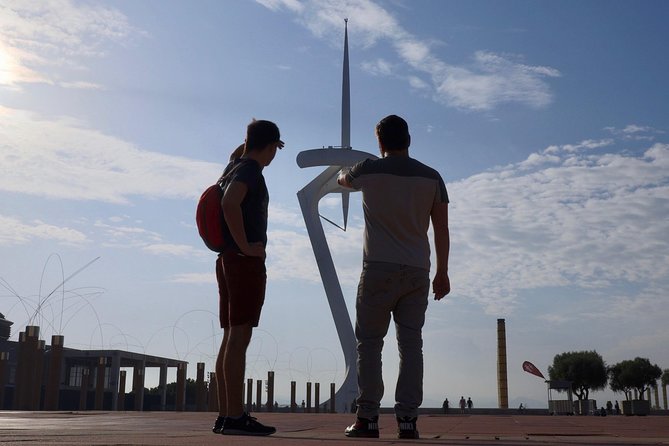
You’ll move through areas connected to the 1929 World Fair. This part isn’t about checking a single monument; it’s about reading the hill like a map. You start noticing how paths, slopes, and built structures work together. It’s a “how Barcelona thought” walk, not just a “where to stand for a view” routine.
This section is also where your guide’s storytelling helps. When you hear what the fair represented—modernity, international attention, and big civic ambition—the hill stops feeling like a random cluster of sights. It starts to feel like a system.
If you’re the kind of traveler who likes to understand why things are where they are, this portion is a real payoff. It’s also a good moment to slow down, because you’ll often be walking at an easy-to-moderate tempo.
Lluís Companys Olympic Stadium: Olympics with a political thread
Next up is Lluís Companys Olympic Stadium. You spend around 20 minutes here, which is enough time to learn and absorb without feeling trapped in a formal visit.
What makes this stop more than a photo opportunity is the history angle. You’ll connect the 1992 Olympic Games with the Alternative People’s Games of 1936, described as a protest event against the Olympics held in Nazi Germany. That comparison gives you a different lens for what the Olympics represented across time.
You’ll also get a look at the Olympic facilities, but you’re not focused on going inside buildings. So if you’re expecting a full stadium tour with entrances and ticketed access, adjust your expectations. The goal here is viewpoint and context—seeing the setting and understanding the story behind it.


Cementerio de Montjuïc: a short stop that hits hard
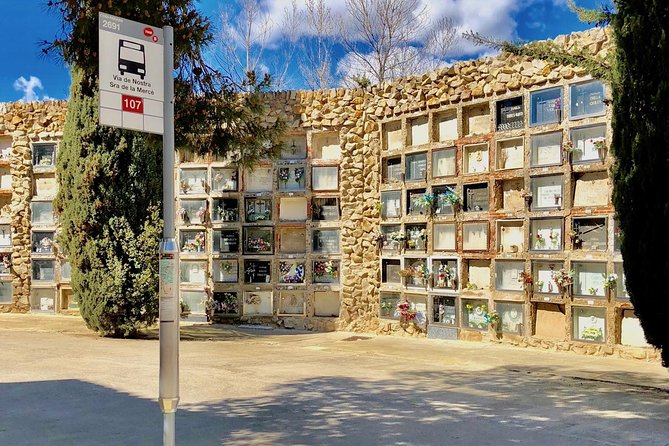
Then you head to Cementerio de Montjuïc for about 10 minutes. Entry here is free, which is nice, and the time window is perfect: you don’t get hurried, but you also avoid turning it into a long, heavy detour.
This is one of the stops that tends to linger in your memory. The cemetery gives the hill a more human side—less spectacle, more atmosphere. Even when you’re not researching specific names or family histories, you feel the shift in tone the moment you arrive.
I’d treat this as a “quiet pause” moment. Keep your head up for the views where they appear, but also take a minute to listen to the space around you. The hill provides a natural separation from the noise of the main city.
Fortresses and the hill as a watch tower
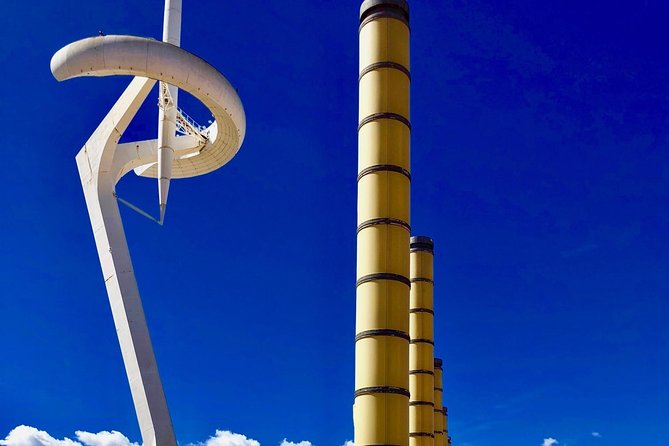
After the cemetery, the walk shifts into the hill’s deeper role. You’ll learn why Montjuïc acted as a natural watch tower and how it was fortified over time—both in medieval history and later civil war history.
This matters because it changes how you see the terrain. You start imagining how control of the heights would shape military decisions, and why the city would keep investing in the hill’s strategic position. It also ties back to why the hill feels layered: expo modernism at one end, defense history at the other.
If you like connecting big historical events to real geography, this section is worth paying attention to. It’s the kind of explanation that makes your photos more meaningful because you’re not just snapping sights—you’re placing them inside a bigger story.
Calle Blai and Pinchos: the local finish in Poble Sec
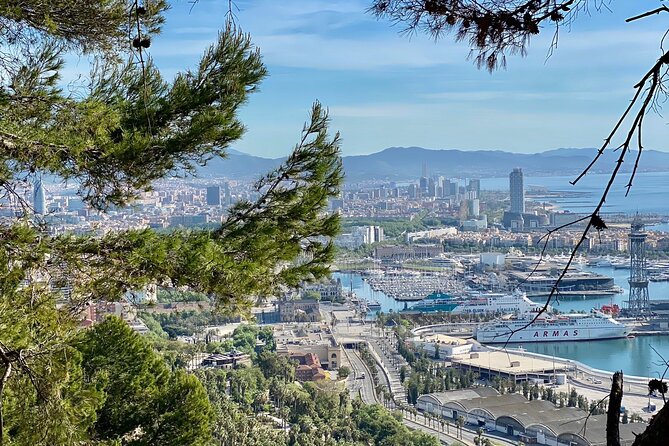
You end in the Calle Blai area in the Poble Sec neighborhood. The last stop is about 30 minutes, and it’s designed for a different vibe: multicultural streets, a chaotic-but-friendly layout, and the chance to try pinchos bars.
Pinchos are Barcelona’s way of doing small plates in a social, street-level style. You’ll see the energy of the neighborhood without needing a reservation or a formal sit-down plan. Since food and drinks aren’t included on this tour (unless specified), you’ll be choosing your own stops—and that’s part of the freedom.
This ending is practical for another reason: you’re near public transportation. A metro connection is close by, with the green line mentioned as nearby, so you can hop back into the city easily after the walk.
Who this tour fits best (and who should skip)
This experience is a strong match if you want:
- A small-group walk that doesn’t feel like a conveyor belt
- Montjuïc’s major stories tied together: Expo 1929, the Olympics, and the hill’s defensive past
- Real walking time and hill views as the main event
It may be less suitable if:
- You dislike uphill walking or aren’t confident on steep, partly uneven ground
- You need lots of shade or a fully flat route
- You want a primarily indoor tour or minimal walking
If you’re traveling solo, this type of guide-led route can be especially reassuring because you’re paired with a real local narrative and a manageable group size. If you’re traveling with family, note the minimum age is 6 due to the walking and uphill effort.
Price and value: what $50.57 buys you
At about $50.57 per person for roughly 3 hours, the value comes from two things: expert guidance and the selection of stops.
Most walking tours in Barcelona are either architecture-lite or view-only. Here, you get a structured sequence that hits architecture at the start (German Pavilion), then a major landmark zone (Magic Fountain viewpoints), then Olympic history, then cemetery atmosphere, then a local food street. You’re paying for the “why” as much as the “where.”
Admission isn’t universal, though. The pavilion admission isn’t included, while other stops like the Olympic stadium and cemetery are free. So the net cost tends to stay reasonable, but you should still budget for any paid entries you choose.
Also keep in mind that the average booking timing is about 70 days in advance. If you’re visiting during popular seasons, booking early helps you lock in a slot that matches your fitness comfort level and daylight plans.
What it feels like in real time: guide energy matters
From the guide examples shared with previous groups, you can expect an enthusiastic, story-forward style. Names you might see include Michael and Christian, and the tone described is personal and humorous, with a strong focus on how Barcelona works culturally and politically—not just dates and plaques.
You should also know the tour is designed around seeing from the outside and moving through spaces on foot, not turning into a museum-style day. The Olympic stop is described as an outside look, and the cemetery stop is short and atmospheric rather than a long deep-dive.
In short: the guide is part of the product.
Should you book the Barcelona Panoramic Walking Tour for Montjuïc?
Book it if you want a guided Montjuïc walk that trades crowds for context, climbs for views, and ends in a local neighborhood vibe where you can grab pinchos afterward. It’s especially good if you like history that connects to real places and you’re comfortable with a moderate amount of uphill walking.
Skip it if you want minimal stairs, lots of shade, or fully indoor sights. And if you’re on the edge fitness-wise, be honest about your ability to handle around 5 miles of partly steep ground.
If you’re the type of traveler who enjoys getting your bearings fast—while also learning why Barcelona built certain landmarks where it did—this is a smart use of a half-day.
FAQ
How long is the Barcelona Panoramic Walking Tour for Montjuïc?
It lasts about 3 hours.
Is this tour suitable for kids?
The minimum age is 6 years, due to the walking length and uphill walking.
What kind of fitness level do I need?
You should have moderate physical fitness. It’s not recommended if you can’t walk for at least 5 miles on partly steep ground.
Is admission included for the German Pavilion?
No. The Barcelona Pavilion (German Pavilion) stop is listed with admission not included.
What’s the group size?
It’s a small group tour with up to 10 travelers taking part, and a maximum of 15 travelers.
Does the tour run in bad weather?
The experience requires good weather. If it’s canceled due to poor weather, you’ll be offered a different date or a full refund.
If you want, tell me your travel dates and your comfort level with uphill walking, and I’ll help you decide whether this fits your schedule (and what to wear and pack for the climb).