REVIEW · BARCELONA
Barcelona Gothic Quarter Tour (Small Group)
Book on Viator →Operated by The Touring Pandas BCN · Bookable on Viator
A great city starts with the right route. This Barcelona Gothic Quarter tour is a short, friendly evening walk that links Roman traces to the medieval streets you came for, with time built in for photos and quick social chats. It’s also the kind of outing where the guide actually points you toward the angles that make your phone look great.
I love that you’re not just staring at stone—you’re learning how to read the place. You’ll get a clear sense of the city’s Roman past, plus the route is paced so you can notice details you’d miss on your own. The small-group size (max 12) keeps it interactive instead of a herd.
One possible drawback: it depends on good weather, and it’s a 2-hour walking format. If you’re not into evenings on foot (or you’re sensitive to uneven historic streets), plan accordingly.
In This Review
- Key things you’ll appreciate on this tour
- A 5:30 pm Gothic Quarter walk that connects Roman Barcelona to today
- Meeting at Pl. de Catalunya: easy logistics and a smooth start
- The first squares and boulevard: your orientation shortcut
- Gothic Quarter highlights and Roman ruins: how the story actually fits together
- Cathedral of Barcelona stop: what the guide helps you see
- Old wall of Barcelona: reading the city’s boundaries
- Barcelona City Hall and the squares that end the walk
- The guides are the real selling point: on-time, funny, and photo-aware
- Price and value: what you’re really paying for
- Who this tour suits best (and who should consider alternatives)
- Practical tips so you get the most from the evening walk
- Should you book the Barcelona Gothic Quarter Tour (Small Group)?
- FAQ
- Where is the meeting point for the tour?
- Where does the tour end?
- What time does the tour start?
- How long is the tour?
- Is the tour offered in English?
- What is included in the price?
- How big is the group?
- What if the weather is bad?
- Is there a cancellation policy?
Key things you’ll appreciate on this tour
- A Roman past thread through the Gothic Quarter so the streets make more sense fast
- Small-group cap of 12 for questions, conversation, and a more personal vibe
- Photo-friendly pacing, including help with getting a good selfie
- Real historic stops, from cathedral area sights to an old wall segment
- Central start and end around Plaça de Catalunya and Plaça Reial for easy follow-on plans
A 5:30 pm Gothic Quarter walk that connects Roman Barcelona to today
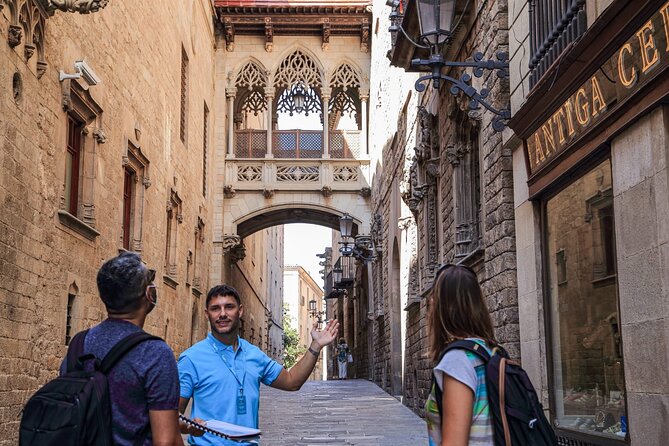
There’s a reason this tour is timed for late afternoon. When you hit Barcelona’s old streets around 5:30 pm, the light is often nicer for photos, and the area feels more like an actual neighborhood than a daytime museum. You’ll start near Plaça de Catalunya—an easy landmark—and end at Plaça Reial, which is a great place to keep wandering after the tour.
What makes this experience work is the way the guide builds a story from stop to stop. You’re seeing the Gothic Quarter highlights while also getting a sense of what came before—especially the Roman past. Even if you don’t memorize dates, you’ll leave with mental “anchors” that help you understand why buildings, street lines, and squares feel the way they do.
It also helps that the tour is small. With a maximum of 12 people, it’s easy to hear directions, keep up on narrow streets, and ask a question without waiting your turn for a megaphone-style lecture.
You can also read our reviews of more tours and experiences in Barcelona.


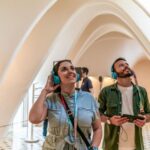
Meeting at Pl. de Catalunya: easy logistics and a smooth start
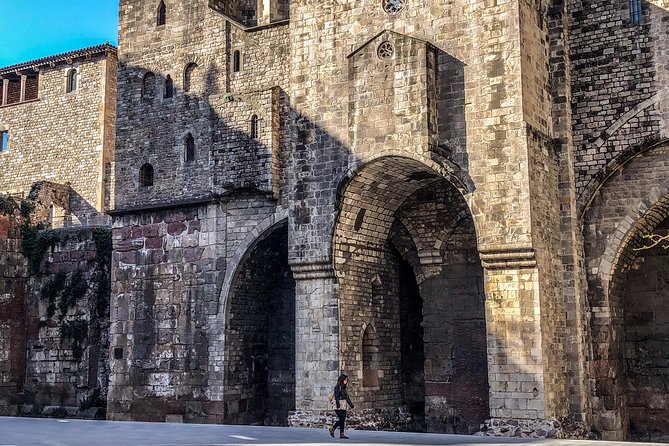
The tour begins at Pl. de Catalunya, 21 (in Ciutat Vella), and the end point is Plaça Reial (Plaça Reial, Ciutat Vella). That matters more than you might think. It means you’re not shuttling across town to start, and you finish in a lively square where you can grab a drink or continue exploring without backtracking.
You’ll use a mobile ticket, and you’ll be guided by a local host for the full about 2 hours on foot. The meeting point is near public transportation, so if you’re arriving from another part of the city, you won’t feel trapped before you even start.
Also, the tour is in English, which makes it a smart pick if you want history context without relying on your Spanish (or your phone’s translation app at every turn).
The first squares and boulevard: your orientation shortcut
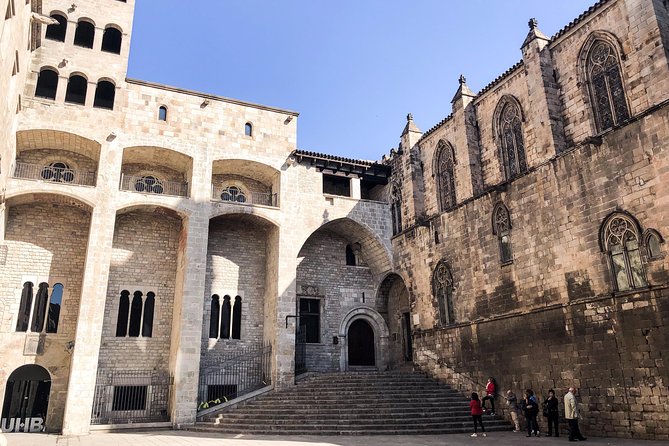
Before the Gothic Quarter gets fully medieval, you’ll spend time on early stops like a square and a boulevard. This is one of the most practical parts of the tour. Those early moments help you understand where you are in the city’s layout, so the later streets don’t feel like a maze.
Here’s what to do during this section: don’t wait until you reach the big-ticket sights to start paying attention. Look for visual cues the guide points out—street turns, changes in building scale, and how squares open up space. This is where you start building the route in your head, which makes everything after it feel clearer.
If you care about photos, this is also when you can start asking for guidance. The tour includes help to get your perfect selfie, and earlier streets are often easier for quick shots because you’re not yet locked into the denser sight lines of peak areas.
Gothic Quarter highlights and Roman ruins: how the story actually fits together
This is the heart of the tour. You’ll walk through the Gothic Quarter highlights and see Roman ruins as part of the route, not as a random detour. That framing is the difference between viewing history as disconnected layers and understanding it as one long conversation across centuries.
What I like about this approach is that it helps you stop treating the Roman past as trivia. When the guide connects Roman traces to later medieval development, you start recognizing patterns: how cities reuse space, how important areas keep their importance, and how new eras build on old foundations.
A quick practical note: the Gothic Quarter has narrow paths and busy pockets. It’s not a “stroll with zero friction” type of walk. But the tour is paced for a small group, and the guide includes time for photos rather than rushing you from spot to spot.
If you want the Roman angle to land, do this: during the ruins portion, listen for the guide’s main point, then look again at what’s physically around you. The goal isn’t to name every element—it’s to learn what to notice.
Cathedral of Barcelona stop: what the guide helps you see
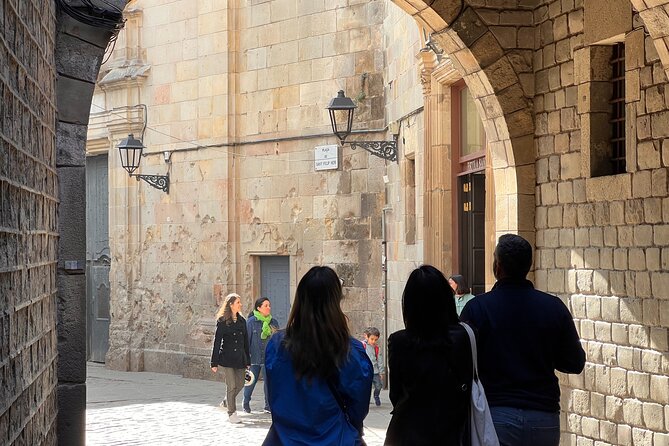
Next comes the Cathedral of Barcelona area. This isn’t just a stop for a “been there” picture. A good guide will frame what you’re looking at so the cathedral doesn’t feel like another landmark you pass through.
Here’s the payoff for first-time visitors: the guide helps you place the cathedral inside the broader Gothic Quarter logic. That means you spend less time wondering where the important bits are, and more time understanding why the area feels the way it does.
You’ll also get guidance on photo timing. Even if you’re not chasing perfect lighting, the tour is set up so you’re not rushed during key moments. That matters because cathedral fronts and nearby streets often look best after you’ve stepped back and found your angle.
Potential drawback to keep in mind: if you’re expecting a long, indoor cathedral visit, this is a walking tour format. It’s focused on moving through and interpreting the sights, not on extended time inside any one building.



Old wall of Barcelona: reading the city’s boundaries
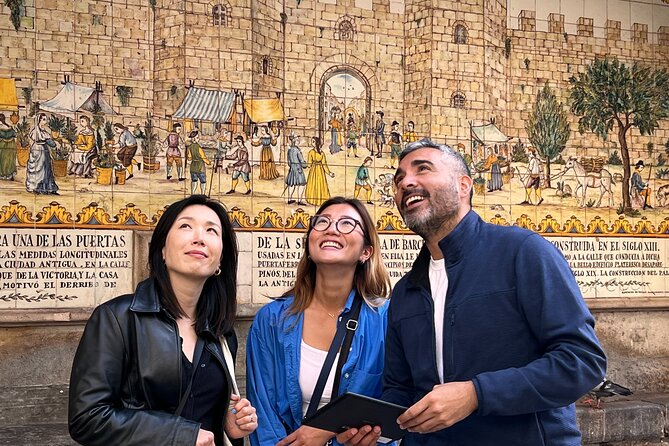
The Old wall of Barcelona stop is where the tour turns from “what looks pretty” to “why the city grew like this.” City walls tell you a lot: where people prioritized defense, how space was organized, and how power and safety shaped the built environment.
I like that this stop gives you a physical sense of boundaries. Even without memorizing details, you’ll leave with a clearer idea of how the city worked as a defended area and how that legacy can still show up in street structure.
If you’re the type who enjoys small details, this is your moment. Look at how the wall line relates to nearby streets and open areas. The guide’s job is to connect the dots—your job is to use your eyes while you still have the context.
Barcelona City Hall and the squares that end the walk
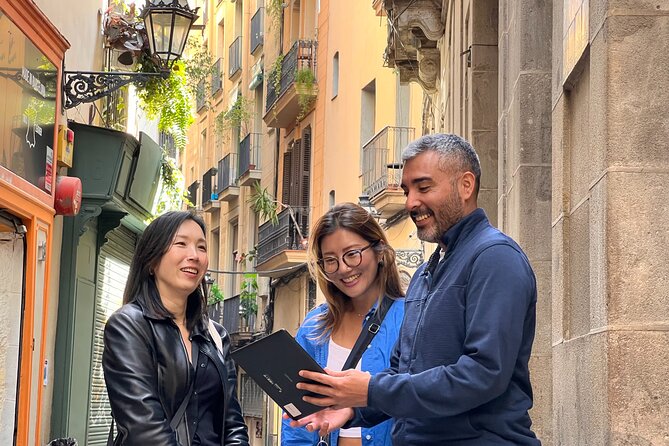
As the tour moves toward the finish, you’ll see Barcelona City Hall and then shift to a beautiful square in the Gothic Quarter before ending at Plaça Reial.
City Hall is useful because it adds a modern layer to what you’ve been walking through. You’re not only learning medieval Barcelona; you’re seeing how governance and civic life still sit in the old fabric of the city.
Then comes the square time—exactly the kind of pause that makes a short tour feel complete. Squares are where you can breathe, compare what you saw earlier to what you see now, and take a few slower photos. The guide’s pacing keeps it from feeling like a checklist.
Finishing at Plaça Reial is smart. It’s a natural “after” spot, so you can keep the momentum going with dinner, a quick drink, or simply more wandering while the history is still fresh in your head.
The guides are the real selling point: on-time, funny, and photo-aware
Across the guides you might encounter, what stands out is how much attention they pay to the human side of the tour. People describe guides like Chassie for arriving on time and delivering a long, detailed walk without turning it into a sprint. Others highlight Marcel for balancing historical stops with lighter cultural context, and Patrick (and Patricio) for enthusiasm, humor, and making the experience feel like a conversation with a local.
That matters because this is a 2-hour tour. You don’t have time for a slow start or a lecture that runs long. The guide’s pacing is what protects your experience—especially the part where you get time for pictures and your questions.
Also, there’s a clear emphasis on social comfort. Small group format helps, but the guide also makes it easier to connect with like-minded people who actually want to talk, not just follow.
If you’re the type who normally avoids group tours because you worry about feeling lost, this one is designed to keep you oriented.
Price and value: what you’re really paying for
At $36.12 per person for about 2 hours, the price is in the range of what you’d expect for a quality, local-guided walk in central Barcelona. The value comes from three things you don’t get as easily when you go solo:
- A guided route that connects Roman traces, Gothic Quarter landmarks, and key civic points instead of leaving you to guess the order.
- A local guide who knows how to explain the transitions between eras so the city feels less like random architecture.
- Time for photos and selfie support, which sounds small until you’ve tried to capture good shots in narrow streets while navigating crowds.
If you’re spending multiple days in Barcelona, this tour can be an efficiency play. Doing it early can help you understand what you’re later seeing on your own—so you don’t waste time wandering without direction.
Who this tour suits best (and who should consider alternatives)
This is a great fit if you:
- Want to understand the Roman past without reading for hours
- Enjoy walking tours that still make time for photos
- Like a small group where you can ask questions
- Are on your first night (or early in your trip) and want a route that builds confidence
It might be less ideal if you:
- Can’t handle a 2-hour walking format
- Dislike weather-dependent outdoor plans (the tour requires good weather)
- Want a long, inside-only museum experience rather than a guided street route
Practical tips so you get the most from the evening walk
A few things will make the tour smoother from start to finish:
- Wear comfortable shoes. Historic streets can mean uneven footing, and you’ll be walking consistently for about 2 hours.
- Bring your phone charger habitually. You’re using a mobile ticket, and you’ll likely want it for photos.
- Arrive near the start point a few minutes early so you can settle and meet up without stress.
- Plan for good weather. The tour requires it, and if conditions are poor you’ll be offered another date or a full refund.
- If you need a service animal, this tour allows service animals.
Should you book the Barcelona Gothic Quarter Tour (Small Group)?
I’d book it if you want a guided, small-group evening that makes Barcelona’s old streets make sense—especially the connection between Roman ruins and later Gothic landmarks. The combination of on-time guides, good pacing, and photo-friendly moments is the kind of value that’s hard to replicate solo, particularly on a first visit.
I’d skip or rethink it only if you’re uncomfortable walking for about 2 hours in older streets, or if you already know you’ll be in and out of museums rather than enjoying the street-level story.
If you’re arriving in Barcelona soon and you want an efficient way to get oriented while learning the city behind the scenery, this is an easy yes.
FAQ
Where is the meeting point for the tour?
The tour starts at Pl. de Catalunya, 21, Ciutat Vella, 08002 Barcelona, Spain.
Where does the tour end?
The tour ends at Plaça Reial, Ciutat Vella, 08002 Barcelona, Spain.
What time does the tour start?
The start time is 5:30 pm.
How long is the tour?
The duration is approximately 2 hours.
Is the tour offered in English?
Yes, it is offered in English.
What is included in the price?
Included are a local guide and a 2-hour walking tour of the Barcelona Gothic Quarter.
How big is the group?
The tour has a maximum of 12 travelers.
What if the weather is bad?
The experience requires good weather. If it’s canceled due to poor weather, you’ll be offered a different date or a full refund.
Is there a cancellation policy?
Yes, free cancellation is available. You can cancel up to 24 hours in advance for a full refund.