REVIEW · BARCELONA
Barcelona Historical Walking Tour: Gothic Quarter and El Born
Book on Viator →Operated by Carpe Diem Tours · Bookable on Viator
Barcelona’s Old Town has a pulse, and this walk makes it make sense. I love the small-group pace and the way the guide links art, religion, and politics to what you can see right now. I also like that you get walk-to-the-good-stuff streets and courtyards that big bus routes usually miss, with Picasso and Gaudí stories along the way. One catch to plan for: entry tickets are not included for the Catedral de Barcelona and Basilica de Santa Maria del Mar.
If you want a quick orientation without feeling rushed, this is a smart way to start your Barcelona days. The tour runs about 2 hours, keeps groups to a maximum of 20, and is offered in English. The route finishes near the Basilica, so you can keep exploring on foot afterward, or hop to public transport.
In This Review
- Key things I’d focus on before you go
- Why this Gothic Quarter and El Born walk is a strong value
- Start point: where the Gothic Quarter story gets going
- Els 4 Gats: the Art Nouveau café where artists gathered
- El Mon Neix En Cada Besada: a Catalan identity memorial you can’t ignore
- Catedral de Barcelona: Gothic grandeur and the story of Saint Eulalia
- Casa de l’Ardiaca: Roman wall meets Gothic-Renaissance design
- Pont del Bisbe: a neo-Gothic bridge with a legend
- Placa Sant Felip Neri: Spanish Civil War scars in a small square
- MUHBA – El Call: the Jewish quarter’s maze of memory
- Placa de Sant Jaume: the city’s government hub
- Placa del Rei: the Royal Palace area and the darker edge
- Plaça de l’Àngel: grain trading in the name of a legend
- Basilica de Santa Maria del Mar: Catalan Gothic and the sea connection
- What kind of guide you’ll want (and what to expect from this one)
- How the route feels in real time: pace, crowd level, and timing
- Who should book this tour
- Should you book the Barcelona Historical Walking Tour: Gothic Quarter and El Born?
- FAQ
- How long is the Barcelona Historical Walking Tour?
- How much does the tour cost?
- What language is the tour offered in?
- How big is the group?
- Where does the tour start and end?
- Are tickets for the churches included?
- Which stops are free during the tour?
- What is included in the price?
- What is the cancellation policy?
Key things I’d focus on before you go
- Small group, slow enough for photos: Max 20 people helps the guide keep things moving without steamrolling the street life.
- Art + power stories, not just stone viewing: Picasso and Gaudí come up in context, not as trivia dumps.
- You’ll hit both Gothic Quarter and El Born logic: It feels like one connected neighborhood story, not two separate stops.
- Mostly free entry stops: Many parts are ticket-free, while two churches are paid separately.
- Start-to-finish in the most walkable core: You’re dropped near the Basilica, a great springboard for more Old Town wandering.
Why this Gothic Quarter and El Born walk is a strong value
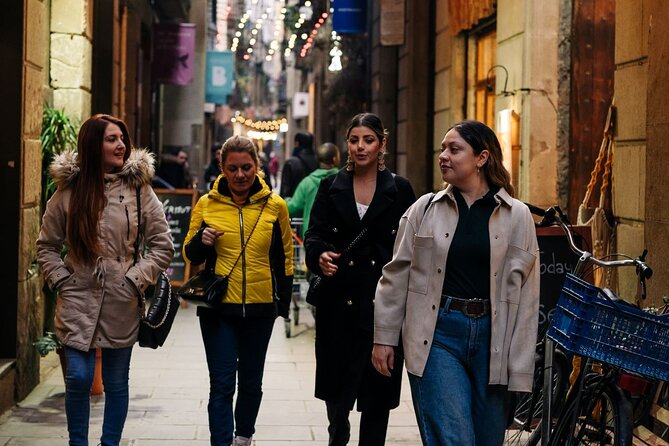
At $30.25 per person for about two hours, you’re paying for a local guide who turns Barcelona’s oldest streets into an easy storyline. That’s the real value here: you’re not just collecting landmarks. You’re learning how the city’s layers fit together, from Roman remnants and medieval worship to Catalan identity.
Two practical bonuses make it feel worth the price. First, the tour is limited to 20 travelers, so you usually get better sightlines and more chances to ask questions. Second, it uses a mobile ticket, which cuts down on last-minute hassle.
The timing also works well. It’s about 26 days booked in advance on average, which usually signals a popular, reliable slot. And because this route is packed with iconic and lesser-known corners, it’s a good choice if you only have a short window in the city center.
You can also read our reviews of more walking tours in Barcelona



Start point: where the Gothic Quarter story gets going
You meet at Plaça del Vuit de Març in Ciutat Vella, near the Old Town core. Expect an easy start for first-time visitors because you’re entering an area that feels dense and layered. The guide’s job early on is to help you stop getting lost in the best way.
From the beginning, you’ll see how narrow streets and sudden open squares create a rhythm that bus tours can’t replicate. You’re walking long enough to feel like you’ve moved through neighborhoods, but not so long that it becomes a full-day grind.
Els 4 Gats: the Art Nouveau café where artists gathered
The walk opens at Els 4 Gats, a historic café and restaurant known as a favorite meeting place for artists, intellectuals, and modernists. This is where Picasso and Antoni Gaudí enter the conversation in a grounded way: not just names on a wall, but part of a creative scene tied to Barcelona’s past.
What I like about this stop for your trip is how it sets a theme. You start thinking in terms of creative circles and public spaces, which makes the later Gothic streets feel less like a museum and more like lived-in city history.
This stop is listed as free admission and lasts about 10 minutes, so it’s a low-pressure introduction.
El Mon Neix En Cada Besada: a Catalan identity memorial you can’t ignore
Next comes El Mon Neix En Cada Besada, a photomosaic installed in 2014. It connects to the Catalan defeat on September 11, 1714, during the War of Spanish Succession, and links directly to the celebration of La Diada (Catalonia Day).
This is the kind of stop that changes how you read street art and monuments across Barcelona. Instead of treating it like decoration, you learn what it represents: resistance, memory, and identity.
Again, admission here is free, and you’re given time to look closely without rushing.
Catedral de Barcelona: Gothic grandeur and the story of Saint Eulalia

At Catedral de Barcelona, you’ll get a look at a Gothic-style church honoring the life and death of Eulalia, a patron saint believed to have been tortured to death by the Romans.
This stop is important even if you don’t plan on going inside, because the guide’s explanation gives you a reason to notice the church’s presence in the city’s center. For many first-timers, this is where the Gothic Quarter stops feeling like “pretty streets” and starts feeling like a whole worldview.
The itinerary notes admission ticket not included here, so you’ll want to be ready for separate entry costs if you choose to go inside. Plan about 10 minutes for the exterior and orientation, then decide on entry time based on your pace and ticket situation.
You can also read our reviews of more historical tours in Barcelona
Casa de l’Ardiaca: Roman wall meets Gothic-Renaissance design
Then you’ll reach Casa de l’Ardiaca, described as a quirky mix of Gothic and Renaissance architecture. The standout detail is that it houses the vertical face of a Roman wall plus aqueduct elements.
This is a great example of why walking beats staring at a map. You’re seeing continuity. A medieval building can act like a protective cover over older layers, and you can actually connect the dots in your own mind.
Admission is free for this stop, with about 10 minutes to take it in.
Pont del Bisbe: a neo-Gothic bridge with a legend

At Pont del Bisbe, you’re on Bishop Street (Carrer de Bisbe), once a major thoroughfare in Roman-occupied Barcino. Today, the bridge’s neo-Gothic style is also tied to a superstition legend that the guide shares to keep things lively.
If you like stories that blend architecture and folklore, this is a fun pause. It’s also a good chance to look up and take in details, since many legends travel best when you can see the thing they’re attached to.
Admission is listed as free, and it lasts about 10 minutes.
Placa Sant Felip Neri: Spanish Civil War scars in a small square
In a quieter corner you’ll find Placa Sant Felip Neri. This square has a sombre connection to the Spanish Civil War, and the guide points out how the area’s scars still show the cost of that time.
This is not a stop for casual “sightseeing only.” You’ll likely walk away more careful with how you look at Barcelona’s smaller public spaces. Squares like this aren’t just pretty; they carry memory.
Admission is free for this part, with about 10 minutes.
MUHBA – El Call: the Jewish quarter’s maze of memory
Next is MUHBA – El Call, the Jewish quarter of Barcelona. You’ll move through narrow streets and medieval architecture, with the guide pointing out key elements tied to Jewish history, including the synagogue area and local legends.
This stop is valuable because it broadens the usual Barcelona narrative. Most visitors focus on Gaudí and the grand modernist era. Here, you’re seeing how many different communities shaped the Old Town long before the modern city took its current form.
Admission is listed as free here, and you get about 10 minutes in the area to absorb the layout.
Placa de Sant Jaume: the city’s government hub
Placa de Sant Jaume is the government square, surrounded by historical buildings and full of day-to-day energy. Even if you’re not going inside anywhere, the meaning lands quickly: this is where civic power becomes visible.
For your planning, it helps because it gives you a geographic anchor. After this point, many of the later squares feel like they’re connected by both street and purpose.
This is listed as free and about 10 minutes.
Placa del Rei: the Royal Palace area and the darker edge
At Placa Del Rei, you’ll see a charming-looking square that also connects to the Royal Palace and to darker parts of Barcelona’s past. The guide’s job here is to keep the story balanced, so it doesn’t turn into a simple “pretty square” moment.
This stop works well if you like context. You’ll probably catch yourself re-reading the city through power and consequence instead of just style.
Admission is free, with about 10 minutes.
Plaça de l’Àngel: grain trading in the name of a legend
Then you’ll reach Plaça de l’Àngel, formerly known as Wheat Square—a major hub for grain trading. The guide ties the name to a heavenly legend called the Angel’s Square story.
This is an easy, fun stop because it blends commerce with myth. It also helps explain why Barcelona’s street names often carry more than a cute label.
Admission is free and the stop lasts about 10 minutes.
Basilica de Santa Maria del Mar: Catalan Gothic and the sea connection
Your tour ends at Basilica de Santa Maria del Mar. The itinerary calls it a breathtaking Catalan Gothic church tied to Barcelona’s maritime history.
This ending is smart. It feels like a payoff: you’ve walked through identity, religion, and civic life, and now you land at a church that reflects Barcelona’s seafaring roots. Plus, it’s a great place to continue your own walking loop afterward.
Here’s the planning detail: admission ticket not included. If you want to go inside, budget for that extra entry cost. The route is about 10 minutes at this final stop, though you may need more time if you choose to enter and look around.
What kind of guide you’ll want (and what to expect from this one)
From the feedback shared, the guides who lead this tour often bring a strong mix of storytelling and practical explanations. Names that come up include Juan, David, Thami, Sonia, Petra, Jorge, Lidia, Darren, Jordan, Craig, Justin, Mariah, Sara, Vanesa, and Tammy.
A few details stand out that can help you decide if this is your style. Some guides use visual aids like an iPad to support the historic narrative. Others keep energy high and pitch it so kids stay interested. And pace matters: one review notes a slow enough tempo for photos, plus a guide handling rain without turning it into chaos.
So if you like history with atmosphere and you enjoy asking questions, this is a good fit.
How the route feels in real time: pace, crowd level, and timing
This is a 2-hour walking tour through dense streets. You won’t be sprinting, because the stops are short and spaced for a guide-led flow. The maximum group size of 20 helps reduce that stuck-behind-a-column-of-people feeling.
One review also mentioned extra time spent explaining while navigating downpours. That’s a clue to bring a light rain layer if the forecast looks uncertain. Even when weather turns, the route is designed around frequent pauses, so you’re not stuck in one long stretch with no breaks.
If you can, going earlier in the day tends to be nicer for comfort. Cooler temps and less crowding usually make the narrow streets more enjoyable to walk.
Who should book this tour
This is a strong match if you:
- Want a first-day orientation of the Gothic Quarter and El Born without spending hours studying a guidebook
- Like stories that connect monuments to real events like September 11, 1714 and La Diada
- Prefer walking streets over bus sightseeing, especially when stops include alley-like spaces and squares with layered meaning
- Are okay paying separate entry tickets for Catedral de Barcelona and Basilica de Santa Maria del Mar
It may be less ideal if you only want one or two major sites and dislike optional extra entry costs. The itinerary includes many free stops, but you still have two churches where you’ll need to decide about entry.
Should you book the Barcelona Historical Walking Tour: Gothic Quarter and El Born?
I’d book it if you want your Barcelona Old Town time to feel guided, coherent, and worth your effort. The combination of famous cultural references like Picasso and Gaudí, plus identity-driven stops tied to Catalan and Jewish history, gives you more than a postcard tour.
This one scores high on value because it’s short, well-paced, and capped at 20 people, which makes the experience feel personal. Just go in knowing the two churches are not included in the ticket price, so set aside a little extra budget if you want to go inside.
If you’re planning your first day in Barcelona’s center, this tour is one of the easiest ways to get your bearings fast and start seeing the city’s story in layers.
FAQ
How long is the Barcelona Historical Walking Tour?
It lasts about 2 hours.
How much does the tour cost?
The price is $30.25 per person.
What language is the tour offered in?
The tour is offered in English.
How big is the group?
The maximum group size is 20 travelers.
Where does the tour start and end?
It starts at Plaça del Vuit de Març, Ciutat Vella, 08002 Barcelona, Spain, and ends at Basílica de Santa Maria del Mar, Plaça de Santa Maria, 1, Ciutat Vella, 08003 Barcelona, Spain.
Are tickets for the churches included?
No. Admission ticket is not included for Catedral de Barcelona and Basilica de Santa Maria del Mar.
Which stops are free during the tour?
The itinerary lists free admission for Els 4 Gats, El Mon Neix En Cada Besada, Casa de l’Ardiaca, Pont del Bisbe, Placa Sant Felip Neri, MUHBA – El Call, Placa de Sant Jaume, Placa Del Rei, and Plaça de l’Àngel.
What is included in the price?
You get a guided walking tour with a local tour guide, plus city highlights and hidden gems. You also receive a mobile ticket.
What is the cancellation policy?
You can cancel for free up to 24 hours in advance for a full refund. Changes within 24 hours of the start time are not accepted.