REVIEW · BARCELONA
Barcelona El Raval Dark History Walking Tour
Book on Viator →Operated by ExperienceFirst · Bookable on Viator
Raval has a past you can feel. This 2-hour walk trades the usual sightseeing circuit for small-group storytelling and free-entry stops, with guides like Eoghan and Zeynep bringing the neighborhood’s darker legends to life. You’ll also pick up real context for how this part of Ciutat Vella changed over time, not just spooky anecdotes.
Here’s the one thing to consider: the subject matter leans dark, from abandoned infants to hospital autopsies and murder-legend-style tales, so keep your expectations on the intense side.
In This Review
- Key Highlights Worth Your Time
- Raval’s Dark Legends, With Real Neighborhood Context
- Price of $33.42: When It Feels Like Good Value
- Meeting Up by Sant Pere Nolasc Mercedaris and Ending at Tres Xemeneies
- Six Stops That Connect Crime Legends to Institutions
- Stop 1: A Foundling Wheel Hidden in Plain Sight
- Stop 2: Carrer de Joaquín Costa and the Villain Legend
- Stop 3: Real Academia de Medicina de Cataluña and Hospital of la Santa Creu
- Stop 4: Sant Pau del Camp, Barcelona’s Oldest Church
- Stop 5: Avenida del Paralelo and the Seedier 20th-Century Side
- Stop 6: Jardins de les Tres Xemeneies, Where Smoke Became Art Walls
- How the Best Guides Keep This Tour From Getting Too Heavy
- Who Should Book This Raval Dark History Tour
- My Booking Checklist Before You Walk
- Should You Book This Raval Dark History Walking Tour?
- FAQ
- How long is the Barcelona El Raval Dark History Walking Tour?
- What is the price per person?
- How big is the group?
- Is there a mobile ticket?
- Are admissions included for the stops?
- Where does the tour start and end?
- Is lunch included?
- Is cancellation free?
- Is the tour suitable for most travelers, and can service animals join?
Key Highlights Worth Your Time
- Max 15 people keeps the pace human and the Q&A possible
- Free-entry stops at every listed site means you’re paying for the guide, not admissions
- Raval after the guidebook cover: you’ll see streets, churches, and corners most people skip
- Churches with violent backstories plus medical-history stops tie the neighborhood’s grit to real institutions
- Guides named in praise include Eoghan, Zeynep, Callum, Albert, Andres, and Cal
Raval’s Dark Legends, With Real Neighborhood Context
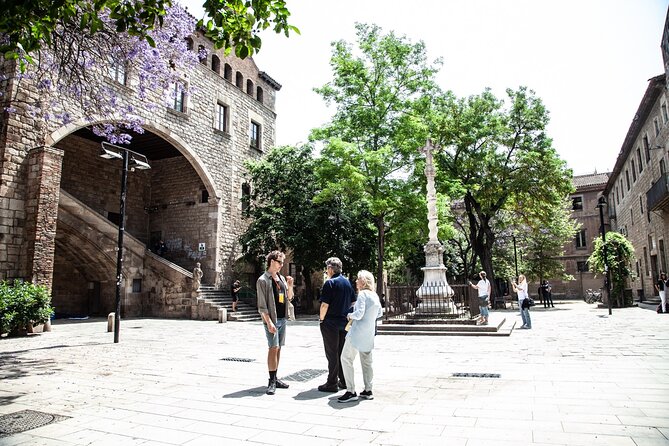
Barcelona’s Raval has a reputation for being rough, but the real story is more complicated (and more interesting). This tour focuses on how people were treated here, how institutions worked, and how the streets developed their characters—then it adds the creepy legends on top.
I like that it doesn’t treat the neighborhood like a movie set. Even when the tales are chilling, you still get the geography: where power sat, where poverty clustered, where nightlife turned up, and where industrial Barcelona left scars that later became art walls.
If you want a quick way to understand the city beyond Gaudí postcards, this is a smart use of two hours. Small group size helps too; you’re not lost in a crowd while the guide talks at you.
You can also read our reviews of more walking tours in Barcelona



Price of $33.42: When It Feels Like Good Value
$33.42 per person sounds steep only if you assume you’re buying attractions. You’re not. The tour includes an experienced local guide, and the stops listed are marked as admission-free.
That matters because Raval sightseeing can get expensive fast when you pile on paid museums. Here, you’re mostly paying for interpretation—someone to connect the building you’re standing in front of to the story behind it.
Also, the tour is short at about 2 hours, which makes it easier to fit into a busy trip. And because it’s commonly booked in advance (about 21 days on average), locking in a slot early can help you avoid disappointment near your travel dates.
Meeting Up by Sant Pere Nolasc Mercedaris and Ending at Tres Xemeneies
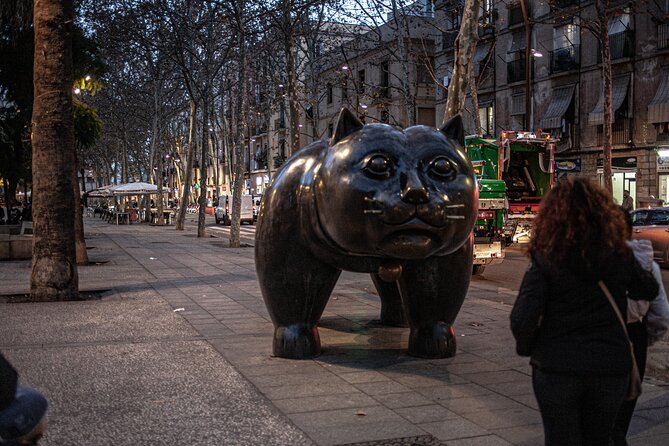
You start at Parròquia de Sant Pere Nolasc Mercedaris, Pl. de Castella, 6, in Ciutat Vella. Ending point is Jardines de les Tres Xemeneies at Plaça de Les Tres Chimeneies, Av. del Paral·lel, 49. Practically, it’s a route that moves you across Raval toward the Sants-Montjuïc side, so you can roll right into your next plan after the walk.
It runs on a mobile ticket, and it’s near public transportation. That’s useful in Barcelona, where you’ll often hop between metro lines during the day. Service animals are allowed, and the tour says most travelers can participate.
One small planning tip: wear comfortable shoes. This is a walking tour in a dense, historic neighborhood, so expect frequent turns, uneven sidewalks, and plenty of time spent close to street-level sights.
Six Stops That Connect Crime Legends to Institutions
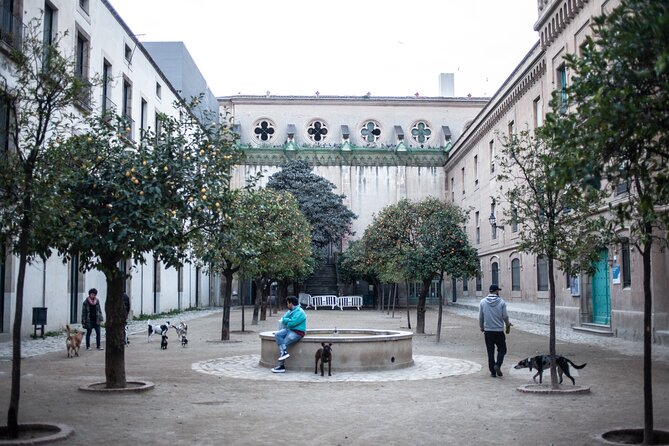
This walk is built around a clear theme: Raval’s reputation isn’t random. The guide points you to the places where society hid problems, studied bodies, managed poverty, or turned to nightlife—and then ties those locations to the stories people still repeat.
The pace is usually about 20 minutes per stop, which is long enough to understand what you’re looking at, but not so long that you lose the thread. And with a group capped at 15 people, the guide can keep the tone controlled while still covering a lot of ground.
Stop 1: A Foundling Wheel Hidden in Plain Sight
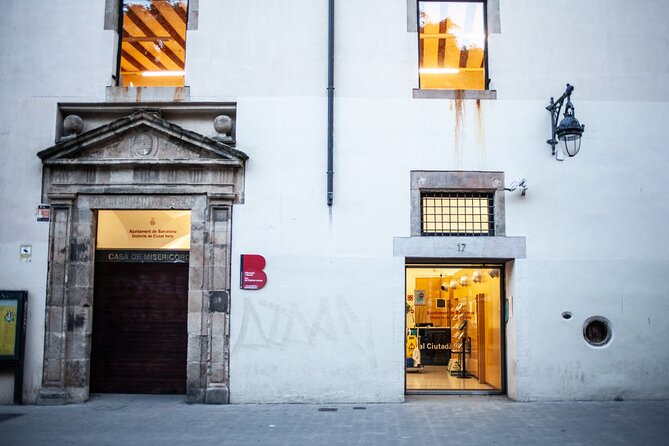
You begin at Fundació Privada Casa de Misericòrdia de Barcelona. The standout detail here is the foundling wheel for unwanted infants—something you can miss if you’re only scanning for church façades and street art.
This stop works because it changes how you think about “dark history.” It’s not just violence. It’s the system: how helpless people were processed, concealed, and managed by institutions.
You can also read our reviews of more historical tours in Barcelona



Stop 2: Carrer de Joaquín Costa and the Villain Legend
Next is Carrer de Joaquín Costa, framed through one of those stories where the guide connects a name and place to crimes that people still bring up. The point isn’t to turn Raval into a horror tour. It’s to show how particular streets became linked to fear, power, and rumor.
Even if you’re not a true-crime person, the guide’s job is to explain why a legend sticks to a location. That’s the skill that turns a scary street into a history lesson.
Stop 3: Real Academia de Medicina de Cataluña and Hospital of la Santa Creu
At Real Academia de Medicina de Cataluña, the tour shifts from street legend to medical history. You’re looking at part of the former Hospital of la Santa Creu, known for its autopsies.
This is one of the most historically grounded stops on the walk, because it’s not only about what happened—it’s about how society studied bodies and what that meant for everyday people. The building becomes a clue you can physically stand inside, which makes the story harder to dismiss as mere gossip.
Stop 4: Sant Pau del Camp, Barcelona’s Oldest Church
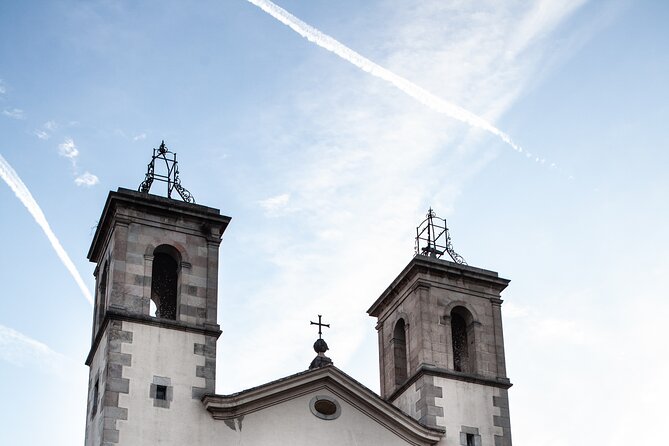
Then you reach Sant Pau del Camp, described as Barcelona’s oldest church and previously a monastery with a violent history. This stop is where the architecture does real work: stone and layout become evidence.
I like that it doesn’t skip the uncomfortable parts. Old places in Europe often come with complicated beginnings, and this one is no exception. The result is a church that feels less like a postcard and more like a survivor of changing eras.
Stop 5: Avenida del Paralelo and the Seedier 20th-Century Side
At Avenida del Paralelo, the tour points you to the neighborhood’s Chinese district and its role as a hub for 20th-century nightlife. The tone stays grounded: this isn’t about glamour, it’s about the social reality behind the streets after dark.
If you’ve been assuming Raval is only about poverty or only about entertainment, this stop adds another layer. It shows how nightlife economies formed, served certain communities, and also drew in outsiders—often unevenly.
Stop 6: Jardins de les Tres Xemeneies, Where Smoke Became Art Walls
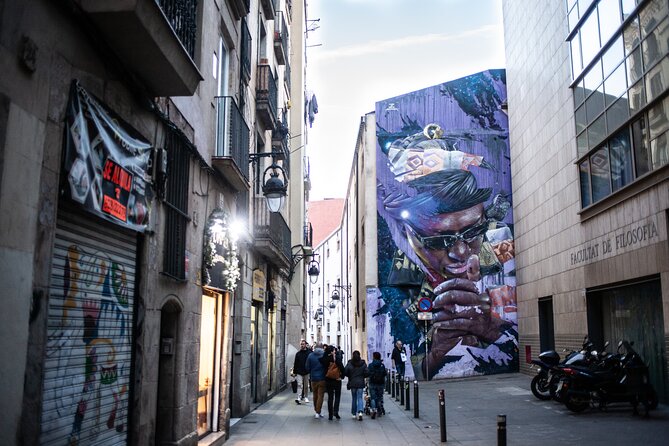
You end at Jardins de les Tres Xemeneies. The story here goes industrial first: the gardens connect to the industrial center of Barcelona and the famous chimneys (the name gives it away). After that, it lands on modern street creativity, especially for graffiti art lovers.
This ending matters. A lot of “dark” tours stop when the stories get scary. Here, the final location gives you a visual contrast: the neighborhood didn’t freeze in time. It changed, repurposed, and created new ways to talk back.
How the Best Guides Keep This Tour From Getting Too Heavy
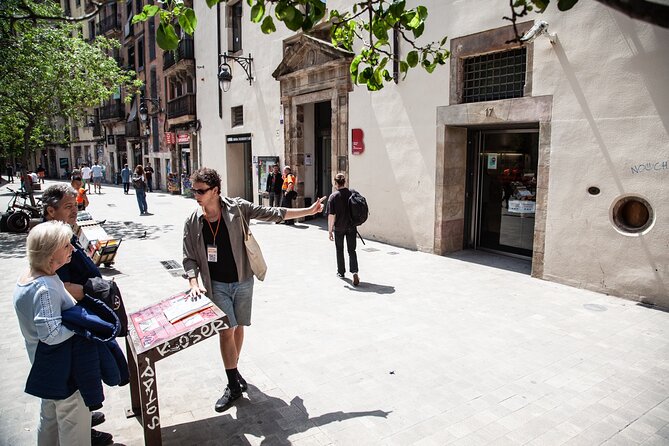
One reason this walk scores so well is the guide style. Across the praised guides—Eoghan, Zeynep, Callum, Albert, Andres, and Cal—there’s a common thread: they connect the dots between buildings and social issues, and they do it with a steady pace that keeps the group comfortable.
You’ll also notice another pattern: people often say it helps them feel oriented fast, like they’re getting insider bearings for the city. That’s exactly what you want from a first or second day activity in Barcelona. You learn where things are, how the neighborhood works, and what you should notice when you go back on your own.
A practical note: because the topics can be intense, the tone depends on the guide. If you’re sensitive to stories involving violence, institutions, or exploitation, you should treat this as a themed walk, not a light stroll.
Who Should Book This Raval Dark History Tour
This is a strong choice if you:
- want more than the headline sights and you like street-level history
- enjoy walking tours where the guide explains how neighborhoods form
- can handle dark topics without needing them sugarcoated
- prefer a small group experience (max 15) where questions are actually welcome
It’s also a good option for families, as long as you choose your family’s “comfort level” first. The walk is only about two hours, but the themes are real and the guide doesn’t act like they’re myths.
If you’re looking for a purely spooky ghost tour with no context, you might find the subject matter more historical than supernatural. On the other hand, if you want the gritty side of Barcelona explained in plain language, this fits well.
My Booking Checklist Before You Walk
Here’s what I’d do to get the most out of it:
- Bring comfy shoes and plan for lots of street corner stops.
- Keep water handy, especially in warmer months, since it’s a two-hour walk.
- If you’re the type who likes to understand places, arrive with an open mind. The stories land better when you notice details like doorways, institutional façades, and street layout.
- If you like to plan ahead, book sooner rather than later. The tour averages about 21 days advance booking.
Should You Book This Raval Dark History Walking Tour?
I’d book it if you want a high-value, short walking tour that gives you a fresh lens on Barcelona. The combination of free-entry stops, small group size, and real institutional history makes it feel like you’re getting something more than a spooky walk with a script.
Pass on it only if you want something light and distraction-free, or if you’d rather avoid stories connected to exploitation, hospitals, and violence. Otherwise, it’s a smart way to see Raval as a lived-in neighborhood with a past that still shows through.
FAQ
How long is the Barcelona El Raval Dark History Walking Tour?
It lasts about 2 hours.
What is the price per person?
The price is $33.42 per person.
How big is the group?
The tour has a maximum of 15 travelers.
Is there a mobile ticket?
Yes, it uses a mobile ticket.
Are admissions included for the stops?
The listed stops are marked as admission ticket free.
Where does the tour start and end?
It starts at Parròquia de Sant Pere Nolasc Mercedaris, Pl. de Castella, 6, Ciutat Vella, and ends at Plaça de Les Tres Chimeneies, Av. del Paral·lel, 49, at the Jardines de las Tres Chimeneas area.
Is lunch included?
No, lunch is not included.
Is cancellation free?
Cancellation is free up to 24 hours in advance for a full refund.
Is the tour suitable for most travelers, and can service animals join?
The tour says most travelers can participate, and service animals are allowed. It’s also near public transportation.