REVIEW · BARCELONA
Photo Walking Tour Barcelona Cathedral Gothic Quarter El Born
Book on Viator →Bookable on Viator
A great photo walk starts with the right streets. This one threads Barcelona’s Gothic Quarter and El Born with phone-friendly guidance and a tight group.
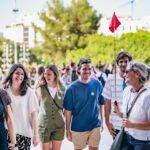
I like that you get personal photo coaching in a group of up to 10, so you can actually correct your framing on the spot. I also like the hit list of sights, from Barcelona Cathedral to Plaça Reial, picked for angles and light, not just checkboxes.
One thing to consider: each stop is brief (about 10 minutes), so if you want slow sightseeing or long indoor time, you may feel a little rushed.
In This Review
- Key things to know before you go
- Why this Barcelona Cathedral and Gothic Quarter photo walk works
- Price and what you’re really paying for ($59.90 for 2 hours)
- Meeting point to first shots at Estació de França
- Palau de la Música Catalana and a poetic pause in the Raval
- Barcelona Cathedral and Pont del Bisbe: the Gothic Quarter photo run
- How the guide coaching improves your photos fast (even with just a phone)
- Who should book this Barcelona photo walk (and who might not love it)
- Should you book the Photo Walking Tour Barcelona Cathedral Gothic Quarter El Born?
- FAQ
- How long is the photo walking tour?
- What does the $59.90 price include?
- Do I need to bring a camera?
- How big is the group?
- What language is the tour offered in?
- Where does the tour start and end?
- What if the weather is bad?
Key things to know before you go
- Small group (max 10) means your guide can adjust tips to your camera and style.
- Phone is enough: bring your iPhone/Android (or any camera that works) and follow the angle lessons.
- Timed highlights keep you moving from Estació de França through El Born and into the Gothic Quarter.
- Architectural variety: Gothic, Modernist, neo-Mudéjar, and medieval streets in one loop.
- Short stop windows (about 10 minutes each) help with momentum, but plan to move quickly.
- English guide and mobile ticket make it easy to join even if you’re not a photo nerd.
Why this Barcelona Cathedral and Gothic Quarter photo walk works
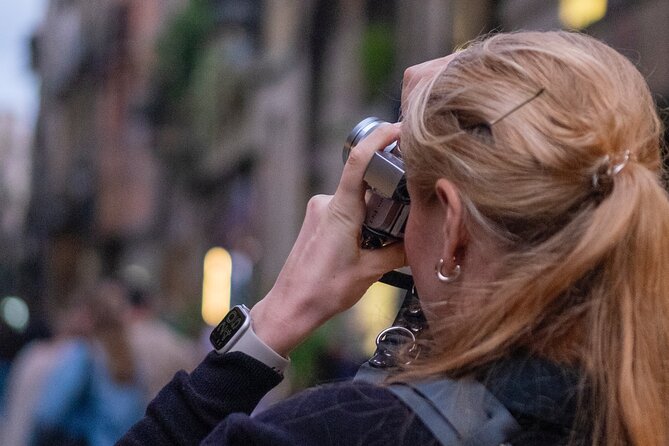
If you’ve ever tried to photograph Barcelona and ended up with mostly the same postcard shot, this tour is built for you. You’re not just walking from landmark to landmark. You’re learning how to see landmarks—where to stand, what angle to choose, and how reflections and lines can make an ordinary photo look planned.
The route also makes sense. You start near Estació de França, cross into Parc de la Ciutadella and the Arc de Triomf, then move through culture-heavy Modernist stops before landing in the Barri Gòtic with Barcelona Cathedral, Pont del Bisbe, and the historic squares.
And yes, it’s beginner-friendly. You don’t need special gear, and you’re not expected to already know what shutter speed or focal length means. Bring your phone, keep up, and you’ll leave with new habits you can reuse on your next city.
You can also read our reviews of more walking tours in Barcelona

Price and what you’re really paying for ($59.90 for 2 hours)
At $59.90 per person for about 2 hours, the value is in the coaching, not in expensive equipment. The tour includes individual tips and guidance on how to improve your images. That’s the core product here: help with composition, angles, and quick fixes you can apply immediately.
A few practical points that affect value:
- Group size up to 10: this matters because you’re more likely to get direct feedback instead of a one-size-fits-all talk.
- Mobile ticket: less hassle at check-in.
- English only: good if you prefer guided explanations in plain language.
- Most stops are free to view: you’re not paying entry fees just to reach the photo spots.
- What’s not included: no camera equipment, no food/drinks, and no transportation to/from the meeting point.
One more thing: this tour tends to sell ahead (it’s commonly booked around 41 days in advance). If you’re traveling in peak season, I’d lock in your slot early so you don’t end up hunting for last-minute alternatives.
Meeting point to first shots at Estació de França
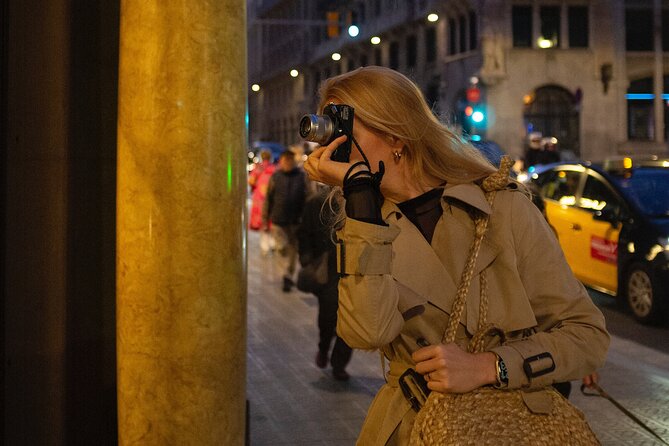
You meet at Estación de Francia, Av. del Marquès de l’Argentera, 6 (in Ciutat Vella), and the walk loops back to the same meeting point at the end. That starting location is smart: you get a major Barcelona rail landmark right away, then you move into parks and arches where it’s easier to work on framing.
Stop 1: Estació de França (France Station)
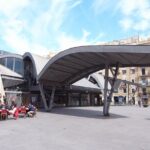
This station is known for its elegant, historical architecture and for being an important Barcelona rail hub since its inauguration in 1929. For photos, think about symmetry and lines. Stations give you strong geometry—arches, roof structure, and repeating elements—so you can practice “clean” compositions before you hit the busier streets.
Stop 2: Parc de la Ciutadella
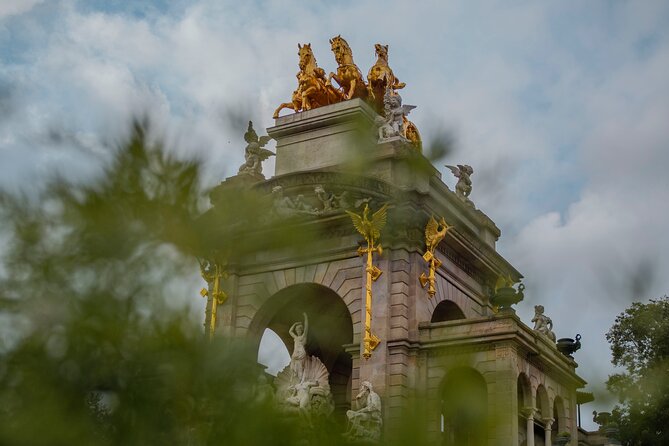
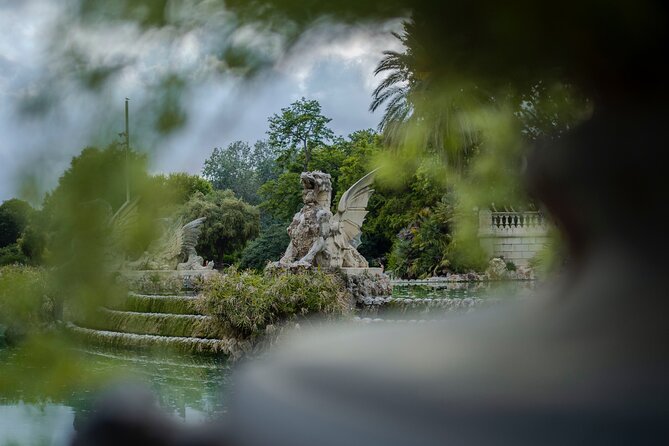
A park is a gift for photography. It buys you softer light, calmer sight lines, and space to step back and reframe. The park was designed for the 1859 Barcelona Universal Exposition, and you’ll see why it works as a visual palette cleanser before the denser Gothic streets.
Stop 3: Arc de Triomf
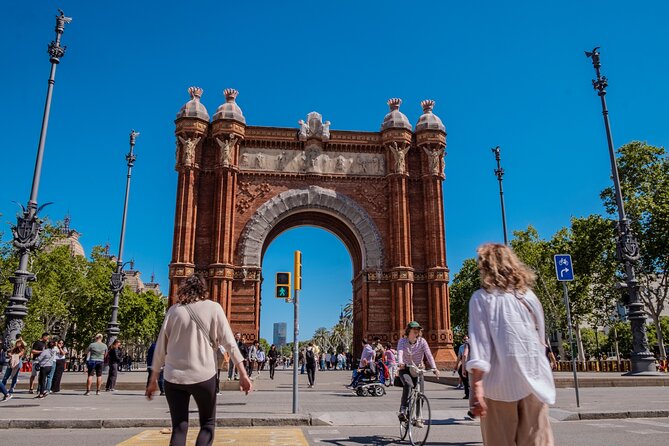
This triumphal arch (built for the 1888 Universal Exposition) is a Neo-Mudéjar standout. For your camera, it’s all about layering: the arch face, surrounding walkways, and the background streets can give you depth without needing special lenses.
Tip for you: use the first segment to figure out your “default” phone settings. You’re going to spend the rest of the walk correcting angles—so start with a stable baseline.
Palau de la Música Catalana and a poetic pause in the Raval
After the open-air feel of Ciutadella and the arch, the tour shifts into more culture-forward stops. This is where the guide’s photo coaching really pays off, because you’ll be photographing details and façades, not just wide views.
Stop 4: Palace of Catalan Music (Palau de la Música Catalana)
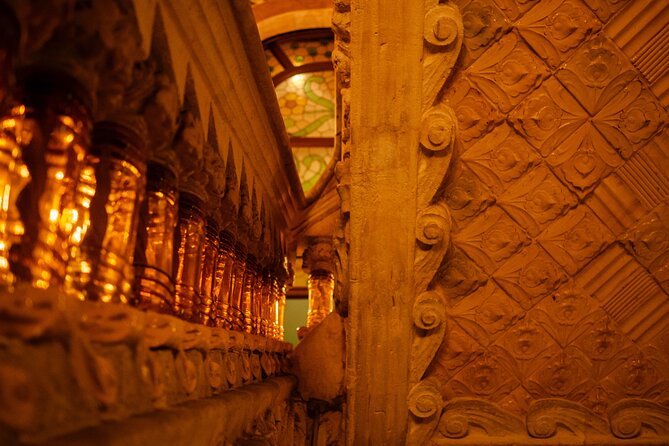
This is one of Barcelona’s most striking Modernist buildings, designed by Lluís Domènech i Montaner. Even if you don’t plan to go inside, you can frame the façade and decorative elements in ways that look “architectural,” not accidental. Modernist buildings reward patience: look for curves, ornament rhythm, and angles that reduce visual clutter.
Stop 5: El Mon Neix En Cada Besada (in Plaça de Isidre Nonell)
This cultural space’s name is poetic—The World Begins in Every Kiss. The value here isn’t just the phrase; it’s that the stop breaks your visual routine. It gives you a chance to photograph something more symbolic and less obvious than a cathedral tower, which can add variety to your final set.
Practical note: since each stop is timed, be ready to quickly choose a composition, take a few shots, and move. The goal is momentum, not one perfect frame you obsess over for 20 minutes.
Barcelona Cathedral and Pont del Bisbe: the Gothic Quarter photo run
Now you hit the heart of it. This portion is for people who want medieval textures and dramatic angles—stonework, narrow corridors, and iconic civic spots. With only about 10 minutes per stop, you’ll want to work fast: pick one primary shot, then try one creative twist your guide suggests.
Stop 6: Barcelona Cathedral (Catedral de la Santa Creu i Santa Eulàlia)
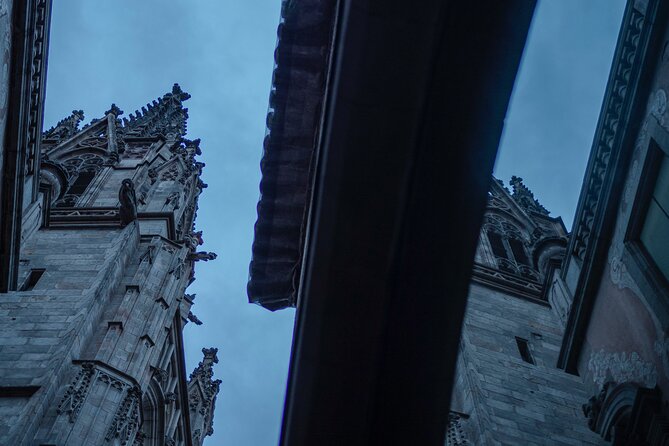
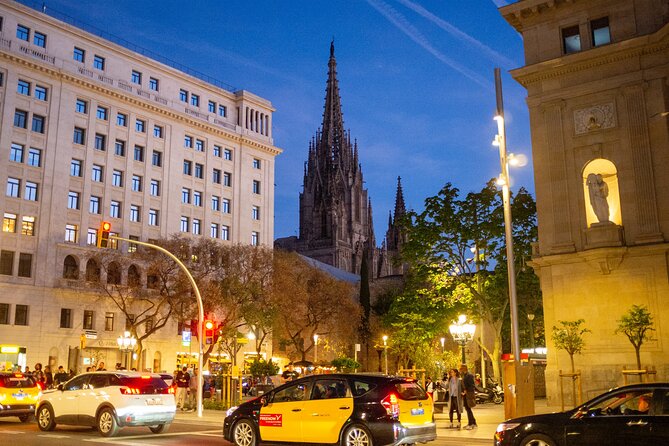
In the Barri Gòtic, this is the big Gothic landmark. The cathedral sits at Pla de la Seu, and it’s an easy place to practice vertical framing. Try composing so the tower lines pull the eye upward, and don’t ignore the foreground—cathedrals get better photos when the street texture adds context.
Stop 7: Casa de l’Ardiaca
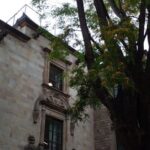
This historic building at Carrer de Santa Llúcia, 1 ties into the medieval cathedral story through the role of the archdeacon. The photo opportunity here is details and surfaces: stone, windows, and the “in-between” angles that make a photo feel like you walked into a specific moment in time.
Stop 8: Pont del Bisbe (Bishop’s Bridge)
Pont del Bisbe connects buildings tied to Catalonia’s government history (through the Palau de la Generalitat). It’s one of the most picturesque Gothic Quarter spots, and it’s perfect for using leading lines. Look for how the bridge shape directs your view and try compositions that include both the bridge and the surrounding façades for depth.
Stop 9: Plaça de Sant Jaume
This is one of the Gothic Quarter’s most central squares—one of those places where history is still part of the layout. For photos, you’ll often get better results stepping slightly off the obvious axis so the buildings frame your subject rather than flatten behind it.
Stop 10: Plaça Sant Miquel
Small, calmer, and very “local pace” compared with the biggest squares. This is useful because it gives you a breath: a quieter spot can make your camera work easier and lets you capture small, human-scale details like street edges and corner geometry.
Stop 11: Plaça Reial
This vibrant square off La Rambla is famous for elegant architecture and an energetic atmosphere. The trick for photos is timing and light. You want a composition that includes enough life to feel real, but not so much chaos that your main subject loses focus.
A reality check for you: this segment is visually dense. If you try to photograph everything equally, you’ll come home with a mixed set. Aim for one “hero” shot per stop, then one variation (a different angle, reflection, or crop).
How the guide coaching improves your photos fast (even with just a phone)
The big promise here is learning to capture better photos on your future travels—and that starts with what your guide does with you during the walk. One name that comes up in the experience is Leonardo, described as passionate about Barcelona history with a strong eye for intriguing photo angles.
Here’s what that usually means in practice:
- You’ll get clear, on-the-spot instructions rather than generic advice.
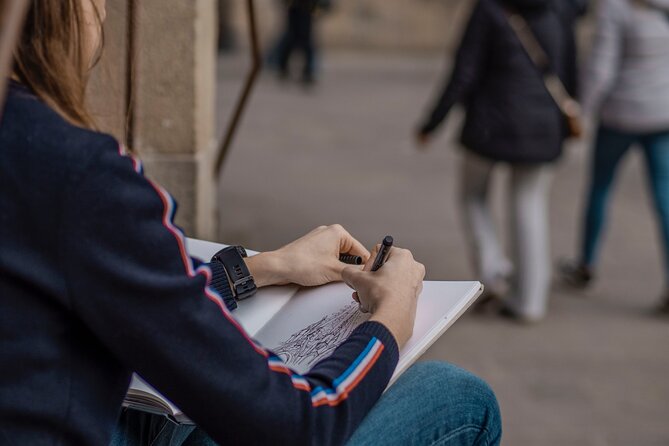
- You’ll practice angles, reflections, and composition so your photos don’t look like accidental snapshots.
- You’ll see examples of how to frame buildings so they feel structured, not messy.
It’s also good that no previous photography experience is required. That doesn’t mean the tour is simplistic. It means the coaching is adjusted so you can learn without technical homework.
And because it works for both mobile phones and cameras that can shoot more manually (like a DSLR), you’re not forced into one gear setup. If you have a phone, you’ll use what it does best. If you bring a camera, you’ll get composition framing that still applies.
Who should book this Barcelona photo walk (and who might not love it)
This tour is a strong match if you:
- Want a high-impact introduction to the Gothic Quarter plus El Born in a short time.
- Care about photography and want simple techniques you can repeat elsewhere.
- Prefer a small group where you can get personal guidance.
- Are traveling with just your phone and want better results without extra gear.
It may not be ideal if you:
- Want long stops, slow wandering, or a lot of indoor time. Many stops are designed for quick framing.
- Expect transportation to and from the meeting point.
- Want the tour to provide equipment or food—those aren’t included.
Should you book the Photo Walking Tour Barcelona Cathedral Gothic Quarter El Born?
I think you should book it if your goal is quality photos with smart guidance, not just a sightseeing stroll. At $59.90 for about 2 hours, the value comes from individual tips and the fact that the route mixes iconic architecture with streets and squares that photograph well.
Just go in with two expectations set:
1) You’ll move fast and choose your shot quickly at each stop.
2) Bring your own device (phone or camera). The tour won’t hand you gear.
One final practical caution: because this is a small-group operation, I’d make a habit of being on time and keeping an eye on any day-of contact instructions. A single missed start time can throw off your whole photo rhythm.
If that sounds manageable, this is a great way to leave Barcelona with a stronger eye—and a photo set that looks like you planned it.
FAQ
How long is the photo walking tour?
It runs for about 2 hours (approx.).
What does the $59.90 price include?
You get individual tips and guidance to improve your photos.
Do I need to bring a camera?
You should bring your own mobile phone or camera that works. The tour does not provide camera equipment.
How big is the group?
The tour has a maximum of 10 travelers.
What language is the tour offered in?
It’s offered in English.
Where does the tour start and end?
It starts at Estación de Francia, Av. del Marquès de l’Argentera, 6, Ciutat Vella, 08003 Barcelona, Spain, and ends back at the meeting point.
What if the weather is bad?
The experience requires good weather. If it’s canceled due to poor weather, you’ll be offered a different date or a full refund.