REVIEW · BARCELONA
Gaudí and Modernism – Private Walking Tour
Book on Viator →Operated by Be Local Tours · Bookable on Viator
Modernism in Barcelona plays like street theater. This private walking tour connects Gaudí and Modernisme to the city’s politics and daily life, from Plaça de Catalunya to the Sagrada Família. I especially liked how the guide, Patrick, ties architectural details to what was happening in Barcelona at the time. You also get a relaxed pace that leaves room to ask questions and stare longer at facades than you planned.
The big value here is context: you’re not just looking at buildings, you’re learning how and why they were made. One possible drawback is that the experience is built mainly around exterior viewing along busy streets, so if you’re craving lots of interior time, you may want extra plans beyond this walk.
In This Review
- Key Things I’d Watch For on This Tour
- Entering Barcelona’s Modernisme World at Plaça de Catalunya
- Passeig de Gràcia: Where the Catalan Bourgeois Dream Got Built
- Bancs de Fanals: Lampposts That Act Like Tiny Museums
- Manzana de la Discordia: Casa Lleó i Morera’s Secrets on the Facade
- Casa Amatller and the Chocolate Story Behind the Symbols
- Casa Malagrida: Modernist Meaning Through Argentina and Spain
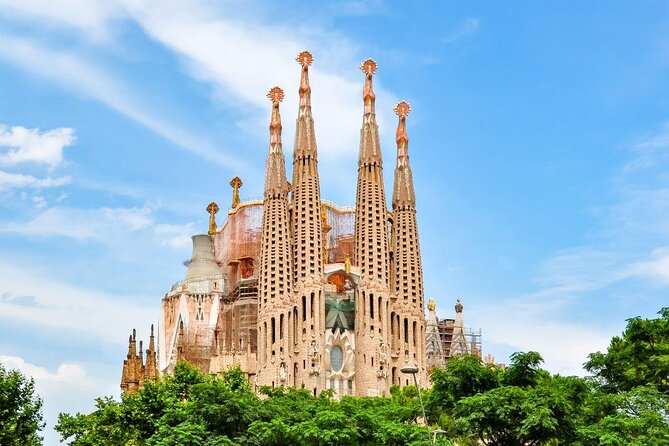
- Finishing at Sagrada Família: Gaudí’s Unfinished Facades
- Why a Private Guide Changes the Whole Experience
- Price Value: What $66.08 Buys You in Real Terms
- Timing Tips: How to Make the Walk Feel Easy
- Should You Book This Gaudí and Modernism Private Walking Tour?
- FAQ
- How long is the Gaudí and Modernism private walking tour?
- What is the tour price per person?
- Where does the tour start?
- Where does the tour end?
- Is pickup offered?
- Is the tour private?
- What language is the tour offered in?
- Are any stops admission ticket free?
- Does the tour require good weather?
- How does cancellation work?
Key Things I’d Watch For on This Tour
- Patrick’s history-first approach ties design choices to Barcelona’s social and political shifts.
- Plaça de Catalunya as a starting “divide” helps you understand what changed from old city to Eixample.
- Passeig de Gràcia mansion-spotting turns an iconic street into a living timeline.
- Bancs de Fanals lamppost symbols reward slow looking and questions.
- Manzana de la Discordia focus makes Casa Lleó i Morera and Casa Amatller easier to compare.
- Sagrada Família exterior facades are the dramatic finish, even though the monument remains unfinished by Gaudí.
Entering Barcelona’s Modernisme World at Plaça de Catalunya
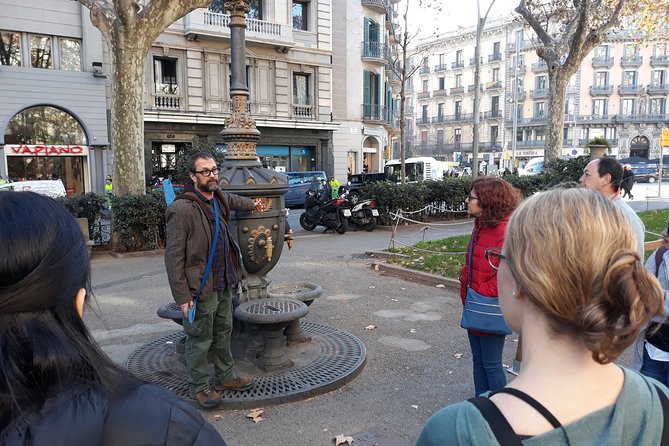
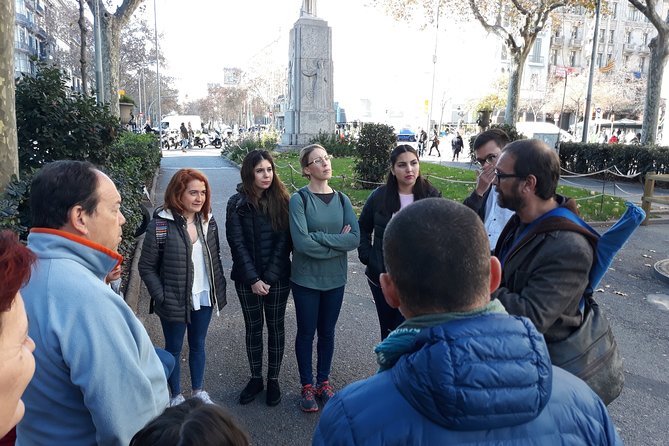
I like starting at Plaça de Catalunya because it works like a visual lesson. It’s the junction between Barcelona’s older core and the Eixample district, and your guide uses that shift to set up what you’ll see next. You’ll hear how the city evolved, and you’ll also get pointed to marks left behind by the Spanish Civil War that still show up in the urban fabric. That context matters because Modernisme isn’t just decoration. It’s also identity—who had power, who wanted to show it off, and how people imagined the future.
This stop is short—about 10 minutes—and the good news is it’s free to view (no admission required). You’ll basically use it to get your bearings fast and understand the “why” behind the neighborhood you’re about to enter. If you’ve already been sightseeing on your own, this is the kind of setup that keeps the rest of the walk from turning into random architecture photos.
One practical tip: keep your eyes up here. Modernisme loves scale and symbolism, and this is where you start training yourself to notice it.
You can also read our reviews of more walking tours in Barcelona



Passeig de Gràcia: Where the Catalan Bourgeois Dream Got Built
Next comes Passeig de Gràcia, the famous boulevard of the 19th and early 20th century. This is where Barcelona’s Catalan bourgeoisie flexed their money—then hired top architects to make sure everyone noticed. Your walk stays on the public side of the street, letting you take in the overall rhythm of the avenue: building fronts in sequence, façades in competition, and details that only make sense when you’ve learned the story behind them.
This is also one of the best stretches to understand Modernisme as a “neighborhood brand.” You’ll hear why Eixample became the stage for these ambitious projects, and how the street’s role as a social space shaped what architects wanted to express. The stop is about 15 minutes and listed as admission ticket free, which fits perfectly with the walking format.
What I love about this part is how it changes your photo strategy. Instead of snapping only the most famous façades, you start looking for patterns: sculpted balconies, symmetrical compositions, and the subtle ways buildings announce wealth and taste without needing a sign.
If you’re short on time in Barcelona, this is still worth it because it gives you a mental map. After this walk, the rest of the Eixample feels less confusing.
Bancs de Fanals: Lampposts That Act Like Tiny Museums
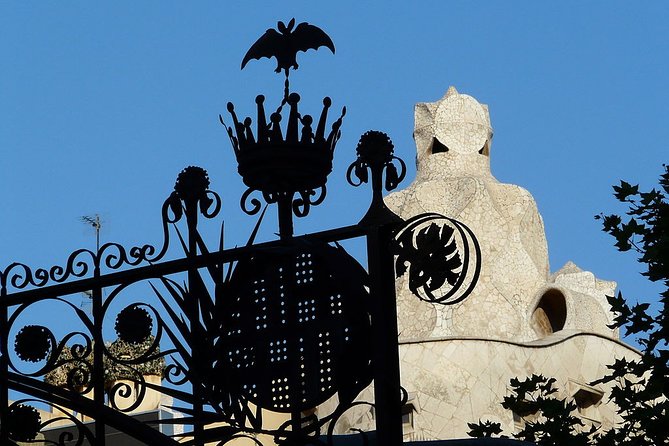
Then you slow down for Bancs de Fanals, the elaborately decorated lampposts along Passeig de Gràcia. These aren’t just functional street fixtures. They’re modernist street art—with symbols and interesting details designed into the structure. They’ve decorated this avenue for more than a century, which is wild when you think about how long a design idea can stay in public view.
This stop is roughly 10 minutes, and again it’s listed as admission ticket free. The real “ticket” here is attention. Your guide points out meanings hidden in the decoration, and it’s one of those moments where you realize you’ve been walking past things like this without really seeing them.
If you want a small challenge during your sightseeing day, try this: pick one lamppost and spend one minute describing what you notice. Then compare your notes to what your guide highlights. It’s a simple way to learn faster, and it makes the walk feel like you’re playing detective instead of just drifting down the sidewalk.
And yes, because Modernisme loves drama, you may get plenty of talk about fantastical details—often the kind that people associate with Gaudí’s world.
Manzana de la Discordia: Casa Lleó i Morera’s Secrets on the Facade
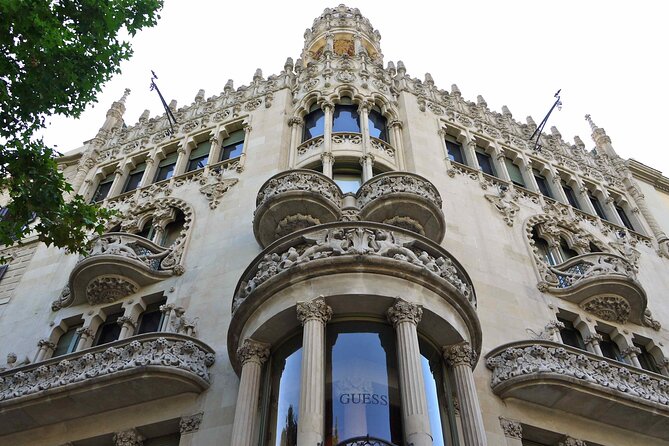
Now you enter one of Barcelona’s best-known clusters for Modernisme: Manzana de la Discordia. This area is famous because several standout buildings crowd into the same block, like architects staging a friendly (and competitive) conversation through stonework.
One of the first houses you’ll focus on is Casa Lleó i Morera. You’ll learn that it’s connected to architect Domènech i Montaner, who designed it in the early 1900s. The tour frames the façade like a story page—details linked to the life and thinking of both the creator and the owner, not just an aesthetic exercise. You’ll hear how the building’s ornamentation reflects ideas, ambitions, and personality.
This stop is ideal if you like architecture that rewards close looking. You might think you’re just seeing a nice building, but the guide helps you spot the design choices that make it feel intentional. That matters because Modernisme is often about the meaning behind the shape—how lines, motifs, and materials translate ideas into public art.
A drawback? You’ll probably want more time here. The walk keeps moving, so if you’re the kind of person who could spend an hour on one façade, you may need to schedule extra solo time later. Still, this stop gives you a strong baseline for understanding the next house you’ll see.
Casa Amatller and the Chocolate Story Behind the Symbols
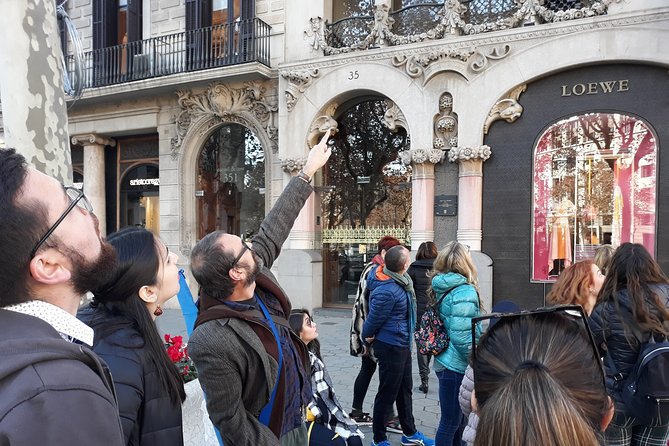
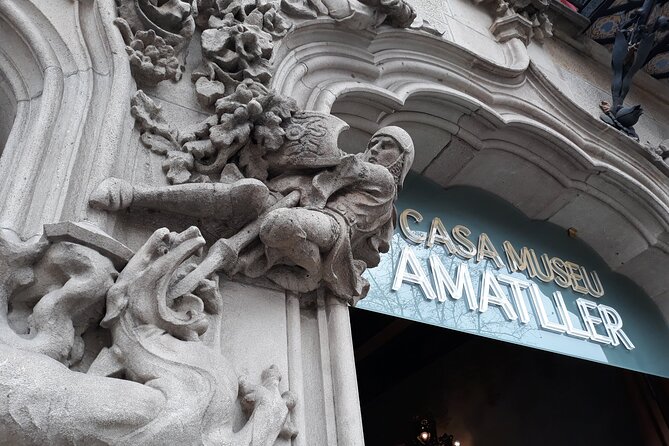
Next up is Casa Amatller, one of the best-known modernist houses in the Eixample. This is Puig i Cadafalch’s work, and the tour connects the building to its owners—specifically a family of chocolate producers. That detail is more than trivia. It helps you understand why the façade’s symbolism can feel playful, pointed, and sometimes coded. You’ll look for hidden symbols on the exterior and learn how the building reflects the identity of the household it represented.
One of the best parts here is the optional add-on connected to the house: it’s possible to go for free to the inner courtyard, where you can admire the staircase, an old elevator, and refined sculptures. The tour doesn’t promise you a long time inside, but the fact that this courtyard access exists is a big plus for anyone who wants at least one moment of relief from street-level focus.
This stop is a great fit if you enjoy comparisons. After Casa Lleó i Morera, Casa Amatller starts to feel less like a random stop and more like a conversation with the building next door. You’ll see how Modernisme can still be personal—different architects, different symbolism, different messages.
You can also read our reviews of more private tours in Barcelona





Casa Malagrida: Modernist Meaning Through Argentina and Spain
Your walk continues to Casa Malagrida, described as an early example of a modernist bourgeois house on this route. The owner, Señor Malagrida, was a wealthy tobacco industrialist. The tour ties the façade decoration to his life spanning Argentina and Spain, which gives the ornamentation a new layer. Suddenly the details aren’t only about local style—they’re also about travel, wealth abroad, and how identity gets expressed through art at home.
This is one of those stops where the guide’s job really shows. Without interpretation, many Modernisme façades can look like “pretty stone.” With the context, you start recognizing choices that feel like personal messaging. You’ll likely notice how the decoration focuses on status and narrative—turning the home into a public statement.
Time is limited on a walking tour, so you won’t be in front of this building as long as you might like. Still, it’s enough to leave you with a clearer picture of how much thought went into the decorative program.
If you’re interested in the social side of Modernisme, this stop is especially rewarding, because it links architecture to a real individual and real trade routes.
Finishing at Sagrada Família: Gaudí’s Unfinished Facades
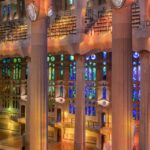
The walk ends at Sagrada Família, specifically in front of it, focusing on exterior facades. The tour gives you about 30 minutes for this finale, which is plenty of time to understand why the site is so important even when you’re only looking from outside. You’ll hear about its long, surprising history and get guided through secrets and interesting construction details your eyes can actually follow from the outside.
This ending also has emotional weight because Sagrada Família was left incomplete by Gaudí. That fact isn’t just a footnote—it changes how you think about the project. You see the building not as a fully closed masterpiece, but as a long-running work that continued shaping Barcelona’s identity after his time.
Practical note: because it’s the most famous stop on the route, it’s also where you’ll likely want your camera ready. The tour’s structure helps: you reach this moment after learning how to read Modernisme. That means you’re more likely to see structure and symbolism instead of just height and scale.
Why a Private Guide Changes the Whole Experience
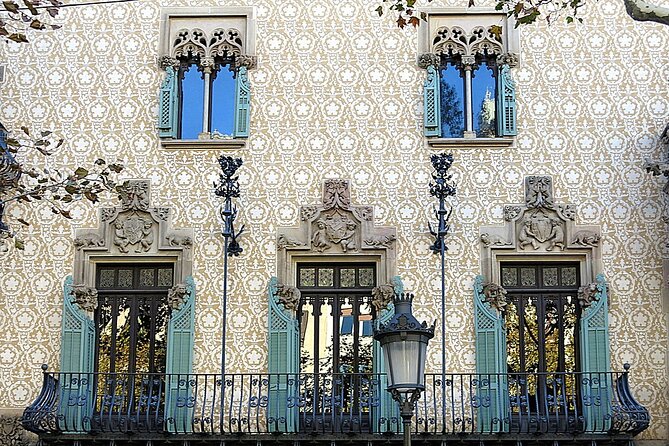
This is a private tour, meaning only your group participates. That sounds like a small detail, but in practice it changes how the walk feels. You’re not competing with other groups for attention at the same façade. You can ask the question that’s stuck in your head, and the guide can adjust pacing if you’re moving slower.
The guide’s style is also a big deal. Patrick doesn’t treat the buildings like isolated art objects. He weaves Barcelona’s political and social history into what you’re seeing, and that makes the architecture click faster. One reason people love this tour is that it leaves you with understanding you can carry forward. Afterward, when you walk around Barcelona on your own, you’re more likely to recognize patterns and meanings rather than only naming styles.
There’s also a practical fairness to how this tour works for different ages. It’s been adapted for two seniors, with pacing that keeps the walk relaxed rather than rushed. If you want structure without speed, this format fits well.
Price Value: What $66.08 Buys You in Real Terms
At $66.08 per person for about 2 hours 30 minutes, you’re paying for two things: time with a guide and interpretation that would take you much longer to recreate on your own. Yes, Barcelona has self-guided routes. But Modernisme is full of symbol systems and design intentions that you only catch quickly with a good guide.
Here’s how the value stacks up:
- You get a private format, which is harder to find in this price range.
- You get an English-speaking guide and a mobile ticket.
- You’re covering a strong cross-section: city evolution at Plaça de Catalunya, Passeig de Gràcia’s grandeur, street-level Modernisme (Bancs de Fanals), key houses in Manzana de la Discordia, and an anchor finale at Sagrada Família.
Also, the tour notes group discounts and pickup offered. That can reduce friction if you’re starting your day elsewhere in the city.
Booking pace matters too. The tour is often booked about 14 days in advance on average, so if you want a specific time window, I’d try not to wait until the last minute.
Timing Tips: How to Make the Walk Feel Easy
This tour runs daily and fits into a broad window—Monday through Sunday from 8:00 AM to 5:00 PM. Since the experience requires good weather, I’d plan it early in your Barcelona schedule so you have room to swap dates if conditions are less friendly.
Wear shoes you trust. You’ll be walking and standing in street-level viewpoints for the full 2.5 hours. Even with a relaxed pace, you’ll feel it in your feet if you picked blister-prone footwear.
For the best experience, do two small things before you start:
1) Bring a phone with enough battery for photos and maps.
2) Come with one question you want answered, like why these façades are so symbolic or what made the Eixample the stage for Modernisme.
Then during the walk, follow your guide’s attention cues. Modernisme rewards people who look with intention, not just speed.
Should You Book This Gaudí and Modernism Private Walking Tour?
Book it if you want a guided walk that makes Barcelona’s Modernisme make sense fast. I’d especially recommend it as an early stop in your trip—before you wander the city on your own—because the context sticks. You’ll leave with a better understanding of how Plaça de Catalunya leads into the Eixample story, how Passeig de Gràcia became a showcase for the Catalan bourgeoisie, and how buildings like Casa Lleó i Morera, Casa Amatller, and Casa Malagrida connect to real people and real times. The finishing focus on Sagrada Família exterior facades is a strong capstone.
Skip or add something else if your dream day is mostly interior visits. This tour is structured around exterior viewing along a walking route, and the only clearly mentioned free inside-style option is the inner courtyard at Casa Amatller.
If you like learning while you walk—and you want the guide’s political and social context alongside the architectural details—this is a smart, high-value way to get oriented in Barcelona.
FAQ
How long is the Gaudí and Modernism private walking tour?
It runs for about 2 hours 30 minutes.
What is the tour price per person?
The price is $66.08 per person.
Where does the tour start?
It starts at Apple Passeig de Gràcia, Pg. de Gràcia, 1, L’Eixample, 08007 Barcelona, Spain.
Where does the tour end?
The tour ends in front of the Sagrada Família, in the Eixample area.
Is pickup offered?
Yes, pickup is offered.
Is the tour private?
Yes. It’s a private tour/activity, so only your group participates.
What language is the tour offered in?
The tour is offered in English.
Are any stops admission ticket free?
Yes. Plaça de Catalunya, Passeig de Gràcia, and Bancs Fanals are listed as admission ticket free.
Does the tour require good weather?
Yes. The experience requires good weather, and if it’s canceled due to poor weather, you’ll be offered a different date or a full refund.
How does cancellation work?
You can cancel up to 24 hours in advance for a full refund. If you cancel less than 24 hours before the experience starts, the amount paid will not be refunded.