REVIEW · BARCELONA
From Barcelona: Private Full-Day Tarragona and Sitges Tour
Book on GetYourGuide →Operated by In Out Barcelona Tours · Bookable on GetYourGuide
Roman muscle meets sea views today. This private full-day tour strings together two very different Catalan worlds: walking the Aqueduct Ferreres in Tarragona, then scoring beach time at Playa de San Sebastián in Sitges with an English- or Spanish-speaking guide such as Ramon or Eduard. One thing to plan for: it’s a walking-heavy day, so pack comfortable shoes and expect cobblestones and outdoor ruins.
What I like most is how the day mixes big-ticket sights with human pace. In Tarragona, you’ll get guided context for the Roman Forum and the amphitheater ruins by the sea. In Sitges, the tour becomes a wandering story—modernist architecture like Casa Bacardí and Casa del Rellotge, plus lively street corners such as the Quiet Corner—with guides like Nuria and Ruben described as keeping the rhythm easy and making time for practical stops like bathrooms.
The other detail that matters for a day trip: you travel in private comfort. Hotel pickup and private transport mean less fiddling, and the small group format keeps questions flowing. Guides you might encounter in past groups include Kurt-Jamie, described as punctual, courteous, and smooth behind the wheel.
In This Review
- Key things that make this Tarragona + Sitges day work
- From Barcelona in a private car: why the logistics feel easier
- Les Ferreres Aqueduct: the Devil’s Bridge you can actually understand
- Tarragona Roman center: the Forum, the walls, and how the ruins connect
- Tarragona amphitheater ruins by the sea: history with a view
- The changeover to Sitges: different vibe, same day energy
- Sitges streets and modernism: Casa Bacardí, Casa del Rellotge, and the quiet corners
- Playa de San Sebastián: the break that makes the day feel complete
- Price and value: what $271 buys you (and when it’s a good deal)
- Who should book this tour, and who should look twice
- Should you book this Tarragona and Sitges day trip?
- FAQ
- How long is the Tarragona and Sitges tour from Barcelona?
- What sites do you visit in Tarragona?
- What do you do in Sitges?
- Is pickup included?
- What languages are the guides?
- What’s included in the price?
- Is the tour suitable for people with mobility impairments?
- What’s the cancellation and payment flexibility?
Key things that make this Tarragona + Sitges day work
- Devil’s Bridge facts you can picture: Les Ferreres is 217 meters long and rises 26 meters.
- Roman Tarraco, on foot: the Roman Forum is shown as the town’s center for about 2,000 years.
- Amphitheater by the water: the sea setting is part of the story, not a bonus photo stop.
- Sitges modernism, not just beaches: Casa Bacardí and Casa del Rellotge fit into the walking route.
- Beach break with real downtime: free time at Playa de San Sebastián, often cited as one of Europe’s top urban beaches.
From Barcelona in a private car: why the logistics feel easier
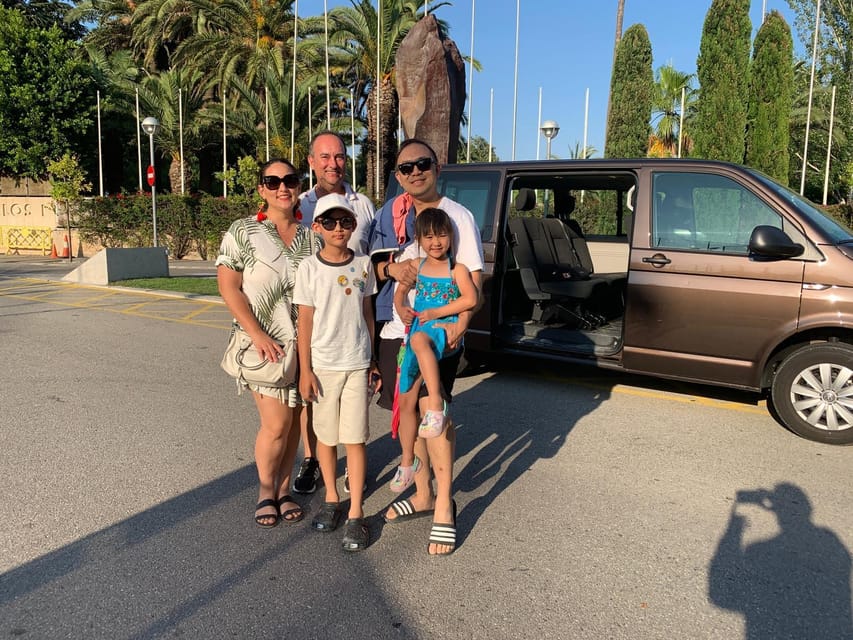
This is built as a full day away from Barcelona, clocking in at 10 hours. You start with hotel pickup in Barcelona, then ride in private transport straight to the Costa Dorada and the Costa del Garraf. If you hate racing to multiple meeting points or waiting on public transit connections, this format is the point.
Because it’s a small group private/semi-private setup, the guide can steer the pace without turning the day into a checkout line. Language options are Spanish or English, and the guide is live throughout, so you can ask follow-ups when a Roman term or a modernist detail clicks in your head.
You’ll want to treat the day as “walk + look + breathe,” not a sprint. Between Tarragona’s archaeological sites and Sitges’ street maze, you’ll be on your feet for a lot of the day, even with guided stops.
You can also read our reviews of more private tours in Barcelona



Les Ferreres Aqueduct: the Devil’s Bridge you can actually understand
Tarragona opens with one of the most impressive Roman structures in Catalonia: Les Ferreres Aqueduct, famously called the Devil’s Bridge. This isn’t just a distant viewpoint. You’ll walk and look in a way that helps you connect the aqueduct to real engineering problems—moving water across valleys and uneven terrain.
Here are the numbers that make it click: it stretches 217 meters and climbs 26 meters. Once you have that in mind, the structure feels less like a photo subject and more like a solution designed by people who expected to be judged on durability. The guide’s job is to put the structure into context—what it means for Roman city life and why Tarragona mattered enough to justify this kind of infrastructure.
Practical tip: wear shoes with grip. Some of the viewing areas can be uneven, and you’ll be outside even if the weather is perfect.
Tarragona Roman center: the Forum, the walls, and how the ruins connect
After the aqueduct, you shift from engineering to civic life. The Roman Forum is the heart of Tarragona for roughly 2,000 years, and that timeline is the key story. Your guide helps you see why a forum wasn’t just a square—it was where power, religion, law, and commerce all rubbed shoulders.
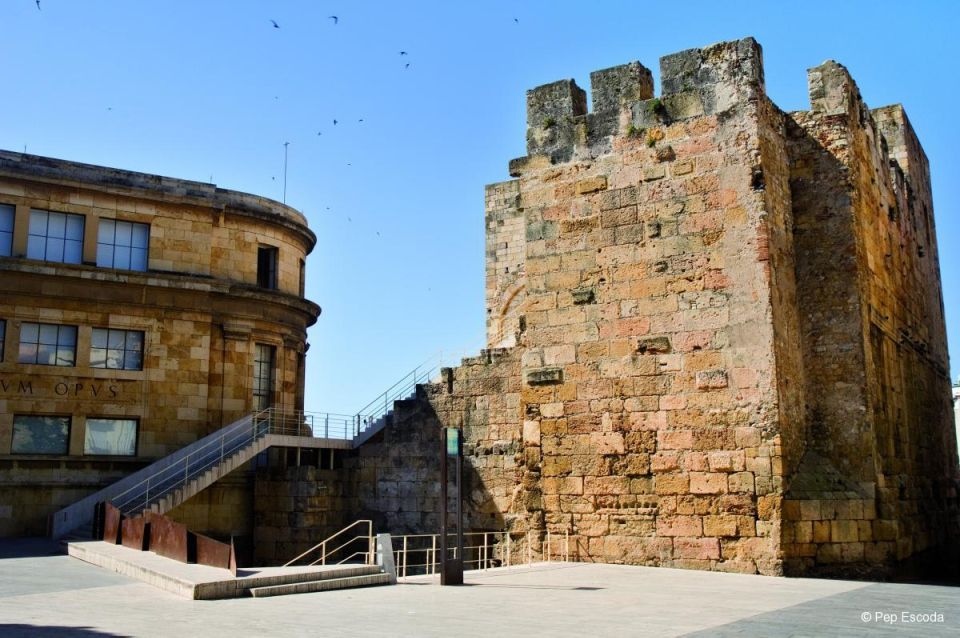
From there, the day continues with the Roman walls (Muralla Romana de Tarragona). Walls can sound like a generic monument until you realize they mark the boundaries of a city—what mattered enough to defend, and how later eras built on top of earlier ones. In Tarragona, that layering is part of the charm. You’re not looking at one era in isolation.
Then comes the big “oh wow” stop: the amphitheater area by the sea. This setting changes the feeling of a ruin. You’re not surrounded by modern noise in the same way, so the idea of public gatherings and spectacle feels more believable.
Tarragona amphitheater ruins by the sea: history with a view
The Tarragona amphitheater ruins are described as idyllically located by the Mediterranean. That matters, because an amphitheater was built for an audience experience—sound, movement, and crowd energy. Even when the structure is partially gone, the coastal position gives you a sense of how people would have oriented themselves toward the spectacle.
Your guide’s explanation is what turns scattered stone into a functioning venue. Instead of just pointing, they connect the amphitheater to gladiator-era entertainment and the culture that surrounded public shows. You’ll also get context for the fact that parts of Tarragona’s Roman leisure spaces were built over or hidden by later structures—so the city’s evolution is part of the archaeology lesson.
One more site you might encounter in the broader guided story: the presence of a preserved circus beneath later layers. It’s the kind of detail that makes you look at a city differently once the walking starts.
The changeover to Sitges: different vibe, same day energy
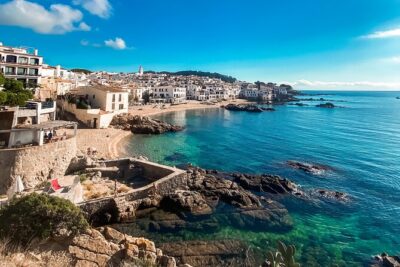
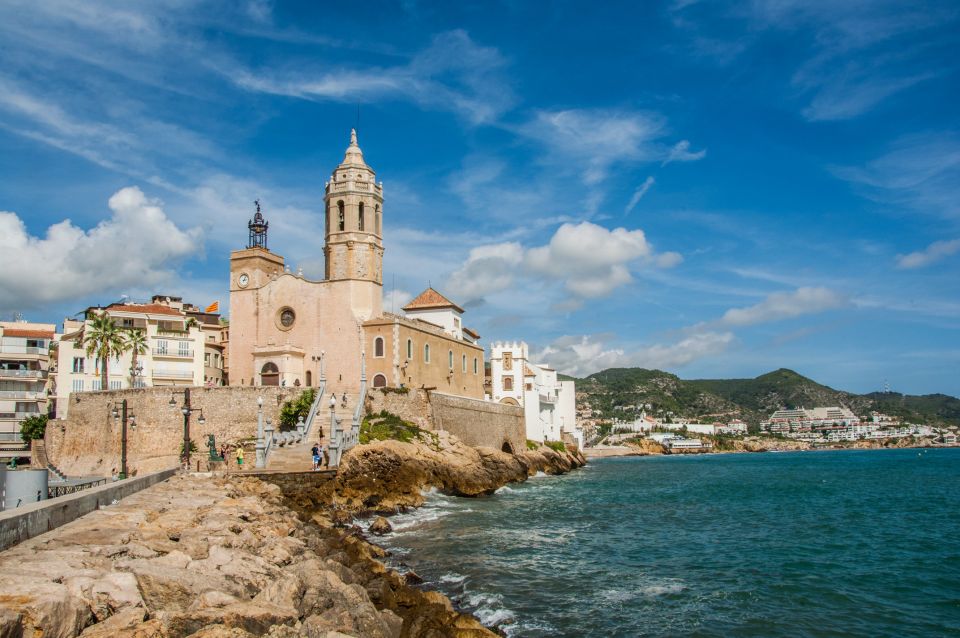
Once you leave Tarragona, you’re shifting from Roman remains and medieval edges to a seaside town built for walking slowly. Sitges is about 38 kilometers from Barcelona, and the drive is part of the reason this tour works as a day trip—you’re not doing the logistics yourself.
Sitges sits between sea and mountains, and you’ll feel that in the way the streets funnel you. The town’s story is also a good contrast to Roman Tarragona: instead of empires and aqueducts, you’re dealing with artists, wealthy patrons, and a long-running relationship with the sea.
The guide will keep the narrative flowing as you move into town, which helps the afternoon not feel like just another free-time period. You’re still learning while you’re walking.
You can also read our reviews of more tours and experiences in Barcelona





Sitges streets and modernism: Casa Bacardí, Casa del Rellotge, and the quiet corners
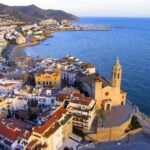
In Sitges, you explore on foot, winding through streets and squares that feel made for wandering. The focus isn’t only beaches. You get architectural stops tied to Sitges’ modernist identity, including Casa Bacardí and Casa del Rellotge.
If you like stories behind buildings, this is where Sitges shines. Your guide explains how wealthy Americanos (locals who made fortunes in the Americas) helped shape the town’s development. That turns ornate facades and grand details into something more personal—money, ambition, and identity stamped into stone.
You’ll also pass or visit religious and landmark sites such as the church of San Bartolomé and Santa Tecla, plus Maricel Palace. Another interesting phrase that comes up in the tour is the Quiet Corner, where live music can add a spontaneous soundtrack to your walking route.
Sitges has a reputation for being a more fashionable seaside version of Spain, sometimes compared to Saint Tropez. Even if you don’t care about comparisons, you’ll notice how the town blends traditional fishermen’s houses with modern boutiques and restaurant life.
Playa de San Sebastián: the break that makes the day feel complete
Every long day trip needs a pressure valve, and this one has it. You finish with free time at Playa de San Sebastián in Sitges. It’s often considered one of the best urban beaches in Europe, and the tour description specifically notes it as recognized by the New York Times.
If the weather is good, you can swim. If it’s not, you still get the benefit of being near the water with time to reset—grab a terrace drink, walk the shoreline, and let the Roman-to-modern story settle in.
One smart move: plan your pacing so you don’t arrive at the beach exhausted. You want enough energy to enjoy the water, not just stare at it while checking your watch. That’s one reason the tour’s guided portions matter—you get structure early, then freedom at the end.
Price and value: what $271 buys you (and when it’s a good deal)
At $271 per person for a 10-hour private day, price is the question. Here’s the honest value math: you’re paying for (1) a professional guide with live interpretation, (2) private transport, (3) hotel pickup, and (4) entrance to the sites included in the day.
If you were to DIY Tarragona and Sitges, you’d still spend time arranging transportation and figuring out how to connect ruins and streets in a way that actually makes sense. A good guide does more than translate signs; they tie the aqueduct to city life, the forum to power structures, and the amphitheater setting to public spectacle. That’s the difference between looking at ruins and understanding why they’re there.
Also, the small group format helps. You’re not stuck listening over a crowd of strangers, and your guide can answer real questions—something that’s reflected in how guides like Ramon, Eduard, and Kurt-Jamie are described as engaging and attentive.
When might it feel expensive? If you only care about one place—say, just the beach—then the full day commitment and added guided value might not match your priorities.
Who should book this tour, and who should look twice
This tour is a strong fit if you want a single day that covers Roman Tarragona + Sitges modernism + real beach time. It’s also a good choice if you prefer not to manage transport on your own, since pickup and private driving are part of the package.
You should also like walking, or at least be comfortable with it. Between Tarragona’s archaeology and Sitges’ winding streets, comfortable shoes are non-negotiable.
One more thing to check before you book: the information says the tour is wheelchair accessible, but it also lists it as not suitable for people with mobility impairments. If you’re using a wheelchair or have limited mobility, contact the operator with specifics before assuming it will work. The safest move is to ask what the walking surfaces and stop locations look like for your exact needs.
Should you book this Tarragona and Sitges day trip?
I’d book it if you’re the type who likes history but also needs a breather at the end of the day. The Tarragona sights give you big Roman set pieces—the aqueduct engineering and the Roman forum context—while Sitges offers the “slow down” part with modernist streets and Playa de San Sebastián time.
I wouldn’t book it if you want mostly one-stop sightseeing or minimal walking. This is a full-day rhythm, and the payoff comes from doing all the pieces, not skipping straight to the photos.
If you can handle a lot of outdoor walking and want a guide-led version of south Catalonia, this is an easy yes.
FAQ
How long is the Tarragona and Sitges tour from Barcelona?
It runs for about 10 hours, including hotel pickup and time for both destinations.
What sites do you visit in Tarragona?
You’ll see Les Ferreres Aqueduct (Devil’s Bridge), the Roman Forum, the Roman walls, and the Tarragona amphitheater ruins. You’ll also enjoy guided time in Tarragona’s historic areas.
What do you do in Sitges?
You take a walking tour through Sitges, with stops connected to its modernist architecture (including Casa Bacardí and Casa del Rellotge) and key landmarks like San Bartolomé and Santa Tecla. The day ends with time at Playa de San Sebastián.
Is pickup included?
Yes. The tour includes pickup at your hotel in Barcelona and transport during the day.
What languages are the guides?
The live tour guide is available in Spanish and English.
What’s included in the price?
The price includes a professional tour guide, private transport, guided tours of both towns, entrance to the included sites, and the hotel pickup.
Is the tour suitable for people with mobility impairments?
The information provided lists wheelchair accessible, but it also says it is not suitable for people with mobility impairments. If mobility is a concern for you, it’s best to check directly with the operator about the specific walking surfaces and stop points.
What’s the cancellation and payment flexibility?
You can cancel up to 24 hours in advance for a full refund. You can also reserve now & pay later to keep your plans flexible.