REVIEW · BARCELONA
From a Roman Village to a Resort Town: A Self-Guided Walking Tour of Sitges
Book on Viator →Operated by VoiceMap Audio Tours · Bookable on Viator
If you like history without the herd, this walk fits. You follow Sitges landmarks at your own pace, with an audio route that talks as you pass the big sights. I love that it’s self-guided, so you can linger for photos or keep moving when the day’s hot.
Two things really sell it for me: the narration is easy to follow, and the app is geo-aware, so you’re not constantly checking where you are. There’s also offline audio and map support, which is exactly what you want in town when signal gets spotty.
One drawback to plan for: you’ll need your own smartphone and headphones, plus comfy shoes. The route includes some hills, and it’s a walking tour, not a seated museum visit.
In This Review
- Key highlights worth your time
- From boardwalk to art town: what this Sitges audio walk really gives you
- Price and “what you actually pay for” (US$11.99)
- Where the tour starts: Pic Nic boardwalk direction markers
- Platja de la Ribera and Sitges basics: setting the stage without crowds
- The Bacardi Monument stop: one name, two layers of local pride
- Xiringuito by the beach: the first beach bar in Spain
- Baluard Plaza and the 1700s defense story
- The most photographed church stop: St Bartholomew and Saint Tecla
- Palau de Maricel and the artist-attractor idea
- Museums and Modernism: Museu de Maricel, Cau Ferrat, and Santiago Rusinol
- Cap de la Vila: from end-of-village to town center
- Who should book this Sitges audio tour
- Should you book it? My practical take
- FAQ
- How long is the Sitges self-guided walking tour?
- What language is the audio offered in?
- Where do I start and where does it end?
- What’s included in the price?
- Do I need a smartphone and headphones?
- Are museum tickets included?
- Is the tour available offline?
- Can I cancel for a refund?
Key highlights worth your time
- Self-paced pacing: You choose how long you walk and where you stop for photos
- Geo-aware audio: The app helps you line up with each landmark as you go
- Offline support: Audio, maps, and geodata are available without roaming
- Iconic Sitges stops: From the Bacardi Monument to the Church of St Bartholomew and Saint Tecla
- Art and Modernism focus: You’ll pass museums and buildings tied to Santiago Rusinol and Catalan Modernism
- Easy-to-understand narration: The tour is presented in English by John, with commentary that mixes close-by and farther-off context
From boardwalk to art town: what this Sitges audio walk really gives you
Sitges can feel like a string of postcard views, but it’s also a town with a serious identity. This self-guided walking tour is designed to help you connect the dots as you move—Roman-village beginnings, a resort-town look, and a strong artistic streak that still shows up in the museums and grand facades you’ll see.
The route is short—about 45 minutes to 1 hour—so you can fit it into almost any plan. You’re walking the boardwalk and then cutting through the town center to major sights, with a few hills to keep your legs awake. The “at your own pace” part matters here: you can slow down for the best angles or pause when something grabs your attention (church views, museum exteriors, or that famous photo spot).
And because it’s an audio tour on the VoiceMap app, you’re not tied to a group schedule. That’s great in Sitges, where the most photogenic corners tend to attract people. You’ll still see others, of course, but you can choose how long you stay in each spot rather than racing through it.
Value-wise, the price is hard to beat for what you get: lifetime access to an English tour plus offline audio and maps, so you can redo it later if you want a second pass when you notice something new.
You can also read our reviews of more walking tours in Barcelona



Price and “what you actually pay for” (US$11.99)
At $11.99 per person, this isn’t a pricey guided excursion with admission fees. That’s a good thing if your goal is walking, looking, and learning as you go.
What you’re paying for is the experience delivery:
- Lifetime access to the English audio tour
- VoiceMap app for Android and iOS
- Offline access to audio, maps, and geodata
What you’re not paying for:
- Museum tickets or any entrance fees
- A smartphone or headphones
- Transportation, or food/drink
That means the value is best if you’re happy doing “look from the outside” sightseeing. If you’re planning to enter multiple museums the day you do this, you’ll still be able to enjoy the walk, but you’ll add those costs separately.
Where the tour starts: Pic Nic boardwalk direction markers
The walk begins in front of Pic Nic beach bar at Passeig de la Ribera, 73, 08870 Sitges. That’s a smart start point because it drops you right onto the boardwalk energy—sea air, easy orientation, and quick access to the waterfront history beats.
When you start, you’ll hear a brief intro about Sitges and how the tour works. You can treat that like your warm-up: you get the rhythm of the audio, then the tour moves into the historic core.
Practical tip: before you leave the bar area, make sure the audio is ready to play and your headphones are working. Once you’re walking, you want zero fiddling time.
The tour ends near Carrer Primer de Maig by the promenade at QUEEN APARTMENT BY BLAUSITGES, Carrer Primer de Maig, 1. That makes it easy to keep walking after, grab a snack, or connect to other parts of Sitges.
Platja de la Ribera and Sitges basics: setting the stage without crowds
From the Pic Nic start, you’ll walk along Platja de la Ribera on the boardwalk. This is where the audio builds the big picture of Sitges—its origins and how it evolved from a village feel toward a resort town.
This kind of opening is worth it because it changes how you read the town. Instead of seeing buildings as random backdrops, you start noticing why certain areas feel older, why others feel more “designed for visitors,” and how the waterfront ties it all together.
And because the tour is self-guided, you can stop whenever the view gets good. Sitges is the sort of place where you’ll naturally pause for photos—but you won’t feel like you’re getting in the way of a rigid schedule.
The Bacardi Monument stop: one name, two layers of local pride
As you pass the Monumento a Bacardi, the audio explains how Facundo Bacardi Masso—a Sitgetan—invented the first white rum in the world. That’s a big claim, and the audio gives you the local context for why this monument matters in Sitges, not just as a famous name.
What I like about this stop is that it anchors a global brand to a specific hometown story. You’re standing in a place where international influence and local identity overlap.
If you’re the type who enjoys quirky, place-specific details, this is one of your moments. If you’re not, it still helps you understand why Sitges has landmarks that aren’t just churches and plazas.
You can also read our reviews of more guided tours in Barcelona





Xiringuito by the beach: the first beach bar in Spain
Next up, you pass Xiringuito, described in the audio as the first beach bar in Spain. That detail is perfect for a resort town like Sitges: it points to how the beach culture grew into something formal, repeatable, and iconic.
Even if you don’t stop for a drink, the audio gives you a reason to look twice. You start to notice the casual beach vibe is part of a longer story, not just today’s trend.
If you do want a pause here, keep it quick and go back on schedule—you still have church and art landmarks ahead.
Baluard Plaza and the 1700s defense story
The tour then introduces Baluard Plaza, an imposing structure tied to how the town was defended in the 1700s. In many Mediterranean towns, you can see military history if you know where to look. This is one of the places where the town’s shape and architecture carry that past forward.
The audio focus here is practical: it helps you understand what you’re looking at and why it looks the way it does. Without that, you might just treat the structure like a dramatic backdrop.
If you like military history, you’ll get a solid thread here. If you don’t, it still makes the route feel more coherent.
The most photographed church stop: St Bartholomew and Saint Tecla
One of the biggest “wow” points on the route is the Church of St Bartholomew and Saint Tecla, identified as the most photographed site in Sitges.
This is where the walking tour hits its cleanest payoff: you get a major landmark you can spot, then the audio frames it as a must-see. Even if you’re not chasing religious architecture, this is a strong photo moment and a mental reset after the defense-era story.
When you reach the church area, don’t rush. Take your time with angles—because Sitges churches often look different from different corners, and the route is designed to bring you to those sightlines at the right time.
Palau de Maricel and the artist-attractor idea
Next, you’ll hear about Palau de Maricel, described as a magnificent building set up to attract more artists to Sitges. That’s an important concept: Sitges didn’t just have great views; it actively worked to become a magnet for creative people.
This stop is valuable because it shifts you from “pretty town” to “why this town became artsy.” You’ll start noticing that museums and grand buildings aren’t random. They connect to a deliberate cultural pull.
It also helps you make sense of the next section, where the audio steers you toward galleries and museums tied to the Catalan Modernist movement.
Museums and Modernism: Museu de Maricel, Cau Ferrat, and Santiago Rusinol
Along the way, the audio points you at galleries and museums including Museu de Maricel and explains how the artistic movement and its members helped shape the Sitges you can see today.
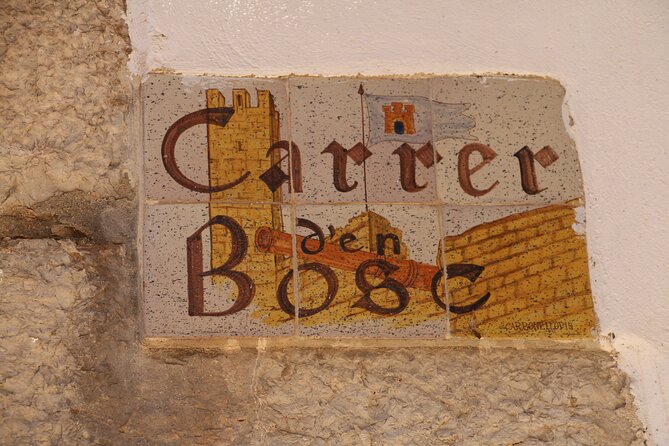
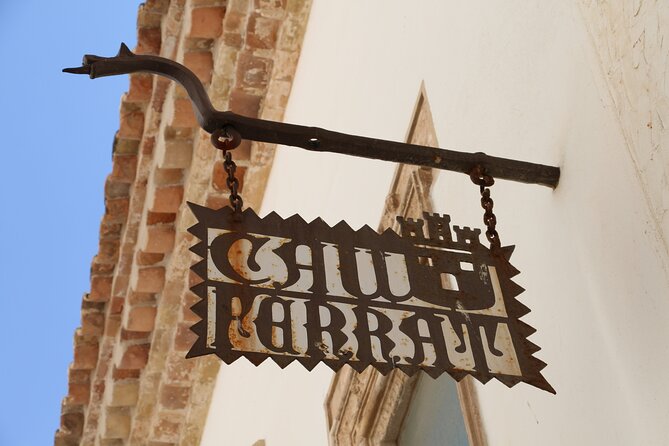
Then you pass Museu Del Cau Ferrat, described as the home of Santiago Rusinol, a key figure associated with Catalan Modernism in Sitges. After that, you’ll pass the monument to Santiago Rusinol, where you get stories about his hedonistic lifestyle and how he was central to Catalan Modernism in Sitges.
I like how the audio handles this in a human way. It’s not just names and dates. You get a sense that artists lived full lives, with flaws and energy, and that the town’s reputation came from real people doing real things—not just carefully packaged culture.
Important note for planning your day: the tour does not include museum tickets or entrance fees. So you’ll mainly enjoy the museums as exterior sights (unless you choose to pay separately on your own). Even without entering, the audio makes the buildings meaningful.
Cap de la Vila: from end-of-village to town center
To wrap up, you’ll stroll through Cap de la Vila plaza, described as the area once known as the end of the village, now part of the town’s centre.
This is a satisfying closing point because it ties back to the tour’s theme. You start with waterfront and early Sitges context, then you move through defense history, major religious and architectural landmarks, and the town’s artistic identity. Ending with Cap de la Vila gives you a “now it’s the center” perspective shift.
It also sets you up nicely for what comes after: you’re in a central area for continuing your walk, grabbing food, or linking up with other viewpoints.
Who should book this Sitges audio tour
This is a great fit if you:
- Prefer self-paced sightseeing over group tours
- Want an English audio guide with offline maps and geodata
- Like learning the “why” behind landmarks as you walk
- Are okay with hills and walking for under an hour
- Want to mix major sights with an art-focused angle tied to Catalan Modernism
It may not be ideal if you:
- Only enjoy attractions with paid entry, since museums on this route are not included
- Don’t want to use your own phone or headphones
- Need fully step-free, low-effort walking (the route includes hills)
Should you book it? My practical take
If your goal is to understand Sitges fast—without spending the day in a crowd—this is a solid buy. The lifetime access plus offline setup makes it easy to repeat on a later day when you’re in the mood to look closer. And because the narration is presented in English by John and delivered in a way that’s easy to follow, you won’t feel lost or bored while you walk.
Book it if you want a meaningful walk with landmark-by-landmark context and you’re fine doing exterior sightseeing around museums. Skip it if you’re expecting a guided tour with admissions included or a mostly level stroll with no hills.
If you’re still deciding: choose your shoes first. Then let the audio do the rest.
FAQ
How long is the Sitges self-guided walking tour?
It takes about 45 minutes to 1 hour, depending on how often you stop.
What language is the audio offered in?
The tour audio is offered in English.
Where do I start and where does it end?
You start at Restaurant Pic Nic on Passeig de la Ribera, 73, Sitges. The tour ends in Carrer Primer de Maig near Queen Apartment by Blausitges, Carrer Primer de Maig, 1.
What’s included in the price?
You get lifetime access to the tour in English, the VoiceMap app (Android and iOS), and offline access to audio, maps, and geodata.
Do I need a smartphone and headphones?
Yes. A smartphone and headphones are not included, so you’ll need to bring your own.
Are museum tickets included?
No. Tickets or entrance fees to museums or attractions are not included.
Is the tour available offline?
Yes. The audio, maps, and geodata can be downloaded for offline access.
Can I cancel for a refund?
Yes, you can cancel for a full refund if you cancel at least 24 hours before the experience’s start time. Cancellation within 24 hours of the start time is not refunded.