REVIEW · BARCELONA
Barcelona: Raval Street Art and Graffiti Walking Tour
Book on GetYourGuide →Operated by Street Art Barcelona · Bookable on GetYourGuide
Raval is where Barcelona gets loud and artistic. This 2-hour Raval street art and graffiti walking tour takes you past murals and tags on real apartment blocks, homes, and even parks, with an expert guide adding the context you’d miss walking solo. I especially like the local perspective—and the way guides tie street art to city life and culture—plus the bonus stop at legendary skate spot Tres Chimeneas. One thing to keep in mind: the tour includes the museum exterior, but MACBA admission isn’t included, so if you want inside time, plan for that extra ticket.
The best part is how the tour turns “random wall art” into a story. You’ll get pointed toward places like the Arnau Gallery and you may also spot major international references such as work by Keith Haring, all while learning about graffiti styles and origins from guides who answer questions, including political ones. Possible drawback: you’re on your feet for the full 2 hours, and the focus is street art and urban culture, not a classic sightseeing route.
If you’re the type who stops to read a wall, this is a smart way to spend part of your day in Barcelona. The guide names come up often in strong reviews—people mention Juan, Anais, Jeanne, and Sylvia for being friendly, generous with personal insight, and fun to talk with. The rating is a high 4.9 from 60 reviews, which matches the vibe: guided, social, and very focused.
In This Review
- Key things to know before you go
- How this Raval walk feels: street art with context, not just photos
- Price and value: why $33 works if you like the details
- The meeting point: start where locals actually move through the area
- Stop-by-stop: what you’ll see in Raval (and what each part teaches)
- Finding the street art map in a real neighborhood
- Arnau Gallery: local projects and the bridge between street and art world
- Tres Chimeneas: skate spot culture you can feel in the air
- Major works like Keith Haring: recognizing international threads
- Finishing at MACBA: the exterior first, then your choice to go in
- Who should book this tour (and who might skip it)
- What makes the guides so praised (and what it means for your experience)
- Practical tips so you enjoy it more
- Should you book this Raval street art tour?
- FAQ
- FAQ
- How long is the Barcelona Raval street art and graffiti walking tour?
- What does the tour cost?
- Where does the tour meet?
- What’s included in the price?
- Is MACBA museum admission included?
- What languages is the tour offered in?
- Is the tour wheelchair accessible?
- Can I visit the museum after the tour?
- What’s the cancellation policy?
- Is there an option to reserve without paying now?
Key things to know before you go
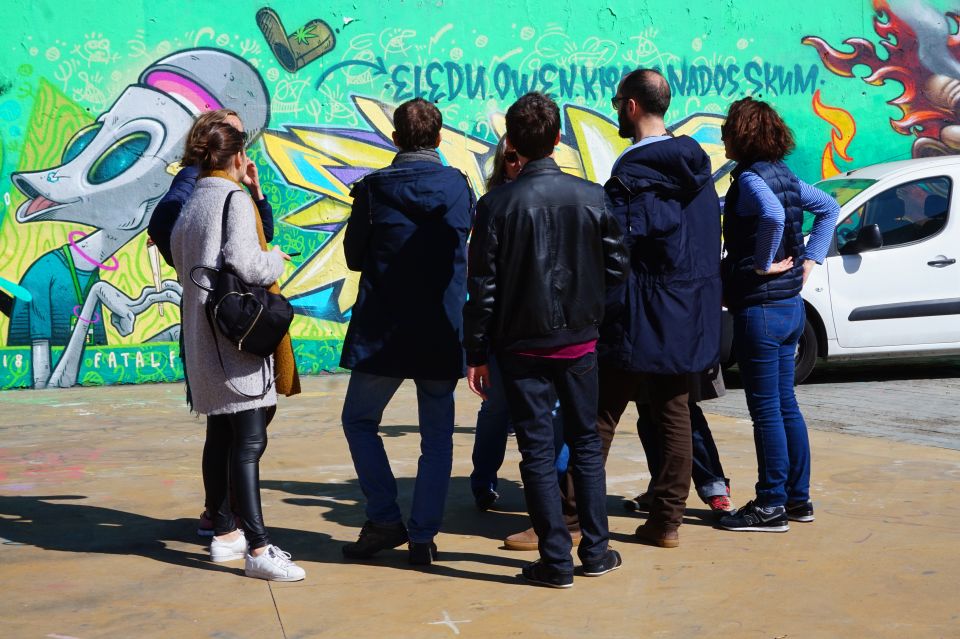
- Raval’s walls tell the story: murals and graffiti live on apartments, houses, and even park spaces.
- Guides add meaning fast: you’ll learn about graffiti origins, styles, and local projects like the Arnau Gallery.
- Tres Chimeneas is part of the route: a legendary skate spot that helps explain the neighborhood’s youth culture.
- MACBA comes in at the end: you’ll see the exterior of the Barcelona Museum of Contemporary Art, then you can go in later.
- International names may appear on the walls: Keith Haring is specifically mentioned as an example you could encounter.
How this Raval walk feels: street art with context, not just photos
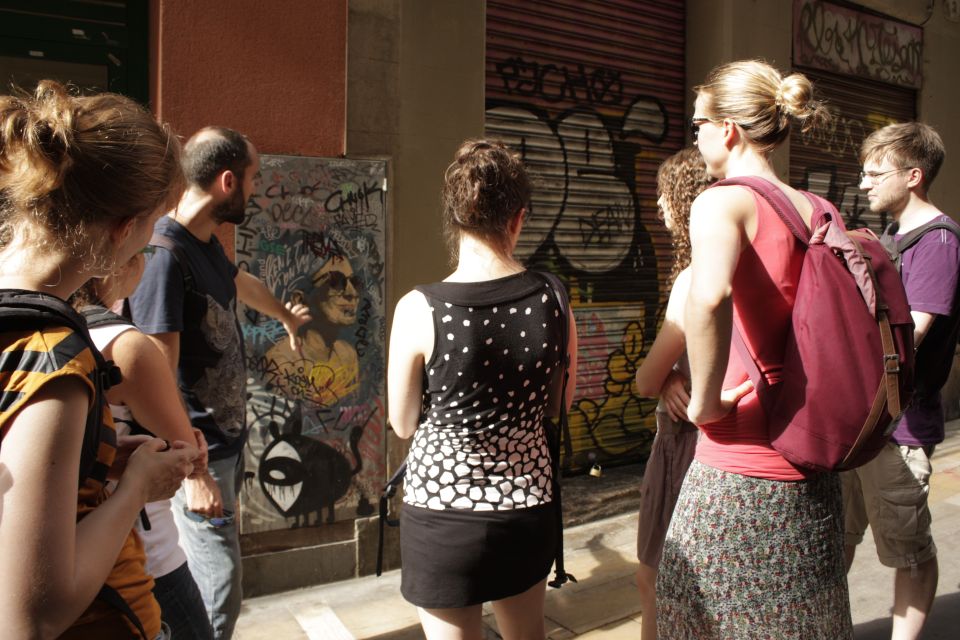
Raval can look like an endless wall of color at first glance. That’s exactly why a guide matters here. Instead of treating graffiti as decoration, this tour frames it as communication—style, identity, and sometimes protest—all moving through the same city streets you’re walking.
I like that the pacing stays simple. You’re not sprinting from landmark to landmark; you’re spending time where the art is, reading the neighborhood with your feet. Guides are also credited for being open to questions, including political topics, which makes the conversation feel more human than textbook.
For many art lovers, this is the sweet spot. You get enough variety to keep it interesting, but the theme stays tight: Raval street art and graffiti, with a clear line from local projects to bigger-name references.
You can also read our reviews of more walking tours in Barcelona



Price and value: why $33 works if you like the details
At $33 per person for 2 hours, this is priced like a focused neighborhood experience with a guide—not like a museum day. The tour includes a tour guide and the walking tour. It does not include Barcelona Museum of Contemporary Art admission, so if you want to spend a while inside, you’ll add that cost separately.
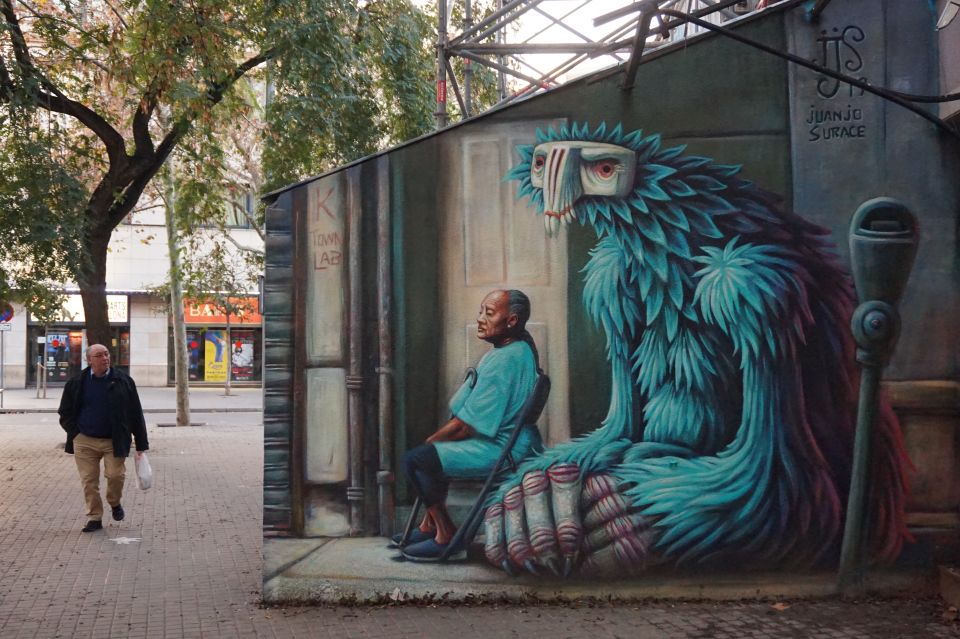
Here’s why it still feels like good value. Street art is everywhere, but context isn’t. A good guide helps you spot the differences between styles, understand why certain artists or projects matter, and point out subtle stuff you’d otherwise miss—like small physical details on the walls that reveal how street artists work.
Multiple reviews praise guides for connecting personal knowledge to what you’re seeing. That “making sense of it” piece is what you’re paying for. If you just want a quick photo stop tour, you might feel like it’s too focused. If you want your eyes trained, it’s a solid deal.
The meeting point: start where locals actually move through the area
You meet your guide at Jardins Talia, on Avenida Paral·lel 100 (08015 Barcelona). That matters because you’re not starting at a distant tourist gateway. You begin in the right neighborhood rhythm, close enough to feel the streets rather than only looking at them.
Also, note that different descriptions mention a nearby hotel area (Hotel Serhs del Port), but the official meeting point is clearly listed as Jardins Talia. Go to the exact spot on Avenida Paral·lel so you don’t waste time.
If you’re arriving by metro or walking over from central areas, give yourself a few extra minutes. Raval’s streets can be busy and a bit confusing at first, and you want to start the tour relaxed so you can actually take in the art.
Stop-by-stop: what you’ll see in Raval (and what each part teaches)
This tour is basically a guided “read the walls” walk. You’ll encounter graffiti and murals across the neighborhood—on residential buildings, apartment blocks, and public areas—so each stop reinforces the same idea: street art isn’t separate from everyday life.
Finding the street art map in a real neighborhood
Early on, your guide helps you orient fast. You learn where to look and how to look—what a tag typically signals, how different graffiti styles show up, and why certain pieces feel rooted in the neighborhood rather than imported.
This is where guides stand out most. Reviews highlight how guides explain the origins of graffiti in general and then translate that into what you’re seeing locally. You’re not just hearing facts; you’re building a mental filter for the walls you pass next.
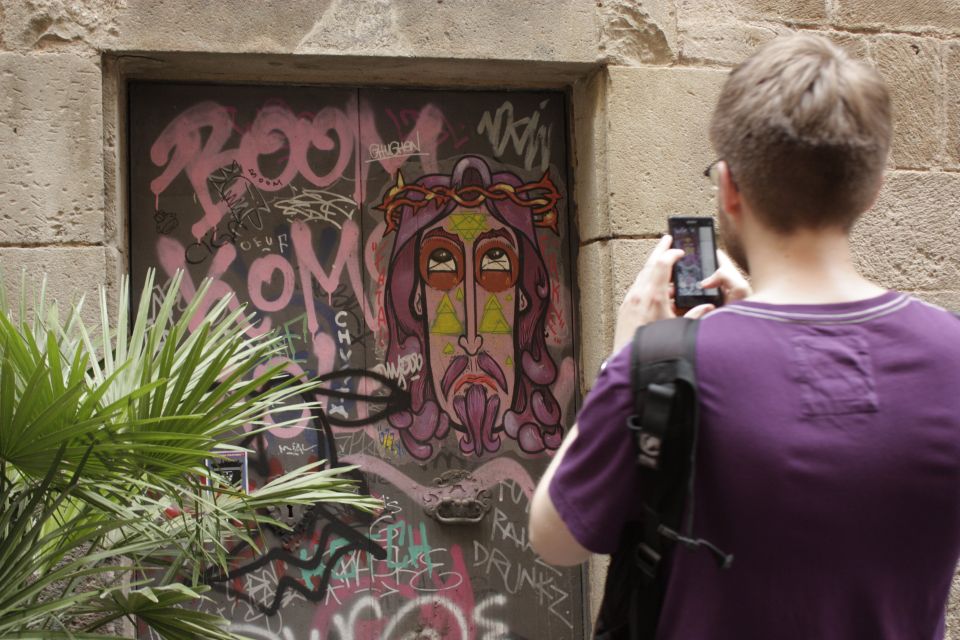
A nice benefit: once your eyes adjust, the walk continues to “pay off” after the tour ends. You start noticing details on your own. People specifically mention spotting small items on the walls that you would likely miss without a cue from the guide.
You can also read our reviews of more tours and experiences in Barcelona



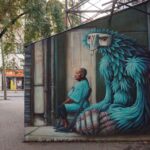


Arnau Gallery: local projects and the bridge between street and art world
You’ll also spend time around the Arnau Gallery, which adds an important bridge. Street art is often discussed as either vandalism or street beauty—depending on who’s talking. By pointing you toward a gallery context, the tour helps you see how urban art can connect to broader art channels while still staying street-born.
What you learn here tends to be practical: why local residents’ work matters, and how community-based projects keep the neighborhood identity moving.
If you’re the type who likes to understand the system behind the scenes, this stop is especially useful. It turns your questions from “Who did this?” into “How does this scene keep going?”
Tres Chimeneas: skate spot culture you can feel in the air
Then you’re led to Tres Chimeneas, described as a legendary skate spot. This isn’t a generic cultural stop; it’s part of the street-art ecosystem because skate culture often overlaps with graffiti culture.
You’ll walk into that vibe and understand it better than you would from a distance. Even if you’re not a skater, it helps explain the energy behind many street scenes: youth-led creativity, quick expression, and art that shows up where people actually gather.
Reviews also mention the tour connecting art to hip hop culture. That makes sense here. Skate spots and hip hop share a rhythm: self-expression, scene-building, and style as language.
Major works like Keith Haring: recognizing international threads
During the tour, you may see works tied to major international artists, including Keith Haring. Even when street art feels deeply local, the scene often shares ideas across countries.
The value of this isn’t just spotting a famous name. It’s learning how international references land on Barcelona walls and how styles echo across borders. Your guide helps you understand the difference between imitation and influence, and what it means when a global icon appears in a local context.
If you’re an art fan, this portion gives you the “I recognize that” moment—without turning the walk into a scavenger hunt.
Finishing at MACBA: the exterior first, then your choice to go in
The tour ends by the Barcelona Museum of Contemporary Art (MACBA) and you’ll see its exterior. The tour description also notes that MACBA is a popular skating spot, which ties the neighborhood energy together: art museums and street life aren’t totally separate here.
You can then visit the museum independently after the tour. That flexibility is smart. You’ll know what kind of contemporary art you’re in the mood for, because you just spent your walk learning how urban artists think.
If you only want the street-art portion, you can stop right at the end. If you want more, MACBA is ready for you next.
Who should book this tour (and who might skip it)
This tour is a great fit if you:
- love street art and want to understand style, origins, and local projects
- like neighborhoods that feel like actual places, not staged highlights
- prefer a guided walk that helps you notice details without turning it into a lecture
- want a route that pairs street art with a museum stop area (without forcing museum time)
Skip it if:
- you mainly want “big famous sights” with minimal walking time
- you’re only interested in museum art and don’t care about graffiti culture
- you dislike urban neighborhoods with busy streets and lots happening around you
One more fit note: the reviews describe a small-group feel in some cases. That tends to make it easier to ask questions and have the guide slow down when something catches your eye.
What makes the guides so praised (and what it means for your experience)
The strongest praise in the reviews is about the guides, not just the route. People mention friendliness, generosity, and a sense that the guide genuinely enjoys talking about the subject.
Specific guide names show up often: Juan is called friendly and generous with personal knowledge. Anais is described as charming and knowledgeable, and praised for speaking good English. Jeanne earns high marks for connecting with people and providing strong background. Sylvia is praised for creating a fun, interesting tour.
Here’s the practical takeaway for you: when the guide is good, the tour becomes interactive. You start asking questions about politics, style differences, and the reasoning behind certain pieces—and you get answers tied to what you’re seeing on the next block.
That’s why this doesn’t feel like a basic photo walk. It feels like a conversation with a local art lens.
Practical tips so you enjoy it more
You’ll get the most out of this tour if you treat it like an art class held outdoors.
- Bring a phone with enough battery. You’ll likely want to photograph walls, then look again later.
- Wear comfortable shoes. Two hours on city pavement adds up.
- Keep your questions ready. If something puzzles you—why a style looks a certain way or what a piece is “saying”—ask. Guides are reported to be open to questions, including political angles.
- Save extra time for MACBA after. Even if you just do a short visit, you’ll enjoy it more after seeing what you learned on the street.
Also, remember what the tour is and isn’t. It’s about street art culture in Raval, plus the MACBA exterior. If you want a full museum experience, treat MACBA as a separate “choose your own adventure” after the walk.
Should you book this Raval street art tour?
I think you should book it if you want a Barcelona experience that feels current and real. The combination of expert guidance, local projects like the Arnau Gallery, the cultural pulse of Tres Chimeneas, and the option to follow up at MACBA makes it a smart, art-focused use of a couple hours.
Don’t book it if your priority is museum entry only or you’re not interested in graffiti and street culture. Since museum admission isn’t included, you’ll still need to plan for that if you want inside time.
FAQ
FAQ
How long is the Barcelona Raval street art and graffiti walking tour?
The tour lasts 2 hours.
What does the tour cost?
It costs $33 per person.
Where does the tour meet?
Meet your guide at Jardins Talia on Avenida Paral·lel 100, 08015 Barcelona.
What’s included in the price?
The price includes a tour guide and the walking tour.
Is MACBA museum admission included?
No. Barcelona Museum of Contemporary Art admission isn’t included.
What languages is the tour offered in?
The live tour guide is available in English, French, and Spanish.
Is the tour wheelchair accessible?
Yes, it’s listed as wheelchair accessible.
Can I visit the museum after the tour?
Yes. You can visit MACBA independently after your tour, since the tour ends with the museum exterior.
What’s the cancellation policy?
You can cancel up to 24 hours in advance for a full refund.
Is there an option to reserve without paying now?
Yes, it offers reserve now & pay later, so you can book your spot and pay nothing today.