REVIEW · BARCELONA
Barcelona: Ramblas, Gothic & Gaudí Architecture Walking Tour
Book on GetYourGuide →Operated by Nostos Tours · Bookable on GetYourGuide
Barcelona’s streets tell stories fast.
This walking tour strings together the Gothic Quarter and Gaudí’s showpiece buildings on Passeig de Gràcia, so you get context without wasting time. I especially like how the route mixes big icons (like Barcelona Cathedral and the Gaudí houses) with smaller squares and medieval lanes where Barcelona’s older rhythm still shows. One thing to consider: it’s a lot of on-your-feet time in busy, central areas, and some stops are photo-focused rather than long sit-down explanations.
You’ll meet your guide outside Foot Locker on Plaça de Catalunya—look for the white umbrella—and get a guided flow that makes the city feel organized. I also like that you end right where the action is, with drop-off options near Passeig de Gràcia, so you can keep going to shopping or your next museum without backtracking. The trade-off is that you may need to handle a quick transit step (you’ll be asked to have a ticket or buy one for €2) and bring rain gear because the tour runs rain or shine.
In This Review
- Key points worth your attention
- Meeting at Plaça de Catalunya: start where everything connects
- Gothic Quarter: medieval lanes, small squares, and Cathedral photo stops
- Plaça Reial, La Rambla, and a quick local café reset
- The metro segment: why you’ll need a plan for the €2 ticket
- Passeig de Gràcia: Gaudí’s stage for shape, color, and meaning
- Casa Milà: the stone wave look and what to notice
- Casa Batlló: the fairytale vibe with real context
- How the pacing works for a short stay (and for families)
- What you learn about Barcelona’s identity beyond the buildings
- Price and value: $34 for a tight route with transit and optional add-ons
- Tips for getting the most out of this walking architecture tour
- Should you book this Barcelona Ramblas, Gothic, and Gaudí tour?
- FAQ
- Where does the tour start?
- How long is the Barcelona Ramblas, Gothic & Gaudí Architecture walking tour?
- What stops are included on the route?
- Is public transportation included?
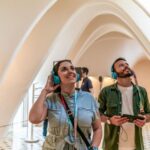
- Are headsets included?
- Is there a food break?
- What language is the tour guide?
- Does the tour run in bad weather?
- Is the tour wheelchair accessible?
- What is the price and what’s included?
Key points worth your attention
- Two famous districts, one easy route: Gothic Quarter lanes plus Gaudí architecture on Passeig de Gràcia.
- Short stops, strong orientation: you get highlights and direction for what to do next in central Barcelona.
- Gaudí with explanations, not just photos: you’ll learn what’s behind the shapes and symbolism.
- A guided pause for energy: there’s a short break at a local café.
- Guide quality matters: top guides like Yannis, Anna, and Henrietta are often praised for making the stories fun and clear.
- Close-to-it-all ending: you finish near the modernist corridor, ready for Sagrada Família, dining, and shopping.
Meeting at Plaça de Catalunya: start where everything connects
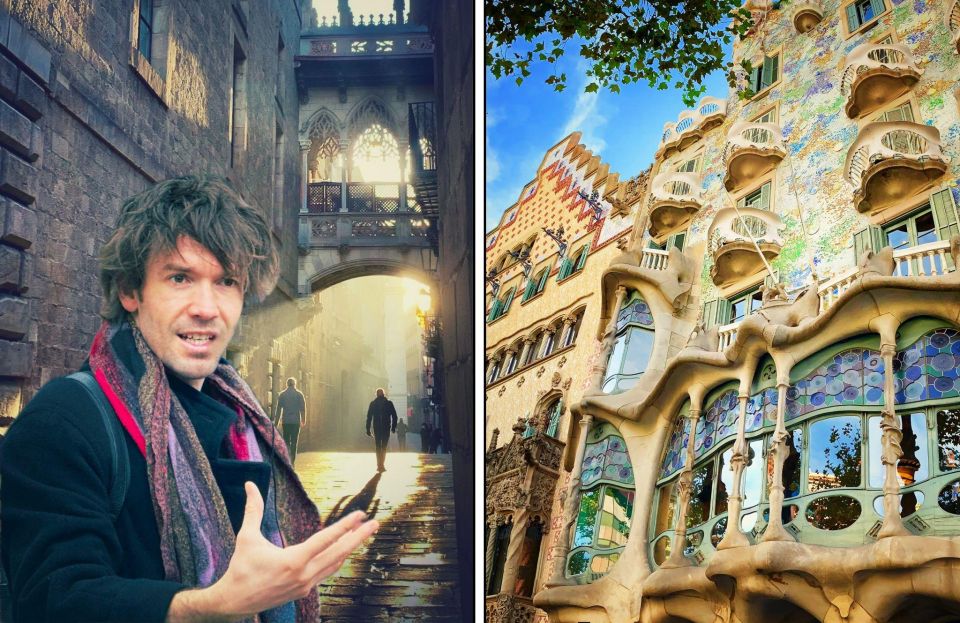
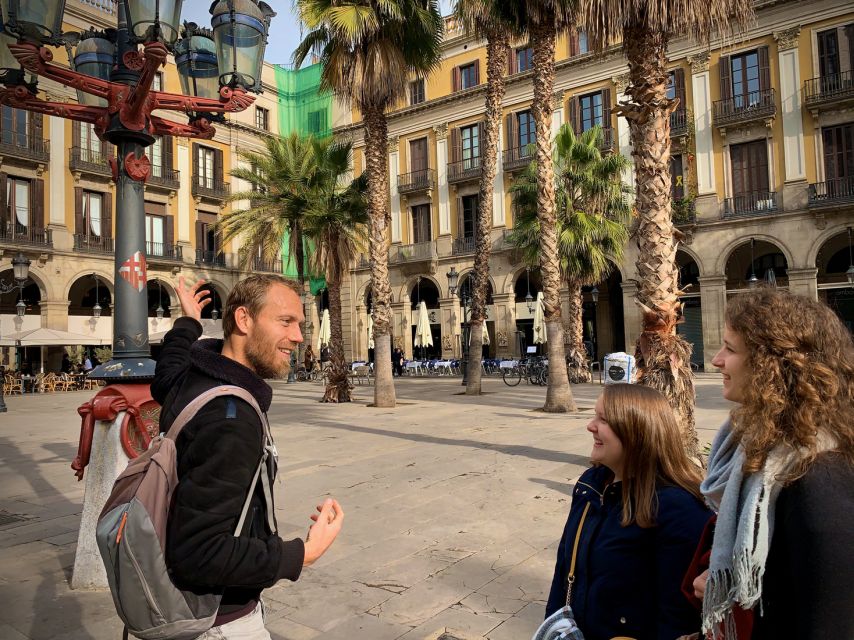
The tour begins on the sidewalk in front of Foot Locker on Plaça de Catalunya. It’s a smart meeting point because it’s central and easy to reach from most parts of the city. Your guide carries a white umbrella, which is a small detail, but it saves a lot of “where is everyone?” time when you arrive.
Right away, you’ll know the tone of the experience. This isn’t a silent walk where you fend for yourself. The guide keeps the group moving and explains what you’re about to see—plus they’ll usually answer questions as you go. On earlier departures, guides such as Anna, Henrietta, and Yannis have been noted for clear storytelling and a fun pace, so the walk doesn’t feel like a lecture.
Practical note: you’ll be walking through dense areas, and the tour is described as rain or shine. Bring something for wet weather, and wear shoes you’re comfortable with for an urban stroll.
You can also read our reviews of more walking tours in Barcelona



Gothic Quarter: medieval lanes, small squares, and Cathedral photo stops
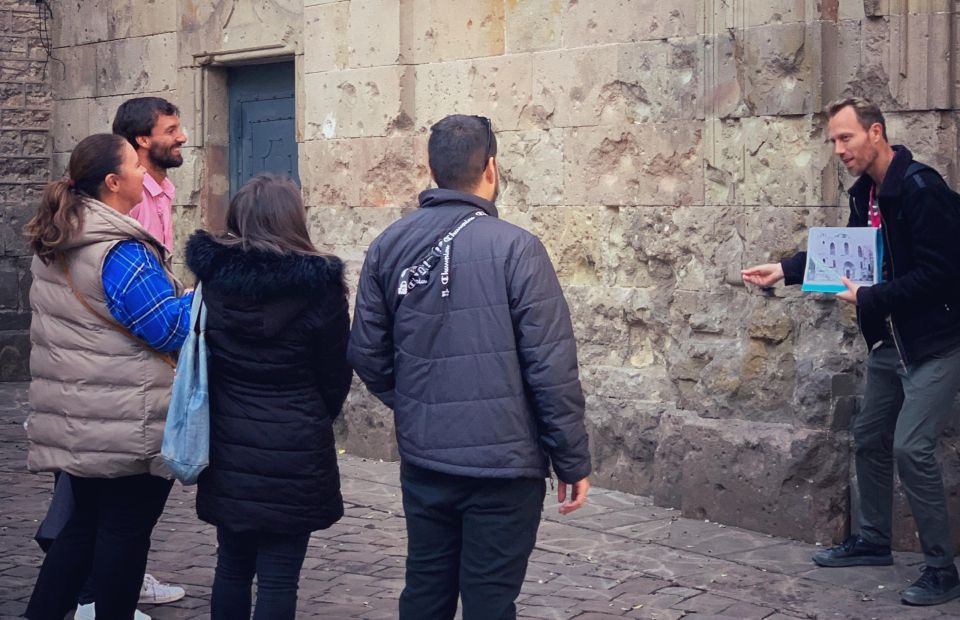
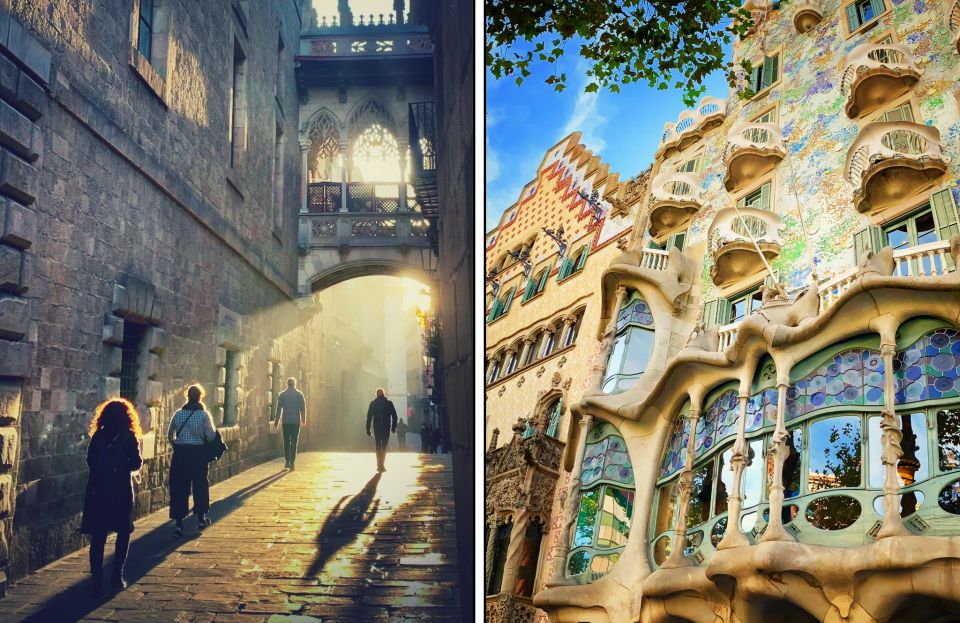
Your first big block is the Gothic Quarter, with about 75 minutes for a guided wander through the older core. This is the part of Barcelona where the streets feel older than the skyline, with medieval buildings and tight lanes that can look like they were designed to slow you down. You’re not just passing landmarks—you’re getting the logic of the neighborhood.
You’ll also get photo stops and quick orientation moments around major public spaces:
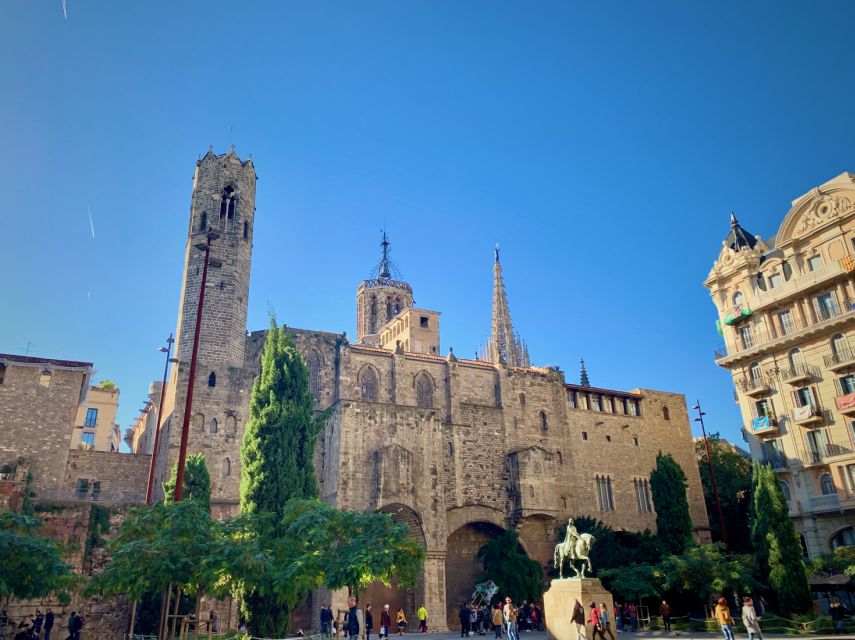
- Barcelona Cathedral: plan on a short, guided look plus photos. You won’t spend hours here, so think of it as a “see it now, understand it quickly” stop rather than a full deep-dive.
- Plaça Sant Jaume: another focused stop, ideal for learning what this square represents in city life and why it matters historically.
What I like about the Gothic section is that it teaches you how to read the city. Once you understand the layers—old civic spaces, religious power, and street layout—you start noticing details on your own later. The guide helps you “see the pattern,” not just memorize names.
Possible drawback: because this is part of a timed walking tour, some stops are brief. If you’re the type who wants to linger in one place and soak up every wall, you may want to schedule a separate, longer visit later for the cathedral and the areas that pull you in.
Plaça Reial, La Rambla, and a quick local café reset
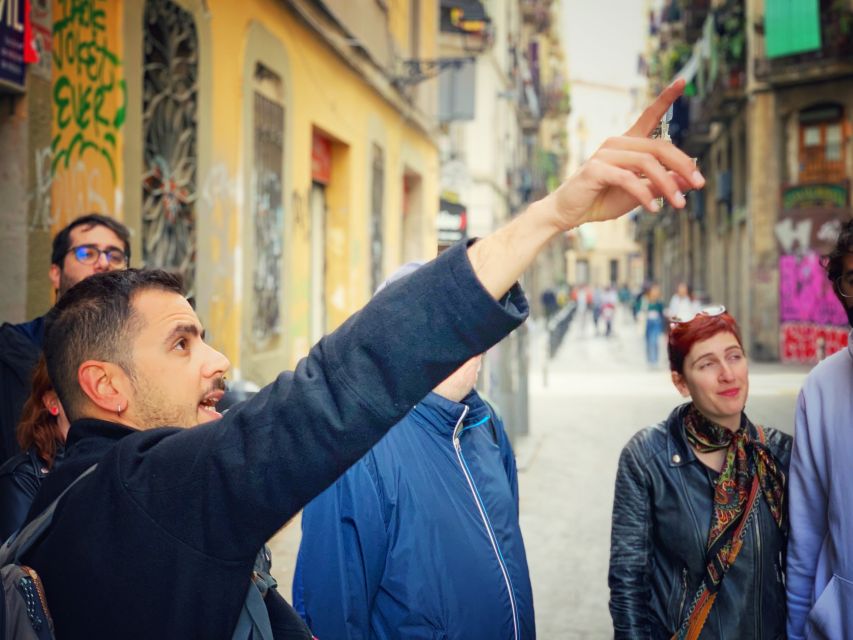
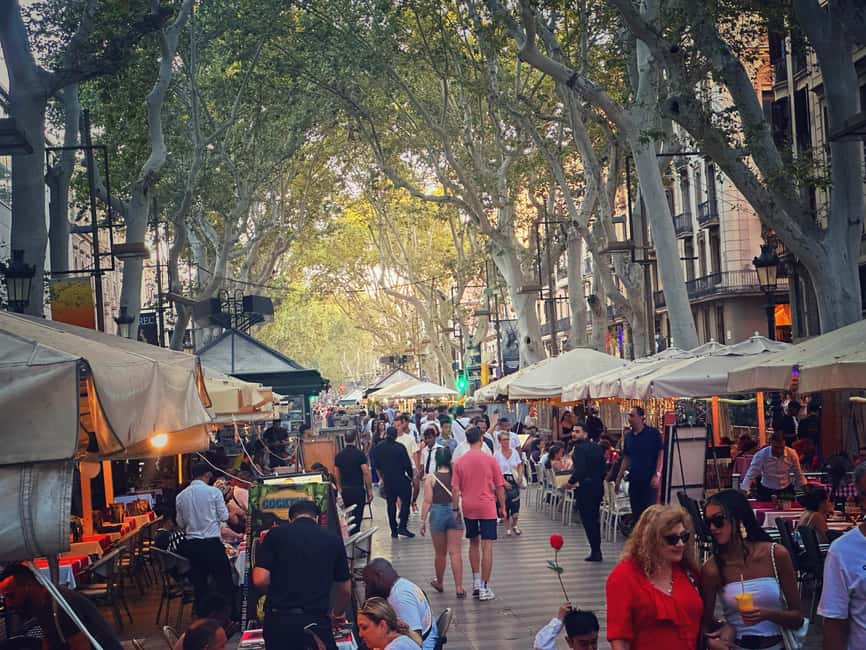
Next comes a change of pace. You’ll pass through or stop for photos around Placa Reial, a square with character and a more open feel than the medieval lanes. From there, the route touches La Rambla with a short photo-focused moment.
La Rambla can be chaotic at street level—busy, noisy, and full of people walking through rather than lingering. In a tour like this, it’s best treated like a landmark corridor: you see the vibe, take your photos, and then move on. The value is not in spending time there; it’s in using it as a reference point for where the older city transitions to the commercial center.
Then there’s a short local café break (about 5 minutes). It’s not a meal break. It’s more of a reset for water, a quick snack, or just stretching your legs before the next stretch of walking.
The metro segment: why you’ll need a plan for the €2 ticket
A key operational detail: there’s a subway/metro segment (about 10 minutes). The tour info is explicit that you’ll need either a valid public transportation ticket or you’ll buy one from your guide for €2.
This matters because it affects how smooth your day feels. If you show up without a plan, you’ll lose time sorting out transit at a moment when the group is moving. If you do come prepared, the transfer is quick and keeps the tour efficient.
Also consider comfort: you’ll be carrying yourself through the city and then through transit. If you’re sensitive to crowds or tight spaces, keep your bag secure and stay close to your guide during the metro portion.
Passeig de Gràcia: Gaudí’s stage for shape, color, and meaning
After the metro step, you’ll arrive on Passeig de Gràcia, with about 45 minutes of guided time along the avenue. This is the “now you’re in Gaudí territory” moment. Passeig de Gràcia is the grand boulevard where modernist Barcelona shows off—designer shopping nearby, tall façades, and a street that feels like a nonstop photo backdrop.
This is also where the tour does something more useful than just pointing at buildings. You’re guided through why the designs look the way they do—how Gaudí’s shapes connect to symbolism, and how modernist style grew out of the city’s ambition and identity.
A big part of this route is the contrast: the Gothic Quarter gives you the older city’s structure, while Passeig de Gràcia shows the architectural confidence of a later Barcelona. That contrast is exactly why this is a strong short-stay tour: you see two different eras without needing separate planning days.


Casa Milà: the stone wave look and what to notice
You’ll stop for photos and guided time at Casa Milà (La Pedrera), about 10 minutes. Even if you’ve seen pictures before, it’s worth going slow enough to catch the unusual feel of the exterior. The building looks sculpted, like the façade is alive rather than simply built.
In a short stop, the guide’s job is to point you toward the features that make the building more than a famous façade. Pay attention to the way the stone surfaces behave visually—then contrast that with how the building sits on the avenue.
Drawback to keep in mind: it’s a brief exterior stop. If you want interior rooms, the tour described here won’t cover that. Still, as an orientation experience, it gives you enough to decide if you should book a longer Gaudí-focused visit afterward.
Casa Batlló: the fairytale vibe with real context
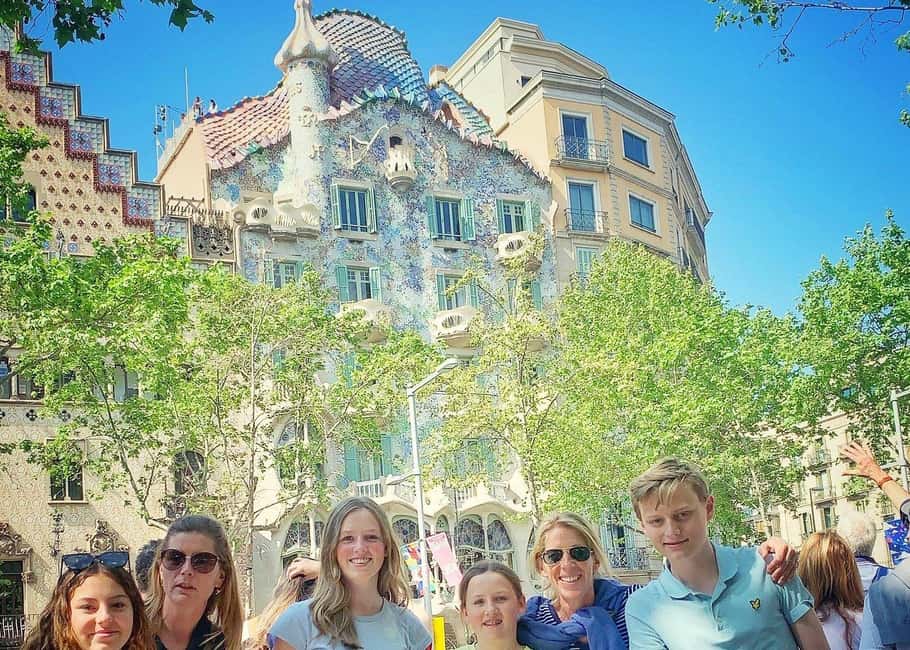
The second major Gaudí stop is Casa Batlló, also about 10 minutes. This is the building most people recognize instantly, with its fairy-tale silhouette and details that look like they’re playing with light and texture.
The guide doesn’t treat it as just an Instagram moment. You’ll learn hidden meanings tied to Gaudí’s choices—what certain shapes suggest and how the design fits his larger approach. That’s the best part of this portion: you leave with a mental picture of the building’s logic, so you’re not just collecting photos.
You’ll also get a more natural flow into your finish area, because the tour’s ending drop-off options are near Casa Batlló and along Passeig de Gràcia.
How the pacing works for a short stay (and for families)

This tour is built for first-time orientation. The total time is 2.5 hours, and it’s structured around motion: walk, quick stops, a short transit segment, then a concentrated modernist stretch.
For couples and friends, it’s a nice way to see the core neighborhoods without splitting your day into separate bookings. For families, it tends to work because the guide tells stories as you walk and keeps the pace moving. In the comments people mention humor and entertaining explanations, and that’s exactly what helps kids and impatient adults stay engaged on a city-walk tour.
Who might not love it:
- If you want a slow museum-style pace, this isn’t that.
- If you hate crowds or standing in busy areas near La Rambla, you’ll want a plan for where you can step aside briefly.
- If your English is limited and you need extra listening support, consider the headset option.
What you learn about Barcelona’s identity beyond the buildings
The tour sells itself as a highlights walk, but the real value is the framework you take away. You’ll see how two thousand years of change and innovation shaped Barcelona’s identity, and you’ll watch that idea show up in the city’s old squares and its modernist architecture.
The tour guide typically includes personal anecdotes and answers questions as you go. In the best cases—guides like Chrisa, Christian, and Tyler—the stories connect past to present in a way that makes the city feel more understandable. That connection is what makes the tour useful even after you leave: you get direction for what to explore next and you understand what you’re looking at when you arrive there.
Price and value: $34 for a tight route with transit and optional add-ons
The price is listed at $34 per person for about 2.5 hours with a local guide and a walking route.
Here’s how I think about value:
- You’re paying for guided interpretation of two major areas, not just sightseeing.
- You’re also getting an efficiency win. The metro transfer is included in the flow, which helps you cover both districts in one morning or afternoon without planning your own transit connections.
- What’s not included matters. Headset rental (optional) costs €1 onsite, and you still need a public transportation ticket (or buy one for €2 from your guide). Food and drinks are not included beyond a short café break.
If you’re doing Sagrada Família and a museum or two on the same trip, this kind of orientation tour can save you time later. You’ll have a clearer sense of where your next stops should be.
Tips for getting the most out of this walking architecture tour
A few practical things will make your experience smoother:
- Bring comfortable shoes. You’ll be walking a lot across central neighborhoods.
- Use the headset option if you need it. The tour is in busy public spaces, and listening can get harder.
- Come ready for the weather. It runs rain or shine.
- Treat La Rambla as a quick landmark moment. Save your energy for the Gothic lanes and Passeig de Gràcia.
- If you’re planning more Gaudí sights, use this tour as your sorting tool. It helps you choose what you want to see longer.
Should you book this Barcelona Ramblas, Gothic, and Gaudí tour?
Book it if:
- You only have one short day (or a half-day) to get oriented in central Barcelona.
- You want the contrast between the medieval Gothic Quarter and Gaudí modernisme without hopping between separate neighborhoods on your own.
- You like guided storytelling and want practical recommendations while you’re there.
Skip it or rethink it if:
- You want long stops inside buildings rather than fast exterior/photo time.
- You’re very sensitive to crowds and don’t handle busy corridors like La Rambla well.
- You want a deep, slow archaeological or art history course.
If you’re weighing options for a first trip, this is a solid “get your bearings fast” format: two iconic zones, a clear route, and enough Gaudí context to make your later visits feel smarter.
FAQ
Where does the tour start?
The meeting point is on the sidewalk in front of Foot Locker on Plaça de Catalunya. Your guide has a white umbrella.
How long is the Barcelona Ramblas, Gothic & Gaudí Architecture walking tour?
The duration is about 2.5 hours.
What stops are included on the route?
You’ll go through the Gothic Quarter and see photo stops including Barcelona Cathedral, Plaça Sant Jaume, Placa Reial, and La Rambla, then head to Passeig de Gràcia for photo stops including Casa Milà and Casa Batlló, with multiple end drop-off locations.
Is public transportation included?
A short metro/subway segment is part of the tour. You’ll need either a valid public transportation ticket or you can buy one from your guide for €2.
Are headsets included?
Headsets are not included. You can rent headsets onsite for €1 if you want help hearing the guide better.
Is there a food break?
There is a local café break time included (about 5 minutes). Food and drinks are not included.
What language is the tour guide?
The tour is in English (live guide). An optional audio guide is also listed as English.
Does the tour run in bad weather?
Yes. The tour takes place rain or shine.
Is the tour wheelchair accessible?
Yes, wheelchair accessibility is listed as available.
What is the price and what’s included?
The price is $34 per person. Included items are the walking tour and a local guide. Not included are headset rental, public transportation tickets, and food and drinks.