REVIEW · BARCELONA
Barcelona: Private Gaudi Tour to Casa Mila & Casa Vicens
Book on GetYourGuide →Operated by LocalCoolTour · Bookable on GetYourGuide
Gaudí in four hours, minus the headache. I love the way this private tour stacks major works back-to-back, with skip-the-line entry at both Casa Milà and Casa Vicens so you don’t lose time to queues. You’ll also get a guided path through the streets where Modernisme actually grew up.
My second favorite part is the mix of hands-on guiding and smart supporting tools. You’ll have a live guide (English, Spanish, French) for the street-level story, plus an audio guide that covers key interiors in multiple languages, so you can keep up without rushing.
One possible drawback to plan for: the guide may not go inside every house with you. In at least one common setup, you spend more time inside Casa Milà and Casa Vicens on your own using the audio, with the guide waiting outside for questions.
In This Review
- Key takeaways before you book
- The value behind a $184 private Gaudí circuit
- Where you start: Plaça del Teatre and getting your bearings fast
- Palau Güell: the urban palace that shows Gaudí before the fame
- Santa Creu gardens: a sad corner of the Gaudí story
- Passeig de Gràcia: seeing Modernisme as a neighborhood
- Casa Batlló to Casa Milà: how the story escalates
- Casa Milà rooftop and rooms: where audio time actually helps
- The subway hop to Casa Vicens: a change of pace that pays off
- Price, timing, and who this tour fits best
- Should you book this Gaudí private tour?
- FAQ
- Where is the meeting point?
- How long is the tour?
- Is this tour private?
- Which places include skip-the-line tickets?
- Is an audio guide included, and what languages are available?
- What languages can the live guide speak?
- Is the tour wheelchair accessible?
Key takeaways before you book
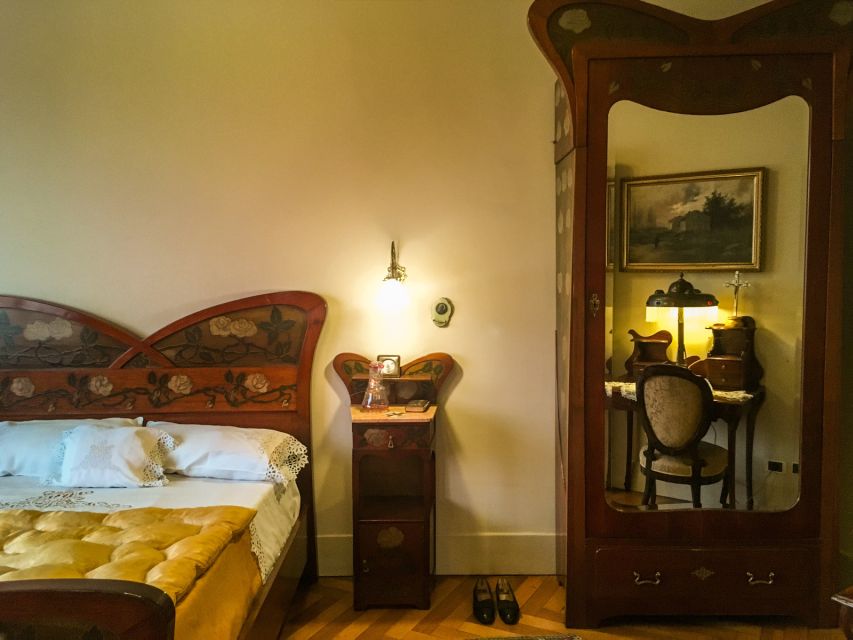
- Skip-the-line access at Casa Milà and Casa Vicens saves the most painful sightseeing minutes
- Palau Güell + Santa Creu gardens give you Gaudí’s early patronage and a personal story tied to 1926
- Passeig de Gràcia with photo stops helps you see Modernisme as a street, not a list
- Casa Milà rooftop time is built in, and the audio guide helps you slow down
- Casa Vicens gets extra attention with skip-the-line tickets and about an hour on-site
- A short subway ride makes the tour flow without turning the day into a marathon
The value behind a $184 private Gaudí circuit
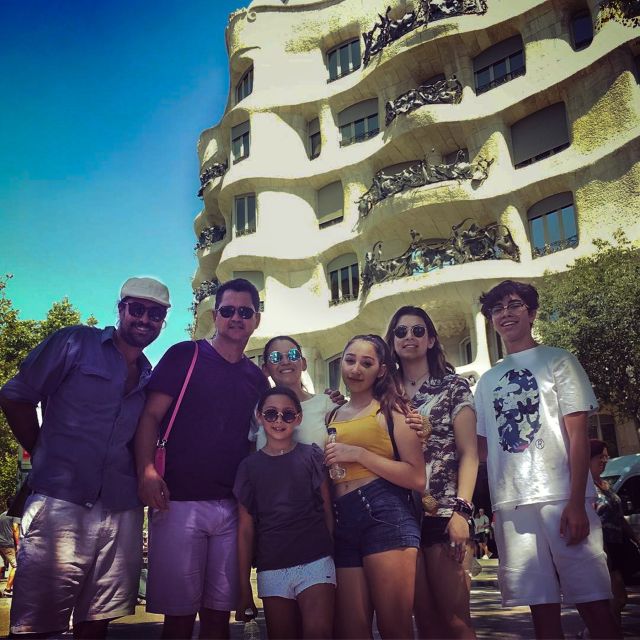
At $184 per person for a 4-hour private tour, you’re paying for three things that matter in Barcelona: less waiting, more explanation, and better pacing. Yes, you can book tickets yourself and wander. But here you’re getting a guided route that connects the dots between Gaudí’s early commissions, the Modernisme boom along Passeig de Gràcia, and his later work.
Also, the tour is structured so you’re not stuck “stand and stare” through four separate lines. Instead, you get a guided walk through the Raval area and central Barcelona, then you switch gears with a quick subway ride to Casa Vicens. That shift is practical. It keeps the schedule tight enough to fit everything, but it’s not so hectic that you feel like you’re speed-running the city.
You’ll want comfortable shoes. The route involves walking and multiple stops, and the whole point is to see details up close rather than from a bus window.
You can also read our reviews of more private tours in Barcelona



Where you start: Plaça del Teatre and getting your bearings fast
The meeting point is at the feet of the statue of Frederic Soler (Pitarra) over Plaça del Teatre. This is a helpful start because it places you near the energy of central Barcelona without tossing you into a dead-end corner of the city.
Right away, you’re on a route that makes sense historically. You begin in the Raval Quarter area and move outward toward Passeig de Gràcia. That direction matters: it mirrors how Gaudí’s world expanded—from the city’s older fabric and patrons’ needs into the bigger Modernisme showcase.
If you’re the type who likes knowing what you’re about to see, this tour rewards that mindset. The guide’s job isn’t just to list facts; it’s to give you a map for what to notice next: materials, symbolism, and the way different buildings reflect the people who paid for them.
Palau Güell: the urban palace that shows Gaudí before the fame
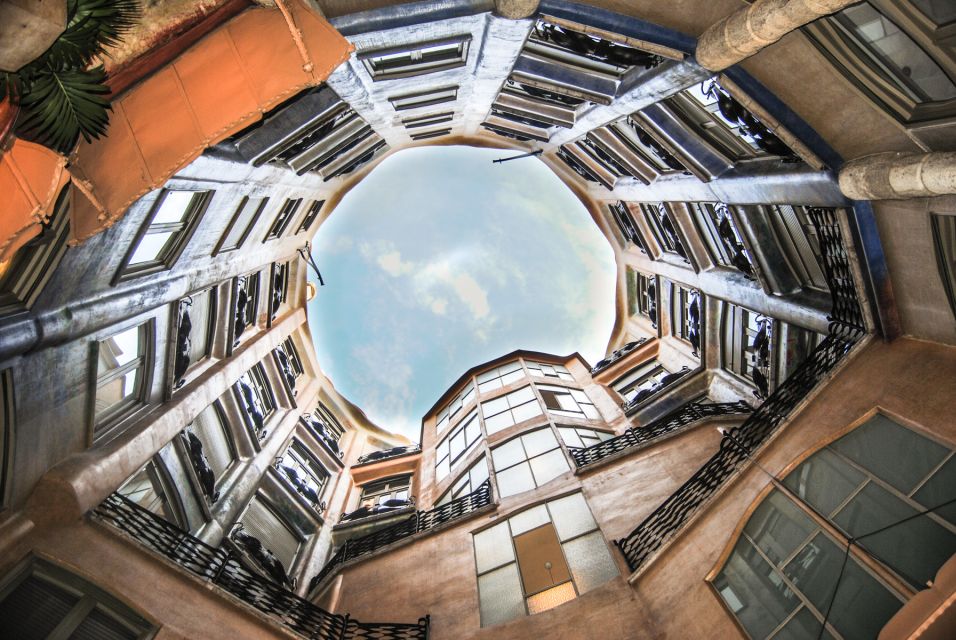
Your first major stop is Palau Güell, one of Gaudí’s early important commissions. This is a big deal because it shows you Gaudí’s imagination before the city’s later, more famous flourishes. It also gives you a look at a Gaudí project that feels urban and close-knit rather than spread out with gardens and wide views.
You’ll start with a short photo stop and a guided visit. The palace setting is part of the lesson. You’re not just looking at architecture; you’re seeing how the wealthy wanted their homes to function inside the dense city. That helps you understand why Modernisme happened when it did and why it took the shapes it did.
There’s also a nice practical rhythm here. After Palau Güell, you’re not immediately forced into another long, tiring line. Instead, you head toward the next storytelling location by foot, so your attention stays on the ideas rather than on logistics.
Santa Creu gardens: a sad corner of the Gaudí story
Next, you’ll visit the old Hospital of Santa Creu area, including the gardens where Gaudí died in 1926. This stop can hit harder than you expect, because it turns the tour from purely visual sightseeing into a human timeline.
What makes it worth your time is the contrast. You’re moving from an urban palace to a more reflective setting tied to a real, tragic moment. It gives emotional context, and that makes later buildings feel less like random masterpieces and more like work produced by a life with chapters—some bright, some heartbreaking.
If you like architecture but also enjoy the emotional stakes behind it, this garden stop is one of the most memorable parts of the tour. Even if you’re not a big cemetery-visitor type, you’ll probably appreciate how the guide frames the significance without turning it into heavy-handed theater.
Passeig de Gràcia: seeing Modernisme as a neighborhood
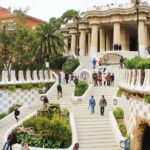
Once you reach Passeig de Gràcia, the tour shifts to street scale. You’ll walk along this iconic avenue and focus on the facades that made Catalan Modernisme famous with the city’s bourgeois families—and with Gaudí himself.
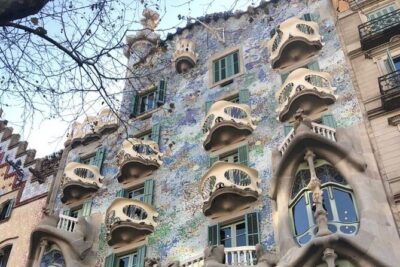
A highlight here is the guided time around Casa Batlló (as a photo stop with guided context) and then down the street toward La Manzana de la Discordia. This block is known for works by four of Barcelona’s important Modernista architects, and seeing it by walking helps you understand how architecture became competition and conversation at the same time.
This part works especially well if you’re visiting Barcelona for the first time or if you only have a limited window for Gaudí. The street level overview helps you avoid the trap of seeing each building as an isolated sculpture. Instead, you start noticing patterns—how design choices respond to neighbors, to style trends, and to status.
Tip that makes a difference: keep your eyes up. This is a tour where the details you spot at eye level matter as much as the famous shapes.



Casa Batlló to Casa Milà: how the story escalates
After Passeig de Gràcia, the tour makes a clever pivot. You get context around Casa Batlló, then you head to Casa Milà with enough time on-site to actually feel the building.
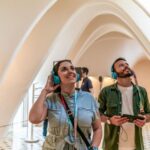
At Casa Milà, you’ll get skip-the-line entry. Once inside, the audio guide helps you pace yourself through rooms and the rooftop. The guide’s job outside the building (or around it) is to connect what you’re seeing to the bigger Gaudí picture, so you’re not left with an audio track and a shrug.
Drawback to keep in mind: at least one common format is that you explore inside more on your own while the guide remains outside. That’s not bad if you enjoy self-guided time, but it does mean you should come prepared with questions. If you’re curious about symbols or construction techniques, ask before you step inside so you get those answers while you can still look them up in real time.
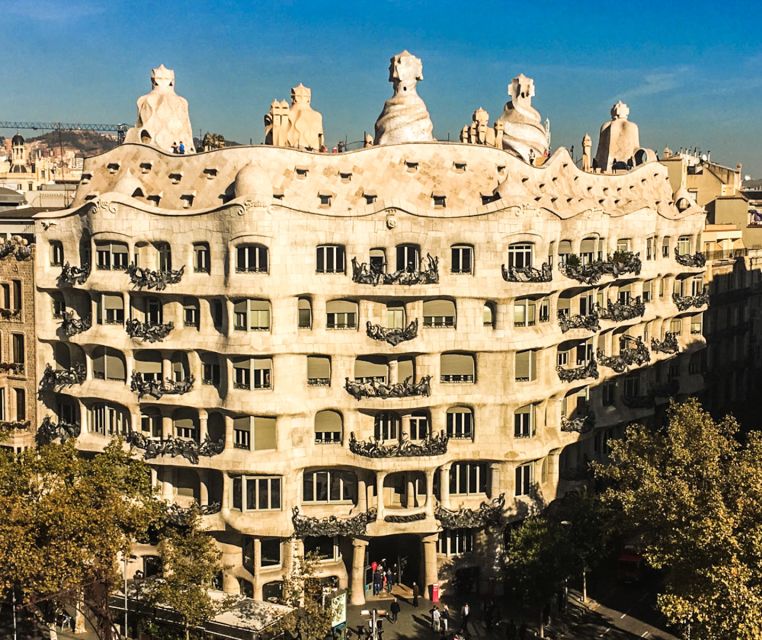
Still, even with that caveat, the rooftop time is a strong payoff. Casa Milà’s terrace isn’t just a viewpoint. It’s where Gaudí’s sense of form becomes almost sculptural and playful, and it’s often the moment you feel the building more than you understand it.
Casa Milà rooftop and rooms: where audio time actually helps
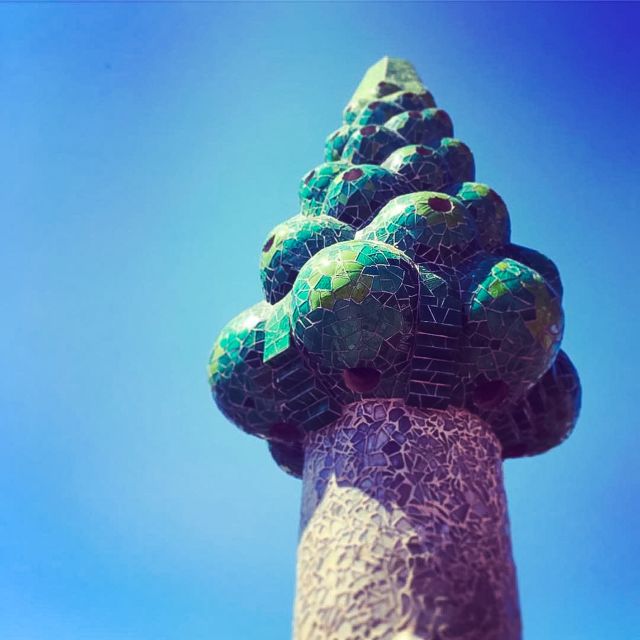
Casa Milà is the sort of building where you’ll want to slow down. The audio guide included in your language (English, Spanish, Italian, French are listed) is useful because it lets you move at your own speed while still catching the key points.
What I like about this setup is that it balances two styles of learning: guided street-level context and then on-your-own interior attention. You’re not forced into a loud, constant commentary. Instead, you can linger over a detail, step back, and then listen again when you’re ready.
If you’re the type who hates rushing, the rooftop and terrace pacing helps you avoid the usual sightseeing stress. You’ll also get a better sense of scale—how a building like this behaves from different angles and how the structure turns into a kind of weather-ready sculpture.
One small practical note: the tour is only 4 hours total. So while the rooftop is a big focus, you still shouldn’t plan to take a million extra photos in every corner. Pick a few places you want to revisit, then let the audio guide pull you along.
The subway hop to Casa Vicens: a change of pace that pays off
After the initial guided portion, you take a short subway ride to Casa Vicens. This is smart for two reasons. First, it keeps the tour from turning into a long walk between neighborhoods. Second, it gives your brain a reset, so Casa Vicens feels like a fresh experience rather than just another stop on the same street.
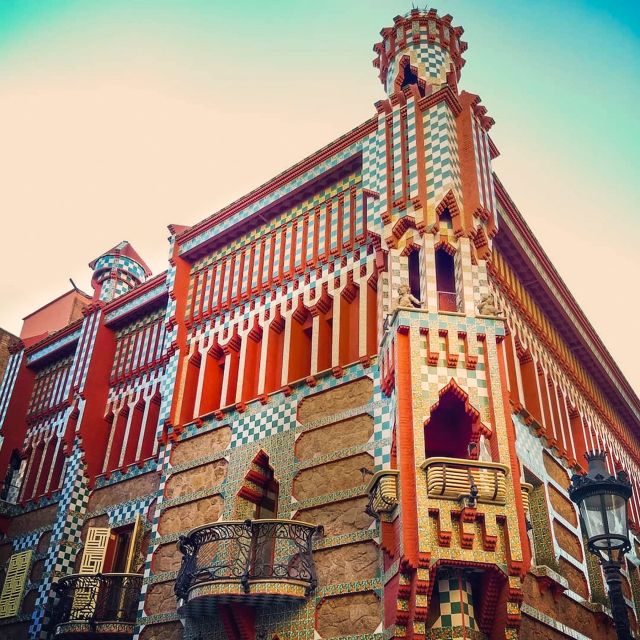
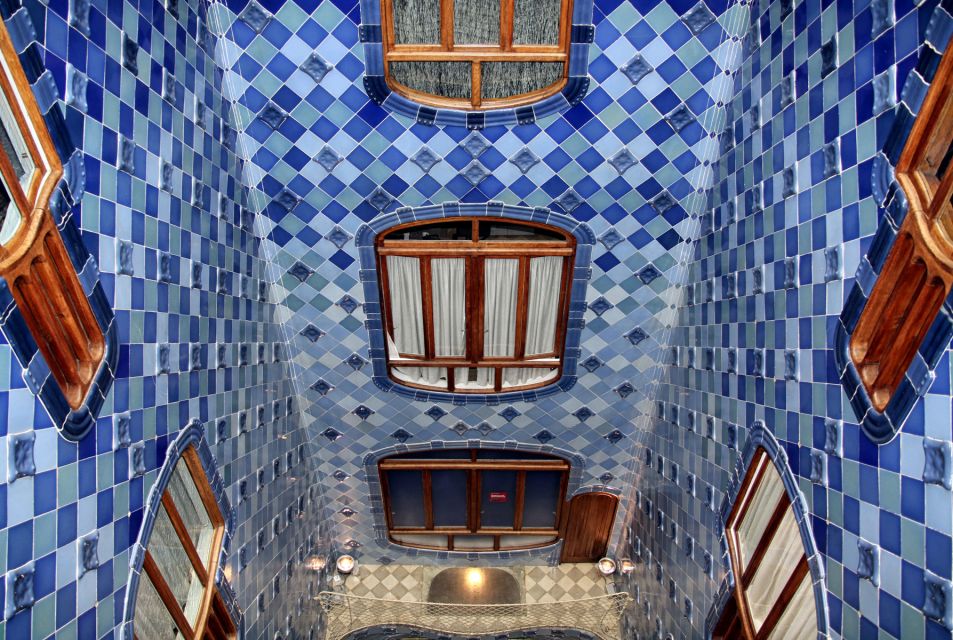
Casa Vicens is especially interesting because it has been more recently open to visitors than you’d think, and the tour includes skip-the-line tickets plus about an hour to explore. That extra time matters here. Casa Vicens rewards lingering, because the design choices are varied and you’ll likely want a moment to look around without constantly checking the clock.
In practice, this stop often works best if you’re comfortable with some self-guided time. Again, you might not have the guide inside for every minute, but you do have a guided component and the ticket structure helps you get in and start seeing quickly.
This is also a great stop for people who feel slightly tired of only the most famous Gaudí sites. Casa Vicens gives you a different chapter—an earlier wonder that helps you see Gaudí’s development, not just his final, most iconic style.
Price, timing, and who this tour fits best
This tour is built for people who want a serious Gaudí hit without burning hours on line-ups and navigation. At $184 per person for a private group, the price starts to look reasonable when you factor in two skip-the-line components and the guide time across multiple stops.
It’s also well suited to couples, friends, and small families who want the route adjusted to their pace and interests. Since it’s private, you’re less likely to get stuck in a rigid herd movement, and you can ask questions when something catches your attention.
Who might be less thrilled:
- If you expect a guide to stay beside you inside every building for the entire visit, you should know that the inside experience may be more self-guided.
- If you’re relying on wheelchair access, it’s listed as not suitable for wheelchair users.
The ideal traveler is someone who likes architecture and wants the guide to connect the story—especially around Gaudí’s early work like Palau Güell and the emotional anchor at Santa Creu.
Should you book this Gaudí private tour?
I’d book it if you want a tightly planned Gaudí day that actually makes connections across sites—Palau Güell, Santa Creu, Passeig de Gràcia, Casa Milà, and Casa Vicens—and you care about not wasting time in lines.
I’d think twice if you’re the kind of visitor who needs a guide inside every single room at every stop. In that case, ask what the guide covers during the interior time so your expectations match the real rhythm.
If you can handle a mix of guided street time plus self-guided interior exploring, this is a strong value. You’ll get the big Barcelona Gaudí names, plus the less obvious emotional and historical threads that make the buildings feel like a single story instead of a checklist. And with skip-the-line tickets in place, your 4 hours stay focused on seeing, not waiting.
FAQ
Where is the meeting point?
You meet at the feet of the statue of Frederic Soler (Pitarra), over Plaça del Teatre (Theater Square).
How long is the tour?
The total duration is 4 hours.
Is this tour private?
Yes. It’s a private group experience.
Which places include skip-the-line tickets?
Skip-the-line tickets are included for Casa Milà and Casa Vicens.
Is an audio guide included, and what languages are available?
Yes, an audio guide is included. Languages listed are English, Spanish, Italian, and French.
What languages can the live guide speak?
The live tour guide is listed as available in English, Spanish, and French.
Is the tour wheelchair accessible?
No. It’s not suitable for wheelchair users.