REVIEW · BARCELONA
Barcelona: Montjuïc Walking Tour With Optional Flamenco Show
Book on GetYourGuide →Operated by ExperienceFirst · Bookable on GetYourGuide
Montjuïc is Barcelona’s best uphill walk. This 2–3 hour experience layers big city views with real neighborhood stories, from Montjuïc Castle down through gardens and monuments that explain why Catalan dance matters. If you get a guide like Thomas, Eoghan, or Daria, you’ll hear the route told with real energy and humor, not just dates.
I love the hilltop photo stops, especially the stretch around Mirador del Alcalde and the final scene at the Magic Fountain. I also love the Catalan dance focus, walking you to landmarks tied to La Sardana and Carmen Amaya. One thing to consider: this route includes stairs and isn’t suitable for wheelchairs or strollers, so wear shoes you trust.
In This Review
- Key highlights you’ll care about
- Montjuïc Castle to the Magic Fountain: why this walk is worth your time
- Starting at Montjuïc Castle: getting your bearings fast
- Mirador del Alcalde: viewpoints plus real neighborhood history
- Joan Brossa Gardens: La Sardana is not just a dance, it’s a landmark
- Carmen Amaya monument: connecting Catalan dance to flamenco roots
- Laribal’s Gardens and Teatre Grec: folklore meets the 1929 exposition
- Magic Fountain finale: the best place to end, not just to look
- Optional flamenco upgrade: El Paraigua is intimate, and the context matters
- Price and time: what your $34 actually buys you
- Who should book this Montjuïc tour (and who might not love it)
- Should you book this Barcelona Montjuïc walk?
- FAQ
- Where do we meet for the Montjuïc walking tour?
- How long is the tour?
- Is the tour in English?
- Does the tour run if it rains?
- Is the tour accessible for wheelchairs or strollers?
- What’s included in the base walking tour price?
- What does the castle upgrade include?
- How does the flamenco show upgrade work, including timing and location?
- Can I reserve now and cancel if my plans change?
Key highlights you’ll care about
- Start at Montjuïc Castle and, if you upgrade, get a guided visit before the walking part
- Mirador del Alcalde viewpoint paired with stories about the ancient migrant community
- Joan Brossa Gardens stop built around La Sardana, the iconic Catalan circle dance
- Carmen Amaya monument that connects flamenco roots to Catalonia’s own traditions
- Laribal’s Gardens to Teatre Grec with witches-and-wizards folklore and the 1929 exposition venue
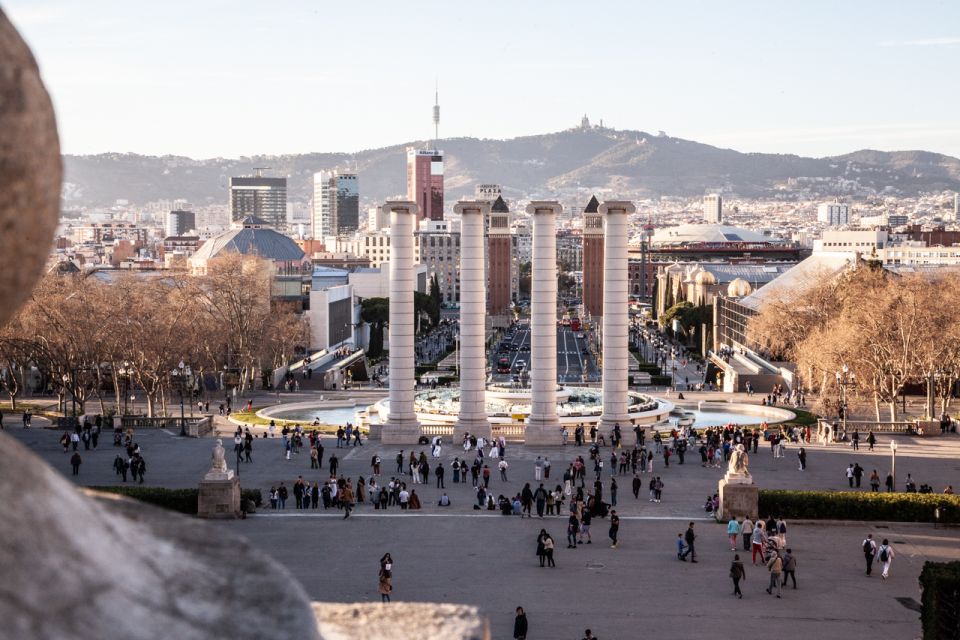
- Magic Fountain finale with dramatic architecture and shallow-water photo moments
Montjuïc Castle to the Magic Fountain: why this walk is worth your time
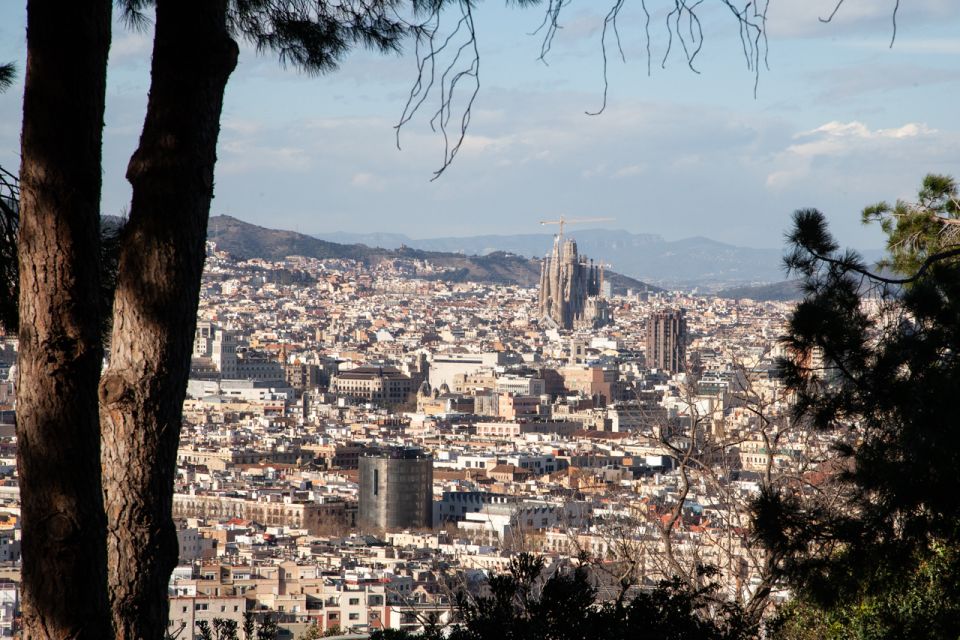
Montjuïc can feel like a big park with a city view. This tour turns it into something smarter: a walking route that ties scenery to culture, movement, and local identity. You’re not just drifting between attractions. You’re walking with context—why these gardens are here, what these monuments represent, and how the hill shaped parts of Barcelona’s story.
The pacing is also built for most people who want a taste of the hill without planning a full day. Expect about 2–3 hours on foot, with guided stops designed for photos and explanations. The guide’s English is live, so you’re not stuck trying to read plaques while everyone passes you.
Value matters, too. At $34 per person, you’re paying for someone to guide your eyes through the right order—especially useful on a hill like this where the best views are spread out and the stairs can surprise you.
You can also read our reviews of more walking tours in Barcelona



Starting at Montjuïc Castle: getting your bearings fast
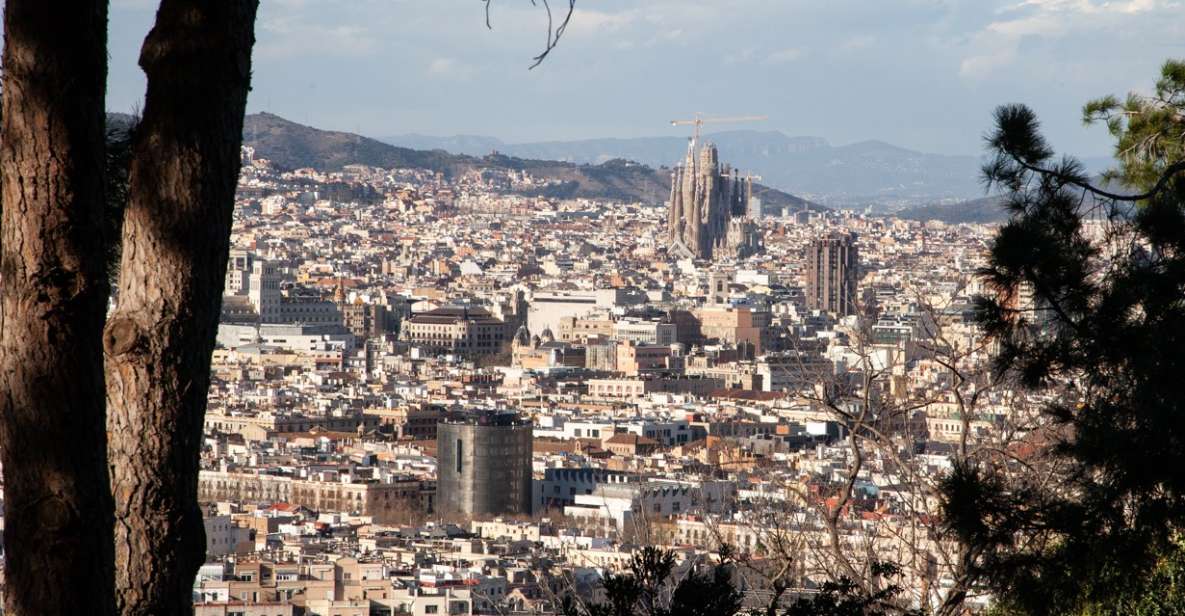
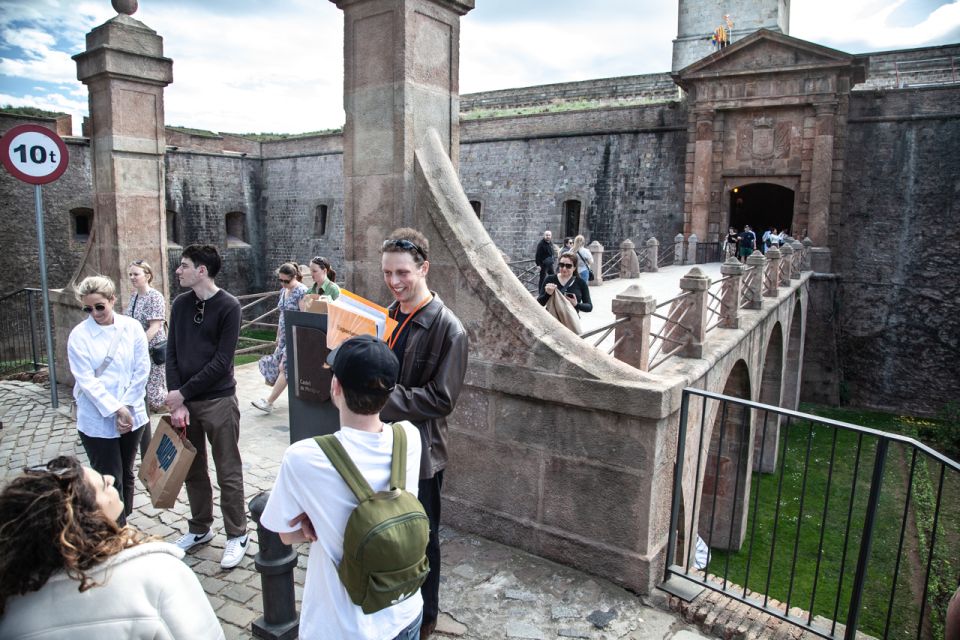
You begin outside Montjuïc Castle, which is a good move. Starting here helps you understand the hill’s structure before you start dropping down through the gardens. You’ll hear how Montjuïc connects to the foundation of Barcelona—then you’ll watch the city open up around you from the viewpoints near the top.
If you choose the upgrade, you add a guided visit inside the fortress before the walking portion. That extra time is best if you enjoy history in a more structured way or you like the idea of stacking viewpoints: castle first, then gardens and monuments.
Practical tip: use the meeting coordinates 41.36396300563352, 2.167071231085228 in Google Maps or your navigation app. And bring comfortable shoes—this is a walk that includes stairs even when the weather behaves.
Mirador del Alcalde: viewpoints plus real neighborhood history

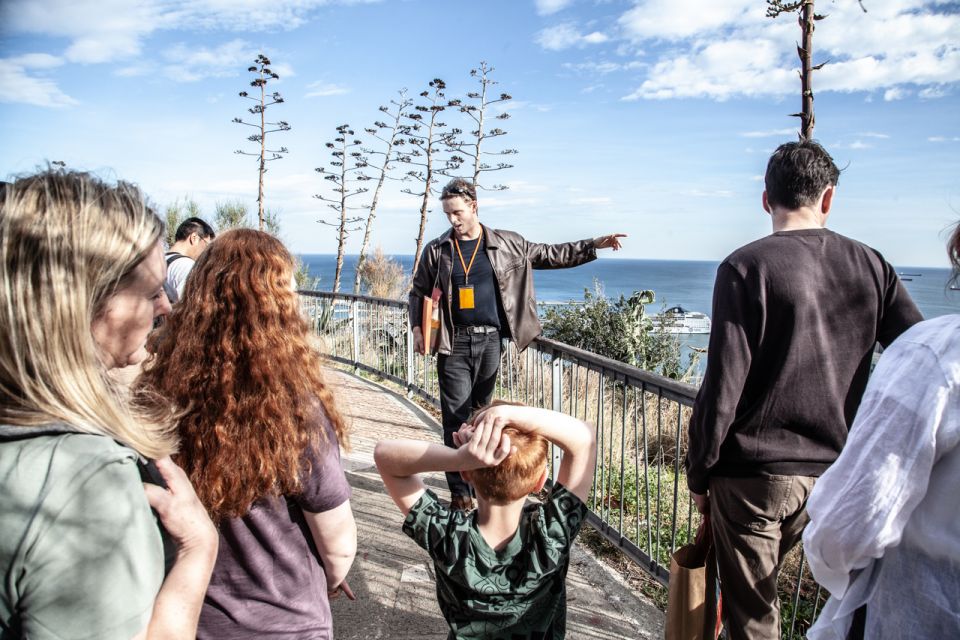
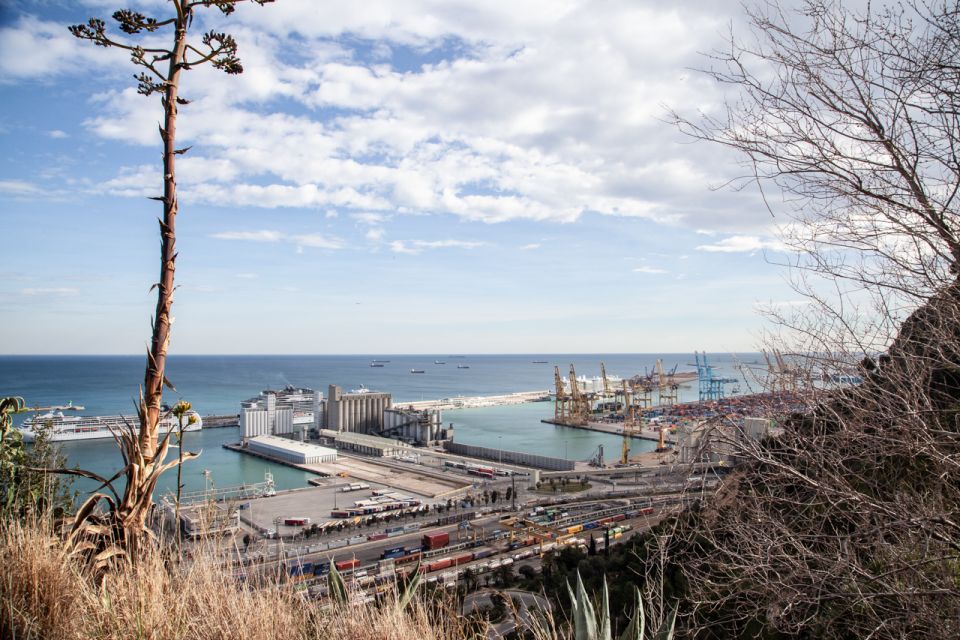
Your route heads toward Mirador del Alcalde. Here, the story shifts from scenery to people. You’ll hear about an ancient migrant community that once lived in this area, and how the hill changed over time.
That matters because Montjuïc isn’t only postcard Barcelona. It’s a working piece of the city’s past and present. When you understand why groups settled here and what the hill went through, the viewpoints stop feeling random. They feel like vantage points tied to human decisions—where to live, where to work, how the city expanded.
If you like photographs with purpose, this is one of your best stops. The guide’s job is to help you look in the right direction and understand what you’re seeing.
Joan Brossa Gardens: La Sardana is not just a dance, it’s a landmark
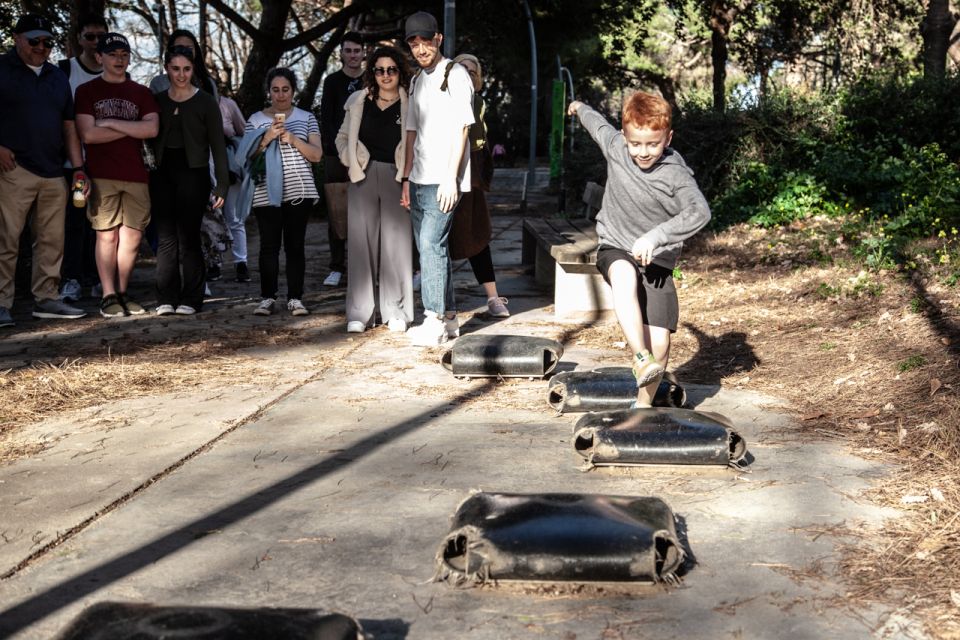
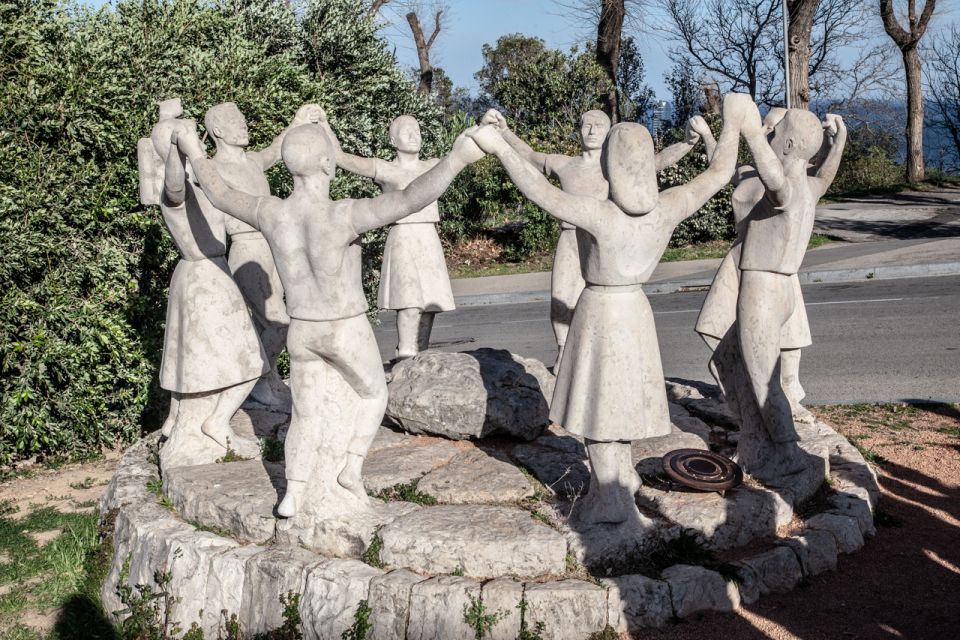
Next up is Jardins de Joan Brossa, a garden stop that works even if you’re not a garden person. The key attraction is a statue dedicated to La Sardana, the traditional Catalan circle dance.
This is where the tour’s theme becomes clear: you’ll see how Catalan identity shows up in public spaces. A dance might sound like something you watch on stage. On this route, it becomes something you walk toward, because the statue gives you a physical marker for the tradition.
Drawback to note: gardens mean you’ll be moving at a slower walking pace. That’s not bad—it just means the tour can feel more like a series of short wanders tied to stories, rather than a strict sightseeing sprint.
Carmen Amaya monument: connecting Catalan dance to flamenco roots
You’ll continue to a monument to Carmen Amaya, one of the famous flamenco dancers. This stop is valuable for anyone who wants more than a surface-level “Spanish culture” label.
The tour frames Carmen Amaya as part of the deeper roots of dance traditions connected to Catalonia. If you’re curious how flamenco and Catalan culture speak to each other, this portion gives you a route to follow with meaning.
Photo tip: monuments like this photograph well when you’re patient with angles. Take a moment, step back, and let the guide point out what to look for—then you’ll get photos that feel like they belong to the story, not just a shot from the sidewalk.
You can also read our reviews of more tours and experiences in Barcelona





Laribal’s Gardens and Teatre Grec: folklore meets the 1929 exposition
One of the more intriguing stretches is Laribal’s Gardens. Here, the tour leans into Montjuïc’s mystique, telling you about witches and wizards who used to gather there. Whether you take that as folklore or you just enjoy the atmosphere, it adds flavor to the garden walk.
Then you move toward Teatre Grec, the Greek Theater. The guide connects it to the 1929 Barcelona International Exposition, which helps you see the hill as a stage built for major city moments—not only a place for quiet strolling.
This pairing makes sense. Gardens supply the imagination; the theater supplies the structure. Together, they help you understand Montjuïc as a place where Barcelona has repeatedly turned public space into performance—through arts, festivals, and big civic events.
Magic Fountain finale: the best place to end, not just to look
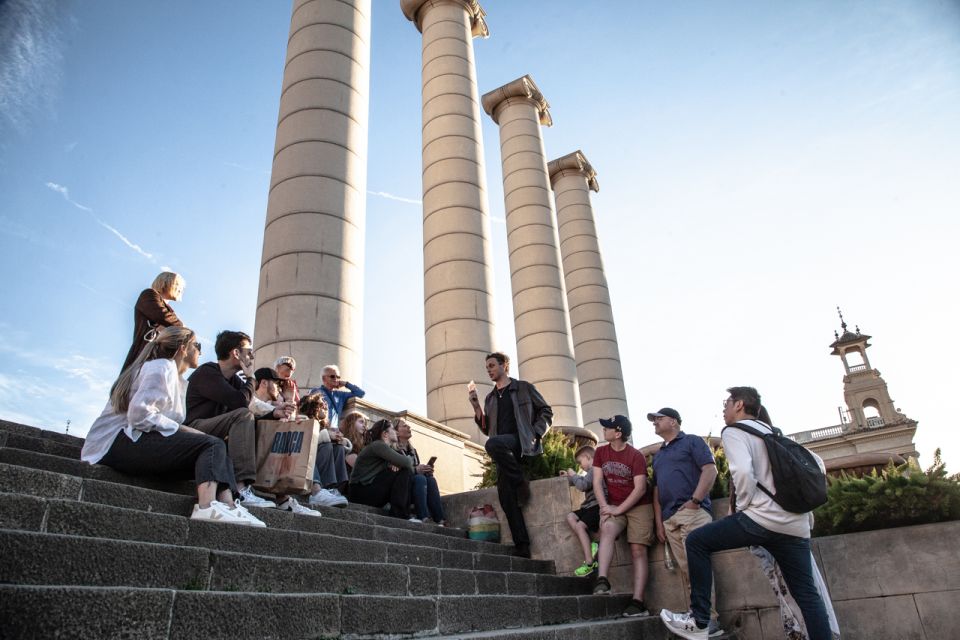
Your final stop is the Magic Fountain of Montjuïc. This is the payoff for the whole walk. You finish where the architecture feels dramatic and the setting is built for watching and photographing.
The fountain area is also surrounded by major views and buildings, including the Museum of Catalan Art, plus a walkway lined with shallow waterfalls. Even when you’re not staring at the water constantly, the surrounding design gives you plenty of picture angles and sightlines.
If you’re choosing this tour as your anchor on Montjuïc, ending here is smart. Most people want one strong “final scene,” and the fountain zone delivers it.
Optional flamenco upgrade: El Paraigua is intimate, and the context matters
If you upgrade for flamenco, you’ll head to El Paraigua, located at Carrer del Pas de l’Ensenyança 2. The show happens in a venue built into the walls of an 11th-century convent, which makes the setting feel more grounded than a generic theater space.
Show timing is specific:
- Fridays and Saturdays: 7 p.m. and 9 p.m.
- Wednesdays: 7 p.m.
The flamenco ticket includes a complimentary drink, so you’re not walking into the performance hungry or scrambling to find something nearby. For many people, this is the best way to extend the tour’s theme: the daytime walk explains roots and landmarks, and the evening show turns it into movement you can feel.
One consideration: you’re adding a longer day. If you’re already planning another evening activity in Barcelona, choose the show time that won’t stress you out.
Price and time: what your $34 actually buys you
At $34 per person for the walking portion, the cost isn’t just paying for access to attractions. You’re paying for guided interpretation of a hill that can be confusing on your own.
You get:
- An English-speaking guide
- Photo-friendly stops and viewpoint guidance
- A sequence of garden and monument moments tied together by culture and history
The optional upgrades cost extra, but they can be good add-ons if they match your interests. The castle upgrade is worth it if you like fortifications and want a more complete understanding of Montjuïc’s role. The flamenco upgrade is worth it if you want an evening performance with the tour’s dance thread already in your head.
If you’re the type who enjoys self-guided wandering, you can technically see Montjuïc independently. But the value here is the ordering and the stories—especially around La Sardana, Carmen Amaya, Laribal’s folklore, and the 1929 connection at Teatre Grec.
Who should book this Montjuïc tour (and who might not love it)
This works best for you if:
- You want guided storytelling tied to actual monuments and gardens
- You like viewpoints, and you’re okay walking a hilly route
- You’re interested in Catalan dance traditions, not just the generic idea of Spanish culture
You might want to skip it if:
- You need an itinerary that’s stroller- or wheelchair-friendly. This tour includes stairs and is not suitable for wheelchairs or strollers.
- You hate walking with frequent stops and explanations. This isn’t a nonstop panorama cruise; it’s a paced route built around learning moments.
Should you book this Barcelona Montjuïc walk?
Book it if you want a structured way to experience Montjuïc without turning it into hours of guesswork. The tour’s strength is how it connects viewpoints and gardens to Catalan identity—especially the dance landmarks and the mix of folklore and 1929-era context.
If you’re worried about the stairs, plan your shoes carefully and consider whether a shorter or alternative Montjuïc plan would suit you better. If you can handle the hill, you’ll likely feel like your time ended with a real sense of place, not just a list of places.
FAQ
Where do we meet for the Montjuïc walking tour?
You meet outside Montjuïc Castle. Use coordinates 41.36396300563352, 2.167071231085228 to find it, and look for the guide holding an ExperienceFirst sign.
How long is the tour?
The walking tour lasts about 2–3 hours.
Is the tour in English?
Yes, the tour is guided in English by a live tour guide.
Does the tour run if it rains?
The tour takes place rain or shine.
Is the tour accessible for wheelchairs or strollers?
No. The tour includes some stairs, so it is not accessible for wheelchairs and strollers.
What’s included in the base walking tour price?
You get the walking tour of the gardens and Montjuïc history, photo ops at viewpoints, and an expert English-speaking guide.
What does the castle upgrade include?
The upgrade adds a guided visit inside Montjuïc Castle, a 17th-century fort, before you begin the walking portion.
How does the flamenco show upgrade work, including timing and location?
If you upgrade, you go to El Paraigua at Carrer del Pas de l’Ensenyança 2. Shows are at 7 p.m. and 9 p.m. Fridays and Saturdays, and 7 p.m. on Wednesdays. Your ticket includes a complimentary drink.
Can I reserve now and cancel if my plans change?
Yes. You can reserve now and pay nothing today, and there is free cancellation up to 24 hours in advance for a full refund.