REVIEW · BARCELONA
Sant Pau Art Nouveau Site Skip The Line | Sant Pau Hospital
Book on Viator →Operated by THINGS TO DO IN FZCO · Bookable on Viator
Healing architecture should be this beautiful. With a skip-the-line Sant Pau Hospital ticket, you can step into the Recinte Modernista de Sant Pau fast and wander the campus at your own pace. I love the Catalan Art Nouveau details—domes, stained glass, tiled rooftops—and the way the whole place feels planned for air, light, and calm.
The main thing to know: this is admission-only (no guided tour included), so if you want the full medical-and-architecture story, you’ll need to rely on your own reading or an audio guide inside—plus plan your time carefully if you think you might leave and re-enter.
In This Review
- Key things to know before you go
- Sant Pau in your sights: a Barcelona hospital built for healing
- Enter faster: what skip-the-line really buys you
- Recinte Modernista de Sant Pau: the pavilions, domes, and stained glass
- The gardens: tranquility as part of the original treatment plan
- Underground tunnels: a surprising, practical side of a pretty place
- A hospital with deep roots: from 1401 to UNESCO status
- No guided tour included: how to make admission-only work for you
- Pricing and value: is $26.41 a fair deal?
- Photo stops that actually work (and how to avoid rushing)
- What you’ll likely notice most: the atmosphere and the restored spaces
- Getting there: near public transport, easy to fit into a day
- Should you book the Sant Pau Hospital skip-the-line ticket?
- FAQ
- Is the Sant Pau Hospital ticket skip-the-line?
- How long does the visit take?
- Is a guided tour included?
- What’s included with the ticket?
- When will I get confirmation after booking?
- Is Sant Pau Hospital near public transportation?
- What is the cancellation policy?
Key things to know before you go
- Skip-the-line entry helps you get started sooner, so you can spend your hour (or two) actually looking.
- Art Nouveau pavilions deliver nonstop photo stops, from stained glass to domed rooflines.
- Gardens with purpose were designed to support patient tranquility in the early 1900s.
- Underground tunnels add a surprising, practical side to the beauty above ground.
- Self-guided experience means you control the pace, but you’ll supply the context.
- UNESCO World Heritage status (since 1997) is a good hint you’re seeing something rare.
Sant Pau in your sights: a Barcelona hospital built for healing
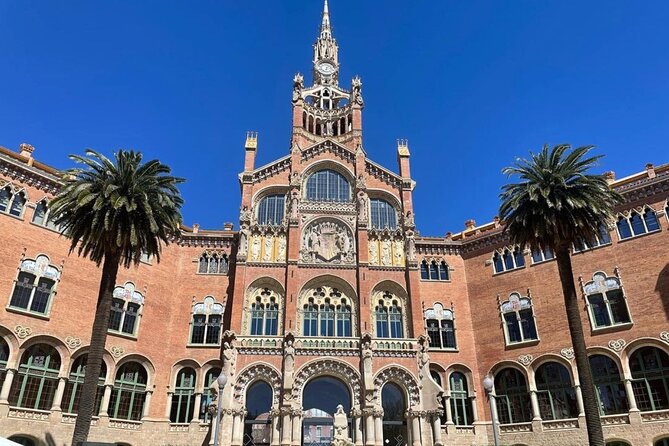
Sant Pau Hospital is one of those places where “historic” doesn’t mean stiff and quiet. It feels alive, even as you walk through the old hospital grounds. The complex is linked to a site that dates back to 1401, and today you’re touring the Art Nouveau/Modernisme masterpiece designed by Lluis Domènech i Montaner.
What makes it interesting is the big idea behind it: the architecture wasn’t just decoration. It was meant to support treatment. You can feel that in the layout—pavilions separated by open space, with gardens and calm walkways that slow your pace without you trying.
You’ll also notice this isn’t a single building. It’s a campus. And that matters for how you plan: this is the kind of visit where you’ll be moving through multiple highlights, not just stopping at one façade.
You can also read our reviews of more tours and experiences in Barcelona



Enter faster: what skip-the-line really buys you
At $26.41 per person, the ticket isn’t “cheap,” but the value comes from time. A skip-the-line entrance helps you avoid turning your visit into a waiting game. With a visit window of about 1 to 2 hours, those minutes are what keep the experience enjoyable.
If you’re pairing Sant Pau with another major stop in Barcelona—say you’ve already done Sagrada Família—this ticket is a smart way to keep your day flowing. Instead of spending your energy in a queue, you’re spending it on staircases, stained glass, and the little corners that make the place special.
One practical thought: since this is admission-only, you’ll get the most out of your skip-the-line if you also arrive with a plan. Decide what you care about most—architecture, gardens, tunnels, or the recreated ward spaces—so you can spend less time deciding and more time seeing.
Recinte Modernista de Sant Pau: the pavilions, domes, and stained glass
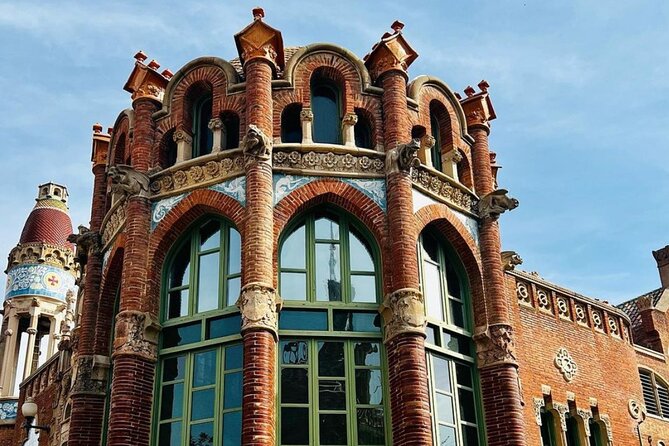
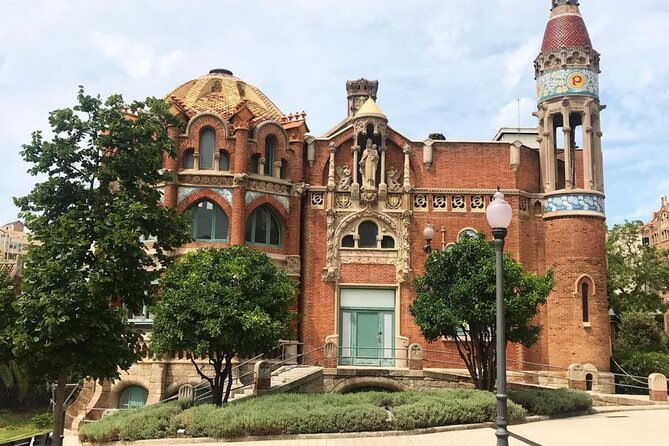
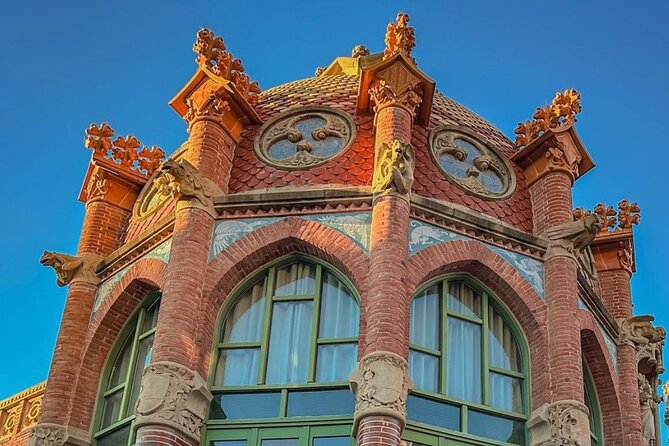
Walking into the Recinte Modernista de Sant Pau is like stepping into Barcelona’s design “highlight reel.” You’re surrounded by domes, ornate details, and the kind of work where you can keep finding small patterns long after your first “wow.”
The property includes 16 pavilions across the site, and the restored buildings you see are part of what makes the UNESCO recognition meaningful. Expect a lot of variation: some spaces look made for daylight, others feel more sheltered and intimate. That contrast is part of the hospital concept—patients needed air, light, and a soothing environment.
Here’s what to do once you’re inside:
- Take a slow first circuit just to get your bearings.
- Then return to your favorite façade angles for photos, because the light can change as you move between buildings.
- Pause at stained glass and mosaics long enough to notice colors and shapes. It’s the kind of detail that looks flat in passing but pops when you stay.
Also, this is the sort of place where you’ll probably want to bring your patience. The architecture is dense. Even if you’re not a design fanatic, you’ll still feel a pull to keep looking.
The gardens: tranquility as part of the original treatment plan
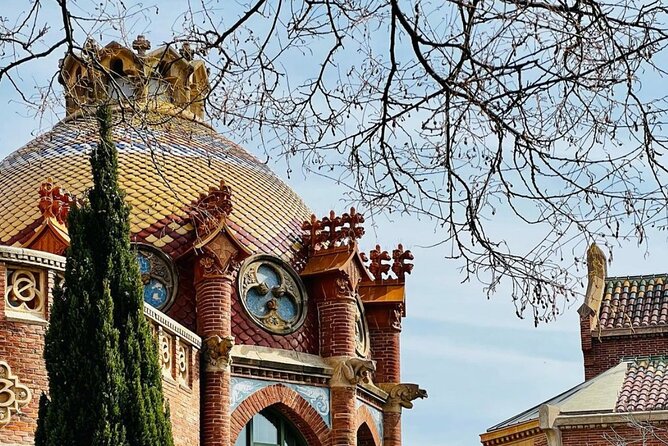
One of the strongest impressions here isn’t just visual; it’s emotional. The gardens are a major part of the experience, and they were planned to give patients a sense of tranquility in the early 20th century.
This is where the campus design shows its logic. The pavilions aren’t isolated for fun. They’re separated to support fresh air and healthier conditions, with greenery as the middle ground. As you walk, you’ll feel how easy it is to slow down. You stop rushing because the place is built to reward a slower pace.
If you’re visiting with kids, this is often the best section to reset everyone. If you’re an architecture person, it’s a break from detail overload. Either way, the gardens make this more than a photo stop.
Underground tunnels: a surprising, practical side of a pretty place
Sant Pau has an underground side, and it changes the mood fast. The highlights include underground tunnels, and once you find them, you’ll see the hospital wasn’t only about beauty above ground.
What tunnels add to the visit is perspective. You start to understand the campus as an operating system, not just a collection of pretty buildings. Movement between parts of the hospital makes sense—patients, staff, and services all needed connections that didn’t depend on the weather or public pathways.
If you like “how things worked” history, don’t rush this section. It’s a good reminder that even when an attraction looks like pure art, it was designed to function.



A hospital with deep roots: from 1401 to UNESCO status
The site’s timeline gives the buildings extra weight. The original hospital site goes back to 1401, and then the Modernisme-era construction took place between 1901 and 1930. That long build period is a clue that this wasn’t a casual project. It was planned, financed, and executed with serious intent.
The complex became a UNESCO World Heritage Site in 1997, which helps explain why people treat it like more than a local curiosity. The UNESCO designation is basically your indicator that the architecture and design planning have global cultural importance.
There’s also a more recent chapter. The site served as a large municipal hospital from 1912 to 2009, so it wasn’t just a historical set that stopped working centuries ago. It continued operating into modern times—then transitioned into the restored spaces you can explore today.
No guided tour included: how to make admission-only work for you
Since guided tour isn’t included, you’re doing this as a self-guided walk through the venue. That’s not automatically bad—some people prefer it. You can linger at the stained glass, skip the parts you don’t care about, and move between pavilions in your own rhythm.
But here’s the catch: without a guide, context can be uneven. The complex is full of design choices that have meaning, especially because the hospital was built with treatment in mind.
So how do you fix that?
- Before you arrive, decide what you want to learn. If the hospital’s medical purpose interests you, plan to read signs closely and take breaks in the spaces that explain design decisions.
- If you’re the type who loves stories, consider pairing your visit with a guided option on another booking day. The architecture is strong enough to carry the visit, but the history can go further with expert commentary.
One more practical note: one person reported being charged an additional entrance fee after leaving and coming back, even after being told re-entry was possible. If you think you might step out during your visit, confirm re-entry rules at the site so you don’t get surprised.
Pricing and value: is $26.41 a fair deal?
For $26.41 per person, the value depends on how you like to travel.
If you’re the type who hates queues and you want to spend your energy on seeing and photographing details, the skip-the-line entrance helps justify the cost. A 1 to 2 hour visit is long enough to cover multiple pavilions and still feel relaxed, especially if you’re not trying to do everything in one frantic loop.
If you’re only passing by with limited time, admission-only can still be worth it because the architecture does the heavy lifting. You’ll get lots of visual highlights: domes, mosaics, stained glass, and garden spaces built for calm.
If you’re expecting a full explanation delivered by a guide, you’ll feel the difference quickly since the ticket includes entry but not a guided tour. In that case, you may want to budget time to read and interpret on-site.
Photo stops that actually work (and how to avoid rushing)
This is a great place for photos, and that’s not just because it’s pretty. The campus layout gives you repeated chances to frame domes, rooflines, and colorful elements without feeling like you’re trapped in a single hallway.
A few photo tips that match how the site is designed:
- Start with exterior shots early when your eyes are fresh, then photograph interiors and stained glass once you’ve slowed down.
- Expect to stand still. The best color from stained glass and detailed surfaces usually comes when you pause and let your eyes adjust.
- Use the gardens as a reset. The green space helps your photos look balanced, not just like architectural wallpaper.
If you’re carrying a camera or smartphone gear, don’t plan to run. The best shots tend to come from deliberate angles and patient pauses.
What you’ll likely notice most: the atmosphere and the restored spaces
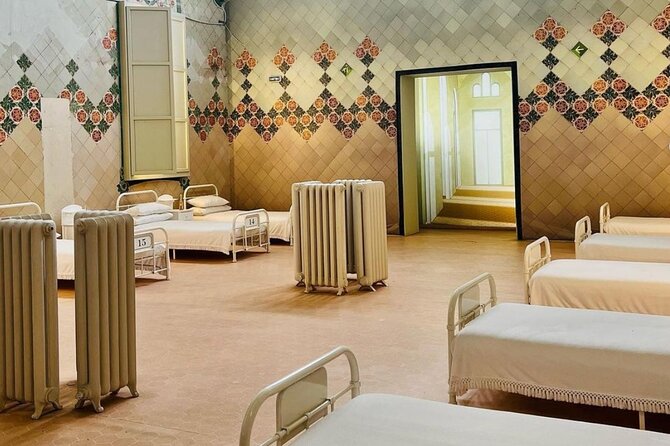
Even without a guide, you’ll likely feel the difference between plain museum vibes and this kind of campus. The pavilions aren’t just displays. They were built as wards and support spaces, and restoration keeps that original “hospital function” in the background.
One standout element from visitor experience is that a building recreates what an old ward looked like, including a solarium visiting room. That kind of recreated space helps you connect the architecture to real daily life in the hospital, even when you’re touring as a casual wanderer.
Put simply: you don’t just see Art Nouveau. You learn what it was trying to do.
Getting there: near public transport, easy to fit into a day
The venue is listed as being near public transportation, which is a big deal in Barcelona. You don’t want a complicated route that eats your best daylight hours.
With an estimated 1 to 2 hours, Sant Pau works well as:
- a calmer alternative to the busiest cathedral-area sights,
- an architecture-focused afternoon stop,
- or a “contrast visit” after another major landmark with heavier crowds.
If you like structured days, time this so you’re not racing right before dinner. You’ll want breathing room for gardens and tunnels.
Should you book the Sant Pau Hospital skip-the-line ticket?
Book it if you want a self-paced Art Nouveau campus experience with time-saving entry. The architecture is the main draw, and the gardens and tunnel spaces make it more than a quick exterior glance. If you like taking photos and moving at your own speed, this is a strong fit.
Skip it or add a plan if you’re expecting a fully explained guided narrative included in the price. This ticket covers admission, not a guided tour. You’ll need to do some of the connecting-the-dots yourself.
One last practical decision rule: if you’re the type who enjoys details—domes, stained glass, mosaics, rooflines—and you can comfortably spend an hour or two walking through pavilions, you’ll likely feel satisfied. If you want an all-in-one history lecture delivered for you, you’ll be happier pairing this visit with guided interpretation elsewhere.
FAQ
Is the Sant Pau Hospital ticket skip-the-line?
Yes. This experience includes a skip-the-line Sant Pau Hospital ticket for entry.
How long does the visit take?
It’s listed as about 1 to 2 hours.
Is a guided tour included?
No. Admission is included, but a guided tour is not included.
What’s included with the ticket?
Admission to the venue is included.
When will I get confirmation after booking?
Confirmation is expected within 48 hours of booking, subject to availability.
Is Sant Pau Hospital near public transportation?
Yes, it’s near public transportation.
What is the cancellation policy?
This experience is non-refundable and cannot be changed for any reason.