REVIEW · BARCELONA
Barcelona Architecture Walking Tour With Casa Batlló Upgrade
Book on GetYourGuide →Operated by ExperienceFirst · Bookable on GetYourGuide
One city, two hours of genius. This tour gives you a clear, guided way to see Barcelona Modernism without getting lost in the details. I love how the guide translates big-idea architecture into things you can actually notice on the street, especially at Sagrada Família. I also like the pacing: you cover major stops on foot, but you still get time to look closely and connect the dots.
My favorite part is the street-level storytelling. When you’re standing in front of buildings by Antoni Gaudí and the Modernist architects around him, the explanations make the carvings, shapes, and symbolism feel less like decoration and more like a whole design system. In real tours, guides like Alberto and Antònia have been praised for pointing out what most people miss and even steering the group toward shade and strong photo angles.
The only drawback is physical time: plan on 2 hours of walking and being out there rain or shine. If you want zero walking or lots of indoor museum time, this may feel a bit too active.
In This Review
- Key things you will notice on this Barcelona architecture walk
- Start at Sant Pau: Art Nouveau that used to be for care
- Sagrada Família from Avinguda Gaudí: symbols you can actually find
- Passeig de Gràcia: a walk through Barcelona’s Modernist rivalries
- Casa Amatller: the chocolate stop that keeps things human
- Casa Lleó i Morera: ending with stained glass and craft
- Upgrade choices: architect guide vs. Casa Batlló admission with AR
- Architect guide upgrade
- Casa Batlló upgrade (admission + AR experience)
- Price and value: what $34 really buys you
- Timing, comfort, and how to prepare for rain-or-shine walking
- Who this tour is best for (and who might want something else)
- Should you book this Barcelona Architecture Walking Tour with Casa Batlló upgrade?
- FAQ
- How long is the walking portion of the tour?
- Where does the tour start and end?
- Is there an English-speaking guide?
- Is Casa Batlló entry included?
- What’s included at Casa Amatller?
- Is the tour wheelchair accessible?
- Is there free cancellation?
Key things you will notice on this Barcelona architecture walk
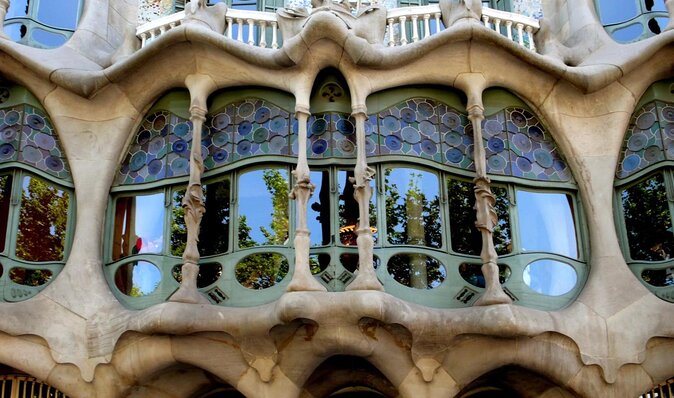
- Sant Pau Recinte Modernista’s 27-building complex and its healthcare-modernist roots
- Sagrada Família symbols on the façades, explained in practical, face-to-building terms
- Passeig de Gràcia houses tied to names like Gaudí, Domènech i Montaner, and Puig i Cadafalch
- Casa Amatller chocolate sample, plus a real taste break without turning it into a food tour
- Optional architect guide that adds extra context when the buildings start feeling complicated
- Casa Batlló upgrade with admission and an included AR experience
Start at Sant Pau: Art Nouveau that used to be for care
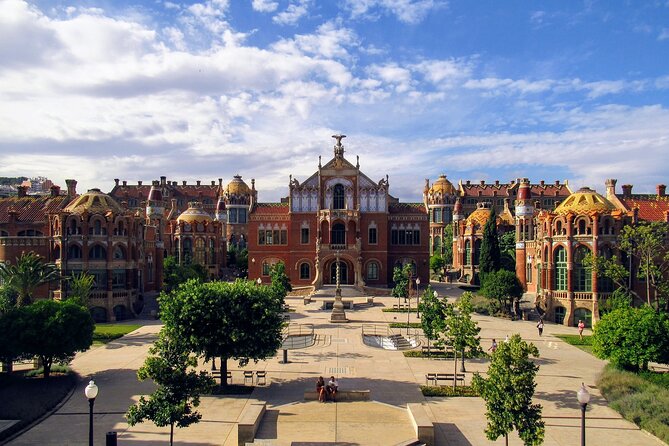
You begin at the Sant Pau Recinte Modernista, a former hospital designed by Lluís Domènech i Montaner. It’s not just pretty façades on a postcard. You’re looking at architecture built for how people needed to live, move, and recover—healthcare translated into Catalan Modernism.
One reason I like this opening stop is that it resets your brain. Before you hit the more famous fanfare of Sagrada Família and Gaudí, Sant Pau helps you understand that Barcelona’s designers weren’t only thinking about beauty. They were thinking about function, flow, light, and human scale, even in a huge complex of 27 buildings.
A big bonus here: you can spot details fast because the complex is designed to be read. Even if you’re not an architecture nerd, you’ll start noticing how ornament, structure, and materials work together. You’ll carry that skill to the next stops.
You can also read our reviews of more walking tours in Barcelona



Sagrada Família from Avinguda Gaudí: symbols you can actually find
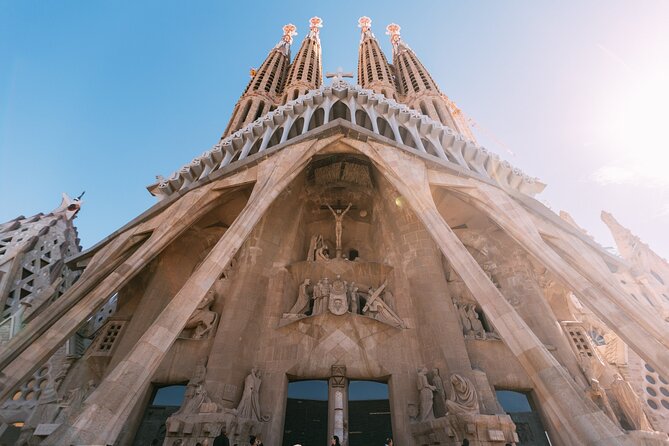
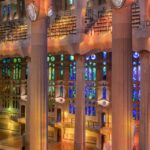
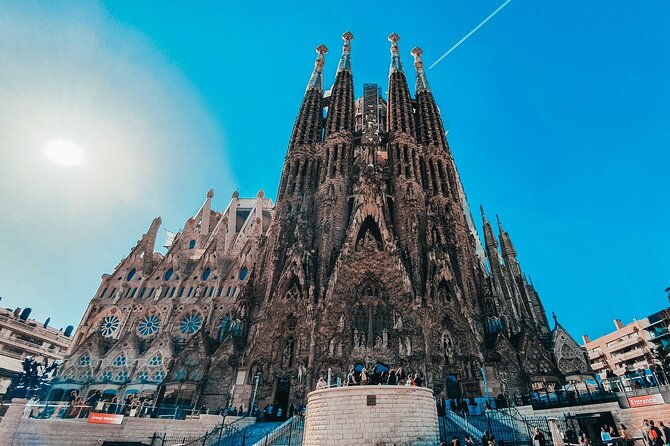
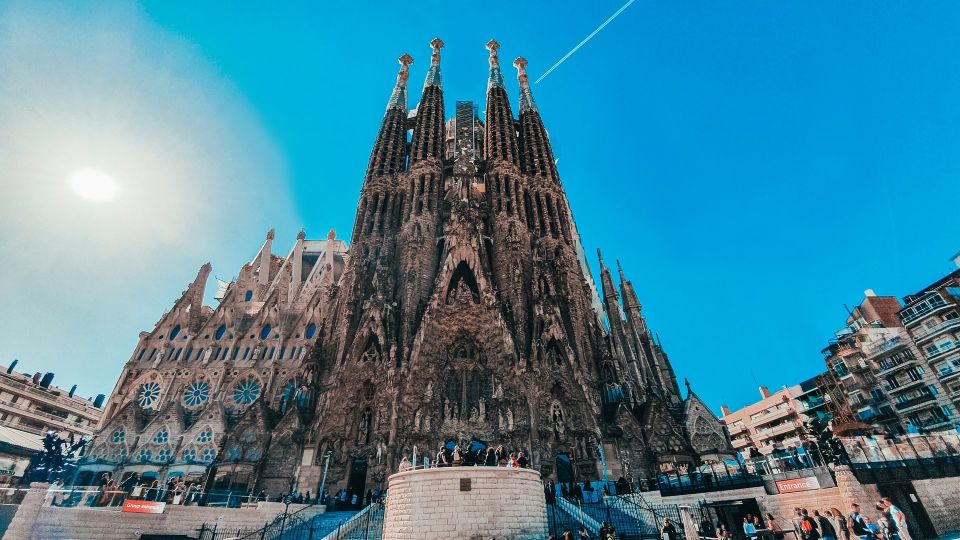
After Sant Pau, the route takes you along Avinguda Gaudí toward Sagrada Família, Barcelona’s symbol and the city’s most famous Gaudí project. The real value of having a guide here is that you’re not just staring at a massive construction. You’re learning how to look.
You’ll be pointed toward the symbols carved into the two façades, so when you see them from different angles, it starts making sense instead of feeling like random stone detail. And since the tour is designed for viewing from more than one side, you get that rare moment where the building changes as you walk, not just as you zoom in with your phone.
This is also where the guides shine. In past tours, guides such as Alberto have been praised for storytelling that makes you notice features you would otherwise walk right past. Antònia has also been mentioned for knowing good photo spots and timing, which matters around Sagrada Família because the light can change quickly.
Practical tip: keep your comfortable shoes on standby. You’ll want a steady stance when you’re stopping to look up, and this part is where you’ll do the most slow, head-tilting sightseeing.
Passeig de Gràcia: a walk through Barcelona’s Modernist rivalries
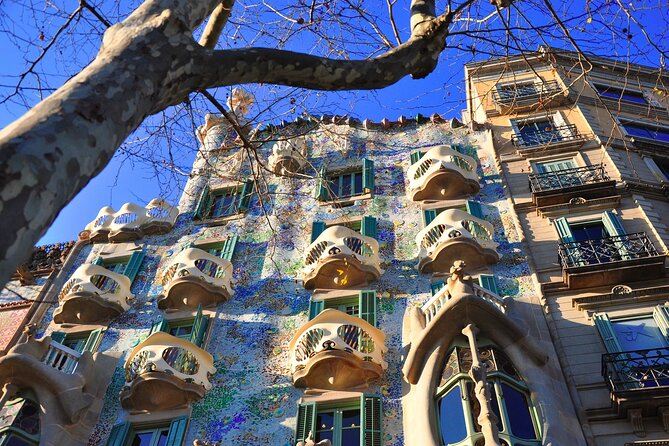
Next comes the stroll along Passeig de Gràcia, the boulevard where Barcelona shows off. This stretch is where you can compare styles, not just collect monuments. You’ll hear about Modernist buildings designed by architects like Gaudí, Domènech i Montaner, and Puig i Cadafalch, which helps you see how Catalan Modernism evolved rather than staying stuck in one look.
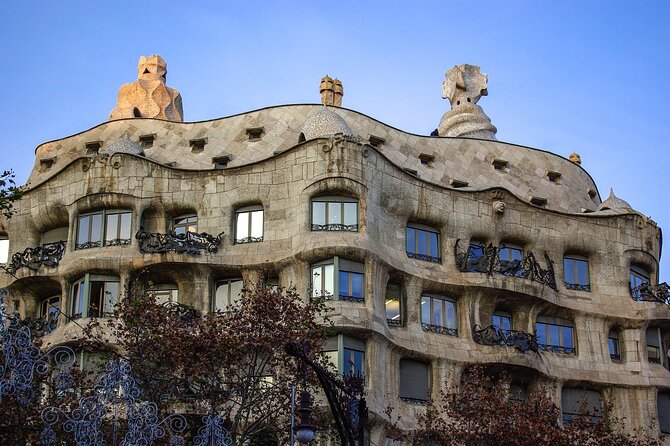
You’ll also get guided attention to major houses on or near the route, including Casa Milà and Casa Batlló, plus Casa Lleó Morera. Even if you don’t go inside every building, the exterior explanations are a strong payoff. The guide helps you understand how forms, curves, and decorative systems relate to the architect’s idea—not just to the era’s taste.
Why I think this part is such good value: Passeig de Gràcia can feel like a lineup of big names. With a guide, it turns into a visual comparison. You start seeing patterns, exaggerations, and design choices that match each architect’s approach.
You’ll also appreciate the practical tour rhythm. Guides have been praised for finding shady spots at regular intervals, and that small touch matters when you’re sightseeing for hours in warm weather.
Casa Amatller: the chocolate stop that keeps things human
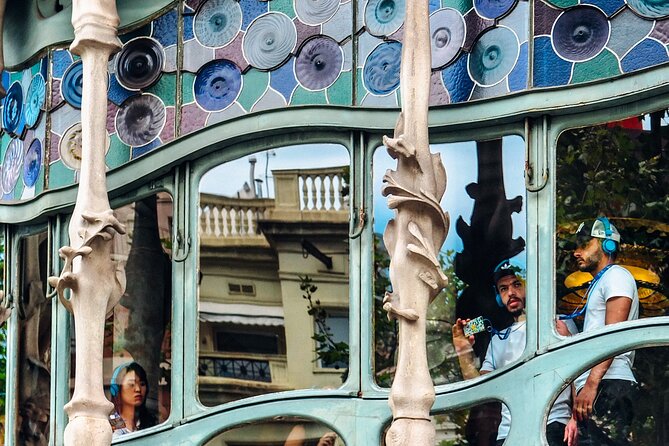
At Casa Amatller, the tour takes a turn that I really appreciate: a break that’s tied to the neighborhood, not tacked on randomly. You learn about the Barcelona chocolate-making process that began in 1797, and then you get a chocolate sample at the shop (the broader selection is not included).
This stop works because it’s sensory. Architecture can make your brain work hard—symbols, styles, and details. Chocolate gives you a reset without losing the thread of Barcelona’s culture. And Casa Amatller is still a Modernist building worth looking at, so you’re not abandoning the theme.
If you’re traveling with people who aren’t thrilled by hours of façades, this is the moment that usually gets a nod. It also gives you a little time to sit, regroup, and cool down before you continue.
Casa Lleó i Morera: ending with stained glass and craft
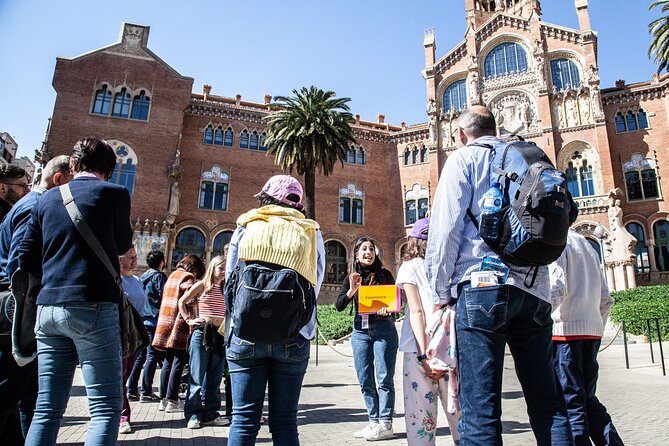
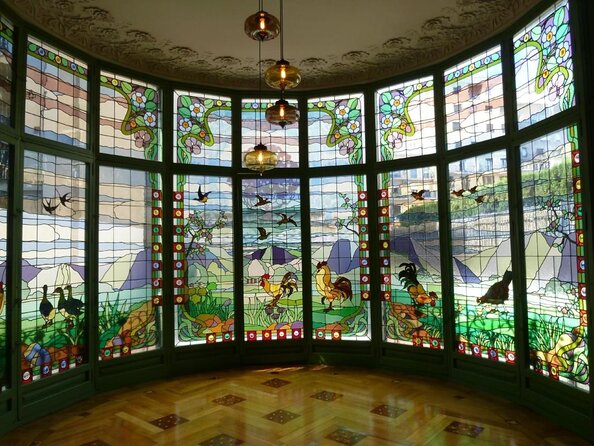
The tour ends at Casa Lleó i Morera, also known as one of Domènech i Montaner’s best-preserved modernist buildings. Now it’s occupied by the luxury fashion store Loewe, but the building itself is still very much the star.
What you’ll focus on at the end: impressive stained glass, mosaics, sculptures, and woodwork. This is the part where the tour’s earlier lessons click. You started by understanding Modernism’s design purpose at Sant Pau. Then you learned to read symbolism at Sagrada Família. Here, you see how craftsmanship becomes a language all by itself.
Ending at Casa Lleó i Morera also makes sense because you’re finishing in Passeig de Gràcia’s historic modernist zone, right near where you can keep exploring on your own afterward. Drop-off is at Casa Lleó Morera on Pg. de Gràcia 35, so you exit into a neighborhood built for follow-on wandering.



Upgrade choices: architect guide vs. Casa Batlló admission with AR
This tour offers two optional upgrades, and both can be worth it depending on your style.
Architect guide upgrade
If you choose the expert architect guide, you’ll likely get more layers of context. This is the best option if you tend to ask questions like why this façade detail is here, or how different architects solved similar design problems.
It’s also a good choice if you’ve got a short time in Barcelona and want to make your viewing smarter instead of just broader.
Casa Batlló upgrade (admission + AR experience)
The Casa Batlló upgrade is the one tied to getting inside. The base tour doesn’t include entry to buildings, but the upgrade does include Casa Batlló admission, plus an AR experience.
If you’re the type who likes to see how design translates into rooms and lighting, this upgrade can turn the stop into a bigger story. I’d pick it if Casa Batlló is the one building you most want to experience beyond the street view.
One consideration: upgrades add cost, and you’ll want to decide if inside access matches your priorities better than extra time out in the neighborhood.
Price and value: what $34 really buys you
At $34 per person, the base tour price is fairly easy to justify because you’re getting a local guide and a structured walk across multiple major architecture stops. On top of that, you also get a chocolate sample at Casa Amatller.
The big value point is not that every building entrance is included. The tour is about guided seeing—learning how to look at façades, symbols, and design choices—so you don’t just pass by landmarks. That’s why the guide matters. It’s the difference between collecting names and understanding what you’re actually looking at.
If you’re considering upgrades, treat them as add-ons to your priorities:
- Choose the architect guide upgrade if you want deeper interpretation.
- Choose Casa Batlló admission if inside access and the AR experience are on your wish list.
Either way, the base tour already covers a lot of visual ground in 2–3 hours, with a reality check of 2 hours of walking.
Timing, comfort, and how to prepare for rain-or-shine walking
Plan to be outside for a while. The tour runs rain or shine, and it includes that steady walking block, so your comfort choices matter.
Bring:
- Comfortable shoes you can stand and walk in for a couple hours
Also do yourself a favor:
- Wear clothes that handle changing light and temperature
- Have your camera ready, but expect to put it away sometimes so you can listen and look properly
The guides in past tours have been noted for making the experience easier during tough conditions, including steering guests toward shady spots and smart photo viewpoints. Still, you should plan like it’s city walking first, not museum time first.
Who this tour is best for (and who might want something else)
I think this is a strong fit if you want:
- An expert to connect the dots between Modernism in general and Gaudí in particular
- Guided stops across multiple standout buildings in a short time
- A walking plan that doesn’t just say what something is, but helps you notice why it looks the way it does
It’s especially good for first-time visitors to Barcelona who want their architecture day to feel organized. You’ll also like the structure if you enjoy seeing a topic build as you go—from Sant Pau’s healthcare Modernism to symbolic façades at Sagrada Família, then to the refined craft at Casa Lleó i Morera.
You might want a different format if:
- You need minimal walking
- You only want indoor building time
- You’re completely uninterested in historical context and symbolism
Should you book this Barcelona Architecture Walking Tour with Casa Batlló upgrade?
Book it if you want a focused architecture day with a guide who helps you see more than the obvious. The value is in the interpretation: symbols at Sagrada Família, Modernist comparisons on Passeig de Gràcia, and a thoughtful ending at Casa Lleó i Morera. The Casa Amatller chocolate sample is a smart break that keeps the experience from turning into hours of standing still.
Upgrade if it matches your priorities. If Casa Batlló is a must for you, take the admission + AR add-on. If you like understanding the design thinking behind the details, choose the architect guide upgrade.
If you’re the type who enjoys slow, careful looking, this tour is one of the more sensible ways to do it in a limited amount of time.
FAQ
How long is the walking portion of the tour?
The tour lasts 2–3 hours, and it involves about 2 hours of walking.
Where does the tour start and end?
It starts at the Recinte Modernista de Sant Pau. It ends at Casa Lleó i Morera on Pg. de Gràcia 35.
Is there an English-speaking guide?
Yes. The live tour guide is English.
Is Casa Batlló entry included?
Casa Batlló admission is included only if you choose the optional upgrade. Entry to buildings is otherwise not included.
What’s included at Casa Amatller?
You get a chocolate sample at Casa Amatller.
Is the tour wheelchair accessible?
Yes, the tour is wheelchair accessible.
Is there free cancellation?
Yes. You can cancel up to 24 hours in advance for a full refund.