REVIEW · BARCELONA
Shore Excursion: Barcelona City Tour Hop-On Hop-Off
Book on Viator →Operated by Julia Travel S.L · Bookable on Viator
Barcelona by bus beats guessing at street maps. This hop-on hop-off cruise shore excursion is built for short ports of call: you ride a double-decker bus, hop off when something catches your eye, then jump back on later. The sliding roof is a smart touch, especially in spring or shoulder season when Barcelona’s weather can turn fast.
I like the flexibility of one ticket that works across both routes, so you can build a plan around your walking energy instead of cramming everything in one go. If you want a quick overview, you can stay aboard for the big highlights, and if you want details, you can get off near the sights and move at your pace.
One thing to consider: logistics can be a challenge on busy days. The meeting point can feel far from the cruise, traffic can slow the ride, and stop areas can get crowded or hard to navigate, especially around major hubs.
In This Review
- Key things I’d plan around on this Barcelona hop-on hop-off bus
- Barcelona Hop-On Hop-Off Basics for Cruise Shore Days
- Two Connected Routes: How the East Loop Shapes Your Day
- East Route stop list, in plain English
- West Loop Highlights: WTC, Montjuïc, and Camp Nou
- West Route stop list, in plain English
- Sliding Roof, Air-Conditioning, and the On-Board Audio System
- Finding Stops Under Pressure: Traffic, Crowds, and Route Changes
- Price and Value: When $39.65 Makes Sense
- When It’s a Great Fit, and When You Should Skip It
- Should You Book Barcelona City Tour Hop-On Hop-Off?
- FAQ
- How much does the Barcelona hop-on hop-off tour cost?
- About how long is the tour?
- Is one ticket valid for both routes?
- Is it an open-top bus, and will I get rained on?
- Is there an English audio option?
- Are food and drinks included?
- Can I cancel for a full refund?
Key things I’d plan around on this Barcelona hop-on hop-off bus
- Two connected routes with a single ticket, so you can mix beach time, Old City wandering, and stadium or hill viewpoints
- Open-top comfort with a sliding roof, plus air-conditioned double-decker buses for temperature swings
- English narration through the audio system, with wireless looping for people who need it
- A discount booklet for major attractions, shops, and restaurants, which can help offset the ticket price
- Lots of stops, meaning flexibility, but also potential waiting time when buses fill up at peak moments
Barcelona Hop-On Hop-Off Basics for Cruise Shore Days
This is a classic Barcelona hop-on hop-off setup designed for people who land in port and want a fast, low-stress sense of the city. You get on the bus, use the stops to orient yourself, and decide later what deserves a second visit. It’s especially useful when you only have a limited window between ship departure times and getting back on board.
The buses are double-decker and open-top, but not “all weather” in the sense of a full roof over every inch. What you do get is that sliding roof feature that helps you stay drier if rain hits while you’re rolling through neighborhoods. That matters because Barcelona rain can be light and sudden, and you don’t want your sightseeing ruined before you even get rolling.
You’ll also notice the ticket format is practical. It’s a mobile ticket experience, and you’re using an on-board audio system instead of trying to read a phone screen while the bus is moving. The tour runs in English, with a multilingual audio guide system available.
You can also read our reviews of more city tours in Barcelona


Two Connected Routes: How the East Loop Shapes Your Day
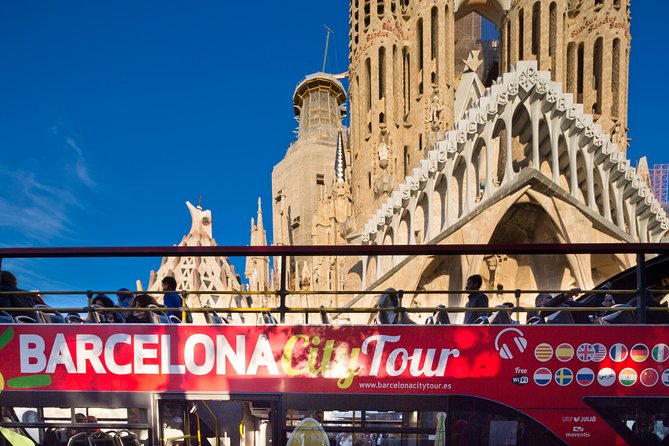
The biggest advantage of this system is that your ticket is valid on both the East Route and the West Route. That means you don’t have to choose one “side” of Barcelona forever. You can start with one loop, jump to the other when you find a stop you love, then return to your ship area when it’s time.
On the East Route, the planning logic is simple. It leans toward the older-city vibe, the waterfront, and then into several of the city’s most visited sights and viewpoints. You pass through areas like Pla de Palau, Barceloneta Beach, and Port Olímpic, so you get that sea-and-city feeling without needing separate transport.
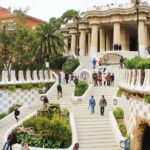
From there, the route keeps stretching into the “city landmarks and gardens” zone, with stops such as Glòries, Recinte Modernista de Sant Pau, Park Güell, and then the Gaudí-focused stop cluster around La Pedrera – Casa Milà and Casa Batlló. Even if you aren’t booking interior visits, these are the kinds of stops where seeing the exterior from the bus or hopping off for a closer look helps you understand what areas are worth prioritizing.
You also get to hop around a green space stop and a city-center “walk-and-stroll” park stop, including Arc de Triomf and Ciutadella Park. In real terms, this is where you can switch from “just riding” into “I want to walk for an hour.”
East Route stop list, in plain English
- Pla de Palau: central waterfront area to orient yourself
- Barceloneta Beach: easy on-ramp to the beach neighborhood
- Port Olímpic: marina vibe and harbor views
- Platja Bogatell and Platja de la Nova Mar Bella: more beach options outside the most frantic stretches
- Forum Sport: a practical stop point for the Forum area
- Glòries: a busy junction-like area where buses meet lots of movement
- Recinte Modernista de Sant Pau: the Modernista complex stop
- Park Güell: hill park viewing area
- La Pedrera – Casa Milà and Casa Batlló: major architecture exterior stops
- Barcelona City Tour: a key stop in the route network
- Arc de Triomf and Ciutadella Park: landmark gate area and a large park stop
West Loop Highlights: WTC, Montjuïc, and Camp Nou
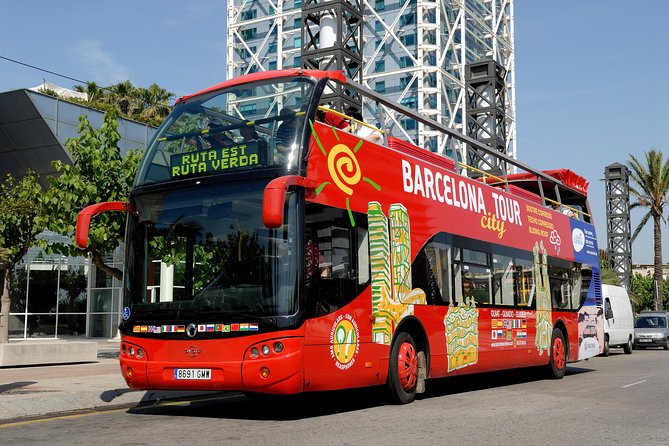
The West Route feels like the “big landmarks plus wider viewpoints plus stadium” loop. If your cruise day includes time for photos and maybe one ticketed stop, this is the side that helps you match Barcelona’s range: business-and-fairs areas, art and culture stops, a stadium stop, and the Montjuïc hill zone.
The loop starts around WTC Barcelona Parking, then runs through stops like Avinguda Miramar, Olympic Ring, and Museu Nacional d’Art de Catalunya. Even if you don’t go in, these names are useful. They flag the kinds of districts where you’ll likely find elevated views, broad plazas, and large tourist infrastructure.
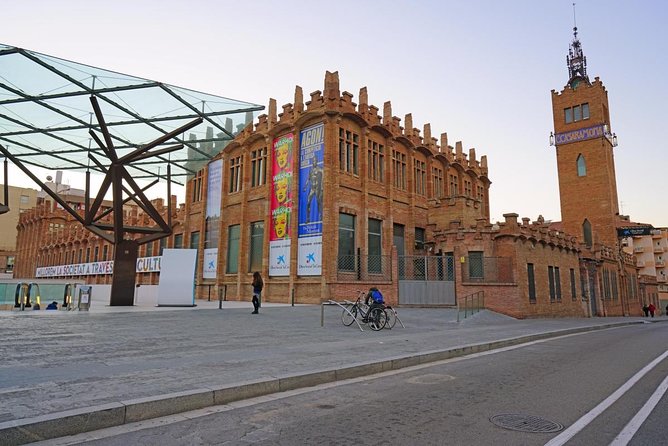
Then it swings into culture-and-city texture with stops including Poble Espanyol and CaixaForum Barcelona. From there, you get Plaça d’Espanya and onward toward the transit-and-transport hub area around Parking Estació de Sants. That last one matters because it can help you reposition if you’re trying to reduce walking or connect to other plans.
Finally, it reaches the football-and-stadium stop: Spotify Camp Nou, plus the route continues around Av. Diagonal and toward Plaça de Francesc Macià. Be aware that this stop can be cancelled due to works, with an alternative location provided by operators. The bus then returns back through La Pedrera – Casa Milà and into Sagrada Família, and loops toward Port Olímpic and back to Pla de Palau.
West Route stop list, in plain English
- WTC Barcelona Parking: main business/transport-style hub stop
- Avinguda Miramar (two stops): access points for the Miramar area
- Olympic Ring: named for the Olympic Park/arena zone
- Museu Nacional d’Art de Catalunya: museum-area stop
- Poble Espanyol: Spanish village stop
- CaixaForum Barcelona: arts/culture center stop
- Plaça d’Espanya: large plaza area stop
- Parking Estació de Sants: near the major station zone
- Spotify Camp Nou: stadium stop
- Av. Diagonal (two stops): major boulevard stops
- Plaça de Francesc Macià: may be cancelled due to works
- La Pedrera – Casa Milà: repeats as a reconnection point
- Sagrada Família: major landmark stop
- Barcelona Nord Bus Station: transit node
- Carrer de la Marina, 37: smaller street stop access point
- Port Olímpic and Pla de Palau: waterfront return stops
- Roch Xarcuters i Formatgers: a food shop stop
You can also read our reviews of more tours and experiences in Barcelona



Sliding Roof, Air-Conditioning, and the On-Board Audio System
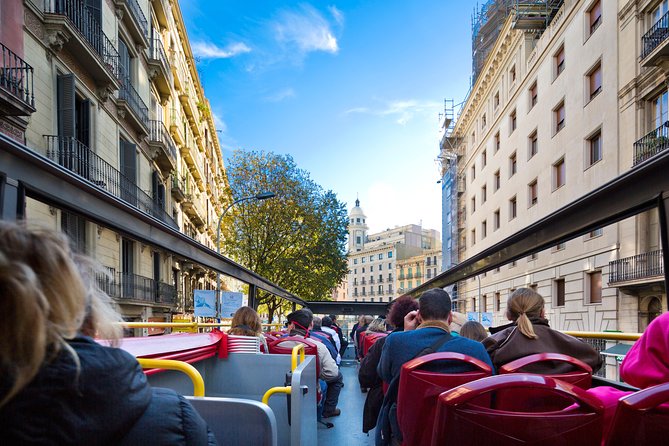
This tour is open-top, but it doesn’t ignore comfort. The buses are air-conditioned double-decker open coaches, so you’re not stuck baking in summer heat. On cooler days, that AC can feel strong, but it’s still better than overheating when you’re bouncing between waterfront shade and city streets.
The sliding roof is the standout weather feature. It helps keep you dry if rain starts while you’re riding. Still, if you’ve ever watched a storm move across the Mediterranean, you know conditions can shift fast, so plan as if you might need a rain layer even with that roof.
The audio system is also a big practical plus. It’s multilingual, and the experience is offered in English. You’ll use headphones without wires through a looping setup, which is especially helpful for people who rely on that adaptation. Seats with the system are signaled, and priority goes to passengers who need it to hear the audio clearly.
One annoyance to plan for: the audio connection can be imperfect on some buses. If you’re sensitive to audio glitches, bring a backup pair of headphones or plan to keep your expectations realistic when you’re listening through an onboard system.
Finding Stops Under Pressure: Traffic, Crowds, and Route Changes
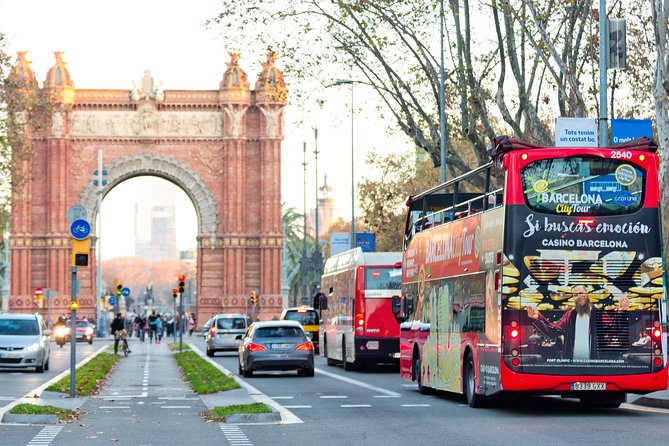
Hop-on hop-off tours sound easy on paper, but cruise days are where reality shows up. You’re dealing with port crowds, traffic lights, and people trying to get on buses in the same time window. The ride can feel slower than it looks on a map.
The meeting point from the cruise can also be a weak link. One key piece of advice: don’t assume you can get there easily at the last minute. Barcelona is busy around ports, and the stop area can be inconvenient if you need to walk farther than expected before your bus even arrives.
Stop-finding is another potential friction point. If you’re relying on signage from a distance, you might miss the correct stop at first. Even people who know what a hop-on hop-off stop looks like can find confusion when there are multiple companies and similar-looking vehicles in the same corridor.
Crowds can hit hard around major hubs. That’s especially true around areas like the World Trade Center zone, where the stop area can feel chaotic. When buses fill up, you may wait for the next one, or you may need to shuffle plans based on where you can actually get on.
Finally, the itinerary isn’t frozen. Stops can change due to events (demonstrations, sports events, cultural events, official acts) and due to public works. The route also notes that at least one stop can be cancelled due to works, with an alternative location provided. So it’s smart to treat your plan as flexible and not as a strict checklist.
Price and Value: When $39.65 Makes Sense
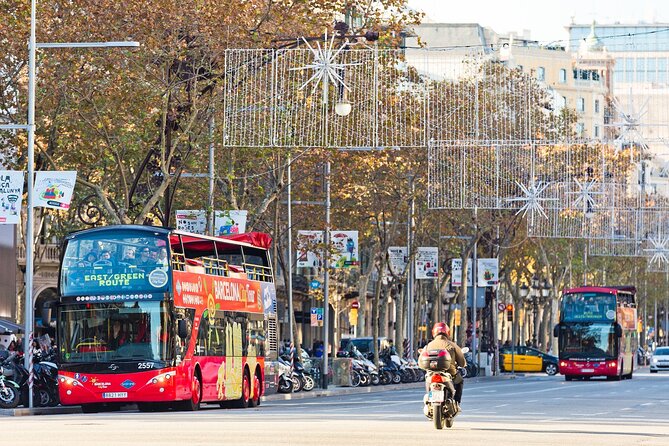
At $39.65 per person for about 2 hours 20 minutes (approx.), this is not a “cheap” bus ticket. But hop-on hop-off value isn’t only about ride time. It’s about saving time and decision stress, especially when you have a cruise schedule and a short runway to see a lot.
For that money, you get more than transportation. You get a single ticket that covers both routes and all stops, plus an audio guide system and a discount booklet. That booklet includes discounts for many of Barcelona’s major attractions, shops, and restaurants. Even if you only use one or two of those discounts, it can help your overall spend feel less “tour tax” and more like planning tools.
There’s also a small but real value in having an air-conditioned ride that still lets you see the city from above. The double-decker format is useful for photographing your “first impressions” of neighborhoods, especially when you’re deciding later whether to do a guided tour, book an attraction, or just wander on foot.
If you’re traveling with people who have different energy levels, this is a good compromise. The bus handles the transport, and the stops let everyone choose their own intensity, from quick photo pauses to longer off-bus exploration.
When It’s a Great Fit, and When You Should Skip It
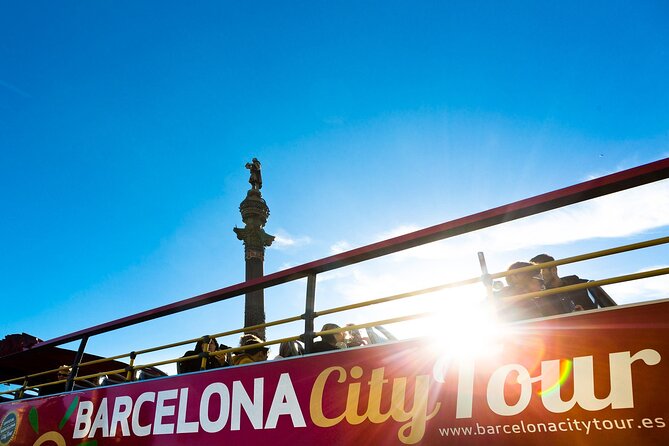
This tour fits best when you want an overview and don’t want to run a tight schedule. It’s ideal for first-time orientation, for cruise shore days where you’re trying to avoid wasting time on transfers, and for people who want to pick priorities after seeing what’s near each stop.
It’s also a good match if you like beaches plus landmarks plus one or two “big ticket” stops. You can build a day around the waterfront stops like Barceloneta Beach and Port Olímpic, then shift toward the landmark cluster around Park Güell, La Pedrera – Casa Milà, and Casa Batlló. Or go the stadium-and-museum way through Spotify Camp Nou and Museu Nacional d’Art de Catalunya.
I’d skip it, or at least treat it as secondary, if your main goal is a very deep visit to one site. This is a moving overview tool. If you already know exactly what you want to do and you don’t need a city orientation, you may get more value by going directly to specific sights and skipping the extra time sitting in traffic.
Should You Book Barcelona City Tour Hop-On Hop-Off?
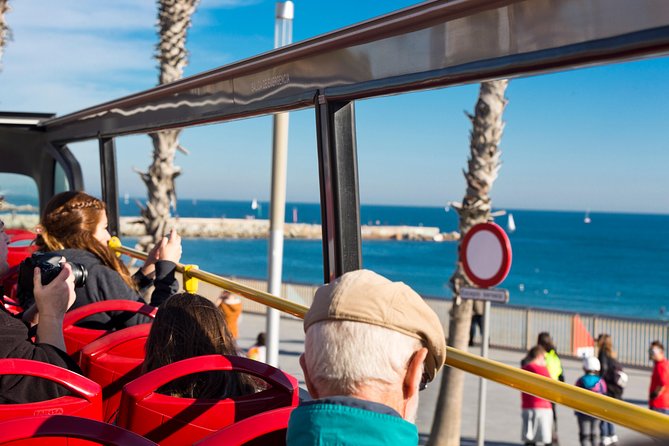
Book it if you want flexibility, a quick sense of distance and neighborhoods, and an easy way to string together Barcelona’s waterfront, parks, and landmark stops. It’s also a solid choice if you’ll use the discount booklet and you value English narration.
Hold off if you expect a calm, uncrowded experience on a peak day, or if you know you don’t do well with waiting when buses fill up. Also, if your cruise schedule is tight and your meeting point is far, plan extra buffer time so you’re not stressed before you even find your bus. A hop-on hop-off tour works best when you give it a little slack.
FAQ
How much does the Barcelona hop-on hop-off tour cost?
The price is $39.65 per person.
About how long is the tour?
It runs for approximately 2 hours 20 minutes.
Is one ticket valid for both routes?
Yes. Your ticket is valid on both the East Route and West Route.
Is it an open-top bus, and will I get rained on?
The buses are open-top double-deckers, but they have a sliding roof designed to keep you dry if it rains.
Is there an English audio option?
Yes. The tour is offered in English, and there is a multilingual audio guide system.
Are food and drinks included?
No. Food and drinks are not included unless specified.
Can I cancel for a full refund?
Yes. You can cancel up to 24 hours in advance for a full refund, based on local time.