REVIEW · BARCELONA
Ramblas, Old Town, Gothic and Gaudi Architecture Walking Tour
Book on Viator →Operated by Nostos Tours · Bookable on Viator
You can spot 2,000 years of Barcelona in one afternoon. This is a small-group walking tour that strings together the Gothic Quarter, Las Ramblas, and Gaudí-era Modernist facades in a route that makes the city click. I like how it mixes story + street-level details, and I also like that it keeps you outdoors and moving so you see how neighborhoods feel in real time. One thing to plan for: most of the big sights here are exterior only, and key monument interiors are not included.
If you do this early in your trip, you’ll come back later with better context. Guides in this format (including names like Filipa, Anna, Loic, Yannis, Christian, Cristian, and Henrietta) are consistently described as fast-moving, story-driven, and great at pacing, so you’re not just reading plaques. The possible drawback is simple: expect a lot of walking over uneven old-town streets, so bring shoes you trust.
In This Review
- Key highlights to expect on this Barcelona walk
- Why 2 hours 15 minutes feels like a full Barcelona primer
- Meeting near Plaça de Catalunya and ending by Casa Batlló / Casa Mila
- Stop 1: Gothic Quarter streets, Roman ruins, and the Cathedral area
- Las Ramblas: a quick hit of markets, bars, and daily energy
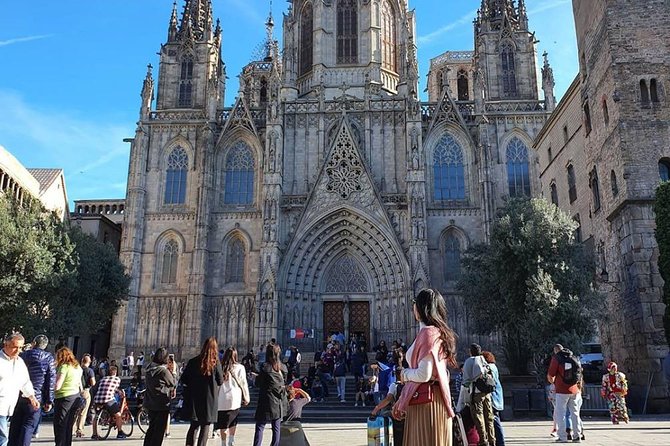
- Catedral de Barcelona area: medieval Gothic style at the heart of it all
- Plaça Sant Felip Neri and Plaça Reial: where the tour pauses for atmosphere
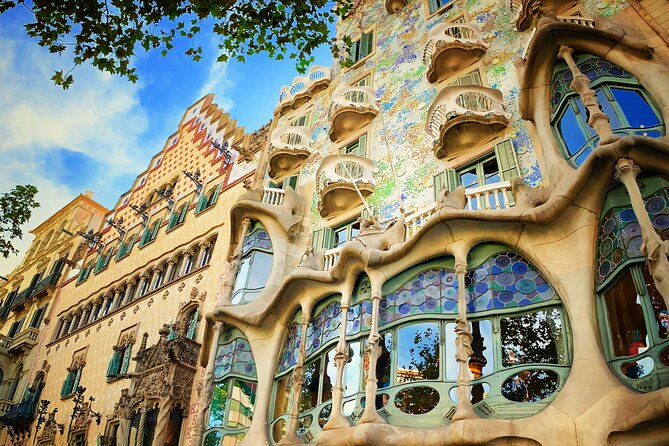
- Gaudí exterior moment: Casa Batlló, the bones-and-dragons look
- La Pedrera (Casa Mila): Gaudí’s biggest private home, seen from the street
- Passeig de Gràcia: the big Modernist street where everything connects
- Casa Amatller: Puig i Cadafalch’s Modernist house beside Gaudí
- Price and what you’re really paying for ($35.37, no monument entrances)
- Headsets and a short metro ride: the bits that affect comfort
- What kind of traveler should book this tour?
- Should you book this Ramblas, Gothic Quarter and Gaudí walking tour?
- FAQ
- Is the tour offered in English?
- How long is the Ramblas, Old Town, Gothic and Gaudi Architecture Walking Tour?
- Are attraction tickets included (like the cathedral or Gaudí buildings)?
- Do I need a headset to hear the guide?
- Will I use public transportation during the tour?
- Where does the tour start and end?
Key highlights to expect on this Barcelona walk
- Gothic Quarter first: Roman ruins, medieval churches, and the Barcelona Cathedral area, with plenty of photo-friendly stops.
- Las Ramblas, but used smart: you get a quick, focused taste without trying to “tour” the whole street.
- Two special squares: the tucked-away feel of Plaça Sant Felip Neri and the nightlife-meets-arcades scene at Plaça Reial.
- Gaudí on the outside: Casa Batlló, La Pedrera (Casa Mila), and Casa Amatller are shown as exterior landmarks rather than inside tickets.
- Passeig de Gràcia as your Modernist spine: about 45 minutes along the grand boulevard and its house facades.
- A small group cap (15): you move at a human pace and can ask questions without yelling.
Why 2 hours 15 minutes feels like a full Barcelona primer
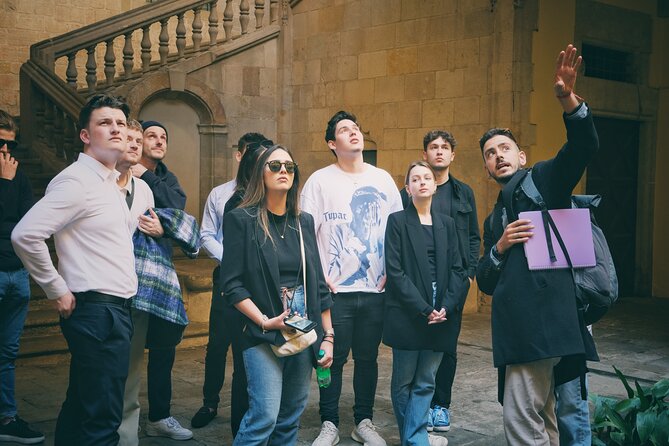
This tour is built for orientation. You’re not trying to “see everything” in the city; you’re stitching together the neighborhoods that explain Barcelona’s personality: ancient layers in the Gothic Quarter, everyday life along Las Ramblas, and the Modernist glamour of Gaudí’s street-level world.
I like that the time budget matches the reality of walking Barcelona. In just over two hours, you get multiple micro-scenes—cathedral-area streets, courtyard-like corners, and wide-boulevard architecture—so you’re never stuck in one mood too long.
You’re also paying for a specific kind of value: a professional guide plus guided walking of the Old Town, and guided walking that focuses on main Gaudí buildings from the outside. At this price point ($35.37), the ticket value mostly comes from how efficiently the route is paced, not from pre-paid monument entries.
You can also read our reviews of more walking tours in Barcelona



Meeting near Plaça de Catalunya and ending by Casa Batlló / Casa Mila
The walk starts at a clear landmark: Foot Locker, Plaça de Catalunya 20 (Ciutat Vella). That’s a convenient jump-in point because you’re starting right where many people arrive, grab transit, or orient themselves.
The tour ends at Carrer del Consell de Cent 310 (Eixample), near Casa Batlló and Casa Mila (La Pedrera). That matters because it sets you up for the next step of your day: you can continue on foot toward more Modernist facades, pop into nearby cafés, or schedule interior tickets on your own time.
Also, this is a maximum of 15 travelers, so it typically feels less like herding and more like a guided stroll with stops. One more practical detail: it’s offered in English and you receive a mobile ticket, which is easy to pull up on the go.
Stop 1: Gothic Quarter streets, Roman ruins, and the Cathedral area

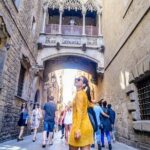
You start in the Gothic Quarter, which is Barcelona’s oldest city core. Expect medieval churches, old stone alleys, and those small courtyard-and-square moments that make the area feel human-sized even when the buildings are huge. This stop is planned for about 30 minutes, and it includes time in the Barcelona Cathedral area.
The big drawback here is also the most common one: admission tickets are not included. So if you want to go inside the cathedral or any other monument that requires entry, you’ll need to budget separately.
What you’ll get even without entrances is the street logic. The Gothic Quarter is the kind of place where the guide can point out how Roman-era remnants and medieval religious architecture relate to the current street plan. That kind of context helps your photos look smarter later, because you’ll know what you’re actually seeing.
Las Ramblas: a quick hit of markets, bars, and daily energy
After the Gothic Quarter, you’re given a very short moment on Las Ramblas. The plan is about 2 minutes, and the focus is the “most famous street” energy—markets, bars, restaurants—without turning it into a long, exhausting walk down the entire boulevard.
This stop works well because it shifts you from old stone to everyday Barcelona. You get the vibe check: this is a place locals and visitors both use, and it’s a corridor where food, noise, and street life overlap.
If you hate crowds, know this section is brief. If you love people-watching, you’ll probably wish it were longer—but the route keeps moving toward quieter squares and the Modernist showpieces.
Catedral de Barcelona area: medieval Gothic style at the heart of it all
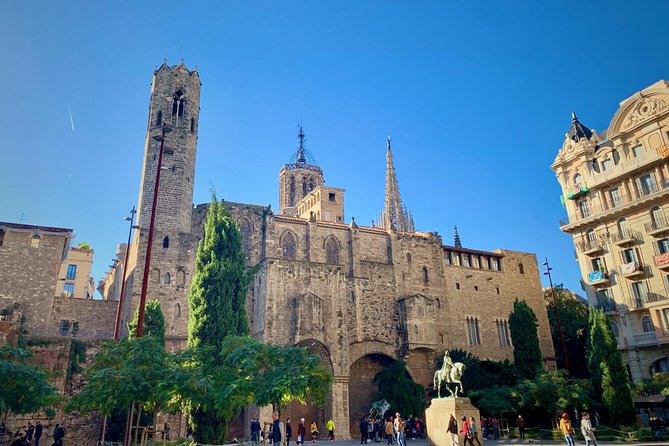
Right after the main Gothic Quarter introduction, there’s a short stop at Catedral de Barcelona, again with that medieval Gothic look. The time here is brief—around 3 minutes—so think of it as a visual anchor.
The practical takeaway: this is where you confirm you’re really in the Gothic story. It’s also a place where you can get your bearings, because the cathedral-area orientation helps connect the earlier alleys to later wide streets like Passeig de Gràcia.
Since admission is not included, don’t build your schedule around a full interior visit on this tour day. Instead, treat this as the moment you understand the shape and scale of the area.




Plaça Sant Felip Neri and Plaça Reial: where the tour pauses for atmosphere
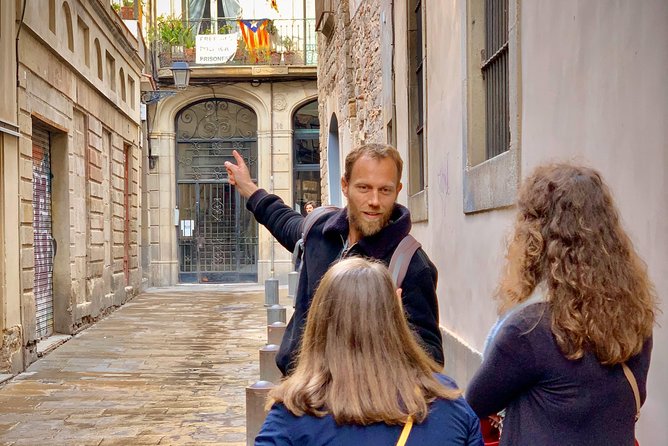
Two of the most rewarding parts of the itinerary are square stops, because squares let your brain reset. You’ll spend about 5 minutes at Plaça Sant Felip Neri, described as a beautiful tucked-away square in the middle of the Old Town. These are the places where old Barcelona feels calm, even if you’re only a few steps from busier streets.
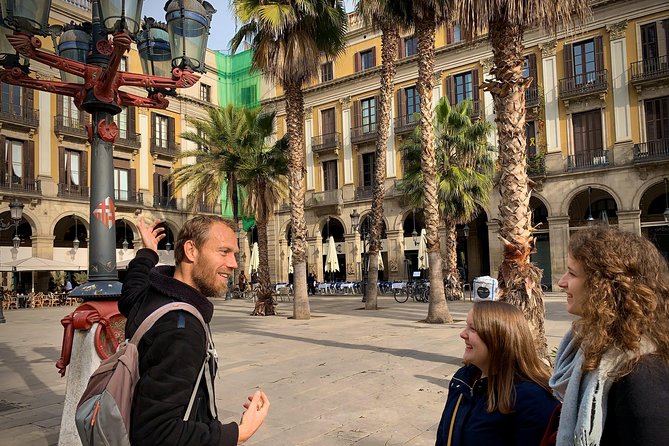
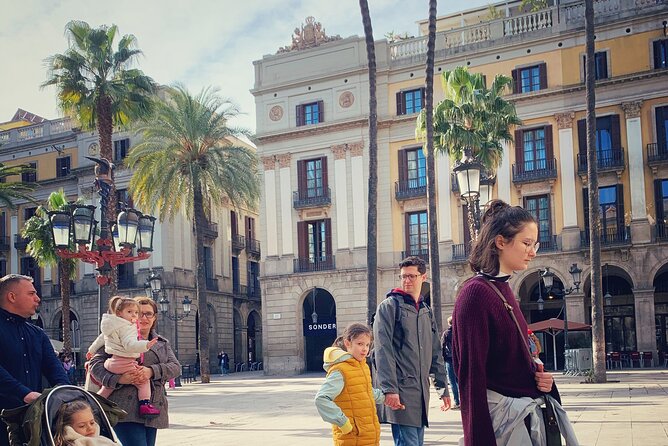
Then comes Plaça Reial for another 5 minutes. This one is bigger and more ceremonial: arcade-lined space, restaurants, palm trees, and that night-life energy. It’s a great contrast to the quiet Old Town corners because it shows a different social rhythm.
If you’re the type who always wants a reason to stop and look, these squares deliver. If you’re the type who only wants big-ticket landmarks, you might skim them—but I’d still treat them as part of the “real Barcelona” feel.
Gaudí exterior moment: Casa Batlló, the bones-and-dragons look
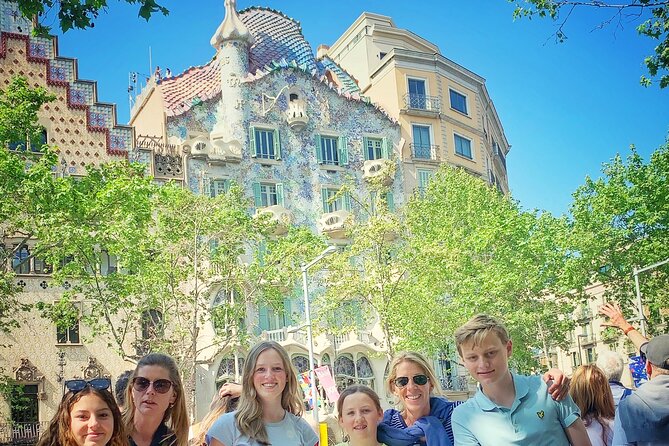
Next up, you get Casa Batlló as an exterior stop for about 10 minutes. The guide shows it as Gaudí’s famous fantasy-style building—often described in playful terms like a bones-and-dragons vibe or an Alice-in-Wonderland-ish look.
Here’s the important planning piece: you don’t go inside. Admission isn’t included, so you’re viewing architecture as art from the sidewalk and nearby vantage points.
Why this stop still matters: Casa Batlló is one of the easiest ways to learn Gaudí’s visual language quickly. You’ll start noticing how he treats curves, color, and surface texture as if the building were alive. Even if you plan to buy an interior ticket later, seeing it this way first helps you choose what to look for.
La Pedrera (Casa Mila): Gaudí’s biggest private home, seen from the street
After Casa Batlló, you’ll move to La Pedrera – Casa Mila, for about 5 minutes. This is Gaudí’s biggest private home for the Mila family, often called the mountain house because of its sculptural exterior feel.
Again, the tour is exterior only. No ticket is included, so your value here is perspective—learning how the building’s form sits in the street and how it compares visually to Casa Batlló.
If you’re a first-timer, this is a smart sequencing move. You see two major Gaudí facades back-to-back, then you transition into the long Modernist corridor of Passeig de Gràcia, where the style becomes a whole neighborhood conversation.
Passeig de Gràcia: the big Modernist street where everything connects
The biggest time block is Passeig de Gràcia, around 45 minutes. This is the fancy boulevard stretch where Modernist architecture shows up in full wardrobe: house facades, decorative details, and even street elements like lampposts and tiles.
This is also where the guide can help you see patterns. Gaudí sits among other Modernists here, so you start to understand that Barcelona’s architecture isn’t one-off genius moments. It’s a whole design era with competing styles and shared tastes.
If you’ve got energy, use this time to slow down and really look at textures—stonework, ornament placement, and how buildings line up along the street. It’s easier to do that with a guide because you’re not constantly asking where to go next.
Casa Amatller: Puig i Cadafalch’s Modernist house beside Gaudí
At the end of the main Gaudí corridor, there’s a short stop at Casa Amatller by Puig i Cadafalch, around 5 minutes. It’s right next to Gaudí’s Casa Batlló, so it’s a great comparison moment.
The tour keeps it simple: you’re getting a quick, exterior look at another major Modernist house. Since admission isn’t included, don’t expect to step inside unless you’ve arranged it separately.
That said, Casa Amatller’s presence next to Gaudí’s work is a small lesson in design variety. You’ll see how the same street can support different interpretations of Modernism, not just one style dominating the block.
Price and what you’re really paying for ($35.37, no monument entrances)
At $35.37 per person for about 2h15, the pricing makes sense if you want guidance and structure more than you want pre-purchased tickets.
Here’s the honest value picture:
- Included: professional guide, guided Old Town walking, and guided walking of main Gaudí buildings from the exterior.
- Not included: monument tickets for places like the cathedral area and Gaudí interiors (the tour does not go inside Casa Batlló or La Pedrera).
So, if you dream about going inside big interiors, you’ll likely spend extra. But if your main goal is to learn, orient, and enjoy the streets, the package does the job.
You’ll also get a mobile ticket and a small group size capped at 15, which is one of those “silent” value boosters. Less crowding usually means more chance to hear your guide and more space at stops to take photos without constant flow-pressure.
Headsets and a short metro ride: the bits that affect comfort
Two small logistics items can change how smooth your tour feels.
First, a radio headset is not included. There’s a rental cost of €1 per person, paid at the start to an external provider. The tour provides this because sound in narrow streets can be tough. If you have trouble hearing, plan for the headset.
Second, there’s a short metro ride during the tour. You’ll need a public transport ticket for that ride. The instructions say to bring your own or get it from your guide.
Strollers and families can fit into the plan. One reported scenario included a metro hop, but elevators were available, which matters a lot for mobility planning.
What kind of traveler should book this tour?
Book this if you want a structured introduction that still feels like walking through real neighborhoods. It’s especially good for:
- First-time Barcelona visitors who want context fast
- People who care about architecture but don’t need to spend hours in lines
- Travelers who like stories as much as photos (the guide style described here often includes humor and pacing built for asking questions)
It’s also a good choice if you want to see how the Old Town leads into the Modernist boulevard. You’ll leave with a clear “map in your head,” which makes the rest of your trip easier.
If you’re determined to do interiors of major monuments right away, you might find this is only half a day of sightseeing. In that case, treat it as the framing act and add interior tickets separately on another time slot.
Should you book this Ramblas, Gothic Quarter and Gaudí walking tour?
Yes—if your priority is orientation, architecture storytelling, and a route that balances ancient streets with Gaudí’s exterior magic. The price is reasonable for what you get: a guided Old Town walk, a guided Modernist corridor experience, and a small group with time to actually look.
Skip it or adjust your expectations if you need interior access on the day. Since the biggest Gaudí stops here are exterior-only and monument entries are not included, you’ll want to plan separate ticket time if you’re trying to do everything in one day.
If you can, schedule this for your first or second day. It’s the kind of tour that helps you walk the city with more confidence afterward, because you’ll understand what you’re seeing and why it matters.
FAQ
Is the tour offered in English?
Yes. The tour is offered in English.
How long is the Ramblas, Old Town, Gothic and Gaudi Architecture Walking Tour?
It runs for about 2 hours 15 minutes.
Are attraction tickets included (like the cathedral or Gaudí buildings)?
No. Monuments tickets are not included. The tour notes specific stops where admission is not included, including the cathedral area and major Gaudí buildings you view from the outside.
Do I need a headset to hear the guide?
A radio headset is not included. There is a rental cost of 1€ per person, paid at the start to an external provider.
Will I use public transportation during the tour?
Yes. There’s a short metro ride during the tour, so you’ll need a public transport ticket (either bring your own or get it from your guide).
Where does the tour start and end?
It starts at Foot Locker, Plaça de Catalunya 20 (Ciutat Vella) and ends at Carrer del Consell de Cent 310 (Eixample), near Casa Batlló and Casa Mila.