REVIEW · BARCELONA
Picasso Small Group Walking Tour with Museum Skip the Line Ticket
Book on Viator →Operated by Turisme de Barcelona · Bookable on Viator
Picasso on foot is the fastest way to understand the city’s art roots. This small-group walking tour pairs street stops tied to Picasso’s Barcelona years (1895–1905) with skip-the-line access to the Museu Picasso, where you’ll focus on the early works that shaped the artist.
I like that the walk isn’t just “look at old streets.” You’ll pass meaningful places tied to his life and training—like El Quatre Gats and the Llotja Mar art school—and your guide connects those stops to what you see later in the museum. I also really appreciate the museum plan: you get guided help spotting the most important highlights from his formative period, not just wandering room-to-room.
One thing to keep in mind: the schedule is tight for a museum visit inside a big building. If it’s hot when you go, the museum can feel warm, so plan for comfort and pace yourself.
In This Review
- Key takeaways before you go
- Plaça de Catalunya meeting point: easy start, smooth flow
- El Quatre Gats and the bohemian streets that shaped Picasso
- Llotja Mar and the art-school moment that changed everything
- Frisos del Col-legi d’Arquitectes: Picasso’s rare open-air works
- La Ribera approach: a neighborhood walk that leads into the museum
- Entering the Museu Picasso: skip the line, then follow the guide’s plan
- What you’ll see inside: 4,000+ works made meaningful
- Pacing and group size: why 2 hours can actually work
- Price and value: $48.06 for a guide plus entry
- Who this tour fits best (and who might want to choose differently)
- Should you book this Picasso small-group tour?
- FAQ
- Where does the tour start and end?
- How long is the tour?
- Is the Picasso Museum ticket included?
- Does this tour offer skip-the-line entry?
- Is the tour offered in English?
- How big is the group?
- What’s included and what’s not included?
- Is it suitable for most travelers?
- Are service animals allowed?
- What’s the cancellation window for a full refund?
Key takeaways before you go
- Skip-the-line museum entry saves time at a site known for long queues
- Max 10 travelers keeps the experience feel manageable and lets you ask questions
- Picasso’s Barcelona years (1895–1905) are the backbone of the story
- Street-to-gallery connections link cafés, schools, and neighborhoods to what you’ll see inside
- Frisos del Col-legi d’Arquitectes gives you a rare “open-air art” Picasso angle
Plaça de Catalunya meeting point: easy start, smooth flow
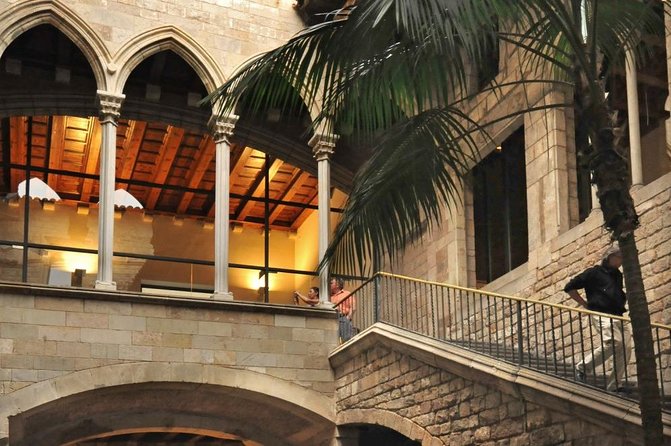
The tour starts at the Oficina d’atenció turística on Pl. de Catalunya, 17. That’s a smart choice. It’s central, easy to find, and it puts you in Barcelona’s main circulation zone right away, so you’re not spending your morning (or afternoon) lost before the story even begins.
The walk itself is built to feel like you’re moving through Picasso’s “training montage.” You cover street scenes, landmark views, and neighborhood changes, then you step into the museum with context already in your head. Ending at Carrer de Montcada, 23 also makes sense, since the museum sits in the old-city area. You won’t be stuck reversing course when you’re done.
You’ll be with a professional guide in English, and the group size is capped at 10. In practice, that matters. Smaller groups generally mean less waiting around and more time actually hearing the point behind each stop.
You can also read our reviews of more tours and experiences in Barcelona
El Quatre Gats and the bohemian streets that shaped Picasso
The early portion of the tour focuses on the young Picasso in Barcelona—those years when the city’s creative scene helped form his instincts. Your guide keeps the walking part grounded in story: who he met, where he went, and why certain places mattered to his development.
A key stop is El Quatre Gats, the café linked to Picasso’s social world. This isn’t treated like a postcard stop. The guide explains how Picasso’s circle of avant-garde thinkers and artists fed his curiosity, and how cafés and salons functioned as information networks long before the internet era.
As you walk, you’ll also get a sense of the texture of the areas Picasso knew. Expect winding streets and old-city corners that feel made for lingering. This is where the tour earns its “small group” tag: you can actually listen while you’re moving, rather than getting swept along like a herd.
Tip for you: wear shoes that work on uneven pavement. You’ll be doing real walking, not a slow roll with frequent sit-down breaks.
Llotja Mar and the art-school moment that changed everything
Next comes the education side of the story. Picasso wasn’t only a street observer—he was learning how to see. The tour includes Llotja Mar, an art school tied to his time in Barcelona.
What I like here is the cause-and-effect framing. Your guide doesn’t just point at a building and move on. You’ll get the sense of how artistic training, formal study, and city life overlap—how someone can be both influenced by street culture and shaped by structured learning.
If you’ve ever wondered why Picasso’s style changes so dramatically over time, this portion helps. You start to notice that the evolution wasn’t random. It grew out of a mix: observation, practice, and a constant feed of new ideas around him.
Frisos del Col-legi d’Arquitectes: Picasso’s rare open-air works
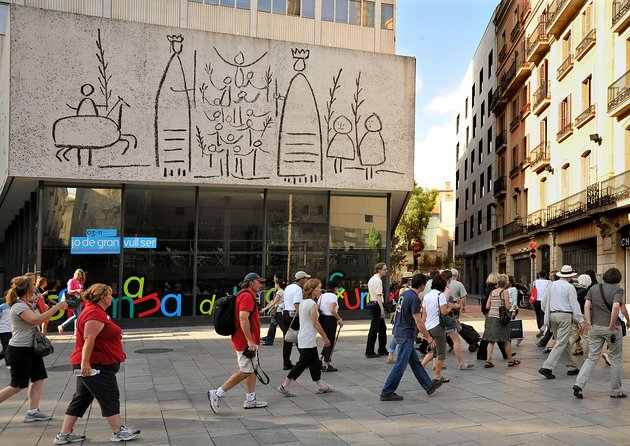
One of the most interesting details in this tour is the stop for the three friezes at Frisos del Col-legi d’Arquitectes. The tour notes that these are Picasso’s only open-air works—and your guide uses that fact to help you “read” the shapes and design choices with more care than you’d likely give on your own.
This is a great moment if you want something visual that’s not locked inside a museum hall. Open-air art has its own kind of pressure: light shifts, angles change, and you naturally approach it from different sides. Your guide’s commentary helps you slow down enough to notice the specifics.
Practical note: friezes and exterior details can be easier to miss if you’re rushing. Don’t. This is one of those stops where being present pays off.
La Ribera approach: a neighborhood walk that leads into the museum
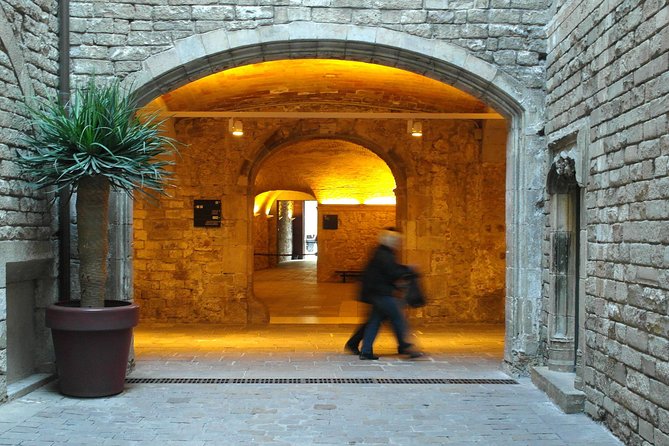
As you head toward the Picasso Museum, you’ll stroll through the La Ribera quarter. Even if you’ve visited Barcelona before, this kind of neighborhood transfer is useful. It helps you feel where Picasso’s world sits in the geography of the city: the old streets, the quieter lanes, and the everyday Barcelona that surrounds major cultural sites.
The tour also makes the transition logical. By the time you reach the museum, you’re not just thinking about Picasso as a big-name artist from a textbook. You’re thinking about the young Picasso in Barcelona—his surroundings, his influences, and the early direction of his work.
If you like to plan your day: treat this as your early “deep context” block. After the tour, you’ll likely enjoy your independent wandering more because you’ll recognize places as chapters, not as random stops.
You can also read our reviews of more walking tours in Barcelona



Entering the Museu Picasso: skip the line, then follow the guide’s plan
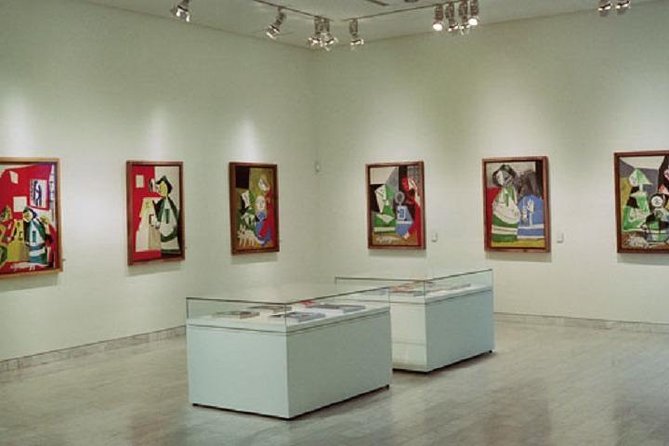
Museum lines can be brutal in Barcelona, and the Museu Picasso is famous for its queues. That’s why the skip-the-line ticket is the big operational win here. Instead of guessing when you can get in, you’re guided straight into the museum experience.
Once inside, your guide helps you focus on the highlights—many tied to Picasso’s early years—and connects what you see back to the street story you just walked. This is especially helpful if you’re not an art-history superfan. You won’t need to memorize dates. You’ll get “why this mattered” explanations as you move.
I’ve seen several guides for this tour mentioned by name in English-language experiences, including Alex, Iris, Pilar, Marco, Danielle, Alli, and Sylvia. Across those versions, a common theme is staying together as a group and keeping a steady pace while pointing out the details that make Picasso’s evolution click.
One consideration: the museum can feel warm. If you’re going in peak heat, bring a light layer you can handle easily, and plan for breaks only if your guide’s timing allows.
What you’ll see inside: 4,000+ works made meaningful
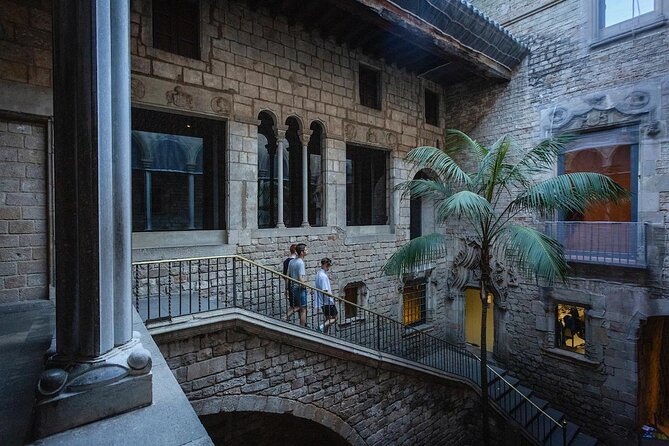
The museum visit centers on a major fact: the Picasso Museum holds over 4,000 artworks. That’s a lot. Left alone, most people bounce between rooms and miss what matters for understanding Picasso’s early development.
This tour aims to fix that with guidance. Your guide navigates you to the key works created during his formative years, and you get commentary on techniques and how his art evolved. You’ll come away with a clearer sense of the connections between Picasso’s life, his training, and the direction his style took next.
For you, that means less scrolling through wall labels and more feeling like the museum has a storyline. Even if you can’t identify every piece at a glance, you’ll understand the “arc” behind the collection.
Pacing and group size: why 2 hours can actually work
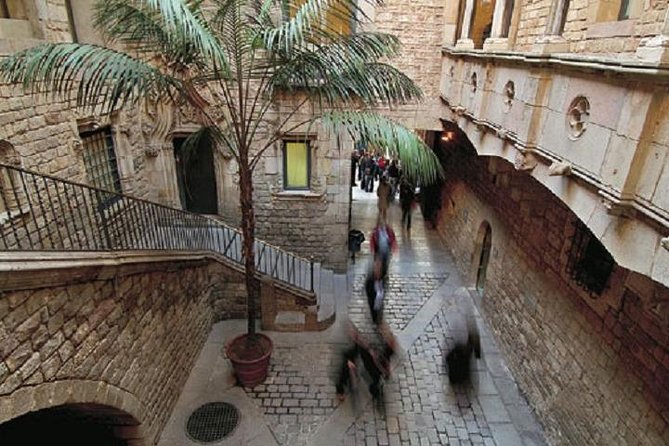
This is listed as about 2 hours, which sounds short until you remember what it includes: a walking circuit plus a museum visit with skip-the-line entry. You’re not getting a slow, museum-only afternoon. You’re getting a condensed, guided sampler with meaning.
That pacing is good for most visitors because it protects your energy. You also spend less time stuck waiting. With a maximum of 10 people, the guide can keep the group together and adjust if someone needs a moment to catch up.
If you’re someone who hates rushing, you’ll still likely enjoy it—just set your expectations. Think of this as a focused primer. After the tour, you can go back for more at your own speed if you want to linger.
Price and value: $48.06 for a guide plus entry
At $48.06 per person, this tour isn’t the cheapest way to spend a couple of hours in Barcelona. But you’re paying for two things that add up quickly: a professional guide and a museum admission ticket, with skip-the-line built in.
Skip-the-line is where the money can feel justified. If you’ve ever arrived at a museum with a long queue, you know the cost isn’t just time—it’s lost energy and impatience. This ticket helps protect your schedule.
Also, small group matters for value. You’re paying to have someone connect the dots—streets to early works, cafés to influences, and architecture to rare exterior art details. If you’re the type of traveler who wants context (instead of just photos), this price starts to look fair.
Who this tour fits best (and who might want to choose differently)
This tour is a strong fit if:
- You want a guided path through Picasso’s early Barcelona years (1895–1905).
- You like history that stays tied to places you can still see.
- You want a manageable max 10 group instead of a large crowd.
You might want to consider another option if:
- You prefer long museum time with minimal walking.
- You’re sensitive to indoor temperature changes in museums.
- You want to customize your stops heavily. This is a structured route with set highlights.
If you’re combining this with other Barcelona art stops, do it early. It acts like a key. After this, the city’s creative threads feel easier to spot.
Should you book this Picasso small-group tour?
If you want a smart, time-saving introduction to Picasso in Barcelona, I think this is a book-worthy choice. The street-to-museum connection is the core value: you don’t just see Picasso—you see the Barcelona that fed the young Picasso’s growth.
Book it if you care about context and want the museum shortcut. Skip it if your idea of a great day is roaming slowly with no structure. Otherwise, for $48.06, you’re getting a guided storyline plus admission to one of the biggest Picasso collections in the city, without losing time to queues.
FAQ
Where does the tour start and end?
The tour starts at Oficina d’atenció turística, Pl. de Catalunya, 17, L’Eixample (08002), Barcelona. It ends at Carrer de Montcada, 23, Ciutat Vella (08003), Barcelona.
How long is the tour?
The tour lasts about 2 hours.
Is the Picasso Museum ticket included?
Yes. Picasso Museum admission is included in the price.
Does this tour offer skip-the-line entry?
Yes. Your ticket is set up to let you skip the line for entry to the Picasso Museum.
Is the tour offered in English?
Yes. The tour is offered in English.
How big is the group?
The tour is limited to a maximum of 10 travelers.
What’s included and what’s not included?
Included: a professional guide and the Picasso Museum admission ticket. Not included: food and drinks, and hotel pickup and drop-off.
Is it suitable for most travelers?
Yes. The tour notes that most travelers can participate.
Are service animals allowed?
Yes. Service animals are allowed.
What’s the cancellation window for a full refund?
You can cancel for a full refund up to 24 hours in advance of the experience start time.