REVIEW · BARCELONA
Master Moroccan Tajine Hands On Workshop
Book on Viator →Operated by Hana · Bookable on Viator
A tagine class starts at La Boqueria. This hands-on Moroccan tajine workshop pairs ingredient shopping with a real cooking workflow, led in English by Hana. I like the market-to-kitchen pacing and the fact that you build, cook, and plate the meal yourself. One thing to keep in mind: the tajine needs slow cooking time, so the class is structured around waiting while the pot does its job.
Because this is a small group setup, you get close attention while you’re learning techniques, not just watching. The menu runs from savory (tajine, couscous, harira, caramelized onions) to dessert (Mahalabia milk pudding plus Moroccan tea). The kitchen is in Barcelona’s Raval area, so it also feels like you’re stepping into real neighborhood life instead of a staged studio.
- Hana guides the whole experience in English, with plenty of back-and-forth while you cook
- La Boqueria ingredient shopping first, then you carry those choices into your meal
- You start the tajine that cooks for about three hours, so you learn what slow heat really does
- You make multiple components, including couscous, harira soup, caramelized onions, and sides
- Small group size (max 4) means the class stays personal
- Recipes are printed for each dish, so you can recreate it later at home
In This Review
- From La Boqueria to Raval: the market-to-kitchen flow
- If the market is closed
- The tajine countdown: building the pot and letting it cook
- What you actually cook: a practical Moroccan menu
- Moroccan Tajine: chicken, plus the classic flavor logic
- Couscous: steamed using a couscousier
- Harira soup and caramelized onions
- Harsha bread, hummus, and the little bites
- Mahalabia milk pudding and Moroccan tea
- Why the small group size changes the quality
- Hana’s approach: kitchen attention plus technique talk
- Timing and logistics: what the 3 hours 15 minutes really means
- Price and value: what you’re paying for at $195.27
- Dietary options, allergies, and who should choose this
- What you get to take home
- Should you book the Master Moroccan Tajine Hands On Workshop?
- FAQ
- How long is the Moroccan tajine workshop?
- Where does the workshop start?
- What time does this option begin?
- Is La Boqueria always part of the experience?
- What do we cook during the class?
- Does the price include the food and drinks?
- Are there vegan or vegetarian options?
- What about allergies?
- How many people are in the group?
- Is transportation included?
From La Boqueria to Raval: the market-to-kitchen flow
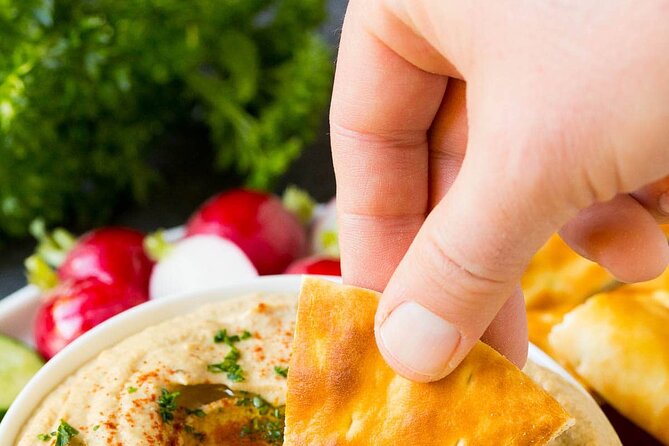
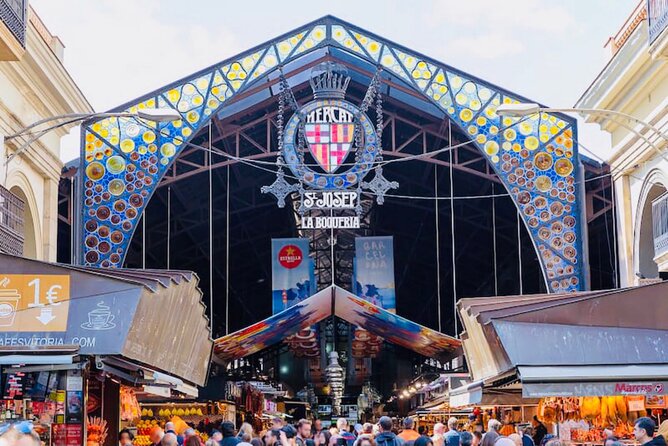
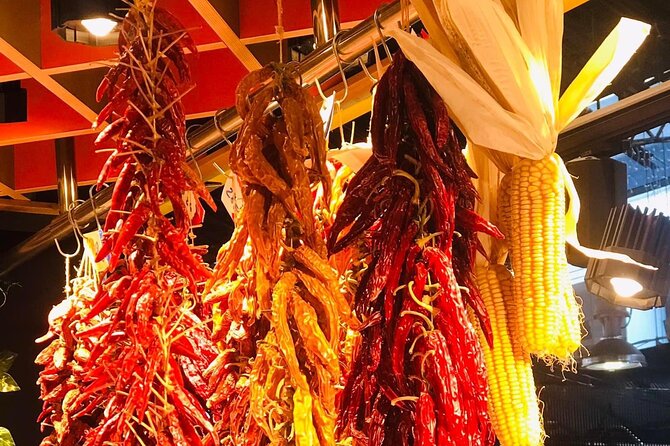
If you like travel that smells like food, this one works. You begin at Rambla de Sant Josep in Ciutat Vella, then head to Mercat de la Boqueria as your first stop. The idea is simple: you don’t show up at a kitchen and guess what ingredients to use. You see what’s fresh, you buy what you’ll cook with, and you understand why certain spices and produce matter.
Boqueria also helps you get your bearings in Barcelona fast. La Boqueria is busy and famous, but what makes this workshop useful is that it turns the market into a practical checklist: you’re not just sightseeing, you’re sourcing.
After the shopping, you go to the workshop kitchen in Raval (Old Town). That neighborhood setting matters more than it sounds. You’re in a multicultural area, and the class is held in a home kitchen setup rather than a huge cooking school with rows of benches. You’ll feel the difference right away: smaller, quieter, and more conversational.
If the market is closed
There’s a built-in backup plan. If it’s a holiday and La Boqueria is closed, you’ll still shop locally for ingredients, using several smaller shops instead. That keeps the experience on track and saves you from the worst-case scenario of showing up and finding nothing to buy.
You can also read our reviews of more tours and experiences in Barcelona

The tajine countdown: building the pot and letting it cook
The core of the class is the Moroccan tajine. You start by building it, and then you lean back for the slow part. Here’s the key detail: the tajine takes around three hours to cook on a slow setting. So you’re not rushing through steps the way some classes do. The schedule is designed around the reality of slow cooking.
That timing teaches you something you won’t get from a quick demo: why Moroccan tajines rely on gentle heat and patience. Even if you’ve cooked other dishes before, the workflow here is different because the pot is doing most of the work while you prep other components.
You’ll also learn what goes into the setup and how you keep everything moving during the waiting period. The workshop doesn’t stop when the pot goes on heat. You still have active tasks that build up to the shared meal.
What you actually cook: a practical Moroccan menu
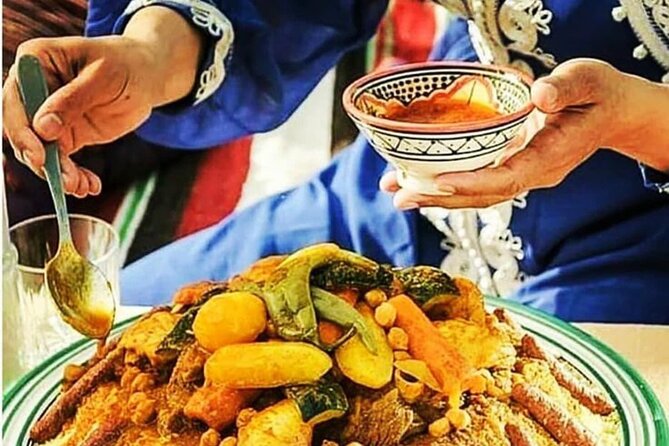
This class is built around real meal components, not just one hero dish. You’ll make a set of dishes that fit together on one table: savory mains, soups, sides, and sweet finishing touches.
Moroccan Tajine: chicken, plus the classic flavor logic
The main dish is chicken with yams, peppers, dates, and apricots (and you may have a choice of chicken or lamb depending on the menu that day). This mix is the Moroccan signature balance: sweet fruit elements alongside savory spices and a rich braise.
You’re not just tasting. You’ll participate in the preparations, then you’ll sit down when everything is ready. That shared meal at the end is part of the learning loop. You see the result of your choices.
Couscous: steamed using a couscousier
You’ll also make steamed couscous with spices. Couscous is one of those foods that can feel simple until you’re the one making it. The workshop includes using a couscousier (the traditional steamer), so you get the method, not just the final mound on a plate.
You’ll build the dish alongside the rest of the menu, so the spices and timing make more sense. It also helps that the tajine is cooking while you do couscous tasks, so you understand how different elements can finish around the same time.





Harira soup and caramelized onions
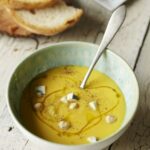
Two other highlights are Moroccan Harira soup and caramelized onions (with pasas, which are like raisins). These aren’t throwaway sides. They bring depth and texture, and they’re exactly the kind of flavors that make Moroccan meals feel layered.
Caramelized onions are also a great learning dish because the technique changes everything. You get that slow sweetness without turning it into mush. You’re learning how to manage time and heat.
Harira brings the comfort factor. It’s warm, spiced, and satisfying—ideal alongside tajine and couscous.
Harsha bread, hummus, and the little bites
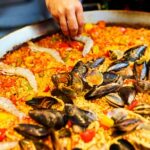
The class includes Moroccan Harsha bread (a fried semolina bread). There’s also hummus included as part of the menu.
These additions matter because they show how a Moroccan meal isn’t only about one big pot. Bread and dips give you a practical way to eat the tajine and soup at home later. If you tend to recreate recipes in parts, these are the components that will actually show up on your weeknight table.
Mahalabia milk pudding and Moroccan tea
For dessert, you’ll make Mahalabia milk pudding with nuts, berries, and honey, then you’ll enjoy Moroccan tea with pastries. Sweet tea after a savory meal is one of those simple cultural rituals that feels instantly right.
The value here isn’t just the taste. It’s that the desserts connect back to the cuisine’s signature flavors: gentle dairy sweetness in Mahalabia and aromatic tea culture to finish.
Why the small group size changes the quality
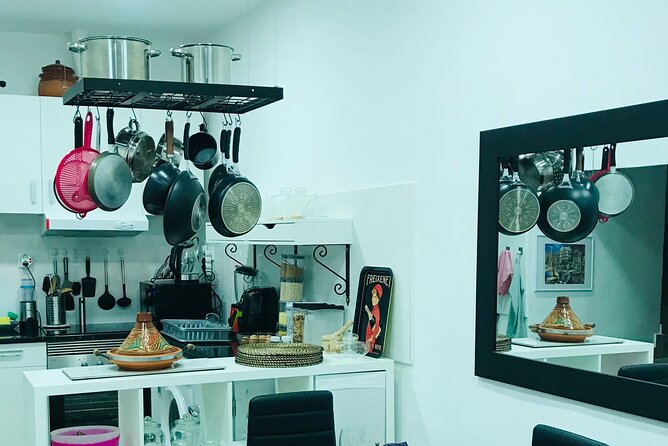
The workshop runs with a maximum of 4 travelers. That’s not just a comfort perk. It changes how the kitchen time feels.
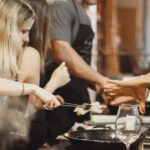
In a small group, you can ask questions while you’re holding the tool or stirring the pot. You’re not waiting your turn for the instructor to notice you. The class is set up as true hands-on cooking, where you participate in all food preparations.
You also get more attention on practical adjustments, like timing, spice handling, and how the different parts of the meal fit together. Even with the slow tajine, you’re kept busy, so you’re not stuck watching the clock.
Hana’s approach: kitchen attention plus technique talk
The experience is hosted by Hana. Her English is stated as perfect in the information, and she’s focused on being a real guide rather than just a lecturer.
The best part of this style is the way it stays practical. You’re not only learning what ingredients go in. You’re learning how techniques and spices work together. That matters because cooking Moroccan food at home can be intimidating if you only memorize steps. Here, you get method and context.
The cooking shop side of the experience also teaches value. You’re buying what you’ll actually cook, and you’ll see how certain stores handle things like mint, herbs, spices, and other ingredients. Even if you never buy everything like a pro at home, you’ll come away with a smarter shopping approach.
Timing and logistics: what the 3 hours 15 minutes really means
This workshop is about 3 hours 15 minutes. It starts at 11:00 am for this option, and there are also morning and evening sessions available, listed as 10–2 and 3–7 time windows.
So what happens during that time?
- You begin with market shopping at La Boqueria (or alternative local shops if needed).
- You head to the workshop kitchen in Raval.
- You build the tajine and set it to slow cook for about three hours.
- While the pot cooks, you keep working on couscous, harira, caramelized onions, and other components.
- When everything is ready, you sit down together for the full meal with drinks, including coffee and/or tea.
This schedule is ideal if you want a complete meal experience, not a quick cooking sprint. It’s also a good reminder: bring your patience. The tajine time is part of the lesson.
Price and value: what you’re paying for at $195.27
At $195.27 per person, you’re paying for more than a recipe card. You’re paying for:
- Guided shopping and ingredient selection tied to the meal
- A small group (max 4)
- All food, beverages, and cooking equipment
- A full meal including lunch, plus coffee and/or tea
- Printed recipes with instructions for each dish
- The instructor’s time, including working with you on techniques while food cooks
Also, transportation isn’t included. But you don’t need private transport because the activity is near public transportation and you meet at a central address in Ciutat Vella.
If you’ve done big-group cooking classes before, this price will feel different. Here, the class is tighter, hands-on, and meal-focused. That’s what makes the number start to make sense.
Dietary options, allergies, and who should choose this
Good news for many diets: there’s a vegan option, and the experience says vegan, vegetarian, and gluten-free restrictions can be accommodated, along with other food restrictions. You’re also asked to note food allergies, so it’s worth listing them clearly when you book.
Who this suits best:
- If you want authentic Moroccan flavors and actual technique
- If you enjoy hands-on cooking more than watching
- If you travel as a couple or small group and want personal attention
- If you like the idea of buying ingredients and then cooking what you chose
Who might think twice:
- If you dislike waiting while a dish slowly cooks, the tajine process will feel long
- If you want a class that’s heavy on theory only, this one is more practical and food-centered
What you get to take home
You leave with more than dinner memories.
You get printed recipes with instructions for each dish, which is a big deal for repeat cooking. You also get a sense of which ingredients and methods matter most. That’s the real takeaway: you’ll be able to recreate the flavors, not just remember the names.
And since the experience includes multiple dishes—tajine, couscous, harira, caramelized onions, bread, hummus, Mahalabia, and Moroccan tea—you get a full menu worth of practice.
Should you book the Master Moroccan Tajine Hands On Workshop?
Book it if you want a Moroccan food experience that feels real, not performative. The market stop at La Boqueria, the Raval kitchen setting, and the hands-on cooking (with a slow-cooked tajine at the center) make this a strong choice for people who love learning through doing.
Skip it only if slow cooking time frustrates you or if you’re looking for a short, sampler-style class. Otherwise, the combination of small group size, full meal, and recipe handouts makes this a practical value for your Barcelona trip.
You’ll go home with dinner—and the know-how to make it again.
FAQ
How long is the Moroccan tajine workshop?
It runs for about 3 hours 15 minutes.
Where does the workshop start?
You meet at Rambla de Sant Josep, Ciutat Vella, 08001 Barcelona, Spain.
What time does this option begin?
The start time listed for this option is 11:00 am. Morning and evening sessions are also offered (10–2 and 3–7 time windows).
Is La Boqueria always part of the experience?
Yes for the ingredient purchasing plan when it is open. If La Boqueria is closed due to a holiday, the group will shop at several local shops instead.
What do we cook during the class?
You will learn to make Moroccan tajine with couscous and accompaniments, including preparations for caramelized onions, couscous, and harira soup.
Does the price include the food and drinks?
Yes. Lunch is included, along with coffee and/or tea, and all food, beverages, and cooking equipment.
Are there vegan or vegetarian options?
Yes. A vegan option is available, and vegan, vegetarian, and gluten-free other restrictions can be accommodated.
What about allergies?
You should note food allergies during booking so the team can accommodate your needs.
How many people are in the group?
The class has a maximum of 4 travelers.
Is transportation included?
Private transportation is not included. The activity is near public transportation.