REVIEW · BARCELONA
Jewish Walking Tour Barcelona by Expert Jewish Guide 2h
Book on Viator →Operated by barcelona dreaming · Bookable on Viator
History feels close here. A tight 2-hour Jewish Quarter walk links politics, prayer, and everyday street life in Barcelona. I like that the route is built around places you can actually see—plus the stories come with real people behind them, from guides like Ella and Dina.
Two things I really like: first, you stop at standout sites such as the Major Synagogue area and the MUHBA – El Call zone, so you understand what you’re looking at instead of just snapping photos. Second, the guides bring context—architecture, religion, and Catalan history—so the neighborhood stops feel connected, not random. You’ll even hear helpful practical tips along the way.
One consideration: entrance fees and a €5 onsite donation aren’t included, so you’ll want a little cash ready and a realistic expectation that some stops depend on on-site access and what’s happening that day.
In This Review
- Key Things That Make This Tour Worth Your Time
- Jewish Quarter Walk: Why This Route Works So Well in Barcelona
- Price and Value: What You’re Paying For (and What You’re Not)
- Meeting Point in the Gòtic: Where You Start and Why It’s Convenient
- Stop 1: Placa de Sant Jaume and the Political Heart of Jewish Barcelona
- Stop 2: Major Synagogue Area and Why It’s a Big Deal
- Stop 3: MUHBA – El Call and the Story Inside the Winding Alleys
- Stop 4: Placa Del Rei and the Power Shift in One Glance
- What the Guides Do That Changes Everything
- How to Plan Your Day Around the 2 Hours
- Who This Tour Is Best For
- Should You Book This Jewish Walking Tour?
- FAQ
- How long is the Jewish Walking Tour Barcelona?
- Where does the tour start?
- Is the tour offered in English?
- Are entrance fees included?
- What stops will we visit?
- Is the tour private?
- Is public transportation nearby?
- What’s the cancellation policy?
Key Things That Make This Tour Worth Your Time
- You walk a focused circuit in about 2 hours, not a half-day slog through scattered locations
- Major Synagogue + El Call streets connect worship history to the daily life of the neighborhood
- MUHBA – El Call helps you read the area with museum-style context while you’re still outdoors
- Placa de Sant Jaume and Placa Del Rei add the political frame: Jewish leaders weren’t history props
- Guides get personal with stories and answer questions, with names like Ella, Dina, Lilac, and Alan showing up often
- Rain-friendly guide skills show up in the reviews, meaning you won’t lose all momentum if weather turns
Jewish Quarter Walk: Why This Route Works So Well in Barcelona
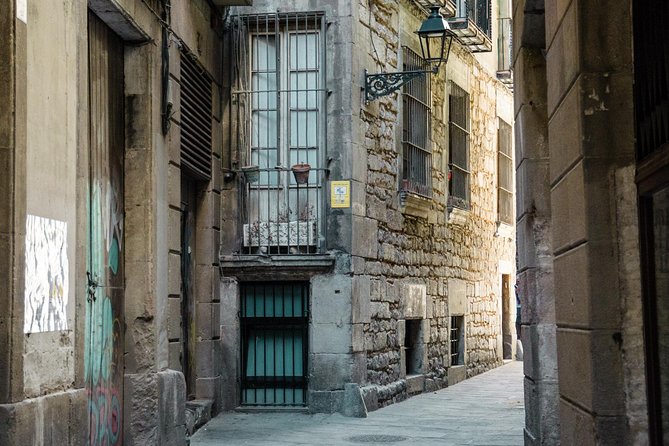
Barcelona’s Old City is a maze, and the Jewish Quarter can feel like it blends into the rest of the Gothic Quarter unless someone helps you read it. This tour’s strength is its structure: you’re guided through concrete reference points—squares and specific sites—then the story grows from there.
At just around 2 hours, you get a high-impact overview without burning your whole day. You’re not trying to squeeze in museum hours plus multiple neighborhoods plus transit stress. Instead, you walk a compact loop and learn what each place meant, and what changed over time.
This is also a good match for how people actually travel in Barcelona. You’ll start in the Gòtic area, near a place you can find easily, and you’ll finish back near the start point. That matters when you’ve got a dinner plan later and don’t want to be hunting for a meeting exit.
You can also read our reviews of more walking tours in Barcelona



Price and Value: What You’re Paying For (and What You’re Not)
The price is $96.79 per person for an approximately 2-hour walking tour. That’s not the cheapest thing in town, but it does line up with what you get: a professional local guide and a guided route focused on sites tied to Jewish life in Barcelona.
What’s included is straightforward:
- Professional local guide
- 2 hours walking tour of Jewish monuments
What’s not included:
- Admission tickets aren’t included
- A €5 per person donation is requested onsite at the synagogue area
Here’s how I think about the value: you’re paying for interpretation. You’re paying for someone to point out what most people would miss—details in the street plan, the location of religious structures, and the historical roles linked to nearby squares. If you go on your own, you’ll likely see the buildings. With a guide, you’ll understand why the buildings mattered.
One practical note: if you’re budget-tight, plan for the donation plus any site costs that might pop up depending on how the stops operate that day. Bring a small amount of cash or a payment method that works onsite.
Meeting Point in the Gòtic: Where You Start and Why It’s Convenient
You’ll meet at Conesa Entrepans, Carrer de la Llibreteria, 1, Ciutat Vella, Barcelona. The tour ends back at the meeting point, so you don’t have to figure out a new transit location at the finish.
This start point works well because:
- You’re in the Gòtic area, where most people are already walking around
- It’s listed as near public transportation, so you can get there easily
- The end back near the start makes your day easier to plan
If you’re trying to fit the tour around other sights, keep some wiggle room. Even a 2-hour walk can run into normal delays like crowding around old streets, people arriving late, or the guide taking a moment to keep the group together.
Stop 1: Placa de Sant Jaume and the Political Heart of Jewish Barcelona
You begin at Placa de Sant Jaume, with about 15 minutes here. This square is more than pretty stone. It acts like a symbolic entry point into the wider story of the neighborhood.
Why this stop matters: it frames the idea that Jewish life in Barcelona didn’t exist in a vacuum. The tour uses this location as a gateway to Jewish Barcelona—so you’re not only learning religious history, you’re also learning about power and governance nearby.
What you should do at this stop:
- Look around and notice the scale of the square compared to the narrow streets you’ll walk later
- Use the moment to ask any first big-picture question you’ve been wondering about, because it’s early enough that it helps you connect later details
A small drawback to be aware of: squares can feel exposed if weather is cold or rainy. If that’s your travel season, wear something you can layer quickly.
Stop 2: Major Synagogue Area and Why It’s a Big Deal
Next is the Major Synagogue stop, with about 30 minutes. The tour centers on the idea that the ancient synagogue in Barcelona is considered one of the oldest synagogues in Europe.
This is where you’ll get the strongest “this is ancient” feeling—because you’re not just looking at modern plaques. You’re learning how one site connects to centuries of Jewish presence.
Two useful things to pay attention to here:
- How the guide explains the site’s significance relative to the rest of the city
- How they connect architecture and location to how community life would have worked
There’s also an important cost detail: while admission tickets aren’t included, the tour requests an on-site €5 per person donation at the synagogue. Plan ahead so you don’t slow the group down when you reach this stop.
In the reviews, names like Ella and Dina show up with praise for walking-and-talking that actually makes the place feel real. If your guide uses maps or visual aids, lean in. This stop is the one where those tools usually help the most.
You can also read our reviews of more guided tours in Barcelona


Stop 3: MUHBA – El Call and the Story Inside the Winding Alleys
The third stop is MUHBA – El Call, again about 30 minutes. This is where the tour shifts into neighborhood texture. The “El Call” area is all about the idea that you can still trace centuries of Jewish life and tragedy through the layout of the streets.
MUHBA is a museum-related context point, and you’ll likely get explanations that help you see the area beyond the postcard view. Even if you’re not a museum person, this stop is valuable because it links what you’re seeing to why it’s remembered.
What to expect:
- A guided look at how the area’s streets and corners shape movement and community life
- A sense of how the story wasn’t only about grand events—it was also about daily routes, gathering places, and the lived environment
One possible challenge: this section can involve standing and walking through older, tighter streets. If you’re sensitive to crowds or have mobility issues, go a little slower and let the group set a comfortable pace.
Stop 4: Placa Del Rei and the Power Shift in One Glance
You finish at Placa Del Rei for about 30 minutes. This square is presented as a place where Jewish leaders served kings—and where history changed in ways that still echo.
I like this stop because it closes the circle. Earlier you start at a political gateway (Placa de Sant Jaume). Then you move through religious space (Major Synagogue) and neighborhood life (El Call). Now Placa Del Rei gives a sharper angle on what power looked like and how that power affected people.
Here’s how to make this stop count:
- Listen for how your guide ties the community’s roles to the broader political context in the region
- Keep an eye on the sense of place—squares in this area are where stories “land,” because they’re easier to imagine in a historical scene than a hidden alley
It’s also a good moment to gather your final questions. Many guides on this route are praised for being receptive, answering questions, and offering clear recommendations for what to do after you finish.
What the Guides Do That Changes Everything
A walking tour lives or dies on the guide. This experience has strong signals for quality because guides repeatedly come up in reviews with similar strengths: historical depth, warmth, and a habit of noticing details people would otherwise walk right past.
You’ll see guide names like:
- Ella, praised for bringing the narrow streets of Del Call to life and sharing recommendations
- Dina, praised for a historical review and taking people to the old synagogue
- Lilac / Lilach, praised for pointing out small details that bring the area to life
- Leilah, praised for knowledge plus engagement
- Rina, praised for depth and clear explanation
- Alan and Eyal, praised for open Q&A and making the experience feel tailored
Even if your guide isn’t one of those people, the pattern matters. You should expect:
- Stories that connect architecture + politics + community life
- A guide willing to answer questions
- Explanations that go beyond a checklist of sites
A practical tip: if you have even one angle you care about—architecture, religious history, or Catalan politics—say it early. It helps the guide shape what you’ll notice most.
How to Plan Your Day Around the 2 Hours
Since this is an active walking tour, do the basics right and you’ll enjoy it more. Here’s what I’d plan for:
- Wear comfortable shoes for old, uneven streets
- Bring a layer for changing weather—rain can happen, and at least one review described an intense downpour handled with storytelling so time still felt productive
- Arrive a few minutes early so the start doesn’t get chaotic
- Consider bringing a small note app so you can jot down place names and recommendations while they’re fresh
Also, since it’s offered in English and runs about 2 hours, it fits well as either:
- A first serious look at Jewish Barcelona after you get your bearings in the Gothic Quarter, or
- A “meaning-making” follow-up if you already visited a couple of sites on your own and want structure
Who This Tour Is Best For
This works especially well if you:
- Like history that has names, places, and explanations—not just plaques
- Want to understand how religious sites connect to everyday life in old neighborhoods
- Enjoy walking tours that point out small details and explain why they matter
It may be less ideal if you:
- Hate walking or want long seated breaks
- Prefer purely visual sightseeing with minimal storytelling
- Don’t want any extra onsite costs at the synagogue donation request
On the positive side, it’s listed as suitable for most travelers and near public transit—so it’s not only for “city-walk pros.”
Should You Book This Jewish Walking Tour?
I think you should book it if you want a clear, guided route through the Jewish Quarter that helps you read Barcelona’s old streets like a story. The tour’s value is in the connections: squares to politics, synagogue significance, and El Call street-life context. With guides praised for clarity and warm energy—whether that’s Ella, Dina, Lilach, or Alan—you’re likely to walk away with more than photos.
Book it sooner rather than later if you can. It’s commonly reserved around 48 days in advance, which suggests it’s popular. And check your budget for the €5 donation and any entrance fees that may apply.
If you’re choosing between a quick self-guided wander and a guided walk, this is the better choice for understanding what you’re seeing—and why it mattered.
FAQ
How long is the Jewish Walking Tour Barcelona?
The tour is approximately 2 hours of walking.
Where does the tour start?
The meeting point is Conesa Entrepans, Carrer de la Llibreteria, 1, Ciutat Vella, 08002 Barcelona, Spain.
Is the tour offered in English?
Yes, it is offered in English.
Are entrance fees included?
No. Admission tickets are not included, and a €5 per person donation is kindly requested onsite at the synagogue.
What stops will we visit?
You’ll visit four main stops: Placa de Sant Jaume, the Major Synagogue, MUHBA – El Call, and Placa Del Rei.
Is the tour private?
It’s listed as a private tour/activity, meaning only your group will participate.
Is public transportation nearby?
Yes. The meeting area is listed as near public transportation.
What’s the cancellation policy?
Free cancellation is available. You can cancel up to 24 hours in advance for a full refund. If you cancel less than 24 hours before the start time, the amount paid won’t be refunded.