
REVIEW · BARCELONA
Horta Labyrinth Walking Tour in Barcelona
Book on Viator →Operated by Mediaticos en ruta · Bookable on Viator
My favorite Barcelona walk hides in plain sight. The Parc del Laberint d’Horta feels like a movie set inside the city, built from 18th-century ideas and packed with statuary, pavilions, and the famous cut-cypress maze. Dating to 1794 and credited to architect Domenico Bagutti, the design blends French Neoclassical formality with English Romantic feeling, so it’s beautiful and a little mysterious from the first turn of the path.
Two things I really like are how the walk turns garden details into stories, and how the park gives you instant relief from the city’s pace. You’ll hear the background on the Desvalls and Lupià family, the original owners, and the mythology threaded through the spaces. I also like the cool, shaded routing and the theatrical garden stops, like the pavilion of Carlos IV, the cave of the nymph Egeria, and all the Greek-myth sculptures tucked between bushes and palaces.
One drawback to consider: the labyrinth experience can feel shorter than you expect, and parts of the plantings may look less dense depending on the season. If you’re hoping for a huge, hours-long puzzle, you might finish with a quick walk-out and wish for more.
In This Review
- Key things to notice on this Horta labyrinth tour
- Entering Parc del Laberint d’Horta: a garden designed like theater
- Meeting point near the Horta Velodrome: start simple, then wander on purpose
- The guide’s role: mythology and ownership that give the paths meaning
- Palacio, tower, and heraldic water: the named stops that make the garden feel real
- Plaza de los Leones and the Garden of Boxes: two ways the park plays with form
- Plaza del Reloj and the belvedere: where the park turns into viewpoints
- Pavilion of Carlos IV and Palladio inspiration: when architecture becomes part of the garden
- Cave of the nymph Egeria: a myth stop that actually feels like a pause
- The labyrinth finale: cut cypresses and royal footsteps
- Price and value: is $16.22 worth 1 hour 45 minutes?
- Who this Horta labyrinth tour suits best
- Quick planning tips so you enjoy every chapter
- Should you book the Horta labyrinth tour?
- FAQ
- How long is the Horta Labyrinth walking tour?
- What does the tour cost, and how do I get tickets?
- Where does the tour start and end?
- Is there an admission ticket included?
- What group size should I expect?
- What if the weather is bad or plans change?
Key things to notice on this Horta labyrinth tour
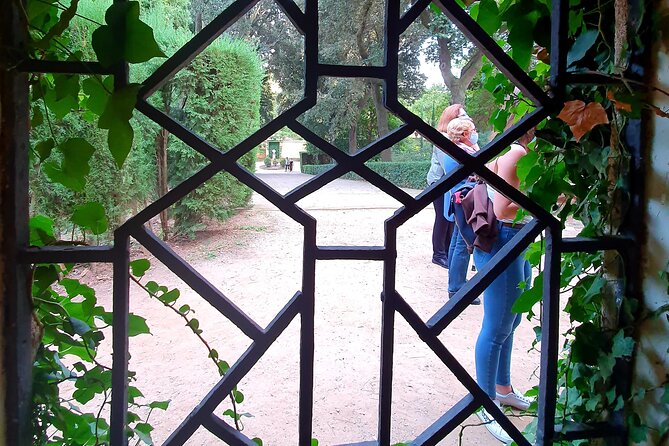
- A small group (max 20) keeps the pacing calm and helps you actually hear the guide.
- Garden built in 1794 makes this feel like a preserved piece of Barcelona’s past, not a modern attraction.
- Mythology on the route: you pass multiple Greek-themed stops rather than just wandering blindly.
- Cut-cypress labyrinth is the finale, with a royal pedigree tied to kings who walked it.
- Lots of named spots (fountain, plazas, belvedere, pavilion, cave) gives you real anchors for photos and memory.
- Fresh-air break in the north of the city: one rating called it a cool center-of-Barcelona refuge.
Entering Parc del Laberint d’Horta: a garden designed like theater
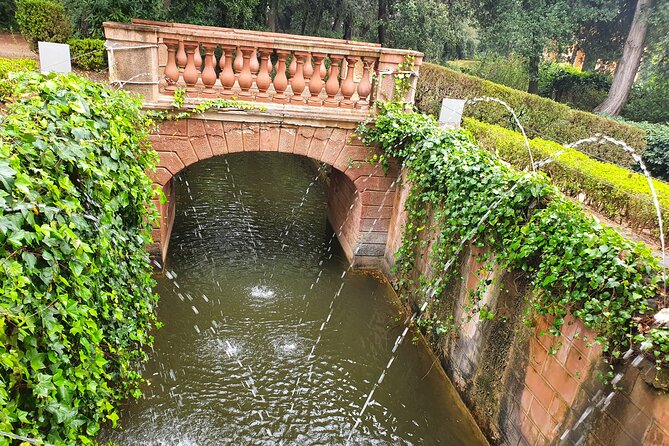
If you want Barcelona without crowds at every step, this is a smart way to spend a chunk of time. You’re heading to the Parc del Laberint d’Horta, described as the oldest garden in Barcelona, with origins dating back to 1794. That date matters because it explains the feel of the place: it isn’t trying to act “new.” It’s built to look composed, crafted, and slightly dramatic.
The design also helps you understand why people keep talking about this park. Domenico Bagutti’s ideas are inspired by French Neoclassical gardens (order, symmetry, structure) and English Romantic gardens (a bit more softness, a bit more surprise). During the walk, you’ll see that mix play out in the way the paths unfold and how the garden spaces change character as you move.
And yes, the maze is the headline. But the tour is structured so you don’t just arrive at the labyrinth and leave. You work up to it, with palaces, fountains, plazas, and myth sculptures along the way.
You can also read our reviews of more walking tours in Barcelona



Meeting point near the Horta Velodrome: start simple, then wander on purpose
The tour starts at Pg. de la Vall d’Hebron, 169 (in Horta-Guinardó), and it ends near the Velodrome of Horta at Pg. de la Vall d’Hebron, 185. The meeting happens at the entrance area, in front of the entrance to the Horta Velodrome.
This matters because you can treat the activity like a clean half-day block: arrive near the park, follow the group, then keep exploring afterward if you want. The tour uses a mobile ticket, which is convenient when you’re juggling tickets for multiple stops across Barcelona.
You’ll also be in good shape timing-wise. The walk is about 1 hour 45 minutes. That’s long enough to feel like you had a guided experience, but not so long that it turns into a full afternoon slog.
The guide’s role: mythology and ownership that give the paths meaning
You’re not just moving through pretty greenery. The tour is led by a specialized guide (listed with the handle #bcnlover), who explains the history of the Desvalls and Lupià family, the original owners. That family context helps you understand why the garden is so intentionally staged—this wasn’t casual landscaping. It was status, taste, and storytelling.
The guide also ties in the park’s mythology and what you should watch for as you go. One of the best parts of guided garden touring is that you stop seeing “decorative stuff” and start seeing a plan. Here, the plan includes Greek mythology themes, palaces, and sculptures placed so they feel like scenes you pass in order.
If you like gardens but get bored when it’s all “pretty but vague,” this kind of narration changes the whole experience.
Palacio, tower, and heraldic water: the named stops that make the garden feel real
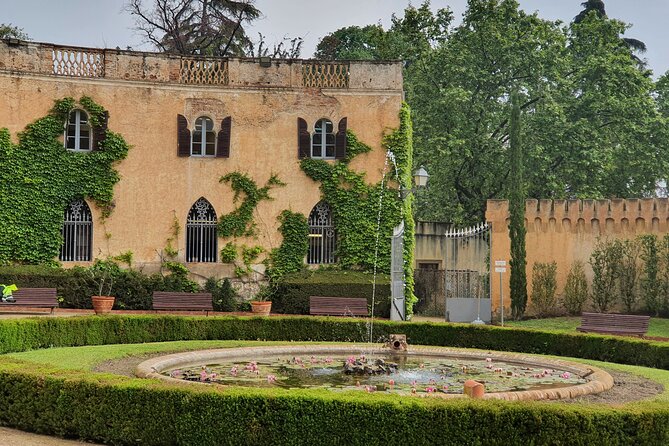
As you walk in, you start spotting specific anchors that keep your route from feeling repetitive. Expect stops that include the palace of the Marqués de Alfarrás and the Subirana tower. Even without a big lecture on each structure, the names alone help. They tell you this park isn’t one-note. It’s a mix of built features and symbolic garden elements.
Then you’ll encounter the heraldic fountain of the Pelícano. Water features are a big deal in formal garden design, and this one adds movement and sound. It also gives you another “spot to check off,” which makes the whole walk feel more rewarding than a loop where you forget what you saw five minutes ago.
You’ll also pass through sections like the domestic garden. That phrase alone hints that not everything here is grand palace showpieces. Some of the park’s areas feel more lived-in, more connected to everyday garden life, which helps balance the big architectural moments.
Plaza de los Leones and the Garden of Boxes: two ways the park plays with form
This is where the Parc del Laberint d’Horta starts feeling like a puzzle box, even before you reach the labyrinth. You’ll stop at the Plaza de los Leones, then continue toward the garden of the Boxes.
The Plaza de los Leones is one of those places where you can’t help but look for what the name suggests. The point isn’t just the view—it’s the feeling of arriving at a room-like space inside the garden, a spot meant for lingering and noticing details.
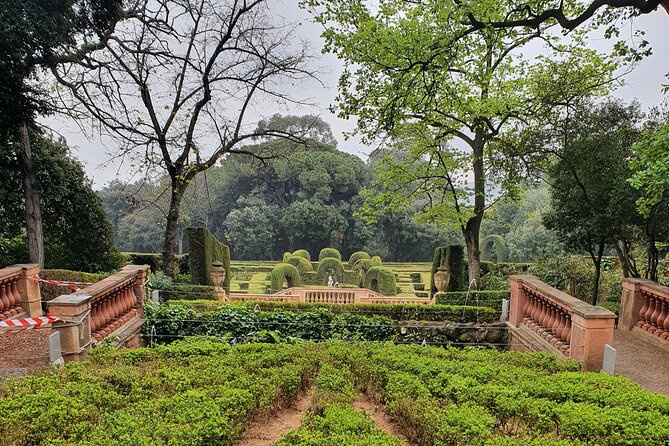
The Garden of the Boxes does something similar but in a different way: it’s about structure. Boxed garden sections tend to read as “designed” rather than “grown,” and in this park that designed look pairs well with the myth and palace scenery. You’re walking through cultivated geometry, then turning and seeing another story beat in the next area.
If you like photography, these are the moments where you’ll get both close-up textures and wider “frame the garden” shots. The park’s layout naturally gives you angles.





Plaza del Reloj and the belvedere: where the park turns into viewpoints
Next comes the Plaza del Reloj, which is another name that gives you a clear expectation: it’s a plaza focused around a clock-themed feature. Even if you’re not the type who reads every symbol, the stop works because it’s a visual checkpoint. It breaks the walk into chapters.
From there, the route climbs to the Belvedere of the park. A belvedere is basically a viewpoint platform, and in a garden like this, it does more than offer a view. It helps you understand how the garden was built: from up high, you can see the way paths and enclosed spaces relate to each other.
That sense of overview can be one of the best “aha” moments in a guided walk. You start recognizing that the maze finale isn’t random. It’s part of the design logic of the whole park.
Pavilion of Carlos IV and Palladio inspiration: when architecture becomes part of the garden
The tour then heads to the pavilion of Carlos IV, and the description matters because it points to an architectural influence. This pavilion is inspired by the architecture of Palladio. That’s a clue that you’ll see classical touches and a more formal building style than you might expect from a garden walk.
In practical terms, that means the stop gives you a break from shrubs and paths while still staying within the park’s story. You’re not leaving the landscape of the garden. You’re stepping into a different “scene,” one with a stronger architectural identity.
This is also one of those moments that works well even if you’re not a hardcore architecture fan. The park’s whole trick is mixing disciplines—gardens, myth, and buildings—so the pavilion feels like a natural part of the journey rather than a random detour.
Cave of the nymph Egeria: a myth stop that actually feels like a pause
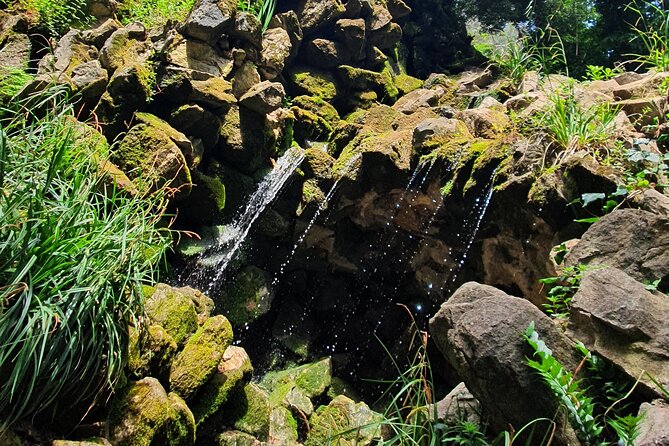
Then you reach the cave of the nymph Egeria. Egeria is part of the Greek mythology thread running through the park, and placing a myth figure in a cave is exactly the kind of theatrical move that makes this garden memorable.
The cave stop functions like a pause. You slow down, you look, you take in the shift in atmosphere. It’s not just “another photo.” It changes the mood of the walk so the final labyrinth doesn’t feel like the only big event.
One of the nicest things about this park is that it keeps variety coming. You go from formal spaces to myth spaces to viewpoint spaces, then to the maze. That variety is part of why the experience is fun for both adults and kids, especially if you enjoy solving your way through visual clues and trying to make sense of the layout.
The labyrinth finale: cut cypresses and royal footsteps
At the finishing touch of the visit, you enter the labyrinth itself, built with cut cypresses. This is the moment most people come for, and it lands best when you’ve spent the previous time learning the park’s logic.
The name matters here too. In this park, the labyrinth isn’t just a “maze for tourists.” It has a royal connection mentioned in the experience description: kings Carlos IV, Fernando VII, and Alfonso XII walked through it.
That detail adds weight to the moment. It’s like you’re not only doing a fun activity. You’re stepping into a designed tradition.
Still, keep expectations realistic. One comment highlighted that some shrubs may not be completely grown in, which can make shortcuts possible. Another point was that the labyrinth can feel not as large as people want. Those are worth taking into account. You’ll probably spend a satisfying amount of time inside the maze, but if your idea of a great maze is “hours and hours,” you might want to treat this as a crisp adventure, not an endurance challenge.
Price and value: is $16.22 worth 1 hour 45 minutes?
The tour price is listed at $16.22 per person, running about 1 hour 45 minutes. On its face, that can look like a small amount of time for the cost. Here’s how I’d judge value, practically.
First, this is a guided experience in a garden where details matter. If you walk through it alone, you’ll enjoy it. If you want meaning—why the design looks the way it does, what the myth themes connect to, why the ownership story matters—guidance is the value add.
Second, the information you get centers on multiple named features: palace, tower, fountains, plazas, belvedere, pavilion, cave, and the labyrinth finale. That’s not one highlight. It’s a chain of highlights, and the guide helps you stay oriented and actually notice the elements.
Third, the activity listing indicates Admission Ticket Free, so you’re not paying extra on top just to access the garden with the tour. That makes the guided component feel more like an “organized visit” than a basic add-on.
If you’re comfortable spending time in gardens and you like stories behind places, this price feels fair. If you mainly want to wander and you’re already set on self-guided exploration, you might compare it to what you’d pay just to enter.
Who this Horta labyrinth tour suits best
This tour fits best if you want a calm, structured walk that still feels playful. I’d especially recommend it to:
- Families with kids who like a quest feel (the labyrinth is built for that).
- Garden lovers who care about layout, not just flowers.
- Travelers who want a break from Barcelona’s busiest sights but still want something “planned.”
It also makes sense for anyone who enjoys mythology in a hands-on way. The Greek theme isn’t limited to a single sculpture. It shows up across the park’s route, with the cave of Egeria as a memorable anchor.
Quick planning tips so you enjoy every chapter
A few practical tips help you get the most out of a guided garden loop:
- Wear shoes you don’t mind on uneven paths. Gardens are fun, but surfaces can change.
- Bring water. The tour is under 2 hours, but you’ll be moving and standing around at stops.
- Expect a cool pocket of air. One rating described the park as fresh and restful in the middle of the city, and the shaded routing is part of that.
Weather also matters. This experience is listed as requiring good weather, and if it’s canceled due to poor weather, you’ll be offered a different date or a full refund.
Should you book the Horta labyrinth tour?
Book it if you want a guided route through a historic, story-driven garden where the stops have names and meaning. The $16.22 price works best when you see the tour as paying for orientation and context across multiple highlight areas, not just for access to a single attraction.
Skip it (or self-guide instead) if you only want to do the labyrinth and you’re the type who prefers reading on your phone in silence. You might still love the park, but you may feel the guidance isn’t necessary for your style.
If you want a peaceful north-of-Barcelona walk that ends with a real maze and royal lore, this is a strong pick.
FAQ
How long is the Horta Labyrinth walking tour?
It runs about 1 hour 45 minutes (approx.).
What does the tour cost, and how do I get tickets?
The price is $16.22 per person, and the tour uses a mobile ticket.
Where does the tour start and end?
It starts at Pg. de la Vall d’Hebron, 169 and ends near the Velodrome of Horta at Pg. de la Vall d’Hebron, 185, at the exit of the park by the entrance to the Horta Velodrome.
Is there an admission ticket included?
The tour listing shows admission ticket free.
What group size should I expect?
This activity has a maximum of 20 travelers.
What if the weather is bad or plans change?
The experience requires good weather. If it’s canceled due to poor weather, you’ll be offered a different date or a full refund. You can also cancel for a full refund if you cancel up to 24 hours in advance. Service animals are allowed.