Barcelona makes sense when someone points and explains. This private, 2.5-hour walk connects El Born and the Gothic Quarter through real streets, Roman squares, and Modernism landmarks, so you understand what you’re seeing. I especially like the way the guide turns architecture into clear stories, and the fact that it’s limited to just your group for real Q&A. One thing to consider: it’s a lot of walking, and if you expect lots of independent exploring or a strict start-to-finish timeline, you’ll want to ask your guide to pace the story how you like.
I’ve found this kind of tour works best when you show up curious. Guides associated with this route, including Christian and Michael, are used to answering questions and shaping the pace around the group. If you want travel tips that go beyond sightseeing, this format is usually where those show up—because you’re not rushing past the “what” without the “why.”
In This Review
- Key Highlights You’ll Care About
- Entering El Born: Getting Your Bearings Fast in Barcelona
- Easy Meetup at Hotel Ohla Barcelona, Then a Private Pace
- Stop 1: El Born’s Medieval Streets (What You’ll Actually Notice)
- Stop 2: Palace of Catalan Music (A Modernism Landmark Moment)
- Stop 3: Arco di Trionfo (Architecture With Legends Attached)
- Stop 4 and 5: Mercat del Born and the Meaning of Passeig del Born
- Stop 6: Through the Streets Toward Museu Picasso (See the Area, Pass the Museum)
- Stop 7: Correus, the Major Post Office Building
- Stop 8, 9, 10: Gothic Quarter, Roman Squares, and Why This City Started Here
- Stop 11: Ending at Plaça Sant Felip Neri (A Quiet, Story-Filled Finish)
- What You’ll Get From the Local Guide (Beyond Facts and Names)
- Price and Value: Is $101.53 Worth It?
- Who This Tour Suits Best
- Should You Book This Private Hidden Streets Tour?
- FAQ
- Where does the tour start?
- Where does the tour end?
- How long is the tour and how much walking should I expect?
- Is this tour private?
- What language is the tour offered in?
- Are admission tickets included for all stops?
- Which stop does not include admission?
- Is there a mobile ticket?
- What is the cancellation policy?
Key Highlights You’ll Care About
- Private group time means the route can match your questions instead of feeling like a lecture.
- El Born plus Roman squares gives you a fast lesson in how Barcelona layered medieval life on older foundations.
- Stop-and-explain moments at landmarks like the Arco di Trionfo and Correus help you notice details you’d miss alone.
- A walk through everyday Barcelona at markets and side streets—not just big monuments.
- Mostly free entries for the stops, with one notable exception at the Palace of Catalan Music.
- Easy meetup near Plaça de Catalunya and a finish in the heart of the Gothic Quarter.
Entering El Born: Getting Your Bearings Fast in Barcelona
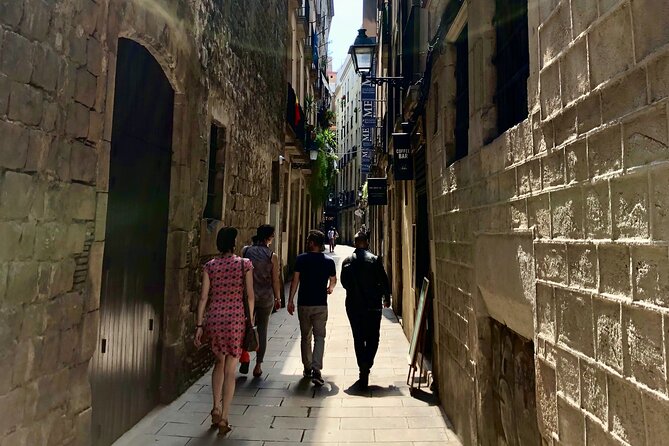
The tour is built for orientation. You start in Ciutat Vella and work your way through neighborhoods that shaped the city for centuries, so you’re not just ticking off sights—you’re learning how Barcelona grew. With about 2 hours in El Born, you get time to absorb the medieval feel rather than glancing at it and moving on.
El Born is the part of Barcelona where streets can feel like they’re running on different clocks. You’ll notice the shift from older, story-rich lanes into areas that bring you closer to the city’s later architectural moves. For many first-timers, that’s the payoff: you leave with a mental map, not just a camera roll.
This is also a practical route for photos, but not in a gimmicky way. The guide helps you spot what matters—street geometry, building details, and why certain locations became important. You’ll also get a sense of where locals linger versus where visitors cluster, which makes your next day planning easier.
You can also read our reviews of more private tours in Barcelona



Easy Meetup at Hotel Ohla Barcelona, Then a Private Pace
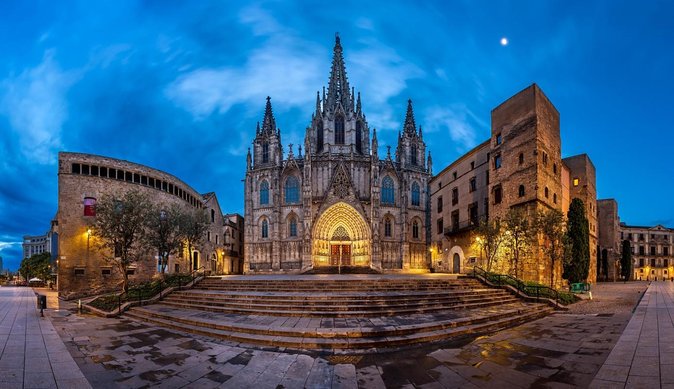
Meeting is straightforward: Hotel Ohla Barcelona, Via Laietana, 49 (near Plaça de Catalunya). From there, you walk together through the center toward your end point at Plaça Sant Felip Neri in the Gothic Quarter. The tour is limited to your group, so you’re not split from the person who can answer your questions.
You’ll want comfortable shoes. The experience is designed for people who can walk for about 2.5 hours, and it’s a city-center route with plenty of turns. If you’re traveling with someone who tires easily, plan for slower pace moments and water breaks, and don’t feel bad asking for them.
The tour uses a mobile ticket, and it’s offered in English. It’s also listed as being near public transportation, which matters if you want to build the day around metro/bus connections. And yes, service animals are allowed.
Stop 1: El Born’s Medieval Streets (What You’ll Actually Notice)
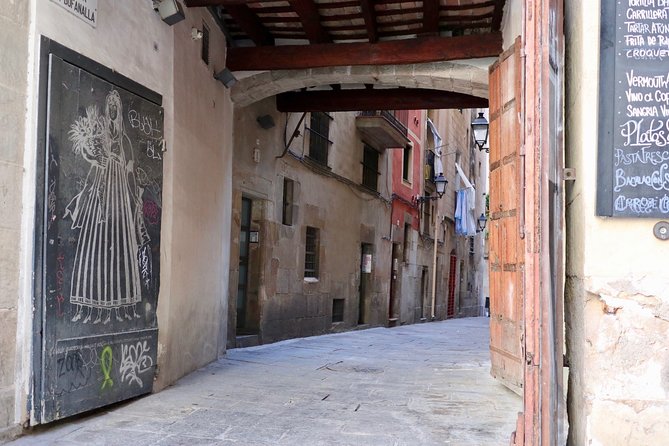
You spend about 1 hour 40 minutes in El Born, and that time is the anchor of the tour. This is where the “hidden streets” idea becomes real. Rather than rushing through, you get enough minutes to see how the neighborhood’s medieval setting still shapes the street experience today.
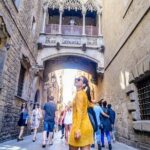
During this stretch, you’ll likely get more than one “oh, that’s why” moment—especially once the guide connects street corners to what lived there and what happened there. You’ll also get the sense that this area isn’t just preserved for visitors. It still functions as a neighborhood, with everyday movement that makes the medieval vibe feel less like a theme park.
One drawback to note: the route is story-driven, not museum-driven. That’s a good thing if you like walking explanations, but it can feel like “just more streets” if you’re only interested in interiors and formal sites. If you want more of the “inside” experiences, ask what you can add on before or after this tour.
Stop 2: Palace of Catalan Music (A Modernism Landmark Moment)
Next comes Palace of Catalan Music as your first major sight. You’ll have about 15 minutes here. The big detail for planning is that admission is not included for this stop.
Even if you don’t go in, this kind of stop matters because it trains your eye. Modernism isn’t only about the main building; it’s about how ornament, light, and structure work together. The guide typically points out what to look for so you can recognize Modernism features on your own later.
If you do want to see the interior, you’ll need to handle that separately. Since the ticket isn’t included, it’s smart to decide ahead of time whether this is an “only-see-it-outside” stop for you or a “book the inside” priority.
Stop 3: Arco di Trionfo (Architecture With Legends Attached)
After that, you’ll reach Arco di Trionfo for another 15 minutes, listed as a highlight of Modernism with history and legends. This is a great pause in the itinerary because arcs and façades compress meaning fast.
Look for what makes it feel different from a plain monument. Even in a short stop, you should get clear explanations about its place in the city’s story—so the structure becomes a clue, not just a photo backdrop.
This stop also helps break up the walking rhythm. A tight schedule can make city days feel like a blur. Stops like this act as punctuation.


Stop 4 and 5: Mercat del Born and the Meaning of Passeig del Born
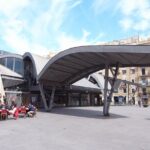
Then you hit Mercat del Born, around 15 minutes. Markets are the opposite of postcard tourism: they’re about daily life. Even if you’re not shopping, you’re watching how a place functions.
It’s one of those locations where the guide can connect the medieval or older city fabric to what people needed day to day. Food, trade, and community space tell their own story—often better than a plaque ever will.
You also walk along Passeig del Born, another stop where the guide explains what El Born actually means. That’s a small detail on paper, but in practice it changes how you interpret the neighborhood. Names in Barcelona aren’t random; they usually point back to how people lived, traded, and organized space.
Stop 6: Through the Streets Toward Museu Picasso (See the Area, Pass the Museum)
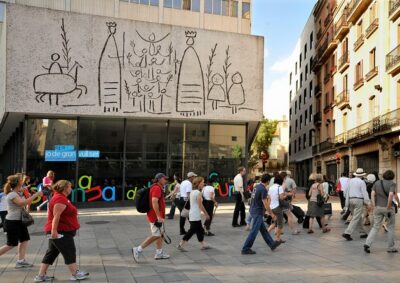
Next is Museu Picasso, but the tour frames it as a walking experience: you move through a maze of little streets and pass by the museum. This part matters even if you’re not entering the museum, because you’re learning how to navigate the old-city feel.
You’ll come away with a better sense of where the museum sits in the fabric of the neighborhood, which helps if you plan to visit later. It also breaks up the itinerary from grand monuments back into pedestrian-scale streets—the scale where you actually get to understand the city.
Stop 7: Correus, the Major Post Office Building
Correus is a key stop for architecture lovers and anyone who likes big institutional buildings with personality. You’ll spend about 15 minutes here.
The attraction is the building itself, described as Barcelona’s major post office and a magnificent structure. Even without going inside, this stop can teach you how Barcelona’s infrastructure reflects civic pride. Post offices, train stations, and markets often reveal what a city wanted to communicate: order, connection, and status.
If you’re the type who enjoys “how things work” history, this stop is a good match. If you’re only focused on religious or royal sites, it still tends to land well because the guide can explain what you’re seeing in plain terms.
Stop 8, 9, 10: Gothic Quarter, Roman Squares, and Why This City Started Here
Now the tour shifts deeper into the story of origins. You spend around 1 hour 20 minutes in the Gothic Quarter (Barri Gòtic), discovering the area where Barcelona was founded more than 2000 years ago.
That’s a powerful section, but it works best if you pay attention to details the guide calls out. The Gothic Quarter can feel like one long medieval maze at first, so your guide’s job is to help you separate the vibes from the facts: which areas connect to older foundations, which details hint at earlier eras, and where legends fit in.
You then stop at Plaça de Sant Just (about 15 minutes), a square dating back to Roman times with stories attached. After that, Placa de Sant Jaume takes you to the heart of Roman Barcelona, with explanations about why the city was founded here. Those are the “history landmarks” in a walking-tour sense: even if you don’t enter anything, you’re absorbing locations that anchor the entire city.
One consideration: if you prefer a strict chronological route, this part might feel like jumping between eras. The tour is designed as a neighborhood story, not a homework timeline. If you want the timeline nailed down, ask your guide to frame what comes first and what comes later while you walk.
Stop 11: Ending at Plaça Sant Felip Neri (A Quiet, Story-Filled Finish)
The tour closes at Plaça Sant Felip Neri, about 10 minutes. It’s described as a small square full of history and atmosphere, and it’s an excellent end point because it gives you a gentle landing after busy walking.
This finish in the Gothic Quarter also helps with practical next steps. If you want dinner nearby or a relaxed stroll to burn off the day, this location is a good anchor. You won’t be shuttled out to a far edge of town; you end where most people want to spend time anyway.
What You’ll Get From the Local Guide (Beyond Facts and Names)
The best part of this tour isn’t any single building. It’s the fact that you’re walking with someone who can answer your questions as they come up. The format is set up for interaction, so you’re not stuck listening without a chance to connect.
In the experience, the guide’s strength shows up in a few ways:
- turning architecture into clear explanations
- connecting streets to stories
- giving you practical travel tips along the way
- keeping the conversation going while you walk
This matters because Barcelona rewards attention. If you only read signs, you miss context. If someone talks you through what you’re standing in front of, you remember it.
That also brings up the main drawback to keep in mind: private doesn’t automatically mean chatty. If your group is quiet, you’ll likely still get a great narrative, but the tour may feel more like guided walking than back-and-forth discussion. If you want lively dialogue, come with a few questions ready—about food culture, neighborhood differences, or what to see next.
Price and Value: Is $101.53 Worth It?
At $101.53 per person for about 2 hours 30 minutes, this sits in the “reasonable for a private guide” category. The value comes from what’s included and how the time is used.
Here’s how I’d judge the cost:
- You’re paying for a guide to connect multiple neighborhoods—El Born, Market area stops, Modernism landmarks, and the Gothic Quarter.
- Most stops are listed with admission ticket free pricing, so you’re mostly paying for guided interpretation rather than separate entry costs.
- The one exception is Palace of Catalan Music, where admission isn’t included. That’s important for budgeting if you want to go inside.
Also, private tours scale your experience with your questions. If you’re a couple, or you have a small group that wants pacing and direction, the per-person cost tends to feel fair. If you’re traveling solo and don’t care much about interaction, a cheaper group option might be more efficient. But if you want a local at your side in the thick of the old streets, this price is easier to justify.
And because the average booking lead time is about 52 days, it’s a good idea to plan ahead, especially if you’re traveling in peak periods.
Who This Tour Suits Best
This tour is a great fit if you want:
- a guided orientation through central neighborhoods
- a story-focused walking plan with Q&A
- a mix of medieval, Roman, and Modernism architecture
- helpful travel tips while you move
It’s also a strong choice for first-time visitors who want to understand the city’s layers quickly. It’s less ideal if you:
- hate walking (you’ll cover about 2.5 hours)
- want lots of indoor time in museums
- prefer strictly chronological history with minimal detours
Should You Book This Private Hidden Streets Tour?
If you’re excited by the idea of learning Barcelona through streets—not just landmarks—this is an easy yes. The route stitches together El Born, Modernism stops, and Roman-era squares in a way that helps the city feel understandable.
Book it if:
- you want a private, question-friendly guide
- you’d like context for what you’ll see in the Gothic Quarter
- you’re okay with a walking-heavy format
Skip or adjust if:
- you need lots of museum time inside buildings (because the itinerary includes a stop where Palace of Catalan Music admission isn’t included)
- you strongly prefer a strict chronological walkthrough
- you want the energy of a mixed group (private means it’s just your party)
If you do book, my best advice is simple: come with a couple of questions and be ready to walk. This tour works when you treat it like a guided conversation through real neighborhoods.
FAQ
Where does the tour start?
The tour starts at Hotel Ohla Barcelona, Via Laietana, 49, in Ciutat Vella, near Plaça de Catalunya.
Where does the tour end?
It ends at Plaça Sant Felip Neri, in Ciutat Vella, in the heart of the Gothic Quarter.
How long is the tour and how much walking should I expect?
It lasts about 2 hours 30 minutes (approx.), and you should be able to walk for about 2.5 hours.
Is this tour private?
Yes. It’s a private tour/activity, and only your group participates.
What language is the tour offered in?
The tour is offered in English.
Are admission tickets included for all stops?
Most stops are listed as admission ticket free. One stop, the Palace of Catalan Music, has admission ticket not included.
Which stop does not include admission?
Palace of Catalan Music is the stop where admission ticket is not included.
Is there a mobile ticket?
Yes, the experience includes a mobile ticket.
What is the cancellation policy?
Free cancellation is available up to 24 hours in advance for a full refund. If you cancel less than 24 hours before the start time, the amount paid isn’t refunded.