REVIEW · BARCELONA
Catalan Paella Cooking Class with Small Group in Barcelona
Book on Viator →Operated by Barcelonadelights · Bookable on Viator
One lesson in Barcelona and you’ll eat like locals. This Catalan paella class turns a famous dish into a practical, story-rich evening at a restored, historic-feeling kitchen near Park Güell. You’ll spend about 2.5 hours cooking, chatting, and finishing with the meal you made.
What I like most is the hands-on feel (small groups mean you’re not just watching) and the way the host connects arrossada-style technique with Catalan food culture. On top of that, the venue itself gets praise: a converted commercial space with historic materials and design details that people even come to see.
One drawback to consider: you’ll be walking and standing around a kitchen setup, so if you need lots of downtime or you’re working around mobility limits, this may feel a bit active. It’s also a private, small-group format, so times can book up and you’ll want to reserve early if your dates are tight.
In This Review
- Key highlights to know before you go
- Catalan paella in Barcelona, taught like a craft
- Where the class starts near Park Güell
- Small-group format: you’ll participate more than you expect
- The heart of the class: learning Catalan “arrossada” technique
- The kitchen setting: restored materials and a space worth noticing
- What you’ll eat and drink: a real meal, not a snack
- What makes the host experience special
- Price and value: what $114.65 buys you in real terms
- Timing, what to wear, and how to make it go smoothly
- Who should book this paella class?
- Should you book Catalan Paella Cooking Class with Small Group?
- FAQ
- How long is the Catalan paella cooking class?
- Where does the tour meet?
- What language is the class offered in?
- Is it a small group or private experience?
- What’s included in the price?
- Is there free cancellation?
- Are there any traveler minimums?
Key highlights to know before you go
- Small group, private format: you stay with your own group, not a big cattle-car class.
- Catalan focus, not generic paella: you learn the “arrossada” side of the dish.
- A real chef-led evening: hosts like Marc (and others mentioned in past classes) share culture plus technique.
- Restored historic-feeling kitchen: people rave about the space as much as the food.
- Food + alcohol included: you finish by eating what you cook, with drinks included.
Catalan paella in Barcelona, taught like a craft
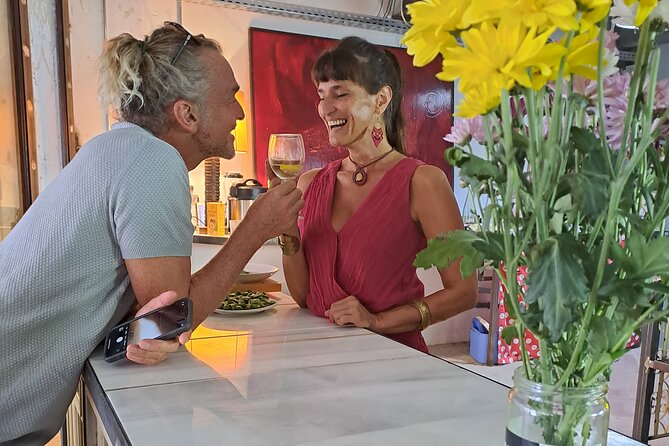
Paella gets sold to tourists like it’s one single recipe. Catalan paella isn’t that simple. Here, the lesson is built around Catalan rice-cooking culture—the “arrossada” approach that defines the Catalan style. That matters because it changes how you think about the pan: ingredient choices, timing, and how you treat the base before you ever think about topping it.
You’re not just getting a fun activity. You’re getting a clear framework for cooking rice the way Catalans do it: step by step, and tied to stories about food and place. If you’ve ever had paella that tasted flat or overly oily, you’ll understand quickly why the details matter.
The vibe is relaxed too. The class description makes it clear you don’t need to bring anything—show up, follow along, and enjoy the process. And based on the strong feedback, hosts lean into friendly conversation, not stuffy “chef school.” Names that show up in past sessions include Marc and Xavier, and another chef listed in the class feedback is José.
You can also read our reviews of more cooking classes in Barcelona
Where the class starts near Park Güell
The meeting point is Carrer de Jaume Puigvert, 13, Horta-Guinardó, 08024 Barcelona. The big practical advantage is location: it’s very close to Park Güell, so you can pair it with a daytime visit. In past comments, people mention it’s about a 20-minute walk from the Park Güell entrance, or you can handle it with nearby public transport if you prefer to save your legs.
What you should do is give yourself a little buffer. This is a cooking class, not a “walk in and instantly start chopping” situation. Arriving on time helps you settle in, get your bearings, and jump into the prep with the group.
Also, you’ll likely be dealing with a neighborhood feel rather than a central tourist plaza. That’s a good thing. It puts you in real Barcelona rather than a stage set.
Small-group format: you’ll participate more than you expect
This activity runs as a private tour/activity with only your group. That usually means you don’t have the classic problem of a big class where a few people get the cutting board and the rest just watch.
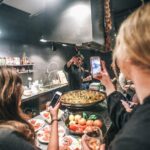
The class also reads as interactive. The description says the kitchen experience is “a very personalized experience.” And in the feedback, people highlight that small groups let them participate and be engaged the whole time.
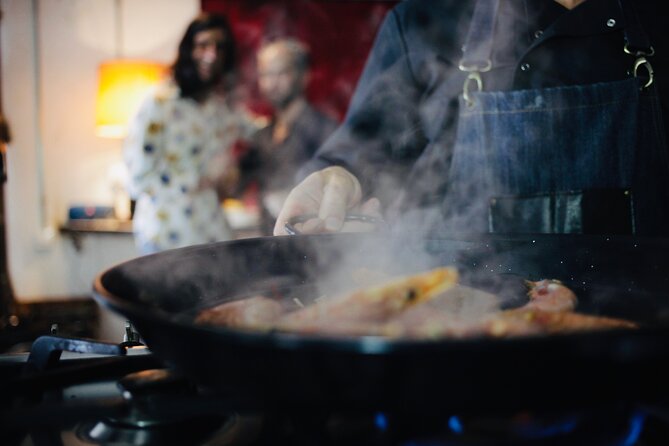
In practice, expect a mix of prep and cooking tasks. You’ll get guidance while you work, and you’ll hear the “why” behind each move—especially around ingredient selection and how you handle the rice. If you’ve done other cooking classes where you mainly stand around, this one tends to feel different: more kitchen time, more conversation, and more chance to ask questions.
One note: at least some class sessions involve additional elements beyond just paella, such as making a tapa and mixing drinks. Past feedback specifically mentions sangria and local white wine. The tour’s official sample menu lists Catalan paella, so treat the drinks/tapa as part of the included evening experience rather than a separate “add-on item” you should plan your meal around.
The heart of the class: learning Catalan “arrossada” technique
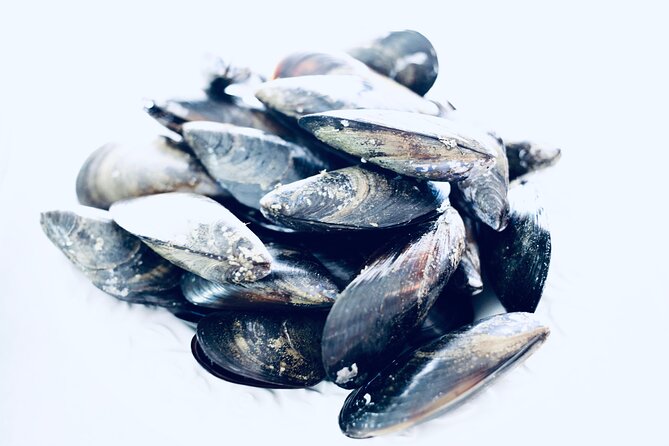
The main event is Catalan Paella. And the key detail is that the Catalan style is tied to arrossada—an approach that sets it apart from other versions people commonly find in tourist-heavy spots.
Here’s what that usually means for you as the cook:
- You learn how the dish starts with the right ingredients for Catalan taste.
- You get the host’s take on what matters most (often more than people think).
- You build the pan with technique, not just dumping ingredients in and hoping for the best.
Past feedback repeatedly calls out that hosts explain both history and preparation. Marc is mentioned as sharing stories and Catalan culture while teaching technique. Another host named Xavier is praised for background and history alongside cooking instructions. José is also mentioned as sharing knowledge about paella and tapas plus sangria.
So you’ll get a two-track experience:
1) You cook with step-by-step guidance.
2) You learn enough context to remember what you did and why it worked.
If you want a souvenir, this is it: a method you can actually repeat.
The kitchen setting: restored materials and a space worth noticing
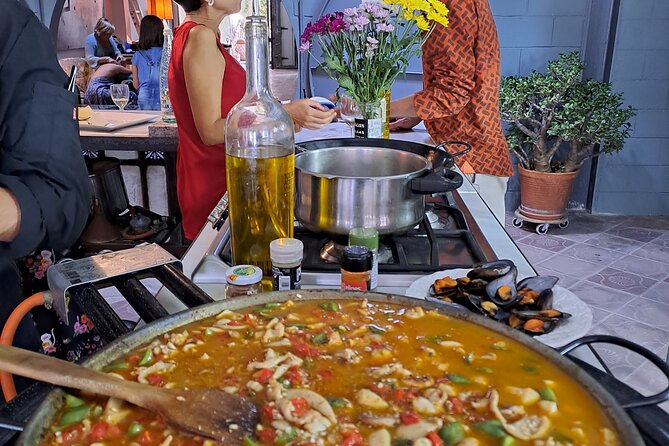
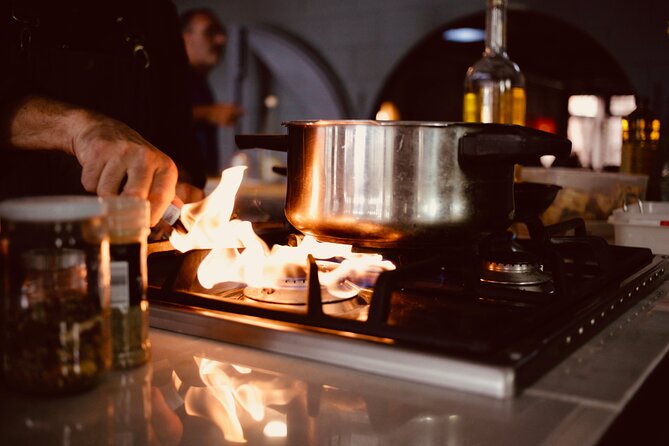
A big reason people love this class is the venue. It isn’t described as a generic cooking studio. It’s a restored kitchen with historic materials that can feel like more than just a place to cook. Past comments describe the space as “funky,” visually designed, and similar to an art-gallery vibe. Others note the industrial feel and the fact that people come specifically to see the space.
Why does this matter for you? Because cooking classes can get repetitive in atmosphere: same tables, same walls, same lighting. Here, you’re in a setting that feels intentional. That changes how the evening flows. You talk more. You pay attention. And the whole night feels like Barcelona, not just food tourism.
It also helps that the kitchen is described as being only a few minutes walk from where you’ll start. That keeps your evening smooth: less wandering, more time cooking.
You can also read our reviews of more tours and experiences in Barcelona

What you’ll eat and drink: a real meal, not a snack
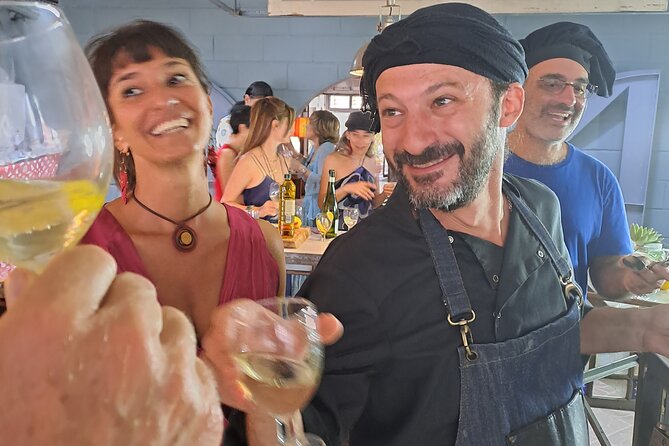
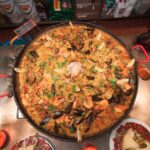
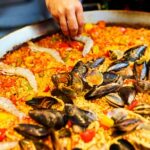
The official included items are paella and alcoholic beverages. The class ends with you eating the paella you helped make, which is exactly what you want from a cooking class. No waiting around for a later meal. No “you’ll sample a bite.” You’re finishing dinner-style.
Even though the sample menu lists only Catalan paella, feedback adds helpful texture about how drinks and extra bites can show up. Some comments mention making or tasting sangria, plus enjoying local white wine. Other comments mention a tapa used to curb appetite before the paella is served.
So plan the evening like a proper meal:
- Expect the paella to be the main event.
- Assume you’ll be drinking as part of the flow since alcohol is included.
- Come hungry. You’re cooking and then eating what you cook.
If you’re someone who worries about wasting money at food experiences, this is one of the more reassuring formats: you’re not paying for the instruction alone. You’re paying for dinner plus instruction.
What makes the host experience special
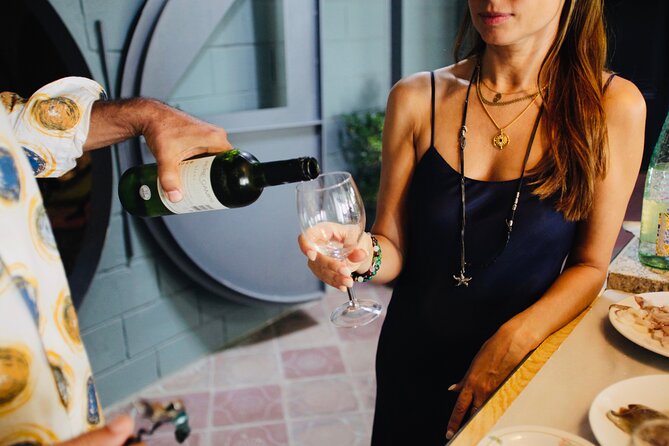
The strongest praise in the feedback isn’t just about food. It’s about the host’s personality and the way stories and culture are woven into the cooking.
Marc shows up a lot. People describe him as personable, sharing Catalan culture and even personal stories. There’s also praise that the experience felt like cooking with family or making a new friend. That’s not fluff—it’s practical. A friendly host encourages you to ask questions, so you actually leave with better technique.
The host also seems to focus on ingredients and technique, not only the final product. One recurring point is learning insider tips on the best ingredients for paella and understanding how the dish is built from the start. That’s how you avoid the common mistake at home: buying random “paella rice,” tossing in ingredients, and then wondering why it doesn’t taste right.
And since the class is offered in English, you should feel comfortable with the explanations. If you’ve cooked anywhere abroad before, you know how helpful good English instruction is when technique matters.
Price and value: what $114.65 buys you in real terms
At $114.65 per person for about 2 hours 30 minutes, this isn’t a budget activity. But cooking classes often aren’t. The question is value—and in this case, you’re getting several value anchors that add up.
You get:
- A small-group, private format (less crowding, more participation).
- A chef-led, hands-on session centered on a specific regional style (Catalan).
- A restored, memorable kitchen setting.
- Paella plus alcoholic beverages included.
Compare that to paying for dinner in a restaurant. Restaurant paella can be delicious, but you won’t automatically learn the “how.” Here, you pay for both dinner and a skill transfer. If you’re the type who likes to cook at home and wants one Barcelona specialty you can reproduce, the cost starts to make sense.
Also, the booking lead time is notable—on average about 24 days in advance. That can signal demand and also helps you plan. If you wait too long, you may lose the date that fits your itinerary.
Timing, what to wear, and how to make it go smoothly
The class runs around 2 hours 30 minutes. That length is long enough to do real prep and cooking, then sit down and eat. It also fits nicely into a travel schedule: you can do Park Güell earlier, then head to dinner via a short walk or transit.
Wear comfortable shoes. You’ll be in a working kitchen environment, likely moving around a bit. Keep it simple: no fancy outfit required.
One more practical note: alcohol is included, so keep your last day of the evening in mind. If you plan to go out later, go easy. The goal is a fun cooking night, not an accidental “I’m done for tomorrow” situation.
Who should book this paella class?
This is a strong fit if you:
- Want a hands-on Barcelona food experience, not a tasting-only tour.
- Like the idea of learning a regional style—Catalan arrossada—not generic paella.
- Enjoy conversation with a host who mixes stories with cooking.
- Prefer small groups and a private feeling.
It also seems friendly for solo travelers. One comment specifically calls it out as a solid option for a solo visit since many other cooking classes require a minimum number of people. So if you’re traveling alone and want an evening that doesn’t feel awkward, this is worth considering.
Couples and friends also fit well. Multiple feedback mentions small groups like two couples, which makes the atmosphere more relaxed and social rather than rushed.
Should you book Catalan Paella Cooking Class with Small Group?
Yes, if you want a real skill-based cooking evening with Catalan focus, and you care about learning technique—not just collecting a photo with paella.
Book it especially if:
- You’ll be near Park Güell and want a convenient pre-dinner or early-evening plan.
- You like small groups and want active participation.
- You’re open to an English-led class with lots of host interaction.
Skip it only if you need a highly structured, quiet experience with minimal standing and you don’t enjoy being in a kitchen environment. Also, if your schedule is inflexible and you’re booking last minute, plan ahead since it’s a smaller, private-format class.
Overall, this is one of those “do it once, remember it for years” experiences—because the meal comes with a method you can recreate, and the setting makes the whole night feel like Barcelona, not just food on a plate.
FAQ
How long is the Catalan paella cooking class?
It runs about 2 hours 30 minutes (approx.).
Where does the tour meet?
You start at Carrer de Jaume Puigvert, 13, Horta-Guinardó, 08024 Barcelona, Spain, and it ends back at the same meeting point.
What language is the class offered in?
The class is offered in English.
Is it a small group or private experience?
It’s a private tour/activity, so only your group participates.
What’s included in the price?
Paella is included, along with alcoholic beverages.
Is there free cancellation?
Yes. You can cancel up to 24 hours in advance for a full refund.
Are there any traveler minimums?
Yes. The experience requires a minimum number of travelers, and if it’s canceled due to not meeting that minimum, you’ll be offered a different date/experience or a full refund.