REVIEW · BARCELONA
Barcelona Walking Tour of Gothic and Born District
Book on Viator →Operated by SANDEMANs Tours - Barcelona · Bookable on Viator
Barcelona’s old streets have a rhythm all their own. This walk gives you big landmarks and small, human details in just about 2.5 hours, with an English-speaking guide keeping the story moving. You start in Ciutat Vella, work your way through the Gothic Quarter and El Born area, and finish near El Born Centre de Cultura i Memòria or Parc de la Ciutadella.
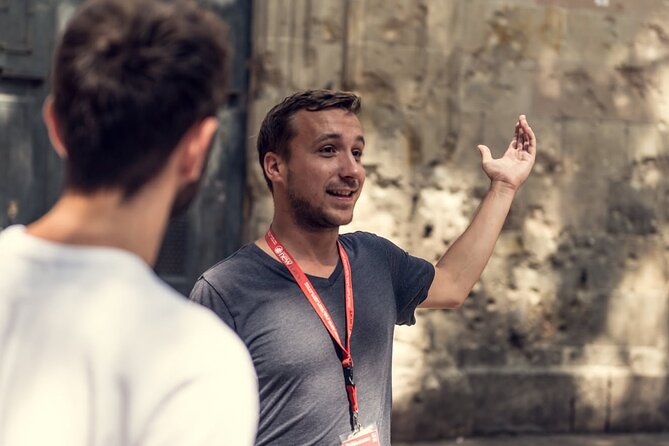
Two things I really like: first, the price is friendly for what you cover, so you can spend your money on tapas instead of admission. Second, the guide energy matters here, and names like Lena show up in feedback as a standout—fast, clear explanations that make the streets feel readable. One possible drawback: the tour can lean more talk than walk, so if you prefer quiet wandering, you’ll want to keep your own pace in mind.
In This Review
- Key points to know before you go
- Gothic Quarter and El Born: Why This Route Works
- Price and what you actually get for $4.79
- Meeting in Jaume I and finishing near El Born Centre or Ciutadella
- Stop 1: Plaça del Rei and the Columbus-at-court moment
- Stop 2: Barcelona Cathedral and the Gothic architecture payoff
- Stop 3: San Felipe Neri Square and wartime scars you can see
- Stop 4: The Castellers monument and Catalan identity
- Stop 5: Santa Maria del Pi and the warm Gothic feel of the Barri Gòtic
- Stop 6: Santa Maria del Mar, or the Cathedral of the Sea
- Stop 7: El Fossar de les Moreres and remembering those lost in 1714
- Finishing by El Born Centre or Parc de la Ciutadella: What to do next
- Should you book this Gothic and Born walking tour?
- FAQ
- How long is the Barcelona Walking Tour of Gothic and Born District?
- What time does the tour start?
- Where do I meet the tour?
- Where does the tour end?
- Is the tour offered in English?
- Are entrance fees included for every stop?
- What is the group size limit?
- What’s the cancellation policy?
- Do I need a printed ticket?
Key points to know before you go
- Two and a half hours, focused route: built for getting your bearings in the Gothic and Born neighborhoods.
- Stop mix that makes sense: from major Gothic churches to memorial ground.
- Some entrances are not included: Cathedral and a couple basilicas require separate admission.
- Small-ish group size: up to 25 people, which helps you hear the guide.
- The guide experience is the product: feedback highlights guides like Lena for high energy and strong explanations.
Gothic Quarter and El Born: Why This Route Works
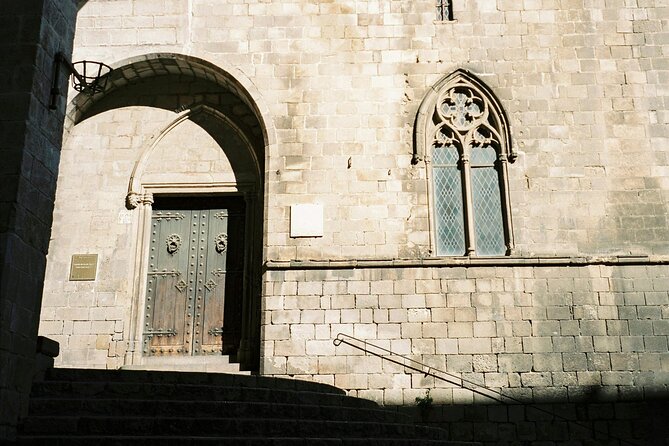
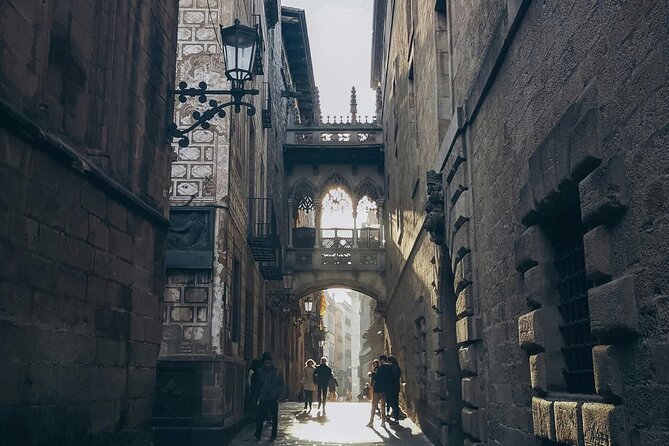
If Barcelona has a quick-start button, it’s Ciutat Vella. This part of town is all narrow lanes, sudden squares, and buildings that look like they’ve been arguing with time for centuries. The trick is knowing where to point your eyes, because otherwise you can spend two hours walking in circles and still feel like you missed the important bits.
That’s where this tour earns its keep. You’re not just passing famous addresses. You’re moving through places tied to public life: power, religion, civic identity, and memory. The route also takes you through both the Gothic Quarter atmosphere and the El Born side of the story, so you get a wider feel for how Barcelona grew and reshaped itself.
I also like that it’s not trying to be everything at once. You hit a sequence of stops that makes the neighborhood legible: a medieval setting first, then the cathedral-scale Gothic wow-factor, then smaller but meaningful spaces where Barcelona’s identity comes through.
You can also read our reviews of more walking tours in Barcelona



Price and what you actually get for $4.79
At around $4.79 per person, this is priced like a budget-friendly introduction rather than a premium, museum-style experience. That matters because you can treat it as part of your first-day plan: get orientation now, and then decide later what deserves your paid time and attention.
But here’s the honest balance. Some major sites on the route do not include admission, including the Barcelona Cathedral and both basilicas Santa Maria del Pi and Santa Maria del Mar. So the money you save on the tour can come back as a ticket choice at a couple stops. Still, even with that in mind, the tour helps you decide what’s worth your time inside those churches because the guide sets context before you go.
A second practical factor: this is booked about 36 days in advance on average. That doesn’t mean you must plan far ahead, but it does suggest the walk is popular enough that locking in a slot earlier can reduce last-minute stress.
Meeting in Jaume I and finishing near El Born Centre or Ciutadella
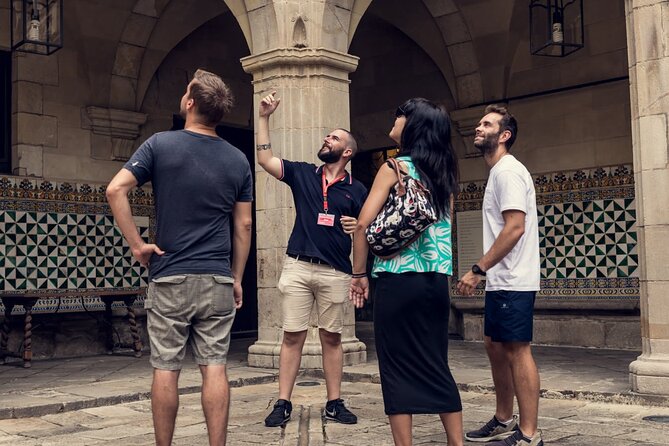
The start point is Jaume I (Ciutat Vella), with an official start time of 11:00 am. You’ll spend about 2 hours 30 minutes on the walk, and the route ends by El Born Centre de Cultura i Memòria or near Parc de la Ciutadella. That ending is useful: you’re dropped in an area where you can keep sightseeing without immediately backtracking.
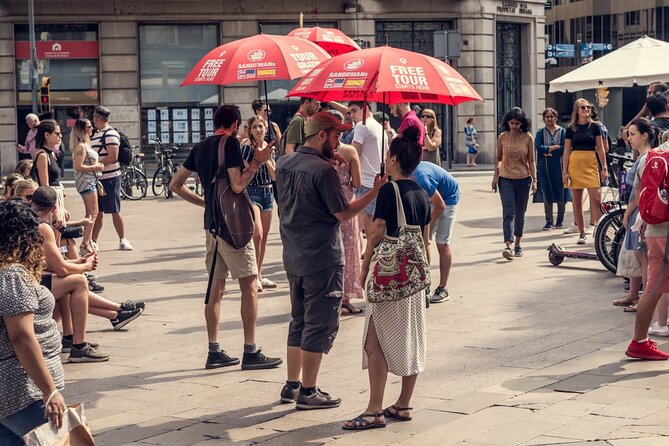
Group size is capped at 25 travelers, which usually keeps the guide’s attention on the group rather than shouting at the back row. The tour uses a mobile ticket, and it’s offered in English—good for first-timers who want help without guessing your way through Spanish-only context.
One small consideration: the walk may feel a bit more guided conversation than independent strolling. That’s not bad if you like stories. If you like to quietly look at stones and signage, you may want to take notes and look on your own between stops.
Stop 1: Plaça del Rei and the Columbus-at-court moment
Your first major moment lands at Plaça del Rei in the Gothic Quarter. This is the kind of square where you can look up and immediately feel medieval scale. The highlight here is King Martin’s Watchtower, described as the medieval structure where Christopher Columbus was received by the Catholic Monarchs after his return from the Americas.
If you’ve ever wondered why Barcelona feels so connected to world events, this is a great place to start. You’re standing in a setting tied to the era when Spain’s global reach accelerated. The guide focus tends to make this feel less like a trivia fact and more like a reason Barcelona mattered beyond its local borders.
The duration at this stop is about 30 minutes. That’s long enough to understand what you’re seeing, but not so long that you feel trapped in one spot while the rest of the route slips away.
Practical tip: wear shoes you trust. The Gothic Quarter streets can be uneven, and you’ll be on foot for the full run of the tour.
Stop 2: Barcelona Cathedral and the Gothic architecture payoff
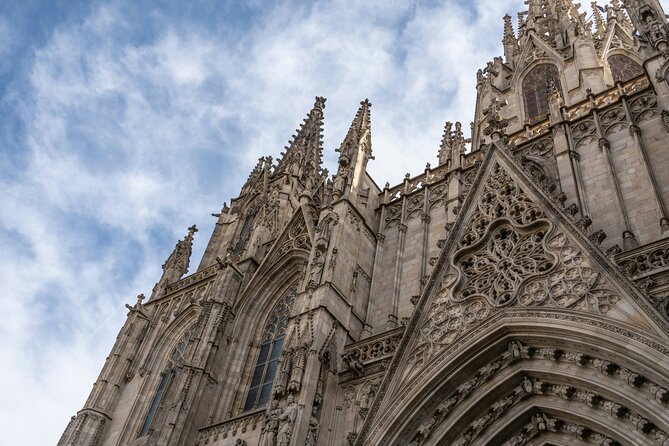
Next comes Barcelona Cathedral, the big visual anchor for many first-time visitors. Expect Gothic architecture on a scale that can feel intimidating at first. The guide’s job here is to help you notice the right things—rather than just standing there thinking, yes, it’s old.
This stop is about 40 minutes, and it’s also where you’ll likely think about budget. Admission is not included, so you’ll need to decide whether to pay for interior access based on your interests. Even if you don’t go in, the exterior and the guide’s framing can help you connect the cathedral to the city’s long identity story.
The value of this stop isn’t just the building. It’s how the tour uses the cathedral to explain who mattered in Barcelona and why. If you’re a visual person, this is the one that can shift your mental map of the city from photos into something you can actually navigate.


Stop 3: San Felipe Neri Square and wartime scars you can see
Then you move to San Felipe Neri Square, where the Church of San Felipe Neri adds a different texture to the Gothic Quarter. What makes this stop memorable is that the square is marked by scars from the Spanish Civil War.
That detail changes the mood fast. You go from medieval grandeur to evidence of modern conflict. And the stop doesn’t feel gloomy for the sake of it. It works as a reminder that cities are layers—your job as a visitor is to learn how to read those layers.
This is a shorter stop at about 20 minutes, so it works well if you prefer quick, focused stops that still carry meaning. Also, it’s a calmer pocket where you can catch your breath before the next shift toward identity and architecture.
Stop 4: The Castellers monument and Catalan identity
At Homenatge Als Castellers, you get a lesson in Catalan national identity through a subject that’s both cultural and athletic. The guide points you to the Monument to the Castellers, a tribute to human towers—a tradition symbolizing strength, unity, and endurance.
This is a smart pivot in the tour. After churches and court history, you shift to a living tradition. You’re learning how people in Catalonia express identity in public life, not only through monuments or buildings.
The time here is around 15 minutes, so it’s a quick but effective stop. If you’re interested in how Catalonia’s story shows up in everyday culture, this is the part that may surprise you most.
Stop 5: Santa Maria del Pi and the warm Gothic feel of the Barri Gòtic
Next is Basilica de Santa Maria del Pi in the Barri Gòtic area. This stop is about 15 minutes, and it’s another one where admission is not included.
What I like about this stop is that it adds personality. If the cathedral feels monumental, Santa Maria del Pi can feel more approachable in scale and atmosphere. The guide tends to connect the basilica to how locals live with these spaces over time, not only as tourist scenery.
Because it’s a shorter stop, it’s not meant to replace a visit inside. Instead, it helps you decide if you want to come back later when you have more time to go in and look slowly.
Budget note: since admission isn’t included, you’ll want to be ready to pay on your own if you want interior access.
Stop 6: Santa Maria del Mar, or the Cathedral of the Sea
If Gothic architecture is the language, then Santa Maria del Mar is a clean, specific dialect. The tour highlights its reputation for rare purity and unity of style, earning it the nickname Cathedral of the Sea, built by Barcelona’s medieval merchants and sailors.
This is one of the most “Barcelona” concepts on the route because it ties a church directly to a working community. You’re not just hearing about grand power. You’re hearing about the people who funded and built the place and what their lives likely demanded—practical, coastal, and connected to movement.
Time here is about 15 minutes, and again admission is not included. Still, the guide’s framing makes the exterior and general structure feel meaningful enough that even a quick stop doesn’t feel wasted.
If you plan to pay for one church interior during this tour, this is a strong candidate. It’s the one the tour sets up to feel like a complete story.
Stop 7: El Fossar de les Moreres and remembering those lost in 1714
The final site is El Fossar de les Moreres, a memorial tied to the defenders of Barcelona who fell during the Siege of 1714. This is a solemn stop, and it lands well after a church-heavy stretch because it changes what you’re paying attention to.
Here, you’re not learning architecture details. You’re learning remembrance—how Barcelona marks resistance and honors sacrifice. The guide frames it as a symbol of Catalan resistance and commemoration, which helps the memorial read as more than a nameplate.
Time is around 15 minutes. That’s enough to understand its meaning and then move on without overloading your emotions.
Finishing by El Born Centre or Parc de la Ciutadella: What to do next
When the tour ends, you’re close to either El Born Centre de Cultura i Memòria (Plaça Comercial, 12) or Parc de la Ciutadella. That’s a helpful transition because you can keep your momentum either into a culture-focused area or into open air.
If you’re still in sightseeing mode, I’d treat this as a good point to do one of two things:
- If you loved the churches, consider going back to the one that felt most meaningful and spend time inside on your own schedule.
- If you liked the identity and memory stops, shift your next hour toward places that focus on Catalan culture and civic life rather than only landmark hunting.
Also, because this walk can be a bit talk-forward, give yourself a short buffer afterward to wander without listening. Take ten minutes. Let the city settle.
Should you book this Gothic and Born walking tour?
Book it if you want a low-cost orientation to the Gothic Quarter and El Born, and you like learning through a guide who keeps the story moving. The route is well-suited for first-time visitors who need a mental map fast, and the stop choices cover a good mix: medieval court moments, major Gothic architecture, Catalan cultural identity through the castellers, and a memorial that grounds the city’s past.
Skip it (or modify expectations) if you prefer lots of free time to roam without commentary. One clear caution from feedback is that the tour can feel more talk than walk, and the admission-not-included stops mean you’ll likely face optional add-on decisions at Barcelona Cathedral, Santa Maria del Pi, and Santa Maria del Mar.
If you do book, come prepared with one simple mindset: treat the tour as the explanation layer. Then use your extra time afterward to revisit the places that hooked you.
FAQ
How long is the Barcelona Walking Tour of Gothic and Born District?
It runs about 2 hours 30 minutes (approx.).
What time does the tour start?
The start time is 11:00 am.
Where do I meet the tour?
You meet at Jaume I, Ciutat Vella, 08002 Barcelona.
Where does the tour end?
It finishes by El Born Centre de Cultura i Memòria (Plaça Comercial, 12) or by Parc de la Ciutadella.
Is the tour offered in English?
Yes, it is offered in English.
Are entrance fees included for every stop?
No. Some stops note admission not included, including Barcelona Cathedral, Basilica de Santa Maria del Pi, and Basilica de Santa Maria del Mar. Other stops list admission as free.
What is the group size limit?
The tour has a maximum of 25 travelers.
What’s the cancellation policy?
You can cancel for a full refund up to 24 hours before the experience’s start time.
Do I need a printed ticket?
No. You get a mobile ticket.